A customer brought in a Reynolds DV46 for service.
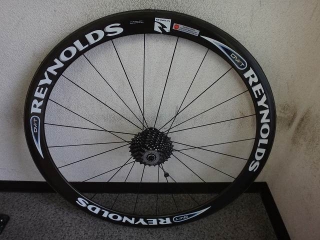
The request was to tighten the spoke tension up more if possible.
Since it's laced with an outpoke radial pattern on the non-drive side,
there won't be any dramatic improvement without a complete relace,
but I'll do what I can.

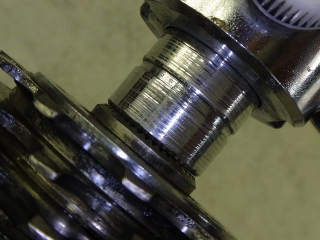
It looks perfectly centered, but actually it's shifted toward the drive side by about the thickness of a sheet of paper.
You can't tell from these photos.
I gave up trying to shoot it better.

The drive side uses Competition spokes while the non-drive side uses Aerolite spokes,
making it an official half-Competition setup,
which is considerably better than all-Aerolite.
This rear wheel has tension comparable to or slightly above the average for stock builds,
or it could have been re-tensioned at a local shop.
It's laced 40-spoke, but if we were to relace it,
simply switching the non-drive side to CX-RAY 6-cross wouldn't be enough
because we'd also be changing the drive side from reverse Italian lacing to regular Italian lacing.
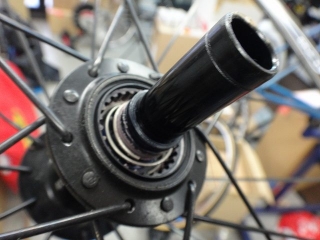

When I rotated the hub axle by hand, there was some roughness, but it disappeared once I removed the freebody.
This means the damage isn't to the hub shell itself,
but to the bearings in the freebody.
Among hubs made "by DT" rather than DT proper—brands like GIANT and Alovarc—
the hub shell bearings are slightly undersized,
but Reynolds hubs from this era use bearings as large as those in DT proper hubs.
That's why they're durable and don't wear easily.
The freebody, on the other hand,
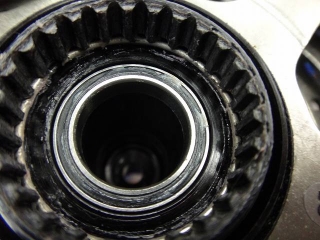
↑inside
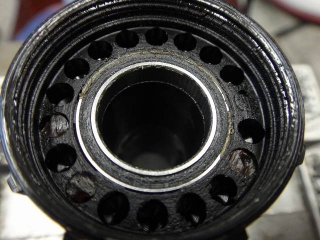
↑outside
uses "SL" specification, found only in Shimano versions,
with bearings of an extremely rare 6702 size.
SL stands for "Short Life"—well put.
The 6702 has inner/outer/thickness dimensions (mm) of 15/21/4,
and because the outer diameter must fit into the freebody's pathetic lightening holes,
the difference between inner and outer diameter is minimized,
and the thickness is reduced to just 4mm.
I call them pathetic lightening holes, but
the weight savings from these revolver-like perforations is less than 2 grams.
The main reason SL freebodies are lighter than standard models
is that the bearings—solid iron—are smaller.
These 6702 bearings are easy to find in open versions (unsealed)
or with metal shields (which don't seal against water),
but ones with rubber seals on both sides are hard to source.
Maybe EZO (Hokkaido Seiki) carries them.
This time it didn't warrant replacement, so I left it alone.
A DT distributor will start carrying bearing spare parts next year.
After the part number, they list inner/outer/thickness in mm,
and among them is 15/28/7, which matches the standard 6902 bearing.
6902 is a size used in hub shell drive-side and freebodies,
but outer diameter 28mm doesn't allow enough freebody thickness,
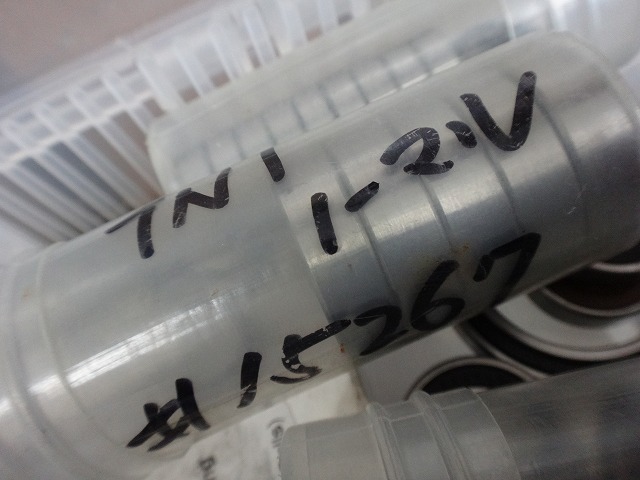
so the 15267, a 6902 with the outer diameter reduced to 26mm only,
is increasingly common nowadays.
This is a non-standard bearing with dimensions 15/26/7 simply concatenated,
and it's used on both sides of Evolite hub freebodies and more.
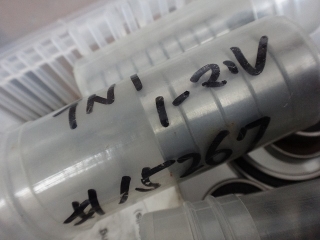
There's demand for this size for other repairs too;
it used to be available as a Tni spare part,
but for some reason it's not carried anymore(I'd buy them out whenever they came in stock).
What I'm getting at is that starting next year,
it will be easily available from DT (heads-up for fellow mechanics).
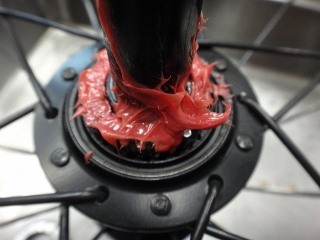
I greased up the star ratchet.
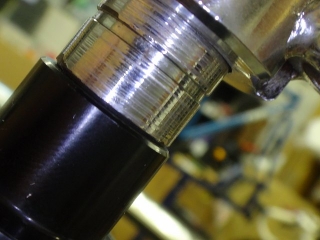
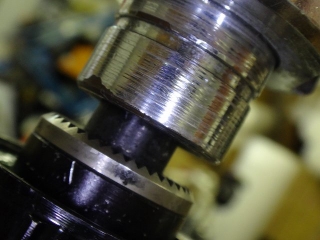
First, I tensioned the drive side as much as I could.
I may have tensioned it more than I would for a 46-spoke build.
The rim shifted significantly toward the drive side, but
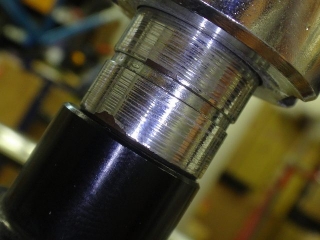

by tightening the non-drive side to about 3/4 the number of rotations I did on the drive side,
the wheel centered up.
The lateral rim movement per nipple turn is less on the drive side than the non-drive side,
but with radial lacing, there's no angle loss,
so the movement becomes even larger.
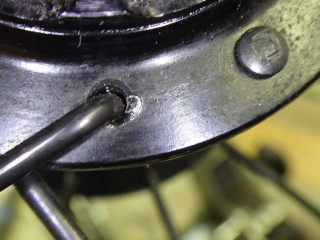
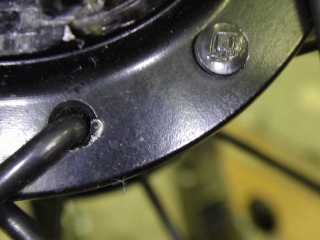
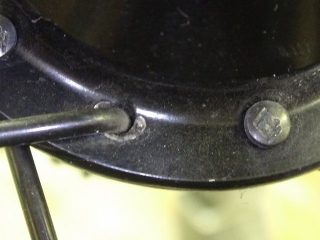
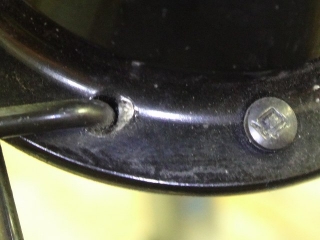
This rear wheel's non-drive side shows only the marks of outpoke radial lacing,
but the drive side has traces of being temporarily laced Italian with decent tension.
However, it's almost certainly a factory build,
so the most likely scenario is that they noticed they were lacing Italian halfway through
and took it apart and redid it.
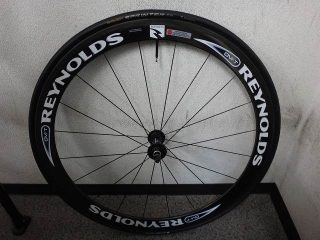
Next, the front wheel.

While the rear wheel is laced as a standard rim, the front wheel is laced as a reverse rim.

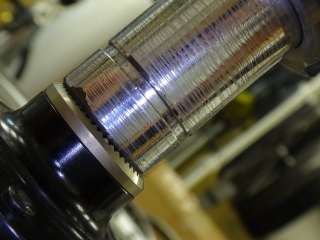
No centering issues, just slight runout,
and I re-tensioned it a bit, though not as much as the rear.
During inspection I stripped the tubular tire,
and after work I mounted the customer's own tire.
One last thing: The DT freebody was for Shimano 10-speed,
so if we swap it for 11-speed, the new wheel center
will have the rim shifted toward the non-drive side.
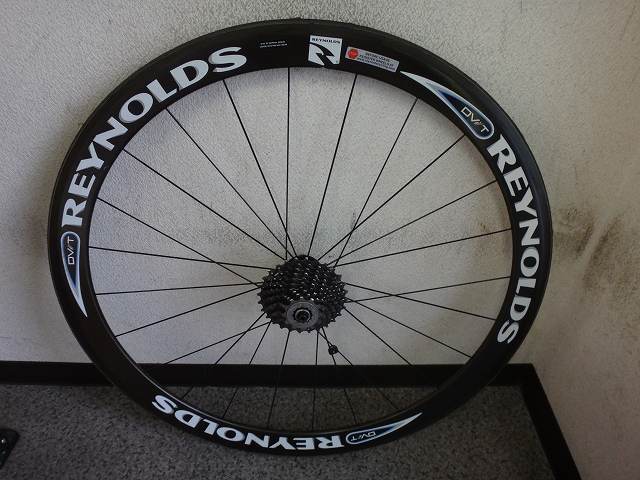
The request was to tighten the spoke tension up more if possible.
Since it's laced with an outpoke radial pattern on the non-drive side,
there won't be any dramatic improvement without a complete relace,
but I'll do what I can.

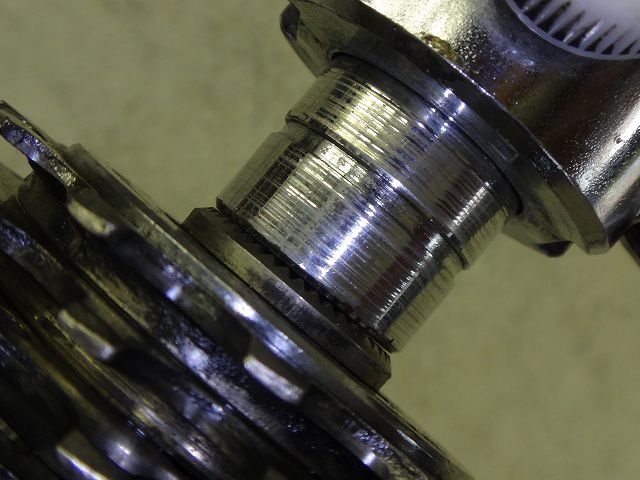
It looks perfectly centered, but actually it's shifted toward the drive side by about the thickness of a sheet of paper.
You can't tell from these photos.
I gave up trying to shoot it better.
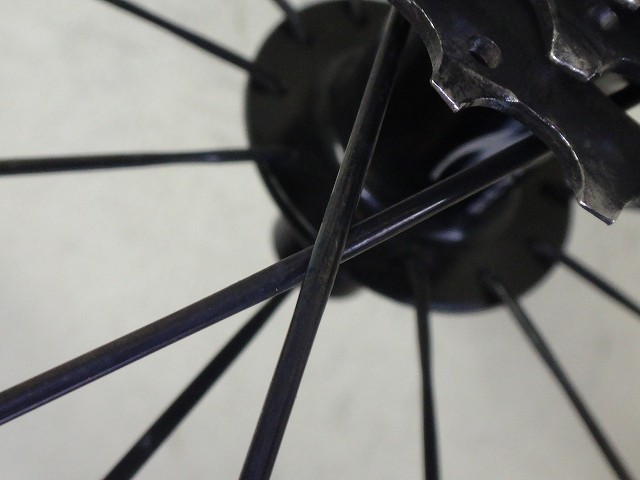
The drive side uses Competition spokes while the non-drive side uses Aerolite spokes,
making it an official half-Competition setup,
which is considerably better than all-Aerolite.
This rear wheel has tension comparable to or slightly above the average for stock builds,
or it could have been re-tensioned at a local shop.
It's laced 40-spoke, but if we were to relace it,
simply switching the non-drive side to CX-RAY 6-cross wouldn't be enough
because we'd also be changing the drive side from reverse Italian lacing to regular Italian lacing.
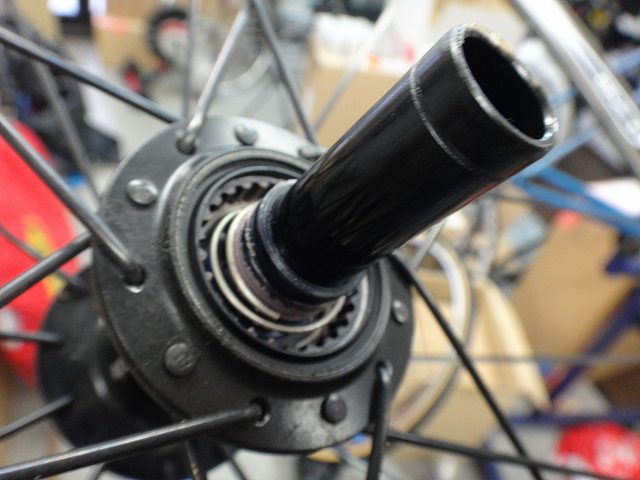
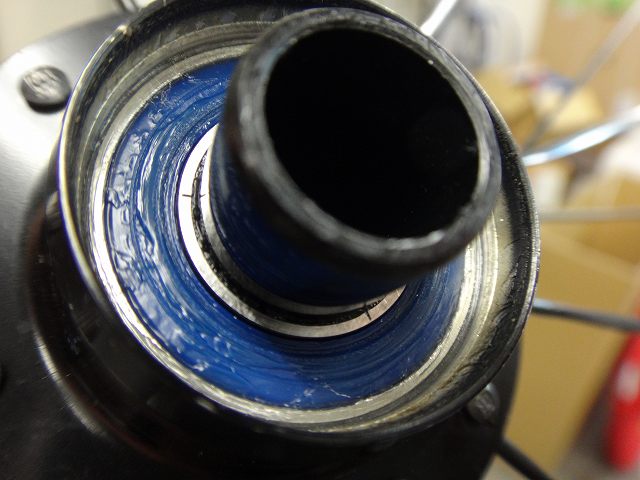
When I rotated the hub axle by hand, there was some roughness, but it disappeared once I removed the freebody.
This means the damage isn't to the hub shell itself,
but to the bearings in the freebody.
Among hubs made "by DT" rather than DT proper—brands like GIANT and Alovarc—
the hub shell bearings are slightly undersized,
but Reynolds hubs from this era use bearings as large as those in DT proper hubs.
That's why they're durable and don't wear easily.
The freebody, on the other hand,
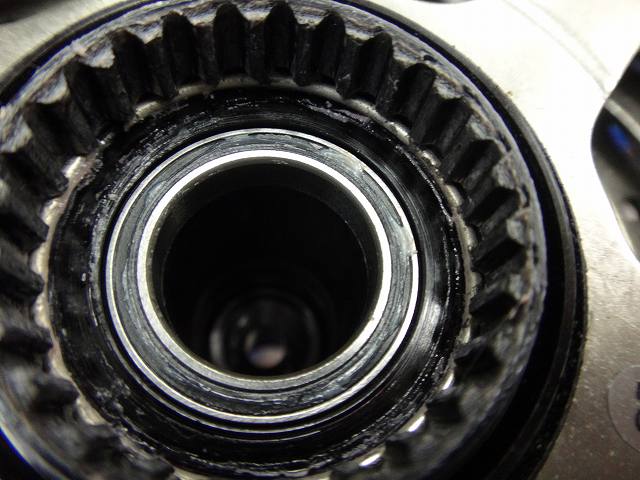
↑inside
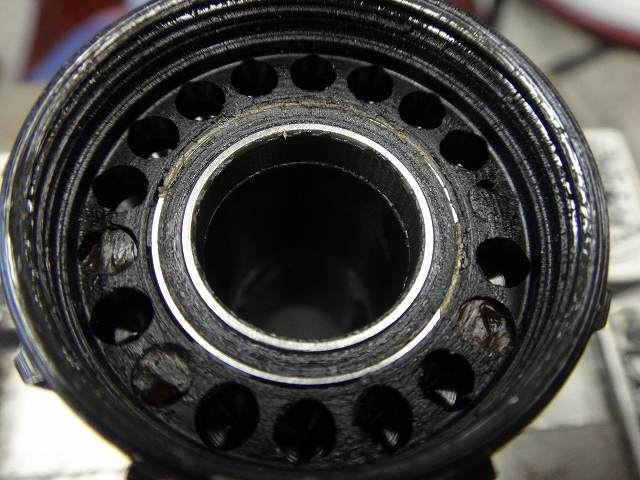
↑outside
uses "SL" specification, found only in Shimano versions,
with bearings of an extremely rare 6702 size.
The 6702 has inner/outer/thickness dimensions (mm) of 15/21/4,
and because the outer diameter must fit into the freebody's pathetic lightening holes,
the difference between inner and outer diameter is minimized,
and the thickness is reduced to just 4mm.
I call them pathetic lightening holes, but
the weight savings from these revolver-like perforations is less than 2 grams.
The main reason SL freebodies are lighter than standard models
is that the bearings—solid iron—are smaller.
These 6702 bearings are easy to find in open versions (unsealed)
or with metal shields (which don't seal against water),
but ones with rubber seals on both sides are hard to source.
Maybe EZO (Hokkaido Seiki) carries them.
This time it didn't warrant replacement, so I left it alone.
A DT distributor will start carrying bearing spare parts next year.
After the part number, they list inner/outer/thickness in mm,
and among them is 15/28/7, which matches the standard 6902 bearing.
6902 is a size used in hub shell drive-side and freebodies,
but outer diameter 28mm doesn't allow enough freebody thickness,
so the 15267, a 6902 with the outer diameter reduced to 26mm only,
is increasingly common nowadays.
This is a non-standard bearing with dimensions 15/26/7 simply concatenated,
and it's used on both sides of Evolite hub freebodies and more.
There's demand for this size for other repairs too;
it used to be available as a Tni spare part,
but for some reason it's not carried anymore
What I'm getting at is that starting next year,
it will be easily available from DT (heads-up for fellow mechanics).
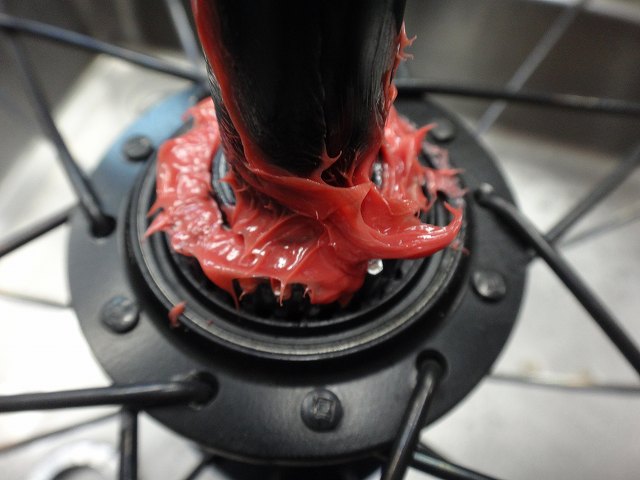
I greased up the star ratchet.


First, I tensioned the drive side as much as I could.
I may have tensioned it more than I would for a 46-spoke build.
The rim shifted significantly toward the drive side, but
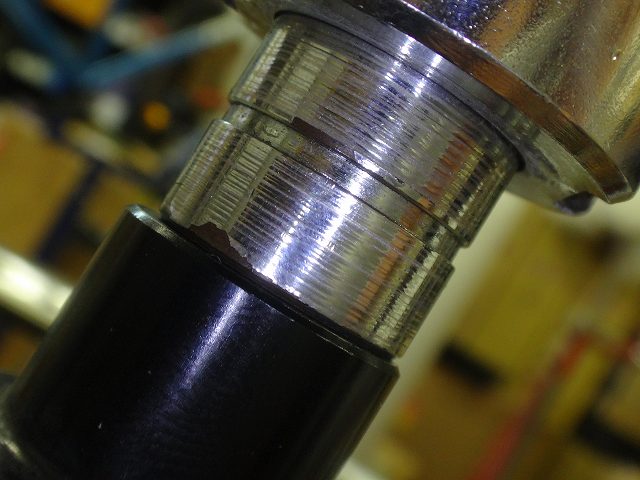
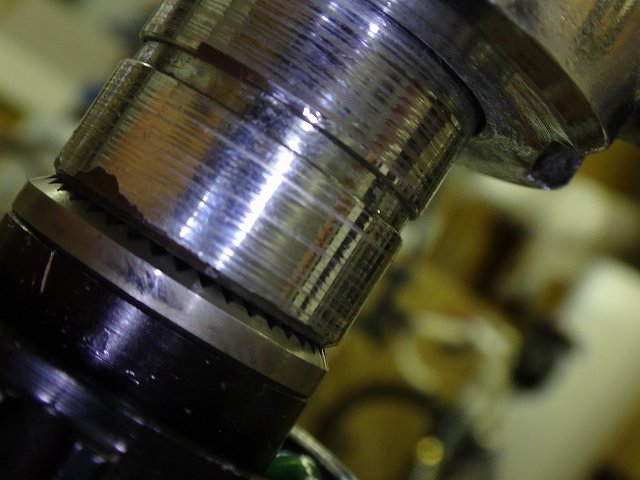
by tightening the non-drive side to about 3/4 the number of rotations I did on the drive side,
the wheel centered up.
The lateral rim movement per nipple turn is less on the drive side than the non-drive side,
but with radial lacing, there's no angle loss,
so the movement becomes even larger.
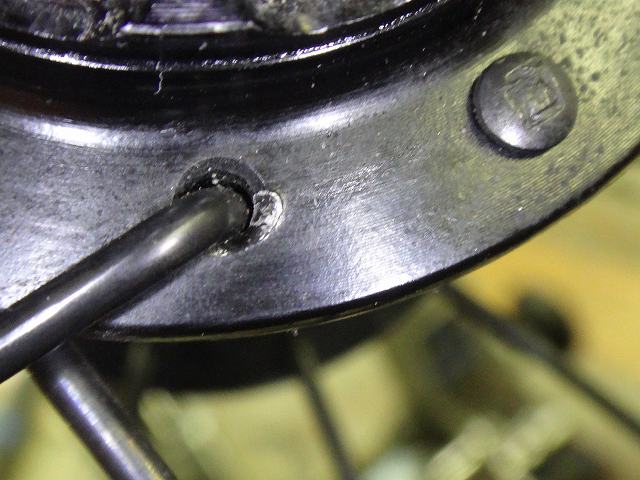

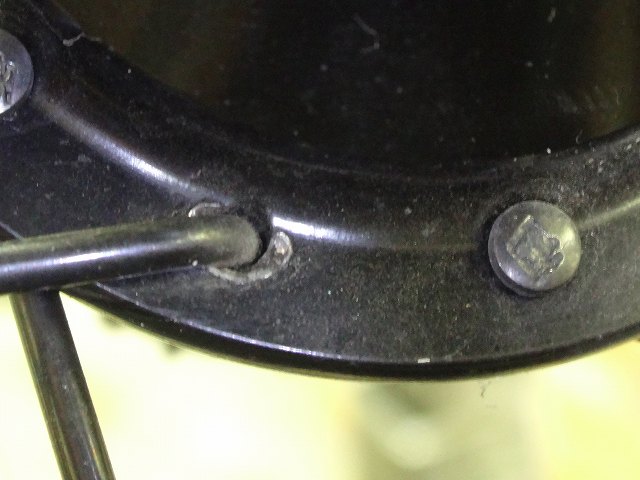
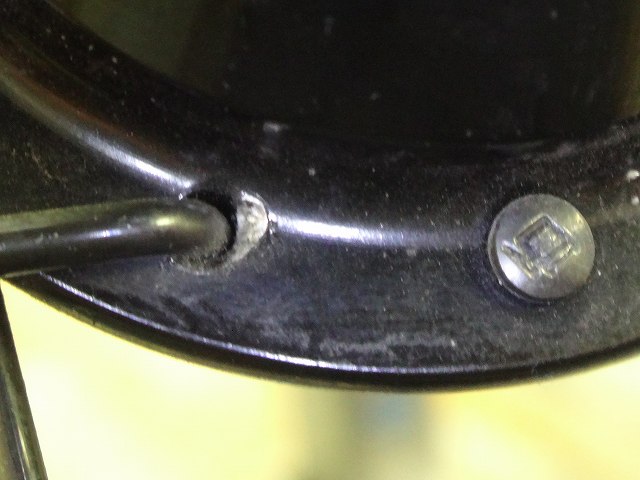
This rear wheel's non-drive side shows only the marks of outpoke radial lacing,
but the drive side has traces of being temporarily laced Italian with decent tension.
However, it's almost certainly a factory build,
so the most likely scenario is that they noticed they were lacing Italian halfway through
and took it apart and redid it.

Next, the front wheel.
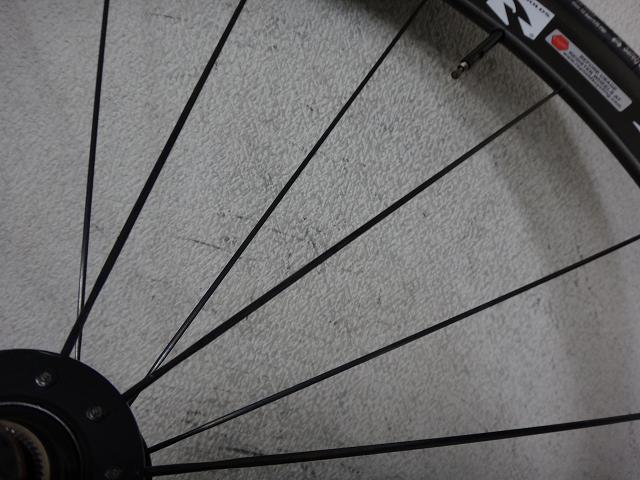
While the rear wheel is laced as a standard rim, the front wheel is laced as a reverse rim.
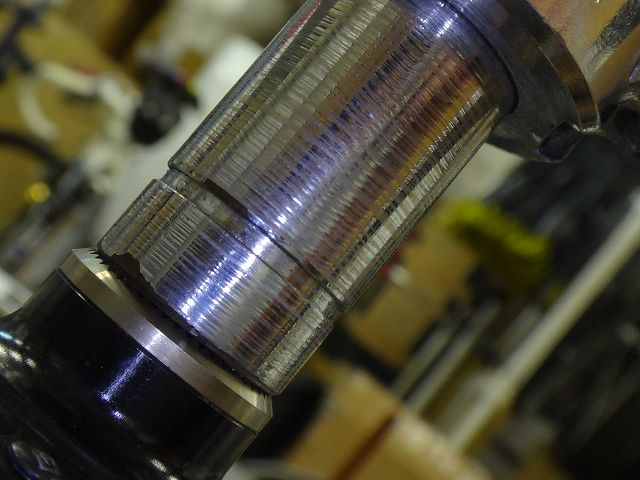

No centering issues, just slight runout,
and I re-tensioned it a bit, though not as much as the rear.
During inspection I stripped the tubular tire,
and after work I mounted the customer's own tire.
One last thing: The DT freebody was for Shimano 10-speed,
so if we swap it for 11-speed, the new wheel center
will have the rim shifted toward the non-drive side.