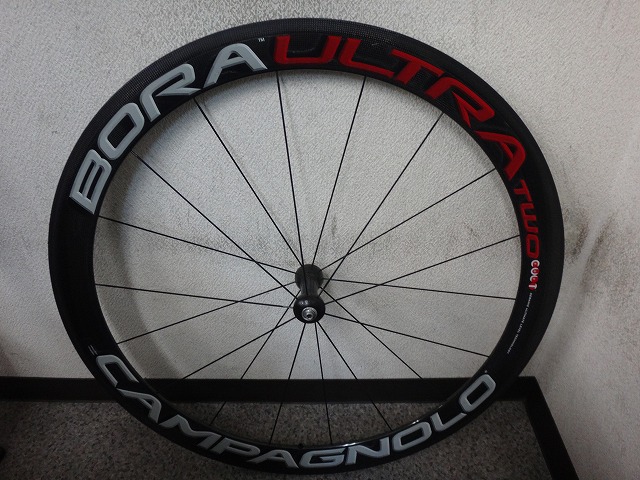
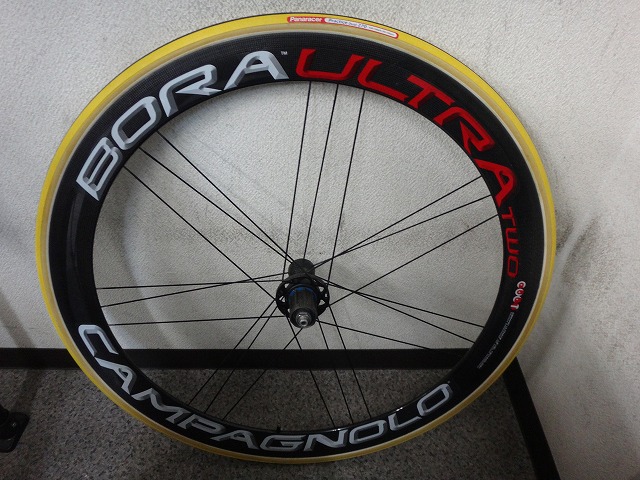
A customer left a Bora Ultra Two with me for service.
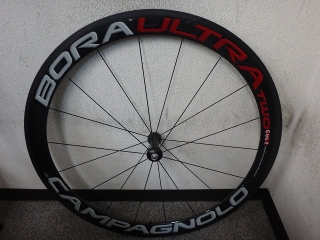
This is a Bora from the era with narrow tubular rim and internal nipple construction.
Inspection and tire installation,
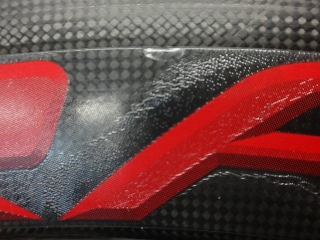
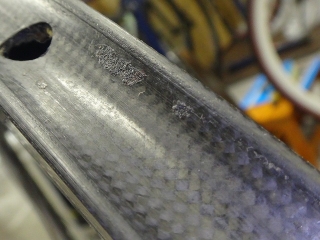
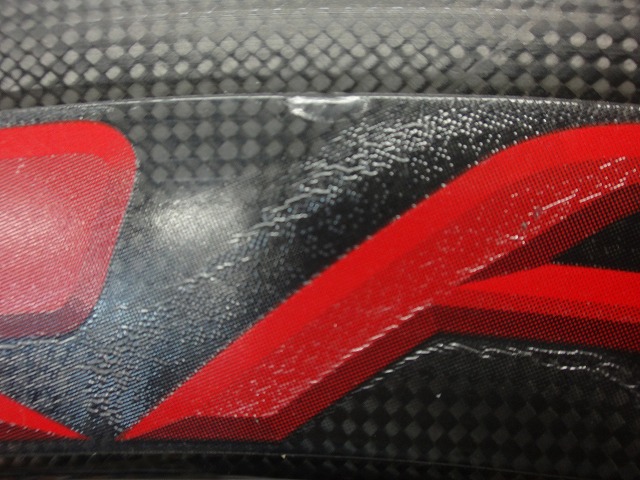
And the customer also wanted the sticker replaced, as it had visible wrinkles.
Current generation Bolas have their labels under clear coat,
but this vintage Bora has removable labels and can be replaced.
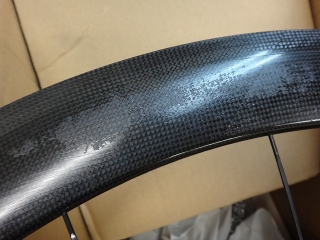
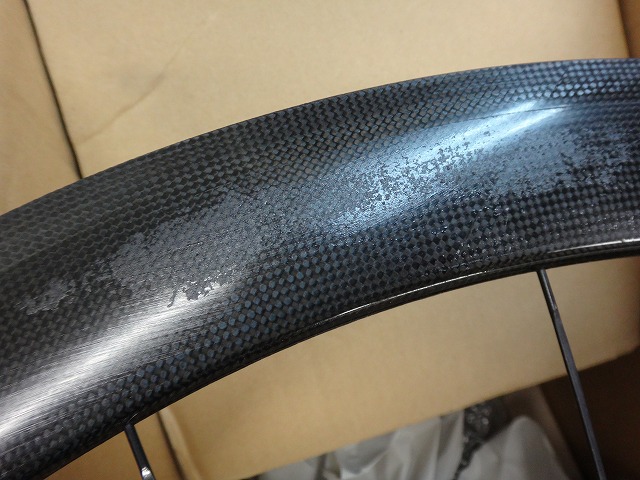
Before
Dealing with the adhesive residue after peeling off the sticker was quite tedious.
It's relatively easier when working with just the rim alone, but...
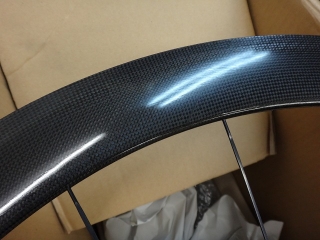
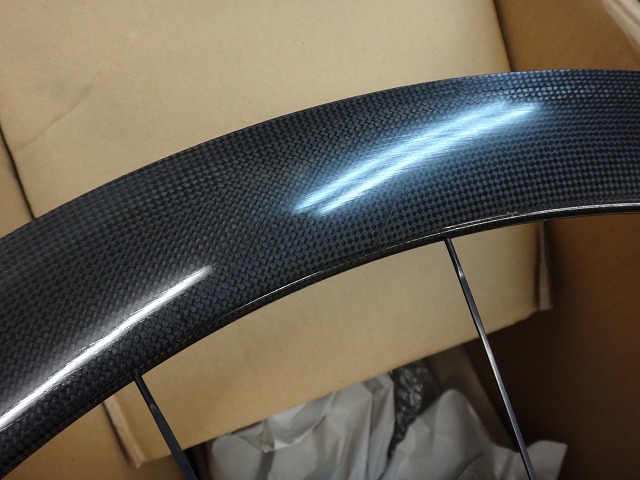
After
Same spot, just to be clear.
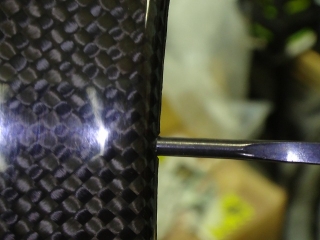
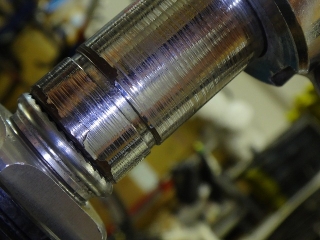
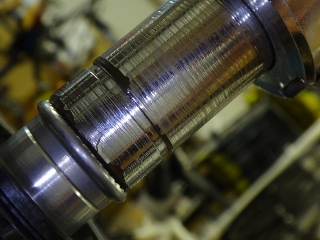
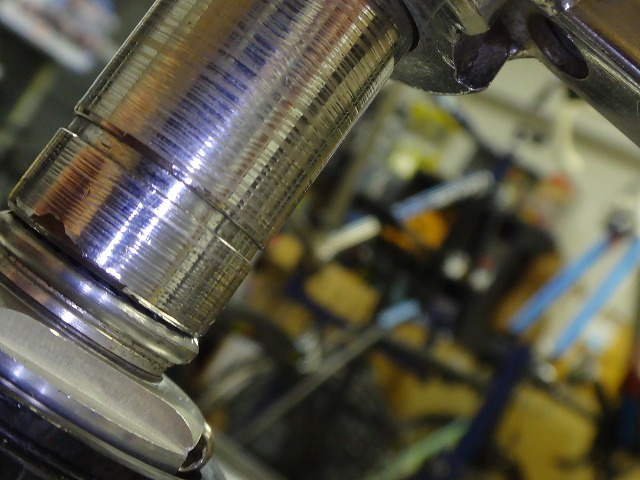
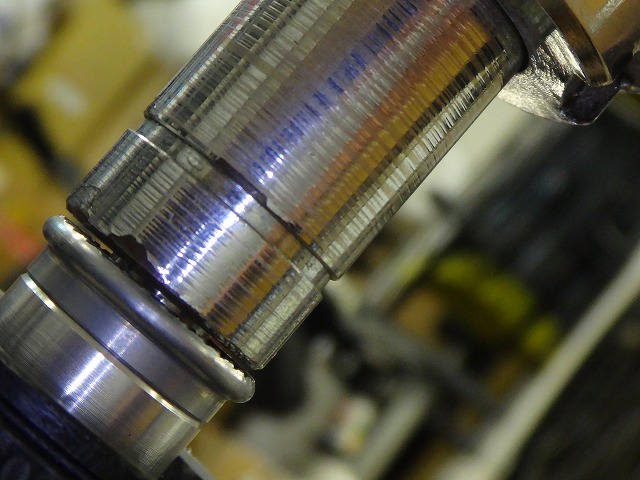
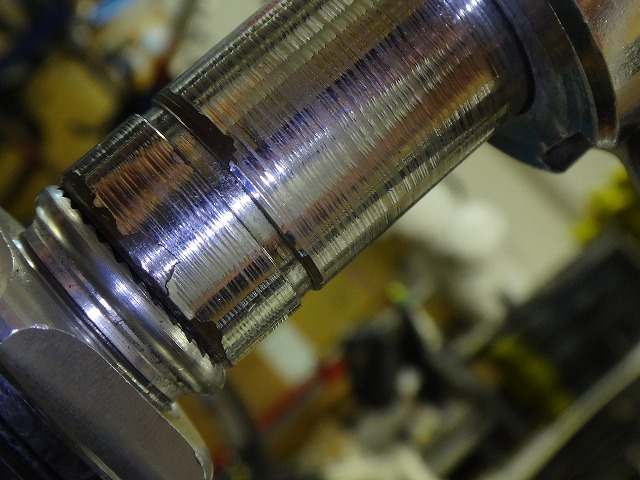
I found a slight bulge in one spot on the front wheel at the rim holes area.
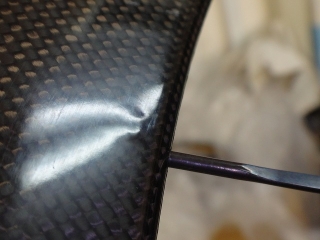
Taken from a different angle.
To be precise, there are faint bulges in other areas too,
but on the front wheel this spot is the most noticeable.
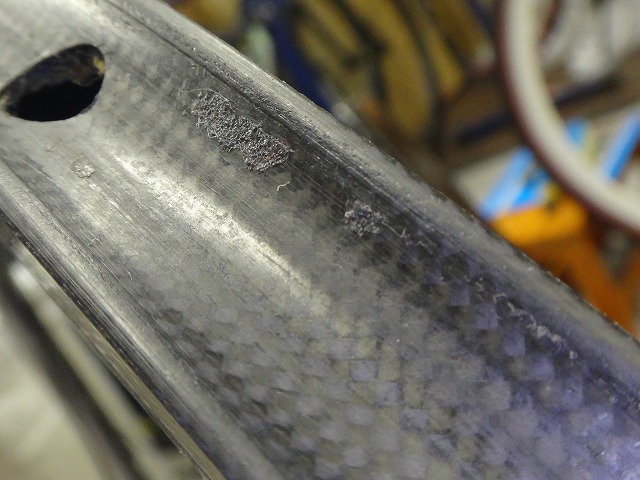
On the rear wheel, possibly because it's a G3,
every rim hole has a more pronounced bulge than on the front wheel.
The likely cause for this would be if the oval (rounded rectangular) washers were oriented left-to-right instead of front-to-back
when tightening the nipples,
but after inspecting all of them, including this spot,
there were no washers with incorrect orientation.
At this level, there's no issue.
I once saw a shoddy repair job by some terrible shop called Racing Speed where
they had tightened everything with the washer orientation wrong
(I confirmed the washer was completely sideways by illuminating the inside of the rim),
and the bulge there was nowhere near this minor.
Since I didn't take photos at the time, I didn't write an article about it,
but I did mention it in another post(→here).
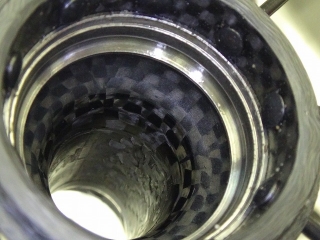
According to the customer, the hub rotation felt rough,
and I could feel that gritty sensation too,
but I believe the ball race just hasn't broken in yet.
The CULT One is a hub that virtually never fails
unless it's used for an extended period with play in it,
and while the customer is not the original owner of this wheel,
the lack of heavy wear suggests bearing replacement isn't necessary,
but I took a look inside anyway. No particular abnormalities.
If the One were to be replaced, as you can see the spoke heads would be in the way,
so the wheel would need to be rebuilt.
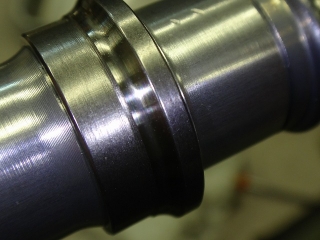
The cone is fine too.
There is a clean wear pattern though.
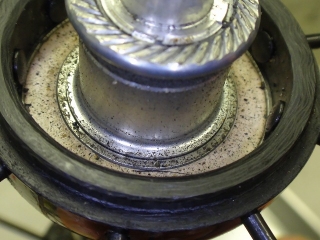
Before
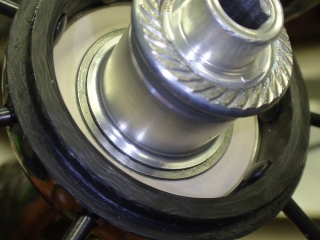
After
The hub rotation had some sandy grit in it,
so after cleaning and reassembling, the gritty sensation was significantly reduced.
With continued use, it should become smooth as silk.
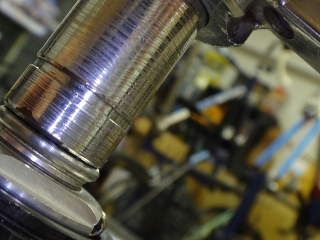
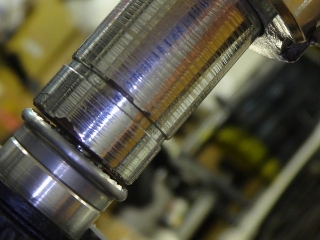
The rim was offset to the right side (opposite the side with the ball race adjustment nut).
There was also a slight wobble,
but within the tolerance of the center offset gap,
so overall the rim was definitely shifted right.
Fixed it.
The previous owner appeared to be a tubular tape user,
but the customer requested rim cement for tire installation
and asked me to apply it "easy enough to remove later, but secure enough not to slip during use."
To rim cement enthusiasts, this has a very nuanced meaning,
and when I do tire work professionally, I follow the approach of
"if a puncture happens at the roadside and we need to swap tires,
even if it's incredibly strong and won't come off,
even if I'm drenched in sweat under the blazing summer sun
or my hands are numb in the dead of winter without gloves,
that's too bad — I'm erring on the side of caution and applying it firmly!"
But for my own tires, I do it at my own risk with a slightly lighter application.
Especially the rear wheel tire where I don't brake as hard — I apply it lighter than the front.
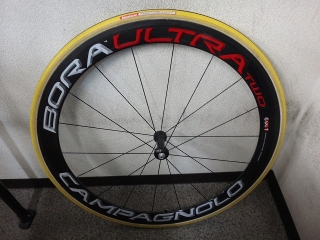
Done.
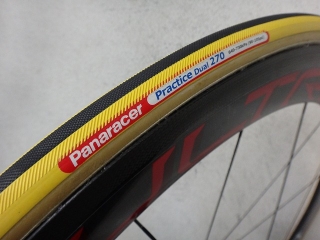
The tires are Panaracer Practice Dual.
With the "Made in Thailand" marking and the blue numerical stamp on the casing,
there's no doubt they're manufactured by Lion Tire.
This Practice tire comes in a regular model with an all-black tread and colorway side,
and with "Dual" added to the end you get a black/yellow dual tread,
and the puncture-resistant Dual TG (Tourguard) comes with
a black/red dual tread.
In other words, each specification has only one color option.
Oh, and just some trivial trivia — Soyo calls this kind of two-tone tread a "twin tread" on their tubular tires.
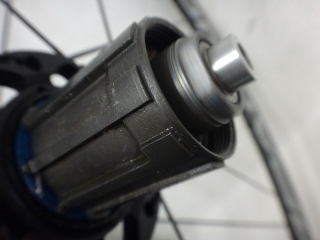
Next, the rear wheel.
The hub rotation was well broken in.
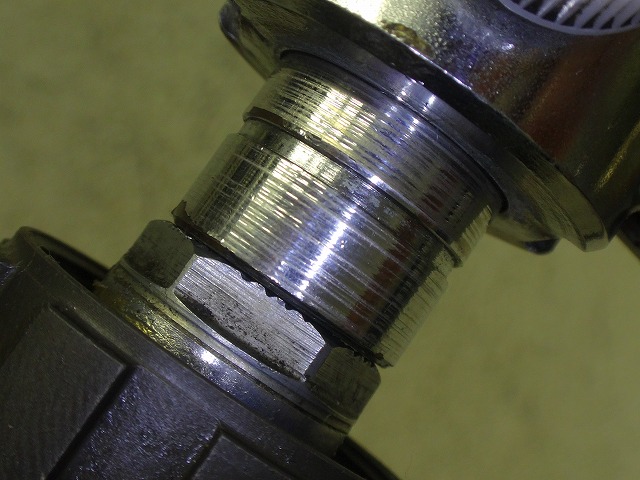
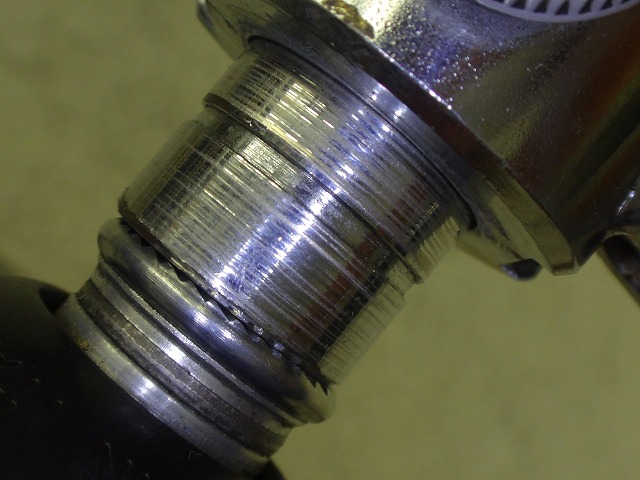
In the image above I'm spinning the hub shaft
like a hand drill. Whirrrrr
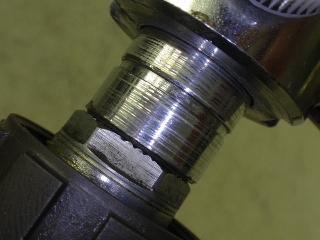

Preliminary center was spot on,
and even after true adjustment it was still spot on. Excellent.
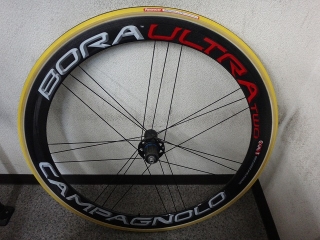
Tires installed too.
This is a Bora from the era with narrow tubular rim and internal nipple construction.
Inspection and tire installation,
And the customer also wanted the sticker replaced, as it had visible wrinkles.
Current generation Bolas have their labels under clear coat,
but this vintage Bora has removable labels and can be replaced.
Before
Dealing with the adhesive residue after peeling off the sticker was quite tedious.
It's relatively easier when working with just the rim alone, but...
After
Same spot, just to be clear.

I found a slight bulge in one spot on the front wheel at the rim holes area.
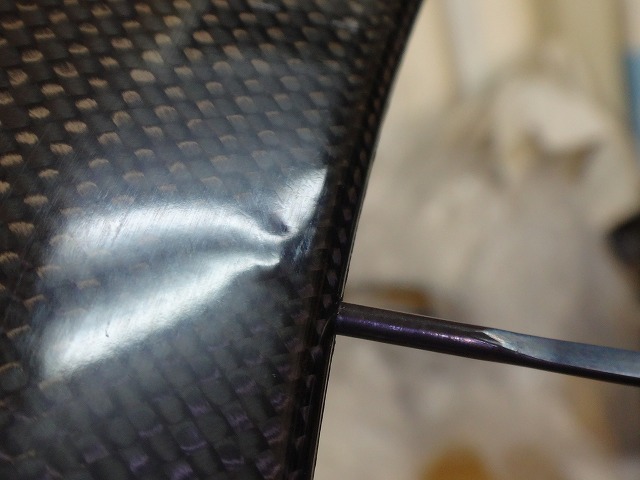
Taken from a different angle.
To be precise, there are faint bulges in other areas too,
but on the front wheel this spot is the most noticeable.
On the rear wheel, possibly because it's a G3,
every rim hole has a more pronounced bulge than on the front wheel.
The likely cause for this would be if the oval (rounded rectangular) washers were oriented left-to-right instead of front-to-back
when tightening the nipples,
but after inspecting all of them, including this spot,
there were no washers with incorrect orientation.
At this level, there's no issue.
I once saw a shoddy repair job by some terrible shop called Racing Speed where
they had tightened everything with the washer orientation wrong
(I confirmed the washer was completely sideways by illuminating the inside of the rim),
and the bulge there was nowhere near this minor.
Since I didn't take photos at the time, I didn't write an article about it,
but I did mention it in another post(→here).
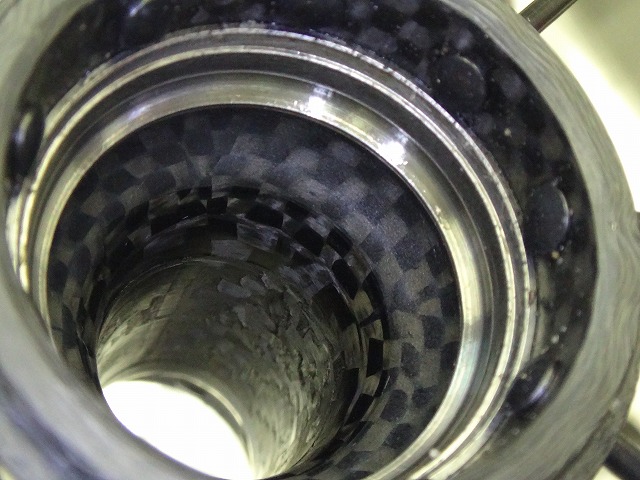
According to the customer, the hub rotation felt rough,
and I could feel that gritty sensation too,
but I believe the ball race just hasn't broken in yet.
The CULT One is a hub that virtually never fails
unless it's used for an extended period with play in it,
and while the customer is not the original owner of this wheel,
the lack of heavy wear suggests bearing replacement isn't necessary,
but I took a look inside anyway. No particular abnormalities.
If the One were to be replaced, as you can see the spoke heads would be in the way,
so the wheel would need to be rebuilt.
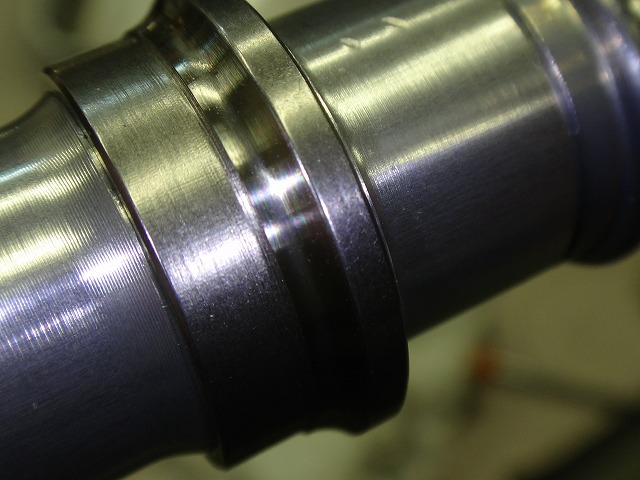
The cone is fine too.
There is a clean wear pattern though.

Before
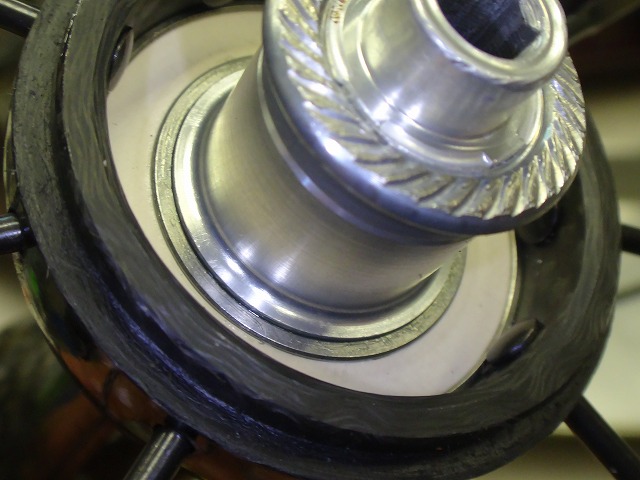
After
The hub rotation had some sandy grit in it,
so after cleaning and reassembling, the gritty sensation was significantly reduced.
With continued use, it should become smooth as silk.
The rim was offset to the right side (opposite the side with the ball race adjustment nut).
There was also a slight wobble,
but within the tolerance of the center offset gap,
so overall the rim was definitely shifted right.

Fixed it.
The previous owner appeared to be a tubular tape user,
but the customer requested rim cement for tire installation
and asked me to apply it "easy enough to remove later, but secure enough not to slip during use."
To rim cement enthusiasts, this has a very nuanced meaning,
and when I do tire work professionally, I follow the approach of
"if a puncture happens at the roadside and we need to swap tires,
even if it's incredibly strong and won't come off,
even if I'm drenched in sweat under the blazing summer sun
or my hands are numb in the dead of winter without gloves,
that's too bad — I'm erring on the side of caution and applying it firmly!"
But for my own tires, I do it at my own risk with a slightly lighter application.
Especially the rear wheel tire where I don't brake as hard — I apply it lighter than the front.
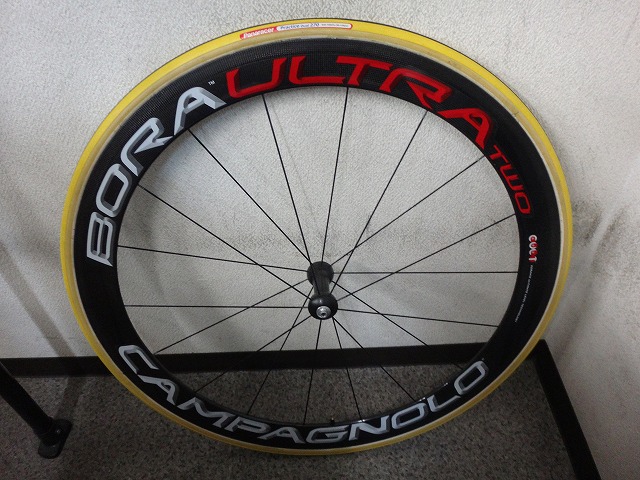
Done.

The tires are Panaracer Practice Dual.
there's no doubt they're manufactured by Lion Tire.
This Practice tire comes in a regular model with an all-black tread and colorway side,
and with "Dual" added to the end you get a black/yellow dual tread,
and the puncture-resistant Dual TG (Tourguard) comes with
a black/red dual tread.
In other words, each specification has only one color option.
Oh, and just some trivial trivia — Soyo calls this kind of two-tone tread a "twin tread" on their tubular tires.
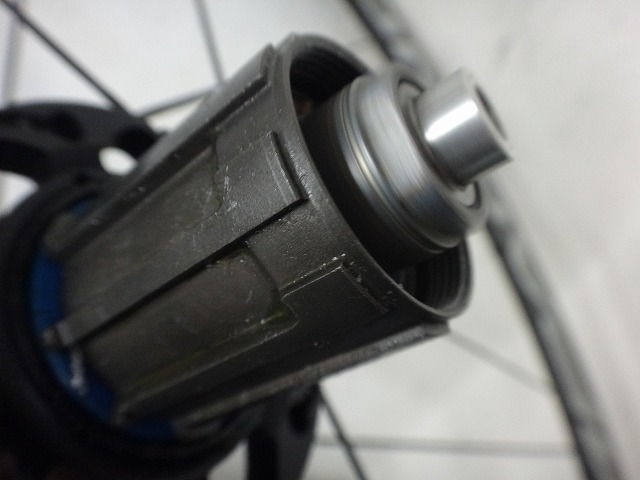
Next, the rear wheel.
The hub rotation was well broken in.
In the image above I'm spinning the hub shaft
like a hand drill. Whirrrrr
Preliminary center was spot on,
and even after true adjustment it was still spot on. Excellent.
Tires installed too.