A customer brought in a Hyperon (high-end carbon wheelset) for service.
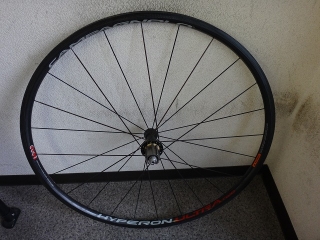
This isn't the original owner of the wheel,
and they're requesting inspection and other service work.

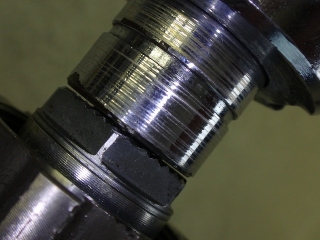
The rim is slightly off-center toward the freewheel side.
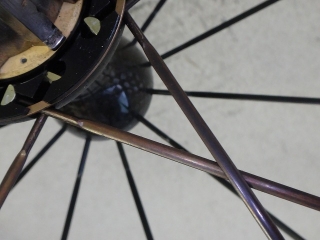
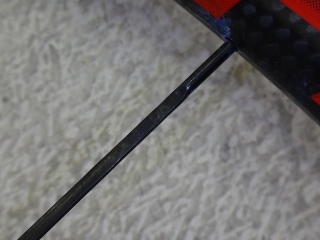
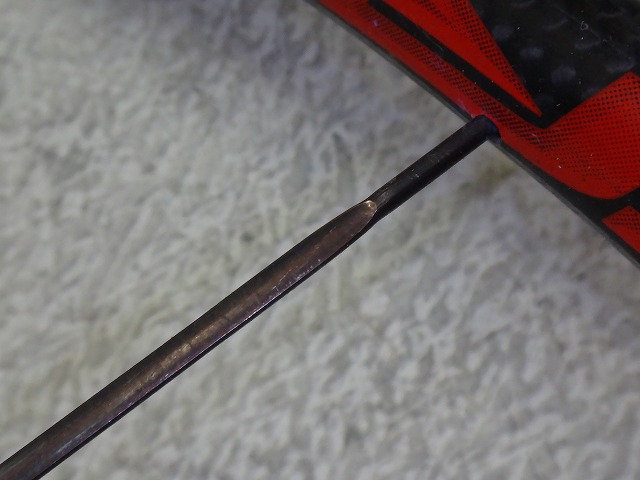
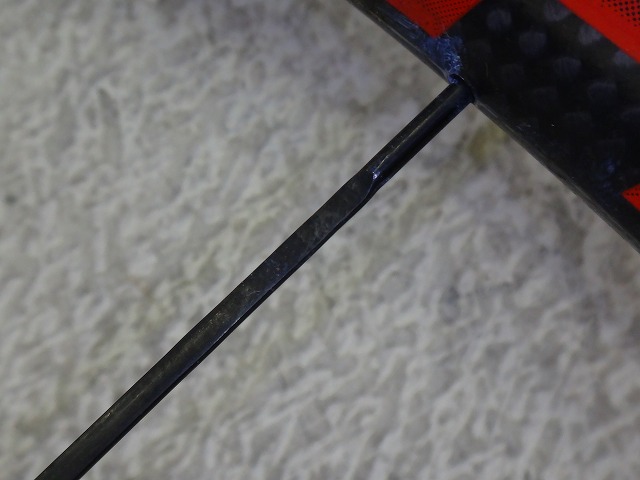
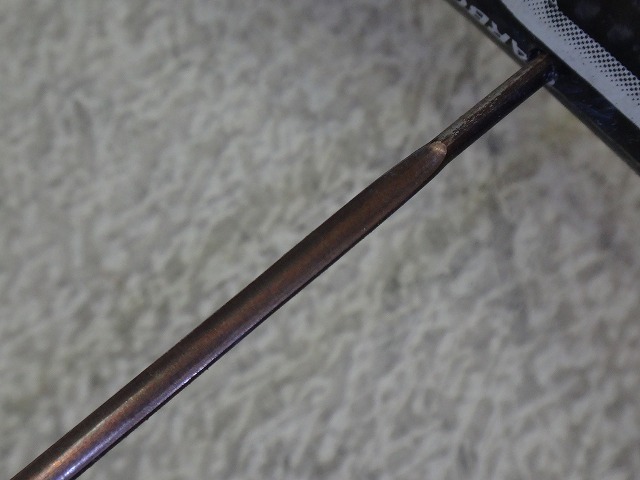
The spokes on the freewheel side have lost their color coating,
and if possible, they'd like them replaced.
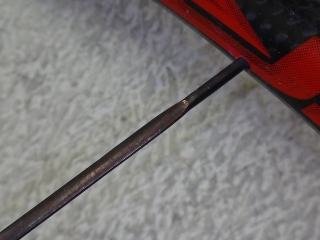
Freewheel side
Non-freewheel side
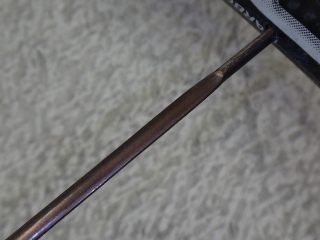
Freewheel side
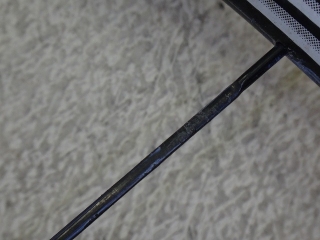
Non-freewheel side
Based on the spoke markings, both sides are from the same manufacturer,
but there's noticeable color fading differences between left and right.
Also, as you can see, there's quite a bit of spoke diameter variance between sides.
Thanks to this asymmetrical spoke arrangement, offset rim, and high-low flange hub,
the Hyperon and Neutron rear wheels
aren't bad wheels despite using radial spoke lacing on the non-freewheel side
with equal spoke counts on both sides.
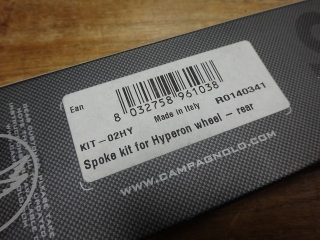
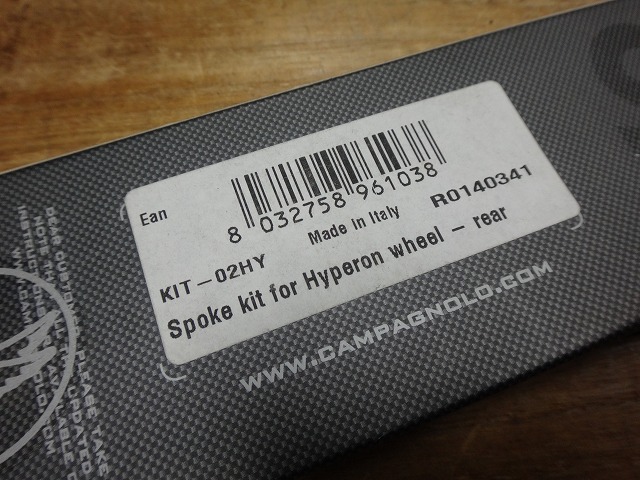
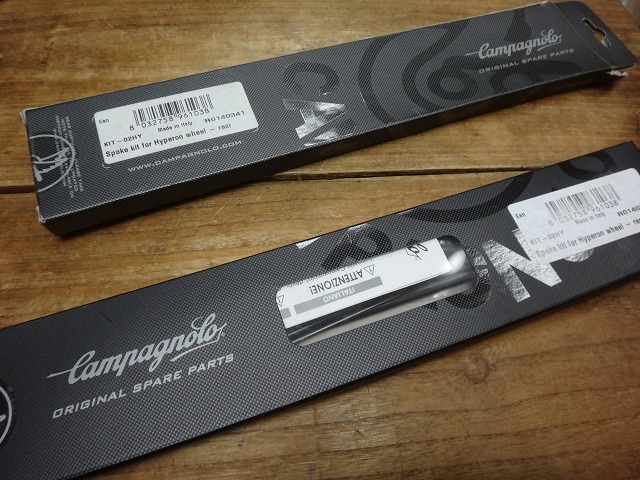
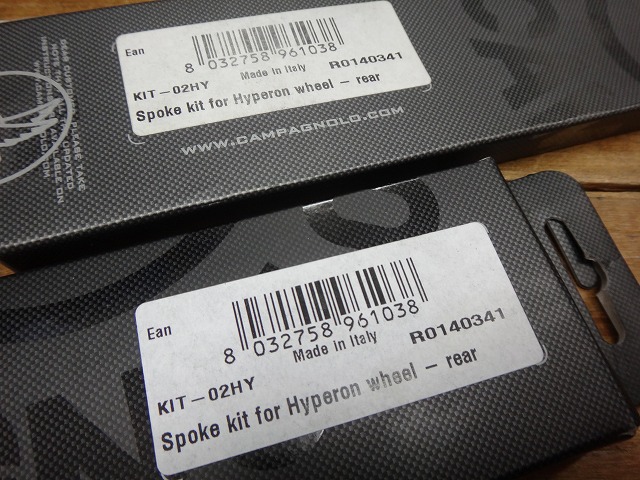
I have a spare spoke kit in stock for the Hyperon rear wheel.
For the 24H wheel with 12 spokes each on the freewheel and non-freewheel sides,
there are 13 spare spokes each included.
However, I've used some in repairs, and I was short on the 12 freewheel-side spokes, so
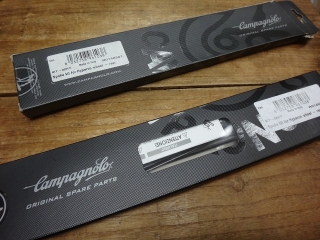
I urgently
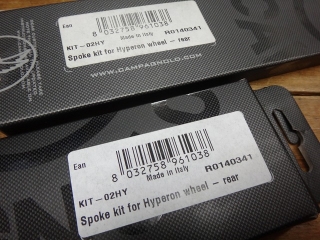
ordered them in.
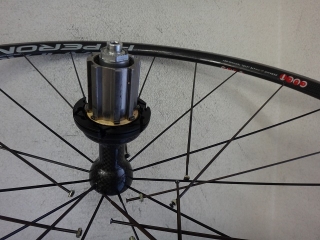
By releasing some spoke tension
and removing the C-ring that retains the spoke heads,
the freewheel side comes apart easily.
From here, I'll completely replace all the spokes,
barely touch the non-freewheel side except for fine adjustments,
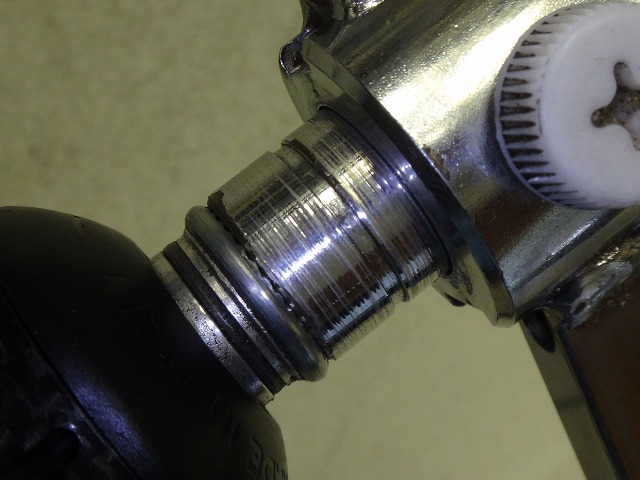
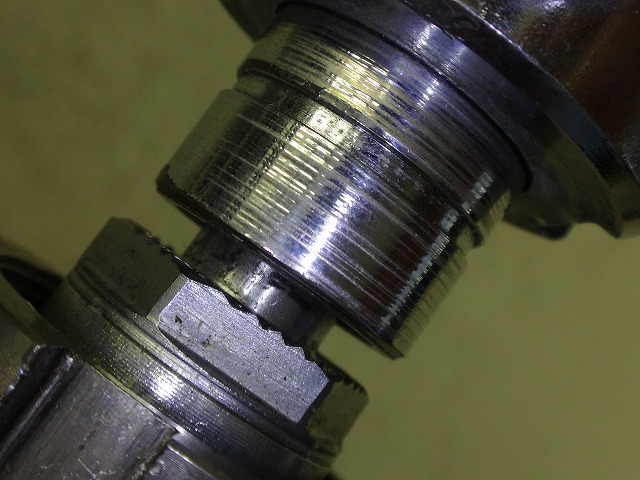
and tension the freewheel side as much as possible to

↑this state.
As you can see, it's shifted toward the freewheel side more than the original.
Since the non-freewheel side isn't loosened,
it's more tensioned toward the freewheel side than originally.
From here, I can further increase tension unilaterally on the non-freewheel side
until center alignment is achieved.
In other words, all nipples have been significantly tightened.
The original state had rather slack tension,
or had sagged from years of use.
If it had been a properly tensioned wheel, this wouldn't be possible.
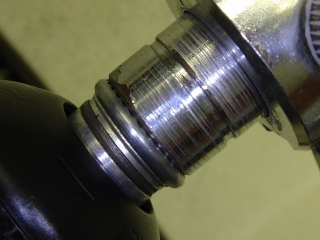
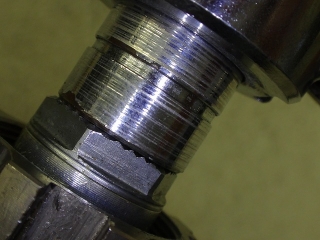
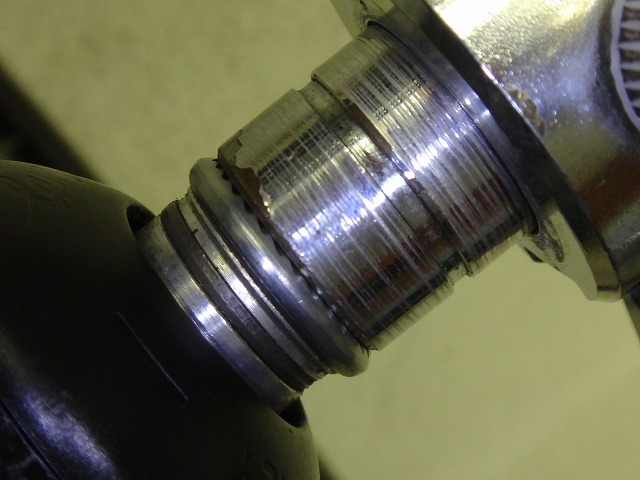
Center alignment achieved.

Done.
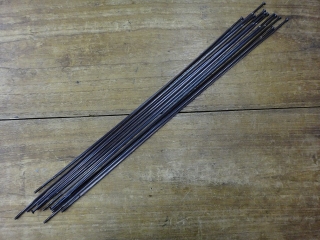
↑ Replaced spokes
Not a single bent spoke—all of them can be used as spare spokes,
so I'll give them to the customer.
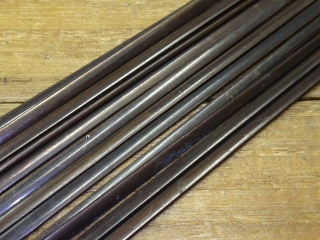
Though the color has faded...
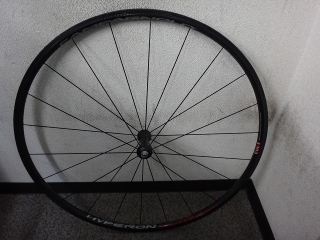
Next, the front wheel.
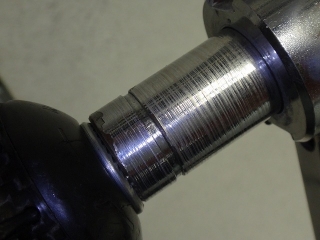
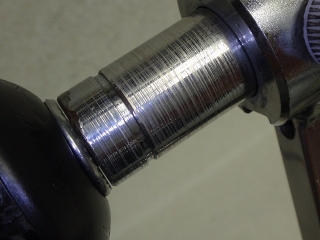
There's a slight center deviation—just over a sheet of paper.
Unlike the rear wheel, the tension is tight, so significant re-tensioning isn't necessary.
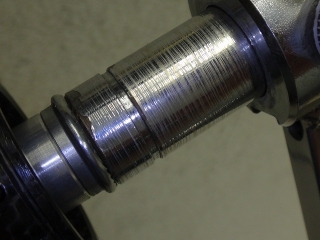
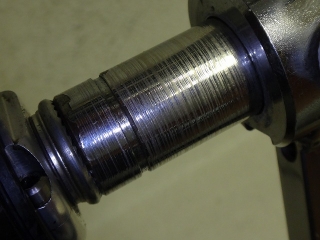
There was also lateral runout, so I removed that and achieved center alignment.
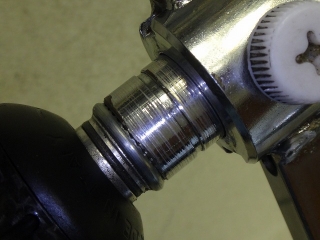
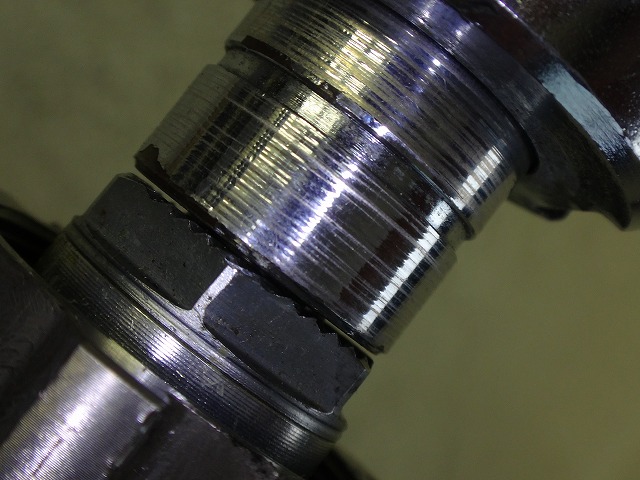
I removed the dust cap to determine the left-right orientation of the hub.
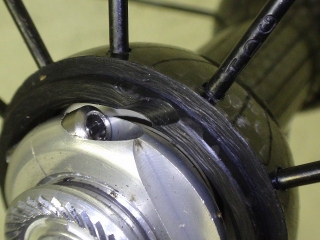
On the Hyperon and Bora carbon hub shells from this era,
only the left side has a notch on the bearing adjustment nut
for an Allen wrench to grip.
This means you can't reverse the hub shaft orientation.
If you cut matching notches on the right side too, that would be different, but...
Also, since this bolt doesn't require much torque,
you can apply adequate tension even by angling a ball-point wrench slightly.
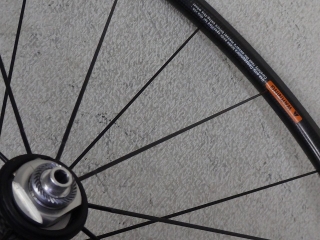
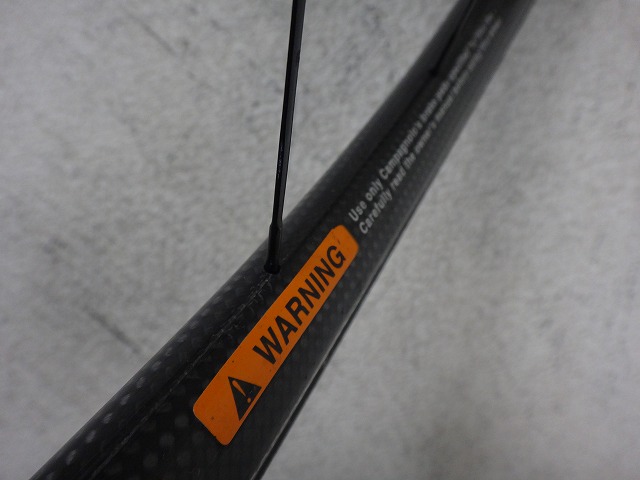
This particular Hyperon has the rim WARNING sticker applied
on the bearing adjustment nut side (left side).
By confirming this detail, you can identify the left-right orientation
even after installing the dust cap.
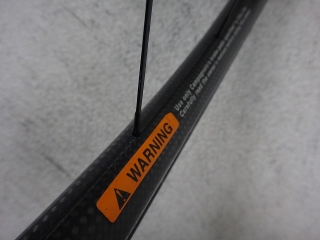
This is the rear rim, and since the Hyperon rear wheel uses an offset rim
with a cliff-like edge on the left side in the brake zone,
the WARNING sticker is always on the right side.
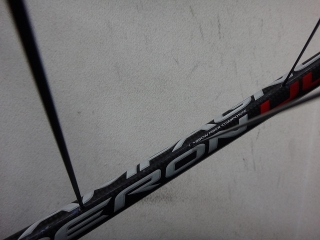
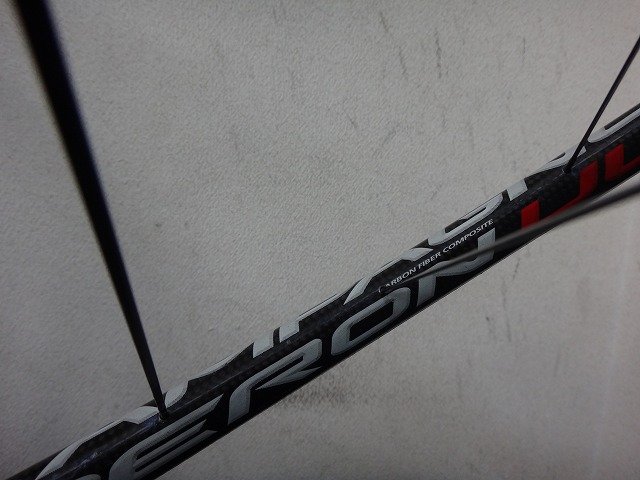
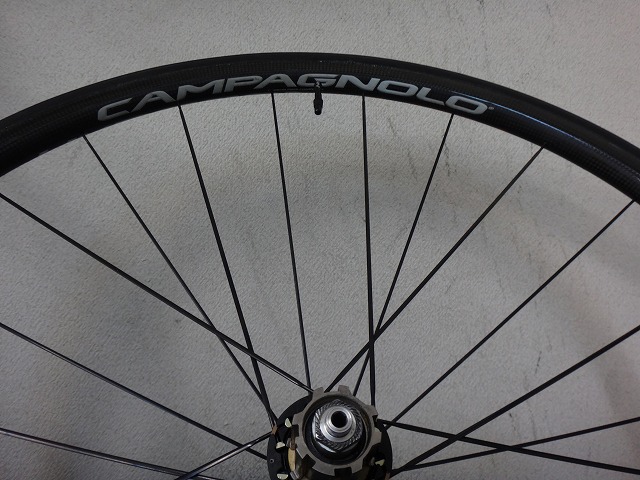
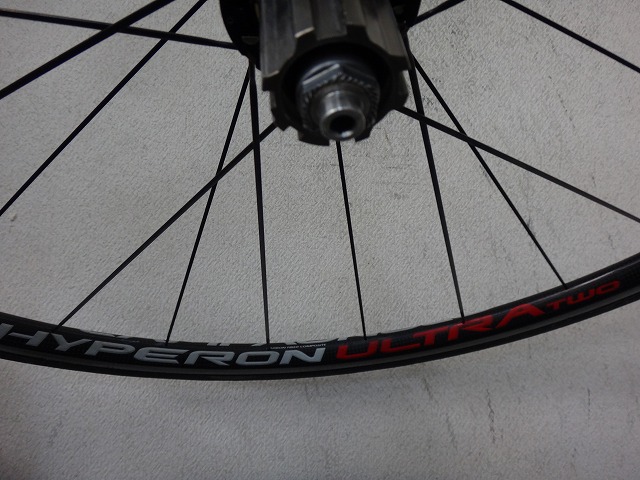
The Hyperon sticker spans the left and right of the rim
with Campagnolo on one side and Hyperon on the other, but
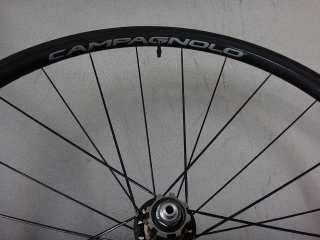
when viewing the wheel from the right side with the valve hole at the top
and looking up from the hub, Campagnolo reads right-side up, and
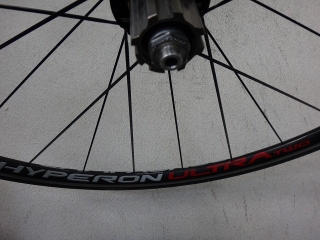
when looking down, Hyperon reads right-side up.
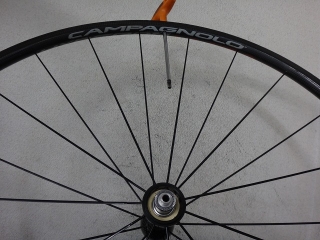
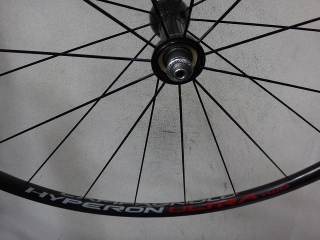
When viewing the front wheel the same way from the right / with valve hole at top,
I got the same result as the rear wheel.
This is another way to distinguish them.

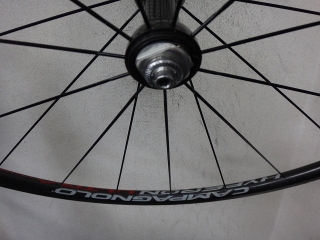
By the way, when viewed from the left side with the valve hole at the top, this is what you see.

This isn't the original owner of the wheel,
and they're requesting inspection and other service work.

The rim is slightly off-center toward the freewheel side.

The spokes on the freewheel side have lost their color coating,
and if possible, they'd like them replaced.
Freewheel side
Non-freewheel side
Freewheel side

Non-freewheel side
Based on the spoke markings, both sides are from the same manufacturer,
but there's noticeable color fading differences between left and right.
Also, as you can see, there's quite a bit of spoke diameter variance between sides.
Thanks to this asymmetrical spoke arrangement, offset rim, and high-low flange hub,
the Hyperon and Neutron rear wheels
aren't bad wheels despite using radial spoke lacing on the non-freewheel side
with equal spoke counts on both sides.
I have a spare spoke kit in stock for the Hyperon rear wheel.
For the 24H wheel with 12 spokes each on the freewheel and non-freewheel sides,
there are 13 spare spokes each included.
However, I've used some in repairs, and I was short on the 12 freewheel-side spokes, so
I urgently
ordered them in.

By releasing some spoke tension
and removing the C-ring that retains the spoke heads,
the freewheel side comes apart easily.
From here, I'll completely replace all the spokes,
barely touch the non-freewheel side except for fine adjustments,
and tension the freewheel side as much as possible to
↑this state.
As you can see, it's shifted toward the freewheel side more than the original.
Since the non-freewheel side isn't loosened,
it's more tensioned toward the freewheel side than originally.
From here, I can further increase tension unilaterally on the non-freewheel side
until center alignment is achieved.
In other words, all nipples have been significantly tightened.
The original state had rather slack tension,
or had sagged from years of use.
If it had been a properly tensioned wheel, this wouldn't be possible.
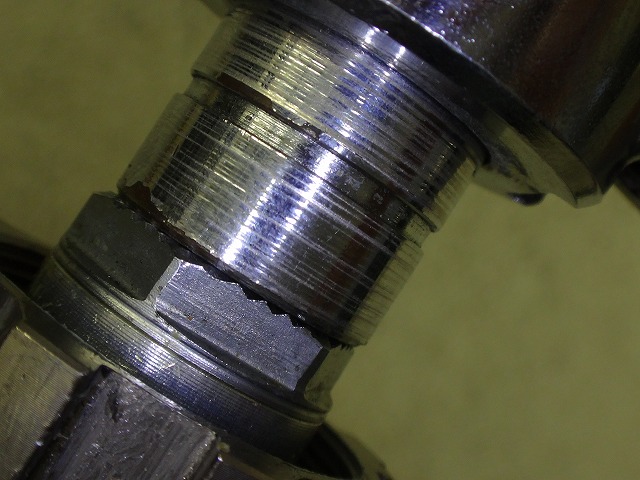
Center alignment achieved.
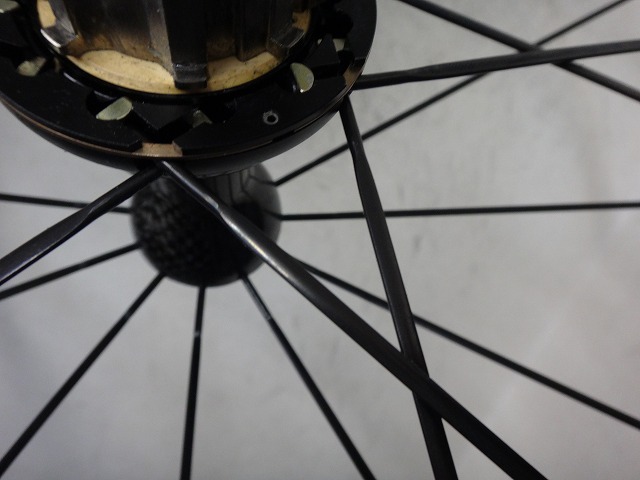
Done.
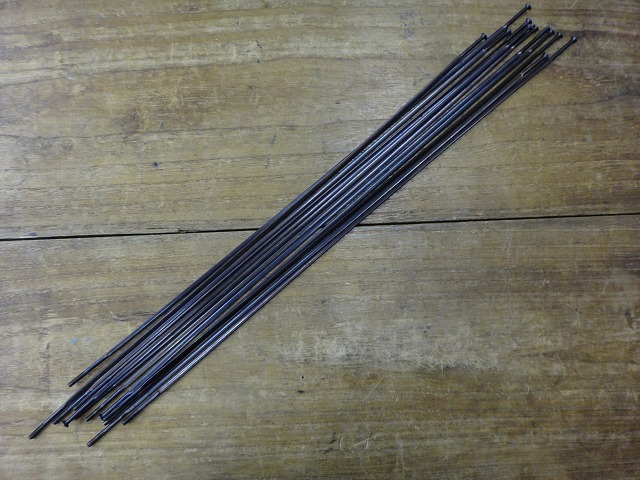
↑ Replaced spokes
Not a single bent spoke—all of them can be used as spare spokes,
so I'll give them to the customer.

Though the color has faded...
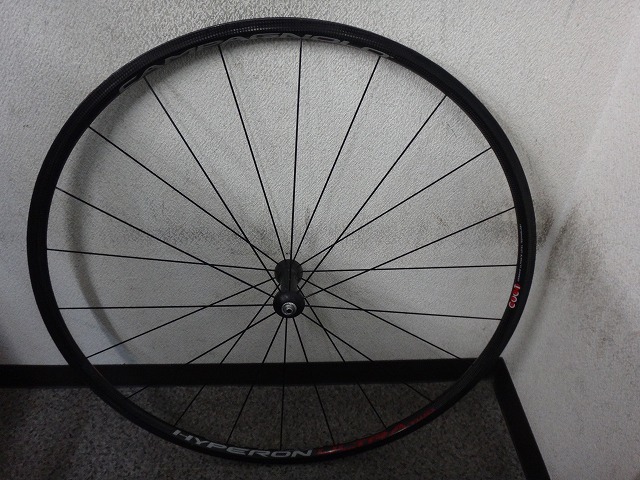
Next, the front wheel.

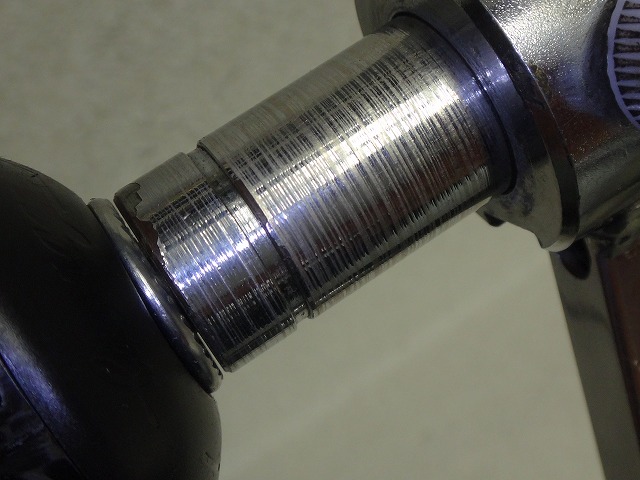
There's a slight center deviation—just over a sheet of paper.
Unlike the rear wheel, the tension is tight, so significant re-tensioning isn't necessary.

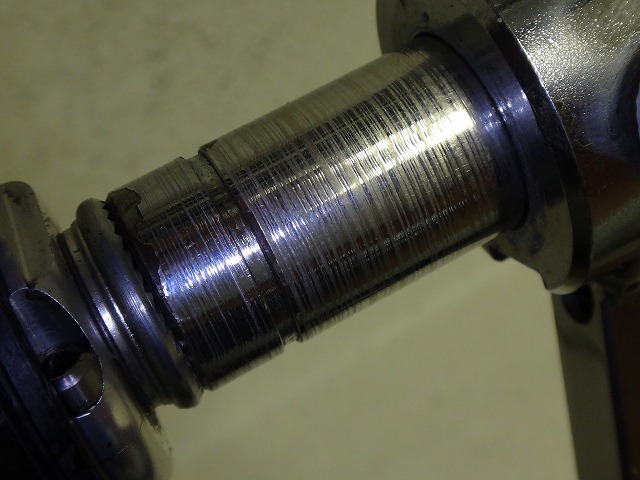
There was also lateral runout, so I removed that and achieved center alignment.
I removed the dust cap to determine the left-right orientation of the hub.
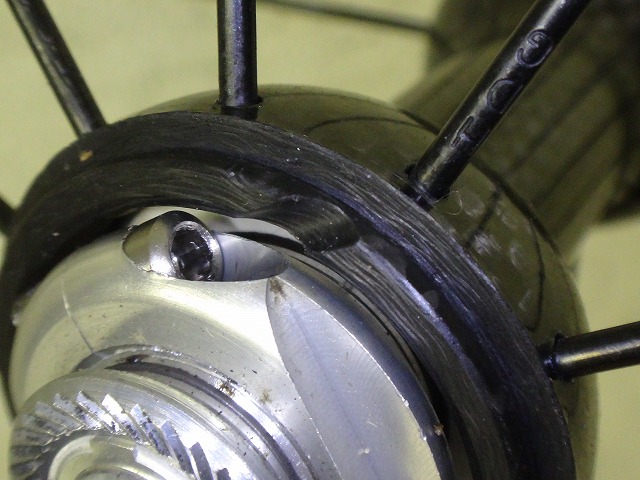
On the Hyperon and Bora carbon hub shells from this era,
only the left side has a notch on the bearing adjustment nut
for an Allen wrench to grip.
This means you can't reverse the hub shaft orientation.
If you cut matching notches on the right side too, that would be different, but...
Also, since this bolt doesn't require much torque,
you can apply adequate tension even by angling a ball-point wrench slightly.
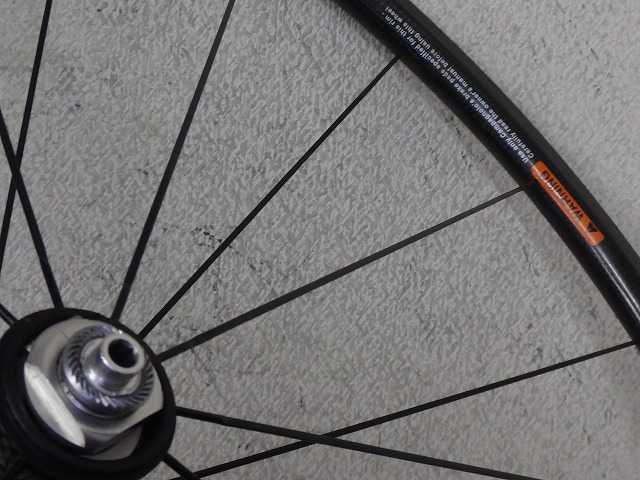
This particular Hyperon has the rim WARNING sticker applied
on the bearing adjustment nut side (left side).
By confirming this detail, you can identify the left-right orientation
even after installing the dust cap.
This is the rear rim, and since the Hyperon rear wheel uses an offset rim
with a cliff-like edge on the left side in the brake zone,
the WARNING sticker is always on the right side.
The Hyperon sticker spans the left and right of the rim
with Campagnolo on one side and Hyperon on the other, but
when viewing the wheel from the right side with the valve hole at the top
and looking up from the hub, Campagnolo reads right-side up, and
when looking down, Hyperon reads right-side up.
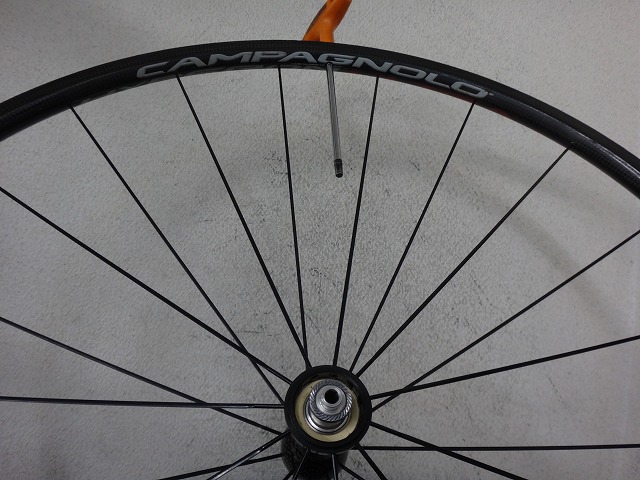

When viewing the front wheel the same way from the right / with valve hole at top,
I got the same result as the rear wheel.
This is another way to distinguish them.

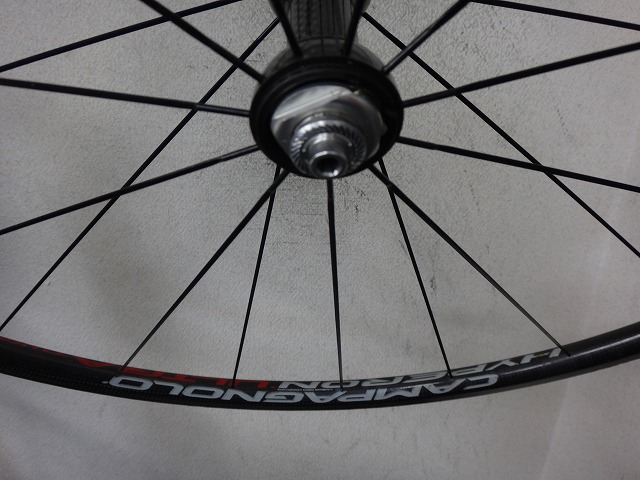
By the way, when viewed from the left side with the valve hole at the top, this is what you see.