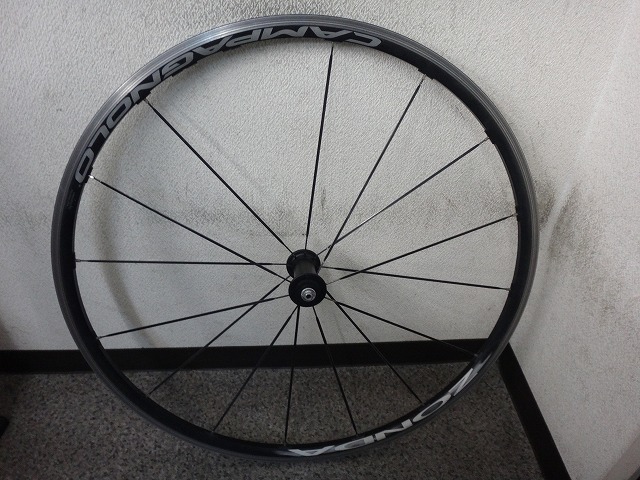
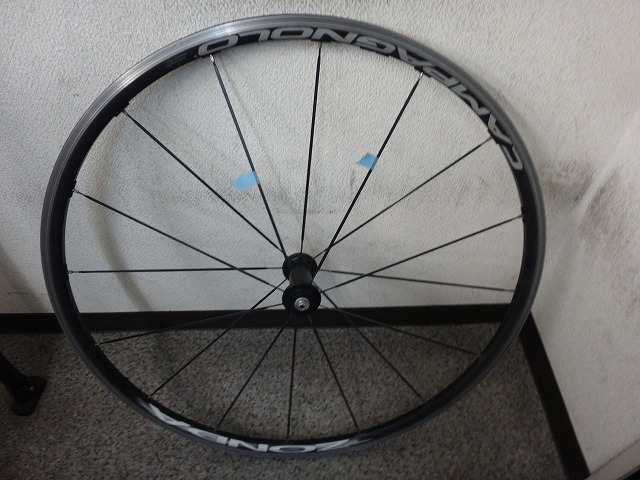
A customer brought in the front wheel of a Zonda from when it used
hook-style hub flanges with
quite flat aero spokes.
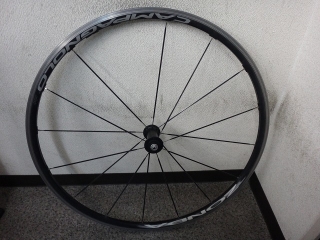
One spoke is broken.
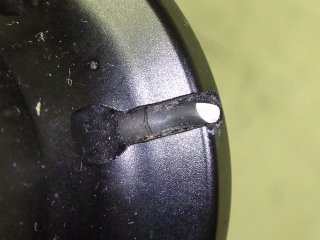
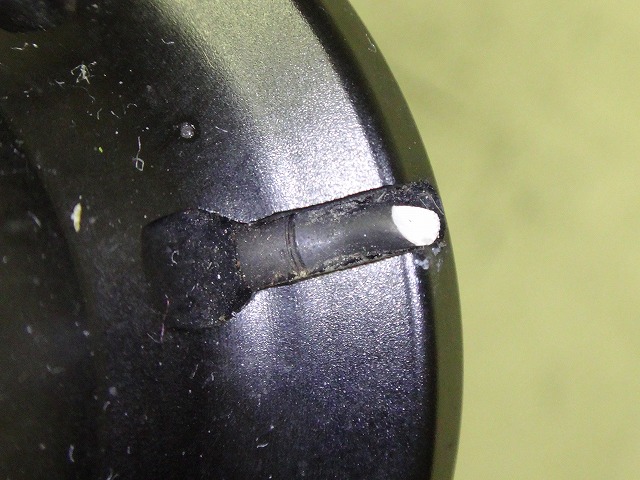
It's broken at the hub in the most difficult spot to retrieve.
Looking closely, it's not a fatigue neck failure
but rather broken at the edge of the hub flange.
When I asked the customer, they said something got caught in it.

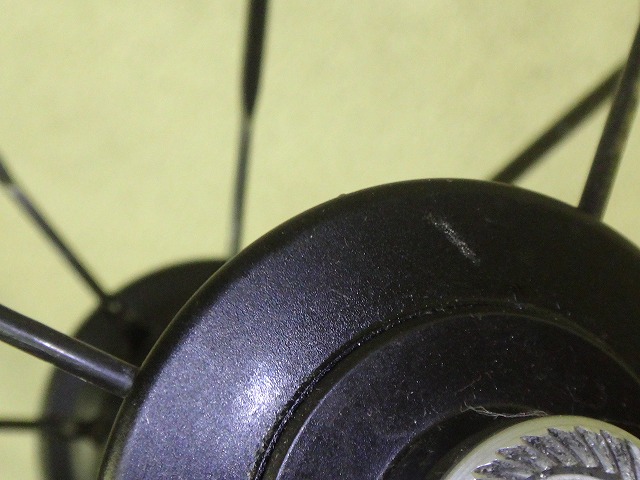
↑Looking at the flange from the outside, it looks like this
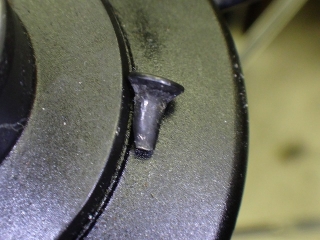
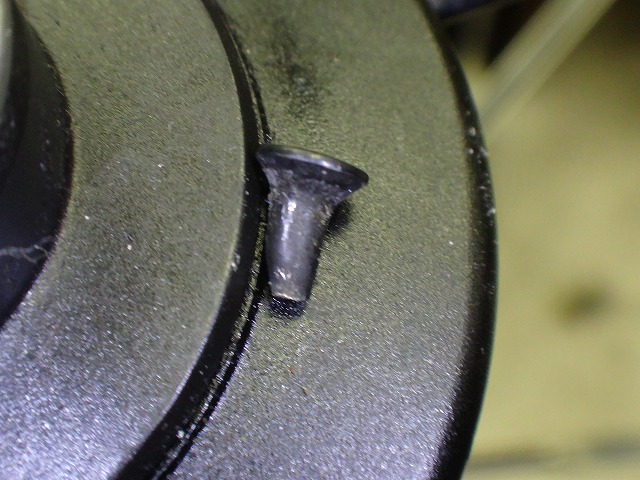
Managed to retrieve it somehow.
As I always mention, by adjusting just the nipple of the replacement spoke,
we can restore it to nearly "the state just before the spoke breaks."
The normal spokes at other locations serve as guides
for the correct position.
However, shortly after adjustment, I found a noticeable lateral wobble.
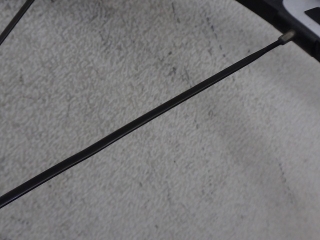
The spoke next to the broken one on the same side
is deformed and crumpled up.

↑Viewed from front to back, it looks like this
The spoke breaking from something getting caught was the first impact,
and this one that held up despite the deformation was the second impact.
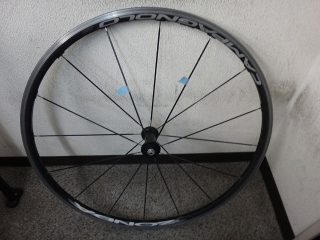
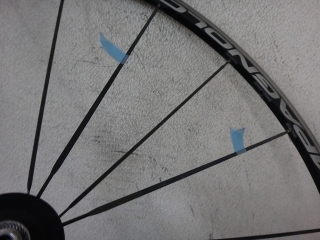
Fixed.
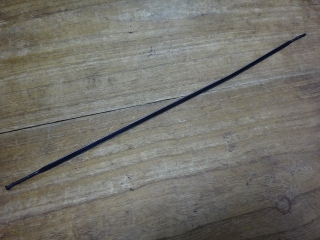
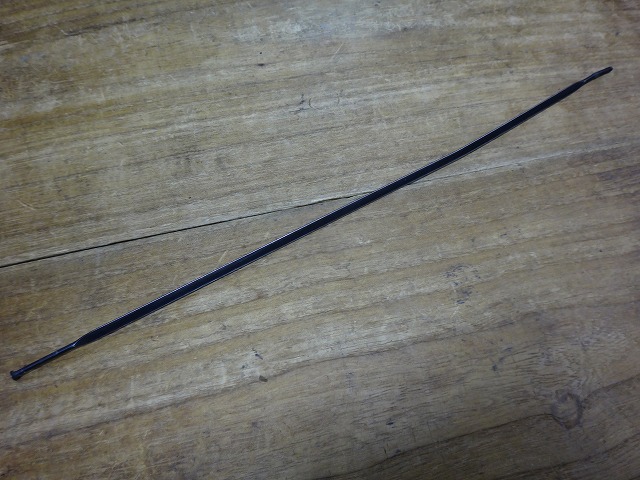
↑The replaced spoke
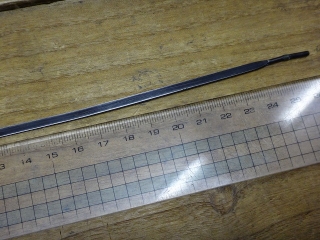
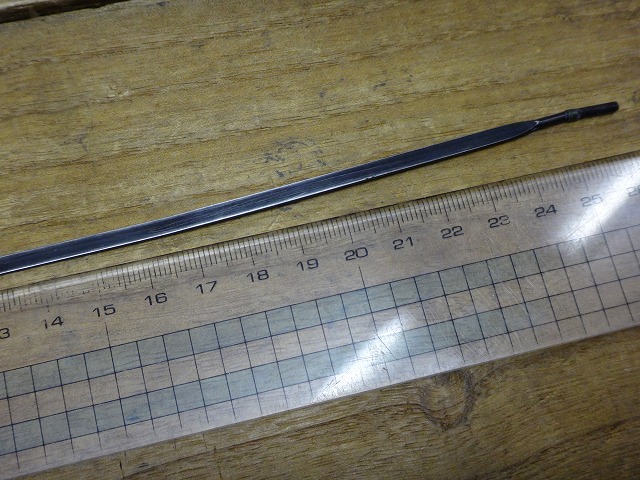
While side-to-side bending is one thing, bending this much
in the front-to-back direction would be extremely difficult
if attempted using only hand force with static loading.

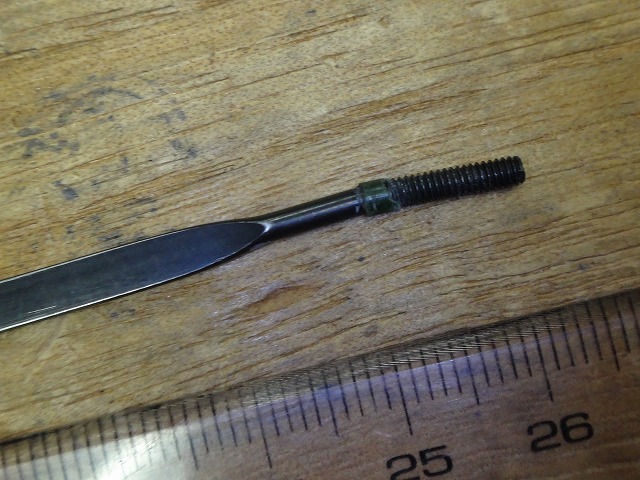
Looking at the subtle deformation in this threaded section,
a very large impact was applied instantaneously.
hook-style hub flanges with
quite flat aero spokes.
One spoke is broken.
It's broken at the hub in the most difficult spot to retrieve.
Looking closely, it's not a fatigue neck failure
but rather broken at the edge of the hub flange.
When I asked the customer, they said something got caught in it.
↑Looking at the flange from the outside, it looks like this
Managed to retrieve it somehow.
As I always mention, by adjusting just the nipple of the replacement spoke,
we can restore it to nearly "the state just before the spoke breaks."
The normal spokes at other locations serve as guides
for the correct position.
However, shortly after adjustment, I found a noticeable lateral wobble.

The spoke next to the broken one on the same side
is deformed and crumpled up.

↑Viewed from front to back, it looks like this
The spoke breaking from something getting caught was the first impact,
and this one that held up despite the deformation was the second impact.

Fixed.
↑The replaced spoke
While side-to-side bending is one thing, bending this much
in the front-to-back direction would be extremely difficult
if attempted using only hand force with static loading.
Looking at the subtle deformation in this threaded section,
a very large impact was applied instantaneously.