Another day of wheel work (etc.).
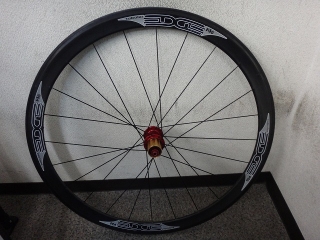
Continuing from yesterday's front wheel.
I'm rebuilding the rear wheel too.
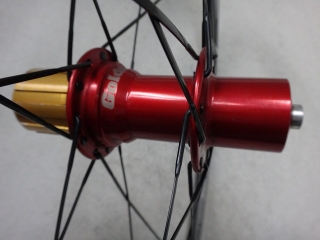
The hub is Goldtec, same as the front wheel,
all-black CX-RAY four-cross Italian spoke pattern
left drop, right rim orientation.
I won't be reusing the rear hub for this rebuild.
The bearings are worn, though not as bad as the front hub,
and the hub dimensions aren't ideal either—
there are various reasons not to reuse this hub, but

the biggest reason is that it has a 10-speed freebody.
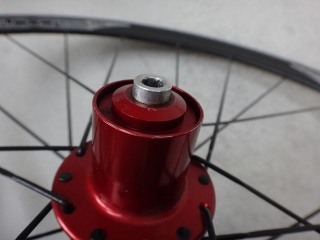
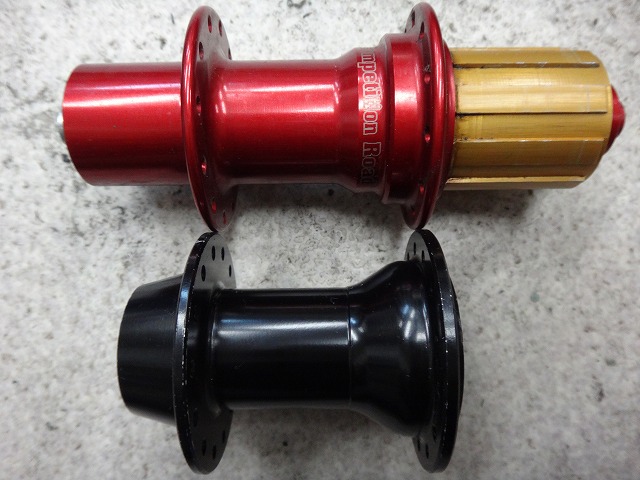
When I say the hub dimensions aren't ideal,
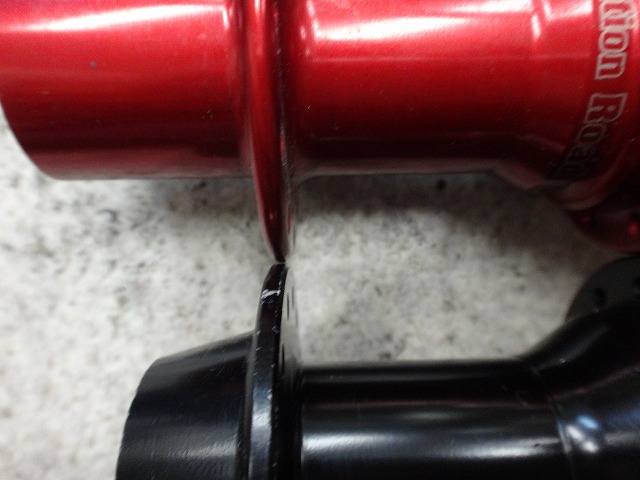
it's because the left flange extends outward at the same diameter as the hub shell,
making it look overly narrow-flanged, but
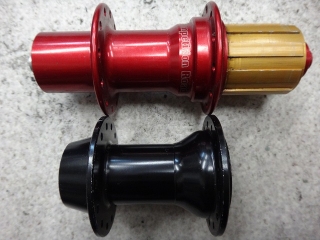
the flange width is the same as DT's (spoke company name) hooked-spoke hub.
The hub shell below in the image is a DT350 (the sticker's been removed).
Both are 53mm outer-to-outer width,
but how that 53mm is distributed left and right—
for example 32/21mm versus 34/19mm—
makes a noticeable difference in spoke tension differential when building.
Of course, there's practically no 11-speed freebody hub with a 21mm right flange width...
With DT hubs on Shimano 11-speed,
the right endpiece is longer (making the dropout tighter),
so compared to other manufacturers' 53mm-width flange rear hubs,
the dimensional conditions are often worse.
This Goldtec hub predates the 11-speed freebody
(probably from the same era as the 1.38 rim),
and while I haven't checked, it seems unlikely the dimensional conditions would be worse than DT,
so maybe it's not really an "ideal" hub after all.
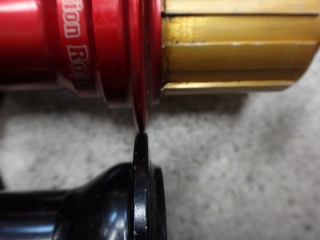
↑freebody side
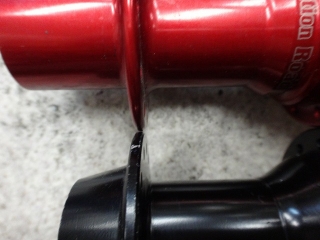
↑non-freebody side
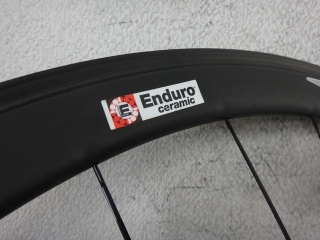
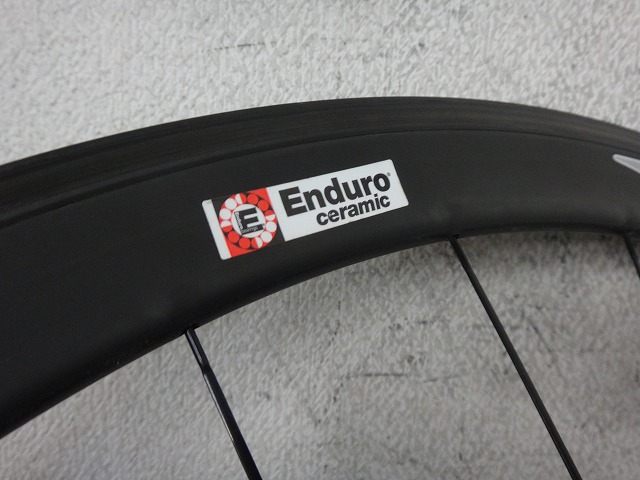
There's an Enduro Ceramic sticker
proudly affixed to only the non-freebody side,
but the serial number on the rim's outer circumference
is the only thing that determines left-right orientation—
whether it reads correctly when facing forward.
Following that logic, this side should be the freebody side,
so I'm flipping the rim orientation during this rebuild.
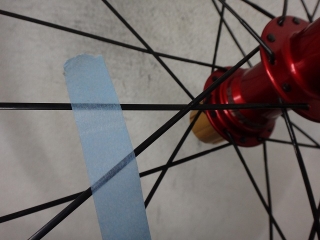
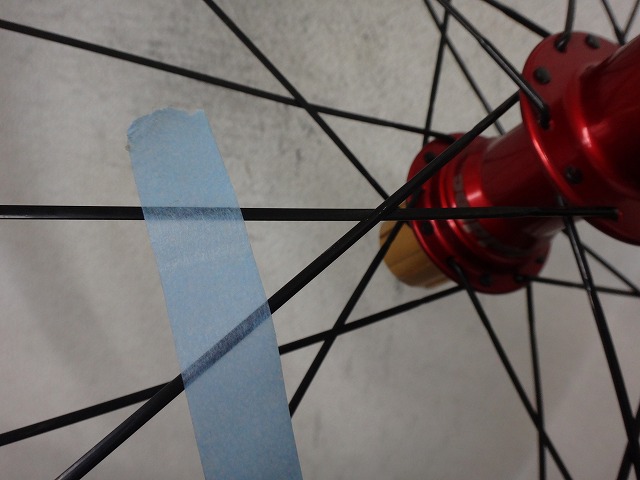
grip check before
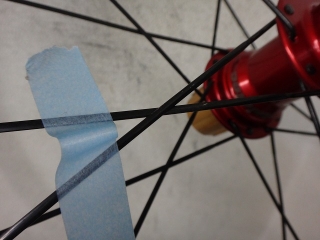
grip check after
The rim was shifted about a paper's thickness toward the non-freebody side,
but this doesn't greatly affect the spoke tension differential.
The freebody side was slack, so the non-freebody side was floppy.
The final crossing position is quite different between before and after.
But this rim has a reason it won't tension up properly—
I suspect it's probably never actually resulted in a properly finished wheel before.
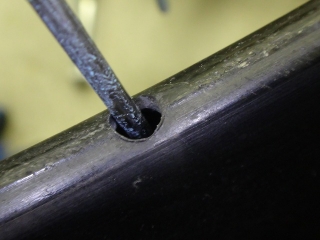
The front rim has internal nipple design,
so the rim holes are only large enough for spokes to pass through,
but the rear rim, for some reason,
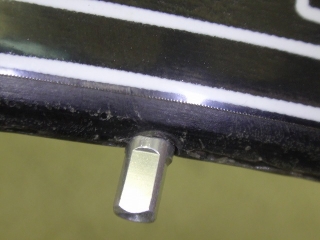

has rim holes sized for standard nipples.
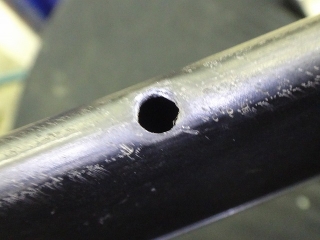
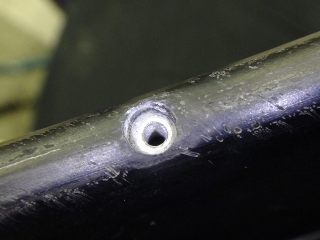
Building a standard-nipple rim with internal nipples is fine with aluminum rims.
I've built wheels that way out of necessity.
But building this rim tight with internal nipples is impossible.
The rim would likely crack.
In the original wheel, they'd built it carefully and deliberately loose to avoid that.
But I also have reasons for not wanting to build this rim with standard nipples.
For this rebuild, I'm using internal nipples,
but what treatment I used, why standard nipples shouldn't be used, etc.—
that's meal-ticket information (trade secrets), so I'll explain it to this wheel's owner,
but I won't write it here.
This rim isn't exactly impossible to build properly without me, but
it's an extremely difficult job, and casually copying my method will result in a cracked rim.
Though the chances of anyone trying to copy are basically nonexistent anyway.

Built.
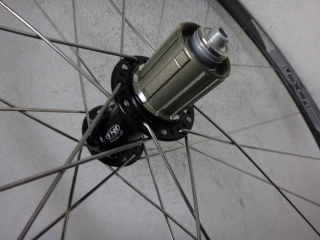
Evolite hub, 24H, semi-comp four-cross pattern.
I'll do the truing later.
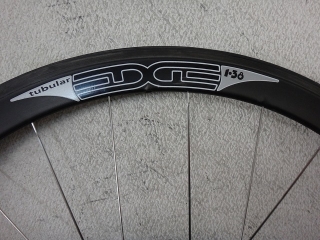
Internal nipples.
By the way, with this 1.38 rim,
the opportunity to measure actual weight is extremely rare.
EDGE/ENVE 25 rims
(since the heavier, more durable 2.25 model doesn't exist for 25,
you typically don't call them 1.25) vary quite a bit in weight depending on era:
195g → 215g → 250g in progression.
The 1.38 wasn't a long-lived model,
so there's probably only one weight version,
and if the actual weights of these two are close,
you can assume all other 1.38 rims in the world are similar weight too.
As for what the actual situation is...
I don't feel obligated to tell you, so I won't expose it here.
↑wow this guy's got bad vibes

Thank you for waiting! Please check out this image!
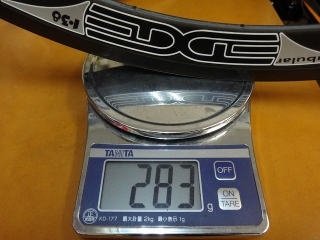
Front rim!
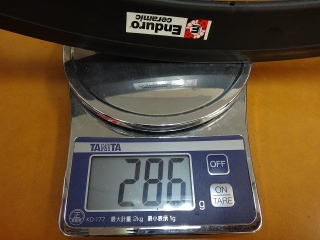
Rear rim!
↑Stop it, noooo!

Continuing from yesterday's front wheel.
I'm rebuilding the rear wheel too.
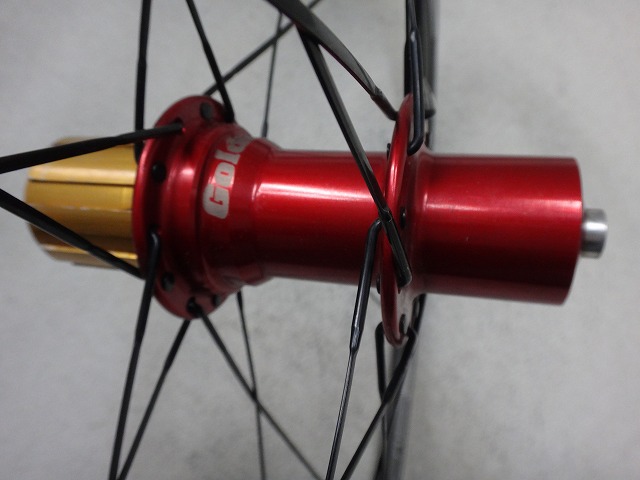
The hub is Goldtec, same as the front wheel,
all-black CX-RAY four-cross Italian spoke pattern
left drop, right rim orientation.
I won't be reusing the rear hub for this rebuild.
The bearings are worn, though not as bad as the front hub,
and the hub dimensions aren't ideal either—
there are various reasons not to reuse this hub, but
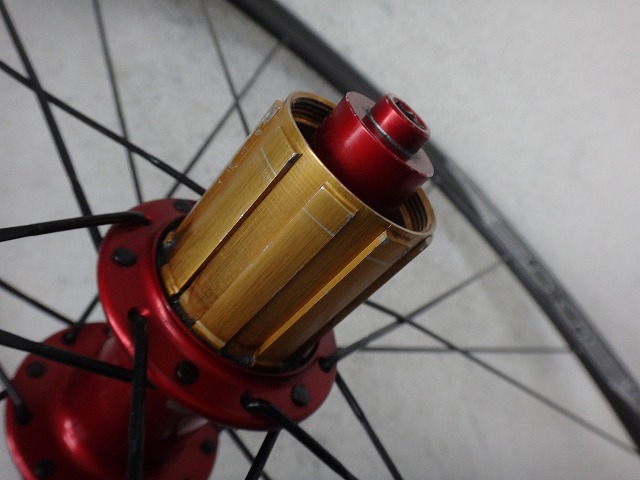
the biggest reason is that it has a 10-speed freebody.
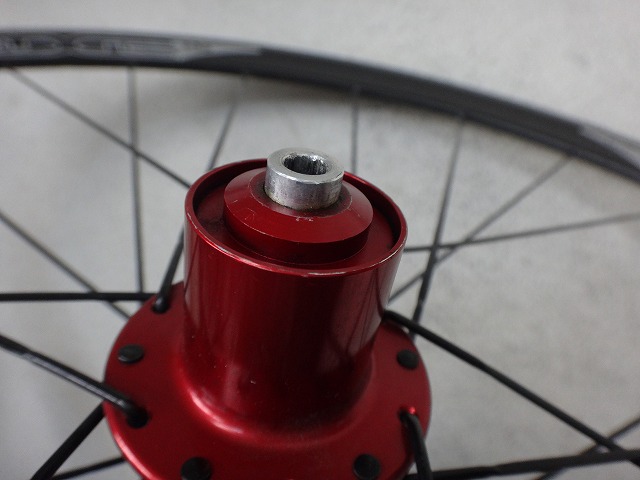
When I say the hub dimensions aren't ideal,
it's because the left flange extends outward at the same diameter as the hub shell,
making it look overly narrow-flanged, but
the flange width is the same as DT's (spoke company name) hooked-spoke hub.
The hub shell below in the image is a DT350 (the sticker's been removed).
Both are 53mm outer-to-outer width,
but how that 53mm is distributed left and right—
for example 32/21mm versus 34/19mm—
makes a noticeable difference in spoke tension differential when building.
Of course, there's practically no 11-speed freebody hub with a 21mm right flange width...
With DT hubs on Shimano 11-speed,
the right endpiece is longer (making the dropout tighter),
so compared to other manufacturers' 53mm-width flange rear hubs,
the dimensional conditions are often worse.
This Goldtec hub predates the 11-speed freebody
(probably from the same era as the 1.38 rim),
and while I haven't checked, it seems unlikely the dimensional conditions would be worse than DT,
so maybe it's not really an "ideal" hub after all.

↑freebody side
↑non-freebody side
There's an Enduro Ceramic sticker
proudly affixed to only the non-freebody side,
but the serial number on the rim's outer circumference
is the only thing that determines left-right orientation—
whether it reads correctly when facing forward.
Following that logic, this side should be the freebody side,
so I'm flipping the rim orientation during this rebuild.
grip check before
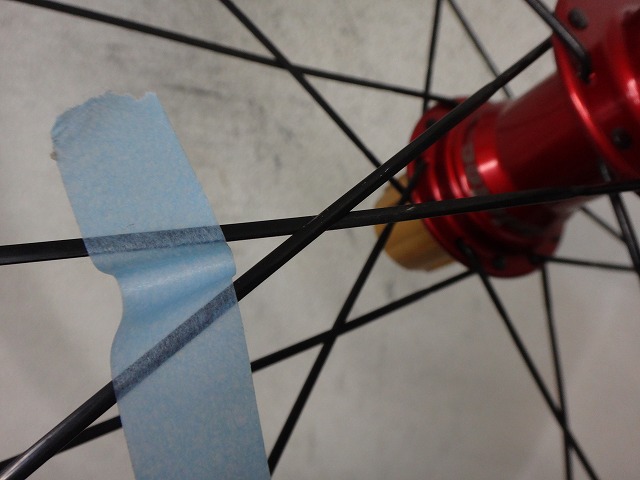
grip check after
The rim was shifted about a paper's thickness toward the non-freebody side,
but this doesn't greatly affect the spoke tension differential.
The freebody side was slack, so the non-freebody side was floppy.
The final crossing position is quite different between before and after.
But this rim has a reason it won't tension up properly—
I suspect it's probably never actually resulted in a properly finished wheel before.
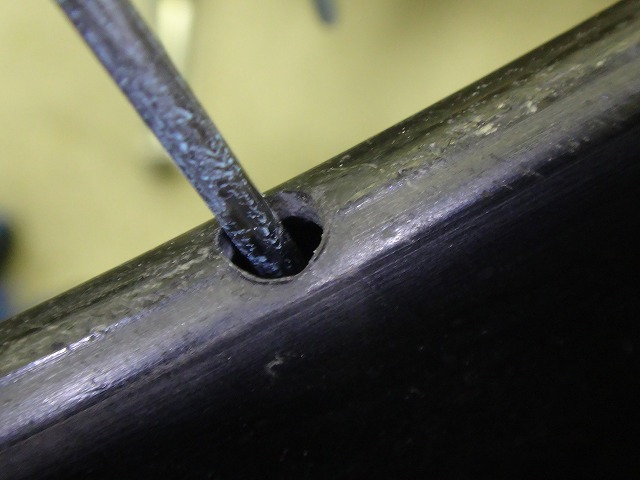
The front rim has internal nipple design,
so the rim holes are only large enough for spokes to pass through,
but the rear rim, for some reason,
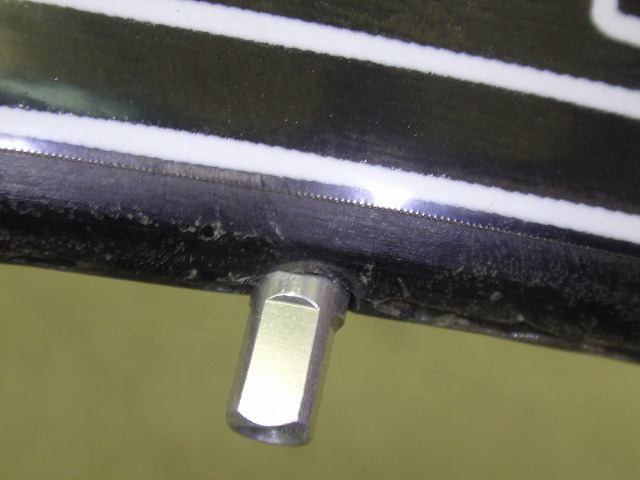

has rim holes sized for standard nipples.
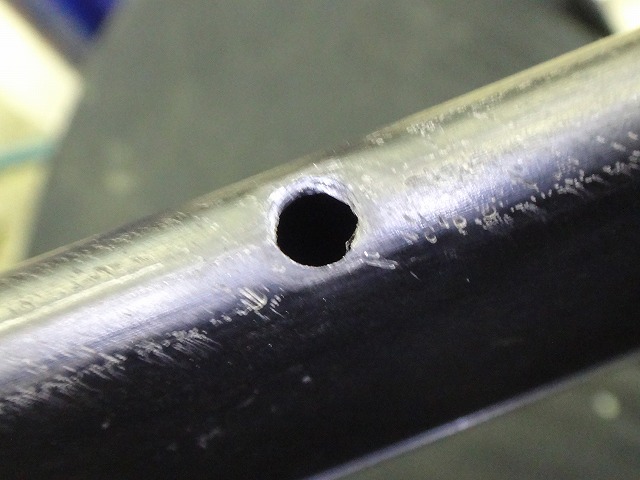
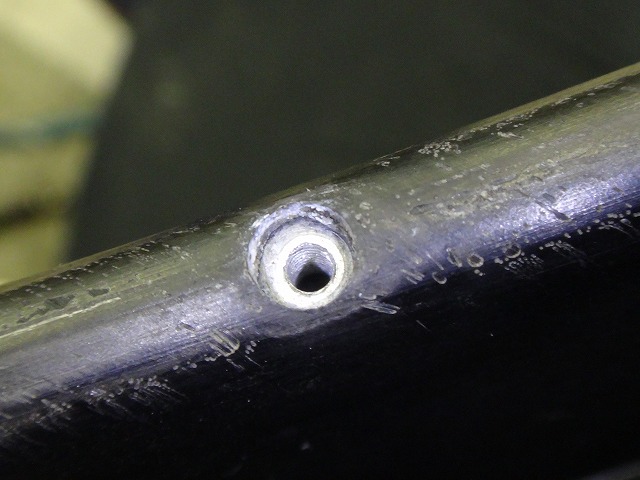
Building a standard-nipple rim with internal nipples is fine with aluminum rims.
I've built wheels that way out of necessity.
But building this rim tight with internal nipples is impossible.
The rim would likely crack.
In the original wheel, they'd built it carefully and deliberately loose to avoid that.
But I also have reasons for not wanting to build this rim with standard nipples.
For this rebuild, I'm using internal nipples,
but what treatment I used, why standard nipples shouldn't be used, etc.—
that's meal-ticket information (trade secrets), so I'll explain it to this wheel's owner,
but I won't write it here.
This rim isn't exactly impossible to build properly without me, but
it's an extremely difficult job, and casually copying my method will result in a cracked rim.
Though the chances of anyone trying to copy are basically nonexistent anyway.
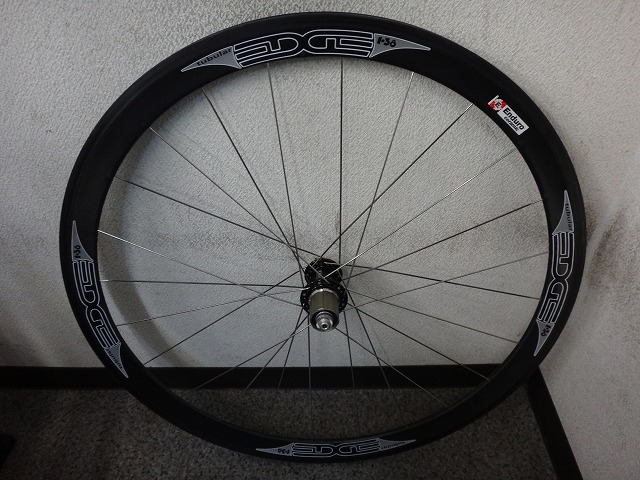
Built.
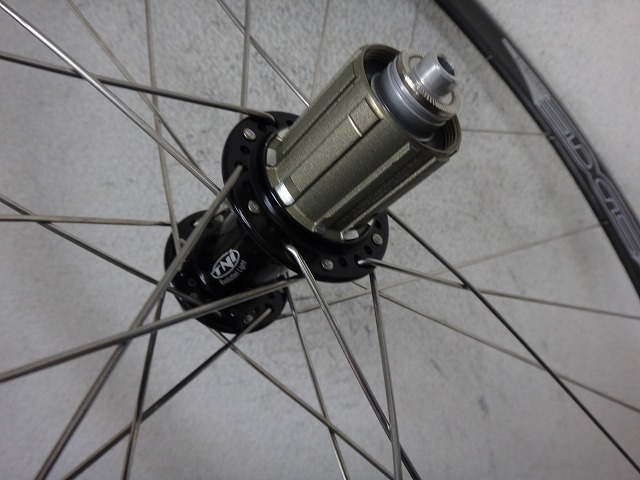
Evolite hub, 24H, semi-comp four-cross pattern.
I'll do the truing later.
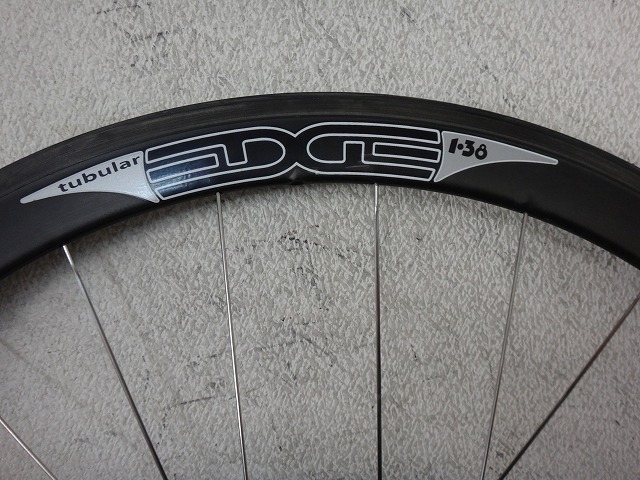
Internal nipples.
By the way, with this 1.38 rim,
the opportunity to measure actual weight is extremely rare.
EDGE/ENVE 25 rims
(since the heavier, more durable 2.25 model doesn't exist for 25,
you typically don't call them 1.25) vary quite a bit in weight depending on era:
195g → 215g → 250g in progression.
The 1.38 wasn't a long-lived model,
so there's probably only one weight version,
and if the actual weights of these two are close,
you can assume all other 1.38 rims in the world are similar weight too.
As for what the actual situation is...
I don't feel obligated to tell you, so I won't expose it here.
↑wow this guy's got bad vibes

Thank you for waiting! Please check out this image!
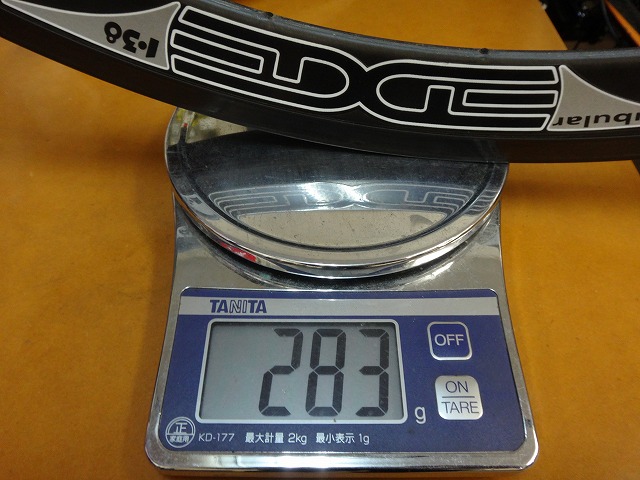
Front rim!
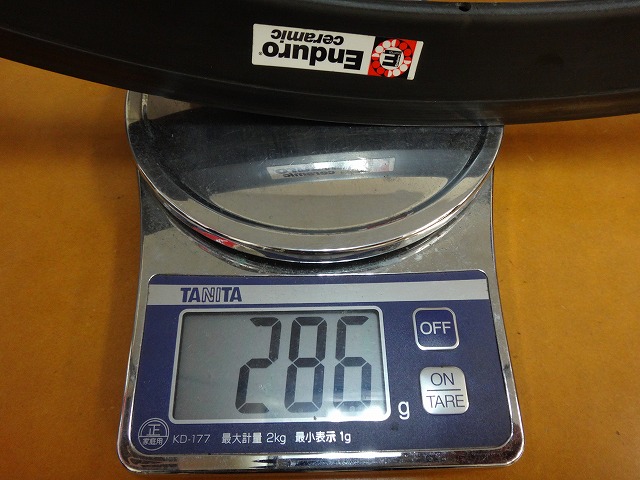
Rear rim!
↑Stop it, noooo!