This isn't related to the article content, but
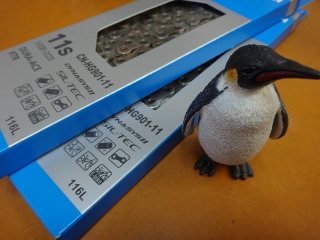
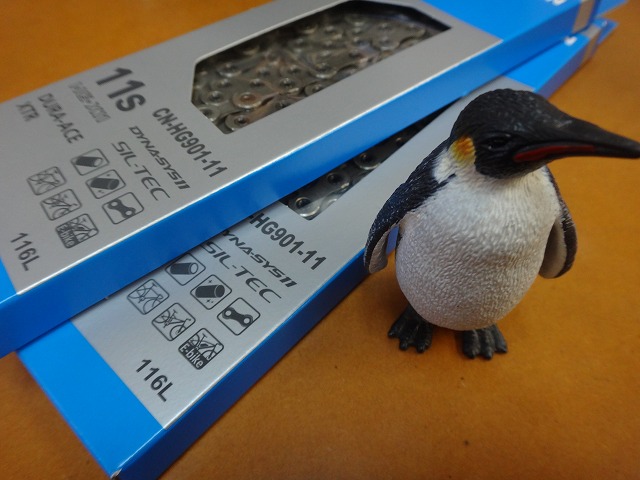
the discounted HG901 chain sold out completely.
The 2 chains in the image are separate from the remaining 4, and were from our regular inventory stock (not discounted), but we sold them at the discount price anyway.
The final 4 + 2 chains all came with connect pin specifications.
Thank you for your purchases.
We might do this again.
Anyway, today it's wheels again (and so on).
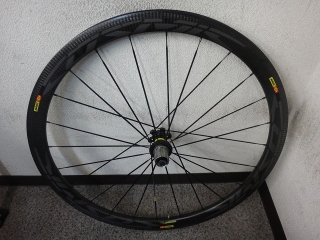
A customer brought in the rear wheel of a Cosmic Pro Carbon SL UST.
They wanted me to build a rear wheel using this rim and a PowerTap hub, but
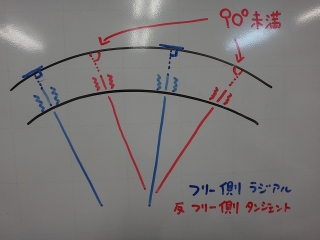
When I first heard about it, I answered that if the rim had Zicral spoke holes, the spoke trajectory from the rim holes would have strong directional constraints, so it wouldn't work. Even before that, if it had Zicral spoke holes at all, it would be pretty much impossible (though depending on conditions, it might not be entirely impossible).
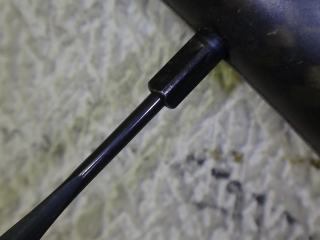
In reality, it had 14-thread nipples and standard-sized rim holes, so I found it could be used as a normal rim.
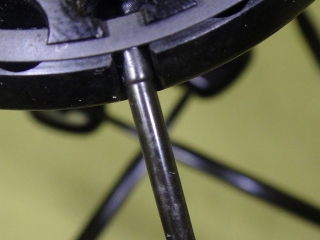
The hub only has 13-thread below the spoke neck, but I won't use these straight spokes (the PowerTap hub has flanges for bent-neck spokes, so they won't work anyway).

For work purposes, I'll need to peel off the factory tubeless tape, but then you hear things like "you must use Mavic-brand tubeless tape" and in another wheel "you must use Exalith brake shoes," and honestly, what happens if the supply runs out?
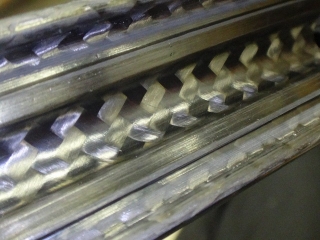
Originally this comes from ENVE technology specs, but the bead bump isn't a protrusion—it's shaped like a wide railway rail.
With certain-period road UST tubeless tires (in my classification, the "second period") or other brands' tires, when the bead gets seated, even after letting air out and pushing hard on the tire sidewall with your finger to try to remove it, the bead can't easily get over this bump, making tire removal extremely difficult. Indoors where you have time to work calmly it's not too much of a problem, but roadside puncture repairs become extremely difficult.
With SMART ENVE rims, despite the wide bump, maybe because ENVE has wider rims, or maybe the bead hook dimensions of road UST tubeless tires differ from ENVE's, tires don't become unusually hard to remove.
※ About UST road tubeless tires (my personal classification):
First period – Easy to install and remove by hand, looser than clinchers, so loose it's actually scary. Mavic advertised "even women can do it easily."
Second period – Installation is extremely difficult, and if you slip with the tire lever when seating the bead, it slides and scrapes the rim, so the rim-side stickers get destroyed. Once the bead seats, removal becomes extremely difficult too.
For first and second period info (→see here). With the next Cosmic Pro Carbon SL UST, the simpler sticker design is probably not unrelated to the "tire lever slipping problem."
Third period (current) – Harder to mount than first period, but not difficult enough to be problematic. First and second period had generation-specific variations with Ixion Pro UST's front-specific Grip Link / rear-specific Power Link, but third period is Ixion Pro UST II, a universal front-and-rear tire (you change the direction you mount it).
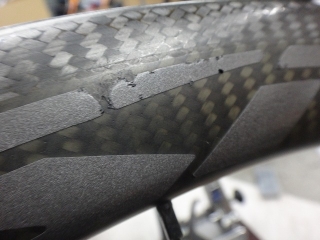
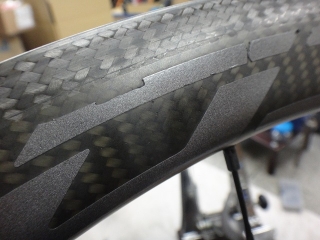
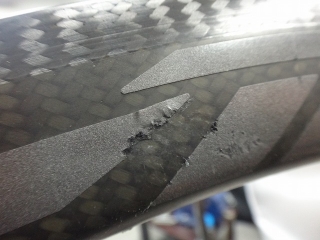
This rim also had marks where tire levers had slipped.
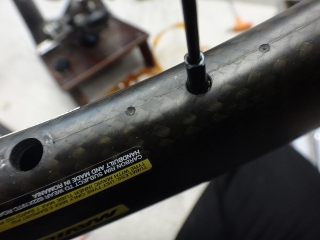
The dots on either side of the rim hole next to the valve hole—if there are two, it indicates a rear rim, and the direction from the valve hole also specifies the rim's left and right orientation.
This rim could be built left-right reversed without following the specification (not that we'd do such a thing), but offset rims with Zicral holes like Ksyrium rims make building them reversed impossible.
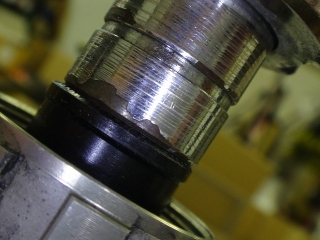

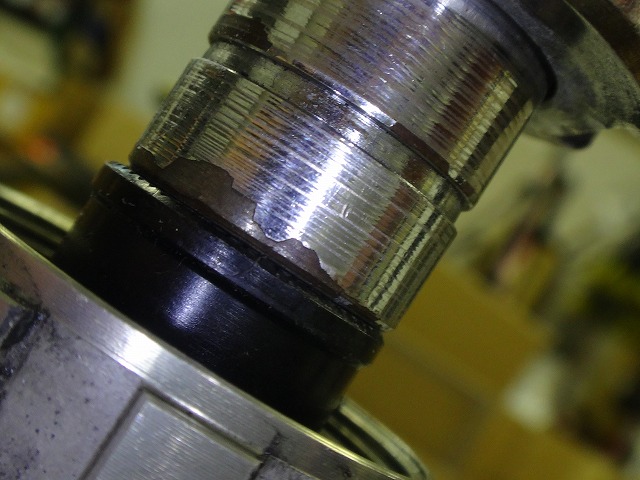
The rim shifted toward the freewheel side, but whatever.
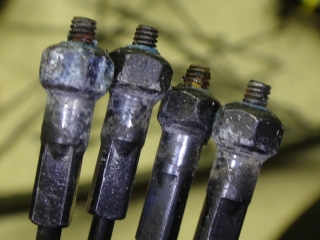
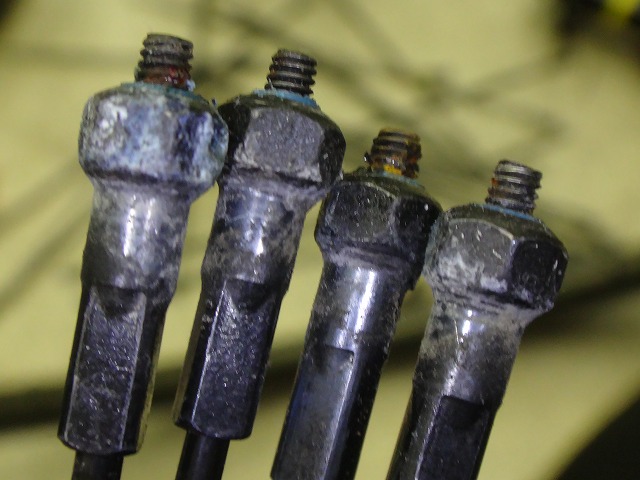
The hub flange is a hook-type design for spoke heads, so if you loosen enough nipples adequately, you can retrieve spokes that haven't had their nipples loosened at all.
The spoke extends past the nipple intentionally, because
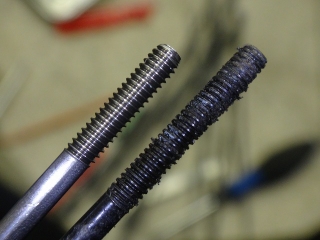
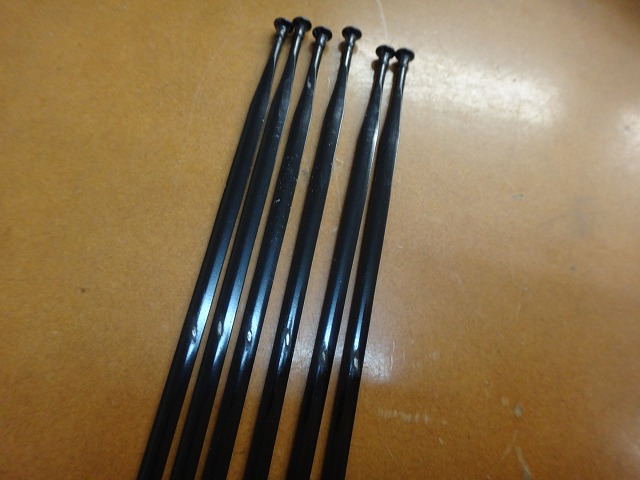
these are universal spokes (top image left / CX-RAY incidentally) with longer thread length in a special spec, so there's no problem.
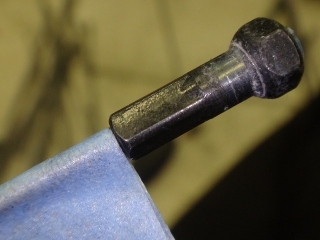
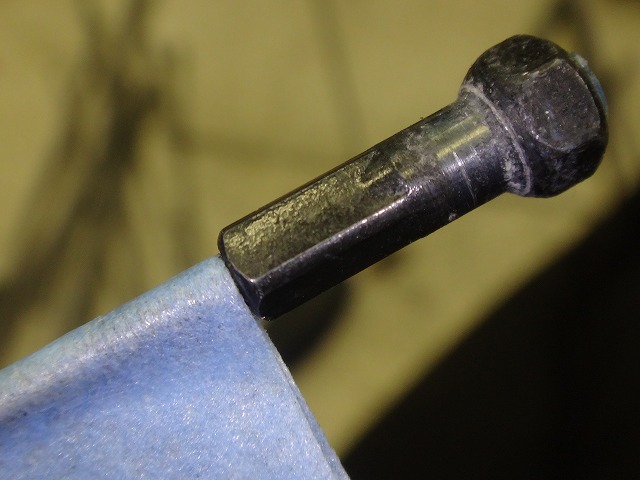
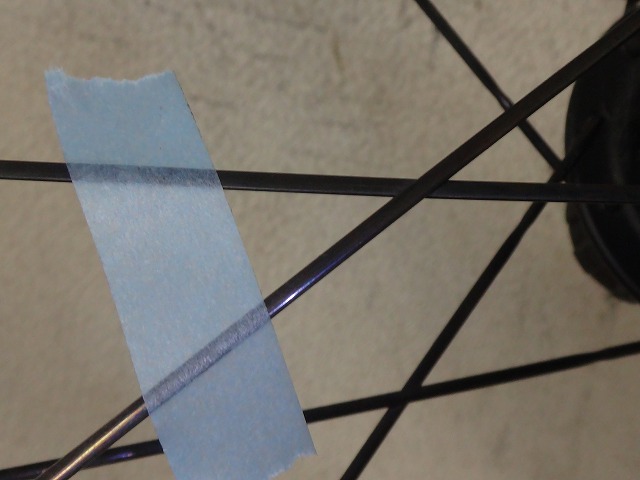
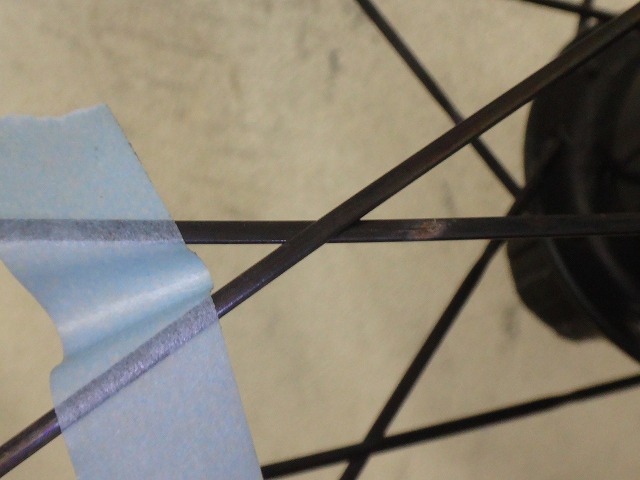
I threaded a universal spoke with a Cosmic nipple all the way to the thread start, and used tape as a mark to indicate the position of the nipple's inner edge.
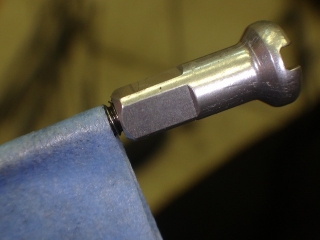
When I thread in a universal nipple, the Cosmic nipple appears about 2 threads deeper, but that's just because its inner diameter extends further inward from the contact point with the rim.
After investigation, I found that with the thread length of universal spokes, you can build while threading the nylon lock-washer on the outer edge of the Cosmic nipple without using up all the thread length.
This means the nipple is reusable.
Also, not shown in the image, but there's a washer between the special nipple and rim.
Of course we reuse that too.
During wheel disassembly and reassembly, we never applied tools to the inner square.
Regarding the PowerTap hub—I thought this customer might disassemble their Nomu Lab Wheel No. 5 that has a PowerTap hub, but

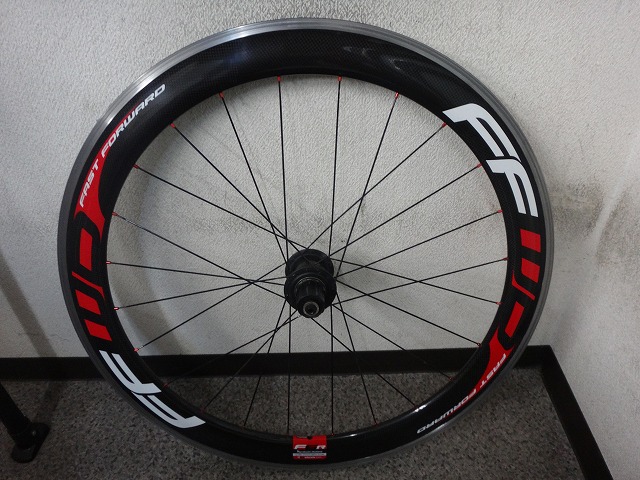
they were going to extract the hub from a rear wheel built with an FF Yamaguchi F6R rim instead.
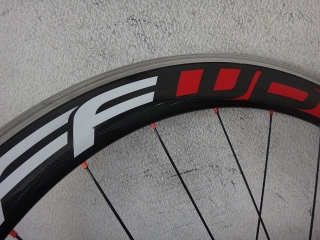

It's an aluminum-braking-zone Al-carbon rim.
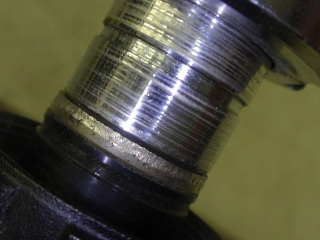

The centering is spot-on. Depending on the phase, it might be off by a paper thickness toward the freewheel side, but that counts as centered.
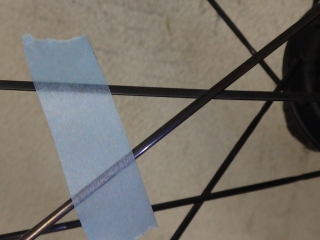
However, the spoke tension was

abnormally loose. All-black CX-RAY 4-cross lacing, but even so it should be tighter.
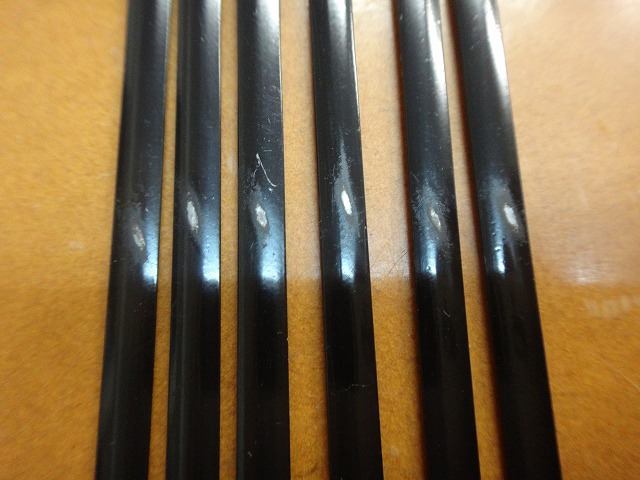
The spots where spoke paint is worn are from friction at the final cross.
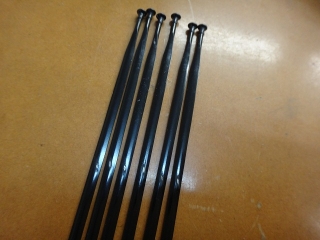
Separate from that,

the Cosmic's freewheel-side spokes also had friction marks at the final cross (even though we weren't cross-weaving).
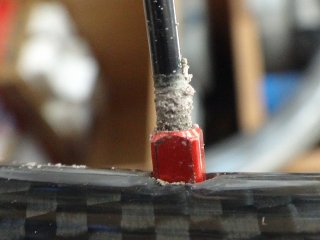
Sand and rust were packed into the thread grooves, but since no threadlock compound was applied, it came apart very easily.
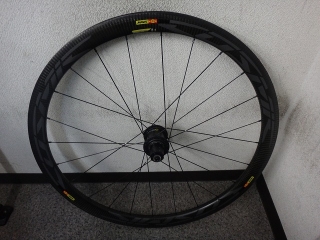
Built.
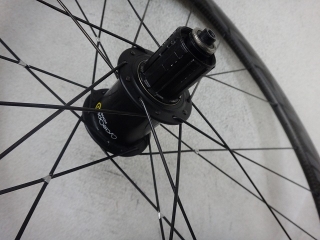
G3 hub, 24H, all-black semi-comp, 4-cross lace with rim tape.
Now, shifting topics, this time I finally got the opportunity to measure the actual weight of the rim, something I'm sure readers have been curious about.
This is usually where I'd be coy about it, but this time I'll share openly.
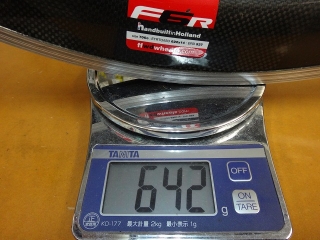
Measured weight of the F6R Al-carbon clincher rim.
What? You were curious about something else?
Like I'd tell you the Cosmic weight that easily—
think about it for a second, it's obvious.
↑ what is this, this guy's got a bad attitude
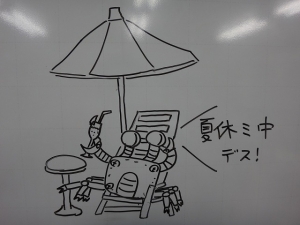
By the way, the crab-laser is taking an early summer vacation, and won't be coming back unless we hit 500 applause, so give up on the Cosmic's actual weight measurement this time.
Damn! We hit 500 applause
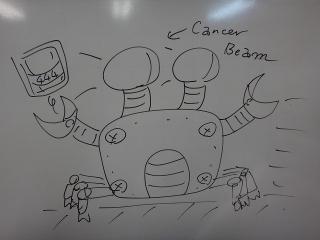
We kept you waiting! (At this point: 590 applause)
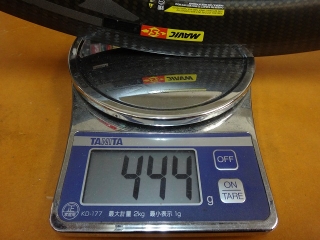
Please take a look at this image!
↑ knock it off!!
Bonus

Whether it's necessary for manufacturing or not, nylon tape-like material is applied to the inner surface's outer edge (not the entire inside) of the rim. When we drilled the rim holes, the rotation kneaded it and it became rough, remaining stuck to the outer edge. But that alone means the inner-side rim holes are visible as in the image above, so it doesn't interfere with wheel building.
However, this nylon tape material fell inside the rim (since it wasn't rough, the fall probably happened before drilling) at several spots, covering the inner-side rim holes, and when you shake the rim, the fallen tape rustles, so
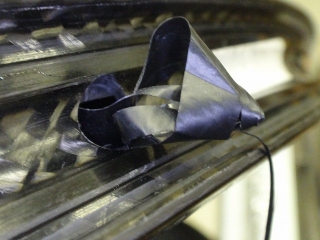
I retrieved it until shaking the rim made no more noise.
the discounted HG901 chain sold out completely.
The 2 chains in the image are separate from the remaining 4, and were from our regular inventory stock (not discounted), but we sold them at the discount price anyway.
The final 4 + 2 chains all came with connect pin specifications.
Thank you for your purchases.
We might do this again.
Anyway, today it's wheels again (and so on).
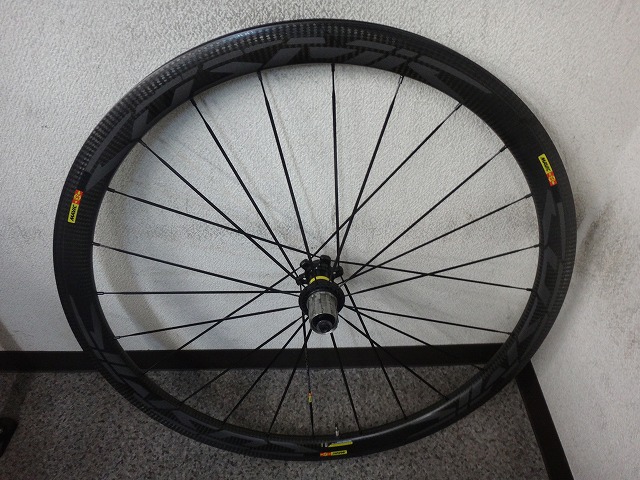
A customer brought in the rear wheel of a Cosmic Pro Carbon SL UST.
They wanted me to build a rear wheel using this rim and a PowerTap hub, but
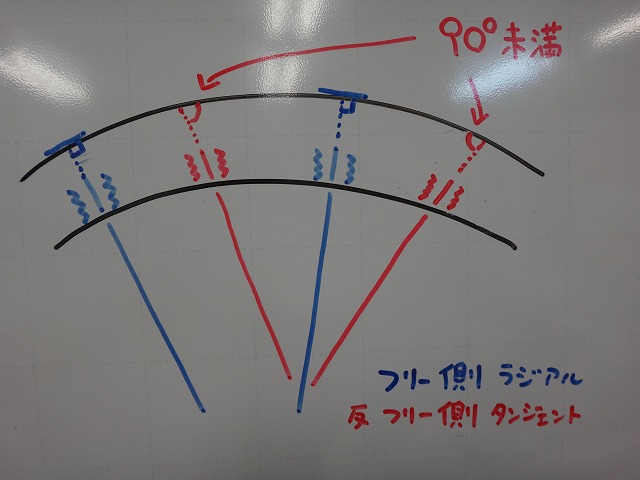
When I first heard about it, I answered that if the rim had Zicral spoke holes, the spoke trajectory from the rim holes would have strong directional constraints, so it wouldn't work. Even before that, if it had Zicral spoke holes at all, it would be pretty much impossible (though depending on conditions, it might not be entirely impossible).

In reality, it had 14-thread nipples and standard-sized rim holes, so I found it could be used as a normal rim.
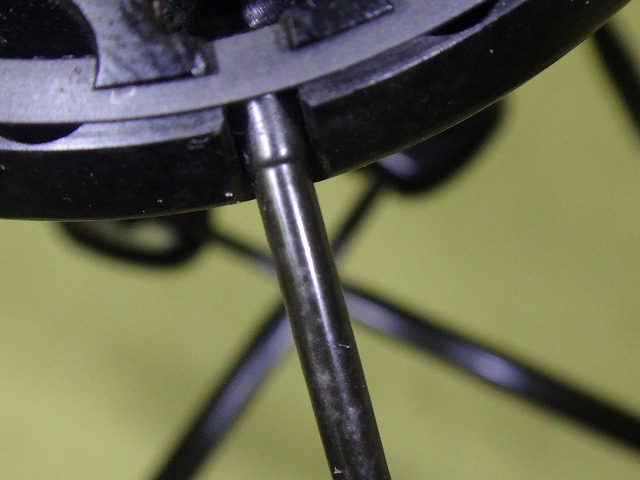
The hub only has 13-thread below the spoke neck, but I won't use these straight spokes (the PowerTap hub has flanges for bent-neck spokes, so they won't work anyway).
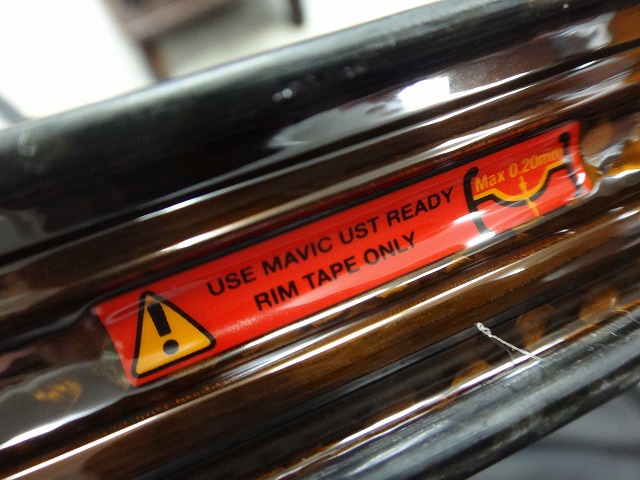
For work purposes, I'll need to peel off the factory tubeless tape, but then you hear things like "you must use Mavic-brand tubeless tape" and in another wheel "you must use Exalith brake shoes," and honestly, what happens if the supply runs out?
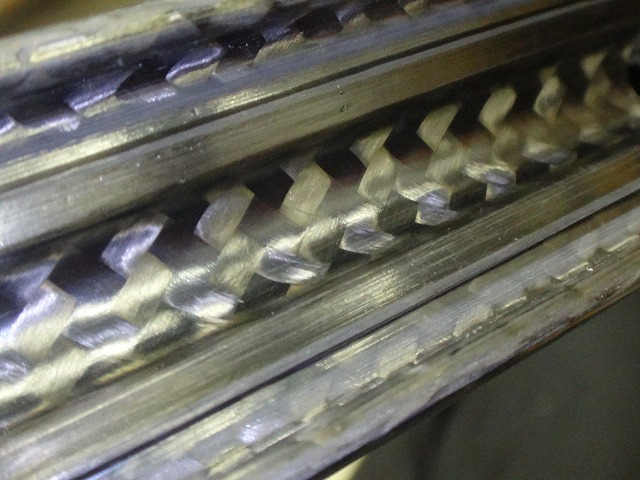
Originally this comes from ENVE technology specs, but the bead bump isn't a protrusion—it's shaped like a wide railway rail.
With certain-period road UST tubeless tires (in my classification, the "second period") or other brands' tires, when the bead gets seated, even after letting air out and pushing hard on the tire sidewall with your finger to try to remove it, the bead can't easily get over this bump, making tire removal extremely difficult. Indoors where you have time to work calmly it's not too much of a problem, but roadside puncture repairs become extremely difficult.
With SMART ENVE rims, despite the wide bump, maybe because ENVE has wider rims, or maybe the bead hook dimensions of road UST tubeless tires differ from ENVE's, tires don't become unusually hard to remove.
※ About UST road tubeless tires (my personal classification):
First period – Easy to install and remove by hand, looser than clinchers, so loose it's actually scary. Mavic advertised "even women can do it easily."
Second period – Installation is extremely difficult, and if you slip with the tire lever when seating the bead, it slides and scrapes the rim, so the rim-side stickers get destroyed. Once the bead seats, removal becomes extremely difficult too.
For first and second period info (→see here). With the next Cosmic Pro Carbon SL UST, the simpler sticker design is probably not unrelated to the "tire lever slipping problem."
Third period (current) – Harder to mount than first period, but not difficult enough to be problematic. First and second period had generation-specific variations with Ixion Pro UST's front-specific Grip Link / rear-specific Power Link, but third period is Ixion Pro UST II, a universal front-and-rear tire (you change the direction you mount it).

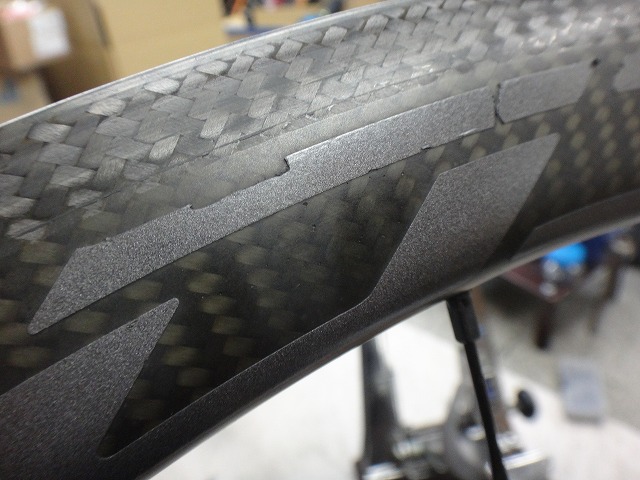
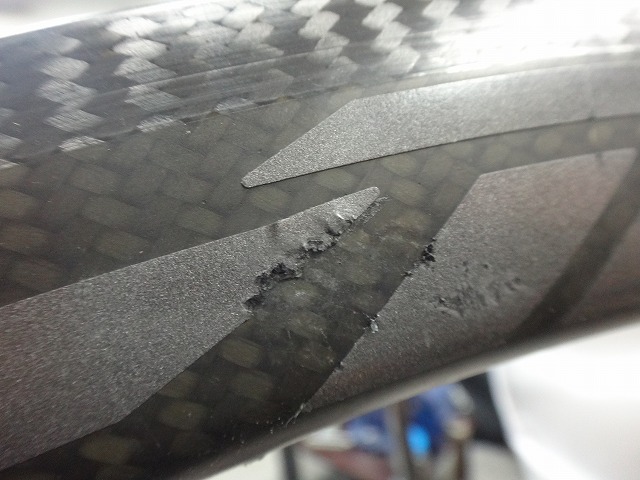
This rim also had marks where tire levers had slipped.
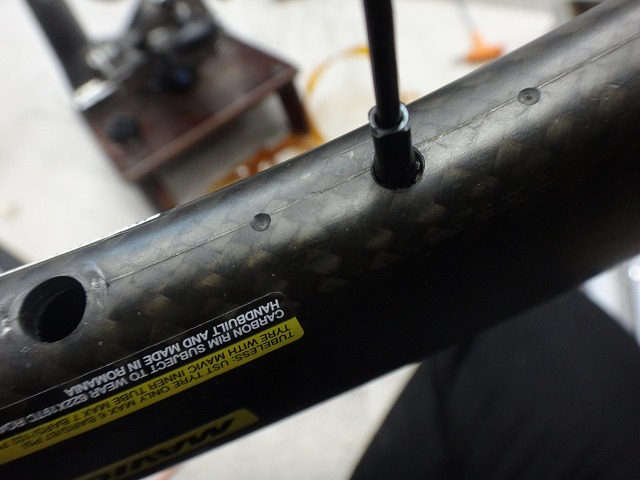
The dots on either side of the rim hole next to the valve hole—if there are two, it indicates a rear rim, and the direction from the valve hole also specifies the rim's left and right orientation.
This rim could be built left-right reversed without following the specification (not that we'd do such a thing), but offset rims with Zicral holes like Ksyrium rims make building them reversed impossible.

The rim shifted toward the freewheel side, but whatever.
The hub flange is a hook-type design for spoke heads, so if you loosen enough nipples adequately, you can retrieve spokes that haven't had their nipples loosened at all.
The spoke extends past the nipple intentionally, because

these are universal spokes (top image left / CX-RAY incidentally) with longer thread length in a special spec, so there's no problem.
I threaded a universal spoke with a Cosmic nipple all the way to the thread start, and used tape as a mark to indicate the position of the nipple's inner edge.

When I thread in a universal nipple, the Cosmic nipple appears about 2 threads deeper, but that's just because its inner diameter extends further inward from the contact point with the rim.
After investigation, I found that with the thread length of universal spokes, you can build while threading the nylon lock-washer on the outer edge of the Cosmic nipple without using up all the thread length.
This means the nipple is reusable.
Also, not shown in the image, but there's a washer between the special nipple and rim.
Of course we reuse that too.
During wheel disassembly and reassembly, we never applied tools to the inner square.
Regarding the PowerTap hub—I thought this customer might disassemble their Nomu Lab Wheel No. 5 that has a PowerTap hub, but
they were going to extract the hub from a rear wheel built with an FF Yamaguchi F6R rim instead.
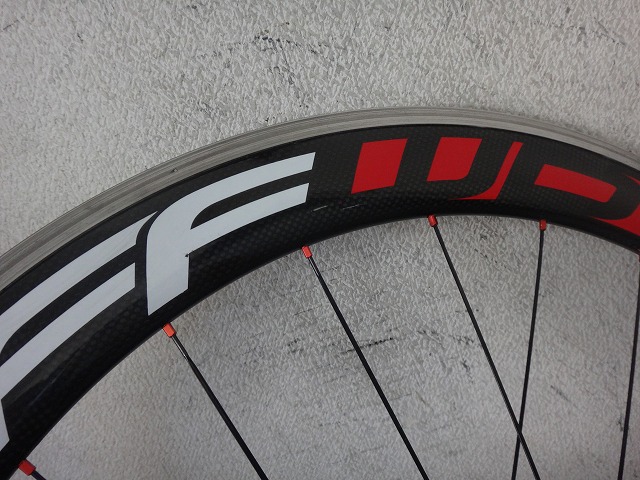
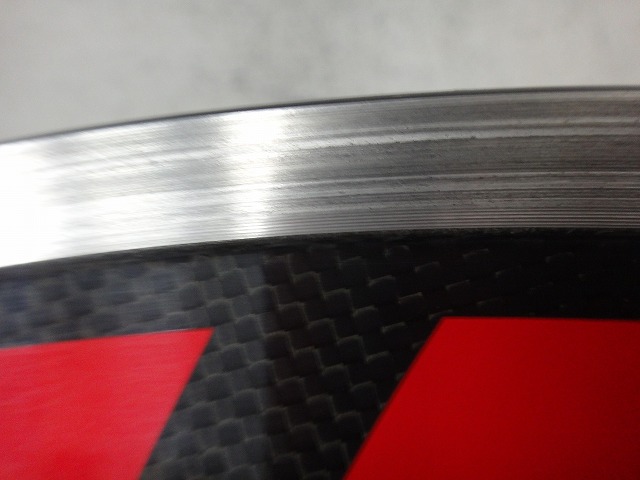
It's an aluminum-braking-zone Al-carbon rim.
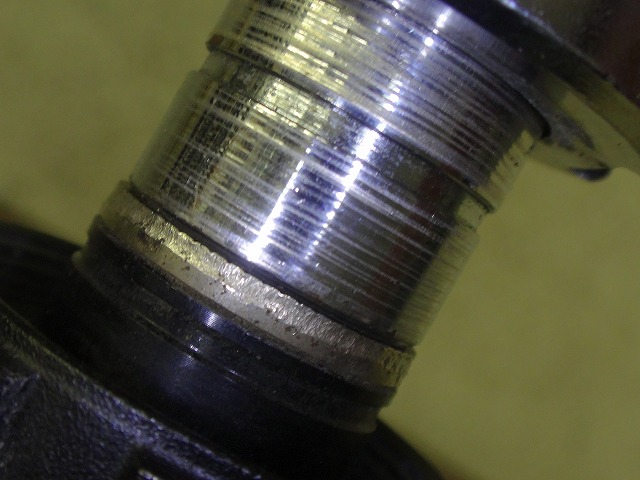
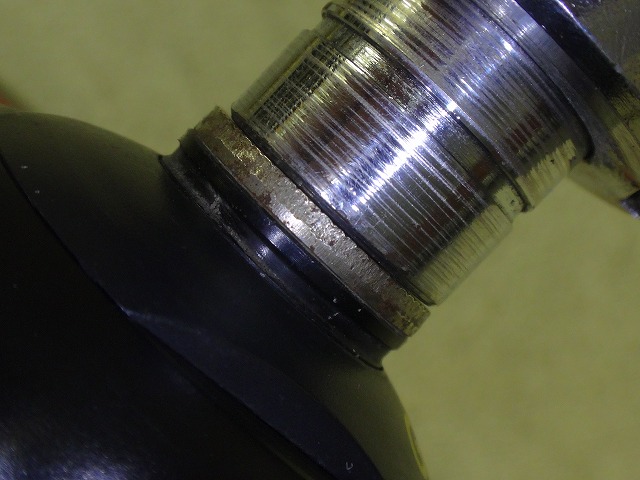
The centering is spot-on. Depending on the phase, it might be off by a paper thickness toward the freewheel side, but that counts as centered.
However, the spoke tension was
abnormally loose. All-black CX-RAY 4-cross lacing, but even so it should be tighter.
The spots where spoke paint is worn are from friction at the final cross.
Separate from that,
the Cosmic's freewheel-side spokes also had friction marks at the final cross (even though we weren't cross-weaving).
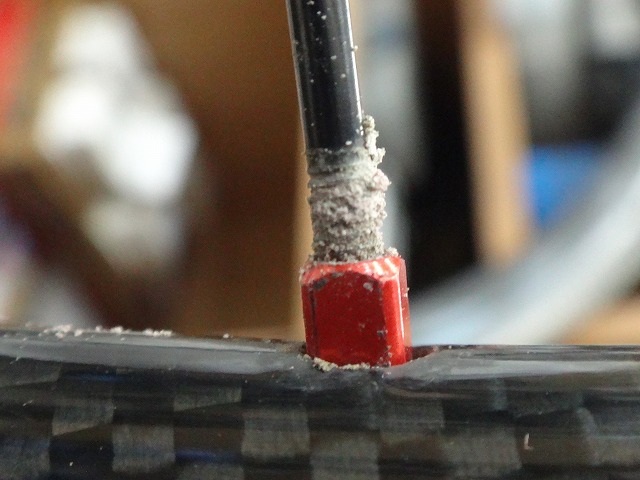
Sand and rust were packed into the thread grooves, but since no threadlock compound was applied, it came apart very easily.
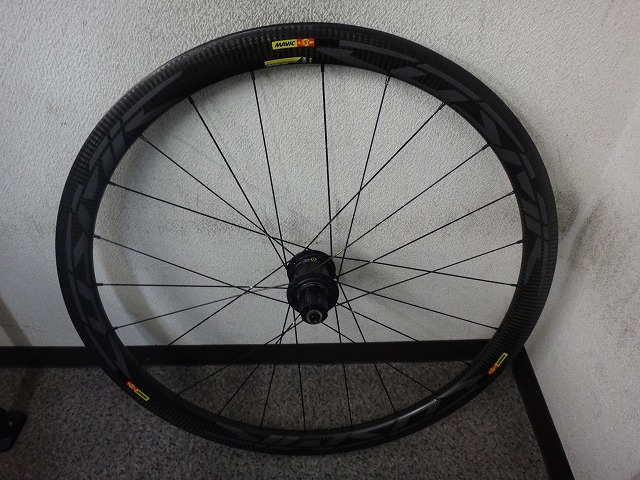
Built.

G3 hub, 24H, all-black semi-comp, 4-cross lace with rim tape.
Now, shifting topics, this time I finally got the opportunity to measure the actual weight of the rim, something I'm sure readers have been curious about.
This is usually where I'd be coy about it, but this time I'll share openly.
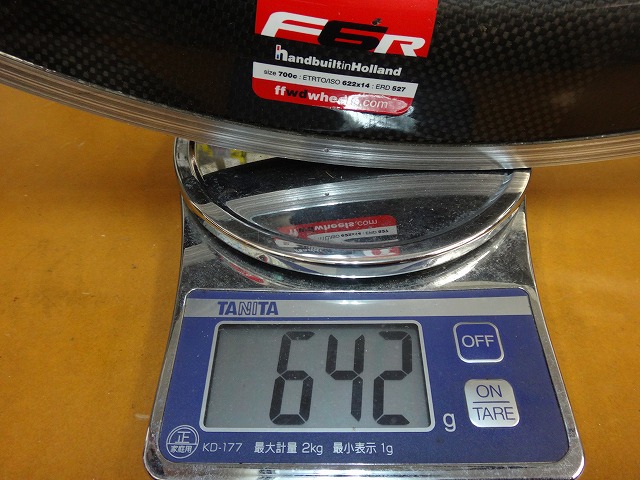
Measured weight of the F6R Al-carbon clincher rim.
What? You were curious about something else?
Like I'd tell you the Cosmic weight that easily—
think about it for a second, it's obvious.
↑ what is this, this guy's got a bad attitude
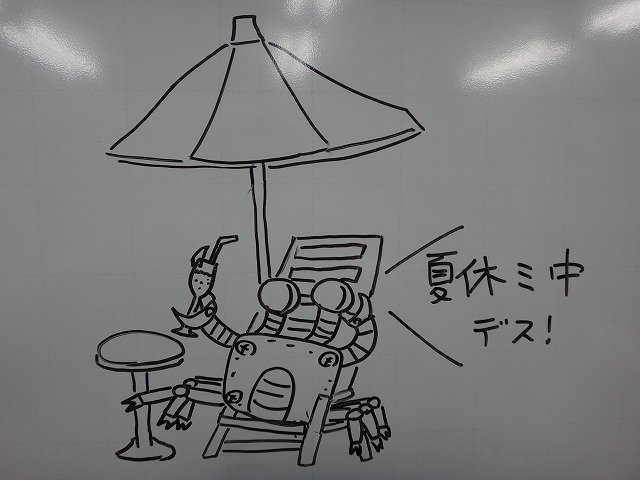
By the way, the crab-laser is taking an early summer vacation, and won't be coming back unless we hit 500 applause, so give up on the Cosmic's actual weight measurement this time.
Damn! We hit 500 applause
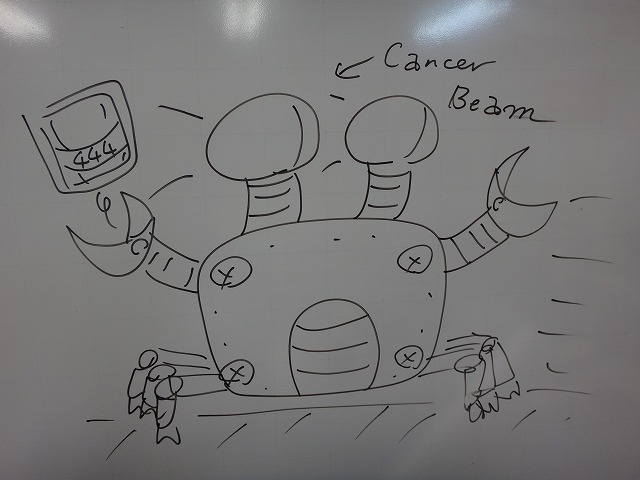
We kept you waiting! (At this point: 590 applause)
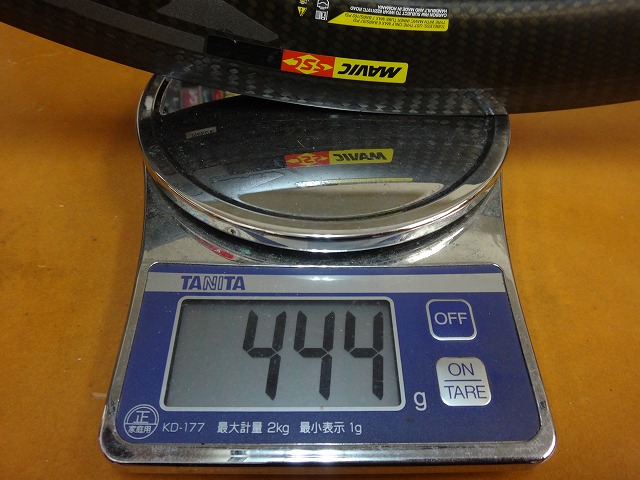
Please take a look at this image!
↑ knock it off!!
Bonus
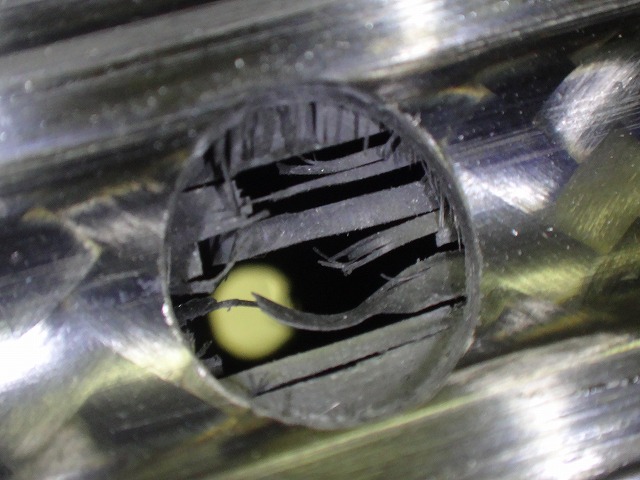
Whether it's necessary for manufacturing or not, nylon tape-like material is applied to the inner surface's outer edge (not the entire inside) of the rim. When we drilled the rim holes, the rotation kneaded it and it became rough, remaining stuck to the outer edge. But that alone means the inner-side rim holes are visible as in the image above, so it doesn't interfere with wheel building.
However, this nylon tape material fell inside the rim (since it wasn't rough, the fall probably happened before drilling) at several spots, covering the inner-side rim holes, and when you shake the rim, the fallen tape rustles, so
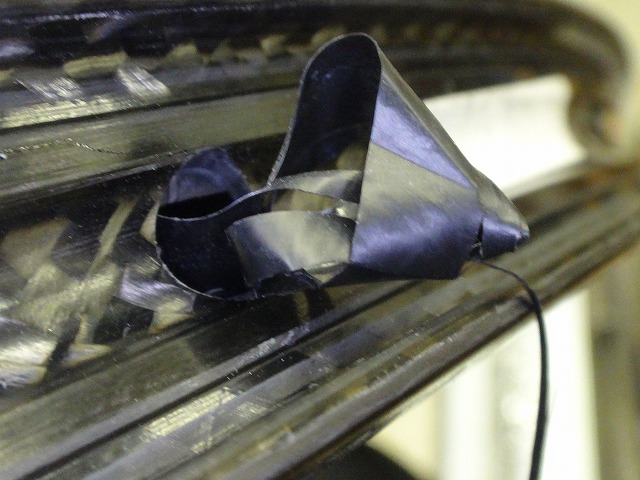
I retrieved it until shaking the rim made no more noise.