A customer brought in an Easton EA90 Aero wheel for service.
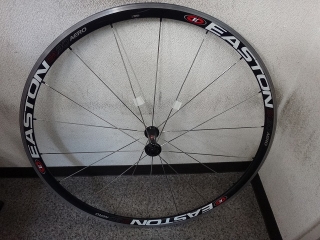
Starting with the front wheel.
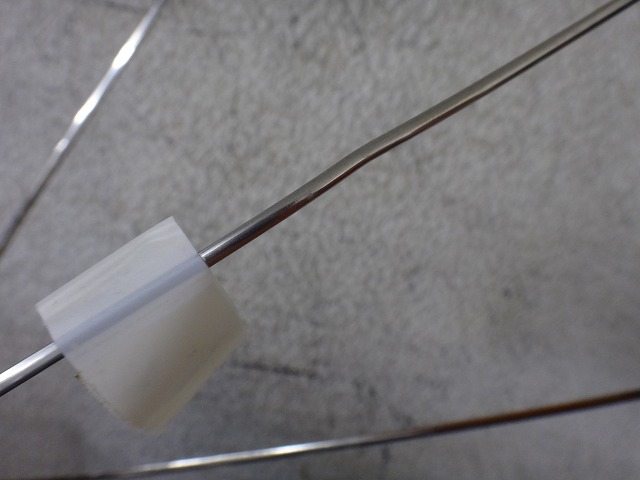
There's tape marking the bent spoke, but based on the rotation direction,
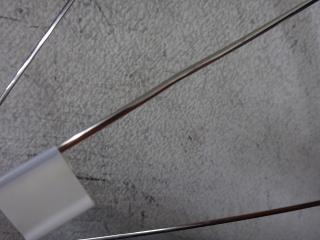
↑The first impact spoke, and
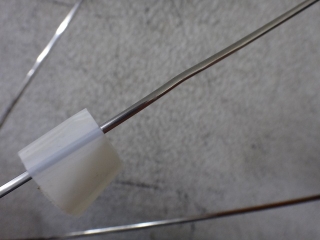
↑The second impact spoke
Interestingly, the second impact spoke is bent more severely.
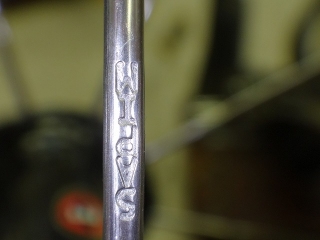
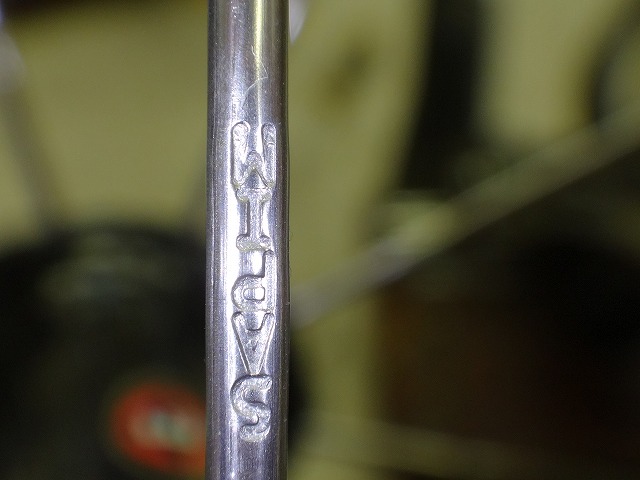
These spokes are from a brand called Widas (Japanese spoke manufacturer), but instead of the usual CX-RAY, they're CX Sprint.
Before CX Sprint had stable supply, repairs were difficult, but that's been resolved now.
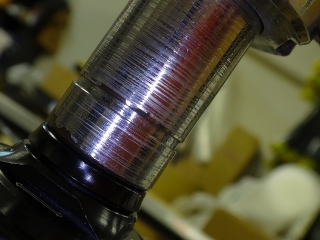
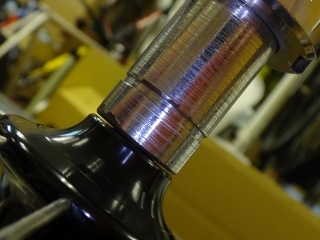
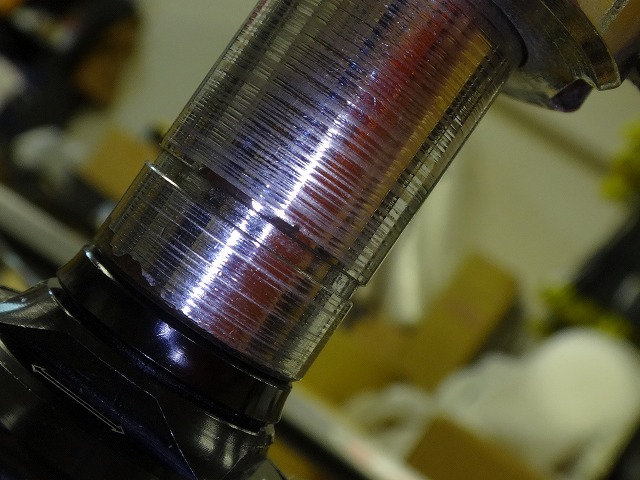
After replacing the spokes, adjusting just those two nipples removed most of the wobble,
but since the provisional center at that point was off,
it probably had this much misalignment even before the spokes bent.
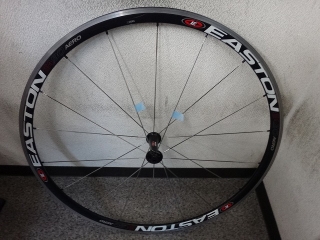
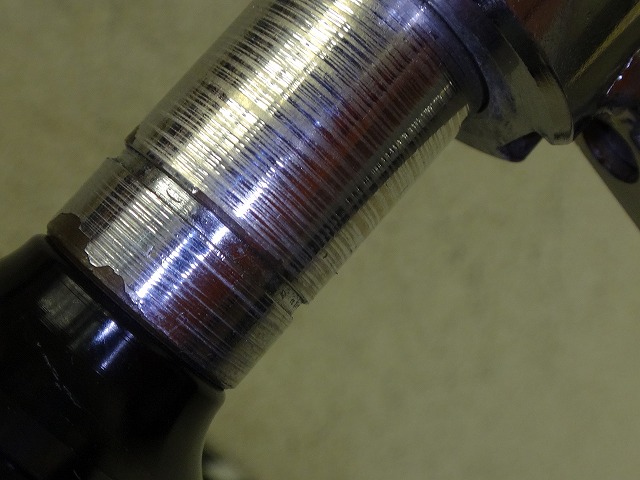
Fixed.
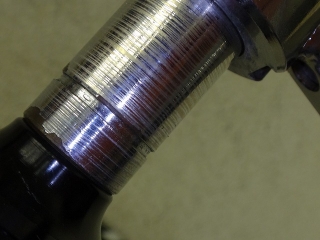
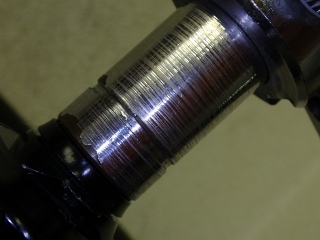
Centering done just to be thorough.
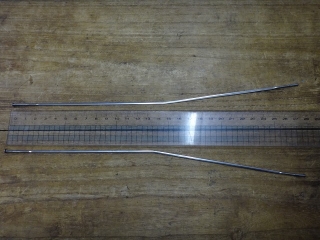
↑The replaced spokes
The more bent one at the bottom of the image is the second impact.
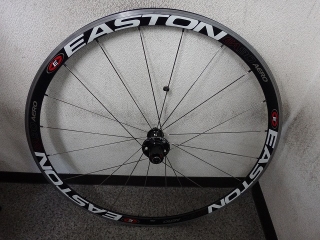
Now for the rear wheel.
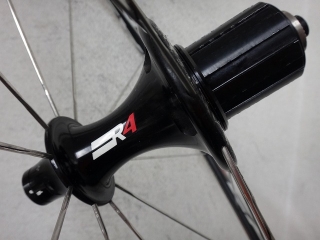
The customer says there are no particular issues, but they're okay with me truing it if needed.
Both sides use CX Sprint spokes, equivalent to a 40-hole symmetric build.
The drive-side lacing appears to be single-cross, but since the spoke head positioning is on the dense flange,
if you extend the spokes inward to reach the evenly-spaced flange position,
the angle would be equivalent to a small flange double-cross (→here).
The hub is an R4, not the R4SL used in the EC90SL and others.
When R4SL hubs come into my shop, almost invariably
the ceramic bearings feel gritty in rotation.
This is because Enduro's Zero Ceramic cartridge bearing's inner and outer races are inferior quality compared to the hardness of ceramic balls,
and the same phenomenon appears with Campagnolo's old black ball races + ceramic bearing combinations on early USB hubs,
but with R4SL, almost all units that have seen some years of use
have dead bearings at a shockingly high rate.
This is partly related to the fact that the ball bearing adjustment parts on the rear hub
loosen frequently (the front hub doesn't have this issue as much),
so the hub is often used with play in it.
But even accounting for that, the "dead bearing rate" on the R4SL rear hub is striking.
I often joke that the "SL" acronym doesn't stand for "Super Light" or "Super Leggero" but rather "Short Life",
and the SL in both the Easton R4SL rear hub
and the Specialized Tarmac SL2 frame truly means Short Life. With the latter,
seat stays cracking easily in crashes was common at the time—back when Saxo Bank colors were around.
If you raced back then, it wouldn't be far-fetched to say
that if you extend it to "know a friend or a friend of a friend who actually cracked one",
the people who don't fit that description are probably fewer.
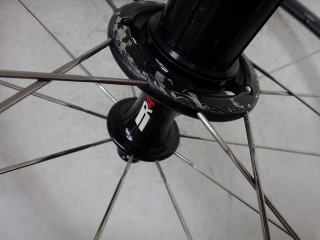
About lacing: I won't do it.
The non-drive side is radial laced so it's not possible,
and the drive side is already under high tension,
so there's not much point in reducing deformation.
Tying off the final cross on the drive side won't change
the tension on the non-drive side
(though the drive side's resistance to deformation during freehub twisting increases, so the non-drive side's twist amount also decreases slightly,
but whether that's perceptible is questionable).
I could replace the hub and build a genuine mulabowheel with this rim,
but since the customer wanted something done without that much budget,
I decided to change the spoke weight distribution on the drive side.
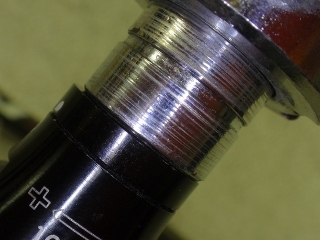
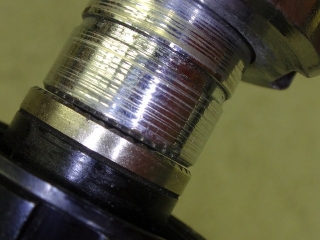
It's offset by about the thickness of a sheet of paper toward the drive side.
This can be attributed to wear over time.
Regardless of offset, the provisional center needs to be noted.
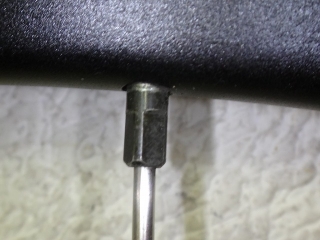
↑Black brass nipples
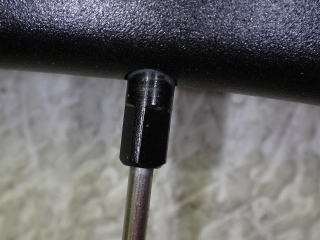
↑Black aluminum nipples
Since this wheel follows the Velomax lineage,
the rear has brass nipples on the drive side
and aluminum nipples on the non-drive side.
I agree with this specification so I'll leave it as is.
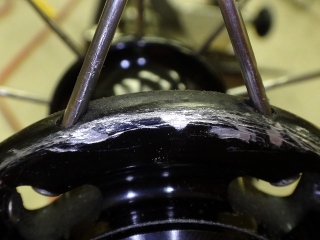
There's a chain drop mark on the right flange, but
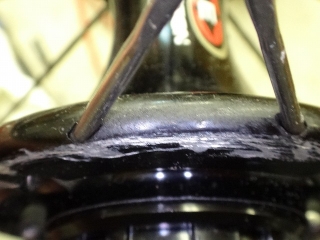
the shape is such that it doesn't damage the spokes—a perfect design that doesn't seem like mere coincidence.
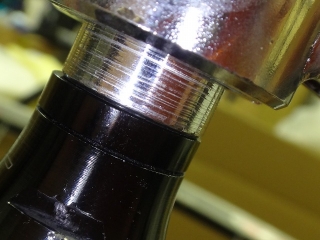
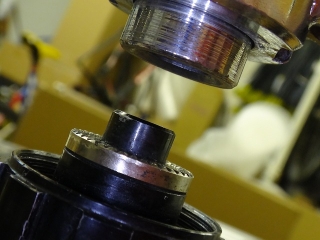
I changed the drive-side spokes to 14g plain Leader Straight,
tensioned them to just below the final build tension,
then focused on radial truing only.
I'll handle the axial truing later, so some runout is okay for now.
The center is way off, but at this stage I'm actually
loosening the non-drive nipples exactly 3 full turns
so that I can gently tighten the drive-side nipples.
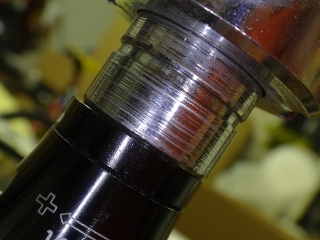

I tightened the non-drive side 3 full turns.
There's still center offset.
From here, the amount remaining after subtracting the provisional center offset
(which we can ignore since it was about a sheet of paper)
is the amount of "additional tightening that's now possible due to the asymmetric build".
From this point, I can increase tension only on the non-drive side until center is achieved.
The key caution is that as I increase non-drive tension, drive-side tension rises too,
so after this point I barely touch the drive-side nipples,
but they need to be kept just under the final target tension.
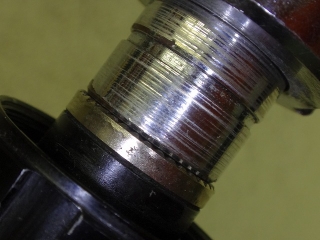
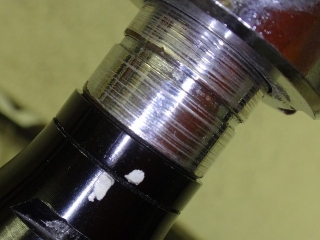
I achieved center by increasing non-drive tension.
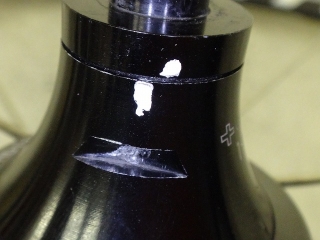
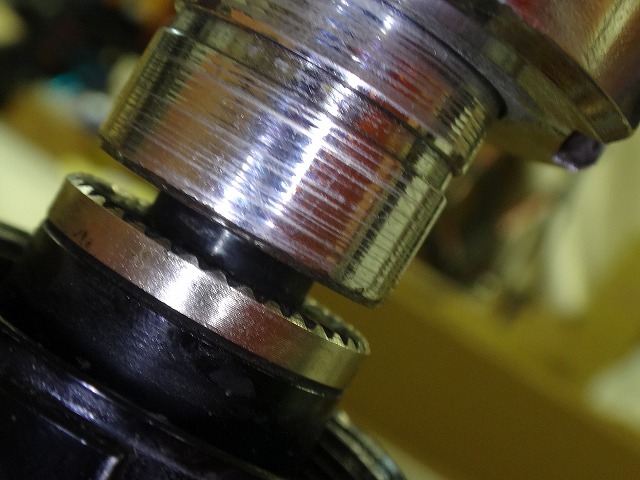
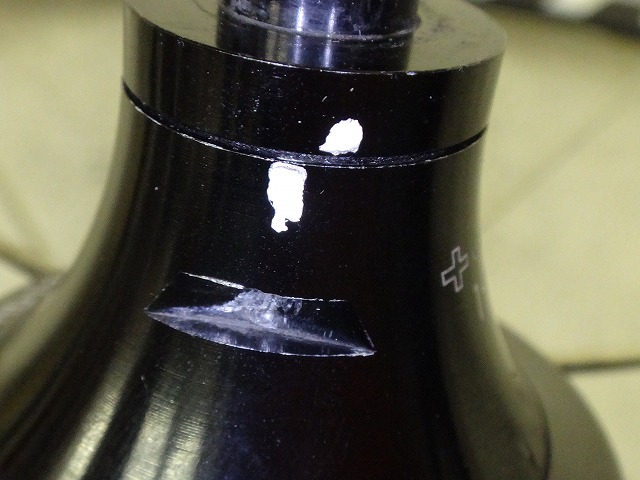
The hub bearing adjustment nuts on both the front and rear
had threadlocker applied by the customer.
Plus, white paint was applied to check for loosening.
The outer end part is tight against the hub axle,
and the inner conical nut is the bearing adjustment part—but looking at the marks,
it's more tightened than when the white paint was applied.
They might be managing it by the principle that "aligned marks mean it loosened".
Depending on the age, this part either has or doesn't have a slot for a 19mm wrench,
but either way, without threadlocker it turns by hand. Worse still,
as I mentioned, it loosens on its own frequently.
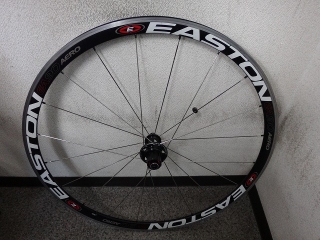
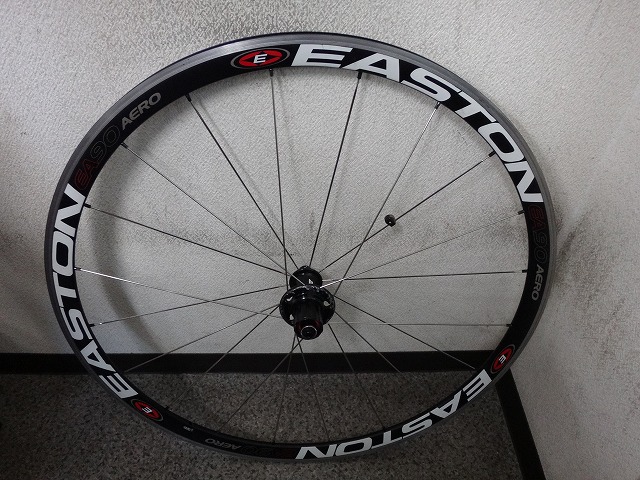
Done.
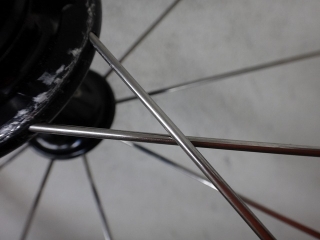
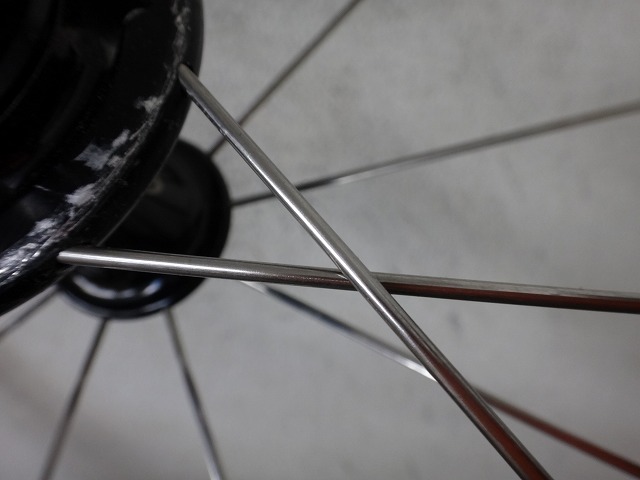
Since the drive side now has plain spokes,
the spoke distribution changed from 78%:78% to 100%:78%.
This rim isn't an offset rim, but Campagnolo's Hyperon rear wheel
is an offset rim with the left side as a sheer cliff that can't work without internal nipples,
and despite having aero spokes on both sides with an extreme asymmetric build,
it's a rare example of a non-terrible wheel—practically a textbook for me.
I've never heard of Hyperons slipping rim brakes much,
but rim tap-on of taller rims like Zipp, Reynolds, and Enve
happens constantly—which, even if wide rims are a factor,
indicates the problem is the wheel's geometry, not rim stiffness.

Starting with the front wheel.
There's tape marking the bent spoke, but based on the rotation direction,
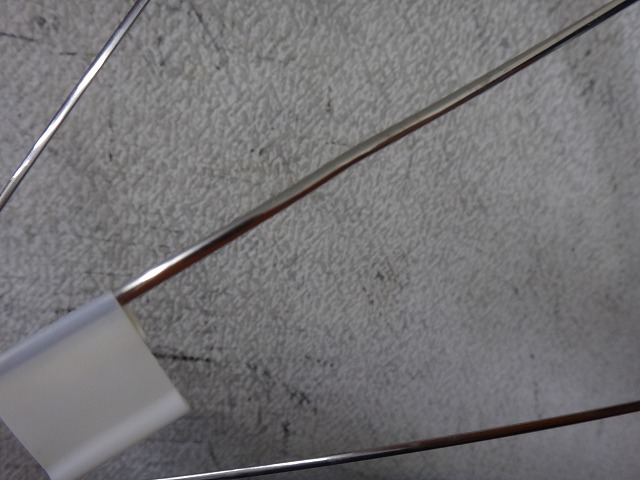
↑The first impact spoke, and
↑The second impact spoke
Interestingly, the second impact spoke is bent more severely.
These spokes are from a brand called Widas (Japanese spoke manufacturer), but instead of the usual CX-RAY, they're CX Sprint.
Before CX Sprint had stable supply, repairs were difficult, but that's been resolved now.

After replacing the spokes, adjusting just those two nipples removed most of the wobble,
but since the provisional center at that point was off,
it probably had this much misalignment even before the spokes bent.

Fixed.
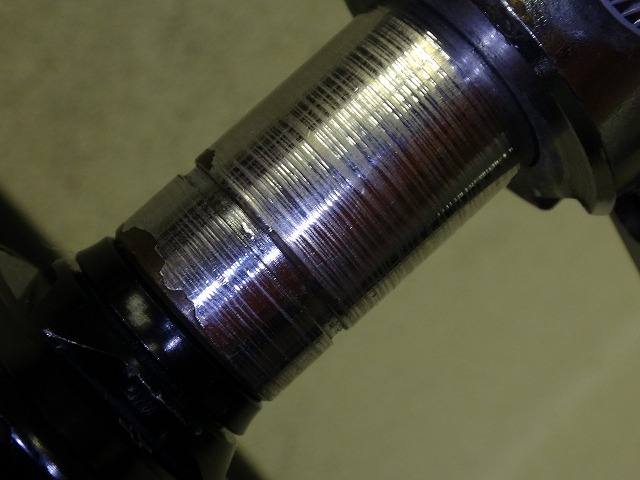
Centering done just to be thorough.
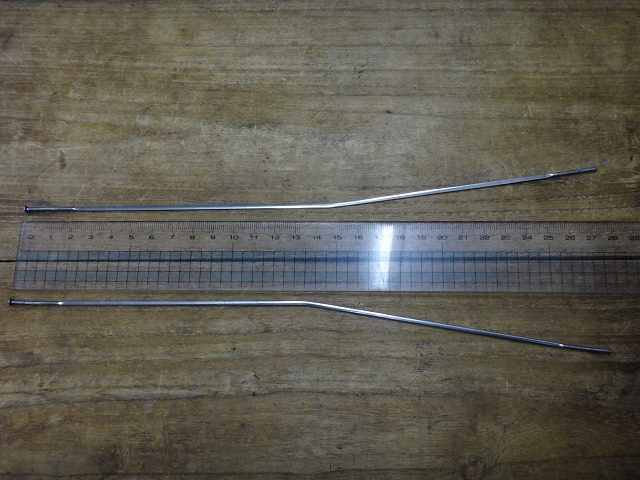
↑The replaced spokes
The more bent one at the bottom of the image is the second impact.
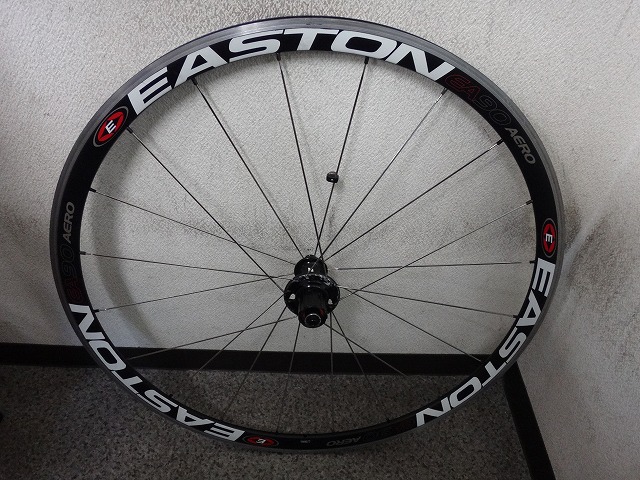
Now for the rear wheel.
The customer says there are no particular issues, but they're okay with me truing it if needed.
Both sides use CX Sprint spokes, equivalent to a 40-hole symmetric build.
The drive-side lacing appears to be single-cross, but since the spoke head positioning is on the dense flange,
if you extend the spokes inward to reach the evenly-spaced flange position,
the angle would be equivalent to a small flange double-cross (→here).
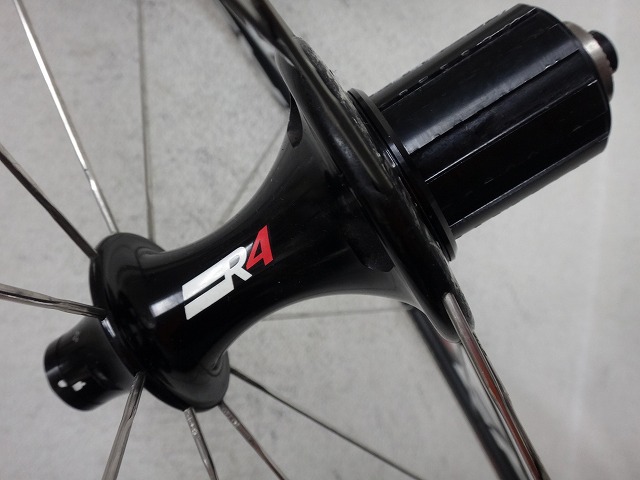
The hub is an R4, not the R4SL used in the EC90SL and others.
When R4SL hubs come into my shop, almost invariably
the ceramic bearings feel gritty in rotation.
This is because Enduro's Zero Ceramic cartridge bearing's inner and outer races are inferior quality compared to the hardness of ceramic balls,
and the same phenomenon appears with Campagnolo's old black ball races + ceramic bearing combinations on early USB hubs,
but with R4SL, almost all units that have seen some years of use
have dead bearings at a shockingly high rate.
This is partly related to the fact that the ball bearing adjustment parts on the rear hub
loosen frequently (the front hub doesn't have this issue as much),
so the hub is often used with play in it.
But even accounting for that, the "dead bearing rate" on the R4SL rear hub is striking.
I often joke that the "SL" acronym doesn't stand for "Super Light" or "Super Leggero" but rather "Short Life",
and the SL in both the Easton R4SL rear hub
and the Specialized Tarmac SL2 frame truly means Short Life. With the latter,
seat stays cracking easily in crashes was common at the time—back when Saxo Bank colors were around.
If you raced back then, it wouldn't be far-fetched to say
that if you extend it to "know a friend or a friend of a friend who actually cracked one",
the people who don't fit that description are probably fewer.

About lacing: I won't do it.
The non-drive side is radial laced so it's not possible,
and the drive side is already under high tension,
so there's not much point in reducing deformation.
Tying off the final cross on the drive side won't change
the tension on the non-drive side
(though the drive side's resistance to deformation during freehub twisting increases, so the non-drive side's twist amount also decreases slightly,
but whether that's perceptible is questionable).
I could replace the hub and build a genuine mulabowheel with this rim,
but since the customer wanted something done without that much budget,
I decided to change the spoke weight distribution on the drive side.
It's offset by about the thickness of a sheet of paper toward the drive side.
This can be attributed to wear over time.
Regardless of offset, the provisional center needs to be noted.
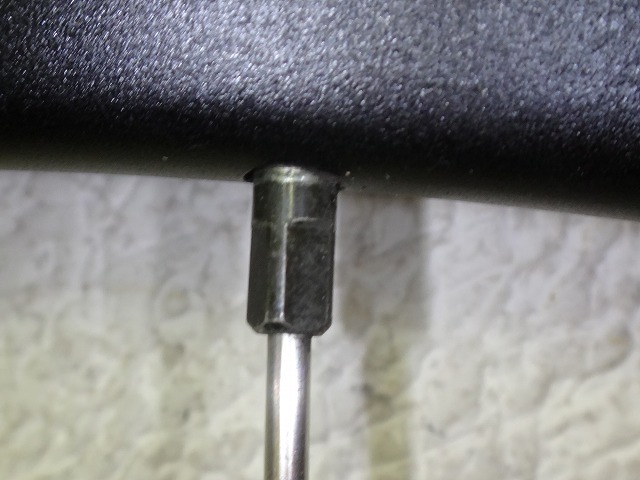
↑Black brass nipples
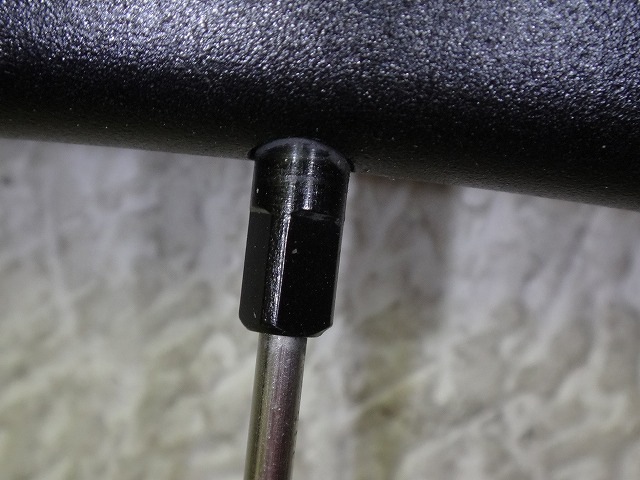
↑Black aluminum nipples
Since this wheel follows the Velomax lineage,
the rear has brass nipples on the drive side
and aluminum nipples on the non-drive side.
I agree with this specification so I'll leave it as is.
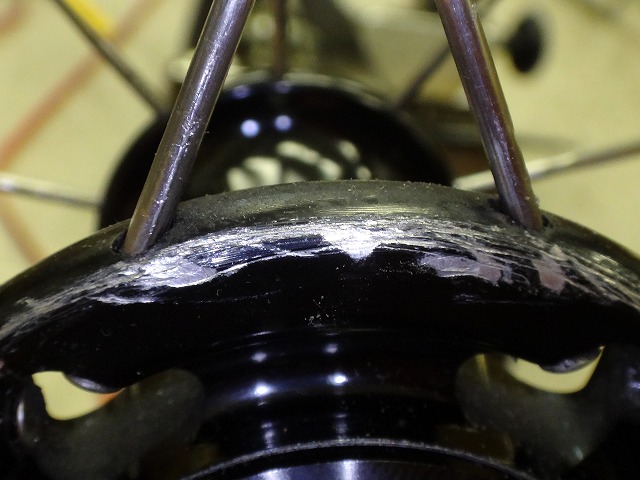
There's a chain drop mark on the right flange, but
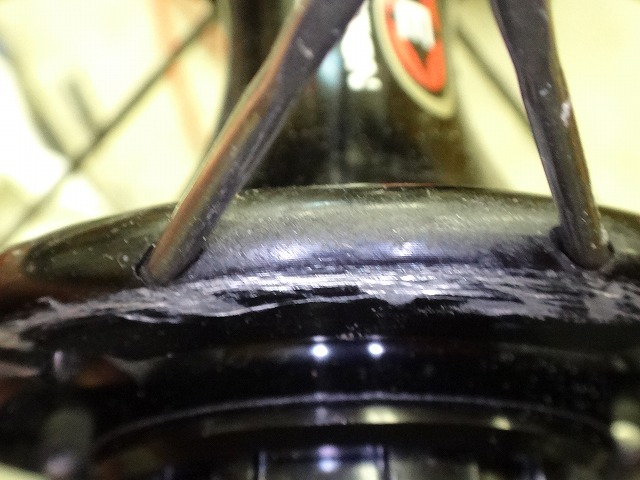
the shape is such that it doesn't damage the spokes—a perfect design that doesn't seem like mere coincidence.
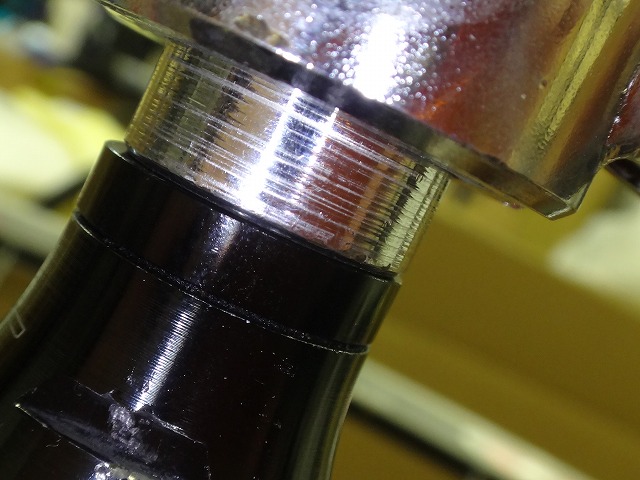
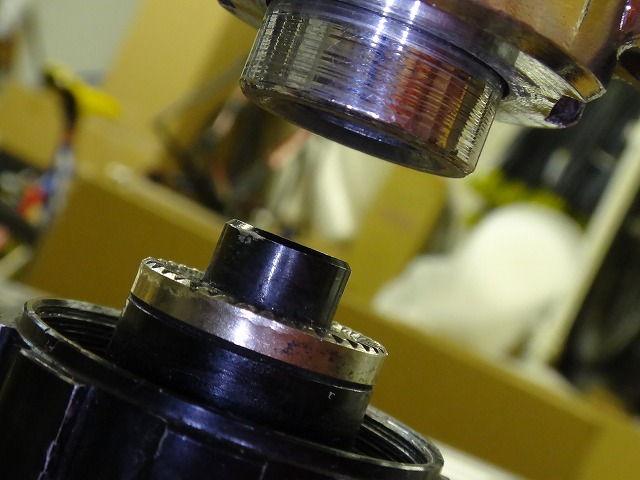
I changed the drive-side spokes to 14g plain Leader Straight,
tensioned them to just below the final build tension,
then focused on radial truing only.
I'll handle the axial truing later, so some runout is okay for now.
The center is way off, but at this stage I'm actually
loosening the non-drive nipples exactly 3 full turns
so that I can gently tighten the drive-side nipples.

I tightened the non-drive side 3 full turns.
There's still center offset.
From here, the amount remaining after subtracting the provisional center offset
(which we can ignore since it was about a sheet of paper)
is the amount of "additional tightening that's now possible due to the asymmetric build".
From this point, I can increase tension only on the non-drive side until center is achieved.
The key caution is that as I increase non-drive tension, drive-side tension rises too,
so after this point I barely touch the drive-side nipples,
but they need to be kept just under the final target tension.


I achieved center by increasing non-drive tension.
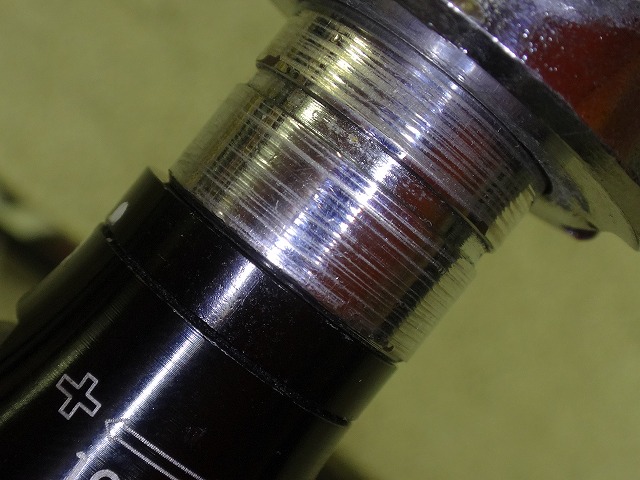
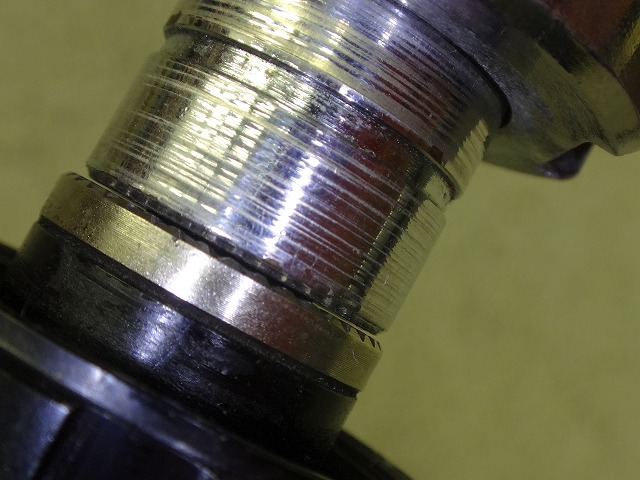
The hub bearing adjustment nuts on both the front and rear
had threadlocker applied by the customer.
Plus, white paint was applied to check for loosening.
The outer end part is tight against the hub axle,
and the inner conical nut is the bearing adjustment part—but looking at the marks,
it's more tightened than when the white paint was applied.
They might be managing it by the principle that "aligned marks mean it loosened".
Depending on the age, this part either has or doesn't have a slot for a 19mm wrench,
but either way, without threadlocker it turns by hand. Worse still,
as I mentioned, it loosens on its own frequently.
Done.
Since the drive side now has plain spokes,
the spoke distribution changed from 78%:78% to 100%:78%.
This rim isn't an offset rim, but Campagnolo's Hyperon rear wheel
is an offset rim with the left side as a sheer cliff that can't work without internal nipples,
and despite having aero spokes on both sides with an extreme asymmetric build,
it's a rare example of a non-terrible wheel—practically a textbook for me.
I've never heard of Hyperons slipping rim brakes much,
but rim tap-on of taller rims like Zipp, Reynolds, and Enve
happens constantly—which, even if wide rims are a factor,
indicates the problem is the wheel's geometry, not rim stiffness.