Another day, another wheel (and so on).
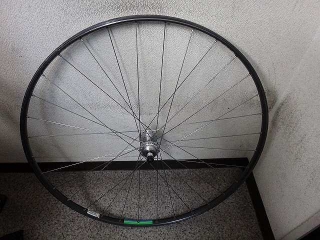
A customer brought in
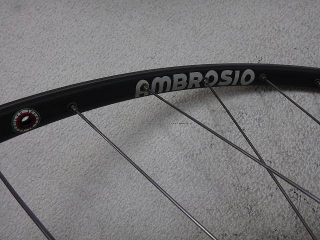
an Ambrosio
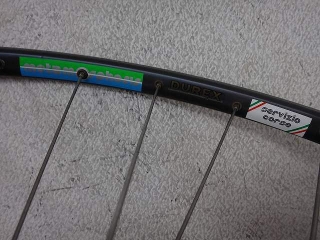
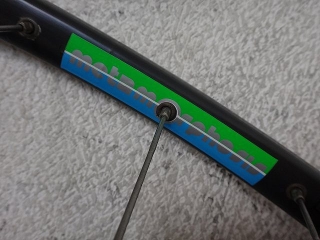
Metamorphosis (Metamorphosis) rim rear wheel to be rebuilt.
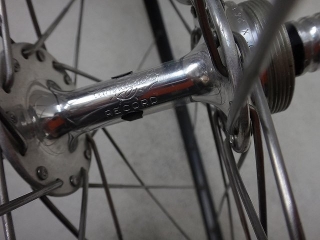
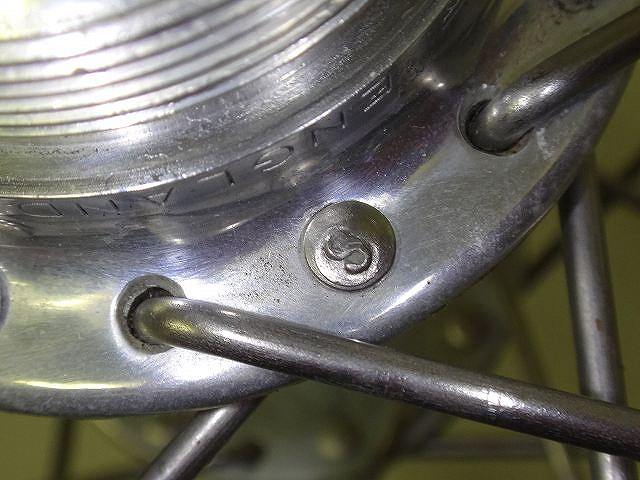
The hub is a Campagnolo Record with the globe logo (naturally 126mm width)
small-flange boss hub, 32H, and it's laced with
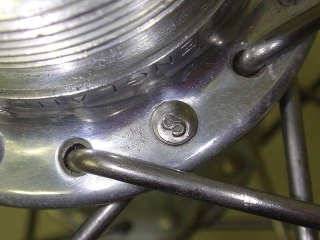
Sacheți 2.0–1.8–2.0mm butted spokes
in a 6/6 Italian lacing pattern.

Either way we're taking it apart, but the customer also pointed out
that the rim's left and right appear to be laced in reverse relative to the hub.
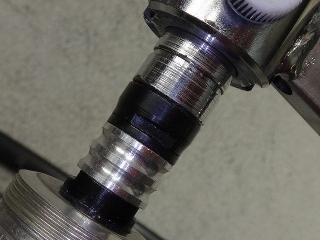
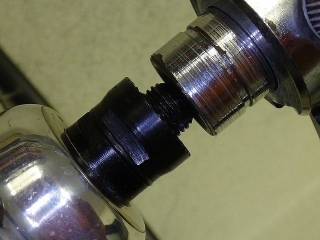
The rim was abnormally off-center toward the freewheel side.
There was some lateral runout in one spot, but not enough to account for this offset.
Truth be told, with this much drift, you'd think it would be obvious just by looking at
the gaps between the wheel and the chainstays of the frame.
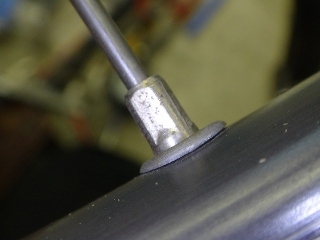
Short nipples are generally 12mm in length these days, but
these nipples are visibly short—
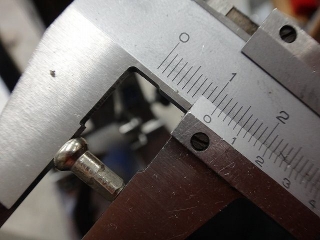
11mm long.
Not reusing them anyway, so no worries there.

This rear hub's
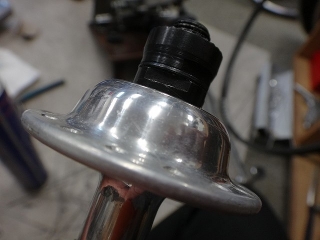
left flange and outer form looked familiar somehow...

And comparing it to
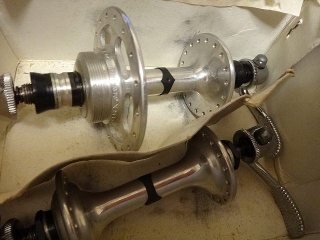

one I have in my personal collection—it's from the same era as a high-low flange rear hub.
Boss hubs don't suffer from the severe dishing that modern freehub bodies do
(the freewheel side is usually up to 7-speed, maybe 8-speed max, so the angle isn't as severe),
and combined with the pretty significant high-low geometry of this hub,
it's fair to say this is dimensionally one of the strongest rear hubs out there.
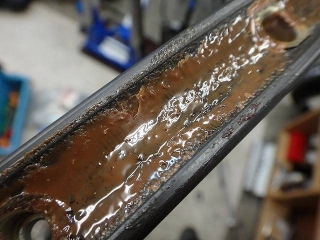
The outer edge of the rim had dried to the final state of what appears to be
slow-drying rim cement (probably), where the finish won't change no matter how long it sits.
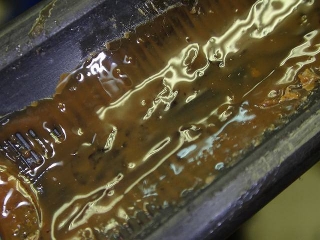
This rim also had the surface treatment I mentioned the other day—the kind that improves
cement adhesion. Truth is, applying fast-drying rim cement over a slow-drying cement bed isn't ideal,
but with current Panaracer rim cement, it doesn't matter—the tire bonds just fine.
Since the customer also wants a tire mounted after the wheel build,
I'll soften the old cement bed with acetone to some degree and then
apply fresh Panaracer cement on top.

The rim isn't particularly light, but since I've been told to build it as tight as possible,
that weight is actually helpful. Silver rims and hard-anodized rims differ in stiffness,
with the latter being stiffer—another advantage—so I should be able to tension it
at about the level I'd use for a Nemesis rim.
The R-50 rim from the other day was around 420g,
but when you tension lightweight pipe rims under 350g with modern rim methods,
they can crack pretty easily. Worth noting.
Super-lightweight pipe rims can be under 300g,
and at that point they just won't accept tension.
But since they don't reach the "unyooon" threshold,
you can use 1.5mm butted plain spokes on them.
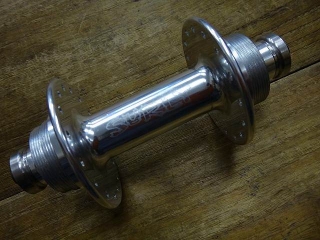
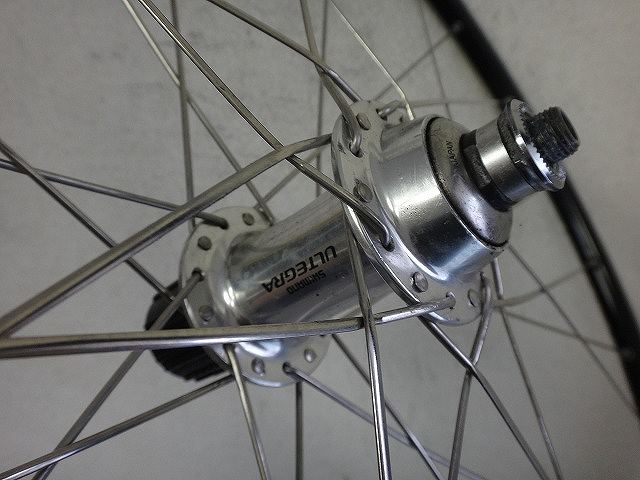
The replacement hub is a Surly Ultra New
130mm-width fixed/free piston hub.
This hub in 130mm width only comes in 32H (available in silver and black) with
freewheel or fixed-gear threading, but in 135mm width with disc tabs you can choose
whether the right-side threading is for fixed or freewheel; in 120mm width you get
fixed/fixed or fixed/freewheel options; in 135mm width both-sided (non-disc) you can get
freewheel/freewheel; and some specs even come in 48H. Lots of interesting variations.
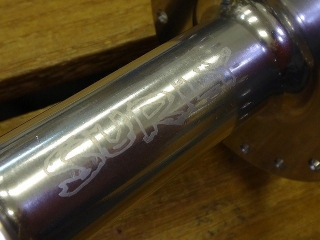
I don't know which gear the customer will use it with, but
I align the rim orientation to match the hub shell logo, so
if they end up using the freewheel side, the rim lettering won't be inverted.

The longest available lengths for the spokes I regularly use are:
DT Competition at 303mm,
Sapim Race or CX-RAY at 306mm,
Sapim CX Sprint (threadless) at 310mm
(available cut down to 270mm if needed).
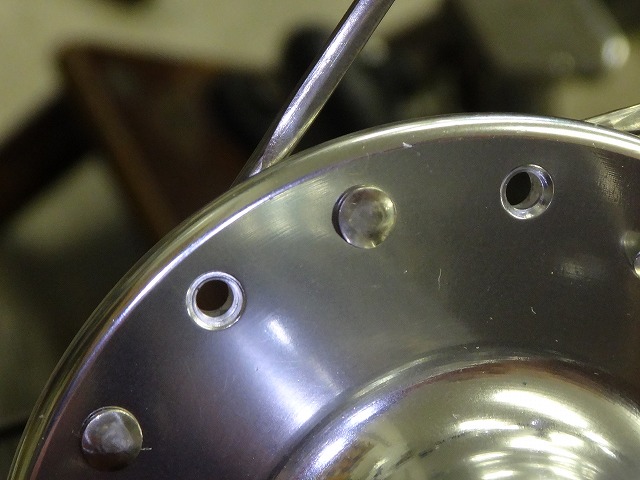
This hub is a large-flange 32H, but with smaller flanges than NJS large-flange hubs.
With a 36H low-profile pipe rim and NJS large-flange hub in 8-spoke lacing you can use 305mm.
That's why Hoshi NJS 14-15 butted spokes only come in 305mm—that's the reason.
36H pipe rims don't vary much in inner diameter across manufacturers and models,
so whether 305mm works or if 304mm would be more appropriate but still doable
gets absorbed within the spoke threading range.
This time it's a somewhat smaller large-flange at 32H instead of 36H,
so to do 8-spoke lacing I need spokes around 310mm
(6-spoke would be around 300mm).
So the usable aero spoke is CX Sprint,
and for plain spokes there's DT Champion at 315mm, about that.
The "48-spoke lacing"—eight spokes per side of true tangent lacing on a 28H wheel—
is one of the ultimate lacing methods, but it has the drawback that
the inpoke trajectory sits directly above the outpoke head, creating contact that
can cause spoke breakage at that point. Excluding external factors like crashes or debris,
spoke breakage normally only happens at the neck, but
outpoke head overlap is pretty much the only cause of mid-shaft spoke breakage from wear.
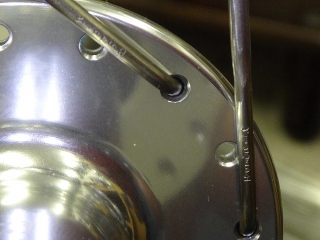
I've already written so much the images above have scrolled out of view, but
those images show test-lacing a 32H 8-spoke setup to confirm that
the outpoke head overlap doesn't create problematic contact.
With a sufficiently large flange, the geometry works in your favor,
so I figured it should be buildable.
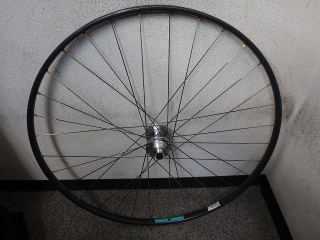
And it built.
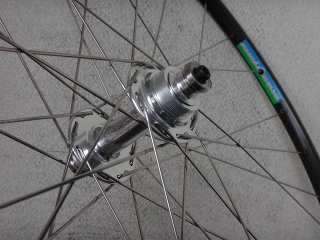
32H all-CX Sprint eight-by-eight JIS laced with
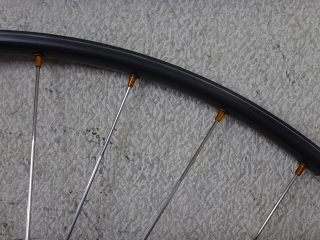
orange aluminum nipples.
I'll do the lacing ties later.
Separate from this wheel, I'm seeing requests for silver CX Sprint and orange aluminum nipples
lately—for cyclocross and MTB builds—for some reason.
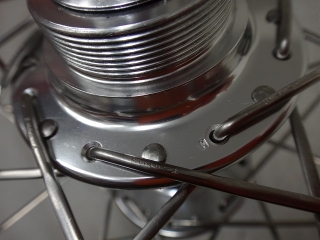
Slight outpoke head overlap is occurring, but at this level it's not a problem.
Bonus:
Besides true tangent lacing, spoke breakage risk is highest with
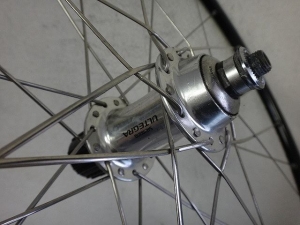
"double-cross" lacing, where spokes cross one more time before the final cross, and

"flower" lacing, where twist is added one cross before the final. But these increase
neck-breakage risk—they don't cause mid-shaft fractures the way outpoke head overlap can.
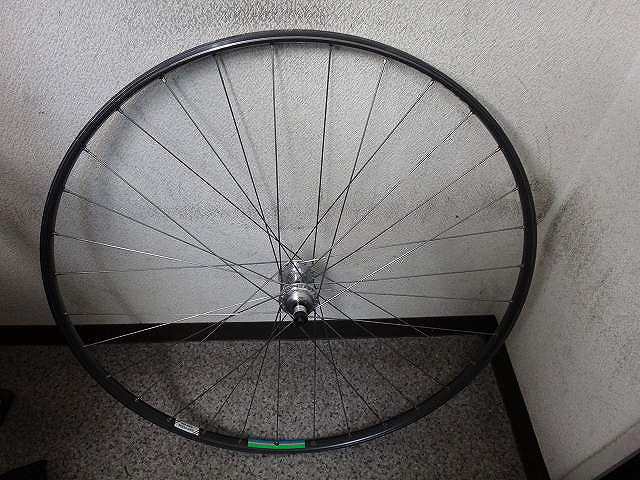
A customer brought in

an Ambrosio
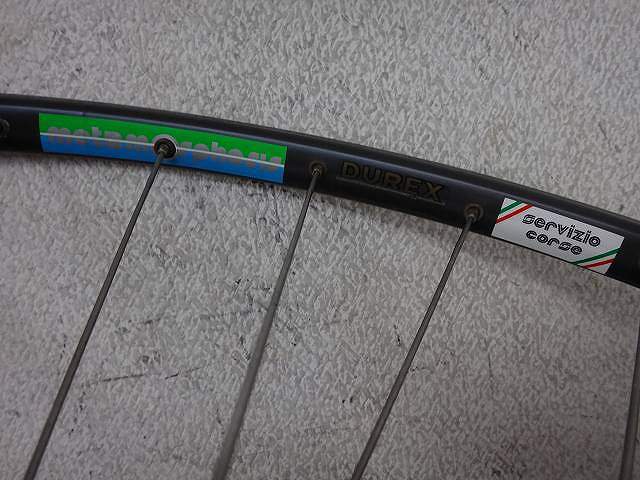
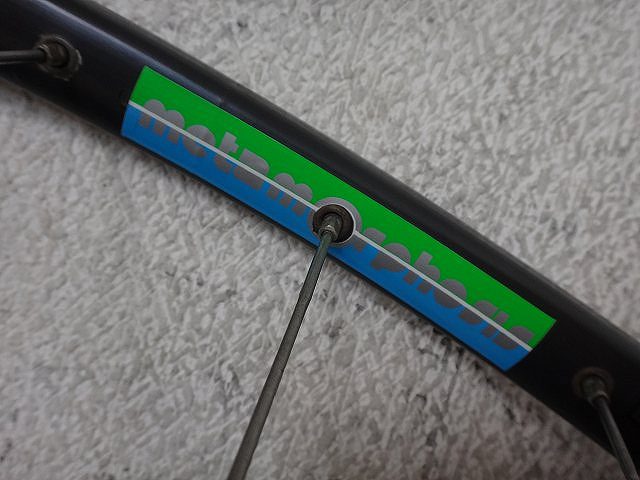
Metamorphosis (Metamorphosis) rim rear wheel to be rebuilt.

The hub is a Campagnolo Record with the globe logo (naturally 126mm width)
small-flange boss hub, 32H, and it's laced with
Sacheți 2.0–1.8–2.0mm butted spokes
in a 6/6 Italian lacing pattern.
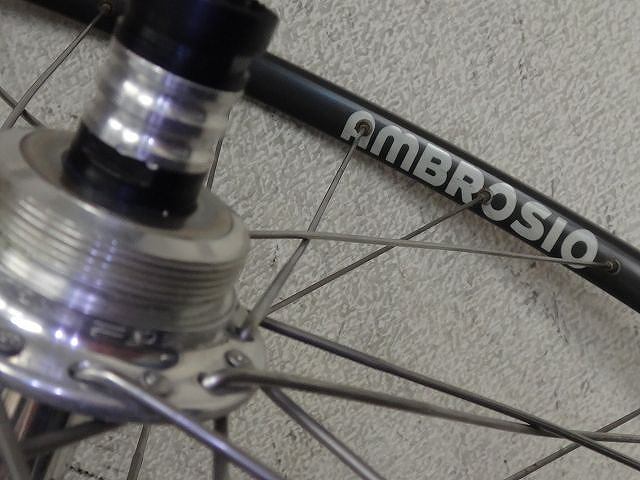
Either way we're taking it apart, but the customer also pointed out
that the rim's left and right appear to be laced in reverse relative to the hub.
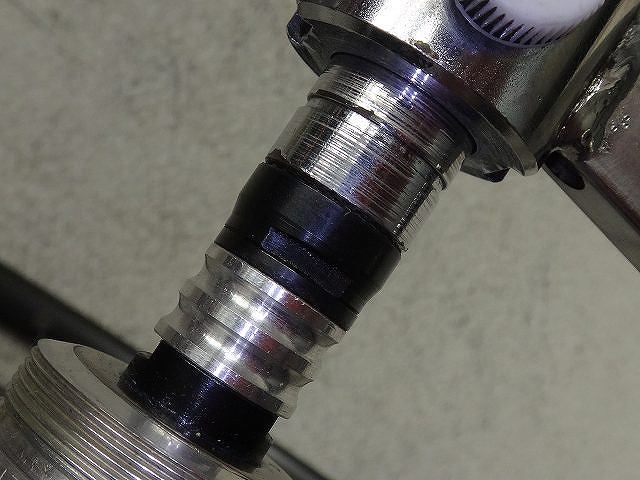
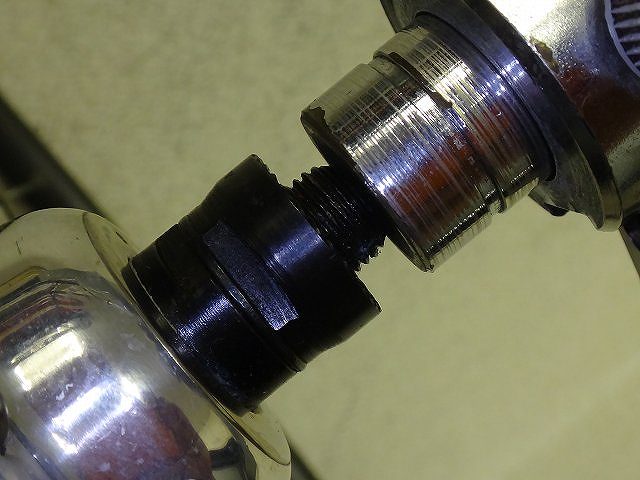
The rim was abnormally off-center toward the freewheel side.
There was some lateral runout in one spot, but not enough to account for this offset.
Truth be told, with this much drift, you'd think it would be obvious just by looking at
the gaps between the wheel and the chainstays of the frame.

Short nipples are generally 12mm in length these days, but
these nipples are visibly short—
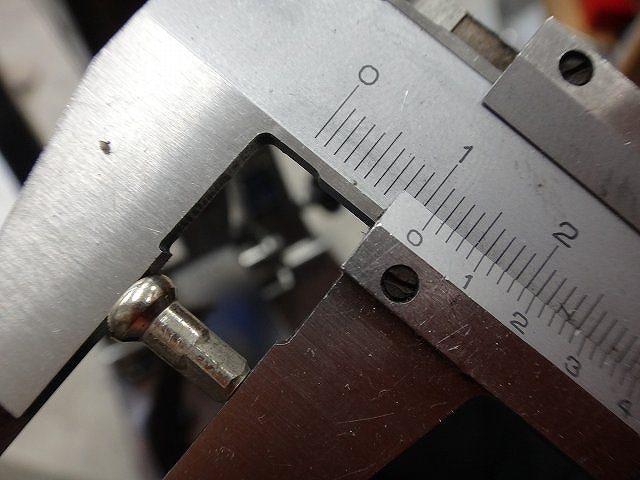
11mm long.
Not reusing them anyway, so no worries there.

This rear hub's
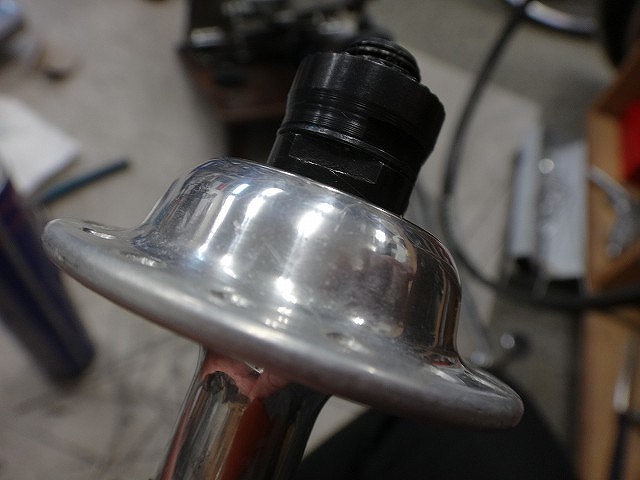
left flange and outer form looked familiar somehow...
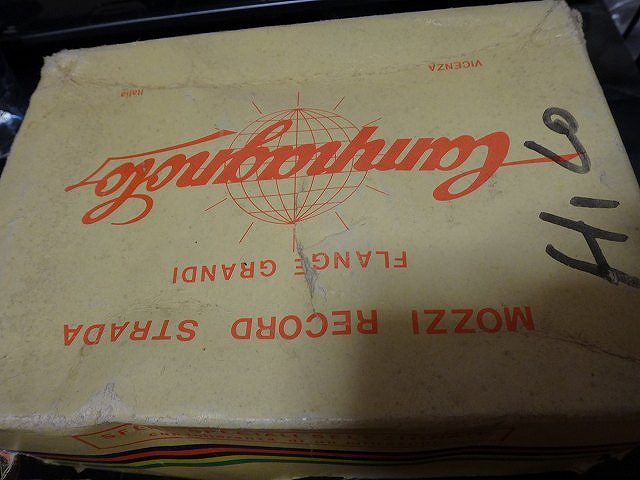
And comparing it to
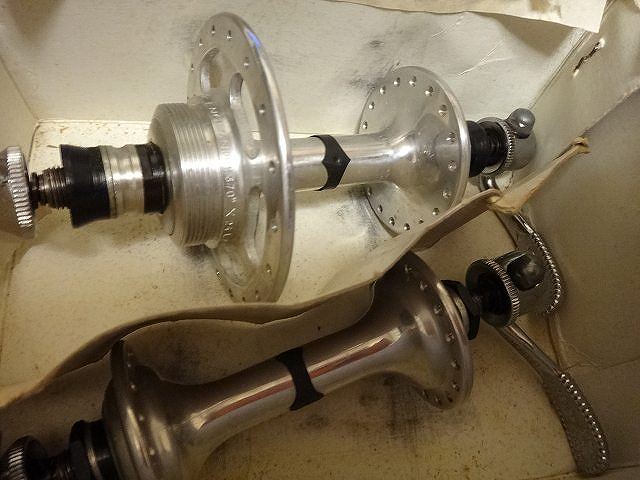
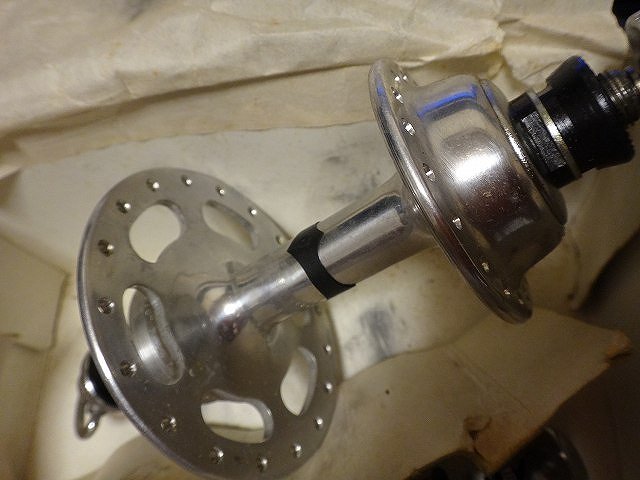
one I have in my personal collection—it's from the same era as a high-low flange rear hub.
Boss hubs don't suffer from the severe dishing that modern freehub bodies do
(the freewheel side is usually up to 7-speed, maybe 8-speed max, so the angle isn't as severe),
and combined with the pretty significant high-low geometry of this hub,
it's fair to say this is dimensionally one of the strongest rear hubs out there.
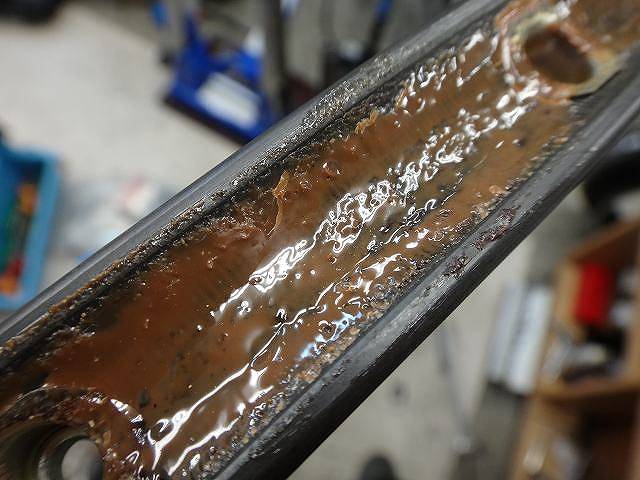
The outer edge of the rim had dried to the final state of what appears to be
slow-drying rim cement (probably), where the finish won't change no matter how long it sits.
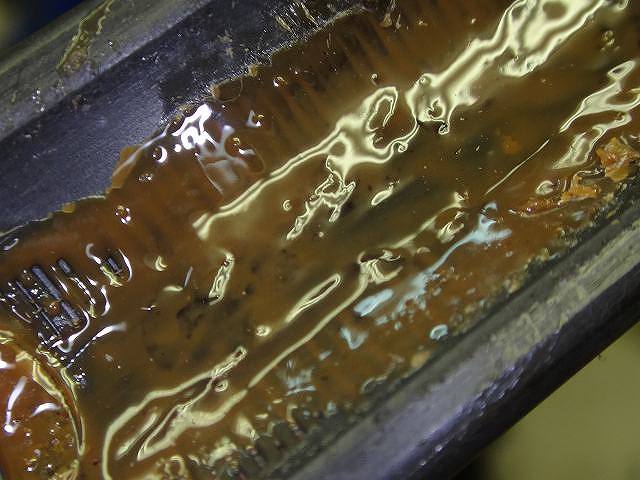
This rim also had the surface treatment I mentioned the other day—the kind that improves
cement adhesion. Truth is, applying fast-drying rim cement over a slow-drying cement bed isn't ideal,
but with current Panaracer rim cement, it doesn't matter—the tire bonds just fine.
Since the customer also wants a tire mounted after the wheel build,
I'll soften the old cement bed with acetone to some degree and then
apply fresh Panaracer cement on top.
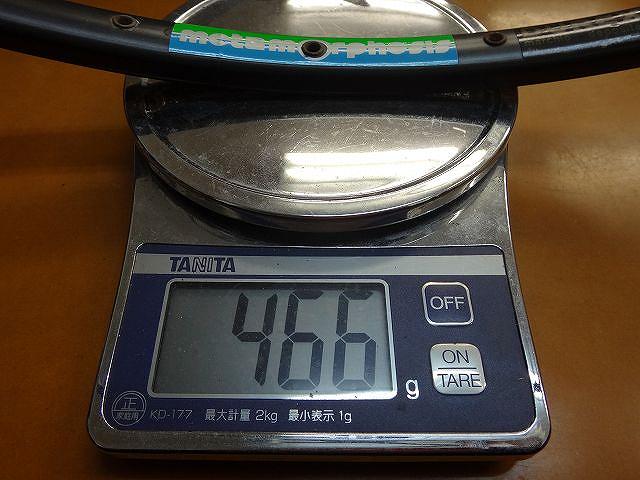
The rim isn't particularly light, but since I've been told to build it as tight as possible,
that weight is actually helpful. Silver rims and hard-anodized rims differ in stiffness,
with the latter being stiffer—another advantage—so I should be able to tension it
at about the level I'd use for a Nemesis rim.
The R-50 rim from the other day was around 420g,
but when you tension lightweight pipe rims under 350g with modern rim methods,
they can crack pretty easily. Worth noting.
Super-lightweight pipe rims can be under 300g,
and at that point they just won't accept tension.
But since they don't reach the "unyooon" threshold,
you can use 1.5mm butted plain spokes on them.
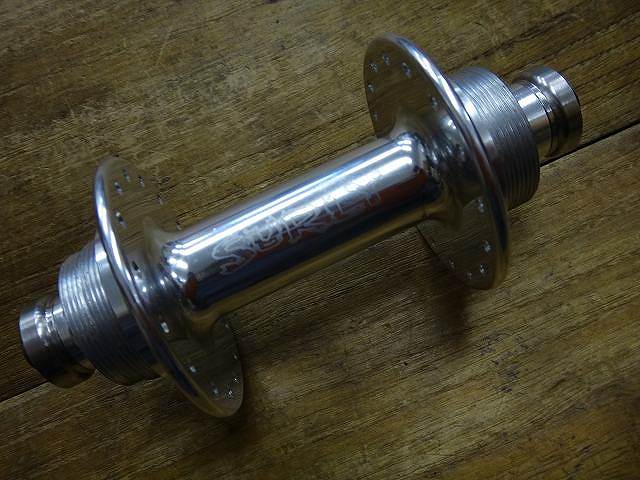
The replacement hub is a Surly Ultra New
130mm-width fixed/free piston hub.
This hub in 130mm width only comes in 32H (available in silver and black) with
freewheel or fixed-gear threading, but in 135mm width with disc tabs you can choose
whether the right-side threading is for fixed or freewheel; in 120mm width you get
fixed/fixed or fixed/freewheel options; in 135mm width both-sided (non-disc) you can get
freewheel/freewheel; and some specs even come in 48H. Lots of interesting variations.
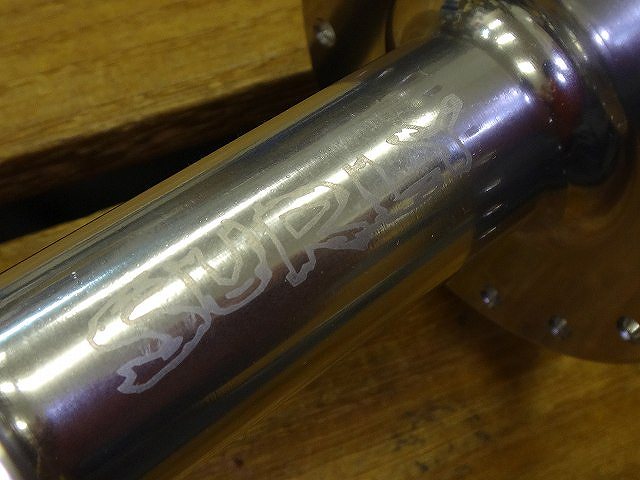
I don't know which gear the customer will use it with, but
I align the rim orientation to match the hub shell logo, so
if they end up using the freewheel side, the rim lettering won't be inverted.
The longest available lengths for the spokes I regularly use are:
DT Competition at 303mm,
Sapim Race or CX-RAY at 306mm,
Sapim CX Sprint (threadless) at 310mm
(available cut down to 270mm if needed).
This hub is a large-flange 32H, but with smaller flanges than NJS large-flange hubs.
With a 36H low-profile pipe rim and NJS large-flange hub in 8-spoke lacing you can use 305mm.
That's why Hoshi NJS 14-15 butted spokes only come in 305mm—that's the reason.
36H pipe rims don't vary much in inner diameter across manufacturers and models,
so whether 305mm works or if 304mm would be more appropriate but still doable
gets absorbed within the spoke threading range.
This time it's a somewhat smaller large-flange at 32H instead of 36H,
so to do 8-spoke lacing I need spokes around 310mm
(6-spoke would be around 300mm).
So the usable aero spoke is CX Sprint,
and for plain spokes there's DT Champion at 315mm, about that.
The "48-spoke lacing"—eight spokes per side of true tangent lacing on a 28H wheel—
is one of the ultimate lacing methods, but it has the drawback that
the inpoke trajectory sits directly above the outpoke head, creating contact that
can cause spoke breakage at that point. Excluding external factors like crashes or debris,
spoke breakage normally only happens at the neck, but
outpoke head overlap is pretty much the only cause of mid-shaft spoke breakage from wear.
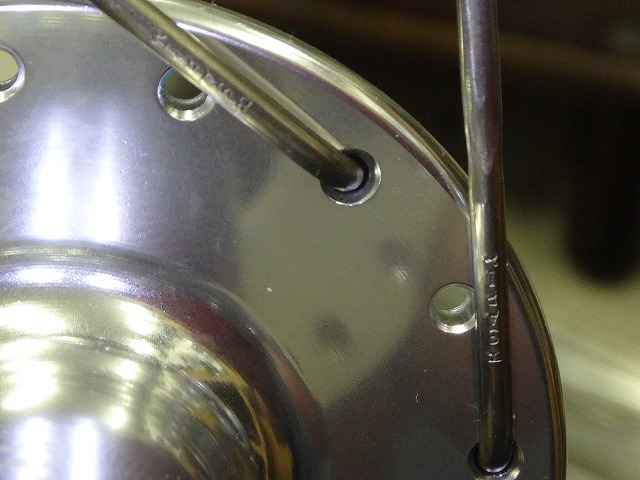
I've already written so much the images above have scrolled out of view, but
those images show test-lacing a 32H 8-spoke setup to confirm that
the outpoke head overlap doesn't create problematic contact.
With a sufficiently large flange, the geometry works in your favor,
so I figured it should be buildable.
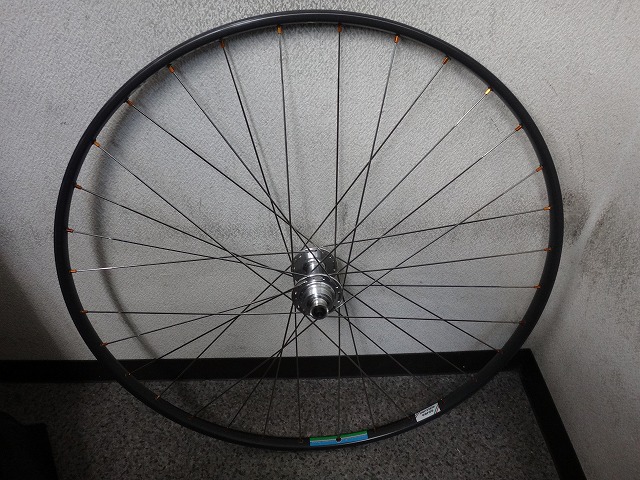
And it built.
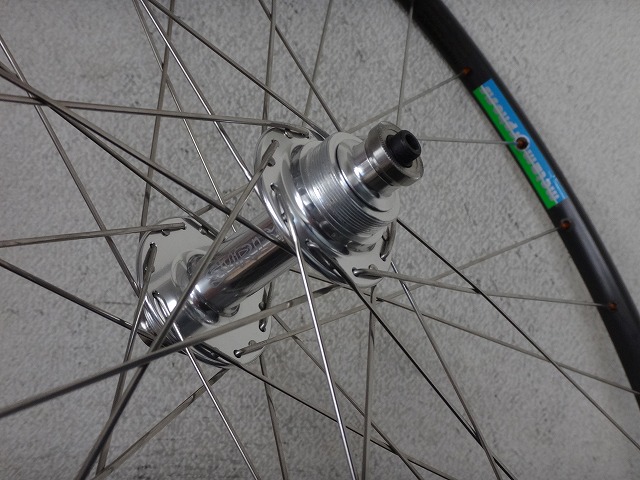
32H all-CX Sprint eight-by-eight JIS laced with
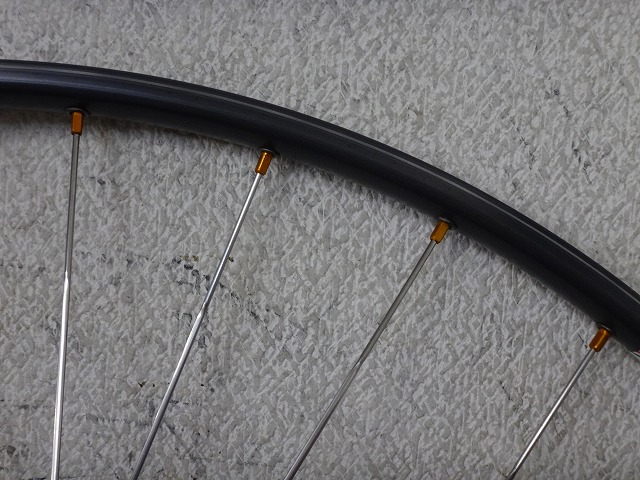
orange aluminum nipples.
I'll do the lacing ties later.
Separate from this wheel, I'm seeing requests for silver CX Sprint and orange aluminum nipples
lately—for cyclocross and MTB builds—for some reason.
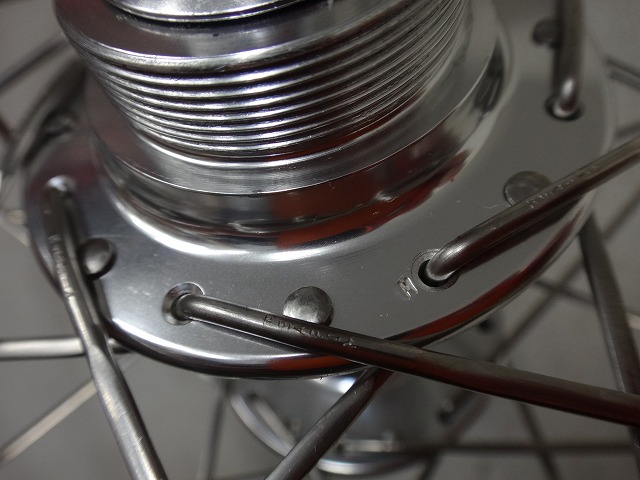
Slight outpoke head overlap is occurring, but at this level it's not a problem.
Bonus:
Besides true tangent lacing, spoke breakage risk is highest with
"double-cross" lacing, where spokes cross one more time before the final cross, and

"flower" lacing, where twist is added one cross before the final. But these increase
neck-breakage risk—they don't cause mid-shaft fractures the way outpoke head overlap can.