Another wheel build today (and so on…).
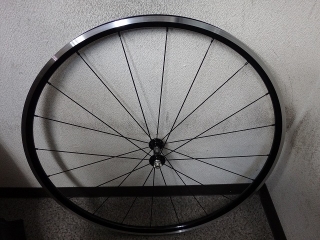
Built up a wheel using the AL22W rim for rim brakes.
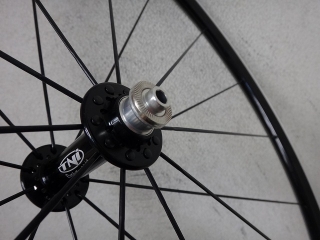
Front wheel—as you'd expect—non-offset rim
Evolite hub, 20H, black CX Sprint, outpoke radial lacing,
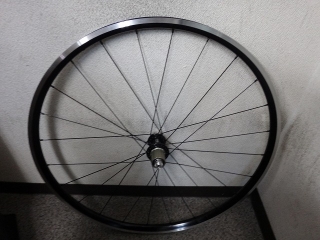

Rear wheel is offset rim
Evolite hub, 24H, black, semi-comp cross lacing.
I'll do the nippling later.
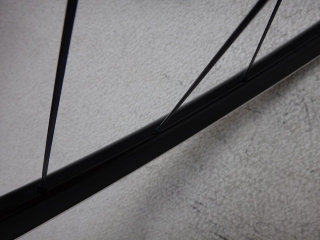
This time I built the rear wheel with an offset rim, but
offset rims have quite a large correction range for spoke deflection between left and right,
so semi-comp lacing isn't the way to go.
The CX-RAY spokes on the non-drive side end up far too taut.
It might work if you're not doing nippling or can't do it, but…
The AL22W rim comes in two types: for rim brakes (with brake zone) and
for disc brakes, and
both come in non-offset and offset versions, so
there are four specifications total, but
just like DT does with the RR411db rim,
I did wonder at one point if
"non-offset spec is unnecessary for disc brake rims?"
But with the AL22W rim, all four specifications
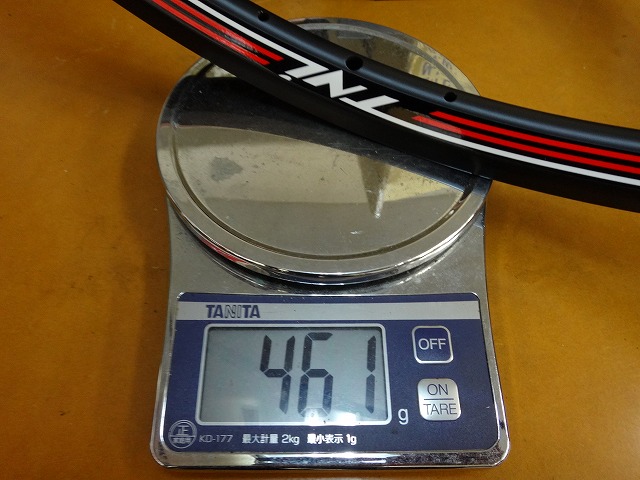
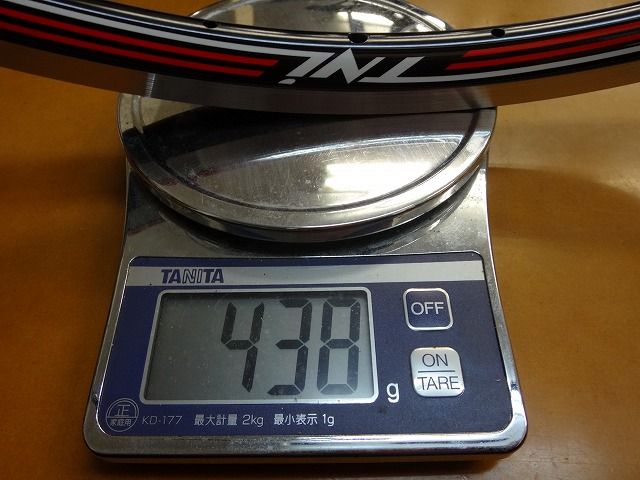
are lumped together at a nominal 445g,
yet in practice the non-offset rim tends to be about 20–30g lighter.
The AL22W front and rear wheels I built one before this one
had the rear wheel on a non-offset rim—per the customer's request
(pretty sharp eye to catch that).
The AL22W DB front wheel I built solo a while back is also
on a non-offset rim per the customer's wishes (same sharp eye…).
If you leverage asymmetric hole-count cross lacing with nippling,
and if the difference in wheel stiffness due to rim offset is below the perceptual threshold
(either way, it doesn't feel especially mushy),
then taking the lighter rim is the smarter choice.
There's no "correct answer" to this.
There might be one, but I don't know it yet.
On the disc brake front wheel I built the other day, I used
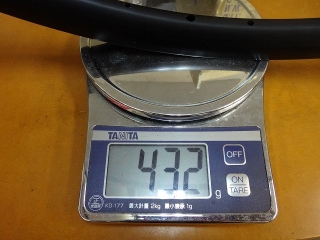
↑non-offset 24H AL22W DB rim

↑offset 24H AL22W DB rim I'm about to build
Today's wheels:
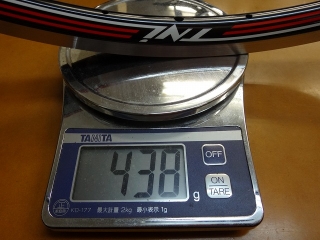
↑non-offset 20H AL22W front rim

↑offset 24H AL22W rear rim
About DT's disc brake rims:
The RR411db, which only comes in offset rim, has an 18mm inner rim width and
an actual measured weight of about 410g, but
there's an XR331—a non-offset rim for MTB cross-country use
with an inner rim width of
20mm nominal (about 19.7mm measured),
barely wider than the RR411db.
The maker's nominal minimum tire width is 25C and max pressure is 6.8 bar,
so it works on disc road and cyclocross too.
Actual measured weight is about 385g.
The next model up in weight, the XR361,
has a nominal inner rim width of 22.5mm, so it's not ideal for disc road.
I can't say that with certainty these days given how equipment changes (not that I'd call it progress),
and if road bike standard became 28C a few years down the line,
rim inner width might end up around 22–23mm.
This relationship between the RR411db and XR331 (both around ¥10,000 each)
mirrors the relationship between offset and non-offset AL22W rims
(around ¥4,000 each),
and I've actually taken cyclocross wheel orders where
the front is an XR331 rim for lightness and
the rear is an RR411db for stiffness.
The problem is that the XR331 is an MTB rim, so its minimum hole count is 28H
and there's no 24H option.
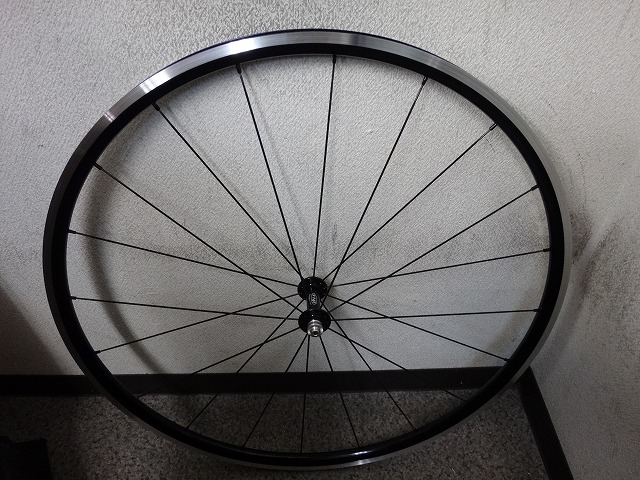
Built up a wheel using the AL22W rim for rim brakes.
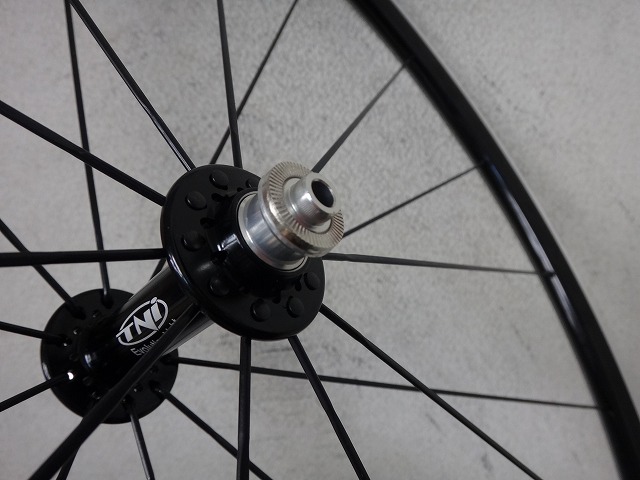
Front wheel—as you'd expect—non-offset rim
Evolite hub, 20H, black CX Sprint, outpoke radial lacing,
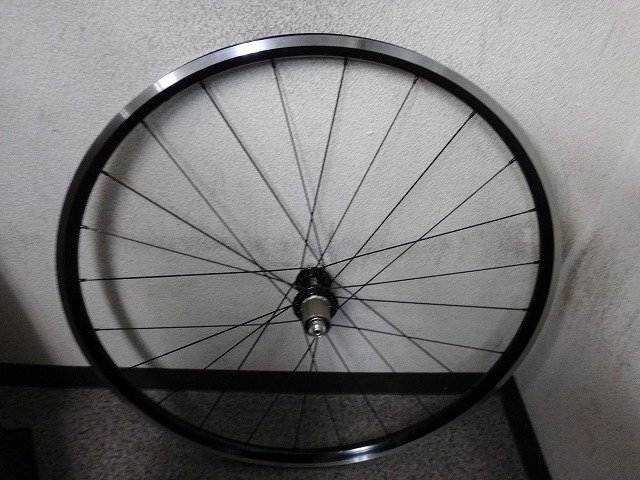
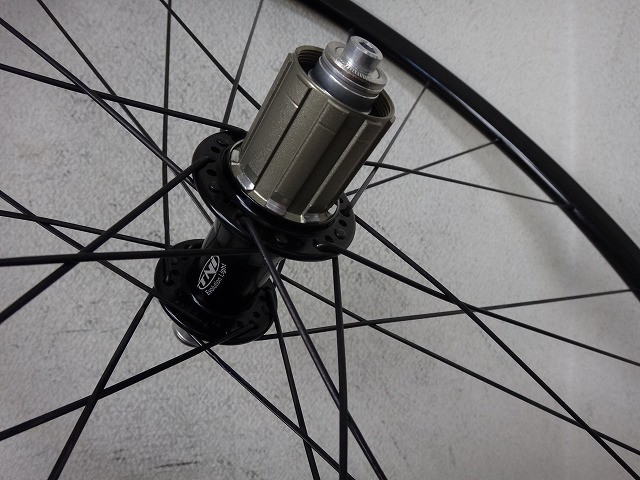
Rear wheel is offset rim
Evolite hub, 24H, black, semi-comp cross lacing.
I'll do the nippling later.
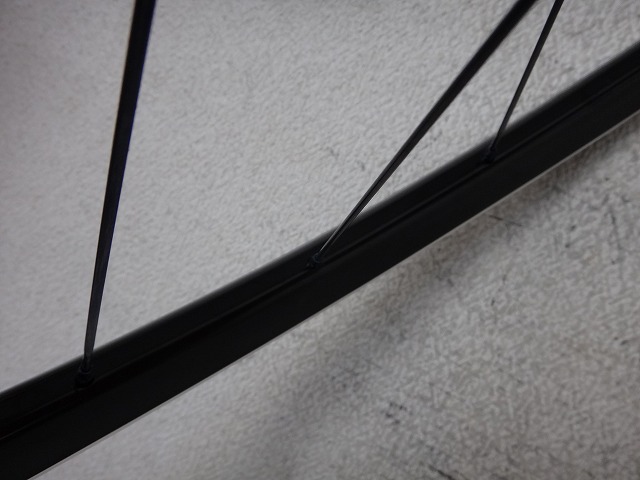
This time I built the rear wheel with an offset rim, but
offset rims have quite a large correction range for spoke deflection between left and right,
so semi-comp lacing isn't the way to go.
The CX-RAY spokes on the non-drive side end up far too taut.
It might work if you're not doing nippling or can't do it, but…
The AL22W rim comes in two types: for rim brakes (with brake zone) and
for disc brakes, and
both come in non-offset and offset versions, so
there are four specifications total, but
just like DT does with the RR411db rim,
I did wonder at one point if
"non-offset spec is unnecessary for disc brake rims?"
But with the AL22W rim, all four specifications
are lumped together at a nominal 445g,
yet in practice the non-offset rim tends to be about 20–30g lighter.
The AL22W front and rear wheels I built one before this one
had the rear wheel on a non-offset rim—per the customer's request
(pretty sharp eye to catch that).
The AL22W DB front wheel I built solo a while back is also
on a non-offset rim per the customer's wishes (same sharp eye…).
If you leverage asymmetric hole-count cross lacing with nippling,
and if the difference in wheel stiffness due to rim offset is below the perceptual threshold
(either way, it doesn't feel especially mushy),
then taking the lighter rim is the smarter choice.
There's no "correct answer" to this.
There might be one, but I don't know it yet.
On the disc brake front wheel I built the other day, I used
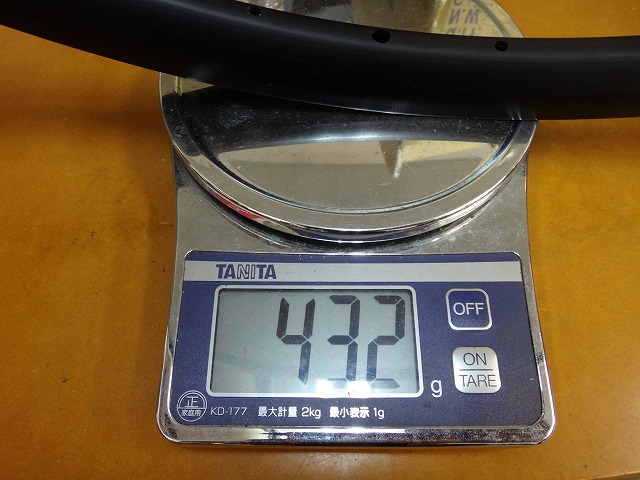
↑non-offset 24H AL22W DB rim
↑offset 24H AL22W DB rim I'm about to build
Today's wheels:
↑non-offset 20H AL22W front rim

↑offset 24H AL22W rear rim
About DT's disc brake rims:
The RR411db, which only comes in offset rim, has an 18mm inner rim width and
an actual measured weight of about 410g, but
there's an XR331—a non-offset rim for MTB cross-country use
with an inner rim width of
20mm nominal (about 19.7mm measured),
barely wider than the RR411db.
The maker's nominal minimum tire width is 25C and max pressure is 6.8 bar,
so it works on disc road and cyclocross too.
Actual measured weight is about 385g.
The next model up in weight, the XR361,
has a nominal inner rim width of 22.5mm, so it's not ideal for disc road.
and if road bike standard became 28C a few years down the line,
rim inner width might end up around 22–23mm.
This relationship between the RR411db and XR331 (both around ¥10,000 each)
mirrors the relationship between offset and non-offset AL22W rims
(around ¥4,000 each),
and I've actually taken cyclocross wheel orders where
the front is an XR331 rim for lightness and
the rear is an RR411db for stiffness.
The problem is that the XR331 is an MTB rim, so its minimum hole count is 28H
and there's no 24H option.