Another wheel day (and so on).
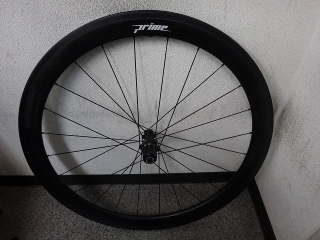
A customer brought in the rear wheel from a Prime—a 50mm tall tubeless-ready
carbon rim wheel.
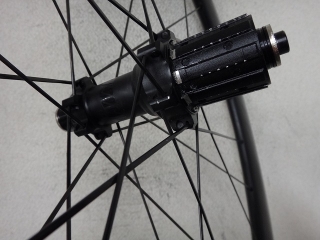
Novatec straight-pull hub, 24-hole,
Aerocomp/Aerolite, laced 2-cross on both sides.
The customer had replaced the hub bearings themselves, but when they tightened the quick-release and mounted it on the frame, it wouldn't turn at all. They asked me to take a look. But then their note said "please rebuild the wheel." That's not what we originally agreed on.
As for the hub bearings, when I spun the hub shaft by hand,
it felt pretty gritty. All four bearings—two on the hub body and two on the freebody—are in contact with the hub shaft when you rotate it by hand, so even if just one of them is bad or all four are bad, you can't tell for sure without checking each one individually. The only certainty is that at least one is shot. But the feel of it suggests all four are bad.
When I asked the customer, they said they'd hammered the bearings in using impact force. I figured as much. DT's hub bearings, for example, use a dedicated tool—a slide hammer with the exact outer diameter of the bearing—to drive them straight along the hub shaft, so the bearings don't get damaged. But if you don't have that and just hammer them in, they're going to feel gritty right from the start.
I could have replaced the bearings on the hanging hub and rebuilt it better, but at that point I figured it would be better to just leave the original hub as-is and instead rebuild with an Evo hub for even better results. The customer agreed to that proposal.
Hmm, something's off center. I suspected that the bearing press-fit was incomplete or something was missing from the left end (which would throw off the locknut dimension), but the dimension checked out at about 130.5mm, so it was just off-center. I don't know the history of any truing attempts. The rim runout was almost nonexistent.
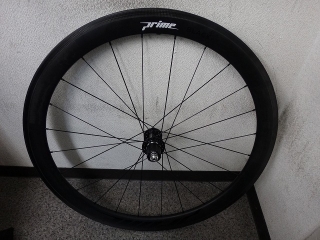
It's built.
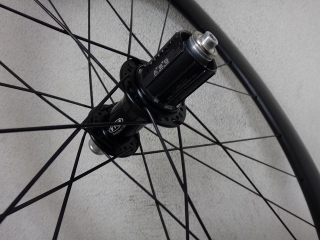
Evo hub, 24-hole, black half-comp, 4-cross lace. I'll wire it up later.
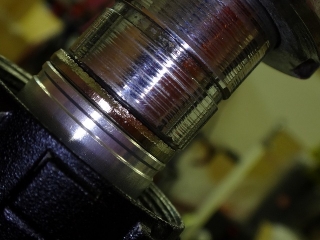

Center is good, just to confirm.
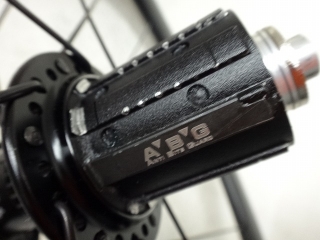
Not something I usually do, but since the freebody was compatible,
I transferred it from the old hub. I deducted the freebody cost from the hub price.
Both bearings on the freebody were bad, but replacing them and reusing the old freebody ended up being cheaper than buying a new one. Also, the old freebody has a steel anti-overshift plate and weight-reduction cutouts on the spline, so reusing it made sense.
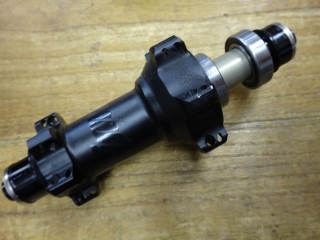
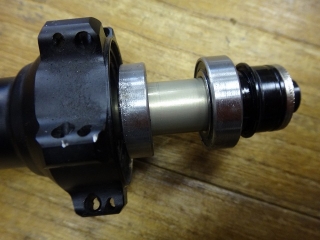
↑So that's what became of the old hub.
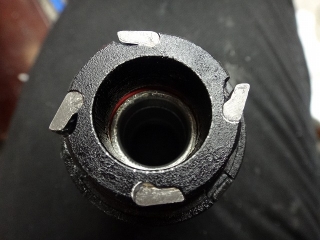
The freebody pawls—the one in the lower part of the image is nearly lying flat,
and the other three aren't standing up very well either.
The pole spring on this freebody is a C-shaped spring that's just shy of a full circle—shaped like a clothespin spring. When the gap in the C comes directly under a pawl, that pawl stops working. To prevent that, a stopper pin is installed to align with the gap's phase, so the spring can move while staying within an acceptable range.
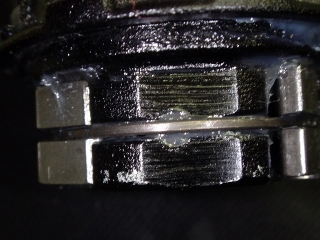
But when removed from the hub, the spring had jumped over the stopper.
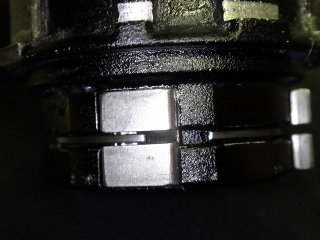
And the gap's phase was aligned with the flat pawl's phase.
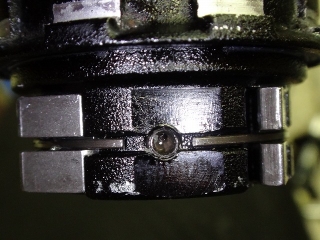
So when I aligned the gap's phase with the stopper pin...
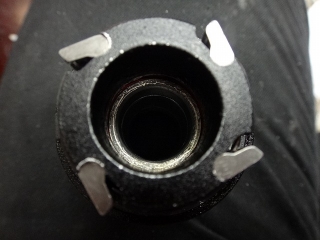
All four pawls sprang up nicely.

As I mentioned earlier, I replaced the bearings. You can assess the freebody for damage once you remove it from the hub, but the hub body stays on the hub shaft, so I can't say for certain whether just one side needs replacement or both. I suspect both are shot. I haven't checked since I'm not using them.
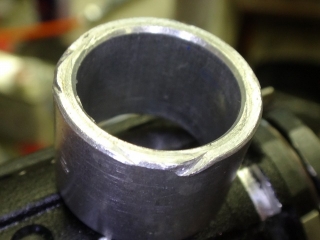
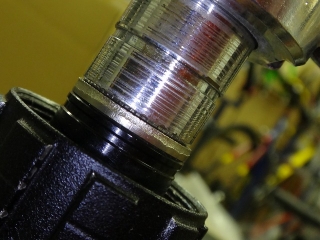
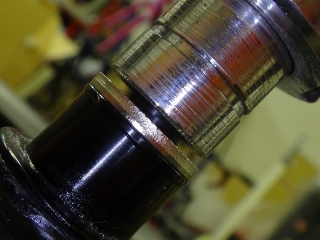
The spacer sitting between the inner races of the freebody bearing also showed signs of impact damage. There was some burring against the hub shaft rotation, so I smoothed it down with a light chamfer to where it no longer causes problems.
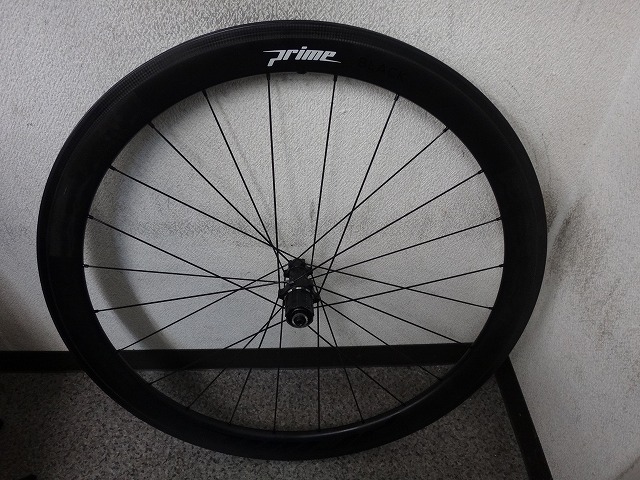
A customer brought in the rear wheel from a Prime—a 50mm tall tubeless-ready
carbon rim wheel.
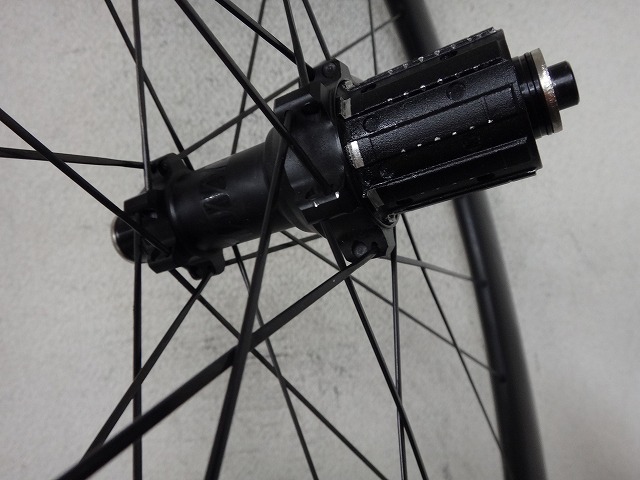
Novatec straight-pull hub, 24-hole,
Aerocomp/Aerolite, laced 2-cross on both sides.
The customer had replaced the hub bearings themselves, but when they tightened the quick-release and mounted it on the frame, it wouldn't turn at all. They asked me to take a look. But then their note said "please rebuild the wheel." That's not what we originally agreed on.
As for the hub bearings, when I spun the hub shaft by hand,
it felt pretty gritty. All four bearings—two on the hub body and two on the freebody—are in contact with the hub shaft when you rotate it by hand, so even if just one of them is bad or all four are bad, you can't tell for sure without checking each one individually. The only certainty is that at least one is shot. But the feel of it suggests all four are bad.
When I asked the customer, they said they'd hammered the bearings in using impact force. I figured as much. DT's hub bearings, for example, use a dedicated tool—a slide hammer with the exact outer diameter of the bearing—to drive them straight along the hub shaft, so the bearings don't get damaged. But if you don't have that and just hammer them in, they're going to feel gritty right from the start.
I could have replaced the bearings on the hanging hub and rebuilt it better, but at that point I figured it would be better to just leave the original hub as-is and instead rebuild with an Evo hub for even better results. The customer agreed to that proposal.


Hmm, something's off center. I suspected that the bearing press-fit was incomplete or something was missing from the left end (which would throw off the locknut dimension), but the dimension checked out at about 130.5mm, so it was just off-center. I don't know the history of any truing attempts. The rim runout was almost nonexistent.
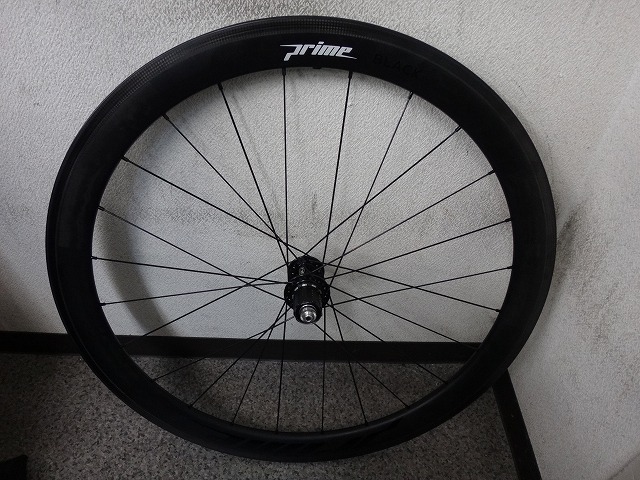
It's built.
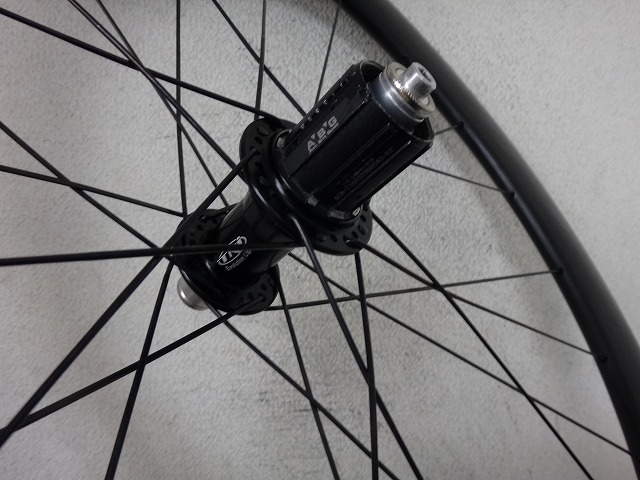
Evo hub, 24-hole, black half-comp, 4-cross lace. I'll wire it up later.
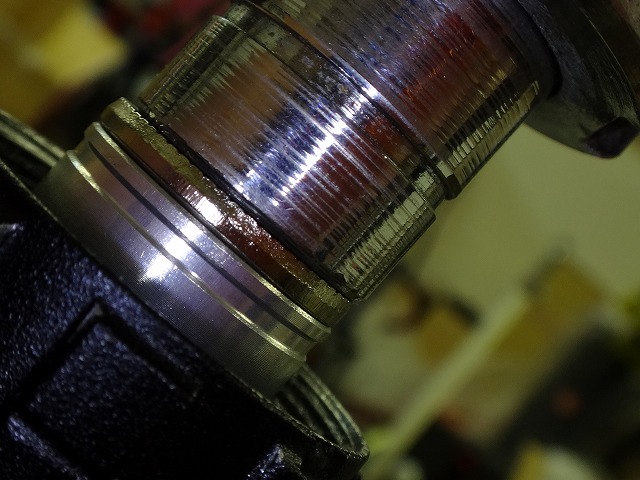
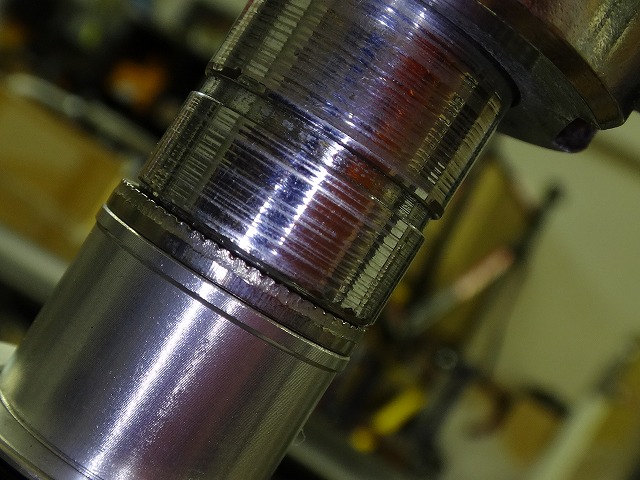
Center is good, just to confirm.
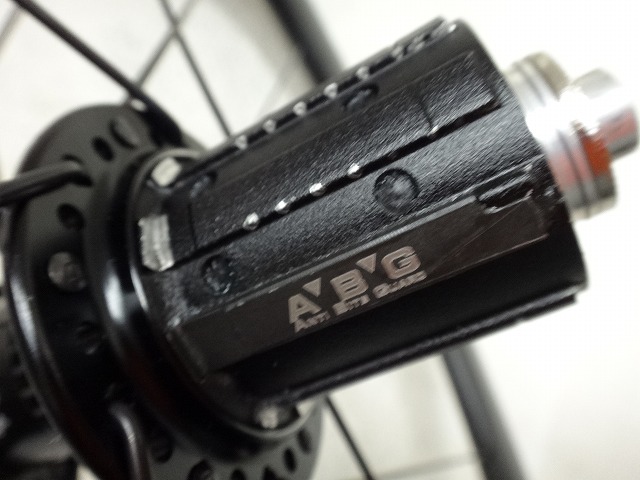
Not something I usually do, but since the freebody was compatible,
I transferred it from the old hub. I deducted the freebody cost from the hub price.
Both bearings on the freebody were bad, but replacing them and reusing the old freebody ended up being cheaper than buying a new one. Also, the old freebody has a steel anti-overshift plate and weight-reduction cutouts on the spline, so reusing it made sense.
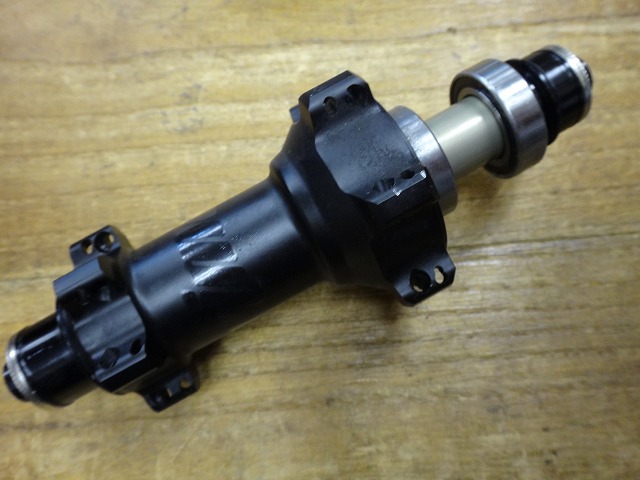
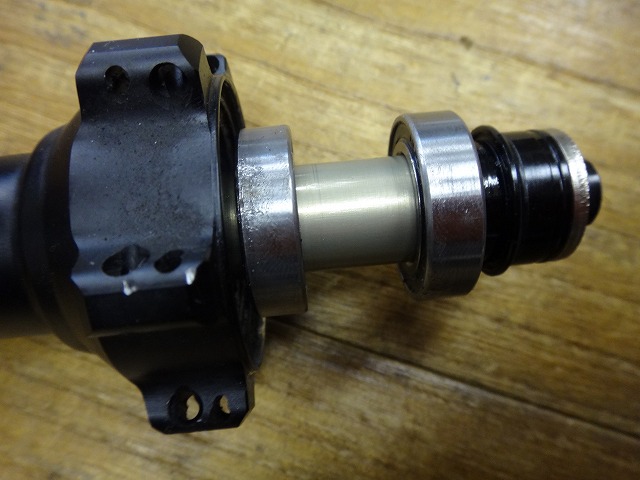
↑So that's what became of the old hub.
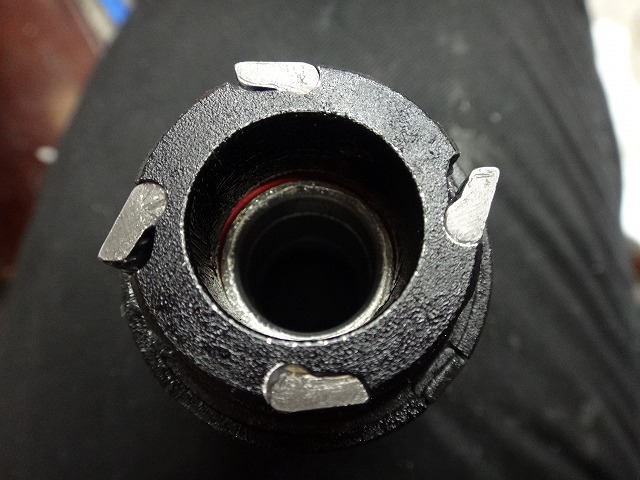
The freebody pawls—the one in the lower part of the image is nearly lying flat,
and the other three aren't standing up very well either.
The pole spring on this freebody is a C-shaped spring that's just shy of a full circle—shaped like a clothespin spring. When the gap in the C comes directly under a pawl, that pawl stops working. To prevent that, a stopper pin is installed to align with the gap's phase, so the spring can move while staying within an acceptable range.
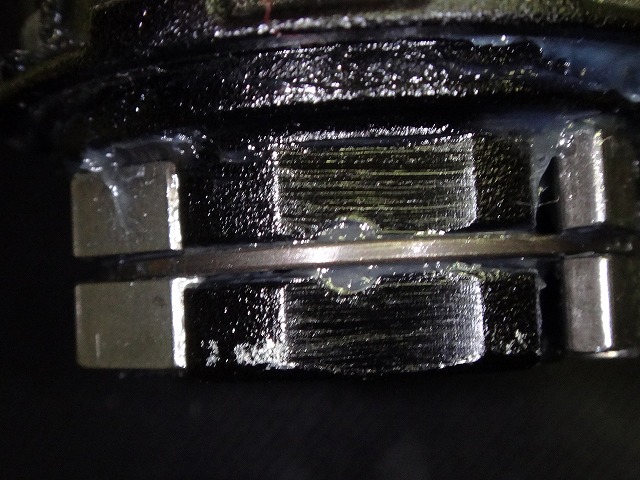
But when removed from the hub, the spring had jumped over the stopper.

And the gap's phase was aligned with the flat pawl's phase.
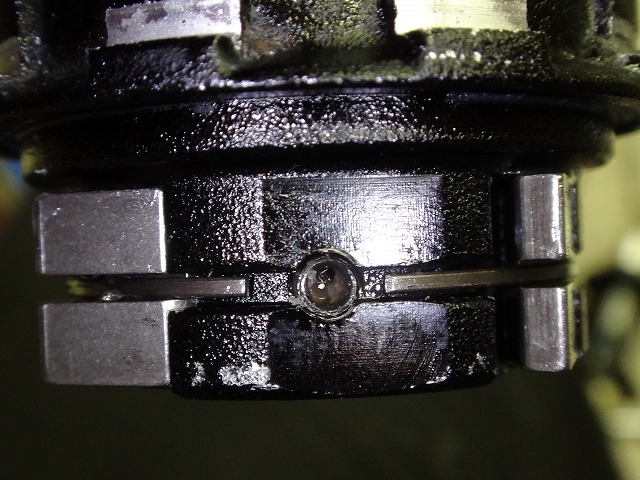
So when I aligned the gap's phase with the stopper pin...
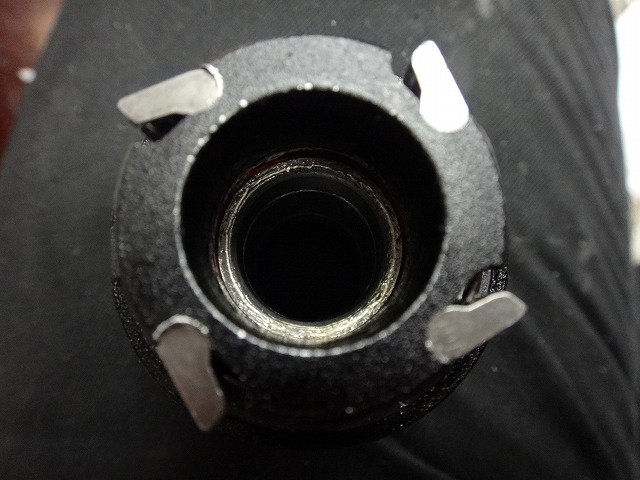
All four pawls sprang up nicely.
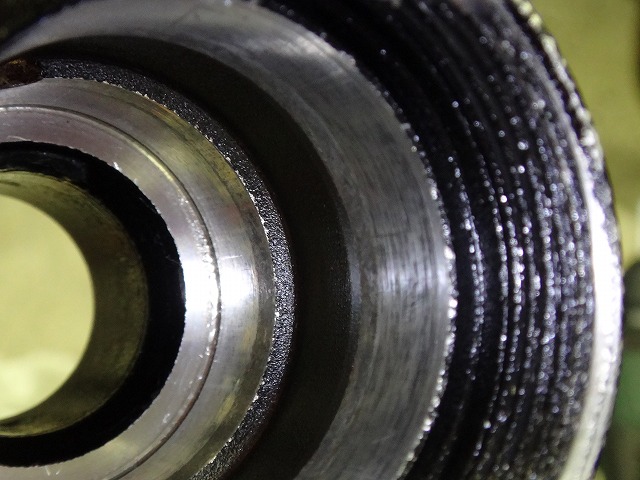
As I mentioned earlier, I replaced the bearings. You can assess the freebody for damage once you remove it from the hub, but the hub body stays on the hub shaft, so I can't say for certain whether just one side needs replacement or both. I suspect both are shot. I haven't checked since I'm not using them.
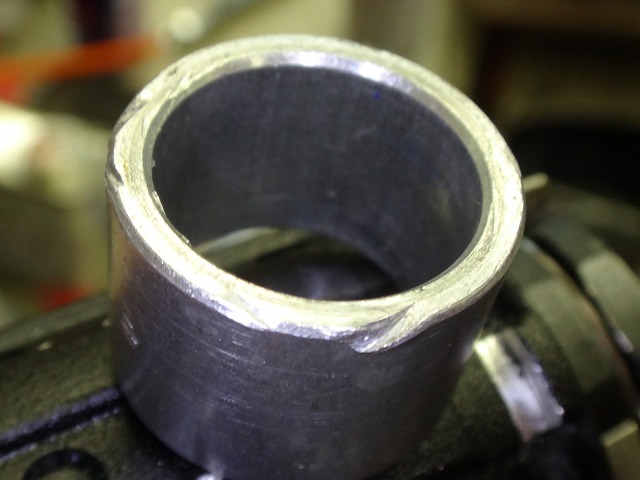
The spacer sitting between the inner races of the freebody bearing also showed signs of impact damage. There was some burring against the hub shaft rotation, so I smoothed it down with a light chamfer to where it no longer causes problems.