Regarding my previous post, I received a comment asking:
「Wasn't Mavic's first carbon brake zone road wheel the Comete?」
Regardless of whether it was specifically designed as a brake zone,
if we're talking about the brake zone area being carbon,
then yes, the Comete from 1985 was indeed the first.
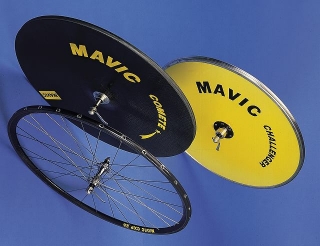
I couldn't prepare my own photos, so I found this one online.
This is a Mavic 1985 model.
The carbon disc version was called the Comete, and the aluminum disc version was the Challenger.
At that time, there were no brake shoes specifically made for carbon.
Koolima was founded in 1988, but their early cork shoes
consisted of a plastic shoe base with yellow cork pads.
Regarding the Comete from this era, there was also a variant called the Comete +/- (plus-minus)
that had weights embedded in 12 holes to adjust rotational inertia.
If you're interested, try searching for "mavic vintage comete" in image search.
By the way, the front wheel in the image above is
the CXP25, a carbon rim with an aluminum brake zone.
Later came the 3G model, a 3-spoke wheel,
but at this point the paired front wheel was intended to be the CXP25.
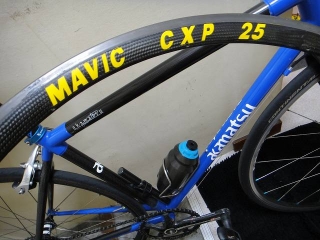
This is also a photo I found online (total lie),
and apparently someone has a brand new CXP25 (playing dumb here).
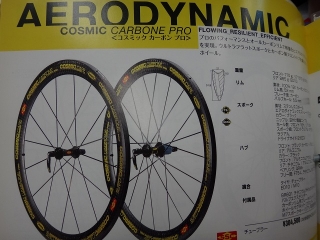
↑The Cosmic Carbone Pro was the first full carbon rim
with a clearly defined brake zone.
The catalog shown above is from 2007,
but this wheel itself first appeared in 2006.
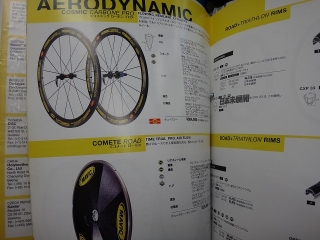
On the same page...
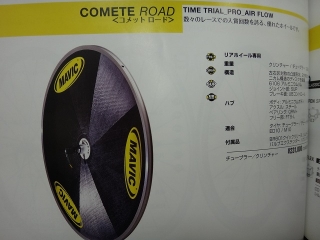
The Comete Road has an aluminum brake zone.
This first appeared around 1996 or 1997,
and aside from increases in the number of sprockets on the freehub,
there were no specification changes for over 10 years.
Regarding wheels not hand-built with spokes,
but purpose-designed wheels in the broader sense of complete wheels,
disc wheels from multiple manufacturers came first,
but for road race spoked wheels that were produced in decent numbers,
Mavic's Helium from 1996 was the first complete wheel.
(If we don't require decent numbers,
there were others like Roval from the freewheel era,
and the original Shamal also came before the Helium).
And for wheels after the Helium where the brake zone is no longer aluminum,
the Cosmic Carbone Pro from 2006 was the first.
Campagnolo's Gibrì has a structure where pulled Kevlar sheets
are sandwiched and held with aluminum,
so having aluminum on the outer section is unavoidable.
However, the fact that while the first generation Bora had a full carbon rim,
the next two generations used the aluminum brake zone design,
shows that carbon rims had brake performance issues for a while.
It wasn't until much later that problems on both the rim and shoe sides
were "tentatively resolved."
Bonus

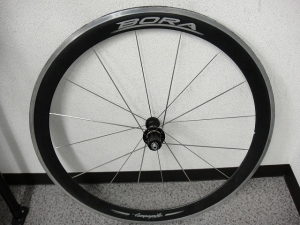
Not my own wheel, but a Bora with an aluminum brake zone.
By the timeline I mentioned, this is the generation after next,
but in terms of rim specifications it's the second generation with front 14H and rear 16H.
The hub uses the same one-press cup and cone method as current designs,
so it's even possible to swap in much later generation parts
like CULT bearings.
The purple-labeled Bora 12HPW (12H both front and rear)
from the generation after first seems to have fewer in circulation than the original.
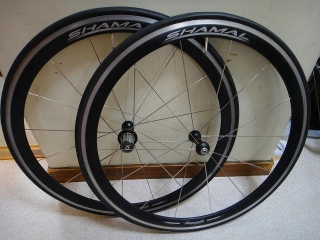
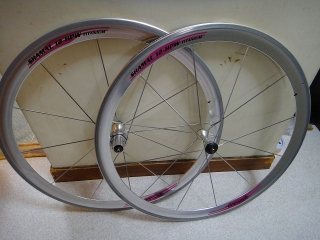
I have Shamals from both eras, though...
「Wasn't Mavic's first carbon brake zone road wheel the Comete?」
Regardless of whether it was specifically designed as a brake zone,
if we're talking about the brake zone area being carbon,
then yes, the Comete from 1985 was indeed the first.
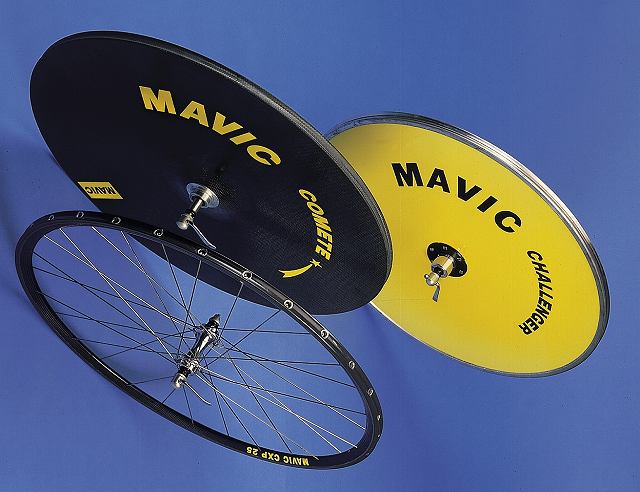
I couldn't prepare my own photos, so I found this one online.
This is a Mavic 1985 model.
The carbon disc version was called the Comete, and the aluminum disc version was the Challenger.
At that time, there were no brake shoes specifically made for carbon.
Koolima was founded in 1988, but their early cork shoes
consisted of a plastic shoe base with yellow cork pads.
Regarding the Comete from this era, there was also a variant called the Comete +/- (plus-minus)
that had weights embedded in 12 holes to adjust rotational inertia.
If you're interested, try searching for "mavic vintage comete" in image search.
By the way, the front wheel in the image above is
the CXP25, a carbon rim with an aluminum brake zone.
Later came the 3G model, a 3-spoke wheel,
but at this point the paired front wheel was intended to be the CXP25.

This is also a photo I found online (total lie),
and apparently someone has a brand new CXP25 (playing dumb here).
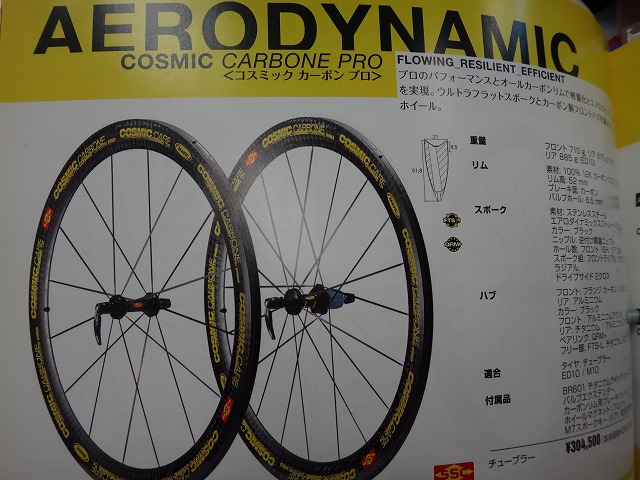
↑The Cosmic Carbone Pro was the first full carbon rim
with a clearly defined brake zone.
The catalog shown above is from 2007,
but this wheel itself first appeared in 2006.
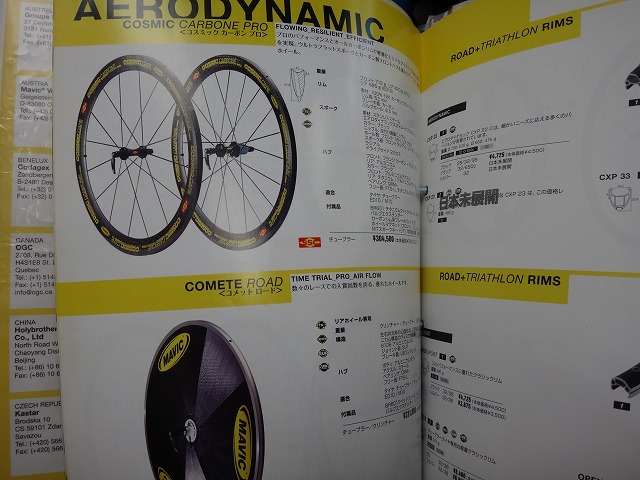
On the same page...

The Comete Road has an aluminum brake zone.
This first appeared around 1996 or 1997,
and aside from increases in the number of sprockets on the freehub,
there were no specification changes for over 10 years.
Regarding wheels not hand-built with spokes,
but purpose-designed wheels in the broader sense of complete wheels,
disc wheels from multiple manufacturers came first,
but for road race spoked wheels that were produced in decent numbers,
Mavic's Helium from 1996 was the first complete wheel.
(If we don't require decent numbers,
there were others like Roval from the freewheel era,
and the original Shamal also came before the Helium).
And for wheels after the Helium where the brake zone is no longer aluminum,
the Cosmic Carbone Pro from 2006 was the first.
Campagnolo's Gibrì has a structure where pulled Kevlar sheets
are sandwiched and held with aluminum,
so having aluminum on the outer section is unavoidable.
However, the fact that while the first generation Bora had a full carbon rim,
the next two generations used the aluminum brake zone design,
shows that carbon rims had brake performance issues for a while.
It wasn't until much later that problems on both the rim and shoe sides
were "tentatively resolved."
Bonus
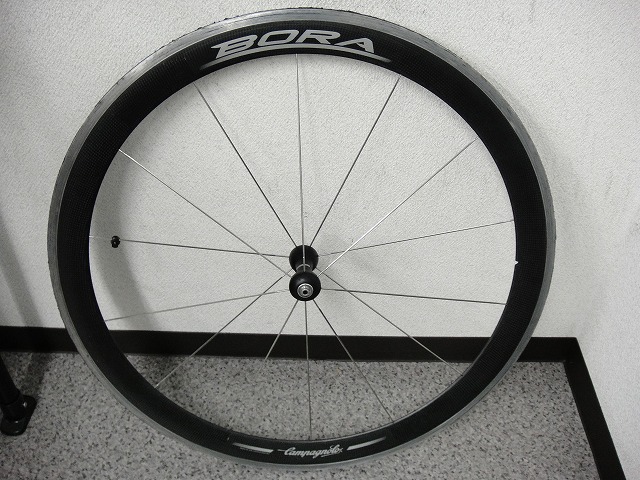
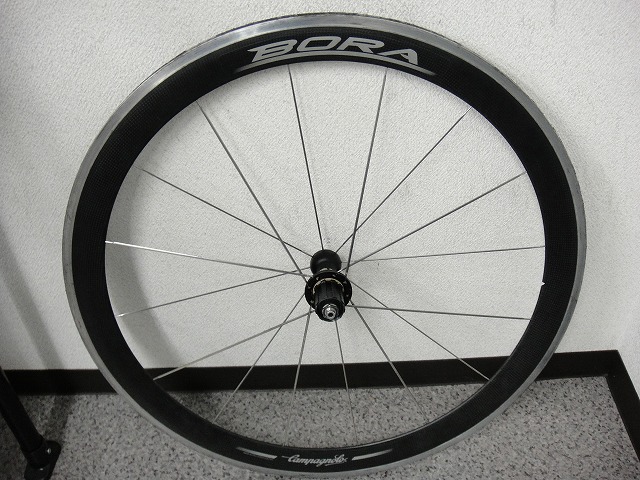
Not my own wheel, but a Bora with an aluminum brake zone.
By the timeline I mentioned, this is the generation after next,
but in terms of rim specifications it's the second generation with front 14H and rear 16H.
The hub uses the same one-press cup and cone method as current designs,
so it's even possible to swap in much later generation parts
like CULT bearings.
The purple-labeled Bora 12HPW (12H both front and rear)
from the generation after first seems to have fewer in circulation than the original.
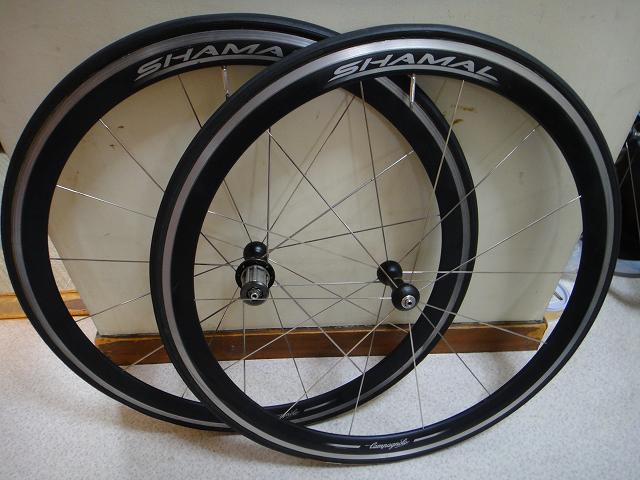
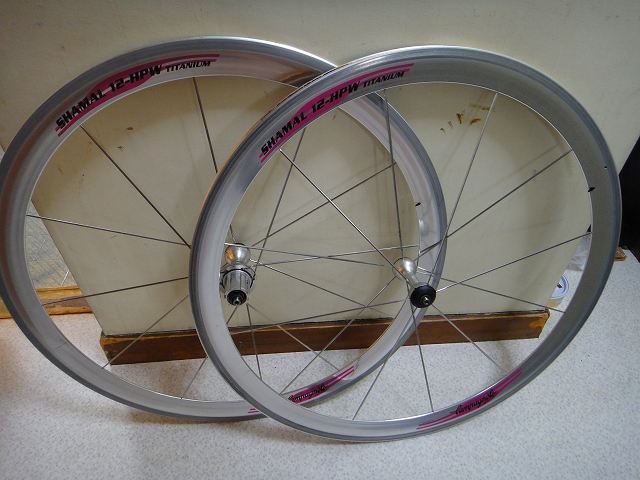
I have Shamals from both eras, though...