I received a rear wheel from a customer's Racing 3 for service.
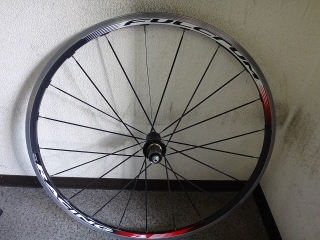
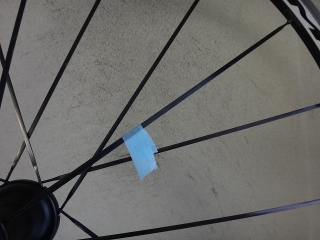
↑Image oriented roughly at 12 o'clock position; the spoke that looks unusually thin is because I loosened the tension and turned it sideways.
This Racing 3 isn't the first generation cosmetically, but
the spoke thickness and other specs match the original Racing 3 (→here).
By this model's time, Racing Zero had already been released, but
when the true original Racing 3 came out,
the lineup consisted of just three models: Racing 1, 3, and 5.
The aluminum spokes on the Racing 1 (which had a necktie shape back then)
have a spoke weight ratio slightly greater than the CX-RAY,
but smaller than the CX Sprint. However,
in terms of spoke deformation resistance under tension
and wheel stiffness, they far exceed spokes with a 100% weight ratio.
In other words, using the same rim as the Racing 1,
even if you build a front wheel with a 16H radial pattern
or a rear wheel with a 21H 2:1 lacing pattern using
Champion spokes (100% weight ratio) or CX spokes (100.3% ratio)
and crank the tension up to maximum,
you can't make a wheel stiffer than the Racing 1.
If that were possible, Fulcrum wouldn't make aluminum spoke wheels in the first place.
There was some idiot in the past who didn't understand this at all
and spouted off about aluminum spokes being meaningless from a material science perspective,
but he's disappeared from circulation.
Compared to the flagship Racing 1 of that era,
if you're going to make a budget model with steel spokes,
matching the spoke weight ratio will get you something close in
"weight when you pick it up."
This is what they did in subsequent models,
using square aero spokes that are slightly heavier than the CX-RAY.
But that's not what the original Racing 3 was about—
instead, while falling short, it was designed to approach
the Racing 1 in terms of stiffness (probably).
This wheel, which doesn't get hung up on the spec that
easily hooks naive amateurs of weight in hand,
is in my opinion the greatest achievement in the history of
complete steel-spoke wheels. And I'm serious about that.
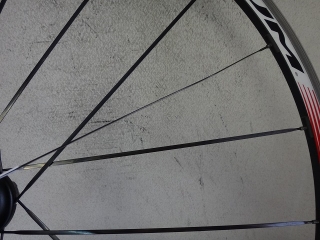
One spoke on the non-freewheel side is bent up pretty badly.
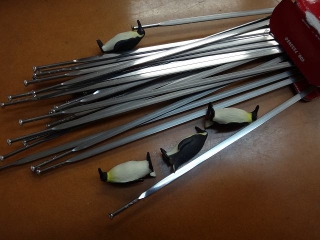
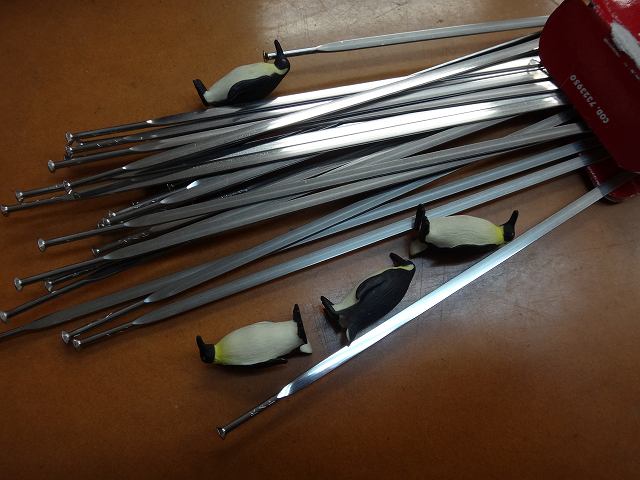
If you need original Racing 3 spokes, I keep them in stock!
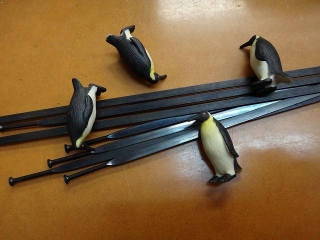
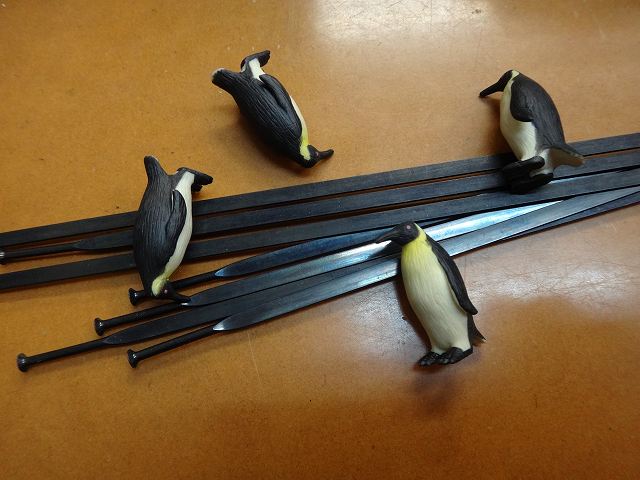
Got the color wrong—it was this one

All fixed.
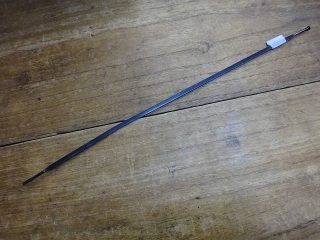
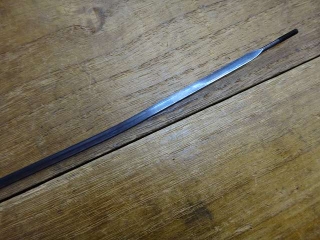
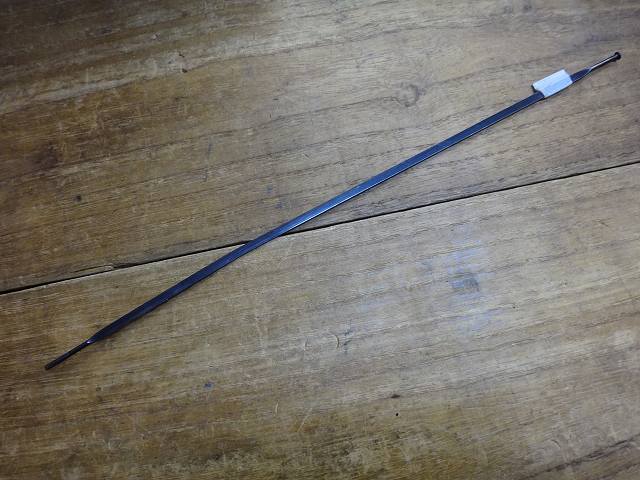
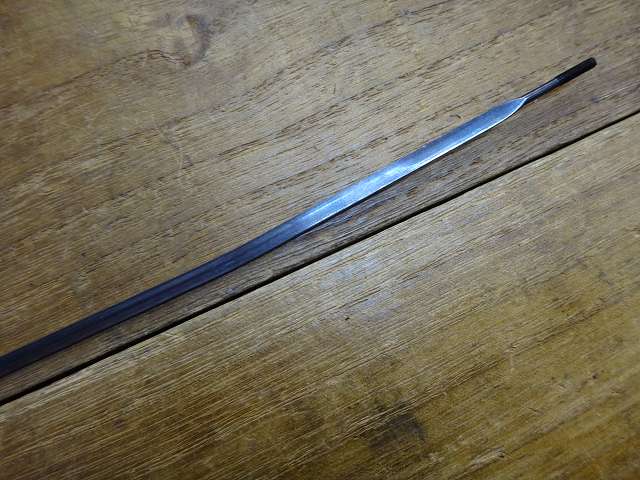
↑The spoke I replaced
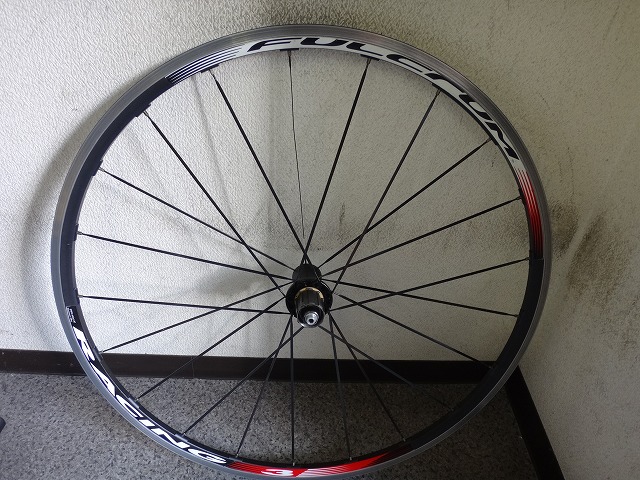
↑Image oriented roughly at 12 o'clock position; the spoke that looks unusually thin is because I loosened the tension and turned it sideways.
This Racing 3 isn't the first generation cosmetically, but
the spoke thickness and other specs match the original Racing 3 (→here).
By this model's time, Racing Zero had already been released, but
when the true original Racing 3 came out,
the lineup consisted of just three models: Racing 1, 3, and 5.
The aluminum spokes on the Racing 1 (which had a necktie shape back then)
have a spoke weight ratio slightly greater than the CX-RAY,
but smaller than the CX Sprint. However,
in terms of spoke deformation resistance under tension
and wheel stiffness, they far exceed spokes with a 100% weight ratio.
In other words, using the same rim as the Racing 1,
even if you build a front wheel with a 16H radial pattern
or a rear wheel with a 21H 2:1 lacing pattern using
Champion spokes (100% weight ratio) or CX spokes (100.3% ratio)
and crank the tension up to maximum,
you can't make a wheel stiffer than the Racing 1.
If that were possible, Fulcrum wouldn't make aluminum spoke wheels in the first place.
There was some idiot in the past who didn't understand this at all
and spouted off about aluminum spokes being meaningless from a material science perspective,
but he's disappeared from circulation.
Compared to the flagship Racing 1 of that era,
if you're going to make a budget model with steel spokes,
matching the spoke weight ratio will get you something close in
"weight when you pick it up."
This is what they did in subsequent models,
using square aero spokes that are slightly heavier than the CX-RAY.
But that's not what the original Racing 3 was about—
instead, while falling short, it was designed to approach
the Racing 1 in terms of stiffness (probably).
This wheel, which doesn't get hung up on the spec that
is in my opinion the greatest achievement in the history of
complete steel-spoke wheels. And I'm serious about that.

One spoke on the non-freewheel side is bent up pretty badly.
If you need original Racing 3 spokes, I keep them in stock!
Got the color wrong—it was this one


All fixed.
↑The spoke I replaced