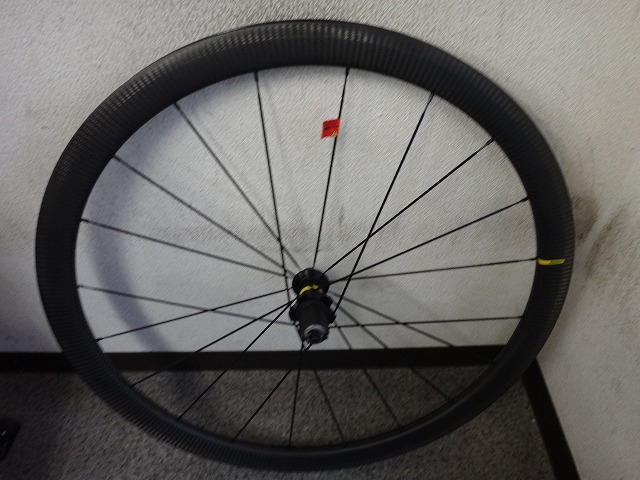
I received a Cosmic Pro Carbon UST (Unidirectional System Technology) from a customer for inspection.
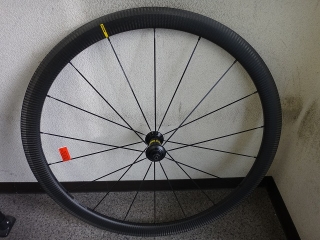
It's brand new, and they want a full inspection. Let me start with the front wheel.
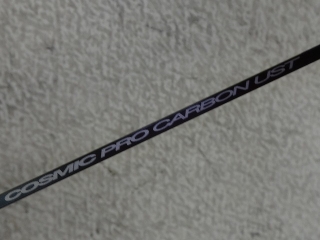
Like the Cosmetic spoke design, this has UST and not SL UST.
With SL, the edges are sharp enough to cut your fingers, and it features an elliptical aero spoke with a high flattening ratio.
Without the SL designation, the flattening ratio is more conservative, featuring a square aero spoke instead.
Aerodynamically, the SL spoke is superior, but when you evaluate all aspects of performance holistically,
I personally think these spokes are better overall.
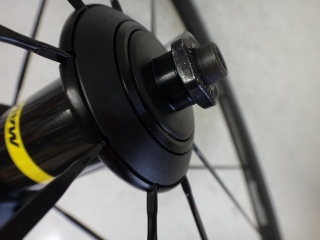
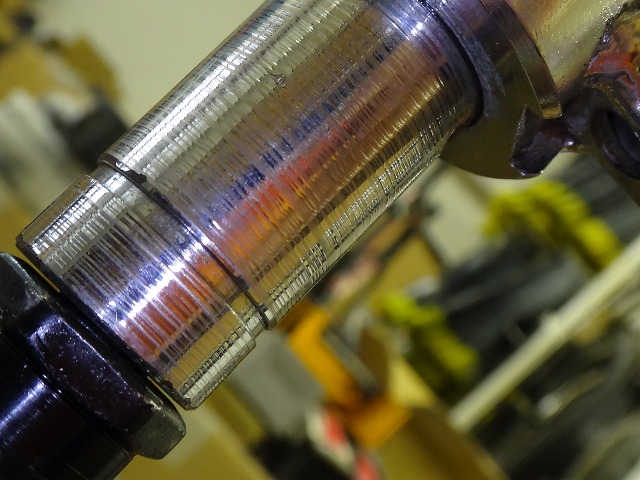
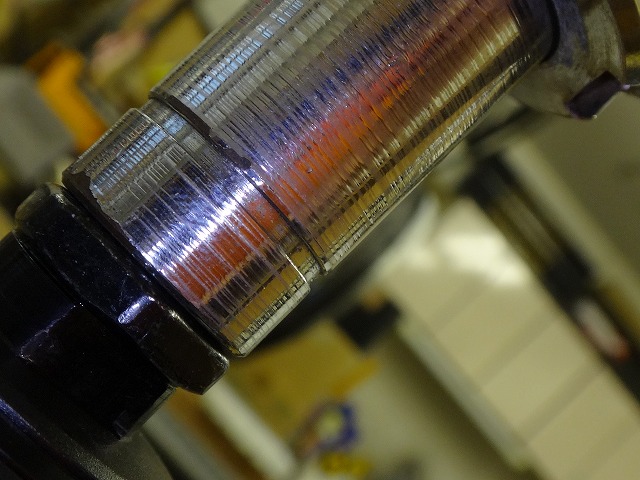
Also, the hub doesn't use the QRM+ system, which uses a dedicated crab wrench to grip and turn four of the six holes in the cone/dust cap,
but rather uses traditional double-nut tightening like a cup-and-cone bearing.
The front hub had play in it.
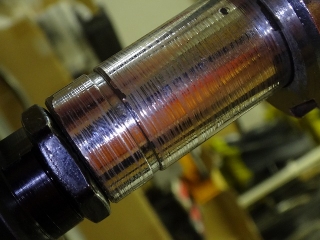
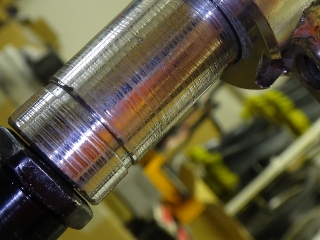
There was a center offset of about the thickness of two sheets of paper, and some lateral runout,
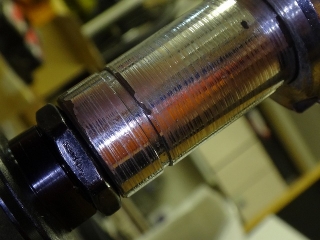
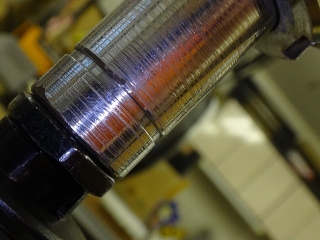
but I fixed it.
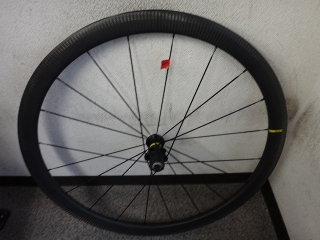
Next, the rear wheel.

The rear hub had no play.
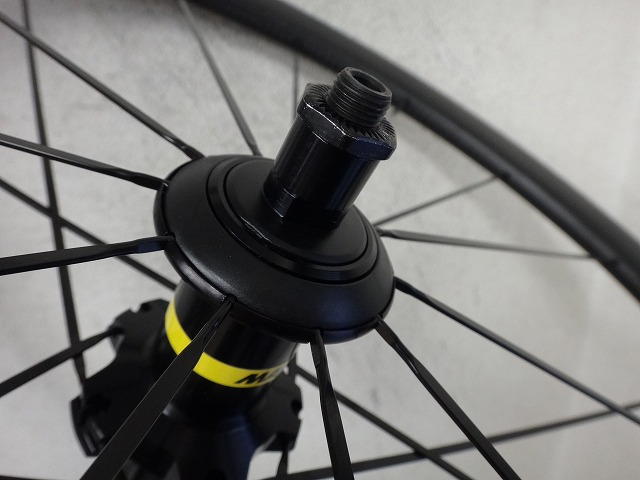
The SL version uses an Instant Drive 360, but without the SL designation, it uses the traditional FTS-L freewheel body hub.
Instant Drive 360 is essentially a tap-fit design where lateral play is eliminated by a wave washer under the snap ring,
but the FTS-L freewheel body hub is superior because ball bearing preload is adjustable,
ratchet maintenance frequency is lower, and bearing wear is less likely to occur
(the grittiness of Instant Drive rear hubs after about a year of use is abnormal)
so hub durability is far superior. I can say that with certainty.
Now, the question is why Mavic switched to Instant Drive 360.
It was because they wanted to use bearing inner diameters of 15mm or 17mm
to accommodate a 12mm through-axle.
The FTS-L freewheel body hub's freewheel body and right-side hub bearing
have bearing inner diameters of 8mm or 9mm, so
they can't be adapted for 12mm through-axle specifications.
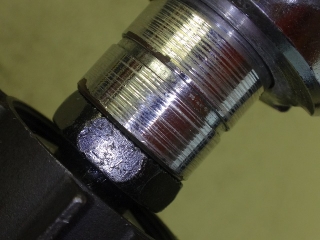
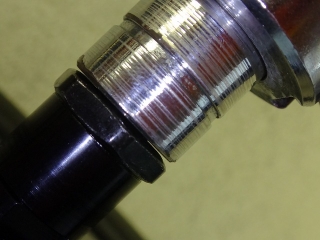
As usual, the rim was offset toward the non-freewheel side.
If, hypothetically, Mavic wheels were consistently
offset this much toward the non-freewheel side,
I could judge there was a rational reason for doing it intentionally.
However, even though roughly 90% of them are offset toward the non-freewheel side,
the amount of offset isn't consistent, and center offsets are also scattered
on front wheels with rim brakes, where offset isn't necessary
(this wheel's partner front wheel is an example of this),
so it's just "sloppy assembly quality."
But that alone doesn't explain why "roughly 90% of rear wheels are offset toward the non-freewheel side." Hmm.
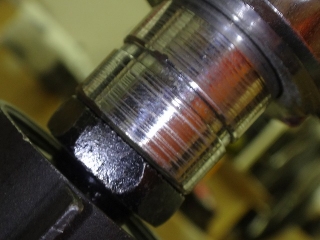

I trued the wheel and centered it.
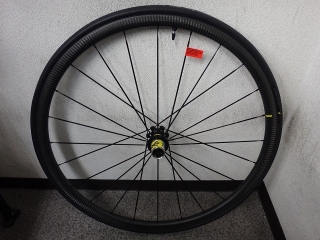
Next is the Ksyrium Pro Carbon SL UST.
It's from the same customer as the Cosmic just described,
so I've grouped them in the same article.
This one has the SL designation.
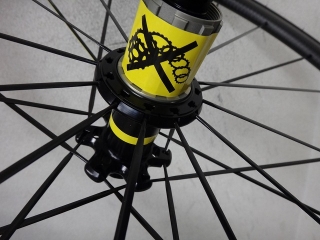
It features the highly flattened elliptical aero spokes I mentioned earlier, and
the freewheel body is Instant Drive 360.
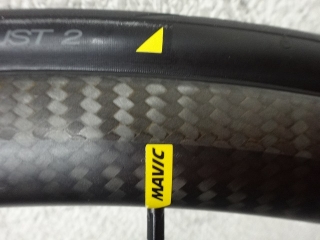
It came with a tubeless tire, but the customer won't be using it.
Since I'm removing it for inspection, I won't reinstall it.
Whether they got disillusioned with the tubeless tire they'd been dreaming about, or
whether this particular tire just isn't good performance-wise, I can't say,
but there are a lot of people running road UST tubeless wheels with clincher (WO) tires
from the second time onward (or even from the start).
While it's possible my shop attracts customers with particular preferences,
at minimum, repeat customers who use this tire a second time or beyond
are extremely rare.
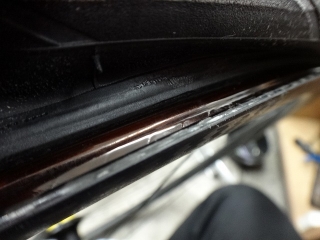
The bead grip was good, but this was a particularly stiff specimen—
dropping the bead from the hump in one spot was difficult.
While I can handle it calmly here in the shop, it would be tough
for a customer to manage roadside.
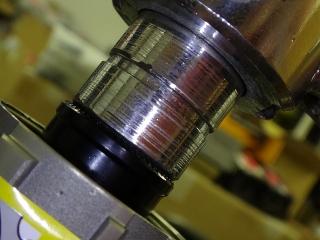

As is the usual trend, this is pretty bad.
Conveniently(?), this was a loose specimen with some lateral runout, so
I adjusted it with a tendency toward increased tightening in the direction that reduces center offset—
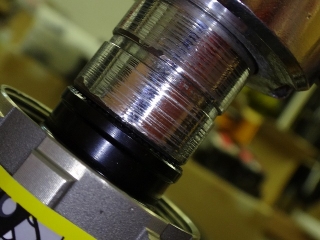

↑This is the state after removing runout alone.
From here, tightening the freewheel side alone couldn't center the rim, so
I combined it with loosening the non-freewheel side,
adjusting the rim to slide toward the freewheel side
while preserving the total left-right spoke tension as much as possible.
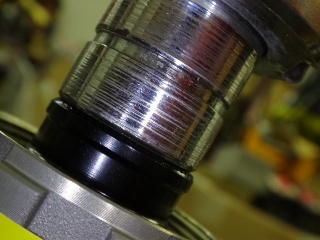

Center achieved.
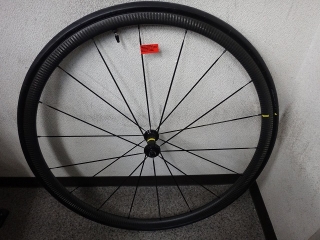
Next, the front wheel.
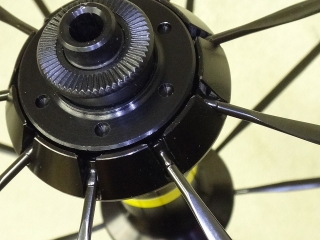
This is the only QRM+ hub among today's wheels.
There was no play, but it actually felt overtightened,
so I loosened it very slightly.
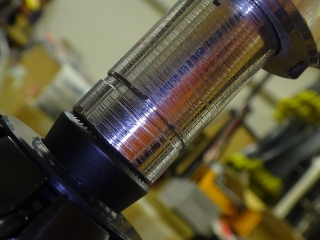
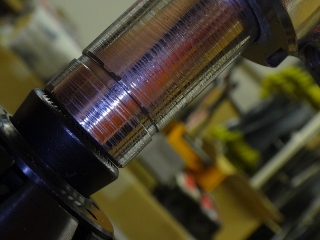
The temporary center appears to have no offset, but
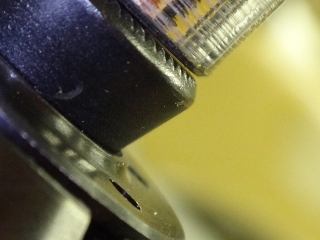
there is a center offset at the barely-detectable limit
(it's possible to see it in the previous image too).
But since there's lateral runout in the first place, this temporary center isn't reliable.
If I search, there should be a phase where the center is spot-on.
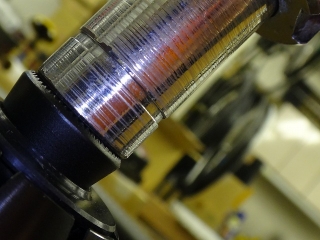

Fixed.
This post doesn't have much value in terms of work content, and
recently I skip writing about things like this (often I don't even take photos),
but since these jobs weren't done in front of the customers,
I decided to write it up.

It's brand new, and they want a full inspection. Let me start with the front wheel.
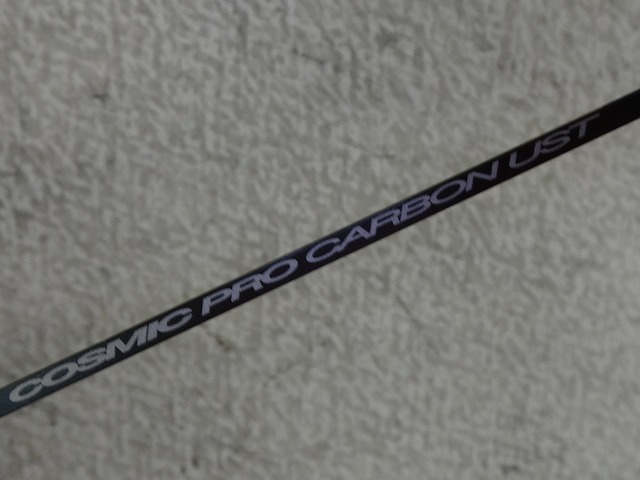
Like the Cosmetic spoke design, this has UST and not SL UST.
With SL, the edges are sharp enough to cut your fingers, and it features an elliptical aero spoke with a high flattening ratio.
Without the SL designation, the flattening ratio is more conservative, featuring a square aero spoke instead.
Aerodynamically, the SL spoke is superior, but when you evaluate all aspects of performance holistically,
I personally think these spokes are better overall.
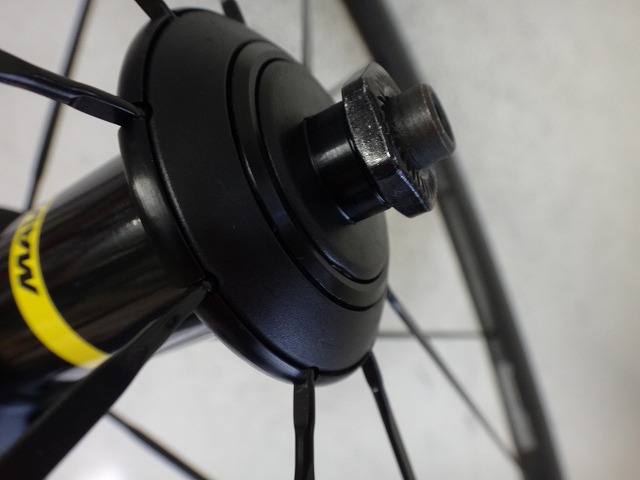
Also, the hub doesn't use the QRM+ system, which uses a dedicated crab wrench to grip and turn four of the six holes in the cone/dust cap,
but rather uses traditional double-nut tightening like a cup-and-cone bearing.
The front hub had play in it.
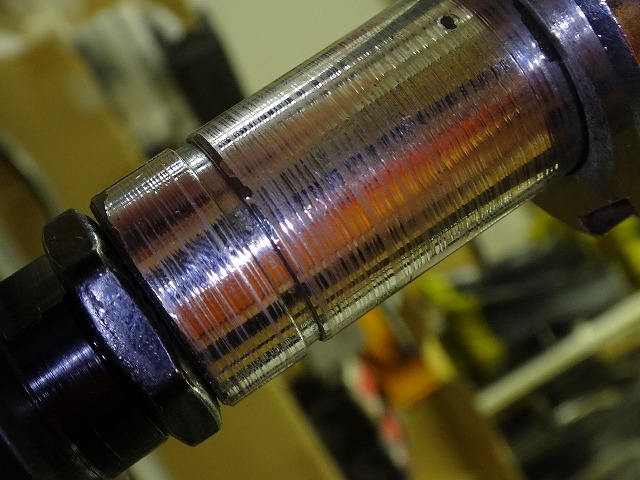
There was a center offset of about the thickness of two sheets of paper, and some lateral runout,

but I fixed it.
Next, the rear wheel.
The rear hub had no play.
The SL version uses an Instant Drive 360, but without the SL designation, it uses the traditional FTS-L freewheel body hub.
Instant Drive 360 is essentially a tap-fit design where lateral play is eliminated by a wave washer under the snap ring,
but the FTS-L freewheel body hub is superior because ball bearing preload is adjustable,
ratchet maintenance frequency is lower, and bearing wear is less likely to occur
(the grittiness of Instant Drive rear hubs after about a year of use is abnormal)
so hub durability is far superior. I can say that with certainty.
Now, the question is why Mavic switched to Instant Drive 360.
It was because they wanted to use bearing inner diameters of 15mm or 17mm
to accommodate a 12mm through-axle.
The FTS-L freewheel body hub's freewheel body and right-side hub bearing
have bearing inner diameters of 8mm or 9mm, so
they can't be adapted for 12mm through-axle specifications.
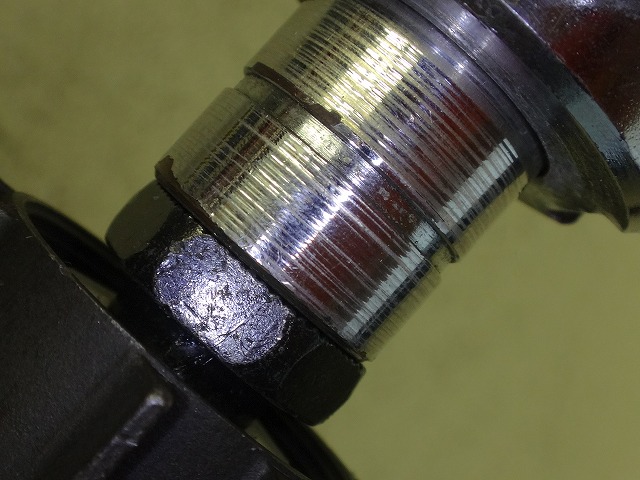

As usual, the rim was offset toward the non-freewheel side.
If, hypothetically, Mavic wheels were consistently
offset this much toward the non-freewheel side,
I could judge there was a rational reason for doing it intentionally.
However, even though roughly 90% of them are offset toward the non-freewheel side,
the amount of offset isn't consistent, and center offsets are also scattered
on front wheels with rim brakes, where offset isn't necessary
(this wheel's partner front wheel is an example of this),
so it's just "sloppy assembly quality."
But that alone doesn't explain why "roughly 90% of rear wheels are offset toward the non-freewheel side." Hmm.

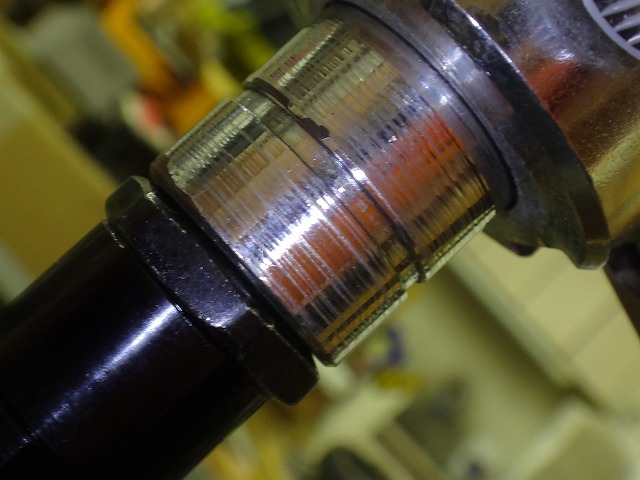
I trued the wheel and centered it.
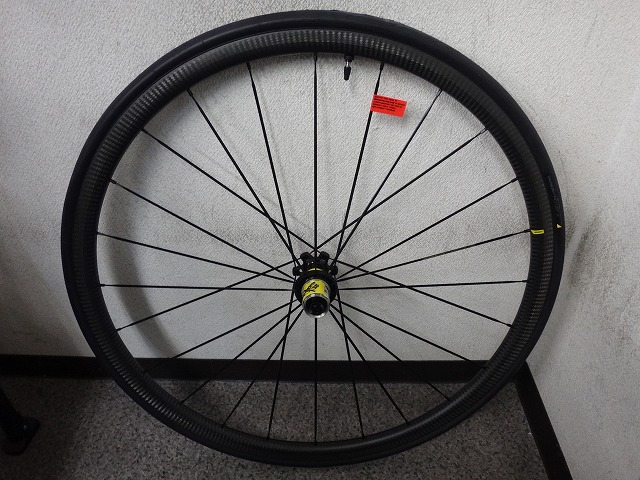
Next is the Ksyrium Pro Carbon SL UST.
It's from the same customer as the Cosmic just described,
so I've grouped them in the same article.
This one has the SL designation.
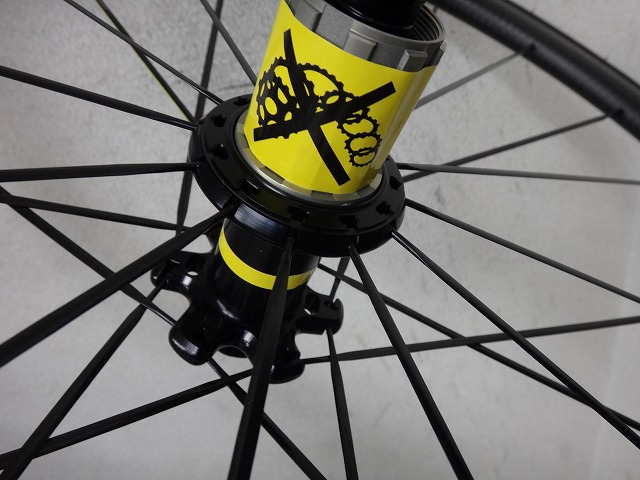
It features the highly flattened elliptical aero spokes I mentioned earlier, and
the freewheel body is Instant Drive 360.
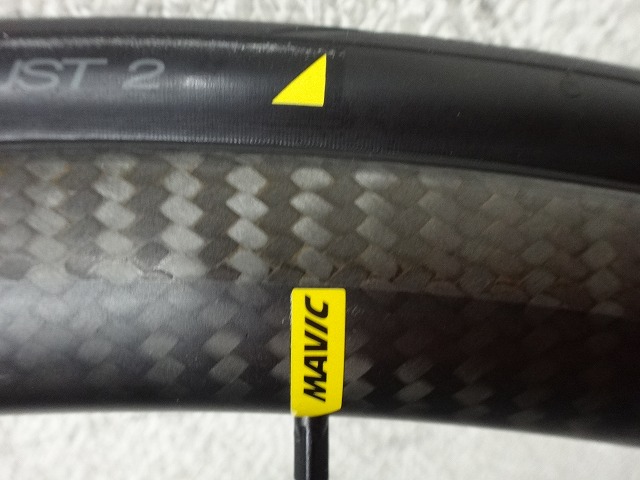
It came with a tubeless tire, but the customer won't be using it.
Since I'm removing it for inspection, I won't reinstall it.
Whether they got disillusioned with the tubeless tire they'd been dreaming about, or
whether this particular tire just isn't good performance-wise, I can't say,
but there are a lot of people running road UST tubeless wheels with clincher (WO) tires
from the second time onward (or even from the start).
While it's possible my shop attracts customers with particular preferences,
at minimum, repeat customers who use this tire a second time or beyond
are extremely rare.
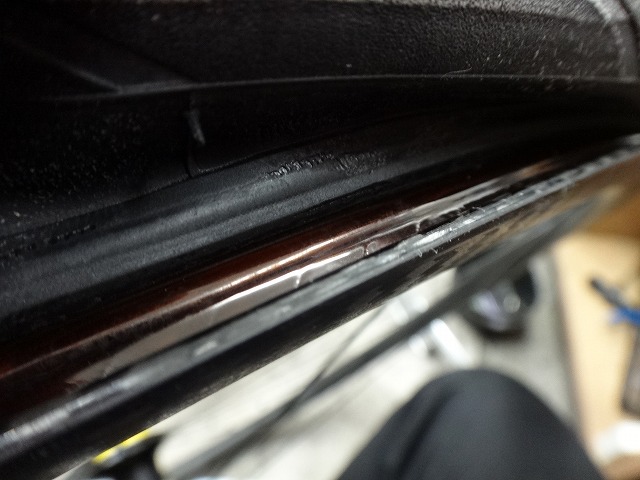
The bead grip was good, but this was a particularly stiff specimen—
dropping the bead from the hump in one spot was difficult.
While I can handle it calmly here in the shop, it would be tough
for a customer to manage roadside.
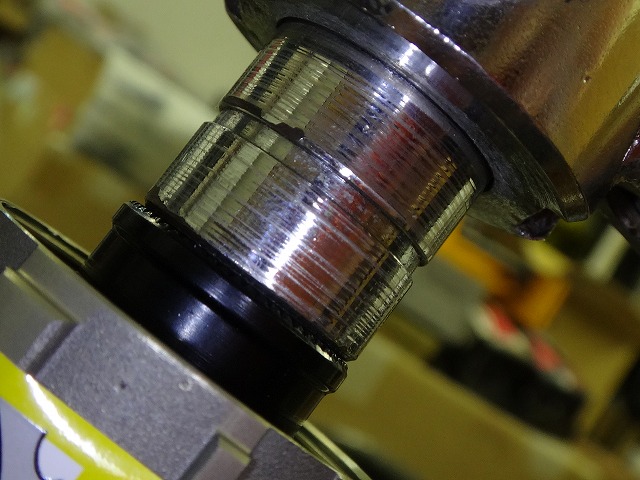
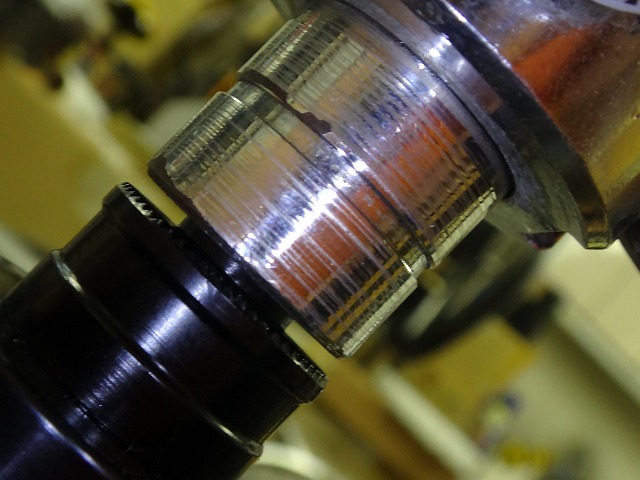
As is the usual trend, this is pretty bad.
Conveniently(?), this was a loose specimen with some lateral runout, so
I adjusted it with a tendency toward increased tightening in the direction that reduces center offset—
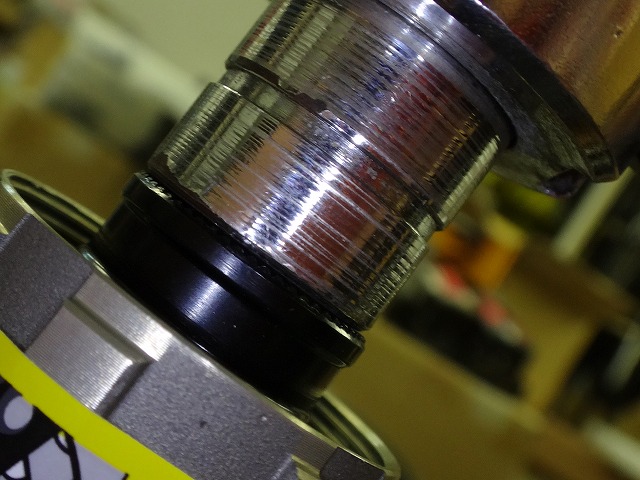
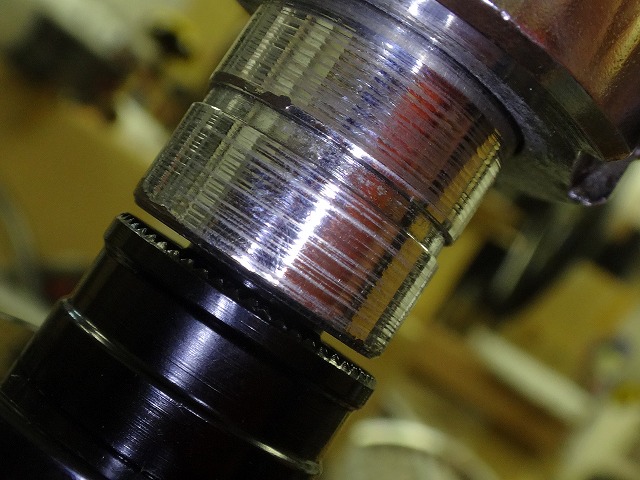
↑This is the state after removing runout alone.
From here, tightening the freewheel side alone couldn't center the rim, so
I combined it with loosening the non-freewheel side,
adjusting the rim to slide toward the freewheel side
while preserving the total left-right spoke tension as much as possible.
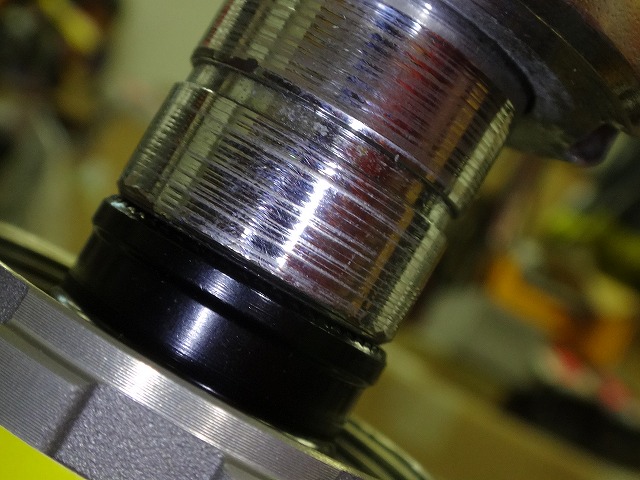
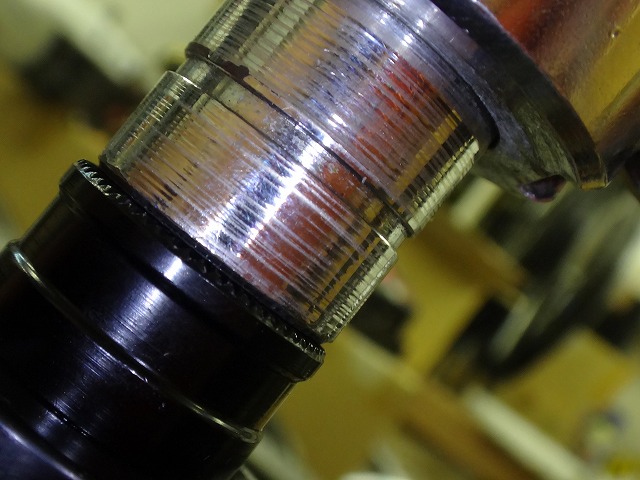
Center achieved.
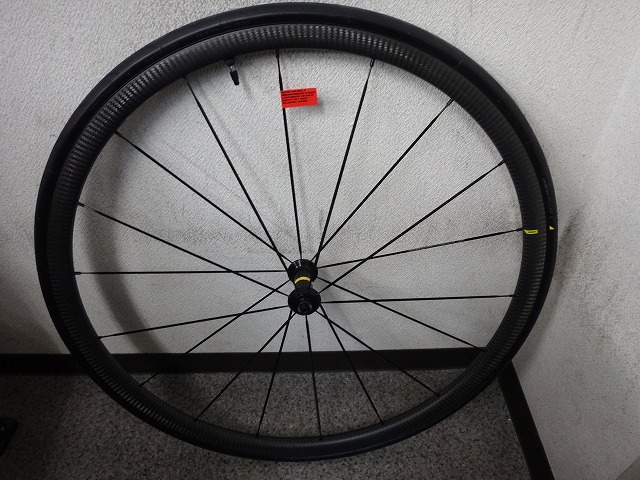
Next, the front wheel.
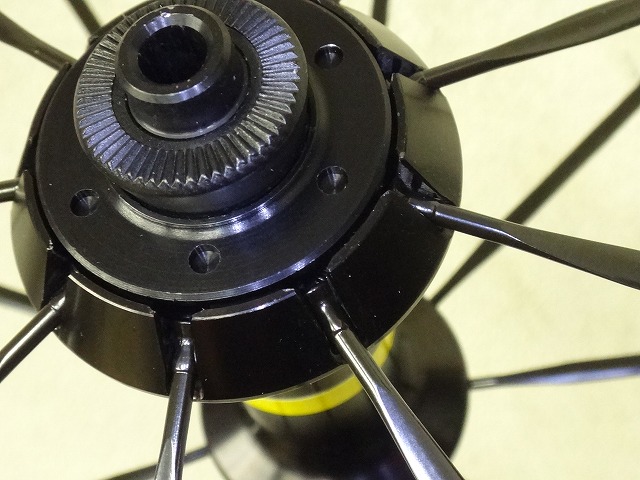
This is the only QRM+ hub among today's wheels.
There was no play, but it actually felt overtightened,
so I loosened it very slightly.
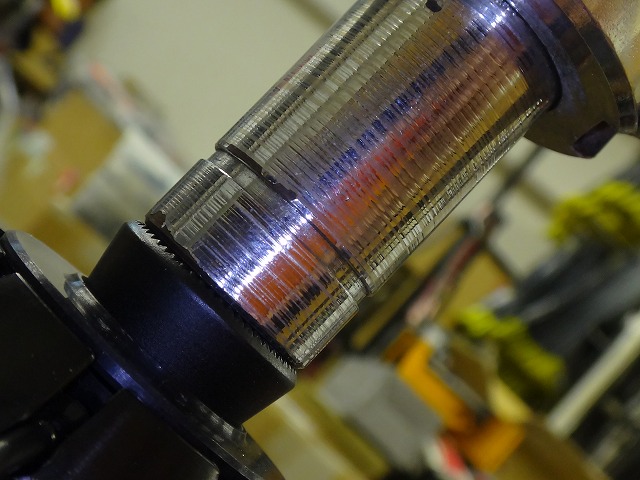
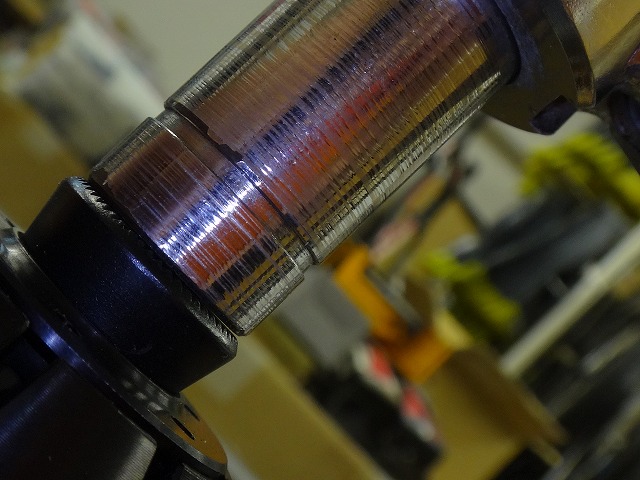
The temporary center appears to have no offset, but
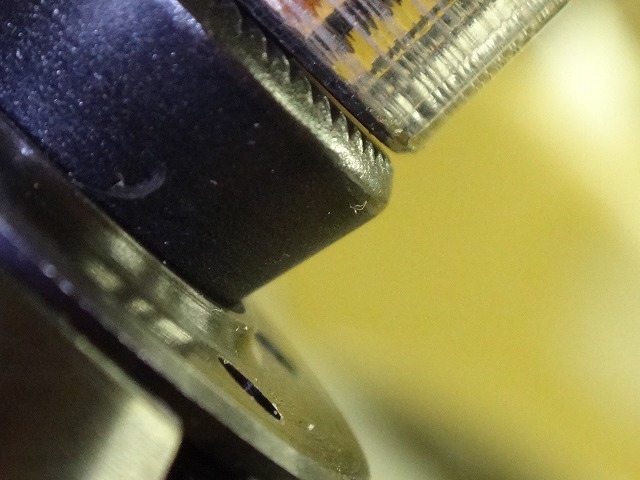
there is a center offset at the barely-detectable limit
(it's possible to see it in the previous image too).
But since there's lateral runout in the first place, this temporary center isn't reliable.
If I search, there should be a phase where the center is spot-on.
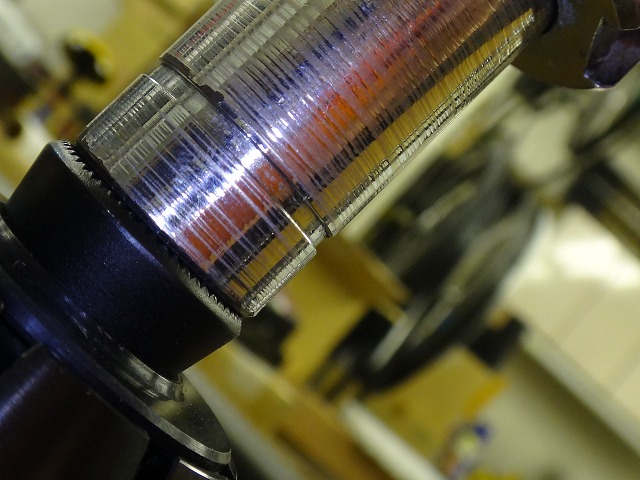
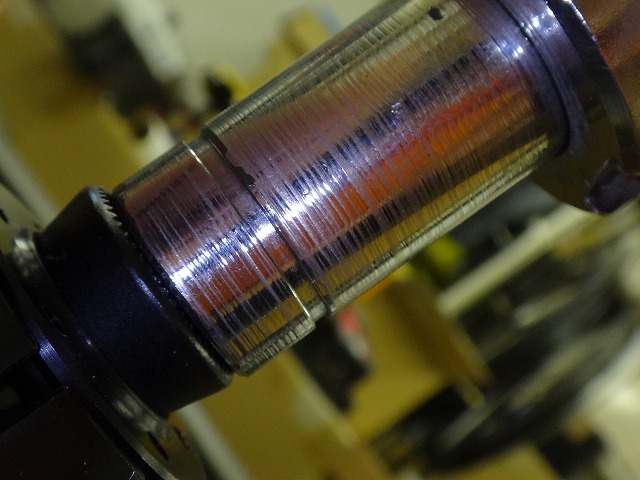
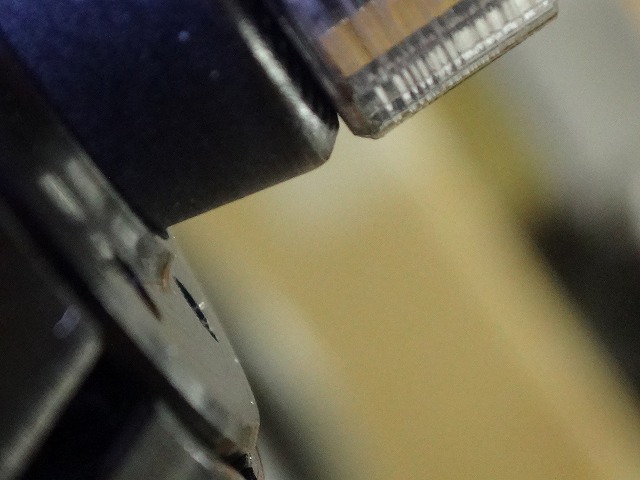
Fixed.
This post doesn't have much value in terms of work content, and
recently I skip writing about things like this (often I don't even take photos),
but since these jobs weren't done in front of the customers,
I decided to write it up.