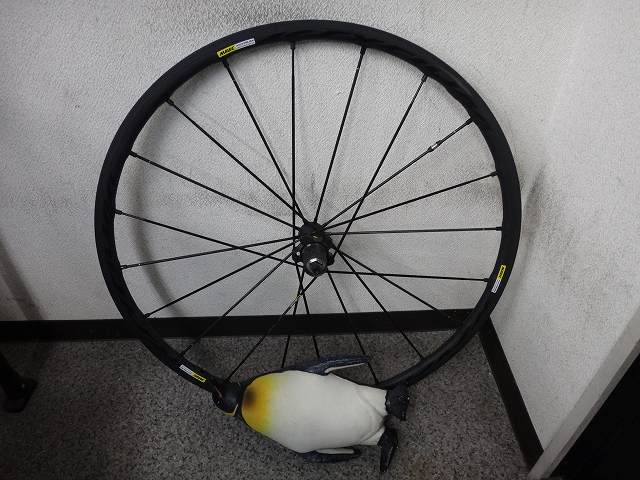
A customer brought in a Ksyrium Pro Exalith SL for service.
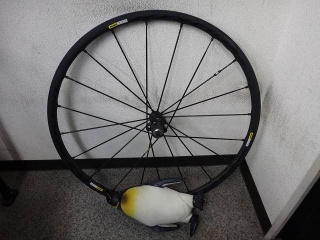
It's a wheel we've inspected before at the shop,
but there's an odd noise during pedaling that they wanted me to check out.
The image above is after service.
I noticed the retailer's sticker on the rim during work,
so I retook the photo with consideration for that.
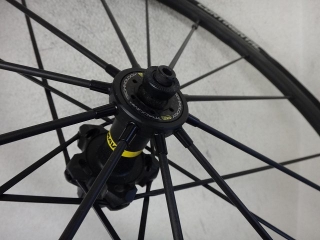
Despite the Ksyrium name, the rear wheel is straight-up R-SYS.
It's not even ISO pulse (radial spoked on the freewheel side).
To make it ISO pulse, you'd need to bring carbon spokes to the freewheel side,
but doing that risks destroying the wheel with a single chain drop.
Mavic was pushing R-SYS hard for a while there,
but it never got the wide rim treatment or road UST tubeless conversion.
Among the narrow rim lineup that's still available,
it's basically just the R-SYS SLR and the entry-level Aksium.
Anyway, the odd noise—it's either something around the traction ring
or possibly the freewheel body running eccentric.
The bearings weren't damaged, but even if the rotation got rough,
it wouldn't typically cause noise during pedaling.
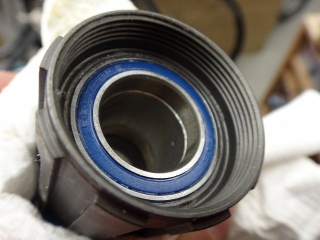
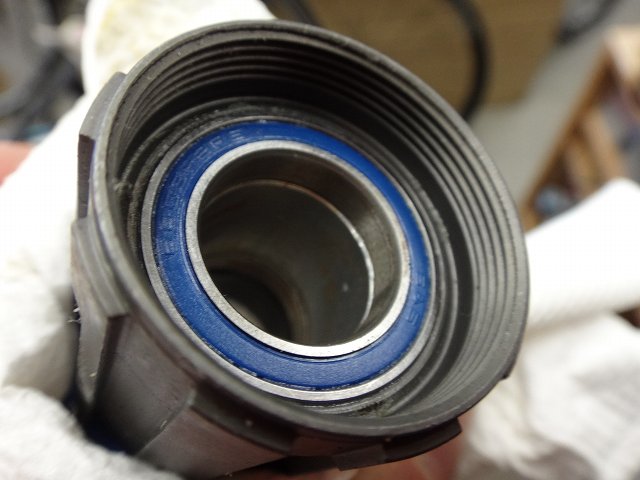
↑This is a Campagnolo freewheel body. Of the inner and outer bearings,
in most cases only the outer one needs replacement.
Even when both are damaged, the outer one is almost always more worn,
and with no bearing replacement history from new,
it's pretty much unheard of for just the inner bearing to deteriorate.
When the inner bearing gets corroded and the steel balls shrink,
the freewheel body becomes eccentric and loose when you hold it and move it.
If you hold the sprocket and body together, the eccentricity becomes even more obvious.
When it gets really bad, it definitely becomes a source of noise.
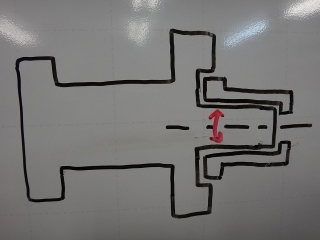
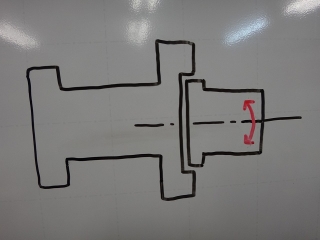
With Mavic's FTS-L freewheel body, when the ratchet teeth inside wear down,
play develops that causes the body to run eccentric,
using the outer edge as a pivot point.
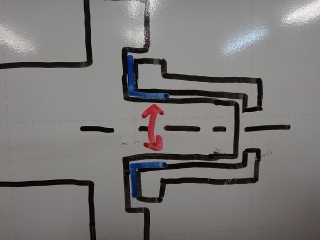
I've marked it in blue—the Delrin-like material (a trademark, similar to rear derailleur pulley material) inside the freewheel body
contacts the rubber seal that runs through the hub shell, but it also extends further inside the freewheel body.
This is where the body contacts the hub during eccentricity.
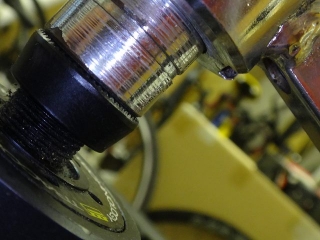
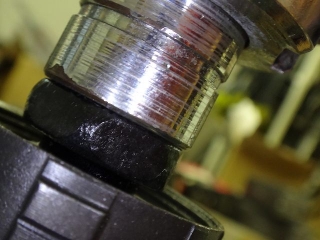
Normally, rear wheels with dish shift toward the freewheel side over time,
but R-SYS is unique because the non-freewheel carbon spokes don't stretch at all,
so it shifts toward the non-freewheel side with age.
But it doesn't look like it's been used that much—the centering was spot-on.

The specialized oil inside the freewheel body was dirty.
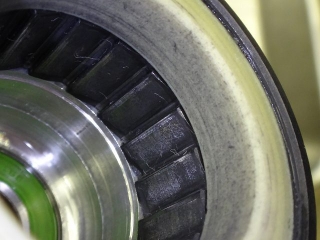
The interior of the removed freewheel body. I cleaned it.
The ratchet teeth are somewhat worn.
The yellow section is that Delrin-like material I mentioned.
The edge is always rubbing against rubber so it doesn't get deep scratches,
but the fine scratches on the inside are from contact with the hub body.
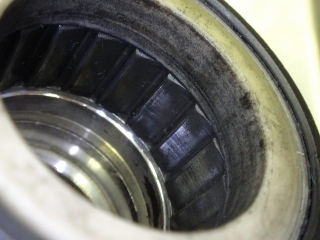
This is a personal reference wheel I keep for comparison purposes,
but this is what "just barely not needing replacement" looks like.
When you install this freewheel body, there's slight play, but nothing that causes noise.
The inner scratches are worse than on this customer's wheel.
I occasionally see ones even worse than this,
and when you shake the sprocket by hand, they rattle like crazy.
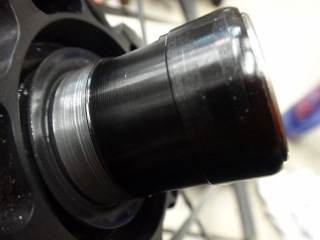
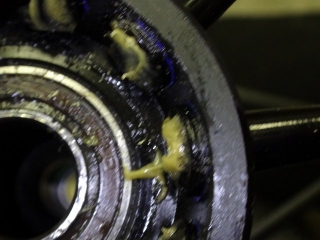
When I wiped the hub body, there were marks where the freewheel had rubbed.
I suspect the noise is coming from here.
Since we don't stock Mavic parts,
if it's not fixed, please have the freewheel body replaced.
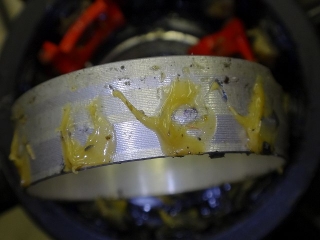
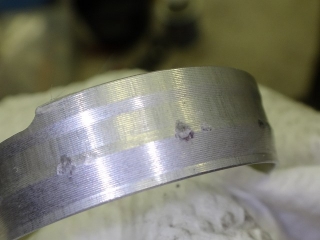
I don't think the noise is coming from this,
but I'm replacing the traction ring just in case.
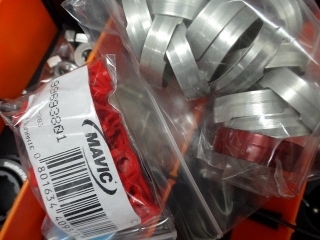
I said we don't stock Mavic parts, but
we do happen to have oil for FTS-L freewheel bodies
and paste for Instant Drive 360, among other items and chemicals.

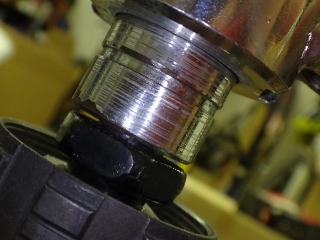
It wasn't exactly loose, but I tightened it up just a bit.
The result of tensioning the freewheel side as much as possible is shown above.
From here until center is achieved, I could still tension the non-freewheel side,
but R-SYS's non-freewheel side moves the rim sideways so much after just a turn or two
that there's not much I can do.
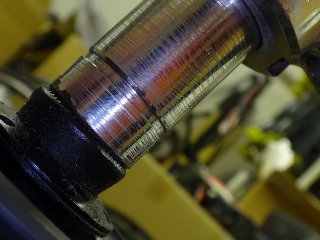
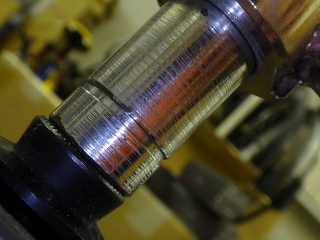
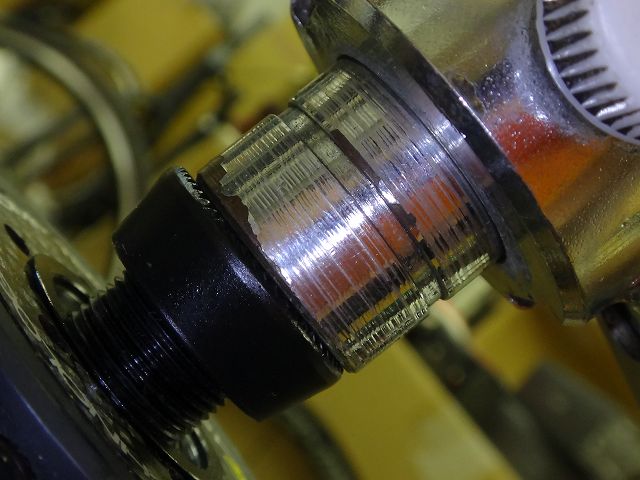
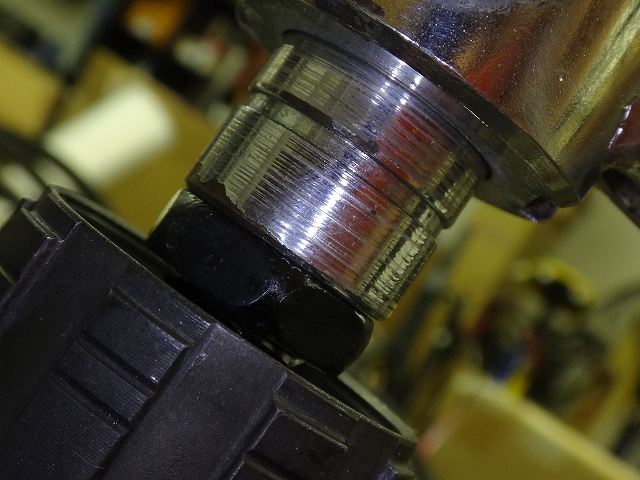
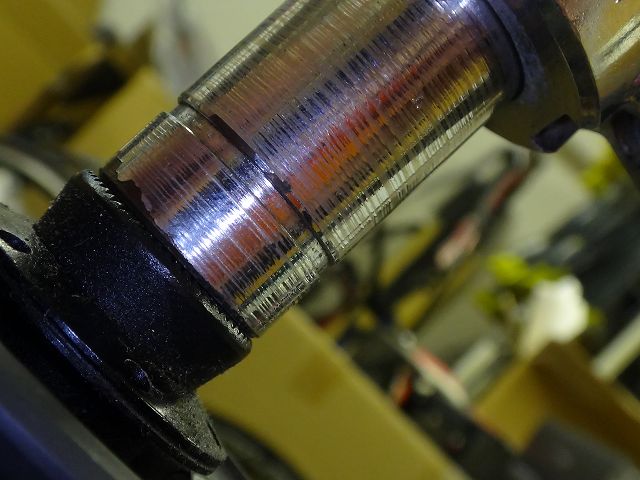
At this point in the image, the traction ring has been removed.
On rear wheels, the traction ring is pressed in on one side only,
but that press-in can change the wheel center.
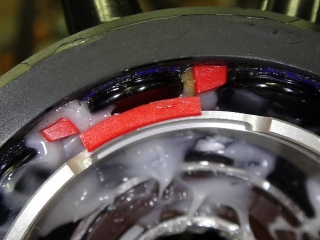
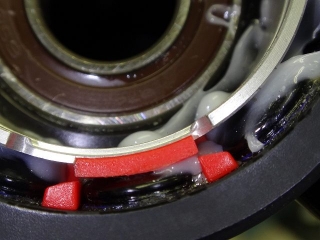
The new traction ring can only be pressed in within the limited range where the red plastic anti-rotation tab fits,
but by pressing it in near the edge of that range,
you can move the spoke head contact to a fresh spot,
stretching out how long before you need to swap parts again.
Though I've done this before and I'm still replacing it with a new one this time.
But doing this can be insurance for when new ones aren't readily available.
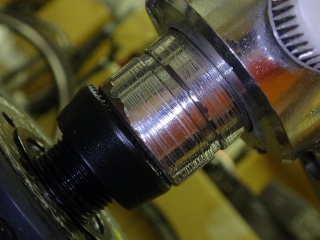
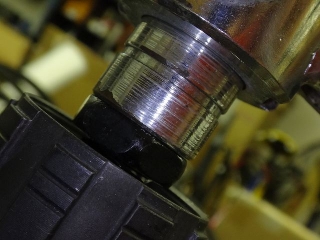
Got it centered.
There was minimal runout.
Next, the front wheel. It was sent along just in case,
and it had essentially no runout, no centering issues, and no hub problems.
I also removed the tires from both wheels and
applied rattle-prevention tape to the valve stems while I had them off.
It's a wheel we've inspected before at the shop,
but there's an odd noise during pedaling that they wanted me to check out.
The image above is after service.
I noticed the retailer's sticker on the rim during work,
so I retook the photo with consideration for that.

Despite the Ksyrium name, the rear wheel is straight-up R-SYS.
It's not even ISO pulse (radial spoked on the freewheel side).
To make it ISO pulse, you'd need to bring carbon spokes to the freewheel side,
but doing that risks destroying the wheel with a single chain drop.
Mavic was pushing R-SYS hard for a while there,
but it never got the wide rim treatment or road UST tubeless conversion.
Among the narrow rim lineup that's still available,
it's basically just the R-SYS SLR and the entry-level Aksium.
Anyway, the odd noise—it's either something around the traction ring
or possibly the freewheel body running eccentric.
The bearings weren't damaged, but even if the rotation got rough,
it wouldn't typically cause noise during pedaling.
↑This is a Campagnolo freewheel body. Of the inner and outer bearings,
in most cases only the outer one needs replacement.
Even when both are damaged, the outer one is almost always more worn,
and with no bearing replacement history from new,
it's pretty much unheard of for just the inner bearing to deteriorate.
When the inner bearing gets corroded and the steel balls shrink,
the freewheel body becomes eccentric and loose when you hold it and move it.
If you hold the sprocket and body together, the eccentricity becomes even more obvious.
When it gets really bad, it definitely becomes a source of noise.

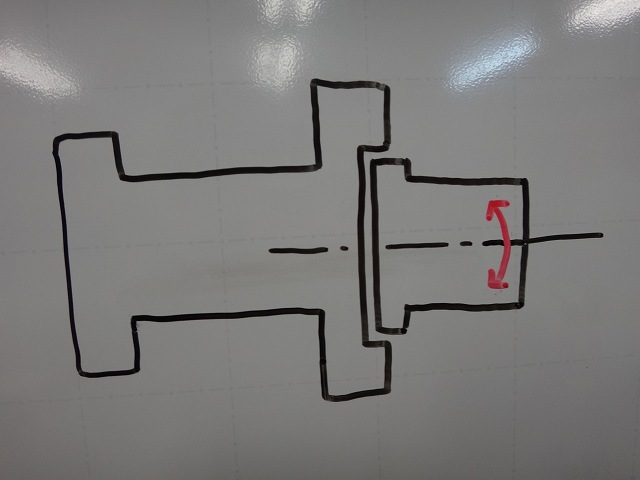
With Mavic's FTS-L freewheel body, when the ratchet teeth inside wear down,
play develops that causes the body to run eccentric,
using the outer edge as a pivot point.
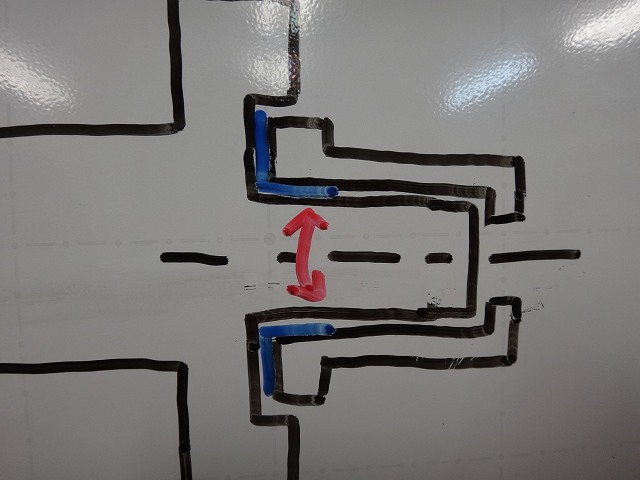
I've marked it in blue—the Delrin-like material (a trademark, similar to rear derailleur pulley material) inside the freewheel body
contacts the rubber seal that runs through the hub shell, but it also extends further inside the freewheel body.
This is where the body contacts the hub during eccentricity.
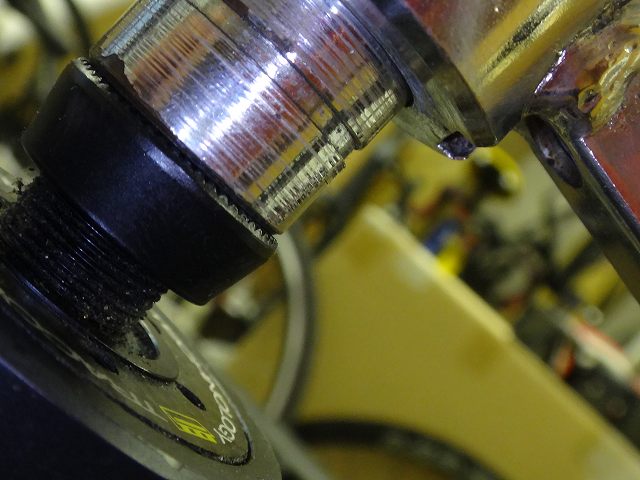
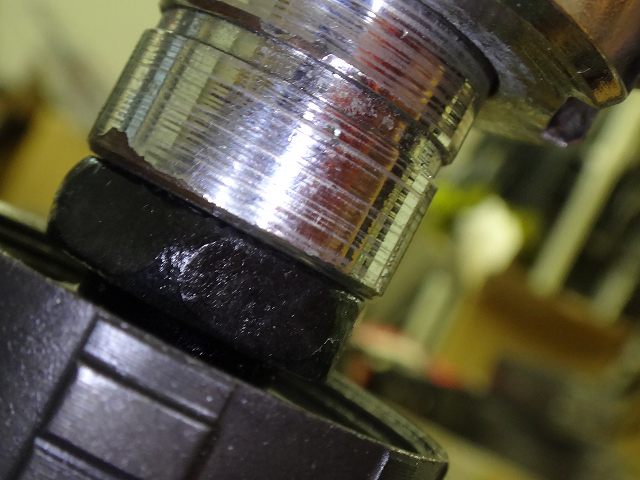
Normally, rear wheels with dish shift toward the freewheel side over time,
but R-SYS is unique because the non-freewheel carbon spokes don't stretch at all,
so it shifts toward the non-freewheel side with age.
But it doesn't look like it's been used that much—the centering was spot-on.
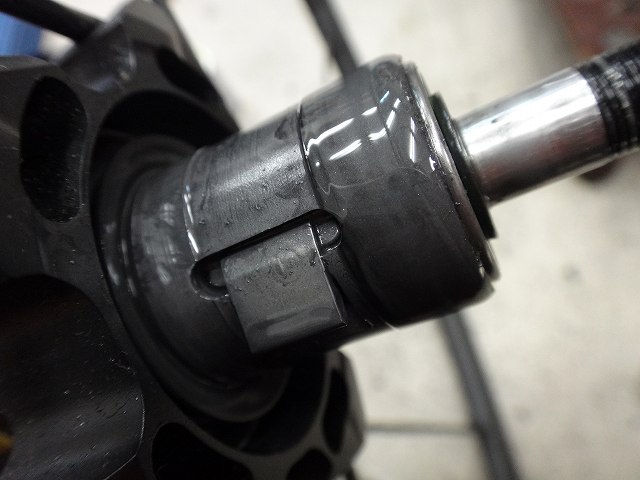
The specialized oil inside the freewheel body was dirty.

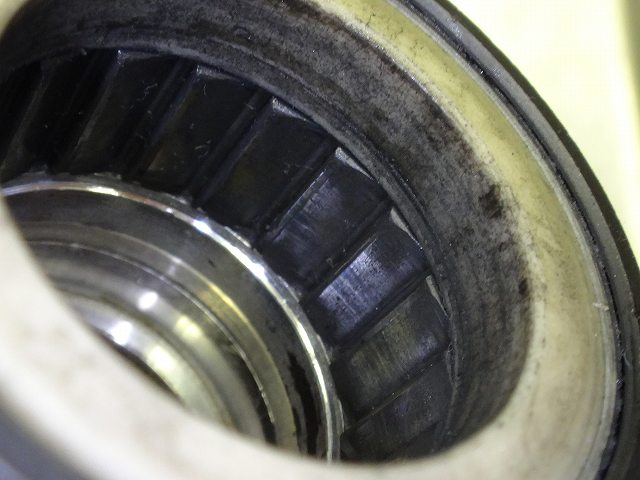
The interior of the removed freewheel body. I cleaned it.
The ratchet teeth are somewhat worn.
The yellow section is that Delrin-like material I mentioned.
The edge is always rubbing against rubber so it doesn't get deep scratches,
but the fine scratches on the inside are from contact with the hub body.
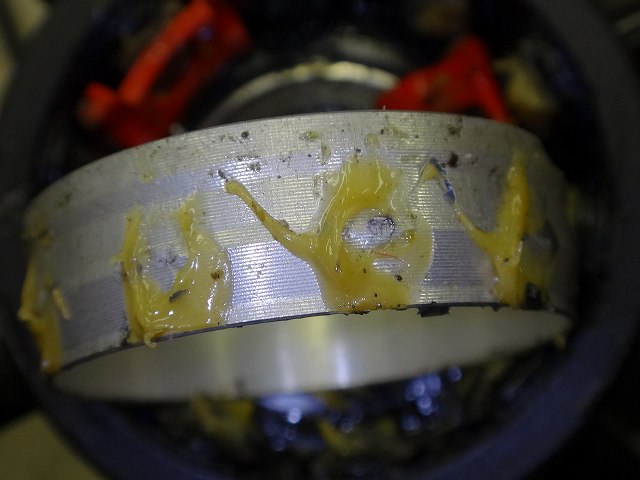
This is a personal reference wheel I keep for comparison purposes,
but this is what "just barely not needing replacement" looks like.
When you install this freewheel body, there's slight play, but nothing that causes noise.
The inner scratches are worse than on this customer's wheel.
I occasionally see ones even worse than this,
and when you shake the sprocket by hand, they rattle like crazy.

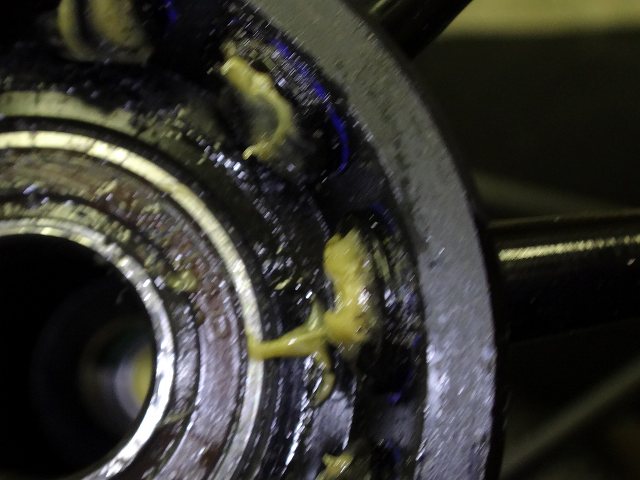
When I wiped the hub body, there were marks where the freewheel had rubbed.
I suspect the noise is coming from here.
Since we don't stock Mavic parts,
if it's not fixed, please have the freewheel body replaced.
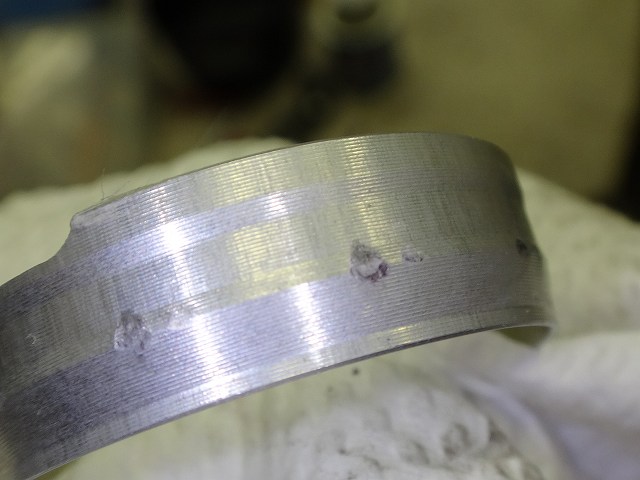
I don't think the noise is coming from this,
but I'm replacing the traction ring just in case.
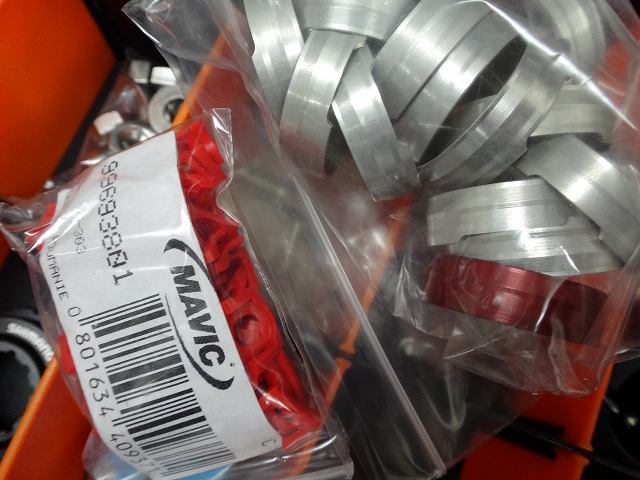
I said we don't stock Mavic parts, but
we do happen to have oil for FTS-L freewheel bodies
and paste for Instant Drive 360, among other items and chemicals.

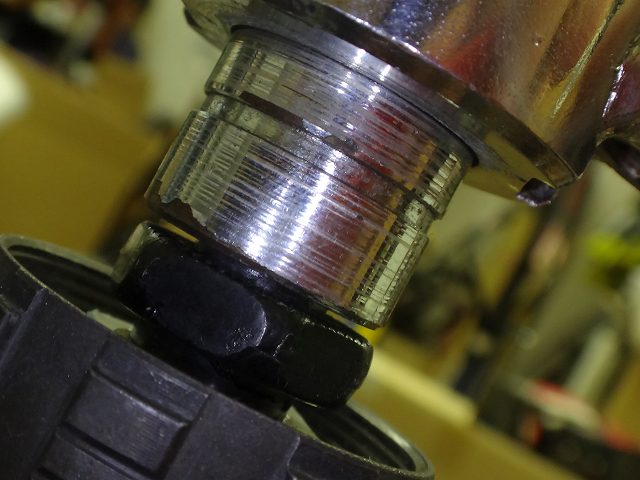
It wasn't exactly loose, but I tightened it up just a bit.
The result of tensioning the freewheel side as much as possible is shown above.
From here until center is achieved, I could still tension the non-freewheel side,
but R-SYS's non-freewheel side moves the rim sideways so much after just a turn or two
that there's not much I can do.
At this point in the image, the traction ring has been removed.
On rear wheels, the traction ring is pressed in on one side only,
but that press-in can change the wheel center.
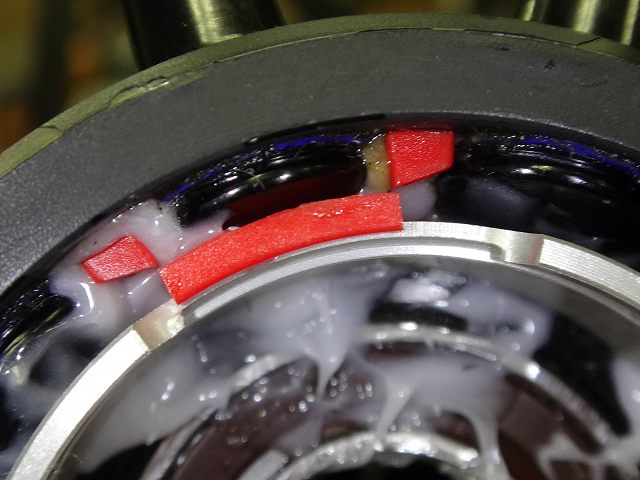
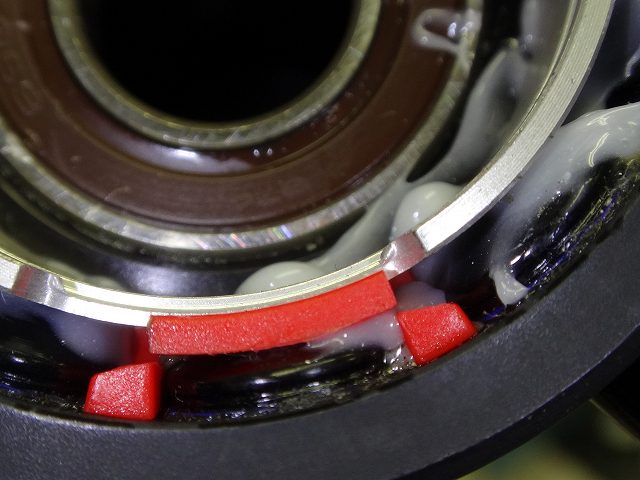
The new traction ring can only be pressed in within the limited range where the red plastic anti-rotation tab fits,
but by pressing it in near the edge of that range,
you can move the spoke head contact to a fresh spot,
stretching out how long before you need to swap parts again.
Though I've done this before and I'm still replacing it with a new one this time.
But doing this can be insurance for when new ones aren't readily available.
Got it centered.
There was minimal runout.
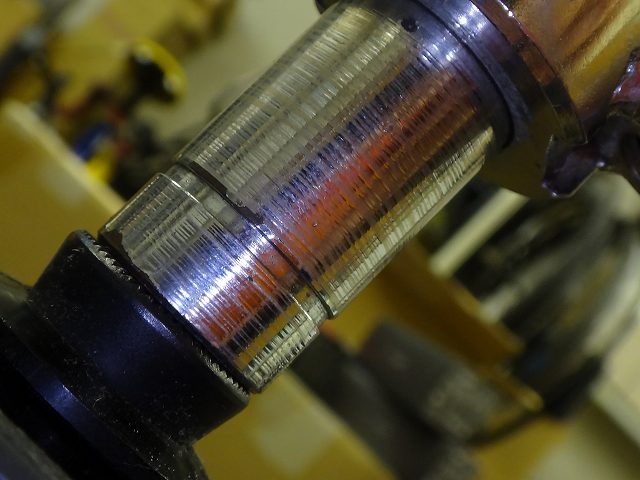
Next, the front wheel. It was sent along just in case,
and it had essentially no runout, no centering issues, and no hub problems.
I also removed the tires from both wheels and
applied rattle-prevention tape to the valve stems while I had them off.