I received a rear wheel from a Racing Speed bike from a customer.
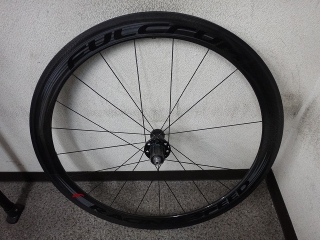
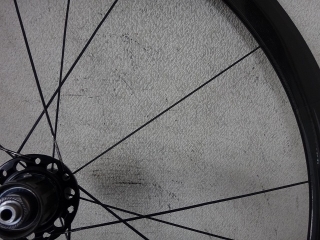
One spoke in the freewheel direction and one spoke in the opposite direction are both broken—two spokes total.
The customer is from out of town and asked for 3 to 4 replacement spokes,
but I believe there's virtually no chance they could get it properly fixed by doing the repair themselves or taking the spokes to a local shop,
and I can't determine whether 3 or 4 spokes would actually fix it without seeing the wheel in person, so I insisted firmly that they send me the entire wheel.
I'll replace every spoke I determine needs replacing.
I did have 3 or 4 spokes in stock, but the actual situation turned out to be much worse.
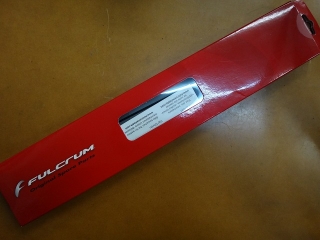
I ordered a set of 21 spokes.
I'll only charge the customer for the ones I actually used, not all 21.
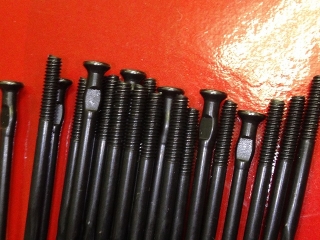
7 spokes on the non-freewheel side with anti-rotation dimple work, and
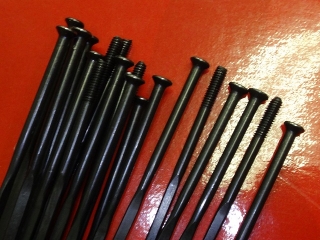
14 spokes on the freewheel side without that feature were included with their directions reversed. A thoughtful touch, but unnecessary for me.
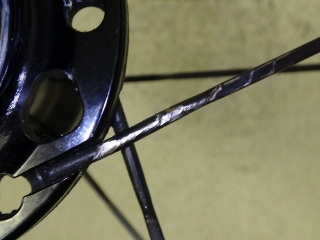
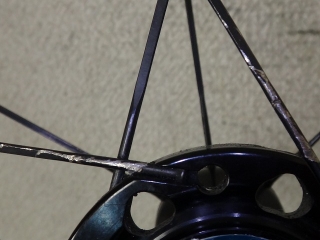
All 6 spokes in the non-broken direction (the outer side on this wheel) show chain drop marks, so I'll replace them.
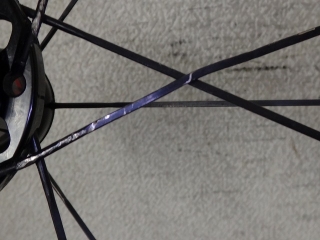
For chain drop marks, if they're minor I often don't replace them, but on this wheel most are deformed, so I've determined they need replacing. The image above shows a particularly severe deformation.
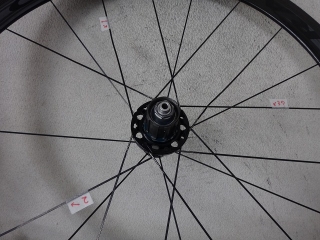
The spokes in the broken direction are definitely all getting replaced, including the broken one,
and I found 3 more spokes in the opposite direction that appear to need replacing,
so I marked them with tape and numbered them.
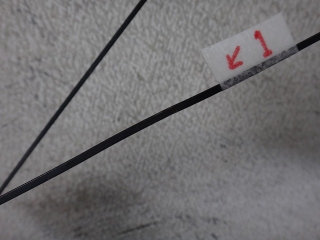
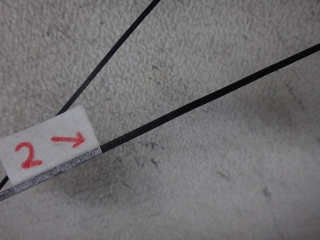
Spokes 1 and 2 show clear deformation.
The area indicated by the arrow appears to be where the bending starts.

Spoke 3 is suspected deformation.
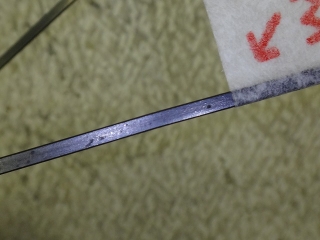
When I run my finger over it, I can barely feel a slight bend...
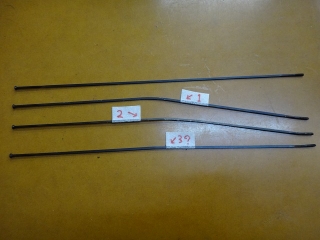
First, I removed spokes 1 through 3.
The top image is a new spoke.
Spokes 1 and 2 are clearly bent.

Spoke 3 needs replacing too.
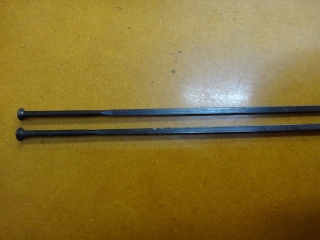
Up to this point it's parallel with the new one, but
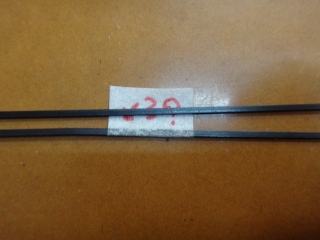
deformation was indeed present.
If this wheel had come in for inspection without any broken spokes and I'd spotted even this much deformation mixed in, I might not have caught it or might not have replaced it even if I did. With this level of deformation, even after truing the wheel, less radial runout than the tire deformation would appear at the phase directly below this spoke.
The result is that I'll be replacing 2 broken spokes and 9 bent spokes—11 total.
Most of the 14 freewheel-side spokes.
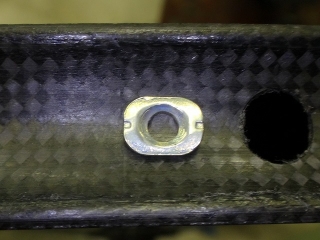
A special washer that sits between the nipple and rim—I make sure its length is oriented firmly in the front-to-back direction of the rim.
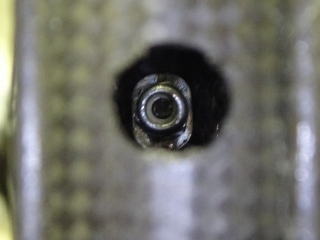
↑Like this.
There was this stupid hack shop called Silvest Cycle that rotated it 90° and applied tension, which caused a bulge near the rim's apex—I wonder how that turned out.
The outcome is unclear, but it's touched on here.
Though that's a different wheel from the one linked.
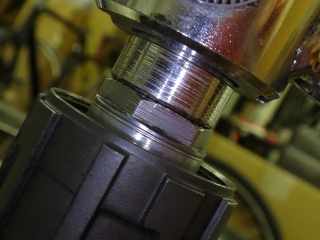
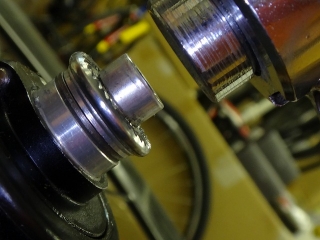
If only a few spokes are broken, the remaining ones function as guides for the original vertical, lateral, and center positions, but with only 3 left, that's not really possible, so I loosened the nipples at the 3 non-replaced locations. In this case, since most of the remaining spokes had deformation, using them as position guides was hopeless anyway.
Whether I replaced the spokes or not, I tightened exactly 5 full turns from where the spoke threads just disappeared from the rim, as shown in the image above. No significant lateral runout appeared, so the amount of center offset doesn't vary greatly by phase. From here, tightening the freewheel side just enough to achieve perfect center should theoretically restore the original state (before the chain drops happened).
If the freewheel-side spokes had been round spokes, this would have been an extremely tedious job, but with flat spokes to prevent rotation it's more manageable.
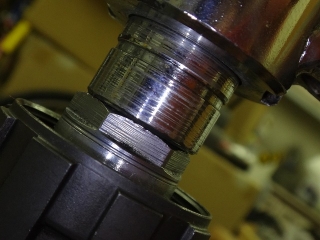
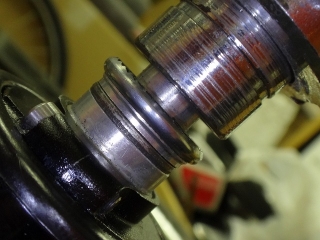
I then tightened the freewheel side 3 more turns.
Up to this point, I haven't touched the non-freewheel side nipples at all.
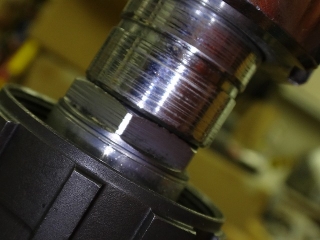
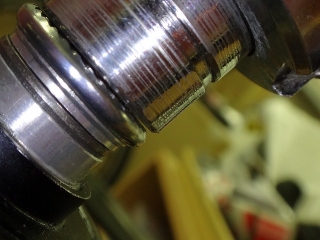
Then I tightened 1 more turn each and also dialed in the radial runout.
The non-freewheel spokes functioned as a vertical position guide, as there was almost no radial runout, and I mostly adjusted only the freewheel-side nipples.
From here, fine tightening of the freewheel side should get the center back—nearly restored to original. The wheel came pre-tensioned, so I won't need to "deliberately shift toward the freewheel side first, then tighten the non-freewheel side to center and lock in extra tension" type work.
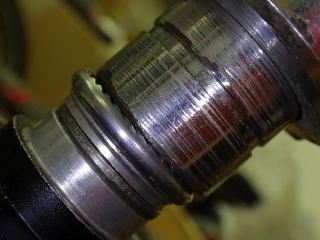
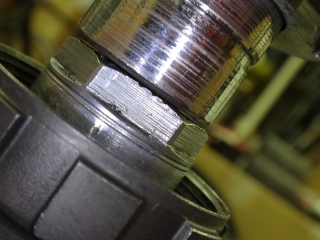
As I was chasing the lateral runout, the center finally reversed.
Just about two paper thicknesses.
From here I could slightly loosen the freewheel side to center, but
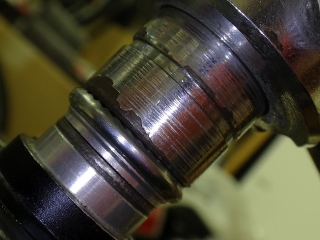
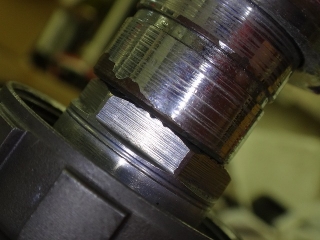
I achieved center by tightening the non-freewheel side.
Since all nipples are now tighter than before, theoretically the wheel should be more tensioned, though whether that's perceptible is unclear.


Fixed.
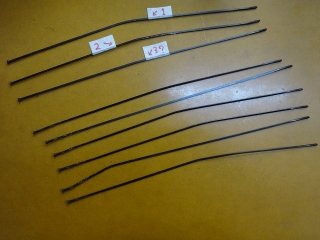
↑Replaced spokes
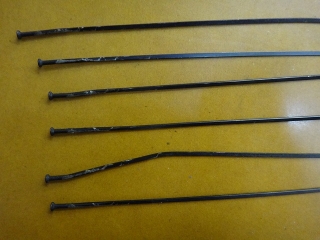
↑6 spokes from the non-broken direction


One spoke in the freewheel direction and one spoke in the opposite direction are both broken—two spokes total.
The customer is from out of town and asked for 3 to 4 replacement spokes,
and I can't determine whether 3 or 4 spokes would actually fix it without seeing the wheel in person, so I insisted firmly that they send me the entire wheel.
I'll replace every spoke I determine needs replacing.
I did have 3 or 4 spokes in stock, but the actual situation turned out to be much worse.

I ordered a set of 21 spokes.
I'll only charge the customer for the ones I actually used, not all 21.

7 spokes on the non-freewheel side with anti-rotation dimple work, and

14 spokes on the freewheel side without that feature were included with their directions reversed. A thoughtful touch, but unnecessary for me.


All 6 spokes in the non-broken direction (the outer side on this wheel) show chain drop marks, so I'll replace them.

For chain drop marks, if they're minor I often don't replace them, but on this wheel most are deformed, so I've determined they need replacing. The image above shows a particularly severe deformation.

The spokes in the broken direction are definitely all getting replaced, including the broken one,
and I found 3 more spokes in the opposite direction that appear to need replacing,
so I marked them with tape and numbered them.


Spokes 1 and 2 show clear deformation.
The area indicated by the arrow appears to be where the bending starts.

Spoke 3 is suspected deformation.

When I run my finger over it, I can barely feel a slight bend...

First, I removed spokes 1 through 3.
The top image is a new spoke.
Spokes 1 and 2 are clearly bent.

Spoke 3 needs replacing too.

Up to this point it's parallel with the new one, but

deformation was indeed present.
If this wheel had come in for inspection without any broken spokes and I'd spotted even this much deformation mixed in, I might not have caught it or might not have replaced it even if I did. With this level of deformation, even after truing the wheel, less radial runout than the tire deformation would appear at the phase directly below this spoke.
The result is that I'll be replacing 2 broken spokes and 9 bent spokes—11 total.
Most of the 14 freewheel-side spokes.

A special washer that sits between the nipple and rim—I make sure its length is oriented firmly in the front-to-back direction of the rim.

↑Like this.
There was this stupid hack shop called Silvest Cycle that rotated it 90° and applied tension, which caused a bulge near the rim's apex—I wonder how that turned out.
The outcome is unclear, but it's touched on here.
Though that's a different wheel from the one linked.


If only a few spokes are broken, the remaining ones function as guides for the original vertical, lateral, and center positions, but with only 3 left, that's not really possible, so I loosened the nipples at the 3 non-replaced locations. In this case, since most of the remaining spokes had deformation, using them as position guides was hopeless anyway.
Whether I replaced the spokes or not, I tightened exactly 5 full turns from where the spoke threads just disappeared from the rim, as shown in the image above. No significant lateral runout appeared, so the amount of center offset doesn't vary greatly by phase. From here, tightening the freewheel side just enough to achieve perfect center should theoretically restore the original state (before the chain drops happened).
If the freewheel-side spokes had been round spokes, this would have been an extremely tedious job, but with flat spokes to prevent rotation it's more manageable.


I then tightened the freewheel side 3 more turns.
Up to this point, I haven't touched the non-freewheel side nipples at all.


Then I tightened 1 more turn each and also dialed in the radial runout.
The non-freewheel spokes functioned as a vertical position guide, as there was almost no radial runout, and I mostly adjusted only the freewheel-side nipples.
From here, fine tightening of the freewheel side should get the center back—nearly restored to original. The wheel came pre-tensioned, so I won't need to "deliberately shift toward the freewheel side first, then tighten the non-freewheel side to center and lock in extra tension" type work.


As I was chasing the lateral runout, the center finally reversed.
Just about two paper thicknesses.
From here I could slightly loosen the freewheel side to center, but


I achieved center by tightening the non-freewheel side.
Since all nipples are now tighter than before, theoretically the wheel should be more tensioned, though whether that's perceptible is unclear.


Fixed.

↑Replaced spokes

↑6 spokes from the non-broken direction