I received a rear wheel from a CLX32 from a customer.

They said they inherited it from an acquaintance,
and it has some runout.
The amount of runout was so severe that the wheel wasn't usable at all,
and the cause was
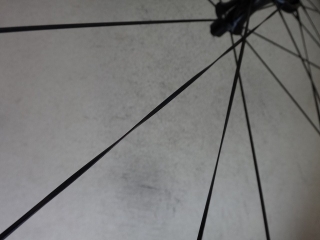
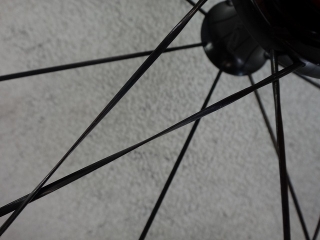
an amateur had been messing with it, twisting spokes
and loosening nipples excessively.
There's both radial runout and lateral runout.
To be honest, it's more troublesome than building a wheel from scratch with new parts.
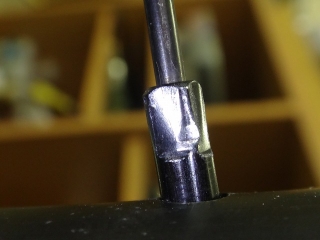
This generation Roval wheel
has nipples with a hex on the outer edge for tools to grip,
so you shouldn't touch the inner edge.
Besides the image above, many nipples were stripped.
The included rim tape wasn't the tape type either,
but rather a stretch band type.
Removing the rim tape isn't a hassle, and it can be reused,
so there's no reason to touch the inner edge.
I guess they just didn't know.
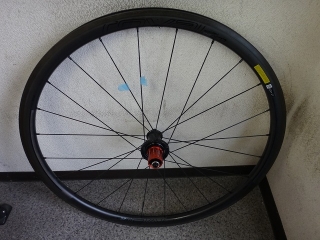
Fixed it.
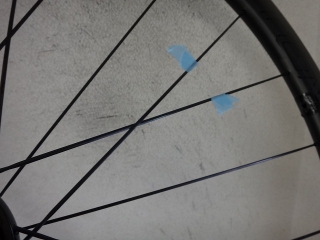
There were about 6 to 7 twisted spokes,
but the minor ones I was able to straighten, so I only replaced 2 of them.
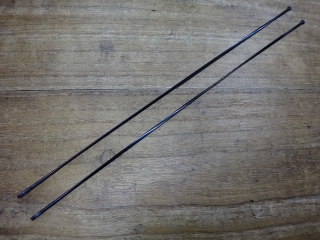

↑Replaced spokes
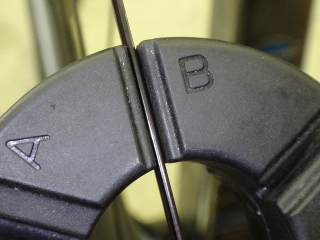
↑Freewheel side
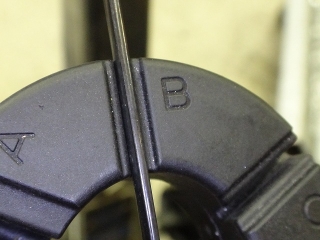
↑Non-freewheel side
This wheel has DT Aerolite spokes on the freewheel side
and opposite-handed different-diameter Aero Comp spokes on the non-freewheel side.
Earlier today, I inspected a CLX50 from the same generation as this for an unrelated job,
and it had Aerolites on both sides.
Regarding whether to use opposite-handed different-diameter spoke configuration
as a counterpart to same-sided different-diameter builds,
complete wheel manufacturers seem to use rim height as the determining factor.
Zonda DB and Racing Zero DB use opposite-handed different-diameter builds on both wheels,
and Racing Zero even does this with aluminum spokes—pretty thorough—but
Bora One DB uses same-diameter builds.
Zonda DB's catalogs from the initial 2018 release
through the current 2021 catalog state
that both wheels front and rear use 2.0–1.6–2.0mm spokes
with same-diameter builds,
but the actual products aren't like that, so this is an error.
As for the rear wheel of the CLX32, the latest catalog
only states "DT Swiss Aerolite T-head" for the spokes,
so if you believe that, it would mean it's not a different-diameter build.

Oh, and I didn't know that sliced king oyster mushroom-shaped spoke heads
were called T-heads.
About this too, depending on the hub generation,
sometimes only the freewheel side uses a standard straight spoke head.

They said they inherited it from an acquaintance,
and it has some runout.
The amount of runout was so severe that the wheel wasn't usable at all,
and the cause was


an amateur had been messing with it, twisting spokes
and loosening nipples excessively.
There's both radial runout and lateral runout.
To be honest, it's more troublesome than building a wheel from scratch with new parts.

This generation Roval wheel
has nipples with a hex on the outer edge for tools to grip,
so you shouldn't touch the inner edge.
Besides the image above, many nipples were stripped.
The included rim tape wasn't the tape type either,
but rather a stretch band type.
Removing the rim tape isn't a hassle, and it can be reused,
so there's no reason to touch the inner edge.
I guess they just didn't know.

Fixed it.

There were about 6 to 7 twisted spokes,
but the minor ones I was able to straighten, so I only replaced 2 of them.


↑Replaced spokes

↑Freewheel side

↑Non-freewheel side
This wheel has DT Aerolite spokes on the freewheel side
and opposite-handed different-diameter Aero Comp spokes on the non-freewheel side.
Earlier today, I inspected a CLX50 from the same generation as this for an unrelated job,
and it had Aerolites on both sides.
Regarding whether to use opposite-handed different-diameter spoke configuration
as a counterpart to same-sided different-diameter builds,
complete wheel manufacturers seem to use rim height as the determining factor.
Zonda DB and Racing Zero DB use opposite-handed different-diameter builds on both wheels,
and Racing Zero even does this with aluminum spokes—pretty thorough—but
Bora One DB uses same-diameter builds.
Zonda DB's catalogs from the initial 2018 release
through the current 2021 catalog state
that both wheels front and rear use 2.0–1.6–2.0mm spokes
with same-diameter builds,
but the actual products aren't like that, so this is an error.
As for the rear wheel of the CLX32, the latest catalog
only states "DT Swiss Aerolite T-head" for the spokes,
so if you believe that, it would mean it's not a different-diameter build.

Oh, and I didn't know that sliced king oyster mushroom-shaped spoke heads
were called T-heads.
About this too, depending on the hub generation,
sometimes only the freewheel side uses a standard straight spoke head.