Another wheel day (and so on).
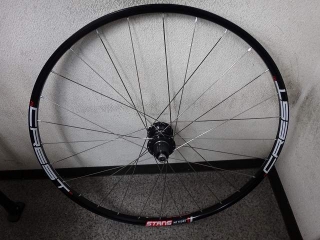
I built a rear wheel with a Crest MK3 rim and XT hub.
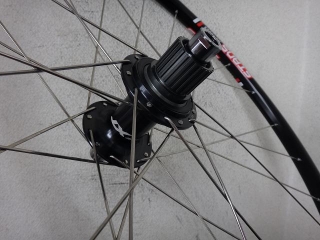
FH-8110-B 28H semi-comp four-cross JIS lacing.
I'll do the spoke nipple tightening later.
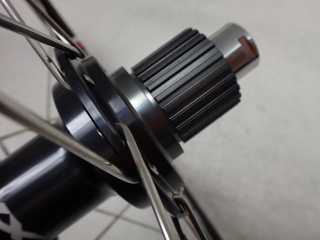
This hub has a Microspline freebody, and while the right flange position looks inset when viewing the hub alone, once I actually threaded the spokes through, the clearance with the sprocket seemed pretty tight.
It's a Shimano MTB hub, but with BOOST-standard hubs, they've put all of the increased overlock-nut dimension directly into flange width. For example, with the earlier M8010 series hubs, the front hub is 10mm wider and the rear is 6mm wider.
For hubs that adapt to BOOST by just swapping end parts on both sides of the same hub body, there's no change to the spoke-structure portion itself, so simply increasing the overlock-nut dimension doesn't necessarily raise wheel stiffness dramatically. Though I suppose for fully-assembled wheels with designs far removed from standard materials, there's no help for it.
On the other hand, Shimano sets hub body dimensions individually based on overlock-nut dimension, which means they can't adapt to standard changes—there's an inflexibility to it.
The M8110 front hub is basically the same design as the M8010 hub body with just the color and XT logo changed. The fact that a 28H spec became available is personally significant, though. In contrast, the rear hub became something completely different since it switched to a Microspline freebody. The large flanges are there because at least on the freewheel side, fitting in the ratchet mechanism requires enlarging the hub body size. The non-freewheel side doesn't have that constraint, so it might have been possible to use small flanges and make it a super high-low flange hub, but in reality, both sides are the same diameter, or nearly so. Non-BOOST hubs have 61mm flange hole center spacing on both sides, but BOOST hubs are 61mm on the freewheel side and 60mm on the non-freewheel side. A 1mm diameter difference in high-low flanges is common with Shimano hubs, and at this level, you don't actually feel the high-low flange effect when building a wheel.
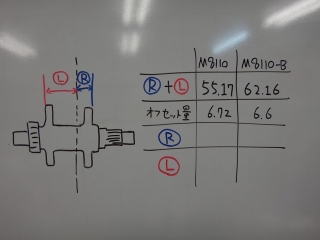
I checked the flange widths of the M8110 rear hub in 142mm and 148mm (BOOST) widths. All numbers below are nominal values. By the way, by "flange width" according to Shimano, they mean outside-to-outside width, though some manufacturers specify the width between the centers of the flange thicknesses. Also, when I write about flange width, unless otherwise noted, it's the outside-to-outside width.
So for the M8110 BOOST rear hub, the flange width difference from the non-BOOST rear hub is 62.16 − 55.17 = 6.99mm. About a 7mm difference. The overlock-nut dimension difference is 6mm, yet somehow they've squeezed out another 1mm. That's amazing.
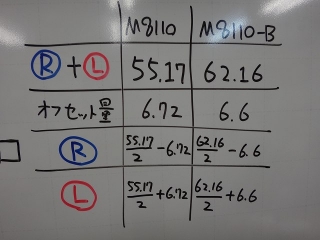
I'm going to investigate the breakdown of that extra 6.99mm. The catalog should just list the left and right flange widths directly (they actually used to), but now they list offset amounts and make you calculate from there.
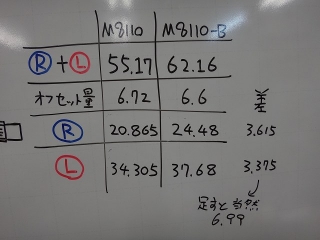
I did the calculations.
The right flange width of the 9S Dura-Ace with 130mm overlock-nut dimension and quick-release is 21.1mm. The 9S XETR with 135mm overlock-nut dimension and quick-release has a right flange width of 23.05mm. Out of the 5mm difference in overlock-nut dimension, about 2mm is being used to widen the right flange.
With the M8110 series XT non-BOOST rear hub, despite having a 142mm overlock-nut dimension, the right flange width is comparable to their 9S road hub. Since it's a 12-speed hub, tight spoke nipple engagement is unavoidable. When it becomes BOOST, you can see they're using most of that 6.99mm to widen the right flange. The right flange width of 24.48mm is actually wider than the 135mm width M8010 9S hub. That's seriously impressive.
Changing the left flange width by 1mm won't greatly change the left-right spoke tension difference, but 1mm on the right flange is huge. On dimensionally tight hubs, you feel it while building—the freewheel side tightens up quickly with a high-pitched ring, while the non-freewheel side is still slack. I appreciate hubs like this that make effective use of the BOOST standard.

I built a rear wheel with a Crest MK3 rim and XT hub.

FH-8110-B 28H semi-comp four-cross JIS lacing.
I'll do the spoke nipple tightening later.

This hub has a Microspline freebody, and while the right flange position looks inset when viewing the hub alone, once I actually threaded the spokes through, the clearance with the sprocket seemed pretty tight.
It's a Shimano MTB hub, but with BOOST-standard hubs, they've put all of the increased overlock-nut dimension directly into flange width. For example, with the earlier M8010 series hubs, the front hub is 10mm wider and the rear is 6mm wider.
For hubs that adapt to BOOST by just swapping end parts on both sides of the same hub body, there's no change to the spoke-structure portion itself, so simply increasing the overlock-nut dimension doesn't necessarily raise wheel stiffness dramatically. Though I suppose for fully-assembled wheels with designs far removed from standard materials, there's no help for it.
On the other hand, Shimano sets hub body dimensions individually based on overlock-nut dimension, which means they can't adapt to standard changes—there's an inflexibility to it.
The M8110 front hub is basically the same design as the M8010 hub body with just the color and XT logo changed. The fact that a 28H spec became available is personally significant, though. In contrast, the rear hub became something completely different since it switched to a Microspline freebody. The large flanges are there because at least on the freewheel side, fitting in the ratchet mechanism requires enlarging the hub body size. The non-freewheel side doesn't have that constraint, so it might have been possible to use small flanges and make it a super high-low flange hub, but in reality, both sides are the same diameter, or nearly so. Non-BOOST hubs have 61mm flange hole center spacing on both sides, but BOOST hubs are 61mm on the freewheel side and 60mm on the non-freewheel side. A 1mm diameter difference in high-low flanges is common with Shimano hubs, and at this level, you don't actually feel the high-low flange effect when building a wheel.

I checked the flange widths of the M8110 rear hub in 142mm and 148mm (BOOST) widths. All numbers below are nominal values. By the way, by "flange width" according to Shimano, they mean outside-to-outside width, though some manufacturers specify the width between the centers of the flange thicknesses. Also, when I write about flange width, unless otherwise noted, it's the outside-to-outside width.
So for the M8110 BOOST rear hub, the flange width difference from the non-BOOST rear hub is 62.16 − 55.17 = 6.99mm. About a 7mm difference. The overlock-nut dimension difference is 6mm, yet somehow they've squeezed out another 1mm. That's amazing.

I'm going to investigate the breakdown of that extra 6.99mm. The catalog should just list the left and right flange widths directly (they actually used to), but now they list offset amounts and make you calculate from there.

I did the calculations.
The right flange width of the 9S Dura-Ace with 130mm overlock-nut dimension and quick-release is 21.1mm. The 9S XETR with 135mm overlock-nut dimension and quick-release has a right flange width of 23.05mm. Out of the 5mm difference in overlock-nut dimension, about 2mm is being used to widen the right flange.
With the M8110 series XT non-BOOST rear hub, despite having a 142mm overlock-nut dimension, the right flange width is comparable to their 9S road hub. Since it's a 12-speed hub, tight spoke nipple engagement is unavoidable. When it becomes BOOST, you can see they're using most of that 6.99mm to widen the right flange. The right flange width of 24.48mm is actually wider than the 135mm width M8010 9S hub. That's seriously impressive.
Changing the left flange width by 1mm won't greatly change the left-right spoke tension difference, but 1mm on the right flange is huge. On dimensionally tight hubs, you feel it while building—the freewheel side tightens up quickly with a high-pitched ring, while the non-freewheel side is still slack. I appreciate hubs like this that make effective use of the BOOST standard.