I received a Racing Zero 2WAY-FIT from a customer.
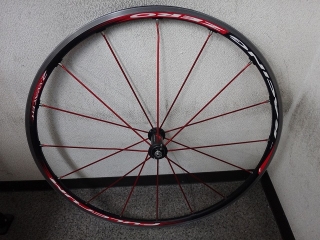
Starting with the front wheel.
There's a note on the rim's outer edge saying "Only Hutchinson tubeless tires can be used,"
which essentially means "Don't use IRC tires."
This is one of the early 2WAY-FIT wheels.
You can see from a distance that the spoke at the 12 o'clock position in the image above is bent.
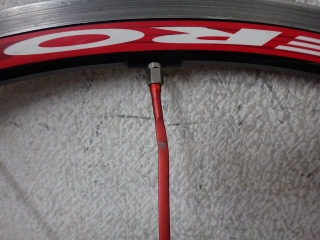
↑This one
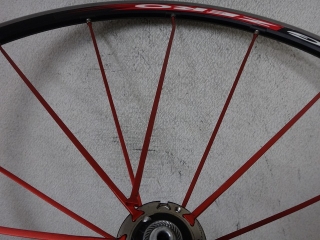
When I released the tension, it looked like this.
Also, two spokes over on the same side as this one
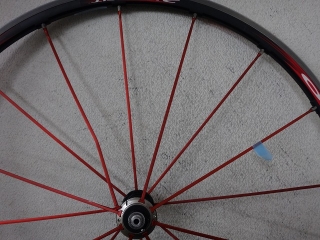
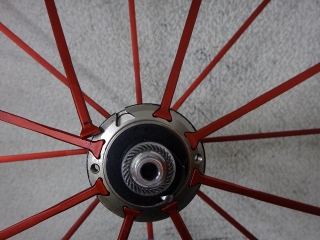
were also bent.
As usual, I thought I could fix most of the runout just by adjusting these two nipples,
but that wasn't the case. The section with the most runout wasn't even related to the replaced spokes.
I checked the spokes in that phase pretty thoroughly too, but found no deformation. However...
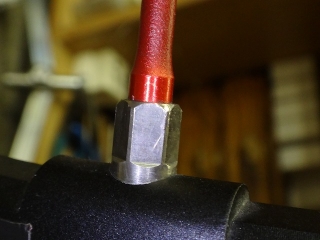
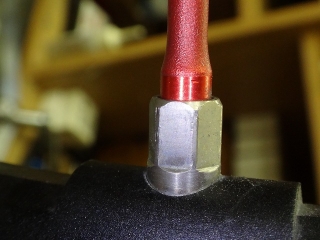
The threaded portion of the spoke sticking out from the nipple is normally about this long,
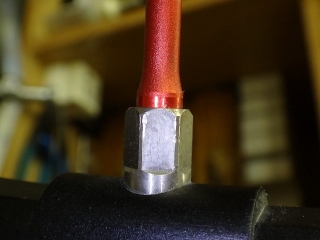
but in the phase with the most runout, it's significantly shorter.
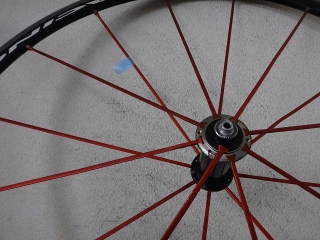
I released the tension and removed it just to be sure.
This spoke is on the opposite flange from the two that had deformation.
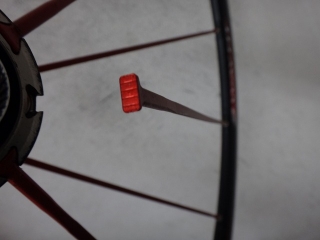
There was no particular deformation.
By the way, the head stamp shows "four vertical lines."
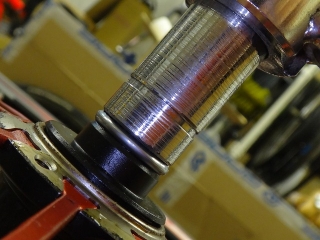
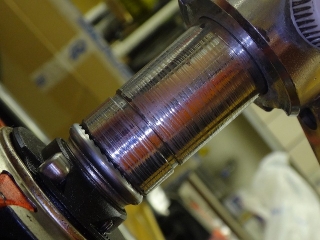
On top of that, there was also an unnatural radial runout in a different phase—separate from the three spokes I touched.
Someone might have messed with it.
Since there was spoke deformation and significant lateral runout,
(although in this case the phase with maximum lateral runout was different from where the spoke deformation was)
I didn't check the preliminary center, but after taking out all the lateral and radial runout,
when I first applied the centering gauge, it was dead-on,
so this wheel likely had virtually no original misalignment.
After further fine runout correction, it shifted by about the thickness of a sheet of paper, which I corrected further.
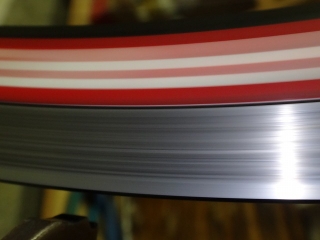
↑This is with the wheel rotating, and
the silver portion on the outer edge where the brake shoe barely touches is bouncing up and down slightly.
Before adjustment, the silver portion was perfectly round and the rim had radial runout.
Now that I've dialed in the runout, the rim's outer edge is nearly round,
and the silver portion that was once round is dancing around.
This will disappear with brake shoe contact during future use,
so you can only see it now.
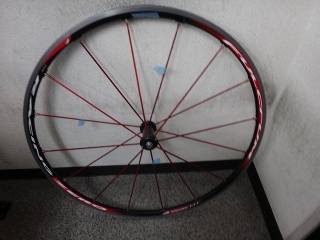
Fixed.
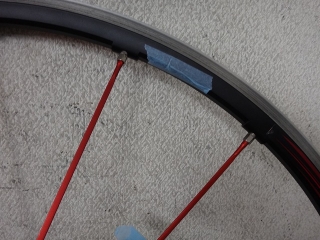
The tape on the rim side marks the phase with unnatural radial runout,
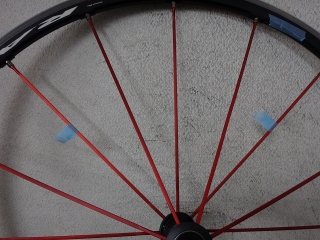
the tape in the middle of the spokes marks the two I replaced,
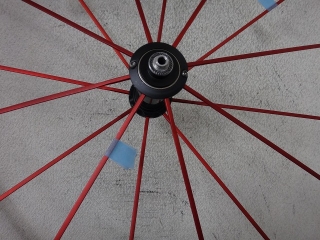
and the tape near the hub marks the one spoke I loosened but didn't replace.
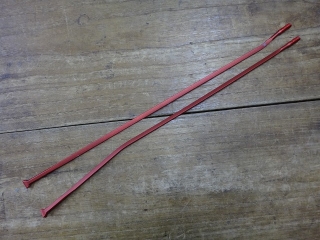
↑Replaced spokes
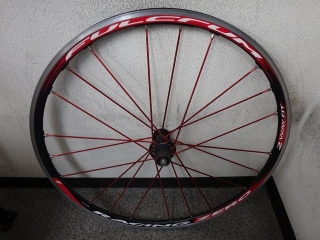
Next, the rear wheel.
This one was just inspected. The customer wanted hub inspection on both wheels,
but I found no abnormalities in the bearings on either hub.
When I release the bearing preload, the rolling feel becomes slightly murky, possibly because the contact point changes slightly during reassembly,
so I deliberately left it alone.
The maintenance frequency for Campagnolo/Fulcrum cup-and-cone bearings is not that high,
unless the hub has been used with play for years.
From what I've seen, hubs belonging to people who say they occasionally grease it themselves
(every few months or so) tend to have murkier rotation more often than not.
The rear hub had play in the bearing preload, so I adjusted it.
That's the only thing I touched in the hub bearing area,
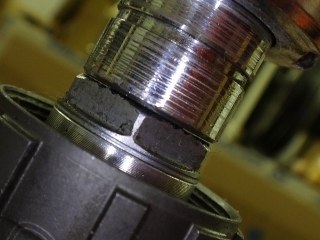
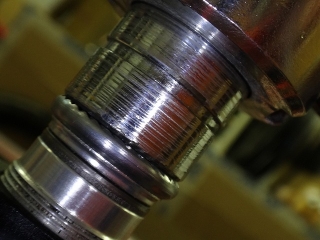
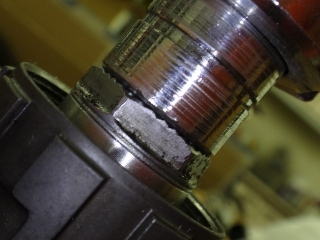
but the freewheel body ratchet feel was off, so when I disassembled it
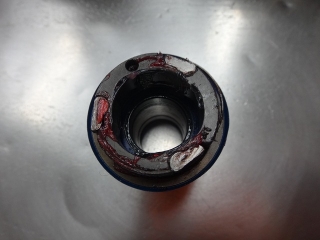
the pawls were flattened.
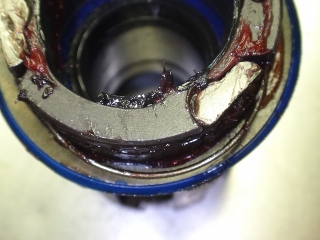
The pawl return spring was also protruding.
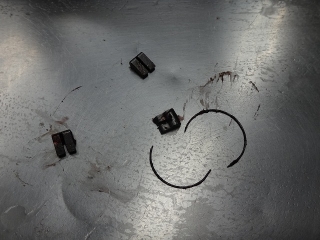
The pawl return spring was broken.
When this spring breaks, it almost always breaks somewhere around the middle of its 360-degree arc.
Even in this state, one of the three springs often still engages the pawl,
so the problem can be hard to notice (it works relatively normally).
However, I've seen the freewheel body free-spin forward before,
so you can't be too careful.
When I just tried to convert "かしん," the first suggestion was "何進."
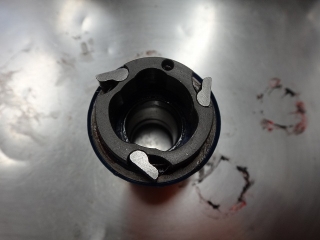
I replaced the pawl return spring.
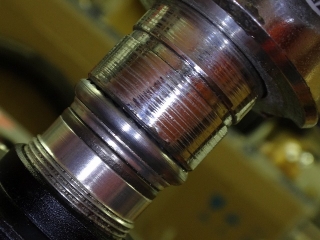
The rim is slightly shifted toward the freewheel side.
It might have shifted from years of use.
After fine runout correction on the anti-freewheel side with a tightening bias,
the center came out on its own.

Starting with the front wheel.
There's a note on the rim's outer edge saying "Only Hutchinson tubeless tires can be used,"
which essentially means "Don't use IRC tires."
This is one of the early 2WAY-FIT wheels.
You can see from a distance that the spoke at the 12 o'clock position in the image above is bent.

↑This one

When I released the tension, it looked like this.
Also, two spokes over on the same side as this one


were also bent.
As usual, I thought I could fix most of the runout just by adjusting these two nipples,
but that wasn't the case. The section with the most runout wasn't even related to the replaced spokes.
I checked the spokes in that phase pretty thoroughly too, but found no deformation. However...


The threaded portion of the spoke sticking out from the nipple is normally about this long,

but in the phase with the most runout, it's significantly shorter.

I released the tension and removed it just to be sure.
This spoke is on the opposite flange from the two that had deformation.

There was no particular deformation.
By the way, the head stamp shows "four vertical lines."


On top of that, there was also an unnatural radial runout in a different phase—separate from the three spokes I touched.
Someone might have messed with it.
Since there was spoke deformation and significant lateral runout,
(although in this case the phase with maximum lateral runout was different from where the spoke deformation was)
I didn't check the preliminary center, but after taking out all the lateral and radial runout,
when I first applied the centering gauge, it was dead-on,
so this wheel likely had virtually no original misalignment.
After further fine runout correction, it shifted by about the thickness of a sheet of paper, which I corrected further.

↑This is with the wheel rotating, and
the silver portion on the outer edge where the brake shoe barely touches is bouncing up and down slightly.
Before adjustment, the silver portion was perfectly round and the rim had radial runout.
Now that I've dialed in the runout, the rim's outer edge is nearly round,
and the silver portion that was once round is dancing around.
This will disappear with brake shoe contact during future use,
so you can only see it now.

Fixed.

The tape on the rim side marks the phase with unnatural radial runout,

the tape in the middle of the spokes marks the two I replaced,

and the tape near the hub marks the one spoke I loosened but didn't replace.

↑Replaced spokes

Next, the rear wheel.
This one was just inspected. The customer wanted hub inspection on both wheels,
but I found no abnormalities in the bearings on either hub.
When I release the bearing preload, the rolling feel becomes slightly murky, possibly because the contact point changes slightly during reassembly,
so I deliberately left it alone.
The maintenance frequency for Campagnolo/Fulcrum cup-and-cone bearings is not that high,
unless the hub has been used with play for years.
From what I've seen, hubs belonging to people who say they occasionally grease it themselves
(every few months or so) tend to have murkier rotation more often than not.
The rear hub had play in the bearing preload, so I adjusted it.
That's the only thing I touched in the hub bearing area,
but the freewheel body ratchet feel was off, so when I disassembled it

the pawls were flattened.

The pawl return spring was also protruding.

The pawl return spring was broken.
When this spring breaks, it almost always breaks somewhere around the middle of its 360-degree arc.
Even in this state, one of the three springs often still engages the pawl,
so the problem can be hard to notice (it works relatively normally).
However, I've seen the freewheel body free-spin forward before,
so you can't be too careful.

I replaced the pawl return spring.


The rim is slightly shifted toward the freewheel side.
It might have shifted from years of use.


After fine runout correction on the anti-freewheel side with a tightening bias,
the center came out on its own.