Continuing from the front wheel work the other day.
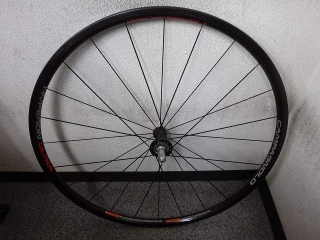
Converting the rear wheel of the original Hyperon Ultra to CULT bearings.
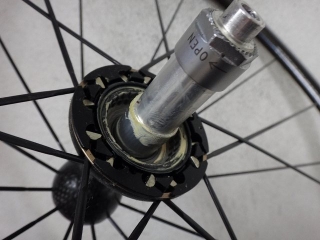
The freewheel body is missing because the customer who owns this wheel had it removed for use on a different wheel they have.
The hub shaft is from the era before butted versions existed, so
it's impossible to install current Campagnolo aluminum freewheel bodies or
Shimano 11-speed white aluminum freewheel bodies.
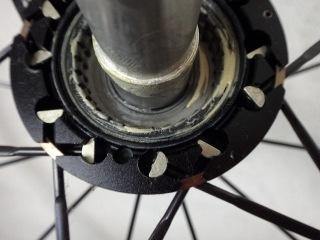
On the freewheel side, I can replace the bearing race
without removing the spokes, but
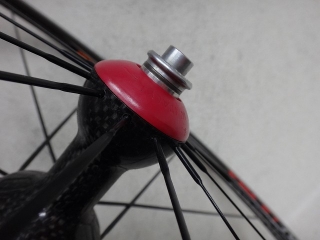
On the non-freewheel side
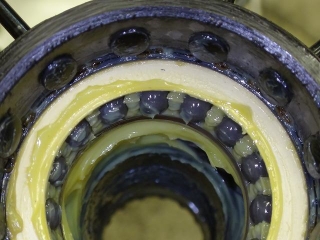
Just like the front wheel, the spoke heads get in the way, so
I have to remove the spokes temporarily.
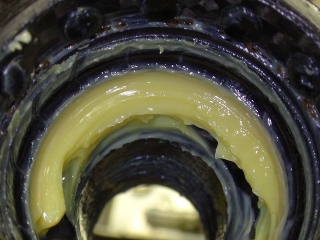
I removed the seal and retainer bearings.
Just like the front hub, grease was packed in unnecessary internal areas.
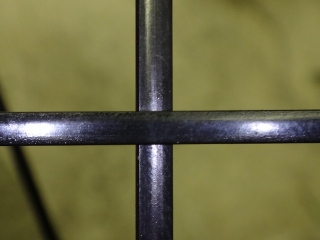
I placed the removed non-freewheel side spokes directly perpendicular to
the freewheel side spokes
(vertical direction is freewheel side, horizontal is non-freewheel side).
The width is different, but the thickness is distinctly different too.
The Hyperon uses equal numbers of spokes on both sides with radial lacing on the non-freewheel side, but
with the two-diameter spoke pairing, high-low flanges, and offset rim,
the deformation amount of the non-freewheel side spokes isn't that loose.
When rim height is tall (strictly speaking, when spokes become shorter)
spoke deformation decreases, but
the Hyperon's rim height isn't naturally that high,
and considering this, it's remarkably well-engineered.
Going back even to the New Cleoron with its aluminum rim that has the same
two-diameter spoke pairing, high-low flanges, and offset rim,
that's over 20 years ago, yet I still find wheels with lower build quality than that,
which continues to baffle me.
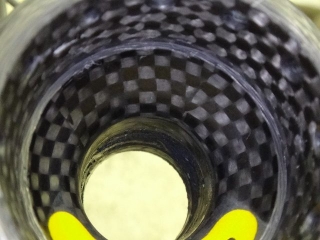
I removed the race and cleaned the hub.
What's slightly visible at the bottom of the image is
a yellow label with the serial number on it, so
I'm careful to keep it out of view.
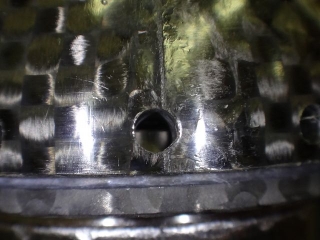
Pressing in the CULT race...

↑Non-freewheel side

↑Freewheel side
What looks like green grease
is adhesive applied during the hub manufacturing process,
and it's extremely hard.
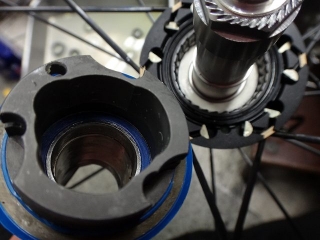
Even with the old non-butted shaft, if it's a Shimano 11-speed steel freewheel body,
installation is possible, so I'll temporarily install it.
If I don't, the position of the right end nut won't be determined,
and the centering gauge position would be on the inside without a freewheel body.
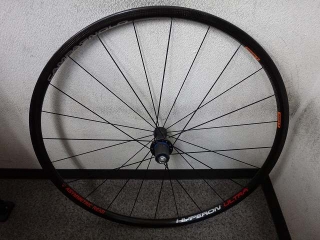

It's assembled.

Converting the rear wheel of the original Hyperon Ultra to CULT bearings.

The freewheel body is missing because the customer who owns this wheel had it removed for use on a different wheel they have.
The hub shaft is from the era before butted versions existed, so
it's impossible to install current Campagnolo aluminum freewheel bodies or
Shimano 11-speed white aluminum freewheel bodies.

On the freewheel side, I can replace the bearing race
without removing the spokes, but
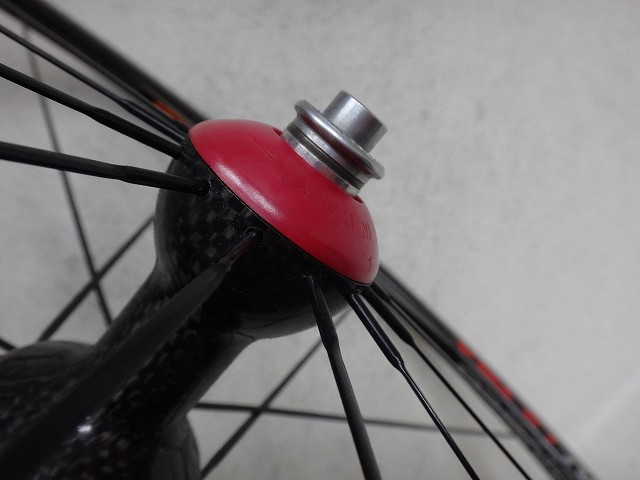
On the non-freewheel side
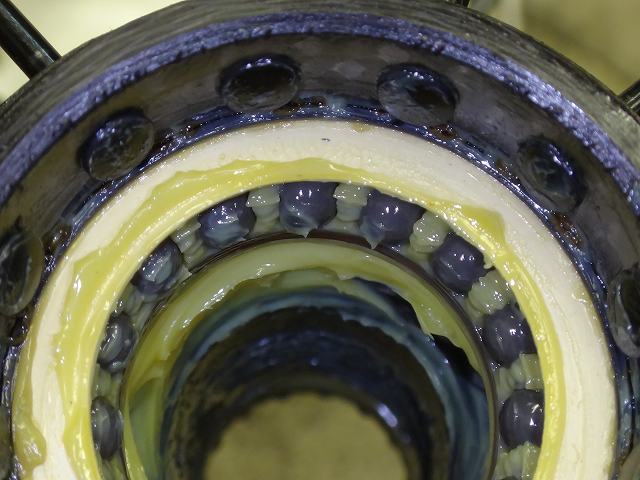
Just like the front wheel, the spoke heads get in the way, so
I have to remove the spokes temporarily.
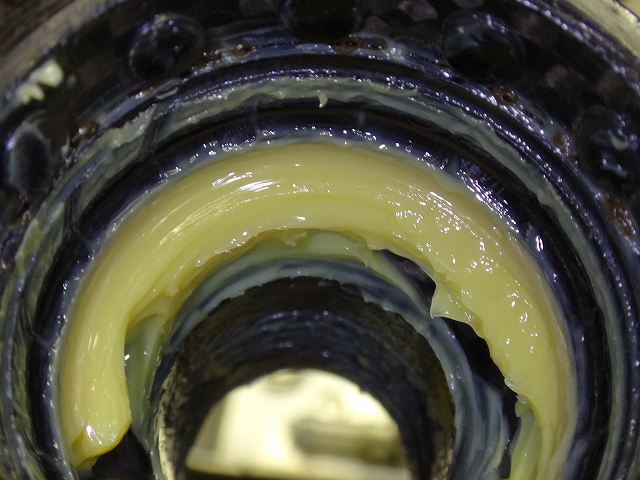
I removed the seal and retainer bearings.
Just like the front hub, grease was packed in unnecessary internal areas.
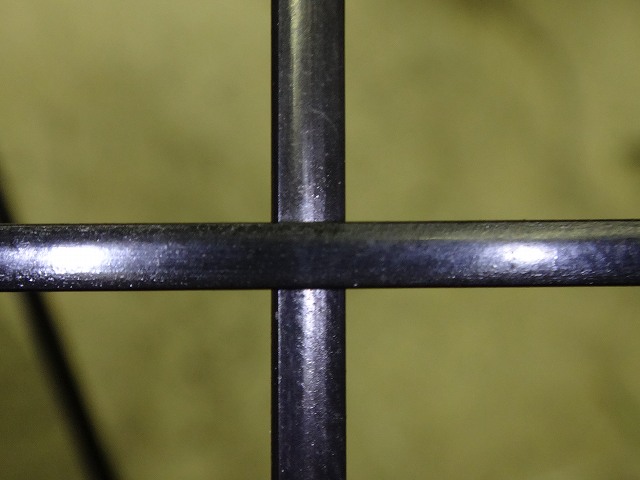
I placed the removed non-freewheel side spokes directly perpendicular to
the freewheel side spokes
(vertical direction is freewheel side, horizontal is non-freewheel side).
The width is different, but the thickness is distinctly different too.
The Hyperon uses equal numbers of spokes on both sides with radial lacing on the non-freewheel side, but
with the two-diameter spoke pairing, high-low flanges, and offset rim,
the deformation amount of the non-freewheel side spokes isn't that loose.
When rim height is tall (strictly speaking, when spokes become shorter)
spoke deformation decreases, but
the Hyperon's rim height isn't naturally that high,
and considering this, it's remarkably well-engineered.
Going back even to the New Cleoron with its aluminum rim that has the same
two-diameter spoke pairing, high-low flanges, and offset rim,
that's over 20 years ago, yet I still find wheels with lower build quality than that,
which continues to baffle me.
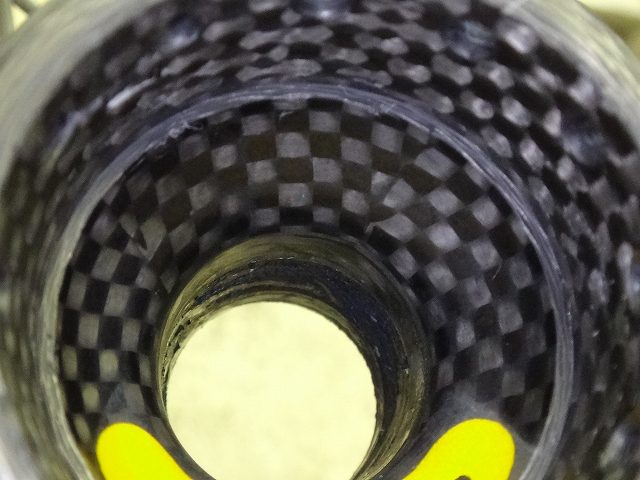
I removed the race and cleaned the hub.
What's slightly visible at the bottom of the image is
a yellow label with the serial number on it, so
I'm careful to keep it out of view.
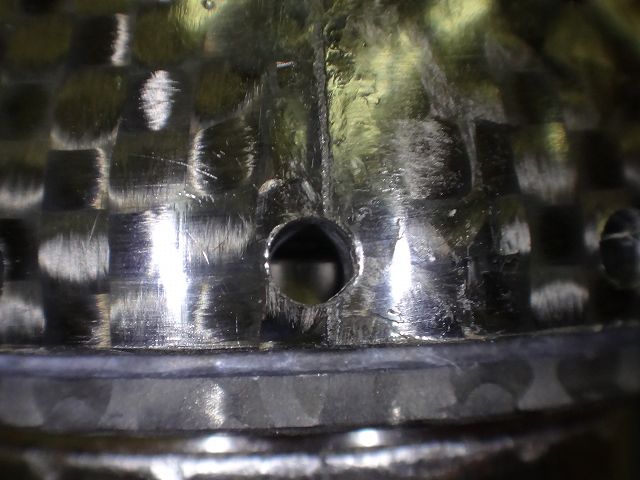
Pressing in the CULT race...

↑Non-freewheel side
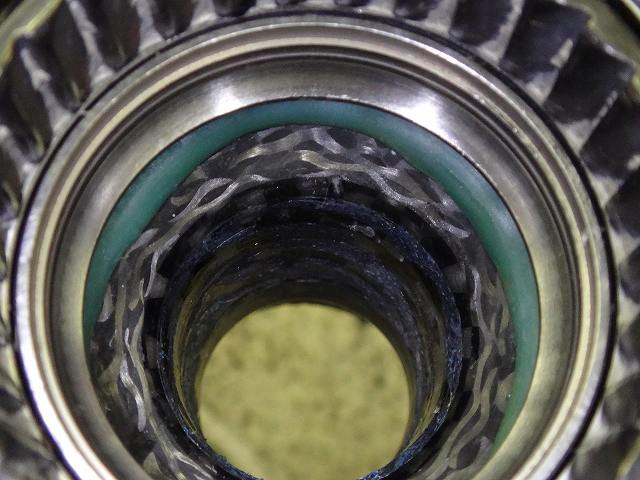
↑Freewheel side
What looks like green grease
is adhesive applied during the hub manufacturing process,
and it's extremely hard.
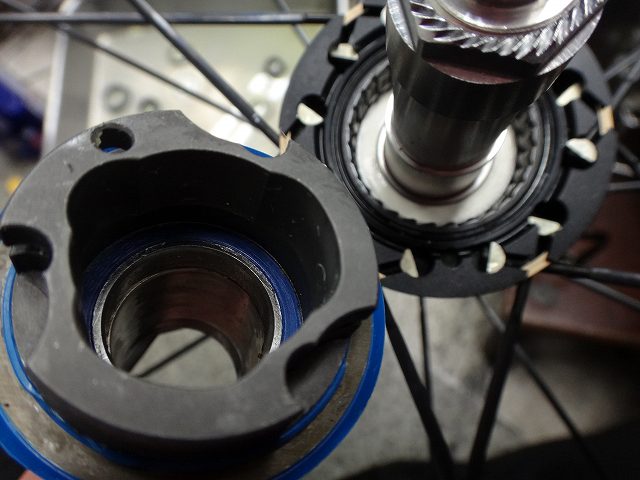
Even with the old non-butted shaft, if it's a Shimano 11-speed steel freewheel body,
installation is possible, so I'll temporarily install it.
If I don't, the position of the right end nut won't be determined,
and the centering gauge position would be on the inside without a freewheel body.
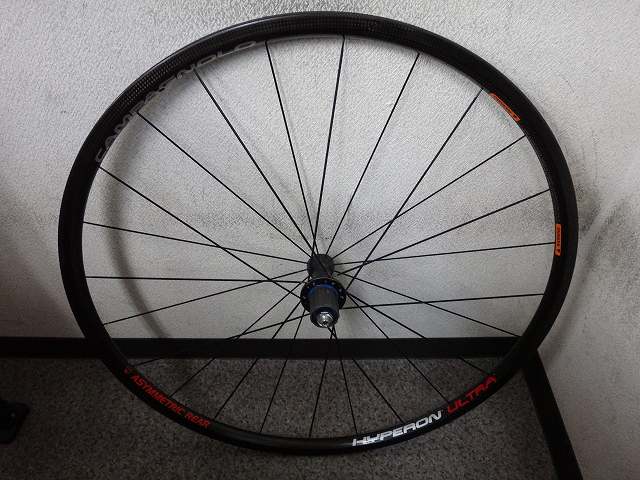

It's assembled.