True: "Today's wheels too" (and so on).
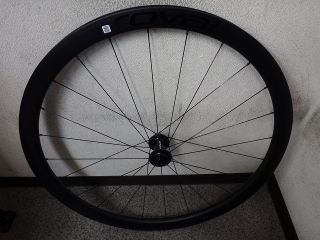
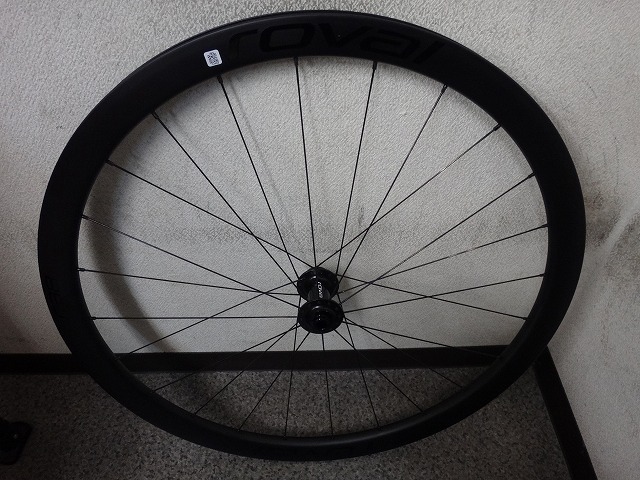
I received a Roval C38 wheel from a customer.
I believe it was mentioned as a bonus wheel with a complete bike,
though it's also available as a standalone item.
I think I asked where their dissatisfaction lay, but I've forgotten.
Setting that aside, even by nomu-lab's wheel philosophy
that excludes preconceptions about brand and price,
this is a crappy wheel.
I say the same thing about Shimano wheels too, but
I'm not making an evaluation that something is bad just because it's from a particular brand.
On a different note, the other day
I received a report that a wheel I rebuilt—one that a local shop said
couldn't be improved any further despite rubbing on the brake shoe—
no longer has that rubbing issue.
Nailed it.
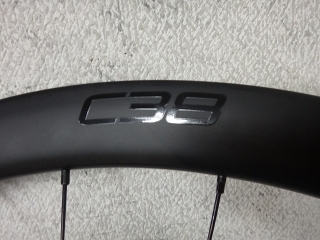
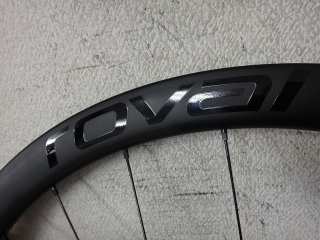
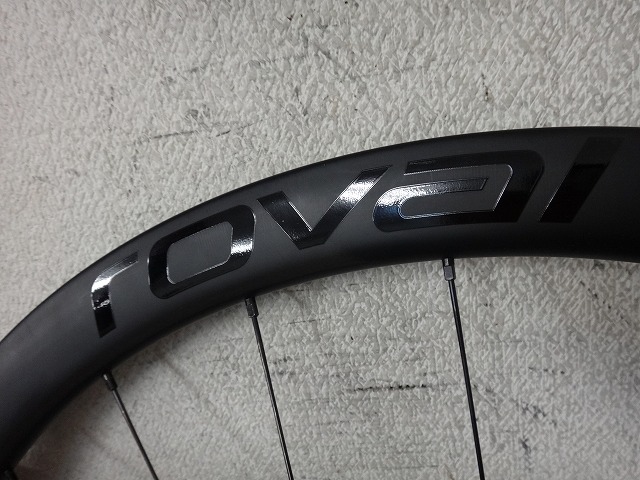
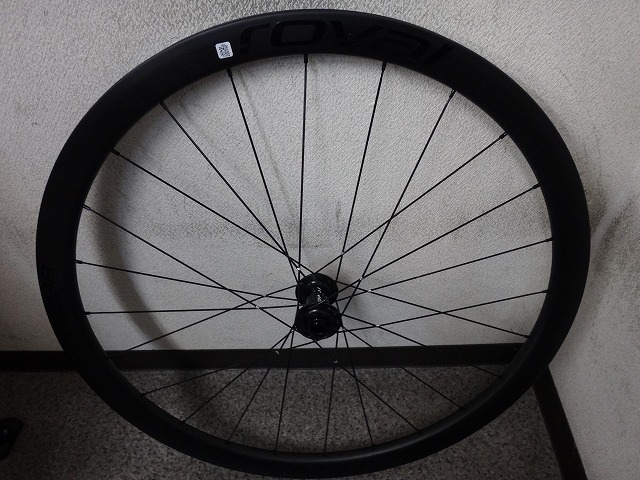
The cosmetics are simple.
This isn't a sticker but rather printed graphics, so
in that respect it's actually more elaborate than the higher-end models.

In a location separate from the ROVAL logo in the previous image,
there's a hole drilled in the "V" of ROVAL
to the right of the valve hole's phase. Since this hole is positioned
too close to the inner circumference to function as a drain hole,
I believe its primary purpose is as an air relief hole
for when tubeless tire pressure escapes into the rim interior.
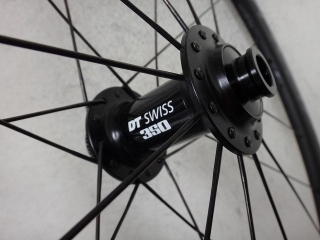
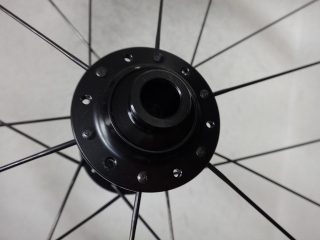
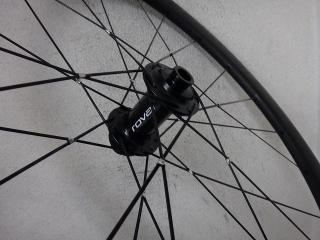
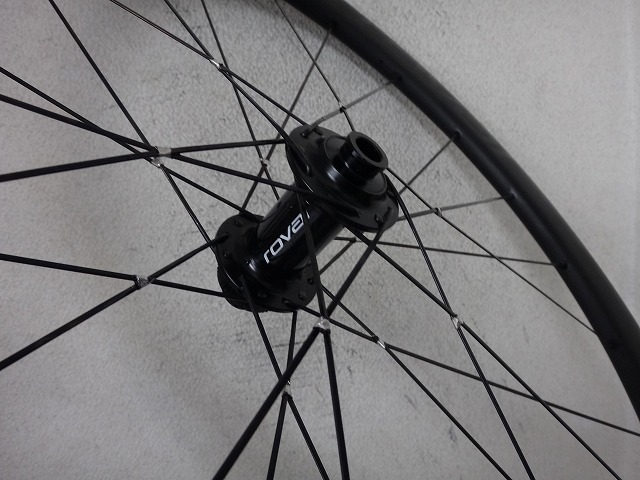
The hub is a DT Swiss 350 designed for hooked spokes, and
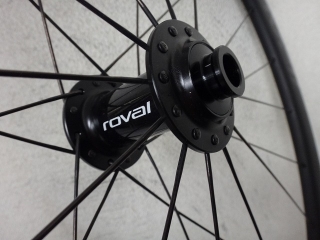
it's a dual-branded ROVAL and DT setup, and

it's laced with equal spoke counts on both sides, which doesn't align with the manufacturer's philosophy.
Moreover, it's a 24H zero-four lace, equivalent to
what would be called anti-freewheel-side radial lacing on a rear wheel.
I can't fathom why anyone would use a lacing pattern
that was already determined to be suboptimal back in the 20th century,
now twenty years into the 21st century.
I have a vague memory of it being briefly trendy around the time XTRA was in the 950-series,
for 26-inch hand-laced MTB disc brake front wheels.
It's possible that Roval intentionally uses poor lacing on lower-end models
to make the performance gap more pronounced when customers upgrade to higher-end models.
However, even Roval's higher-end models don't employ particularly intelligent lacing,
so it doesn't seem to serve much purpose.
As for the spokes on this wheel, they're DT Swiss "Competition Race" spokes.
Not Competition spokes—Competition Race.
Between DT's Compe and Sapim's Race, in the case of 14-gauge base,
the diameter is 2.0–1.8–2.0mm
and the gauge is 14–15–14.
With a 15-gauge base, it becomes
1.8–1.6–1.8mm and 15–16–15.
Competition Race is a model where the butted section of Compe is changed to 16-gauge,
giving dimensions of 2.0–1.6–2.0mm.
DT's Revolution and Sapim's Laser have
a butted section of 17-gauge with
2.0–1.5–2.0mm dimensions, so it's similar.
When tensioned properly, this might develop some lateral flex.
Also, unless Specialized stocks spares,
getting replacement spokes is currently extremely difficult.
On an unrelated note,
with a 24H disc brake front wheel that's laced four-cross on the rotor mount side,
if the front brake caliper is SRAM,
since SRAM's hose connection uses a banjo bolt from the side,
the spacing with the spokes becomes extremely tight, and in worst cases,
interference occurs.
I once had a front wheel I'd built semi-Compe, back when CX Sprint wasn't in stable supply,
that interfered with SRAM's banjo bolt, so I rebuilt it entirely with CX-RAY at no charge.
Recently I also saw a Kona complete bike where the spokes on the included front wheel
were regularly hitting SRAM's banjo bolt quite often.
Competition Race, being round-section spokes, would likely avoid interference,
but it's better not to build disc road front wheels with round spokes.
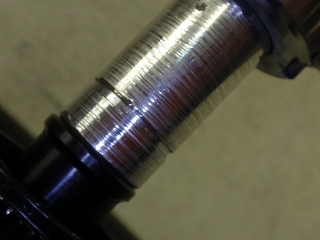
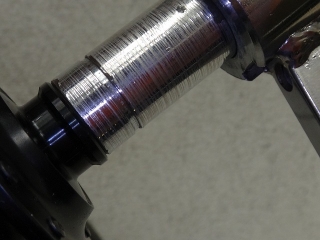
Since I'm disassembling it anyway, it doesn't matter, but the centering was accurate.
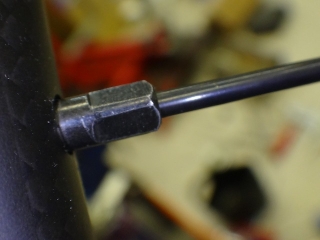
The nipples were a type that could be turned from the outside with a 6mm hex wrench,
but they were brass, so after rebuilding I'll use standard black aluminum nipples.

Partway through disassembly, but...
Alright! I thinned out the spokes to create an XI-pattern lace
with rest phases in a 2:1 ratio!
Since the original is 24H, in this state it's 18H, but setting that aside,
the difference with Campagnolo and Fulcrum is that they:
・Use super high-low flanges with the large flange side laced as close to tangential as possible
to dull the final crossing angle
・Don't unnecessarily reduce spoke weight distribution
・Use reverse differential diameter lacing depending on rim height
If I'm being detailed, there are many more points, but
the reason you don't hear complaints like
"Get me those Bola wheels with increased spoke weight on the few-spoke side
and parallel lacing on the high-spoke side—they rub constantly and flex
on descents and corners, making them unusable"
is exactly because there are legitimate reasons for how they do it.

Built.
24H all-black CX-RAY in reverse Italian four-cross with full lacing on both sides.
I wanted to use semi-CX Sprint spokes, but
certain lengths of CX Sprint have been out of stock long-term,
and while I'm aware of the expected restocking period, it's still ways off, so
to come up with a build that isn't just a "temporary stopgap until we can swap to CX Sprint later,"
I first built it entirely with CX-RAY, then
laced only the anti-rotor mount side, but
I decided it would be better to do full lacing anyway, so
I laced both sides.
I received a Roval C38 wheel from a customer.
I believe it was mentioned as a bonus wheel with a complete bike,
though it's also available as a standalone item.
I think I asked where their dissatisfaction lay, but I've forgotten.
Setting that aside, even by nomu-lab's wheel philosophy
that excludes preconceptions about brand and price,
this is a crappy wheel.
I say the same thing about Shimano wheels too, but
I'm not making an evaluation that something is bad just because it's from a particular brand.
On a different note, the other day
I received a report that a wheel I rebuilt—one that a local shop said
couldn't be improved any further despite rubbing on the brake shoe—
no longer has that rubbing issue.
Nailed it.

The cosmetics are simple.
This isn't a sticker but rather printed graphics, so
in that respect it's actually more elaborate than the higher-end models.

In a location separate from the ROVAL logo in the previous image,
there's a hole drilled in the "V" of ROVAL
to the right of the valve hole's phase. Since this hole is positioned
too close to the inner circumference to function as a drain hole,
I believe its primary purpose is as an air relief hole
for when tubeless tire pressure escapes into the rim interior.
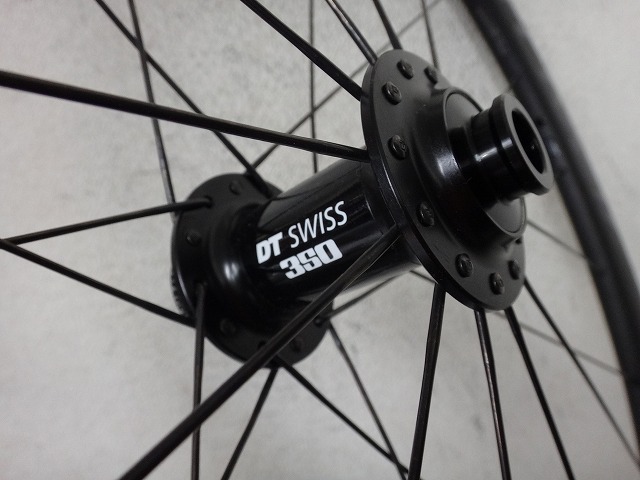
The hub is a DT Swiss 350 designed for hooked spokes, and
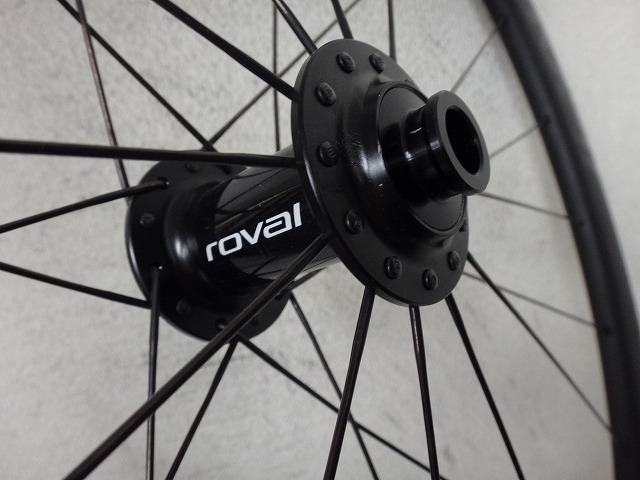
it's a dual-branded ROVAL and DT setup, and
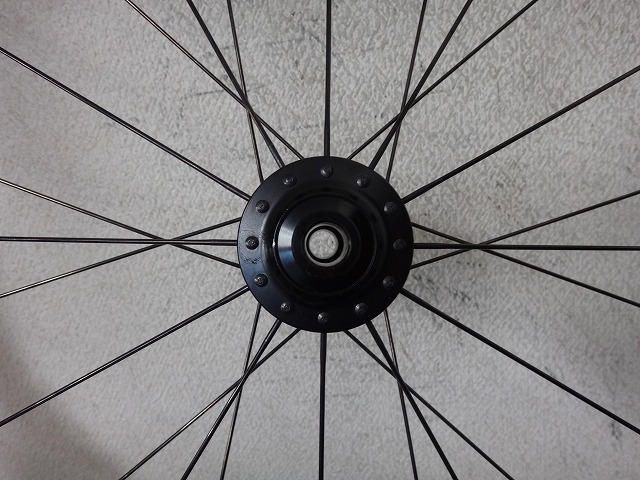
it's laced with equal spoke counts on both sides, which doesn't align with the manufacturer's philosophy.
Moreover, it's a 24H zero-four lace, equivalent to
what would be called anti-freewheel-side radial lacing on a rear wheel.
I can't fathom why anyone would use a lacing pattern
that was already determined to be suboptimal back in the 20th century,
now twenty years into the 21st century.
I have a vague memory of it being briefly trendy around the time XTRA was in the 950-series,
for 26-inch hand-laced MTB disc brake front wheels.
It's possible that Roval intentionally uses poor lacing on lower-end models
to make the performance gap more pronounced when customers upgrade to higher-end models.
However, even Roval's higher-end models don't employ particularly intelligent lacing,
so it doesn't seem to serve much purpose.
As for the spokes on this wheel, they're DT Swiss "Competition Race" spokes.
Not Competition spokes—Competition Race.
Between DT's Compe and Sapim's Race, in the case of 14-gauge base,
the diameter is 2.0–1.8–2.0mm
and the gauge is 14–15–14.
With a 15-gauge base, it becomes
1.8–1.6–1.8mm and 15–16–15.
Competition Race is a model where the butted section of Compe is changed to 16-gauge,
giving dimensions of 2.0–1.6–2.0mm.
DT's Revolution and Sapim's Laser have
a butted section of 17-gauge with
2.0–1.5–2.0mm dimensions, so it's similar.
When tensioned properly, this might develop some lateral flex.
Also, unless Specialized stocks spares,
getting replacement spokes is currently extremely difficult.
On an unrelated note,
with a 24H disc brake front wheel that's laced four-cross on the rotor mount side,
if the front brake caliper is SRAM,
since SRAM's hose connection uses a banjo bolt from the side,
the spacing with the spokes becomes extremely tight, and in worst cases,
interference occurs.
I once had a front wheel I'd built semi-Compe, back when CX Sprint wasn't in stable supply,
that interfered with SRAM's banjo bolt, so I rebuilt it entirely with CX-RAY at no charge.
Recently I also saw a Kona complete bike where the spokes on the included front wheel
were regularly hitting SRAM's banjo bolt quite often.
Competition Race, being round-section spokes, would likely avoid interference,
but it's better not to build disc road front wheels with round spokes.
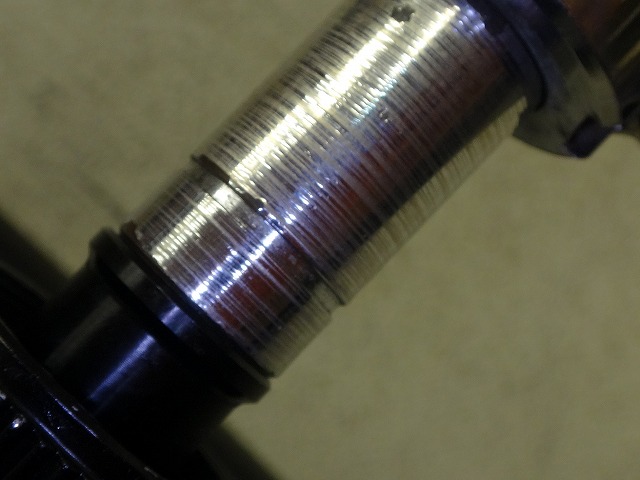
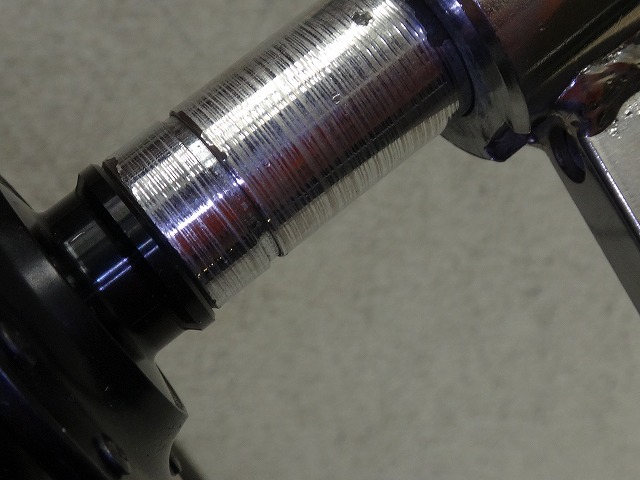
Since I'm disassembling it anyway, it doesn't matter, but the centering was accurate.
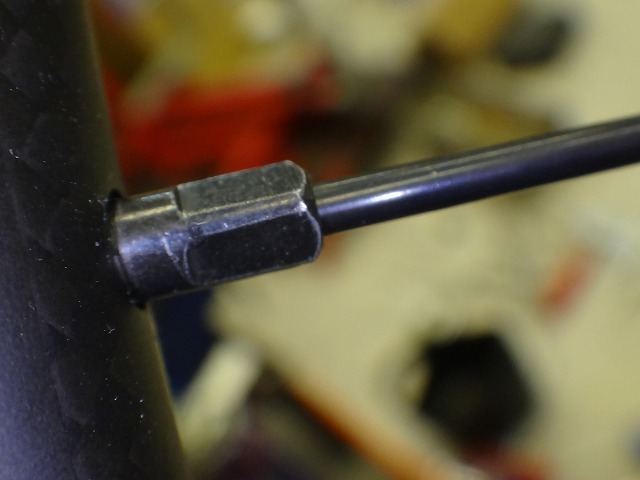
The nipples were a type that could be turned from the outside with a 6mm hex wrench,
but they were brass, so after rebuilding I'll use standard black aluminum nipples.
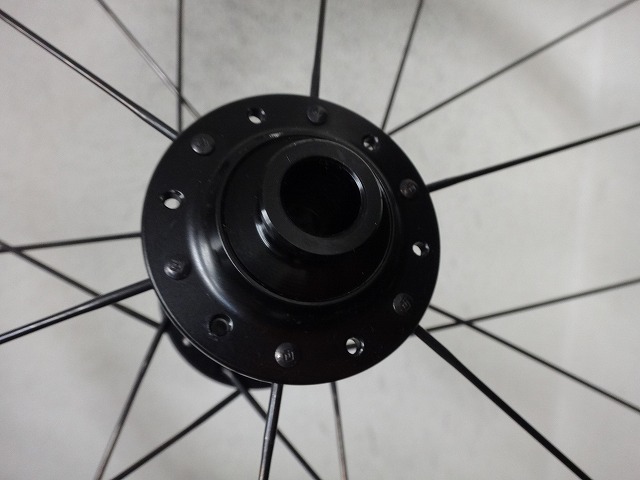
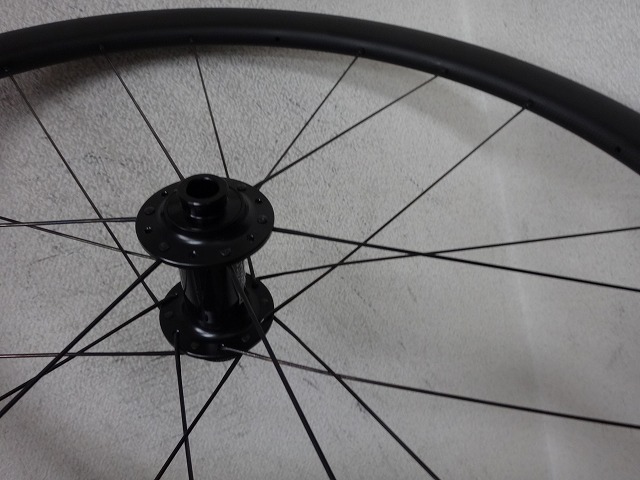
Partway through disassembly, but...
Alright! I thinned out the spokes to create an XI-pattern lace
with rest phases in a 2:1 ratio!
Since the original is 24H, in this state it's 18H, but setting that aside,
the difference with Campagnolo and Fulcrum is that they:
・Use super high-low flanges with the large flange side laced as close to tangential as possible
to dull the final crossing angle
・Don't unnecessarily reduce spoke weight distribution
・Use reverse differential diameter lacing depending on rim height
If I'm being detailed, there are many more points, but
the reason you don't hear complaints like
"Get me those Bola wheels with increased spoke weight on the few-spoke side
and parallel lacing on the high-spoke side—they rub constantly and flex
on descents and corners, making them unusable"
is exactly because there are legitimate reasons for how they do it.
Built.
24H all-black CX-RAY in reverse Italian four-cross with full lacing on both sides.
I wanted to use semi-CX Sprint spokes, but
certain lengths of CX Sprint have been out of stock long-term,
and while I'm aware of the expected restocking period, it's still ways off, so
to come up with a build that isn't just a "temporary stopgap until we can swap to CX Sprint later,"
I first built it entirely with CX-RAY, then
laced only the anti-rotor mount side, but
I decided it would be better to do full lacing anyway, so
I laced both sides.