A customer left me with a red spoke from a Fulcrum rear wheel to source a replacement.
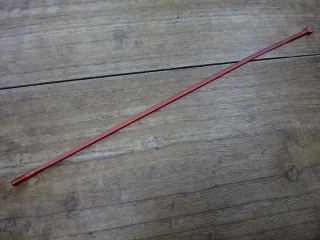
It's from a Racing Zero rear wheel with rim brakes,
a freewheel-side spoke on a super high-low flange rear hub with staggered rim holes.
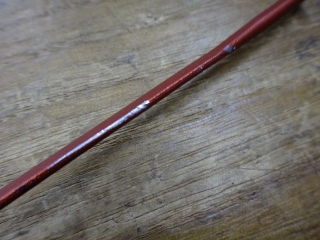
It has impact damage,
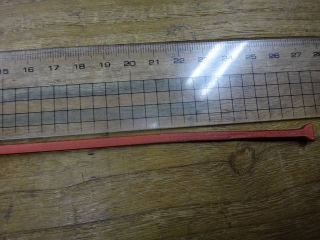
and deformation.
The customer asked me to find a spoke suitable for repair,
but there is no "identical" red spoke available.
Regarding limited editions, or more precisely,
wheels with original specifications planned by frame brands or distributors,
the basic policy is to use repair parts from regular models,
even if they come in a different color (exceptions are virtually non-existent).
For example, when a rim is damaged on a Fulcrum wheel with a bright label sticker where the red accent color differs—say lime green or blue—you can only obtain the regular model's replacement rim.
One exception is certain Racing Zero spare rims planned by Japanese distributors that are available,
and the spare parts catalog lists them as "Kawashima Original."
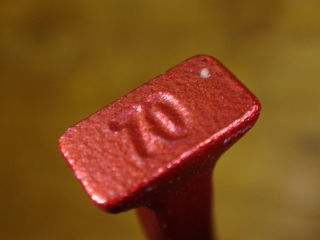
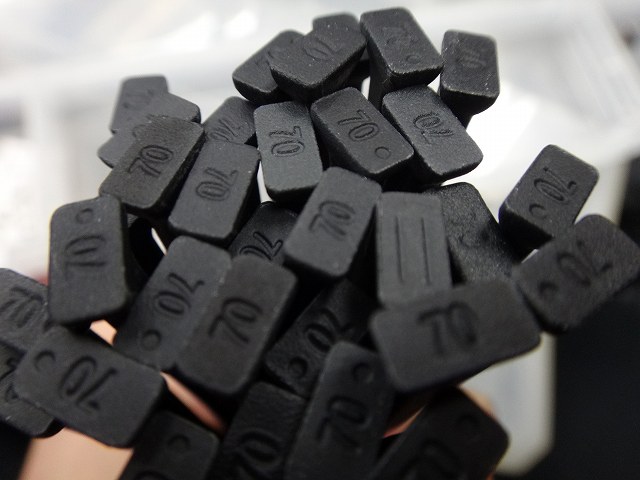
The spare spoke stamping this time read "70."
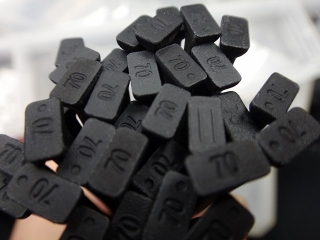
The "70" is a freewheel-side spoke, and only exists in black.
In the image above, there's a "= (two horizontal lines vertically)" mixed in,
but "70" and "=" are the same length.
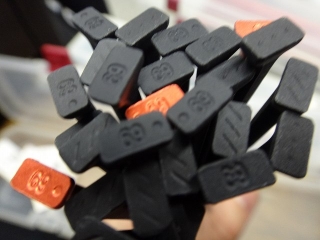
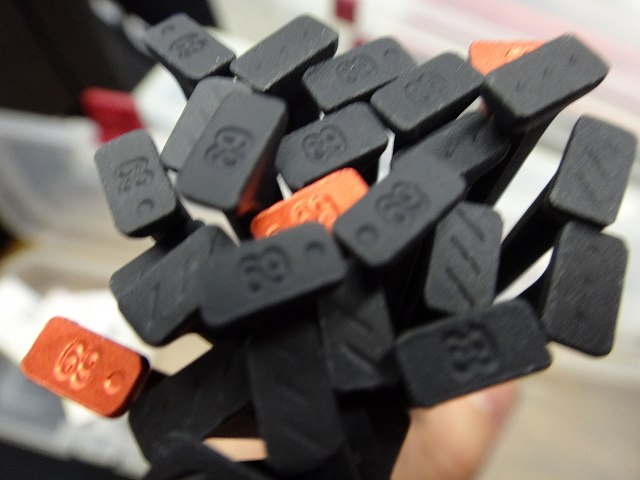
These are "69" and "/// (three diagonal lines)," both the same length.
These are for current front wheels.
Front and non-freewheel side spokes used to be the same length,
but since the front hub bearings were reduced to a smaller retainer (two fewer balls),
the hub flanges became slightly smaller,
so front wheel spokes became slightly longer and are no longer interchangeable.
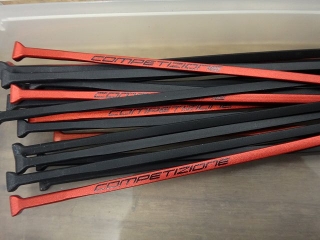
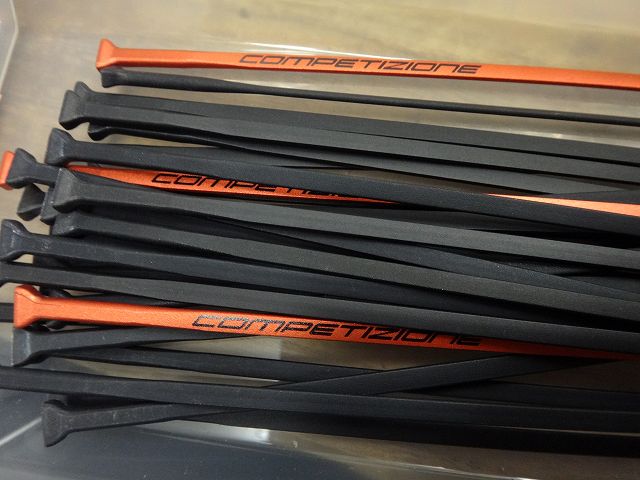
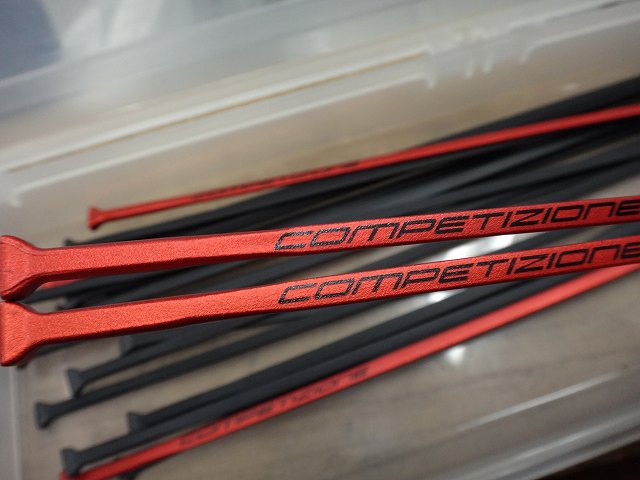
There are red spokes in the image above, but
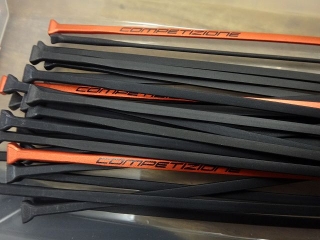
this red spoke is from the current Competizione model,
has text stamping and costs about twice as much as unmarkeed spokes.
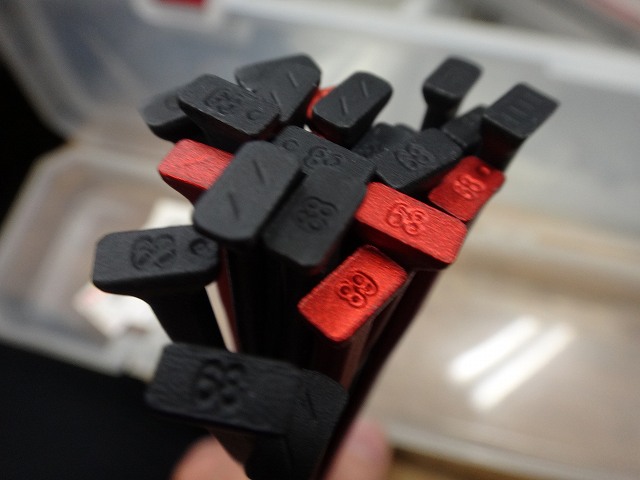
Text-marked red spokes are used only once each on the front and rear non-freewheel sides near the valve hole,
so there's no freewheel-side spoke with this specification either.
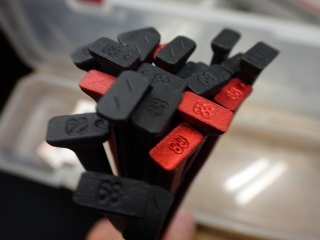
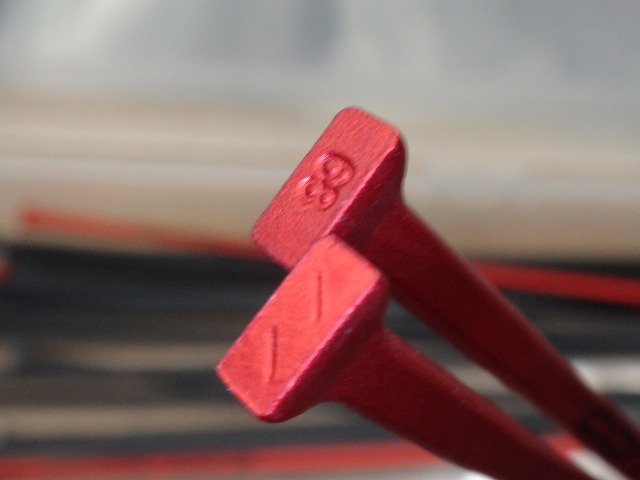
These are non-freewheel-side spokes marked "68" and "// (two diagonal lines)."
Both are the same length.
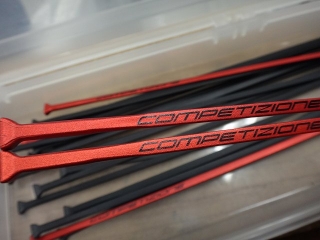
↑These two text-marked red spokes are the same length, but
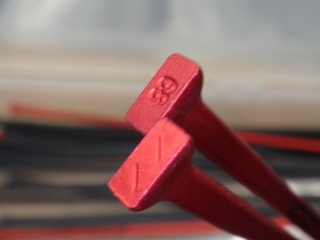
the stampings are different.
So while a red "70" spoke cannot be obtained,
a spoke with the same effective length as "70" can be sourced.
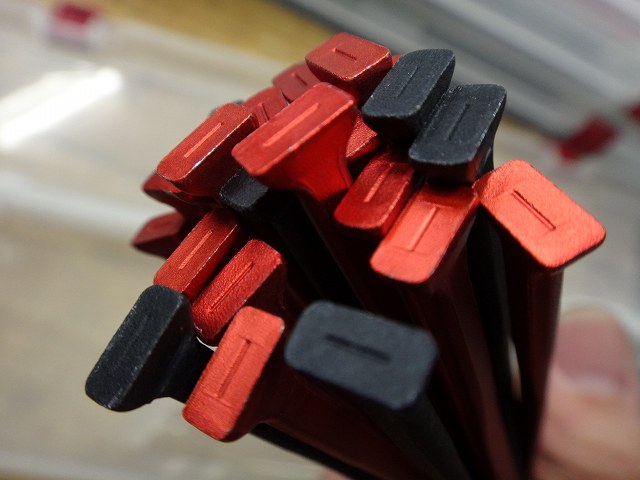
There was a Racing Zero model from a certain period—a global model, not Japan-exclusive—
that came in all-red spoke configuration for about a year,
and those spokes are available as spare parts.
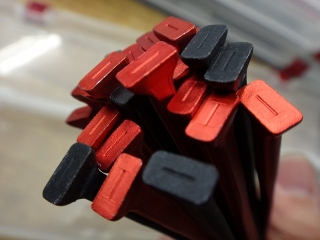
↑That's this one marked with "— (single horizontal line)."
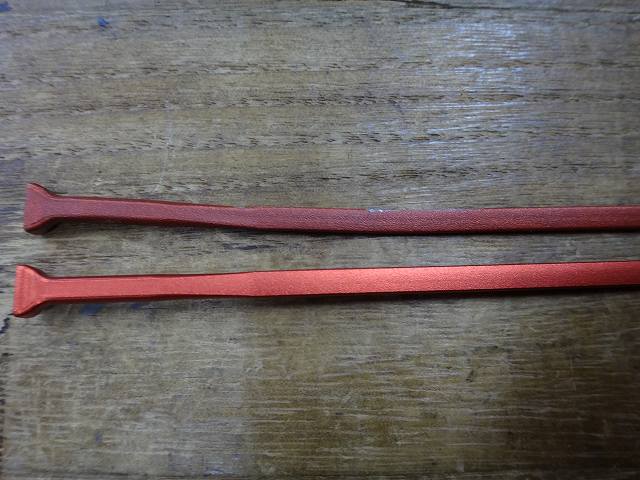
What I mean by "same effective length" is:
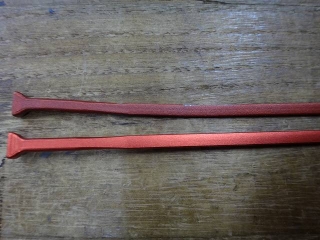
↑Top image is "70," bottom is "—,"
"the length from the hub-end of the spoke to
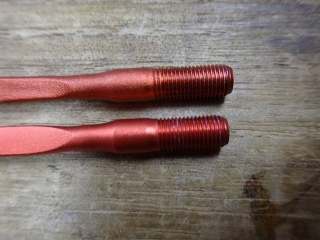
where the threads begin" is the same.
That's what I call "same effective length."
The difference in thread length is because the corresponding nipple specifications differ.
The "—" red spoke was produced for a super high-low flange hub with staggered rim holes,
but before the nipple specifications changed—
it's a global model spare part,
and because that original model existed for 2 years in the catalog and about 1 year in actual circulation,
the spare parts exist as well—
it's almost a miraculous spoke.
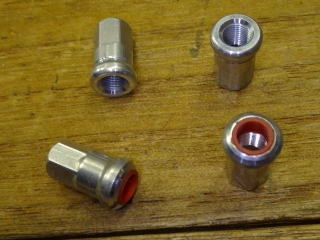
↑Top two are old-style nipples,
bottom two are new-style nipples with nylon insert for looseness prevention.
The new-style nipples are longer overall,
but only the nylon-embedding section is extended,
so the length from the rim contact point inward is nearly identical.
In other words, the shape and length of the portion protruding from the rim are almost the same,
so once assembled into the wheel, visual distinction is impossible
(though with black nipples I can say definitively since only new nipples exist).
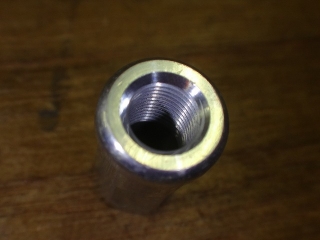
Whereas the old nipple has threads positioned toward the outer edge,
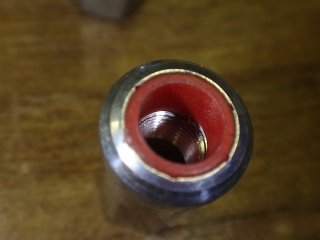
on the new nipple, even accounting for the nylon thickness,
the thread position is positioned significantly more toward the inner edge.
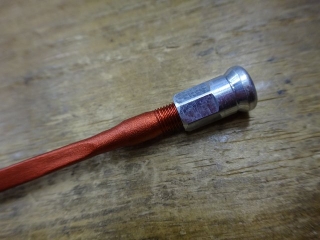
I inserted the spoke into the old nipple until it bottomed.
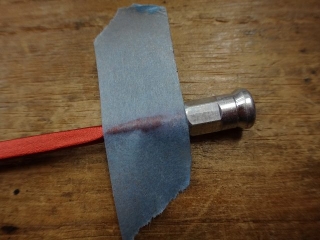
I placed a reference tape,
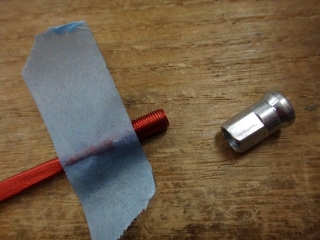
and pulled it out.
This represents the thread pocket depth.
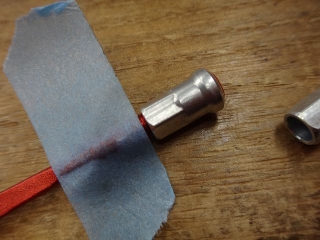
When I insert it into the new nipple,
the thread pocket is about 2 threads shallower.
Regarding non-original combinations:
With new spokes and old nipples, though hidden inside the rim,
the spoke would protrude from the nipple end face.
However, since the effective length is the same, there's no problem.
With old spokes and new nipples,
while the old spoke doesn't reach the nylon,
since the original old specification had none of that anyway,
that's not a concern.
The worry is whether the nipple's threads moved 2 threads toward the inner edge might cause bottoming if the old spoke is overtightened,
but this wouldn't occur under normal circumstances,
and given the thread pocket depth,
it probably can't be reached even with abnormal tightening.
So my conclusion is that mixing old and new spokes with nipples presents no problem,
though if you're concerned, you can simply replace the nipples as well.
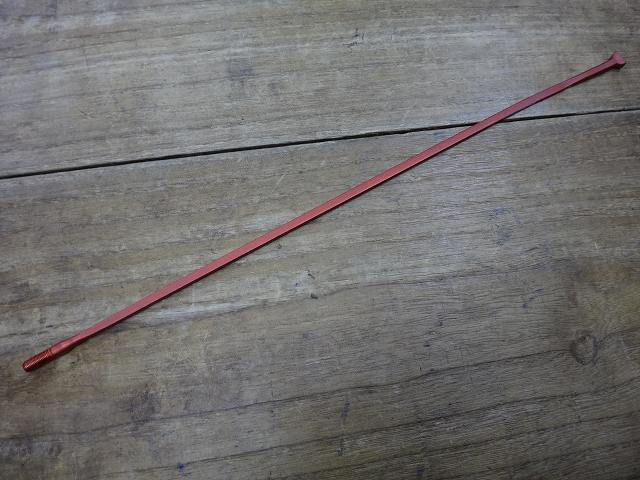
It's from a Racing Zero rear wheel with rim brakes,
a freewheel-side spoke on a super high-low flange rear hub with staggered rim holes.
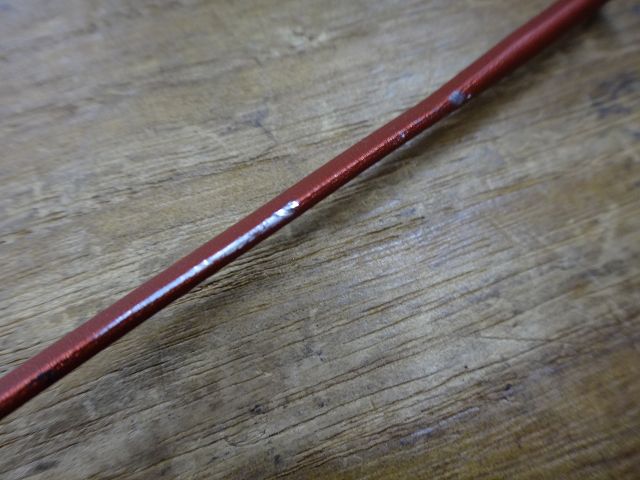
It has impact damage,
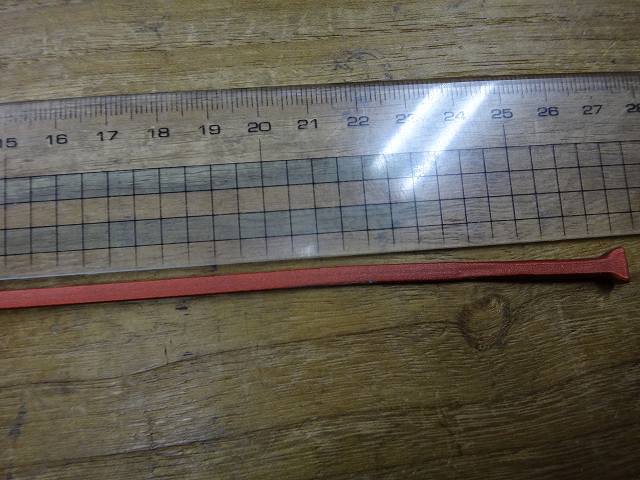
and deformation.
The customer asked me to find a spoke suitable for repair,
but there is no "identical" red spoke available.
Regarding limited editions, or more precisely,
wheels with original specifications planned by frame brands or distributors,
the basic policy is to use repair parts from regular models,
even if they come in a different color (exceptions are virtually non-existent).
For example, when a rim is damaged on a Fulcrum wheel with a bright label sticker where the red accent color differs—say lime green or blue—you can only obtain the regular model's replacement rim.
One exception is certain Racing Zero spare rims planned by Japanese distributors that are available,
and the spare parts catalog lists them as "Kawashima Original."

The spare spoke stamping this time read "70."
The "70" is a freewheel-side spoke, and only exists in black.
In the image above, there's a "= (two horizontal lines vertically)" mixed in,
but "70" and "=" are the same length.
These are "69" and "/// (three diagonal lines)," both the same length.
These are for current front wheels.
Front and non-freewheel side spokes used to be the same length,
but since the front hub bearings were reduced to a smaller retainer (two fewer balls),
the hub flanges became slightly smaller,
so front wheel spokes became slightly longer and are no longer interchangeable.
There are red spokes in the image above, but
this red spoke is from the current Competizione model,
has text stamping and costs about twice as much as unmarkeed spokes.
Text-marked red spokes are used only once each on the front and rear non-freewheel sides near the valve hole,
so there's no freewheel-side spoke with this specification either.

These are non-freewheel-side spokes marked "68" and "// (two diagonal lines)."
Both are the same length.
↑These two text-marked red spokes are the same length, but
the stampings are different.
So while a red "70" spoke cannot be obtained,
a spoke with the same effective length as "70" can be sourced.
There was a Racing Zero model from a certain period—a global model, not Japan-exclusive—
that came in all-red spoke configuration for about a year,
and those spokes are available as spare parts.
↑That's this one marked with "— (single horizontal line)."
What I mean by "same effective length" is:
↑Top image is "70," bottom is "—,"
"the length from the hub-end of the spoke to
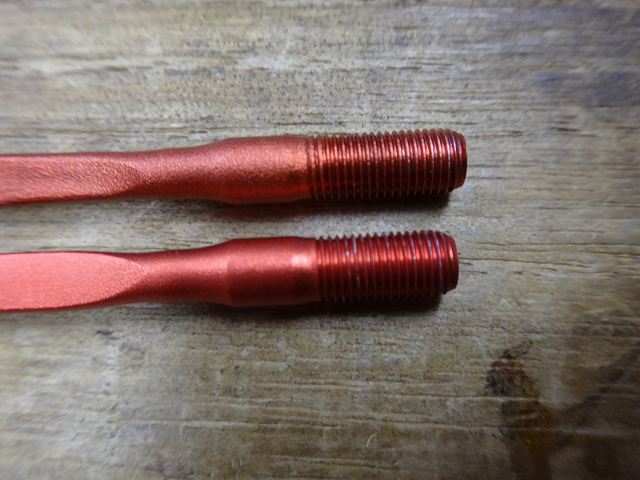
where the threads begin" is the same.
That's what I call "same effective length."
The difference in thread length is because the corresponding nipple specifications differ.
The "—" red spoke was produced for a super high-low flange hub with staggered rim holes,
but before the nipple specifications changed—
it's a global model spare part,
and because that original model existed for 2 years in the catalog and about 1 year in actual circulation,
the spare parts exist as well—
it's almost a miraculous spoke.
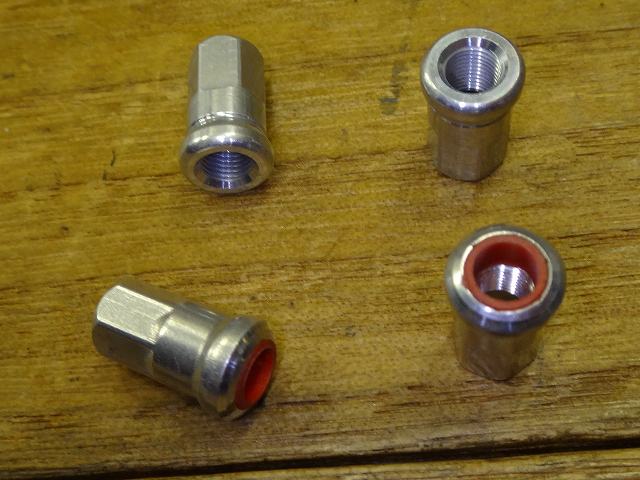
↑Top two are old-style nipples,
bottom two are new-style nipples with nylon insert for looseness prevention.
The new-style nipples are longer overall,
but only the nylon-embedding section is extended,
so the length from the rim contact point inward is nearly identical.
In other words, the shape and length of the portion protruding from the rim are almost the same,
so once assembled into the wheel, visual distinction is impossible
(though with black nipples I can say definitively since only new nipples exist).
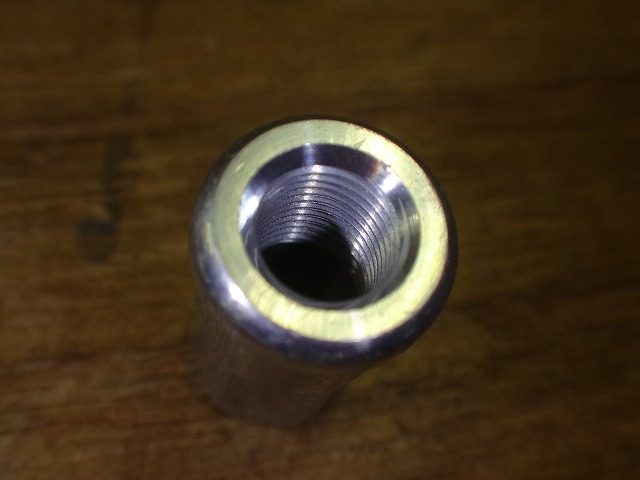
Whereas the old nipple has threads positioned toward the outer edge,
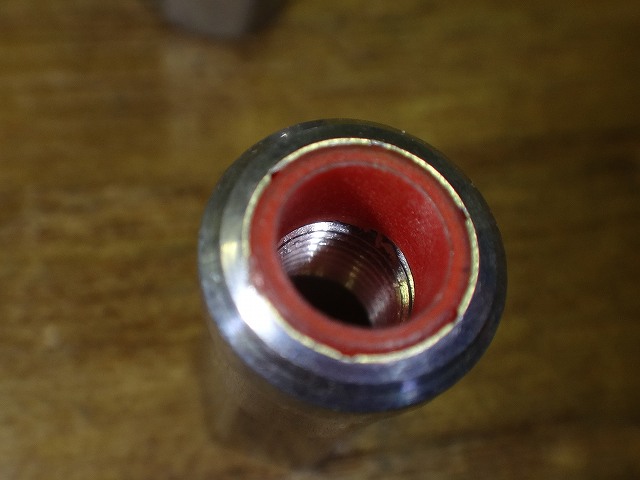
on the new nipple, even accounting for the nylon thickness,
the thread position is positioned significantly more toward the inner edge.
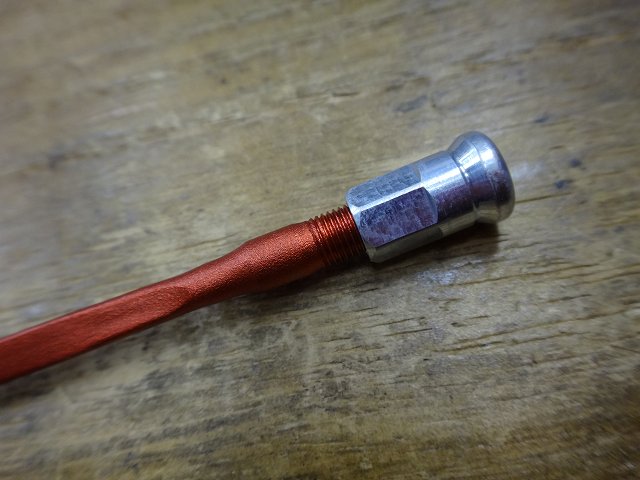
I inserted the spoke into the old nipple until it bottomed.
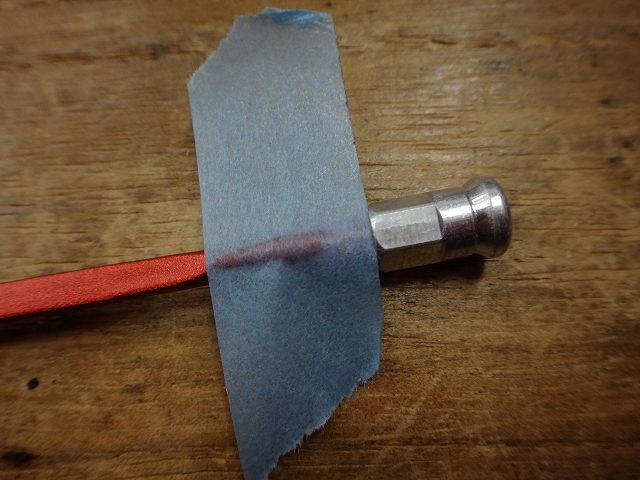
I placed a reference tape,

and pulled it out.
This represents the thread pocket depth.
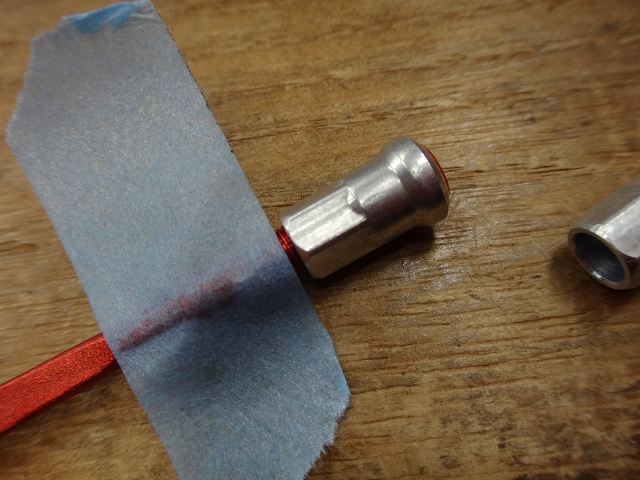
When I insert it into the new nipple,
the thread pocket is about 2 threads shallower.
Regarding non-original combinations:
With new spokes and old nipples, though hidden inside the rim,
the spoke would protrude from the nipple end face.
However, since the effective length is the same, there's no problem.
With old spokes and new nipples,
while the old spoke doesn't reach the nylon,
since the original old specification had none of that anyway,
that's not a concern.
The worry is whether the nipple's threads moved 2 threads toward the inner edge might cause bottoming if the old spoke is overtightened,
but this wouldn't occur under normal circumstances,
and given the thread pocket depth,
it probably can't be reached even with abnormal tightening.
So my conclusion is that mixing old and new spokes with nipples presents no problem,
though if you're concerned, you can simply replace the nipples as well.