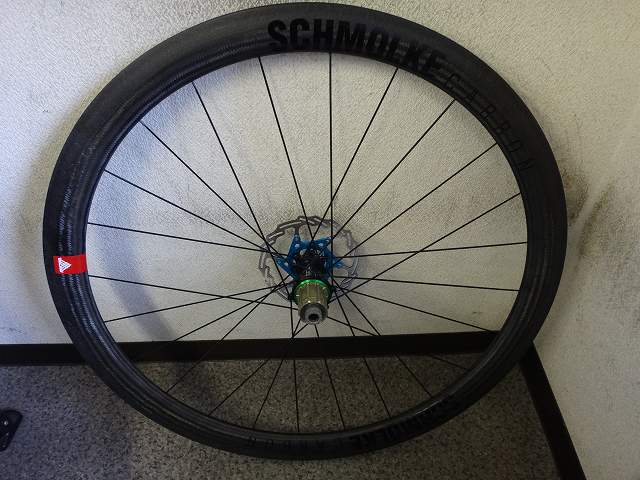
A customer brought in a complete wheel assembled with Schmolke's TLO rim
by the manufacturer in-house.

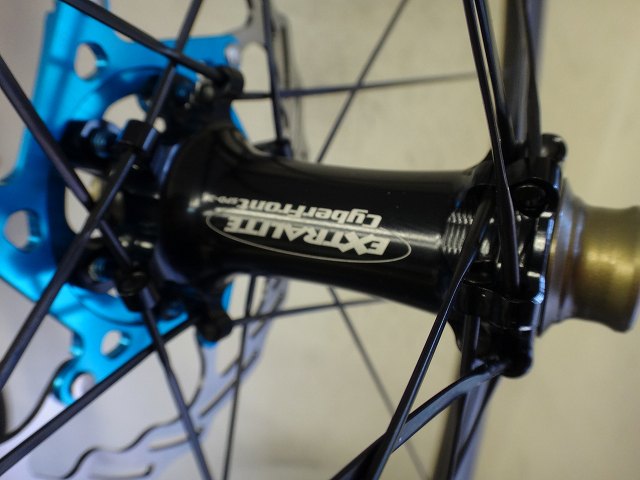
Both front and rear wheels are built with Extralight disc-brake hubs
using straight spokes.
Both are all-black CX-RAY.
Let me start with the rear wheel.

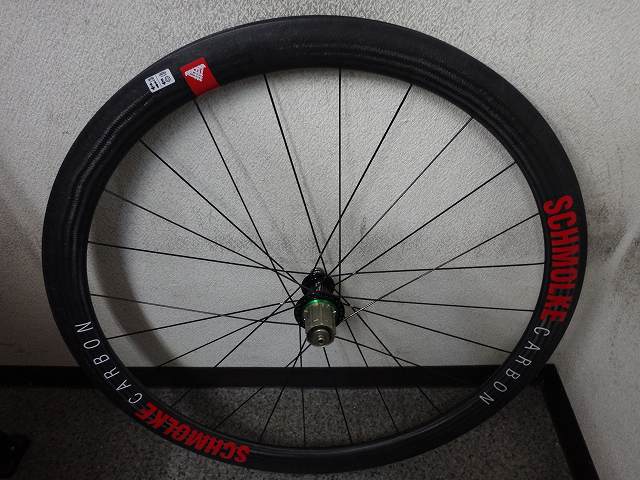
When viewed from the freewheel side (right side), there's a Schmolke logo label
counterclockwise next to the valve hole.

But on the non-freewheel side (left side), it's a label that says "TLO"
clockwise next to the valve hole.


The centering was abnormally off. What the heck.
In theory, this is the direction of center deviation that decreases with tire pressure,
but even if you pressurized the rim to the point of explosion,
this deviation would never become zero.
The problem is that to correct this,
I'd need to either tension the already-tight freewheel side even more
or loosen the slack non-freewheel side even further.
Even though the freewheel side is tensioned reasonably well,
the non-freewheel side is so slack despite having excessive tension
to create this much center deviation—and that's because this is
an all-CX-RAY "standard-built wheel."

Moreover, the rear wheel has long spokes on both sides,
especially on the freewheel side (image above), where the spoke protrudes quite a bit
from the nipple end face, leaving almost no room for tightening.


Since there was also lateral runout, I tightened heavily on the freewheel side.
The center deviation reduced slightly.
Against my better judgment, from here on I could only center it
by loosening the non-freewheel side.
I thought I might need to loosen the nipples by about half a turn,
but when I tried loosening by 1/4 turn twice in two stages instead,


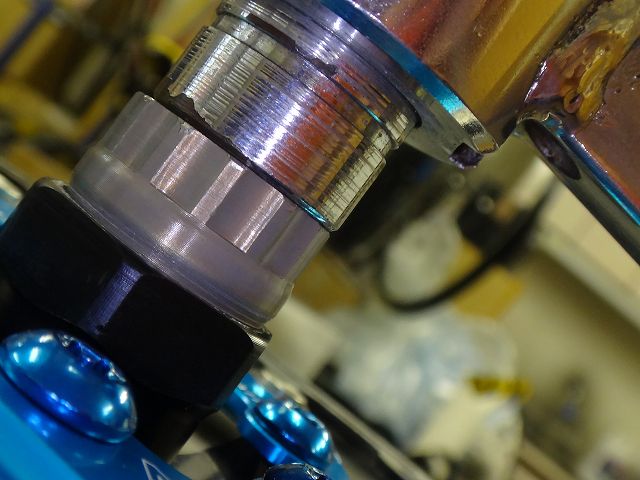
On the first 1/4 turn, the center came out almost perfectly,
and the image above is after carefully centering a bit more.
Indeed, loosening the non-freewheel side causes the rim to move dramatically.
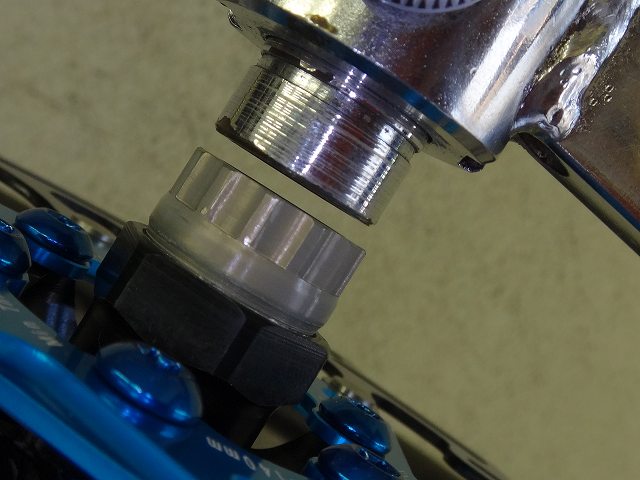
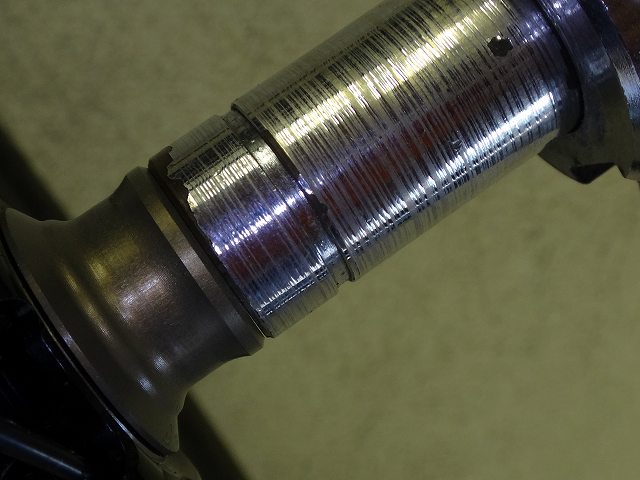
This hub's end pieces have the same shape on both left and right,
but the left is part of the hub axle while the right is an end nut.
Both take a 17mm wrench. Actually, before work began, I replaced the freewheel body
from Campagnolo-type to Shimano-type,
and the right end nut... is not reverse-threaded.
The danger here is accidentally tightening hard when trying to loosen,
which could cause seizing and galling.
The thread pitch is fine on both the aluminum hub axle and aluminum end nut,
so if it "clicked" and galled, that would be really bad.
The hub axle threads had no grease on them
(yet it was tightened pretty firmly to begin with).

Looking at the spline of a Campagnolo ED11 freewheel body,
the protrusions on the side where sprockets bite in during forward crank rotation
all have the same shape every 90° in phase (black protrusions in the diagram above).
The protrusions on the opposite side are shaped differently in just one spot
to align the shift points cleanly (blue protrusions in the same diagram).

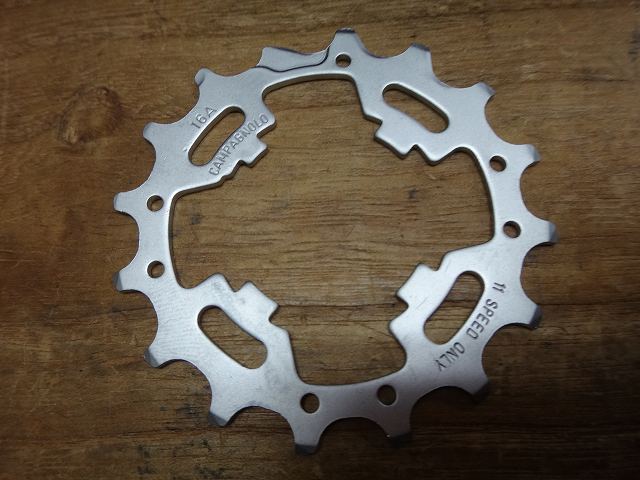
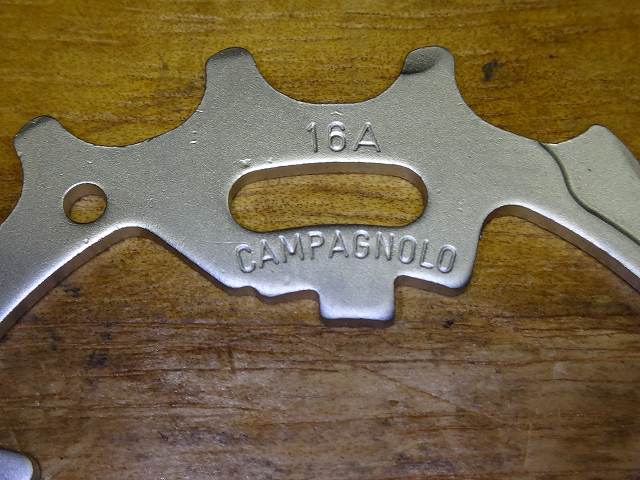
This is a Campagnolo ED11 sprocket, and

↑only here is the shape different from other areas.

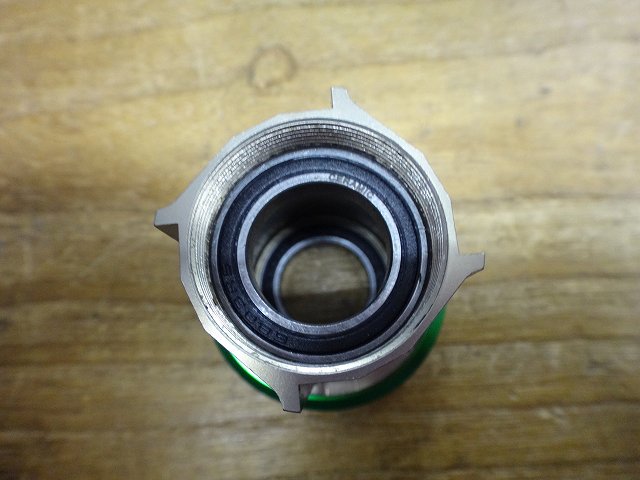
This is an Extralight Campagnolo-type freewheel body,
as an example of the extreme weight reduction
seen across this hub line generally
(the name certainly lives up to the product):

the spline protrusions number only 4 on the side where the sprocket bites in.

So the phase at which the sprocket fits

is not limited to just one position.
The two images above are of the same protrusion, by the way.
So when installing the sprocket,
you must install it so that the sprocket's different-shaped part aligns with
a specific protrusion, or shifting performance will degrade.

Also, there's no retaining protrusion on the opposite side of the bite direction,
so until the lockring is tightened, the sprocket will shift
counterclockwise as shown in the image above.
So before tightening the lockring, you need to make sure
all sprockets are in contact with the bite-direction protrusions.

This is common to both Shimano and Campagnolo types,
but the pawl spring has two pawls.
Mavic's FTS-L freewheel body also has two pawls,
but that has the unusual structure of pawls on the hub body side.
Pawl springs with pawls on the freewheel body side
typically have 3 or 4 pawls, or up to 6 (I've never seen 5).

The number of pawls is sketchy, but what's even sketchier is that the pawl return spring
is a rubber O-ring.Are you kidding?

↑pawls engaged

↑pawls retracted

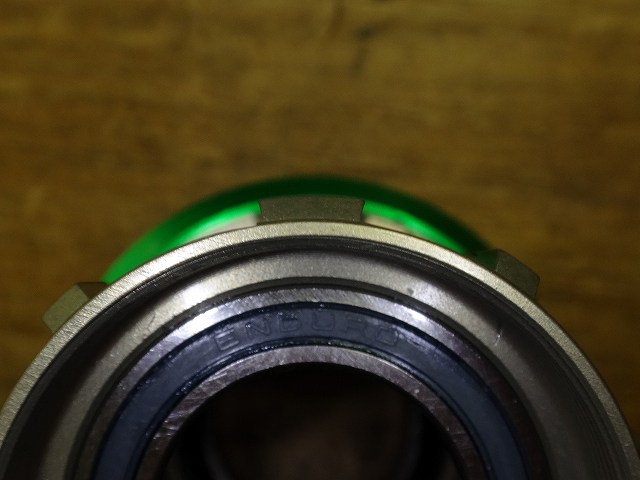
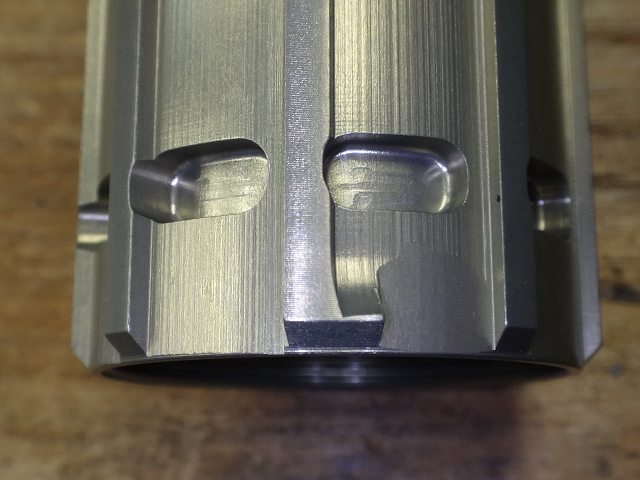
This is the Shimano-type freewheel body.
Shimano's genuine HG freewheel body has
9 protrusions equally spaced, with one of them being narrower.
Some third-party lightweight freewheel bodies have all 9 protrusions narrow,
which creates the same situation as the Campagnolo freewheel body above—
the sprocket can fit at any spline position—but


this freewheel body is the opposite of the Shimano genuine—
it has one protrusion that's wider (at least at the entry) so that
the sprocket position aligns to a specific phase.
If all protrusions were narrow splines, the indefinite position relationship
between sprocket and body would be the same as with Campagnolo,
but Shimano sprockets don't have the stepped notch on the reverse side
like Campagnolo does, so sprockets can be installed backwards
(→here).

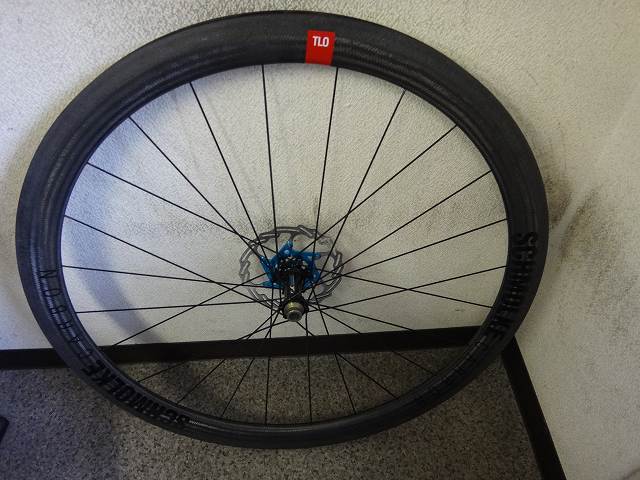
Next, the front wheel.

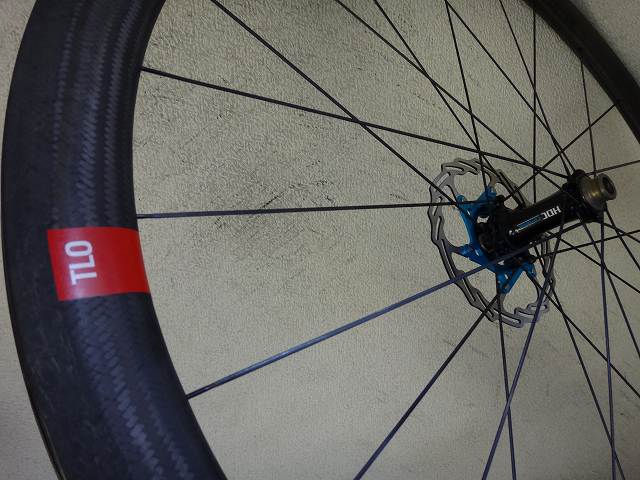
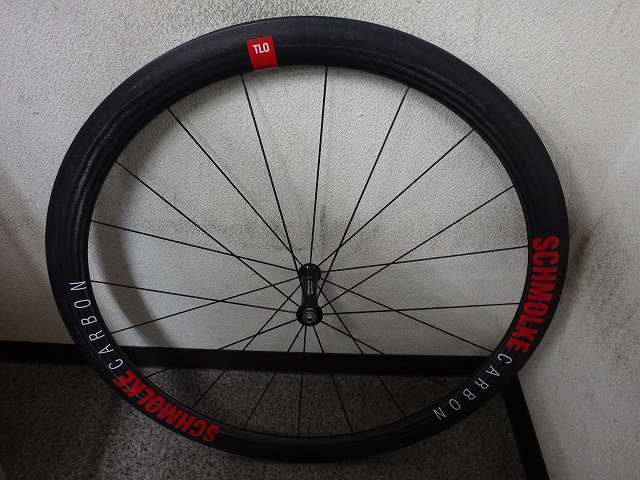
When viewed from the right side, there's a label reading "TLO"
clockwise next to the valve hole, and

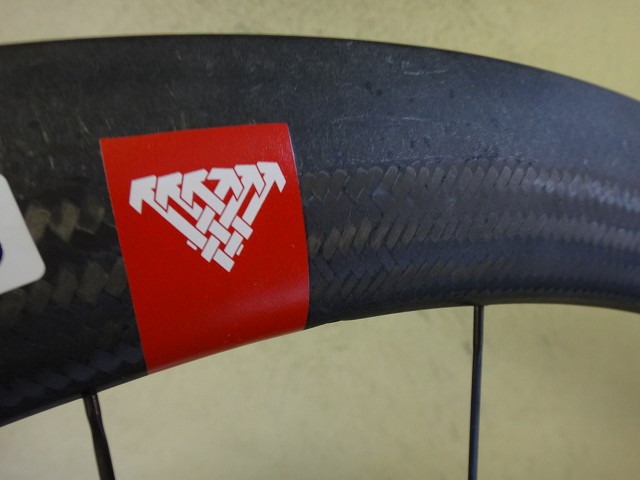
when viewed from the left side, there's a Schmolke logo label
counterclockwise next to the valve hole, so
just as on the maker's website,
the rim direction is reversed between front and rear.

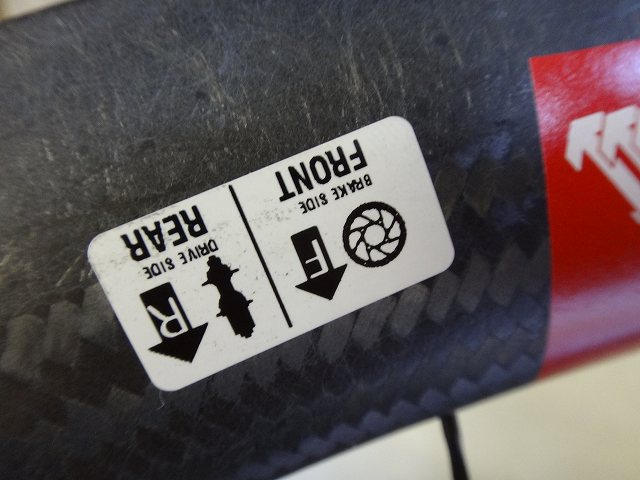
On the Schmolke logo label side, there's an instruction saying
"Orient this side toward the rotor mounting plate for the front wheel,
or toward the freewheel body for the rear wheel—
in other words, toward the side where spoke angles are steeper"
so if this sticker were always placed on the Schmolke logo side,
I'd understand the rim orientation reversing front to rear.
But the sticker only appeared on the front wheel.
Since this rim is not an offset rim,
the fact that rim orientation is specified means
the rim hole positioning (hole location and angle)
has left-right distinction... but.

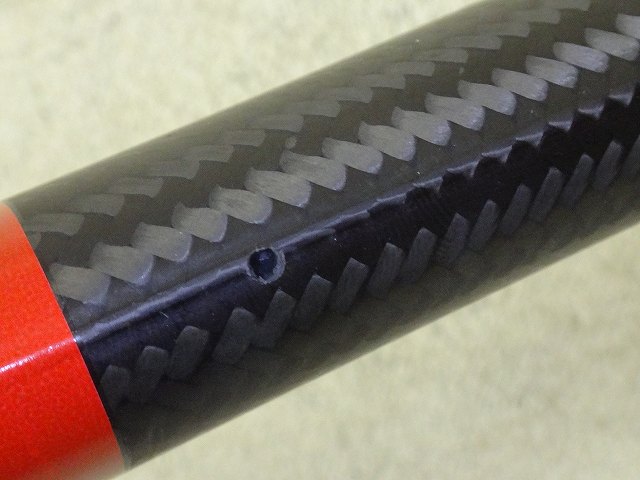
This is a Schmolke TLO45 rim I built a while back,
and the holes are offset below the centerline of the rim.

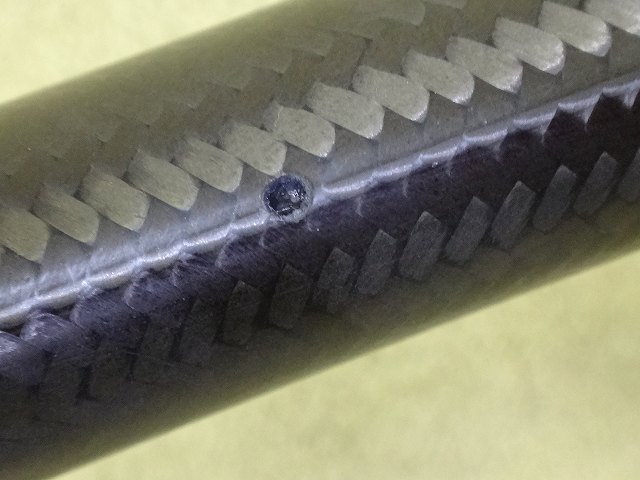
In this hole, they're offset above.
So there is hole offset,

but some holes that appear to be only at centerline
are scattered throughout, so
the rim doesn't seem to have an offset significant enough to warrant orientation instructions.
In this manufacturer's in-house disc-brake wheels,
both front and rear show the TLO logo on the front and Schmolke logo on the rear
when viewed from the right side, but


the rim-brake front and rear wheels I built a while back are also oriented
following the maker's website.
On this rim, the white orientation sticker was only on the rear rim.
On those front and rear wheels, the red label appears counterclockwise
from the valve hole when viewed from the right on both,
but on this wheel the front rim label is clockwise instead.
I'm going to chalk up this inconsistency to just being how Schmolke rolls.

With the Extralight hub, the rim-brake version has an instruction
saying "orient this side as the left side,"
and following it makes the logo upside down, but
the disc-brake hub is impossible to install backward,
so that instruction marking was absent.


It's off-center again. But unlike the rear wheel,
I can center it by tensioning the low-tension side,
so if you think of it as a tightening bonus, it's actually welcome.
The rear wheel freewheel side had spokes long enough to protrude past the nipples,
but the front wheel had short spokes on both sides—you could say too short.
This carelessness too, but there's no doubt
it's an in-house manufacturer wheel.


I trued the runout and centered it.

Only the front wheel's valve was slightly angled, so
I removed the tire to redo it, and
noticed something shocking:
the holes on the outer and inner edges are slightly offset,
so the valve will always sit tilted front-to-back.

This is the rim-brake rim from the other day,
and the valve hole is clearly offset side-to-side.
The valve should emerge tilted side-to-side on this rim too
(the outer hole was almost dead center).

This is somewhat unrelated to wheels,
but regarding the R9100 crankset on the bike
where these wheels were installed.
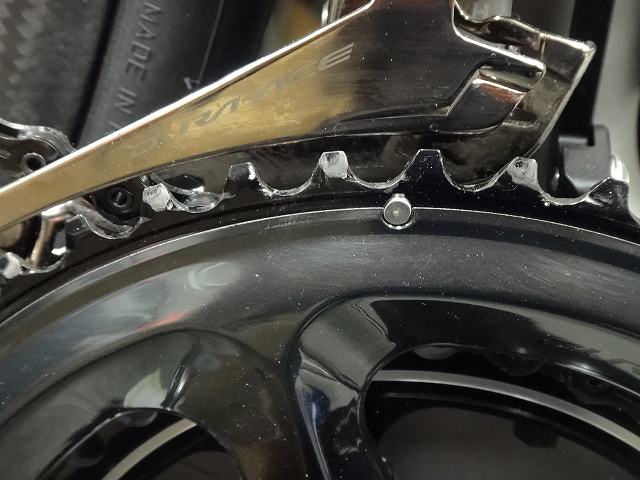
The post-purchase mileage is definitely under 2000 km,
and it almost certainly spent all that time on the outer chainring.
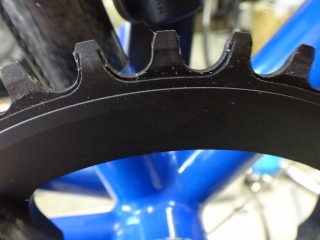
The outer ring has 50T, an even number, so the relationship between
which chain inner and outer links are engaged
doesn't change as you pedal
(it might change if you shift gears, or it might not—more on that later),
so only the teeth engaging inner links show more wear,
with alternating tooth tip colors.
For only 2000 km from new, the anodize is peeling pretty fast, isn't it?
Unlike the 7900, the 9000 and R9100 outer chainrings seem to wear faster.
I don't think it's just my imagination.
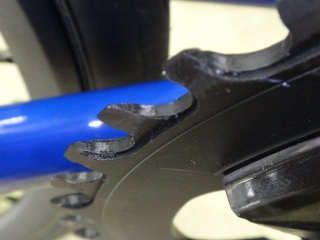
Here's a Campagnolo Ekar chainring that's been used about 5000 km,
wiped of chain lube on the teeth,
and it has a narrow-wide profile, so it's naturally even-toothed (44T).
The anodize is barely peeling.
Fast wear is one thing, but if you want even wear,
just use odd-toothed. That's why Shimano changed
the rear derailleur pulleys from the 10T standard to 11T back in the day.
Some might say that with sufficient front shifting,
the relationship between chain links should change,
but the path the chain takes to a given shift pin is constant,
so if there are 3 shift paths and the phase relationship
between chain links and tooth tips when the chain lands on the outer ring
is the same for all 3 paths, then during "clean shifts"
this relationship wouldn't change.
Speaking of odd-toothed outers, that would be 53T,
but you rarely see those anymore except on pros.
I thought SRAM's AXS should include a 49T option
for front double outers, but
they've gone with even-numbered options only.
by the manufacturer in-house.
Both front and rear wheels are built with Extralight disc-brake hubs
using straight spokes.
Both are all-black CX-RAY.
Let me start with the rear wheel.

When viewed from the freewheel side (right side), there's a Schmolke logo label
counterclockwise next to the valve hole.

But on the non-freewheel side (left side), it's a label that says "TLO"
clockwise next to the valve hole.

The centering was abnormally off. What the heck.
In theory, this is the direction of center deviation that decreases with tire pressure,
but even if you pressurized the rim to the point of explosion,
this deviation would never become zero.
The problem is that to correct this,
I'd need to either tension the already-tight freewheel side even more
or loosen the slack non-freewheel side even further.
Even though the freewheel side is tensioned reasonably well,
the non-freewheel side is so slack despite having excessive tension
to create this much center deviation—and that's because this is
an all-CX-RAY "standard-built wheel."
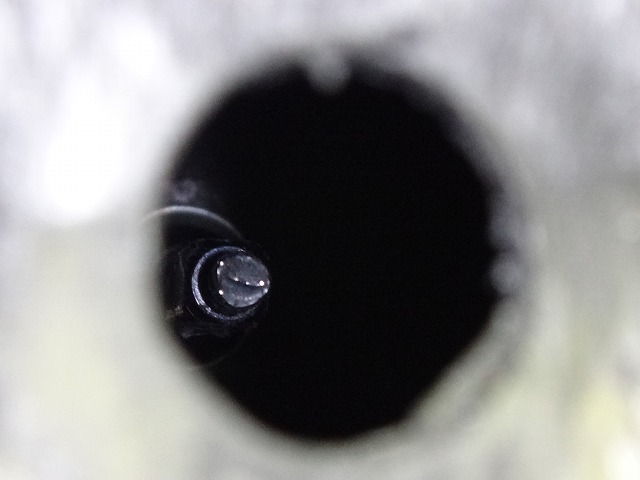
Moreover, the rear wheel has long spokes on both sides,
especially on the freewheel side (image above), where the spoke protrudes quite a bit
from the nipple end face, leaving almost no room for tightening.
Since there was also lateral runout, I tightened heavily on the freewheel side.
The center deviation reduced slightly.
Against my better judgment, from here on I could only center it
by loosening the non-freewheel side.
I thought I might need to loosen the nipples by about half a turn,
but when I tried loosening by 1/4 turn twice in two stages instead,
On the first 1/4 turn, the center came out almost perfectly,
and the image above is after carefully centering a bit more.
Indeed, loosening the non-freewheel side causes the rim to move dramatically.
This hub's end pieces have the same shape on both left and right,
but the left is part of the hub axle while the right is an end nut.
Both take a 17mm wrench. Actually, before work began, I replaced the freewheel body
from Campagnolo-type to Shimano-type,
and the right end nut... is not reverse-threaded.
The danger here is accidentally tightening hard when trying to loosen,
which could cause seizing and galling.
The thread pitch is fine on both the aluminum hub axle and aluminum end nut,
so if it "clicked" and galled, that would be really bad.
The hub axle threads had no grease on them
(yet it was tightened pretty firmly to begin with).

Looking at the spline of a Campagnolo ED11 freewheel body,
the protrusions on the side where sprockets bite in during forward crank rotation
all have the same shape every 90° in phase (black protrusions in the diagram above).
The protrusions on the opposite side are shaped differently in just one spot
to align the shift points cleanly (blue protrusions in the same diagram).
This is a Campagnolo ED11 sprocket, and
↑only here is the shape different from other areas.

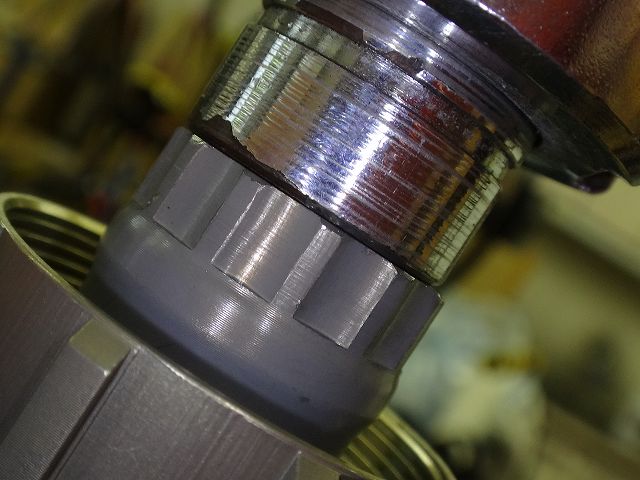
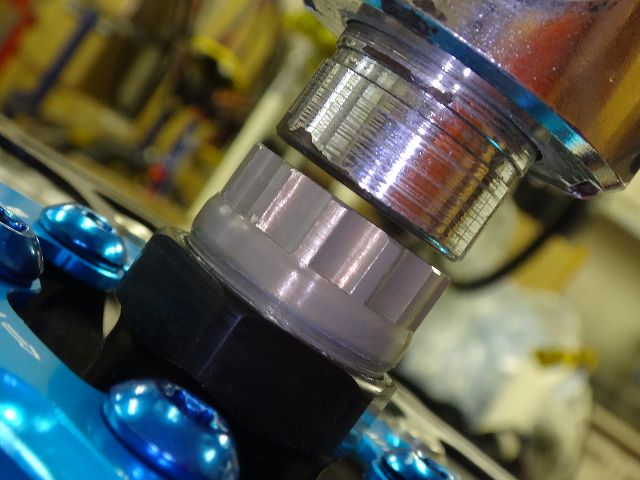
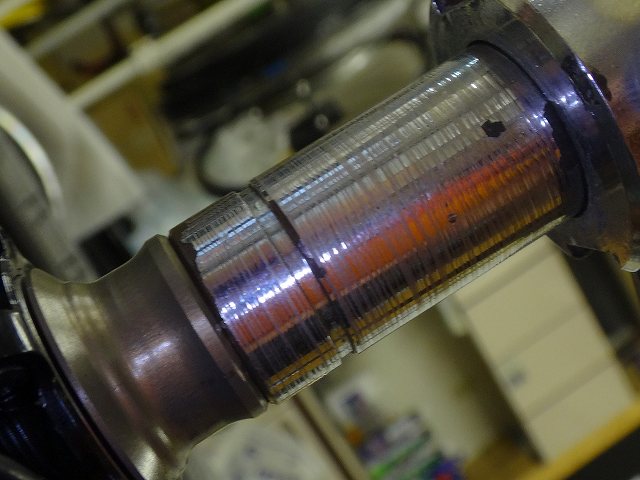
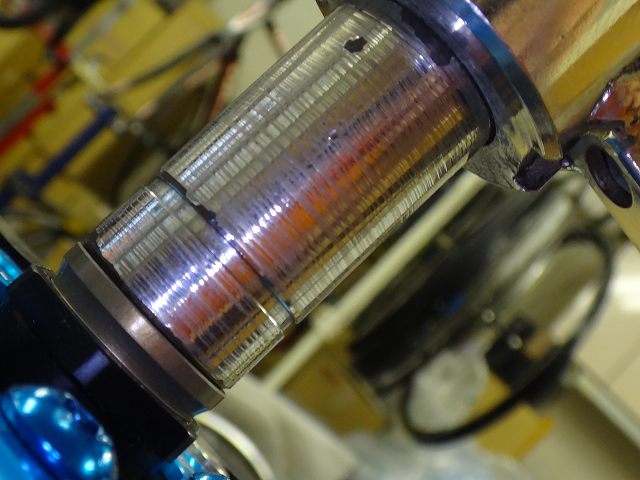
This is an Extralight Campagnolo-type freewheel body,
as an example of the extreme weight reduction
seen across this hub line generally
(the name certainly lives up to the product):
the spline protrusions number only 4 on the side where the sprocket bites in.
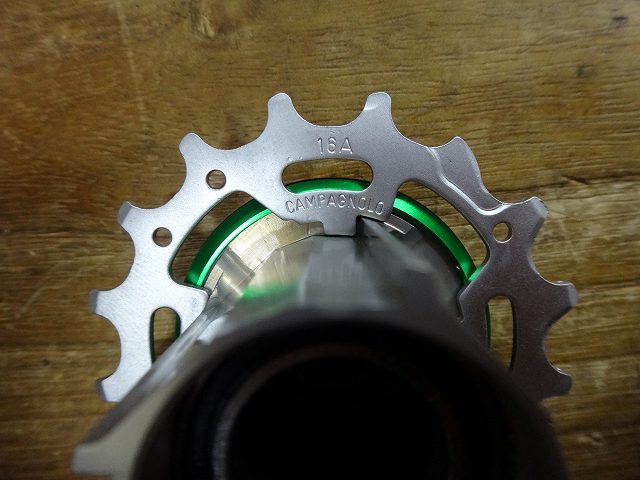
So the phase at which the sprocket fits
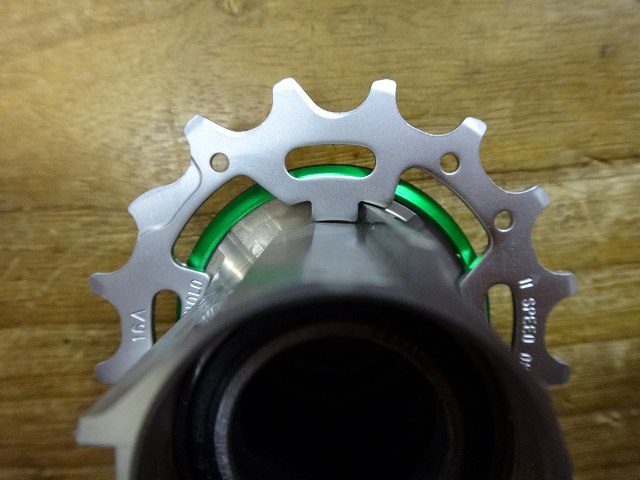
is not limited to just one position.
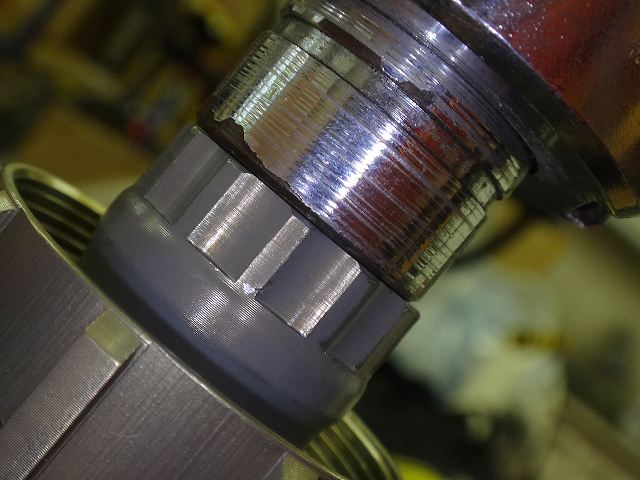
The two images above are of the same protrusion, by the way.
So when installing the sprocket,
you must install it so that the sprocket's different-shaped part aligns with
a specific protrusion, or shifting performance will degrade.
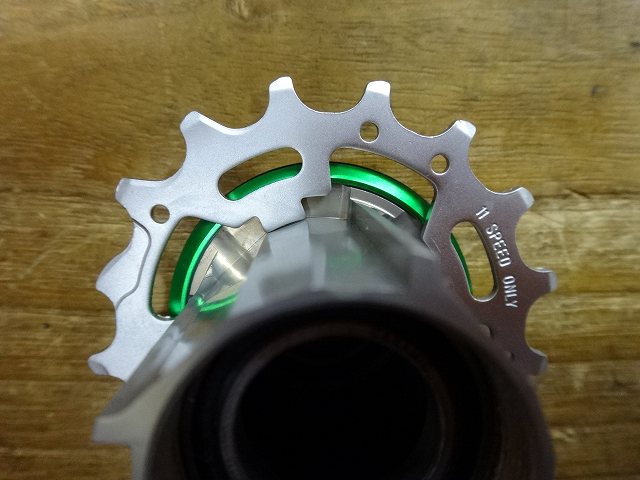
Also, there's no retaining protrusion on the opposite side of the bite direction,
so until the lockring is tightened, the sprocket will shift
counterclockwise as shown in the image above.
So before tightening the lockring, you need to make sure
all sprockets are in contact with the bite-direction protrusions.
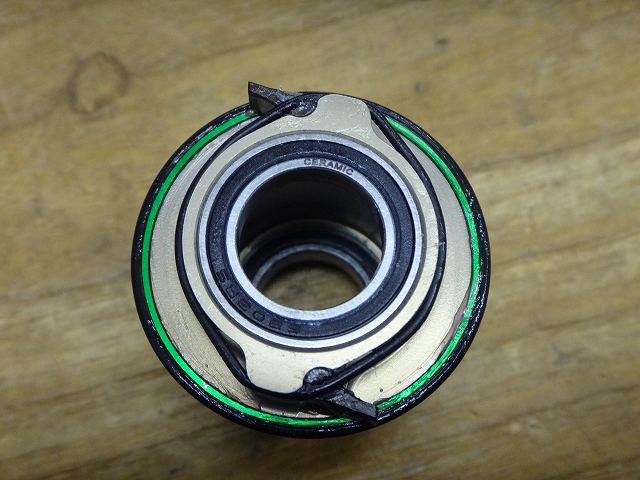
This is common to both Shimano and Campagnolo types,
but the pawl spring has two pawls.
Mavic's FTS-L freewheel body also has two pawls,
but that has the unusual structure of pawls on the hub body side.
Pawl springs with pawls on the freewheel body side
typically have 3 or 4 pawls, or up to 6 (I've never seen 5).
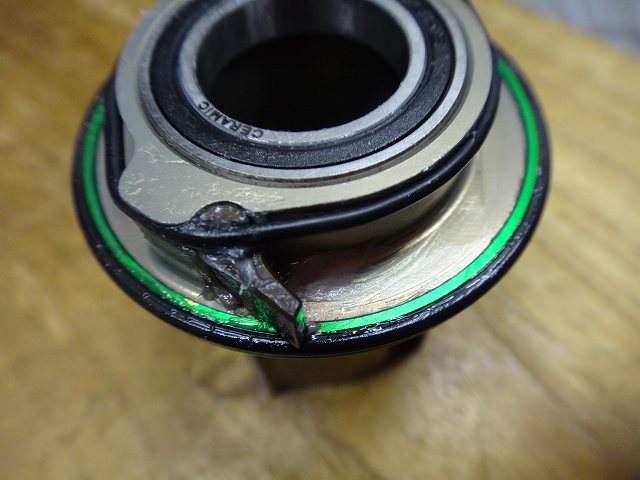
The number of pawls is sketchy, but what's even sketchier is that the pawl return spring
is a rubber O-ring.
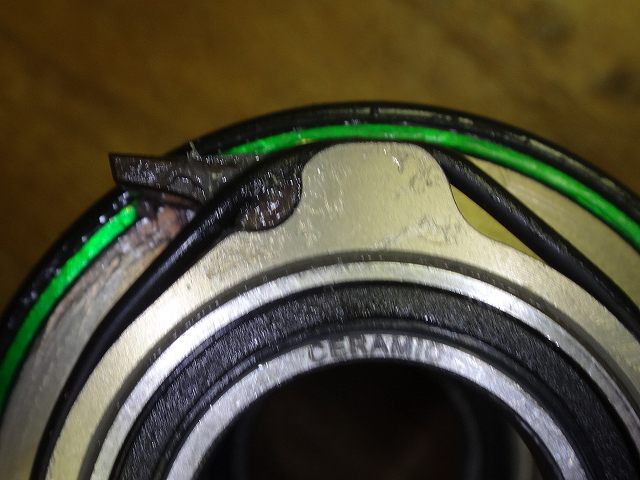
↑pawls engaged
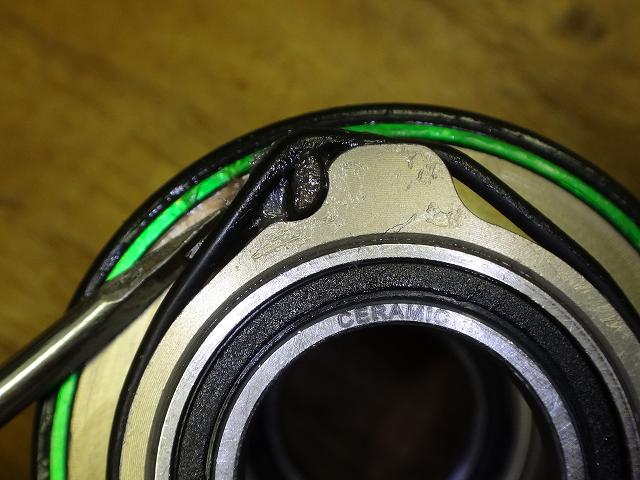
↑pawls retracted
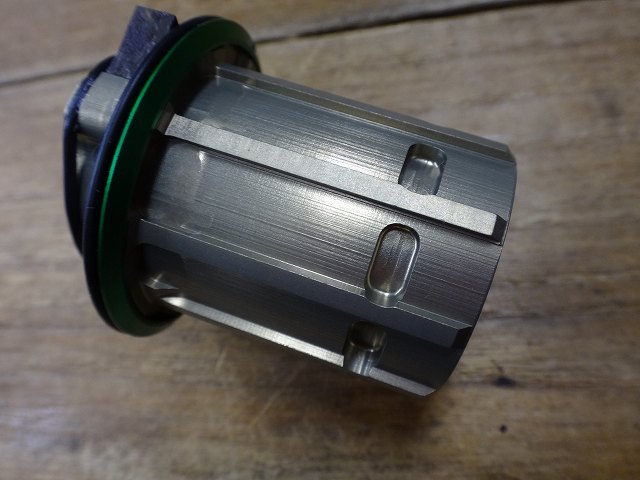
This is the Shimano-type freewheel body.
Shimano's genuine HG freewheel body has
9 protrusions equally spaced, with one of them being narrower.
Some third-party lightweight freewheel bodies have all 9 protrusions narrow,
which creates the same situation as the Campagnolo freewheel body above—
the sprocket can fit at any spline position—but
this freewheel body is the opposite of the Shimano genuine—
it has one protrusion that's wider (at least at the entry) so that
the sprocket position aligns to a specific phase.
If all protrusions were narrow splines, the indefinite position relationship
between sprocket and body would be the same as with Campagnolo,
but Shimano sprockets don't have the stepped notch on the reverse side
like Campagnolo does, so sprockets can be installed backwards
(→here).
Next, the front wheel.
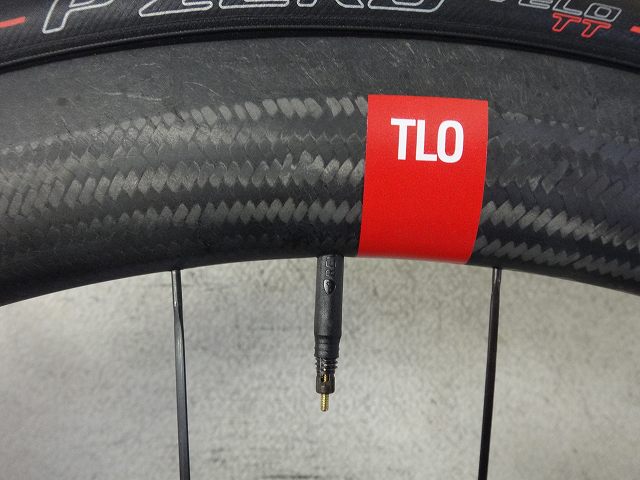
When viewed from the right side, there's a label reading "TLO"
clockwise next to the valve hole, and
when viewed from the left side, there's a Schmolke logo label
counterclockwise next to the valve hole, so
just as on the maker's website,
the rim direction is reversed between front and rear.
On the Schmolke logo label side, there's an instruction saying
"Orient this side toward the rotor mounting plate for the front wheel,
or toward the freewheel body for the rear wheel—
in other words, toward the side where spoke angles are steeper"
so if this sticker were always placed on the Schmolke logo side,
I'd understand the rim orientation reversing front to rear.
But the sticker only appeared on the front wheel.
Since this rim is not an offset rim,
the fact that rim orientation is specified means
the rim hole positioning (hole location and angle)
has left-right distinction... but.
This is a Schmolke TLO45 rim I built a while back,
and the holes are offset below the centerline of the rim.
In this hole, they're offset above.
So there is hole offset,

but some holes that appear to be only at centerline
are scattered throughout, so
the rim doesn't seem to have an offset significant enough to warrant orientation instructions.
In this manufacturer's in-house disc-brake wheels,
both front and rear show the TLO logo on the front and Schmolke logo on the rear
when viewed from the right side, but
the rim-brake front and rear wheels I built a while back are also oriented
following the maker's website.
On this rim, the white orientation sticker was only on the rear rim.
On those front and rear wheels, the red label appears counterclockwise
from the valve hole when viewed from the right on both,
but on this wheel the front rim label is clockwise instead.
I'm going to chalk up this inconsistency to just being how Schmolke rolls.
With the Extralight hub, the rim-brake version has an instruction
saying "orient this side as the left side,"
and following it makes the logo upside down, but
the disc-brake hub is impossible to install backward,
so that instruction marking was absent.

It's off-center again. But unlike the rear wheel,
I can center it by tensioning the low-tension side,
so if you think of it as a tightening bonus, it's actually welcome.
The rear wheel freewheel side had spokes long enough to protrude past the nipples,
but the front wheel had short spokes on both sides—you could say too short.
This carelessness too, but there's no doubt
it's an in-house manufacturer wheel.
I trued the runout and centered it.
Only the front wheel's valve was slightly angled, so
I removed the tire to redo it, and
noticed something shocking:
the holes on the outer and inner edges are slightly offset,
so the valve will always sit tilted front-to-back.
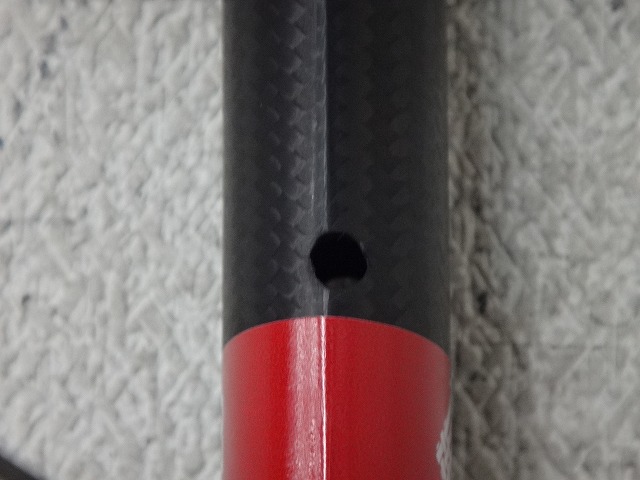
This is the rim-brake rim from the other day,
and the valve hole is clearly offset side-to-side.
The valve should emerge tilted side-to-side on this rim too
(the outer hole was almost dead center).
This is somewhat unrelated to wheels,
but regarding the R9100 crankset on the bike
where these wheels were installed.
The post-purchase mileage is definitely under 2000 km,
and it almost certainly spent all that time on the outer chainring.
The outer ring has 50T, an even number, so the relationship between
which chain inner and outer links are engaged
doesn't change as you pedal
(it might change if you shift gears, or it might not—more on that later),
so only the teeth engaging inner links show more wear,
with alternating tooth tip colors.
For only 2000 km from new, the anodize is peeling pretty fast, isn't it?
Unlike the 7900, the 9000 and R9100 outer chainrings seem to wear faster.
I don't think it's just my imagination.
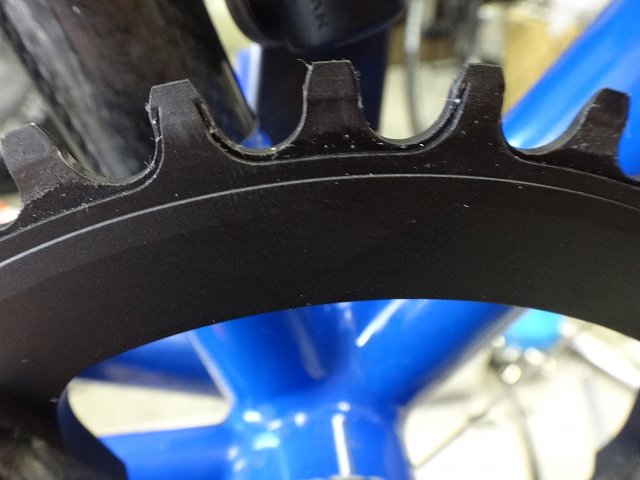
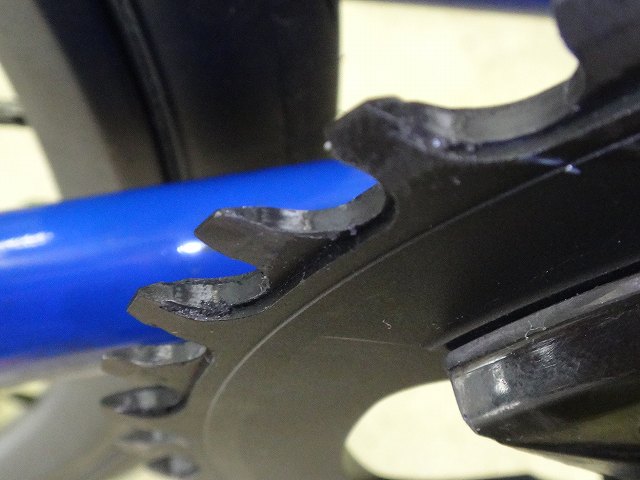
Here's a Campagnolo Ekar chainring that's been used about 5000 km,
wiped of chain lube on the teeth,
and it has a narrow-wide profile, so it's naturally even-toothed (44T).
The anodize is barely peeling.
Fast wear is one thing, but if you want even wear,
just use odd-toothed. That's why Shimano changed
the rear derailleur pulleys from the 10T standard to 11T back in the day.
Some might say that with sufficient front shifting,
the relationship between chain links should change,
but the path the chain takes to a given shift pin is constant,
so if there are 3 shift paths and the phase relationship
between chain links and tooth tips when the chain lands on the outer ring
is the same for all 3 paths, then during "clean shifts"
this relationship wouldn't change.
Speaking of odd-toothed outers, that would be 53T,
but you rarely see those anymore except on pros.
I thought SRAM's AXS should include a 49T option
for front double outers, but
they've gone with even-numbered options only.