I repaired a spoke break on a PowerTap wheel.
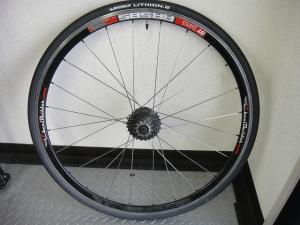
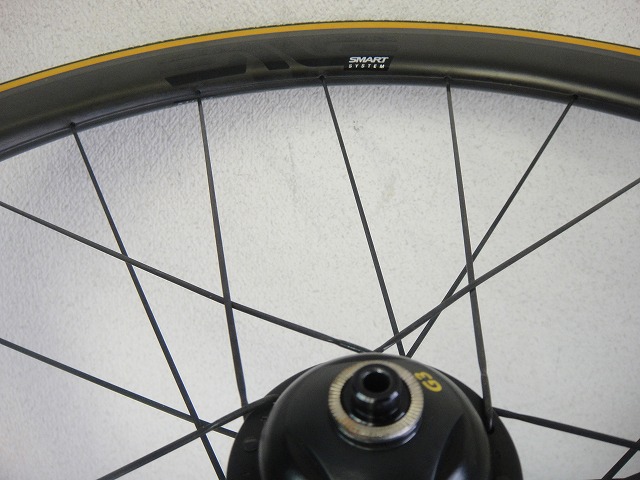
↑One of the CX-RAY spokes on the non-freewheel side had broken, but
it's already been replaced in this photo.
I know I'm being inconsiderate, but there's no malice intended.
No wheel exists where spoke breaks absolutely never happen
no matter who builds it or how it's built.
Recently, someone left a comment with a link to a certain shop's blog,
and according to it, Italian lacing is more prone to spoke breaks than reverse Italian lacing.
I've built over a thousand wheels in my time (though probably not two thousand),
and about half of those are rear wheels, which I build almost exclusively using Italian lacing.
If I had experimentally built about half using reverse Italian lacing instead,
I might have been able to confirm a statistically significant difference in spoke break risk between the two methods,
but since I almost only do Italian lacing, I don't have reliable data myself.
I have no doubt that the risk of spoke neck breaks with 1.8mm diameter spoke necks (15-gauge)
is higher compared to 2.0mm diameter (14-gauge).
That reverse Italian lacing is less prone to breaks—there was no convincing rationale given
at that linked source, so they must be speaking from experience and conviction.
I don't know how many wheels of both Italian and reverse Italian lacing
they've built before reaching that conclusion, but that's apparently their thinking.
This wheel uses reverse Italian lacing, but
I don't believe it raises or lowers the probability of spoke breaks.
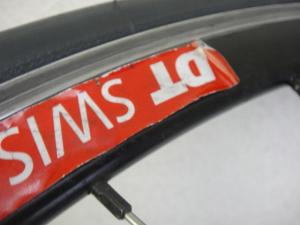
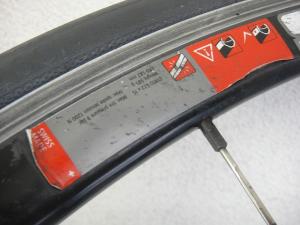
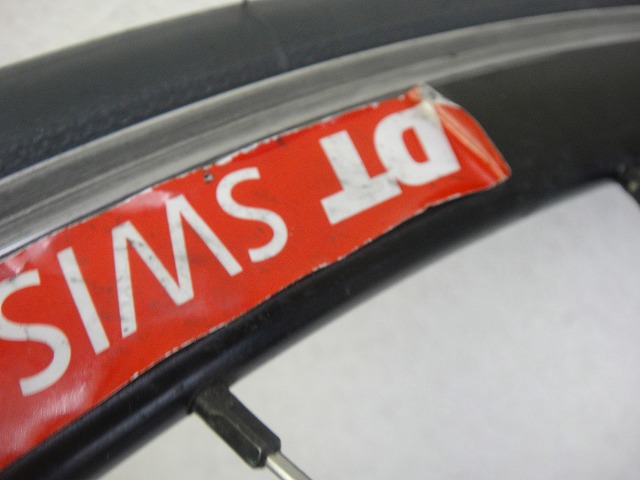
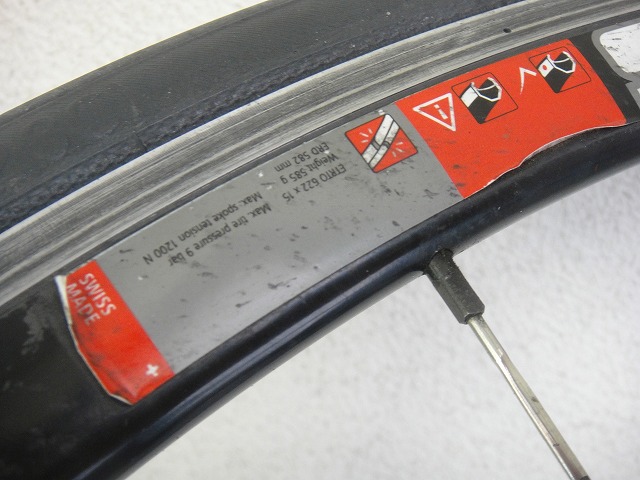
The DT sticker could really do better.
The "sticker adhesive is weak to heat" theory seems most plausible.
On bikes used only for casual city riding (no braking heat from descents),
even well-used ones don't peel like this.

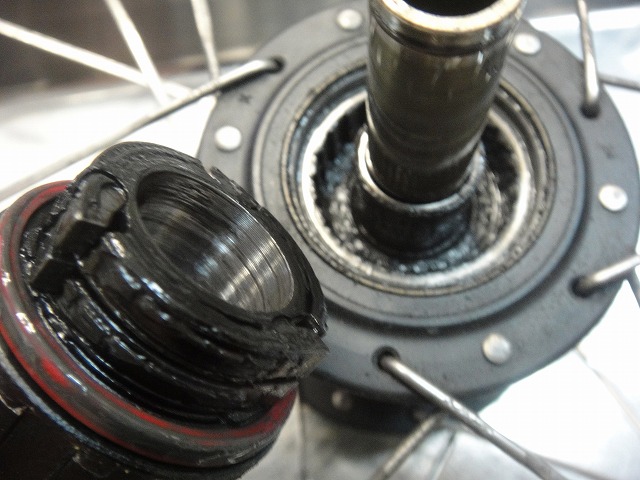
Since they also wanted an overhaul, I did that too.
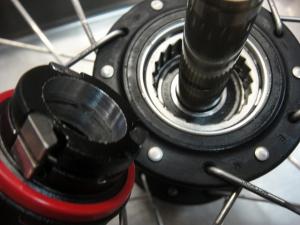
The usual photo.
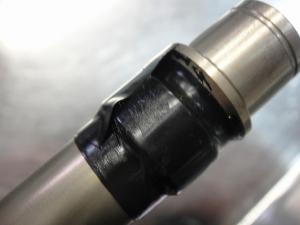
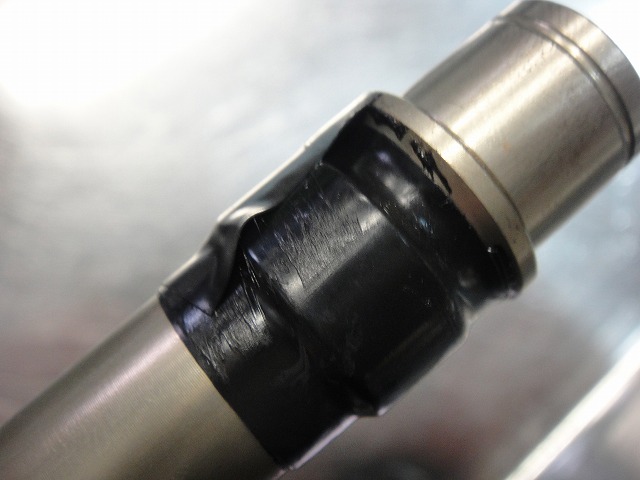
Not very motivated (and so on).
I forgot to take a photo after heat shrink tubing treatment.
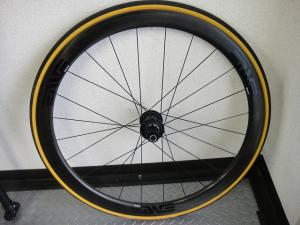
Same customer, this is also a hub inspection.
Since it hasn't been used that much, I didn't do a complete teardown and cleaning.
The bearings in the previous wheel were EZO steel balls,
but these are ceramic, and didn't really need any grease.
I only dealt with the magnetic tape and applied grease to the freewheel section.
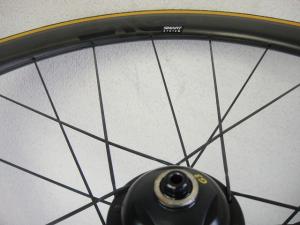
That aside, this wheel is really light.
When you hold it, you wouldn't think it was a PowerTap.
For a bike that comes in under 6.8kg even with normal assembly,
it might make a meaningful addition to the weight budget.
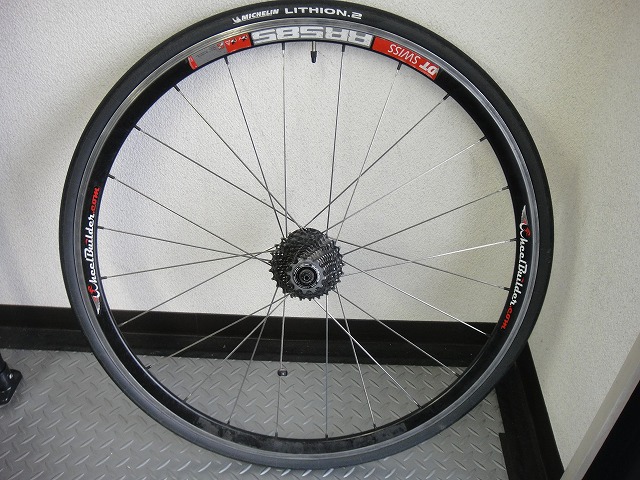
↑One of the CX-RAY spokes on the non-freewheel side had broken, but
it's already been replaced in this photo.
I know I'm being inconsiderate, but there's no malice intended.
No wheel exists where spoke breaks absolutely never happen
no matter who builds it or how it's built.
Recently, someone left a comment with a link to a certain shop's blog,
and according to it, Italian lacing is more prone to spoke breaks than reverse Italian lacing.
I've built over a thousand wheels in my time (though probably not two thousand),
and about half of those are rear wheels, which I build almost exclusively using Italian lacing.
If I had experimentally built about half using reverse Italian lacing instead,
I might have been able to confirm a statistically significant difference in spoke break risk between the two methods,
but since I almost only do Italian lacing, I don't have reliable data myself.
I have no doubt that the risk of spoke neck breaks with 1.8mm diameter spoke necks (15-gauge)
is higher compared to 2.0mm diameter (14-gauge).
That reverse Italian lacing is less prone to breaks—there was no convincing rationale given
at that linked source, so they must be speaking from experience and conviction.
I don't know how many wheels of both Italian and reverse Italian lacing
they've built before reaching that conclusion, but that's apparently their thinking.
This wheel uses reverse Italian lacing, but
I don't believe it raises or lowers the probability of spoke breaks.
The DT sticker could really do better.
The "sticker adhesive is weak to heat" theory seems most plausible.
On bikes used only for casual city riding (no braking heat from descents),
even well-used ones don't peel like this.
Since they also wanted an overhaul, I did that too.

The usual photo.
Not very motivated (and so on).
I forgot to take a photo after heat shrink tubing treatment.

Same customer, this is also a hub inspection.
Since it hasn't been used that much, I didn't do a complete teardown and cleaning.
The bearings in the previous wheel were EZO steel balls,
but these are ceramic, and didn't really need any grease.
I only dealt with the magnetic tape and applied grease to the freewheel section.
That aside, this wheel is really light.
When you hold it, you wouldn't think it was a PowerTap.
For a bike that comes in under 6.8kg even with normal assembly,
it might make a meaningful addition to the weight budget.