A customer brought in the front wheel from an original first-generation R-SYS.
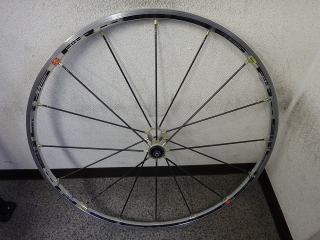
To be precise, this is the model after the front wheel was recalled and replaced.
(You can distinguish it by the three lines near the rim side of the spokes).
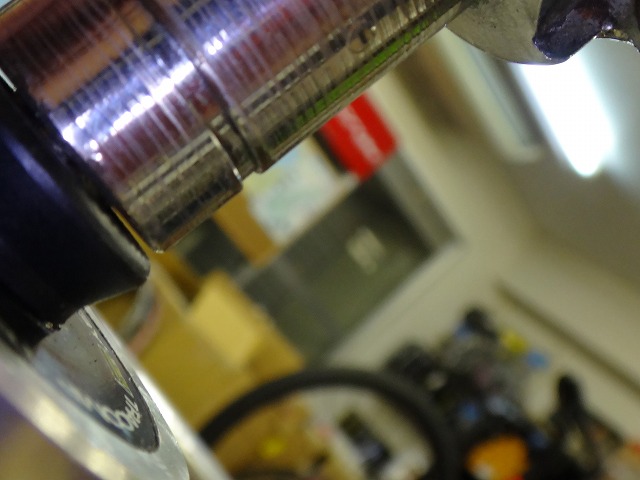
There's a noticeable lateral runout in one spot,
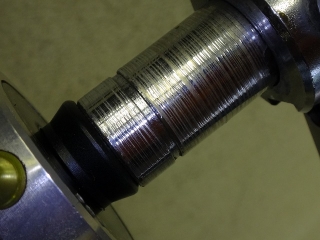
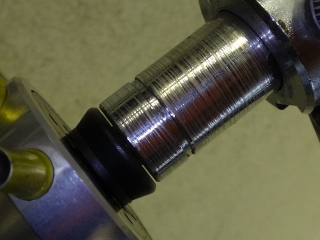
Even at a phase where the rim centering error seemed relatively minor,
it was off by about this much.
The lateral runout is manageable, but there's radial runout in various spots.
The adhesive-bonded nipples on the ends of the R-SYS carbon spokes
have coarse-pitch threads, so even a tiny turn
causes significant movement both radially and laterally.
It seems like multiple rounds of truing have accumulated radial runout,
but only the lateral runout was corrected.
I'm not aware of this wheel's service history though.
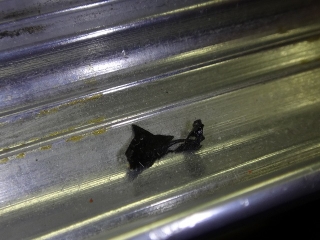
There was foreign debris inside the rim, so I removed it.
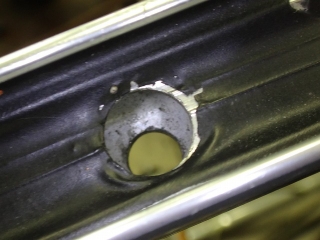
The tape was applied by the customer, not the manufacturer,
and a piece of it had fallen into the rim.
Even just a scrap of tape makes a hard, gritty sound
when you shake the rim, like sand is trapped in there.
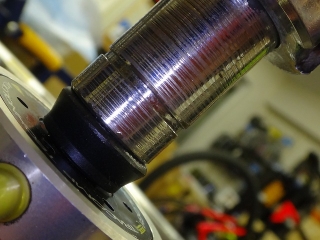
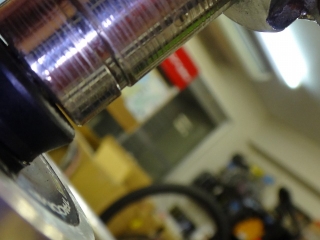
Before truing, I tightened all the nipples evenly by the same small amount.
Even though some nipples needed loosening depending on the adjustments,
overall the spoke tension is definitely higher than it was originally.
There were so many radial runout spots to chase
that I didn't have the luxury of also correcting the rim centering much.
I chased the radial runout all the way down, except for a barely perceptible
inward dip at the rim seam on the opposite side of the valve hole.
After that I corrected the lateral runout, and once all the truing was done,
that's what the image above shows.
Looking back at the original centering error image from the beginning—it's a bit hard to see—
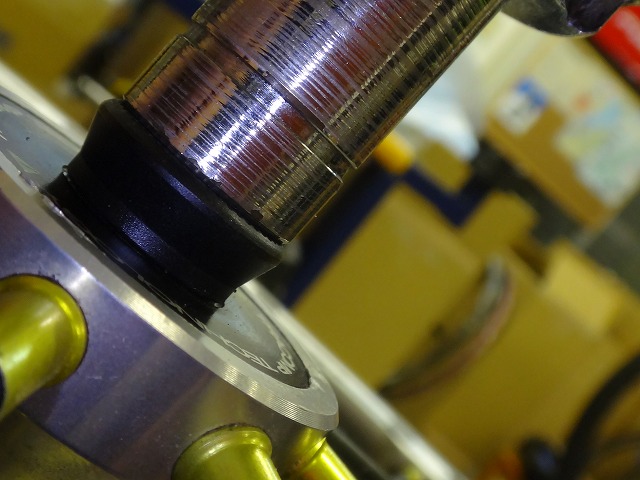
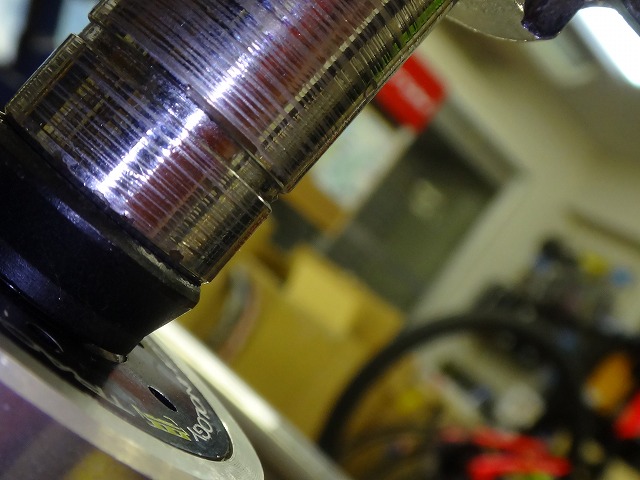
but the rim was offset toward the side with the six holes for ball race adjustment on the hub seal(the left side).
After completing all the truing, the rim had shifted past center
and was now offset toward the right side.
This means I had to work on an awful lot of different spots.
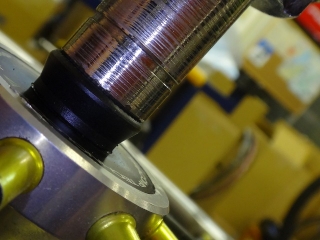
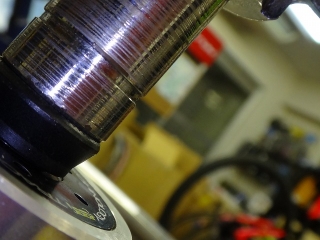
I also centered it up.
By tightening, so to speak.
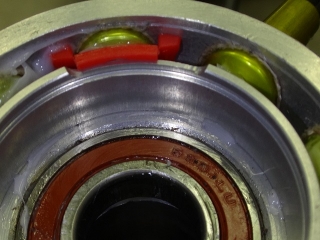
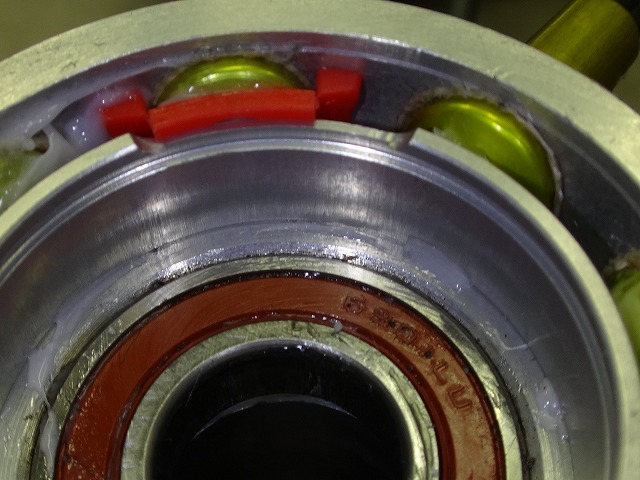
The customer also wanted the lock ring replaced,
and I install it by tapping that red plastic part
into the edge of the anti-rotation notch.
This lets me set the spoke head contact point at least one more degree
to a fresh location.
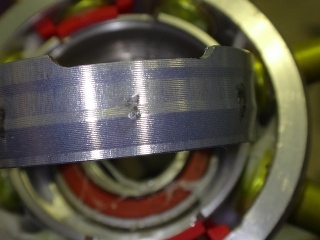
↑Original lock ring position
Roughly in the middle of the notch.
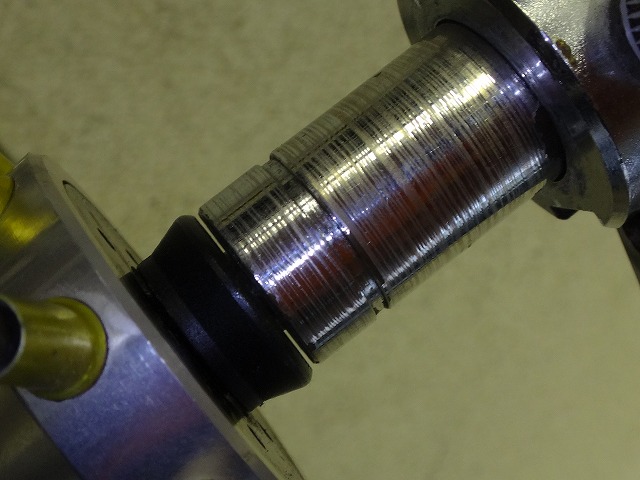
By the way, on the true original first-generation R-SYS,
there's a deep red anodized aluminum ring without a notch.
Installing the lock ring can cause a slight shift in wheel center.
With the front wheel going in both left and right, it doesn't drift much though…
The manufacturer technically prohibits truing with the lock ring installed,
but when centering up after installing the lock ring,
sometimes I have to turn it slightly if necessary.

To be precise, this is the model after the front wheel was recalled and replaced.
(You can distinguish it by the three lines near the rim side of the spokes).
There's a noticeable lateral runout in one spot,

Even at a phase where the rim centering error seemed relatively minor,
it was off by about this much.
The lateral runout is manageable, but there's radial runout in various spots.
The adhesive-bonded nipples on the ends of the R-SYS carbon spokes
have coarse-pitch threads, so even a tiny turn
causes significant movement both radially and laterally.
It seems like multiple rounds of truing have accumulated radial runout,
but only the lateral runout was corrected.
I'm not aware of this wheel's service history though.

There was foreign debris inside the rim, so I removed it.

The tape was applied by the customer, not the manufacturer,
and a piece of it had fallen into the rim.
Even just a scrap of tape makes a hard, gritty sound
when you shake the rim, like sand is trapped in there.

Before truing, I tightened all the nipples evenly by the same small amount.
Even though some nipples needed loosening depending on the adjustments,
overall the spoke tension is definitely higher than it was originally.
There were so many radial runout spots to chase
that I didn't have the luxury of also correcting the rim centering much.
I chased the radial runout all the way down, except for a barely perceptible
inward dip at the rim seam on the opposite side of the valve hole.
After that I corrected the lateral runout, and once all the truing was done,
that's what the image above shows.
Looking back at the original centering error image from the beginning—it's a bit hard to see—
but the rim was offset toward the side with the six holes for ball race adjustment on the hub seal(the left side).
After completing all the truing, the rim had shifted past center
and was now offset toward the right side.
This means I had to work on an awful lot of different spots.
I also centered it up.
By tightening, so to speak.
The customer also wanted the lock ring replaced,
and I install it by tapping that red plastic part
into the edge of the anti-rotation notch.
This lets me set the spoke head contact point at least one more degree
to a fresh location.
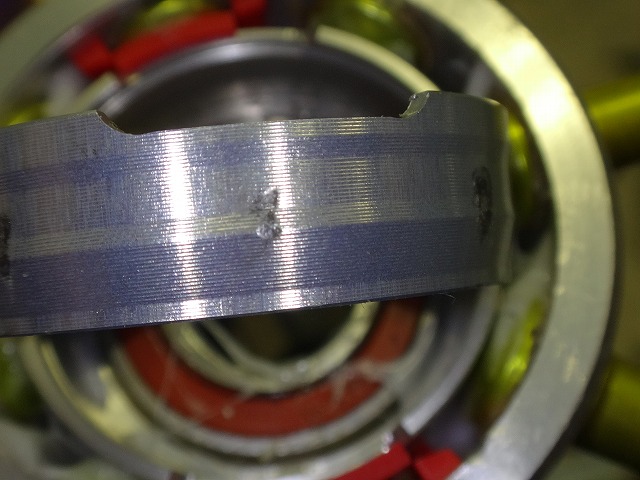
↑Original lock ring position
Roughly in the middle of the notch.
By the way, on the true original first-generation R-SYS,
there's a deep red anodized aluminum ring without a notch.
Installing the lock ring can cause a slight shift in wheel center.
With the front wheel going in both left and right, it doesn't drift much though…
The manufacturer technically prohibits truing with the lock ring installed,
but when centering up after installing the lock ring,
sometimes I have to turn it slightly if necessary.