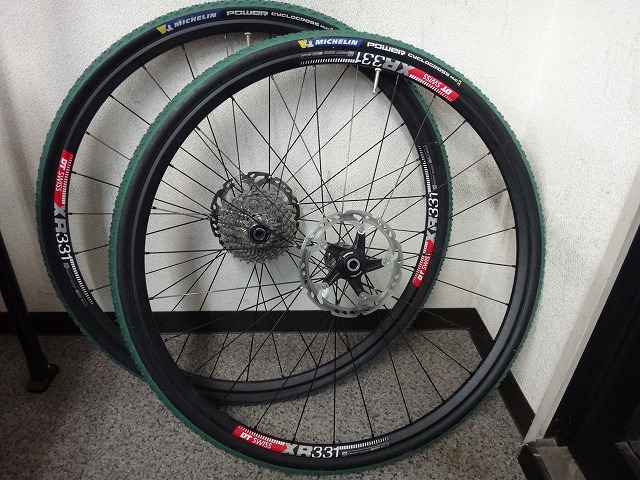
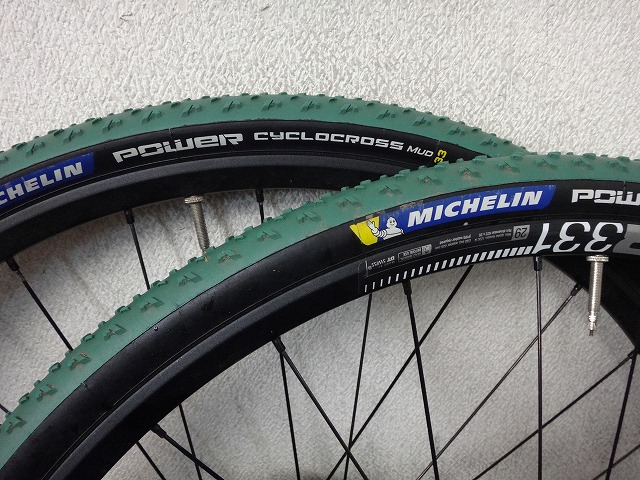
The other day I built up a wheel with an XR331 rim,
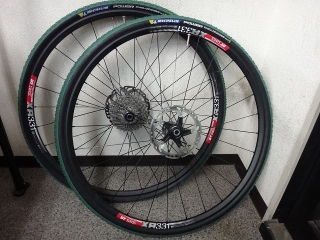
and mounted the tire that had been on the original wheel.
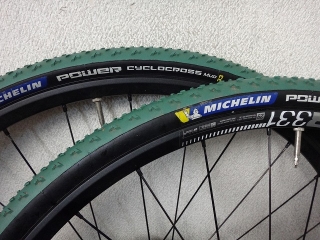
Same tire, same size.
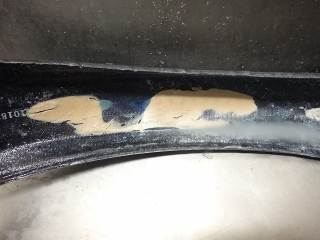
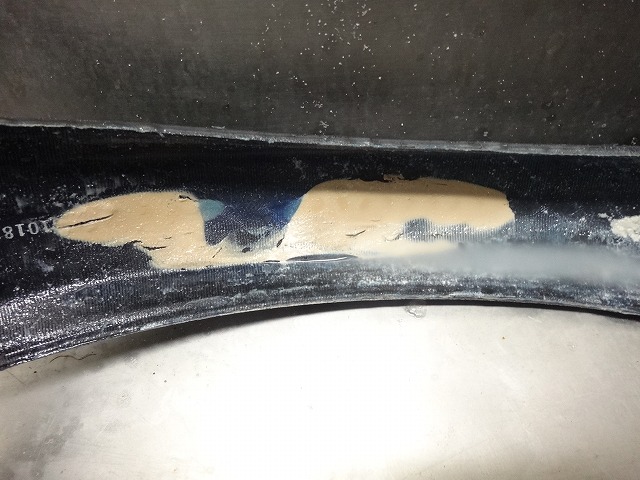
Both tires had clumps of sealant that looked like they'd been sitting in that position for a long time,
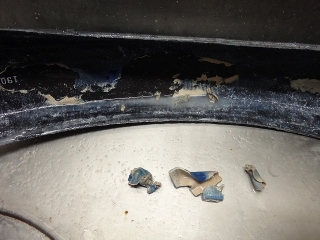
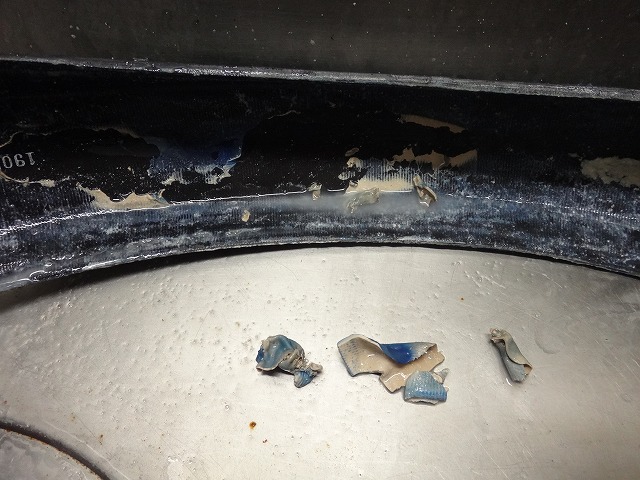
and since they weren't adhering that strongly, I peeled off as much as I could.
In the initial image state, there's no liquid sealant inside the tire at all.
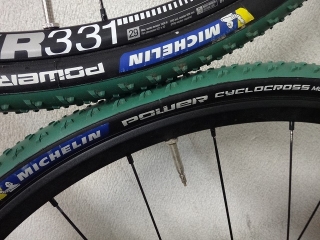
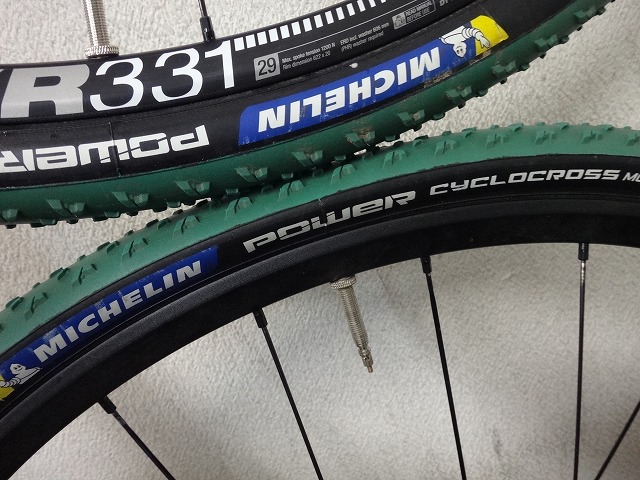
When I pump both wheels to about 3 bar without sealant, for the first 4-5 hours there's no apparent difference in how quickly they lose air—they barely seem to deflate at all. Though this is with the bike sitting still, it might be different under actual riding. I wouldn't rely on running these without sealant in a race, but still.
However, after a day passes, the rear tire's air pressure has dropped noticeably.

↑When I push the front wheel against the rear wheel, it looks like this. This is after about 2 days have passed; on day one there's still more air. Also, no matter how long you leave it, the tire bead never drops off the rim's bead hook.
When the customer brought this wheel to me, the tire was caked in mud. I washed it before disassembling, and the soap bubbles turned brown from how dirty it was. That's when I noticed something—only the rear tire's sidewall would bubble with air leaks, like a crab blowing bubbles, whenever the side got wet. The reason is unclear, but it's not from the customer's mishandling—I think it's just a quirk of that particular tire. It's interesting because this phenomenon is usually a product-level trait where virtually all units of one tire brand do it and virtually all units of another brand don't. Seeing it happen with just one unit out of the same product batch is unusual.
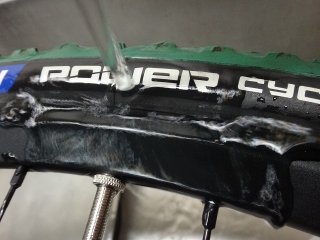
To reproduce it, I first thoroughly soaked the front tire's sidewall with water.
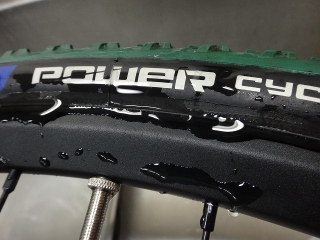
I waited for a bit, but nothing happened.
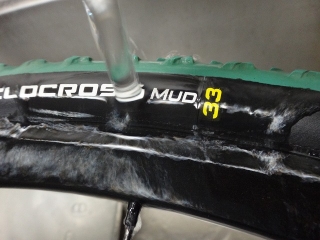
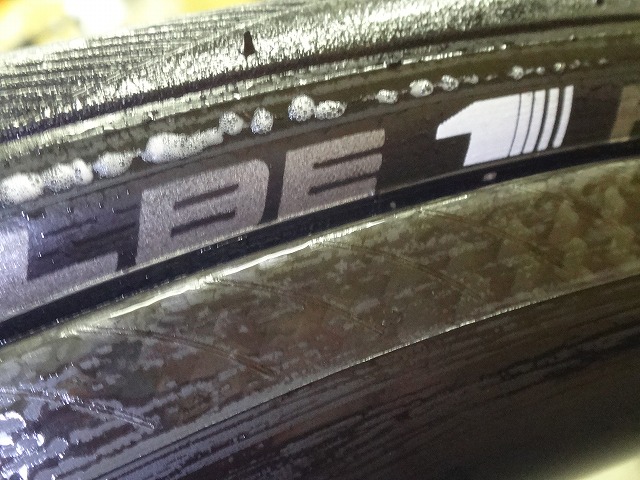
↑But with the rear tire,
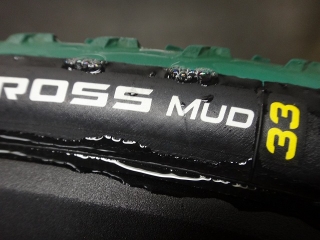
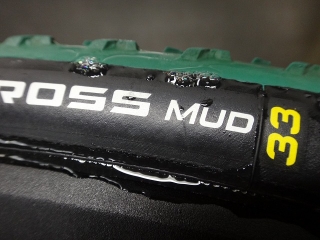
You can tell from how different the bubble shape is that it's bubbling with air leaks. And notably, no bubbles are coming from the bead area (the water pattern stays the same there).
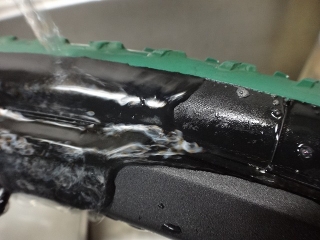
At particularly bad spots,
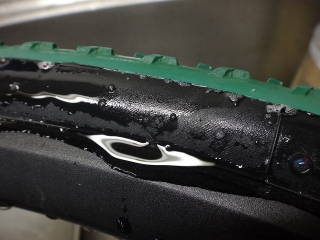
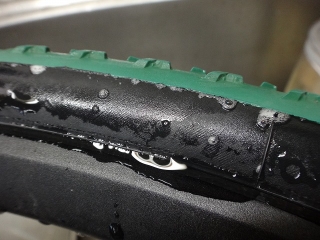
↑it looks like this.
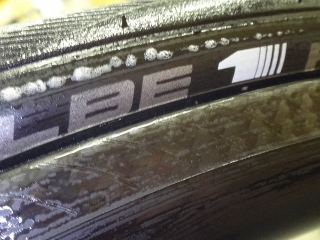
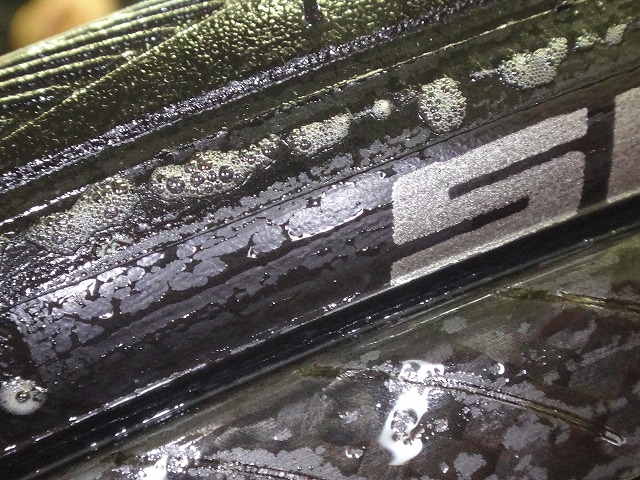
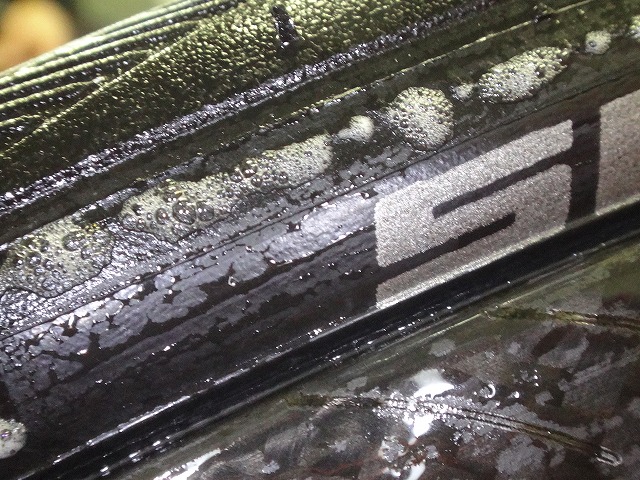
↑This is a separate incident I happened to see during work and asked to take photos of for the article. I'd mounted the tire only partway onto the rim, poured sealant inside, and then popped the bead up with a quick bang. Sealant flew onto the rim sidewall, so I wiped it with a wet rag and the tire sidewall started bubbling away. (I used ".。o○" because that's what my converter gave me for the bubbling sound.)
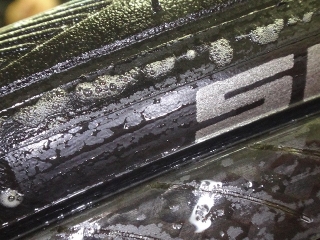

With tires that have this issue, water-washable sealants like Finish Line or Effeto (エメジ) sometimes don't seal air leaks very easily, so you often need to put in a decent amount or plan on monitoring it over 2+ days. That's why I often use a stronger sealant. I did that this time too.
Previously I mentioned I hadn't even tried Finish Line sealant because road tires call for 90ml, which is a huge amount. But I got a comment saying "Air leaks that wouldn't stop with 90ml of Finish Line sealed with 50ml of Effeto (エメジ)." It's not something I tested myself, but from the specs alone, Finish Line is definitely quite mild. (Is Effeto doing stealth marketing? ←That's rich coming from me)
As for the Michelin cyclocross tires from the beginning, I'm suggesting to the customer that they could use different sealants in the front and rear, and since it's going to harden before the season if we put it in now, maybe wait until right before they actually use them.
I don't know much about MTB tires, but for road and cyclocross tubeless tires, if you want to avoid grief from this sidewall bubbling issue, it's not stealth marketing or anything, but in my opinion it's gotta be IRC (アイアールシー).
Speaking of which, one of our customers recently contacted IRC directly about their tubeless valve issue and sent the wheel in. The IRC people had soldered Stans (スタンズ) tape around twice and used a soldering iron to open the valve hole, which the customer called "careful work." When the customer mentioned our shop name, apparently the IRC folks knew about Dark Bicycle Koubou (暗黒自転車工房), the mad dogs of the industry.
※Cutting the valve hole with a blade by scraping, or punching it open with a Phillips screwdriver, can cause splits in the front-and-back direction of the hole where sealant can seep in. Using Stans tape wrapped around twice or more, the heat welds it, which prevents the tape from lifting or peeling.
With pre-built wheels from Mavic or Roval, sometimes the last part cut like a can-lid is still barely connected inside the rim, or it's snapped off and fallen inside so the wheel rattles when you shake it.
Also, rim tape other than Stans—at least from Effeto Mariposa, GIANT, Mavic, and DT—doesn't melt from soldering iron heat, which is another reason I mainly use Stans tape.
and mounted the tire that had been on the original wheel.
Same tire, same size.
Both tires had clumps of sealant that looked like they'd been sitting in that position for a long time,
and since they weren't adhering that strongly, I peeled off as much as I could.
In the initial image state, there's no liquid sealant inside the tire at all.
When I pump both wheels to about 3 bar without sealant, for the first 4-5 hours there's no apparent difference in how quickly they lose air—they barely seem to deflate at all. Though this is with the bike sitting still, it might be different under actual riding. I wouldn't rely on running these without sealant in a race, but still.
However, after a day passes, the rear tire's air pressure has dropped noticeably.
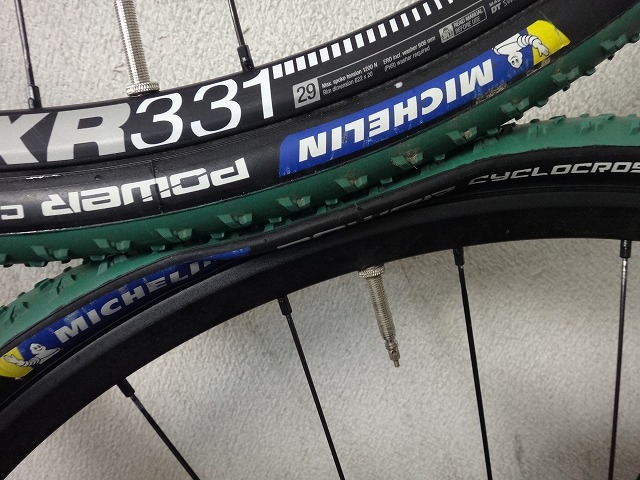
↑When I push the front wheel against the rear wheel, it looks like this. This is after about 2 days have passed; on day one there's still more air. Also, no matter how long you leave it, the tire bead never drops off the rim's bead hook.
When the customer brought this wheel to me, the tire was caked in mud. I washed it before disassembling, and the soap bubbles turned brown from how dirty it was. That's when I noticed something—only the rear tire's sidewall would bubble with air leaks, like a crab blowing bubbles, whenever the side got wet. The reason is unclear, but it's not from the customer's mishandling—I think it's just a quirk of that particular tire. It's interesting because this phenomenon is usually a product-level trait where virtually all units of one tire brand do it and virtually all units of another brand don't. Seeing it happen with just one unit out of the same product batch is unusual.
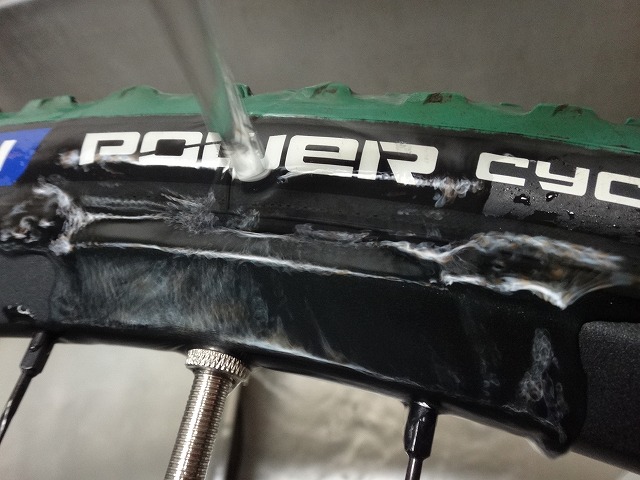
To reproduce it, I first thoroughly soaked the front tire's sidewall with water.
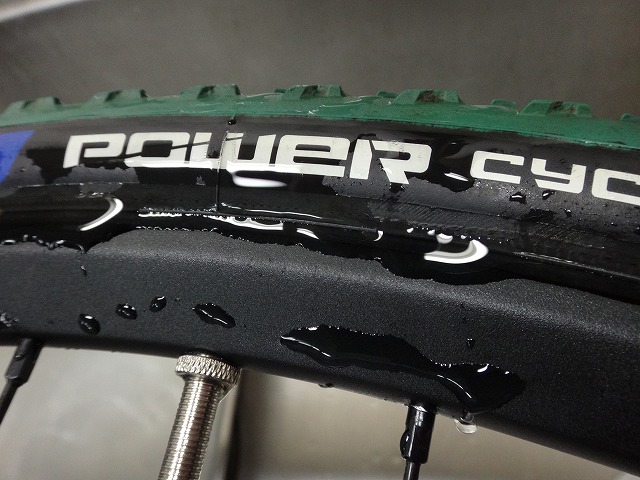
I waited for a bit, but nothing happened.
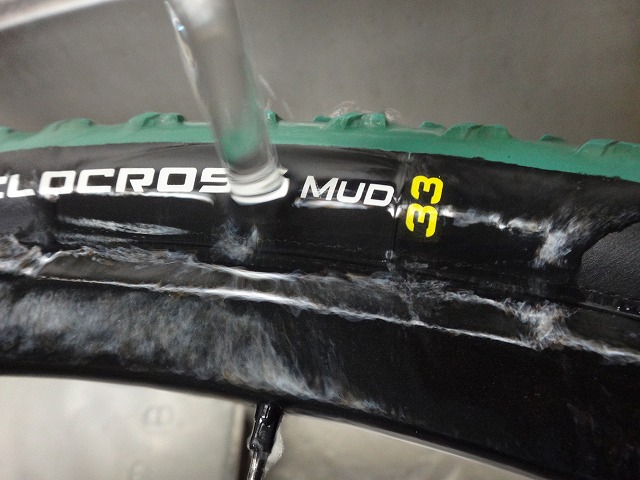
↑But with the rear tire,
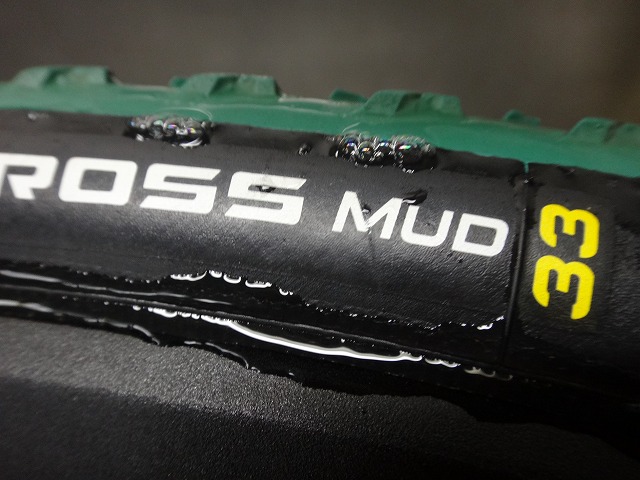
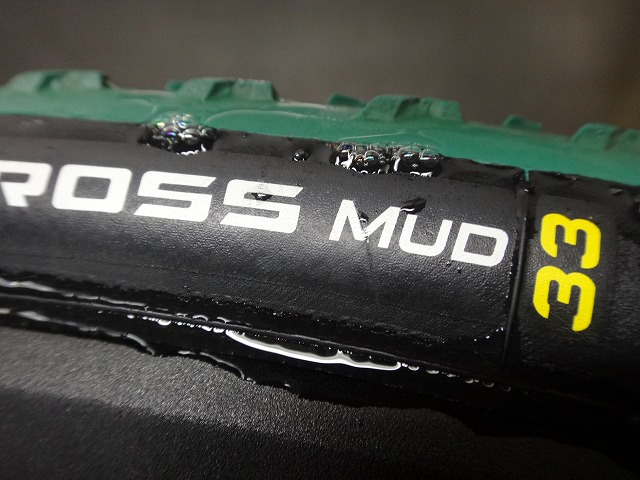
You can tell from how different the bubble shape is that it's bubbling with air leaks. And notably, no bubbles are coming from the bead area (the water pattern stays the same there).

At particularly bad spots,
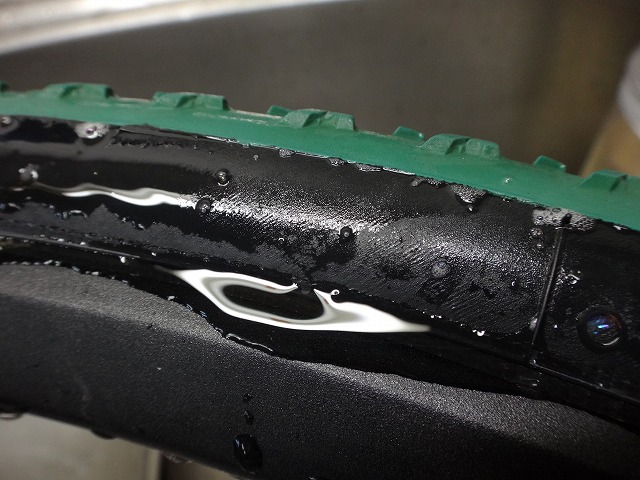
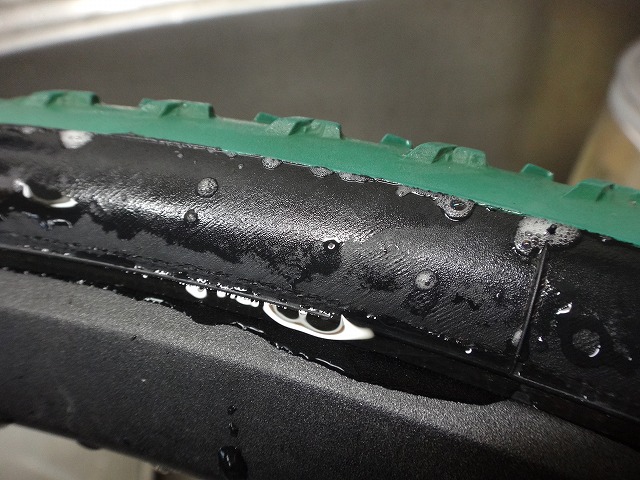
↑it looks like this.
↑This is a separate incident I happened to see during work and asked to take photos of for the article. I'd mounted the tire only partway onto the rim, poured sealant inside, and then popped the bead up with a quick bang. Sealant flew onto the rim sidewall, so I wiped it with a wet rag and the tire sidewall started bubbling away. (I used ".。o○" because that's what my converter gave me for the bubbling sound.)
With tires that have this issue, water-washable sealants like Finish Line or Effeto (エメジ) sometimes don't seal air leaks very easily, so you often need to put in a decent amount or plan on monitoring it over 2+ days. That's why I often use a stronger sealant. I did that this time too.
Previously I mentioned I hadn't even tried Finish Line sealant because road tires call for 90ml, which is a huge amount. But I got a comment saying "Air leaks that wouldn't stop with 90ml of Finish Line sealed with 50ml of Effeto (エメジ)." It's not something I tested myself, but from the specs alone, Finish Line is definitely quite mild. (Is Effeto doing stealth marketing? ←That's rich coming from me)
As for the Michelin cyclocross tires from the beginning, I'm suggesting to the customer that they could use different sealants in the front and rear, and since it's going to harden before the season if we put it in now, maybe wait until right before they actually use them.
I don't know much about MTB tires, but for road and cyclocross tubeless tires, if you want to avoid grief from this sidewall bubbling issue, it's not stealth marketing or anything, but in my opinion it's gotta be IRC (アイアールシー).
Speaking of which, one of our customers recently contacted IRC directly about their tubeless valve issue and sent the wheel in. The IRC people had soldered Stans (スタンズ) tape around twice and used a soldering iron to open the valve hole, which the customer called "careful work." When the customer mentioned our shop name, apparently the IRC folks knew about Dark Bicycle Koubou (暗黒自転車工房), the mad dogs of the industry.
※Cutting the valve hole with a blade by scraping, or punching it open with a Phillips screwdriver, can cause splits in the front-and-back direction of the hole where sealant can seep in. Using Stans tape wrapped around twice or more, the heat welds it, which prevents the tape from lifting or peeling.
With pre-built wheels from Mavic or Roval, sometimes the last part cut like a can-lid is still barely connected inside the rim, or it's snapped off and fallen inside so the wheel rattles when you shake it.
Also, rim tape other than Stans—at least from Effeto Mariposa, GIANT, Mavic, and DT—doesn't melt from soldering iron heat, which is another reason I mainly use Stans tape.