Another day of wheels (and so on).
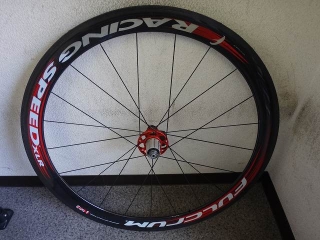
A customer left me a rear wheel from a Racing Speed XLR.
Apparently the left flange exploded during riding and became unusable.
What I mean by that is,
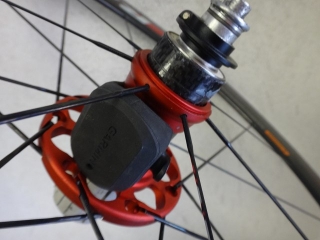
↑ This is what happened.
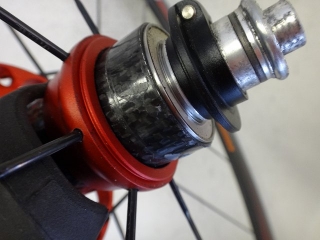
Just losing adhesive wouldn't cause this.
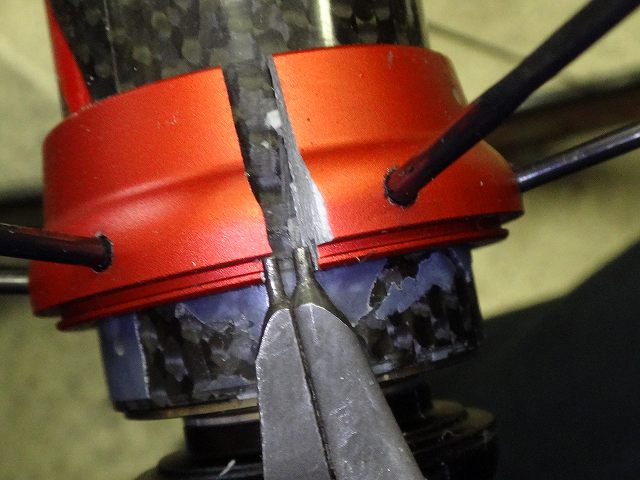
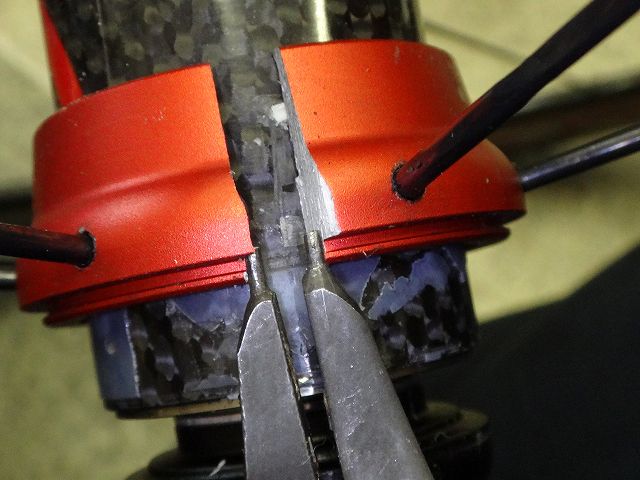
I'll show you pictures later, but the red aluminum flange part is actually cracked.
It became a narrow flangelike a cockroach,
and the spoke tension is completely gone.
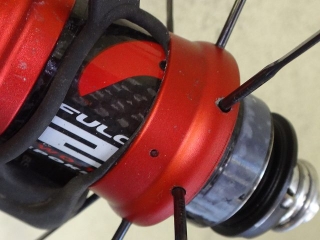
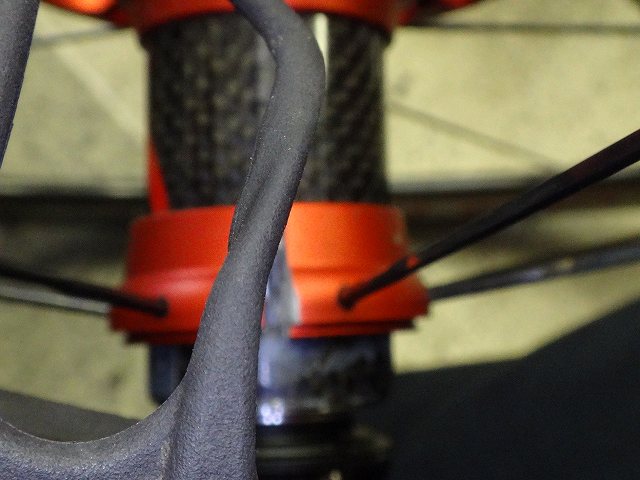
A cycling computer sensor got wedged between the flange and the hub body
and couldn't be removed, so
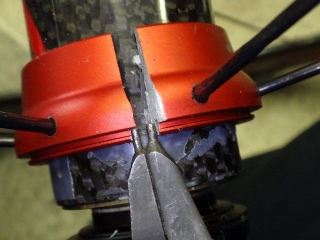
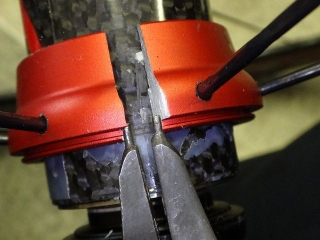
I spread open the cracked part of the flange
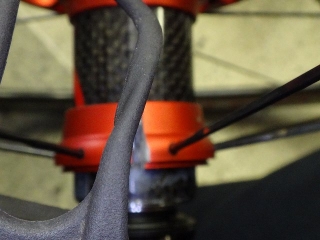
and recovered the sensor.
So I sent this rear wheel to a Campagnolo distributor who is supposedly the most knowledgeable in Japan,
just as a long shot, and they said:
"Warranty-wise we can't do anything,
but this is an interesting situation. I photographed it and reported it to headquarters."
When I asked if there was a compatible hub available
and that I'd do the work myself,
They didn't exactly say "We have no spare hubs, so just die—
if you have anything to say, I'll hear it in the afterlife (Valhalla)"
but basically that's what the answer amounted to.
I was at a loss, but then
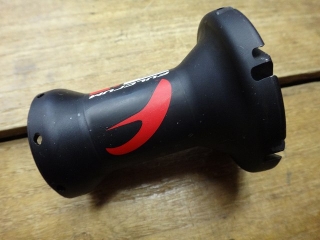
"Hey, I found a Racing 3 hub body!"
"Excellent!"
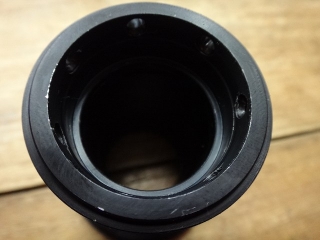
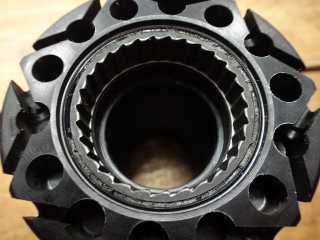
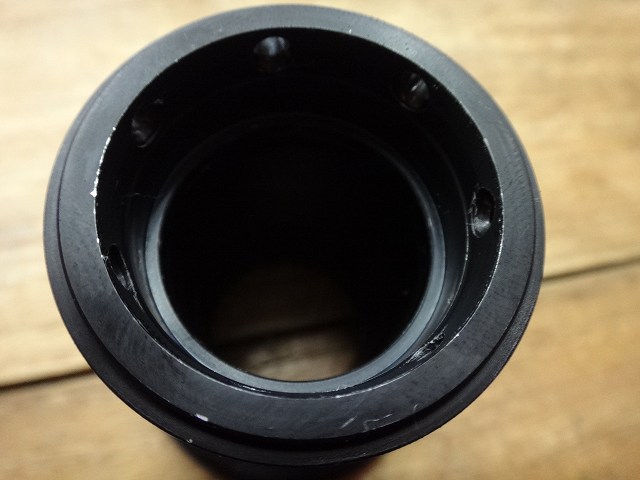
The bearing cup hasn't been press-fit.
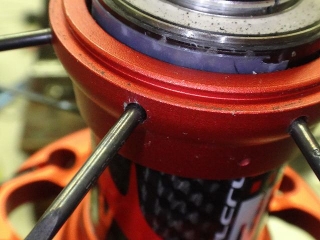
As long as there's a red flange directly below the carbon hub body,
the spokes won't come loose.

I disassembled the freewheel side spokes and removed the hub body.
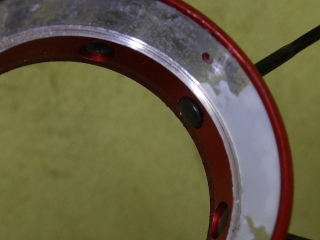
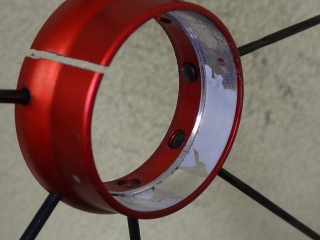
The last part of the press-fit before adhesion has a step, so
it wouldn't normally pull out inward just from loss of adhesive.
But if the flange cracks, that's a different story.

I removed the CULT bearing cup from the original hub
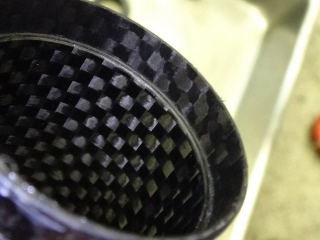
and extracted it.
The left end of this hub body's carbon section

is incredibly thin.
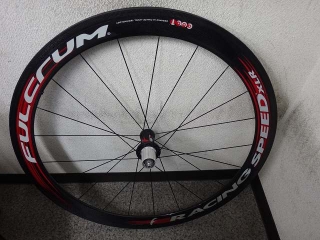
I got it built.
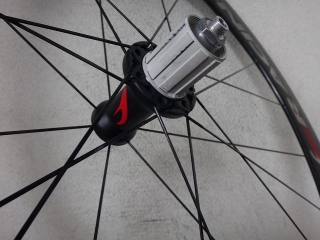
Most hub parts are shared in common, but
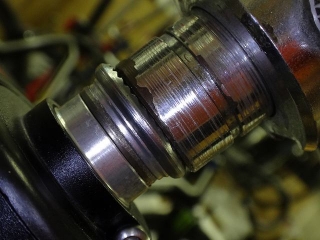
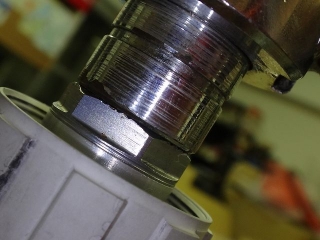
The hub is centered—not that that's a problem—
but the bearing preload adjustment nut visible in the upper image
is different between the Racing Speed and Racing 3 hubs.
Actually, for the successor models like the Speed with wide rims and the current Bora,
the hub axle part number has advanced by one digit,
and the bearing preload adjustment screw pitch has become finer.
In that case, this Racing 3 hub's bearing preload adjustment nut won't fit on the hub body.
This Racing Speed XLR has a mega flange on the right side, but
if the hub body was from a mega flange Racing 3,
there's a possibility that the bearing preload adjustment nut for that
won't fit on the hub axle.
Well, in that case I'd just need to change the hub axle to a newer one.
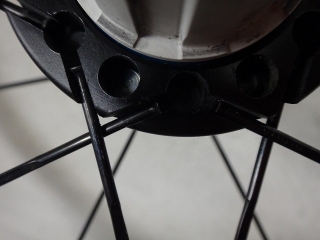
The original Racing Speed hub has
a mega flange and rim holes spaced evenly,
while the rebuilt Racing 3 hub has
a non-mega flange and rim holes with offset phase spacing.
The rim height and hole phase are different, but
there's no problem with the spoke orientation slightly different in theory at the flange slits.
If it were a Zonda hub designed for G3 lacing, it might not have worked.
We managed to make the spoke length work (or rather, we made it work).
As another difference,
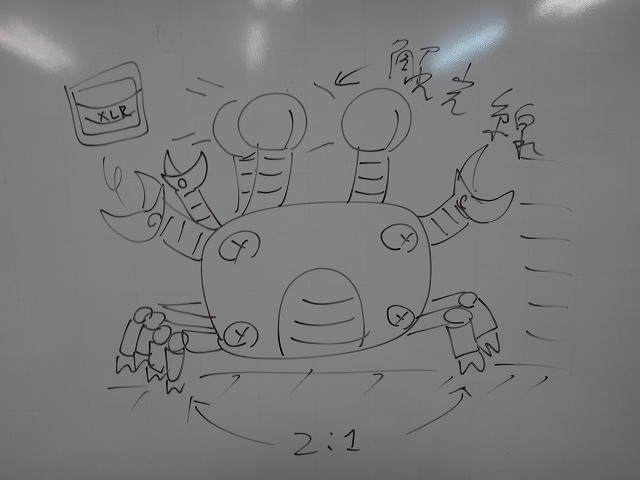
this Racing Speed XLR uses Ж (zhe) lacing for 2:1 spoke pattern,
but the Racing 3 hub I used is XI (XI) laced, so
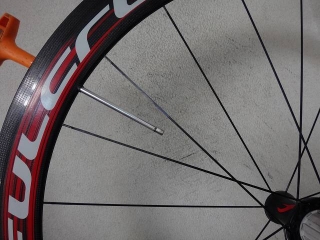
the valve hole position ends up in the middle of the freewheel side spoke's final cross.
This is unavoidable.
You might think we could shift the rim hole by one position either way, but
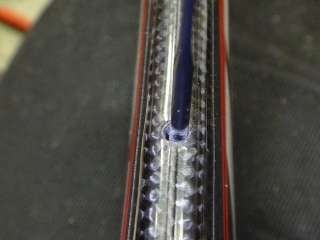
as is common with 2:1 lacing rims,
the freewheel side spoke holes aren't offset to the right, but rather positioned
at the rim center
(or maybe just slightly to the right...),
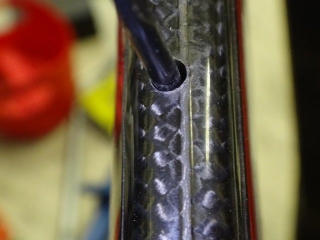
while the non-freewheel side spoke holes are
clearly offset to the left.
So we can't shift the hub-rim phase by one hole
(and we also can't assemble it backwards).
There are other tricky or pitfall-prone points besides what I've written here,
but I won't mention them.
I don't think most shops would do this kind of thing anyway.
And even if they were told to do it, they couldn't—
if you can't build normal wheels, you can't build weird ones.

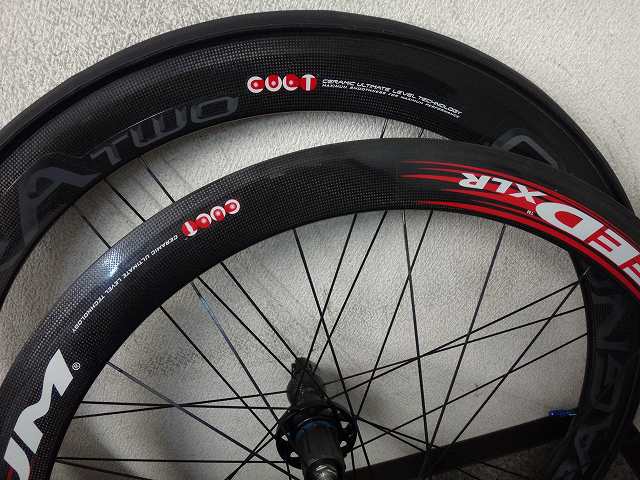
This Racing Speed XLR, shown alongside
a Bora Ultra Two in the image above, is
identical except for the rim hole phase,
both being narrow rim tubular with internal nipple design
from that era.
So they weigh the same
(though the front and rear rims might differ).
Against these "narrow rims," the current models use
"wide rims" built with 4mm (or 3.95mm) external nipples,
but what "wide rim" means is that
what started as barely feasible width according to old ETRTO standards of that time
has become wider still with recent wide rims now compliant with new ETRTO,
one step broader than what was originally called wide rim.
For Campagnolo and Fulcrum, C15 was a narrow rim and
C17 was a wide rim, but
recently there's a C19 rim, and
how should we even call this?
It's still just called a "wide rim," but
isn't the range of what "wide rim" covers getting too broad?
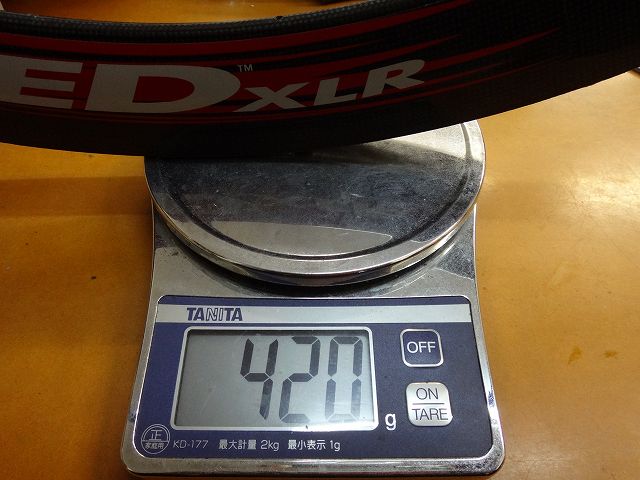
Since I'm disassembling this rim anyway, I weighed it for reference, but
rather than the utility of knowing this single rim's weight,
it might have more value as a benchmark
comparing the height-to-weight ratio with current wide rims
to see how much heavier recent rims have become—
the question being how many 50mm-high rims of this weight class
exist in new ETRTO-compliant designs.
Even if I "choose to believe" the aerodynamic properties of wider rims
and the rolling resistance lightness of wider tires,
when I weigh that against the detriment of increased rim weight at the perimeter,
in terms of what I often call "the relative magnitude of factors,"
I just can't bring myself to think such rims are necessarily inferior.
Even if there were a 50mm-high tubeless wide rim of nearly identical weight to this one,
if it were part of a complete wheel,
it almost certainly wouldn't have lateral stiffness greater than Bora or Speed.
As wheel manufacturers, I frequently hear about Shimano, Roval,
and as rim makers, Reynolds, ZIPP, ENVE—their 50mm-high-class off-the-shelf wheels,
if they're rim brake models,
I constantly hear about and have personally fixed many cases of brake rub.
It's still true today. The phenomenon of brake rub just isn't disappearing;
it's just becoming easier to hide the fact that the wheels are garbage.
Having written this far, you'd expect me to disclose the actual weight
of that old-fashioned 50mm narrow rim,
but that's information only I need to know, so I'm not telling.
↑ What a jerk
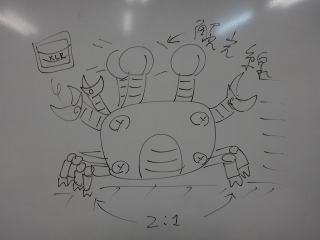
We apologize for the wait! Please take a look at these images!
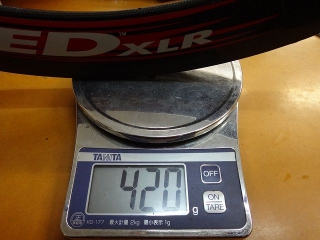
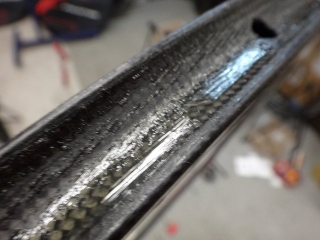
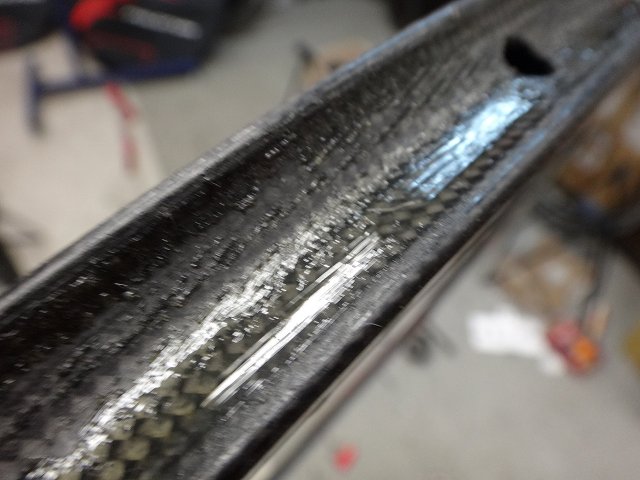
Note that the rim bed has cement
applied to this degree on the rim's outer perimeter!
↑ Stop it!

A customer left me a rear wheel from a Racing Speed XLR.
Apparently the left flange exploded during riding and became unusable.
What I mean by that is,
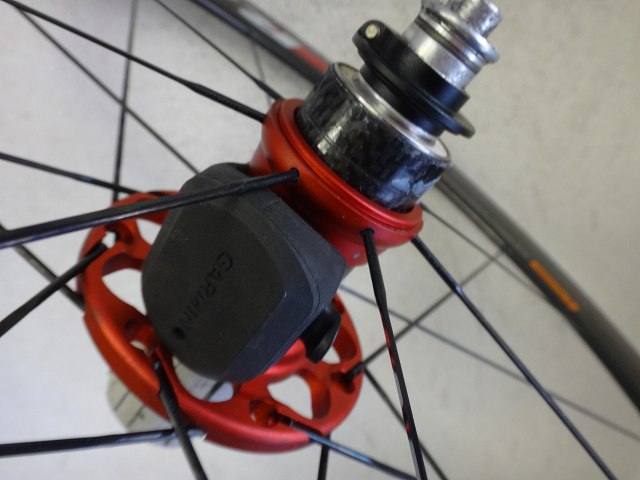
↑ This is what happened.
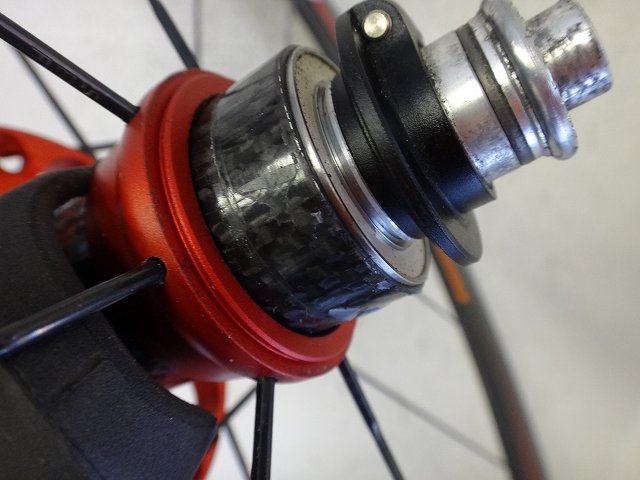
Just losing adhesive wouldn't cause this.
I'll show you pictures later, but the red aluminum flange part is actually cracked.
It became a narrow flange
and the spoke tension is completely gone.
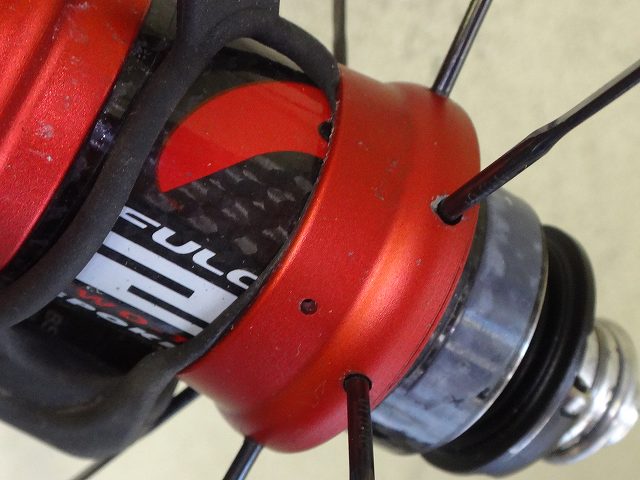
A cycling computer sensor got wedged between the flange and the hub body
and couldn't be removed, so
I spread open the cracked part of the flange
and recovered the sensor.
So I sent this rear wheel to a Campagnolo distributor who is supposedly the most knowledgeable in Japan,
just as a long shot, and they said:
"Warranty-wise we can't do anything,
but this is an interesting situation. I photographed it and reported it to headquarters."
When I asked if there was a compatible hub available
and that I'd do the work myself,
They didn't exactly say "We have no spare hubs, so just die—
if you have anything to say, I'll hear it in the afterlife (Valhalla)"
but basically that's what the answer amounted to.
I was at a loss, but then

"Hey, I found a Racing 3 hub body!"
"Excellent!"
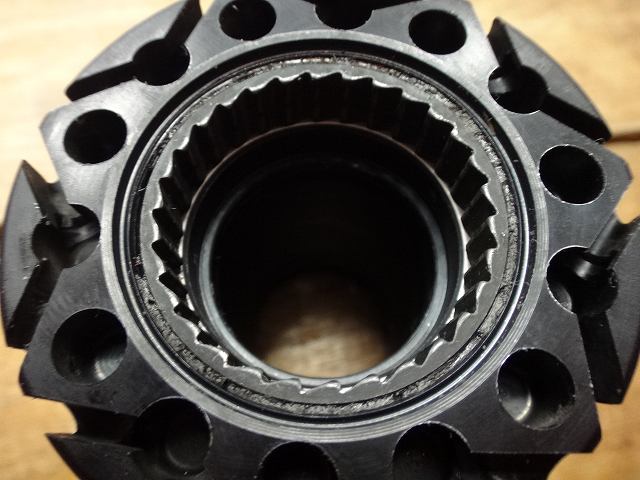
The bearing cup hasn't been press-fit.
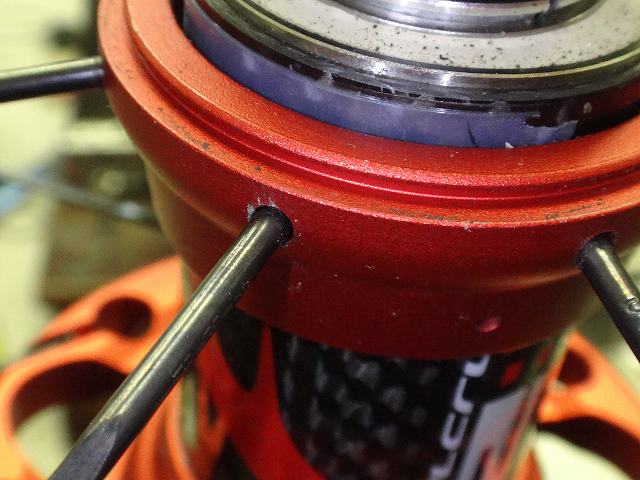
As long as there's a red flange directly below the carbon hub body,
the spokes won't come loose.
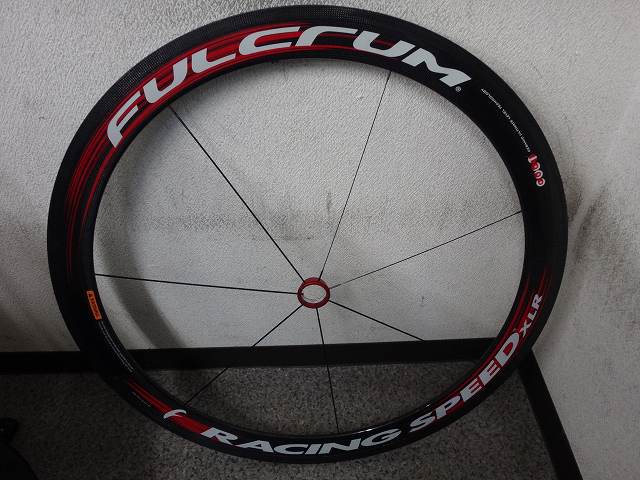
I disassembled the freewheel side spokes and removed the hub body.
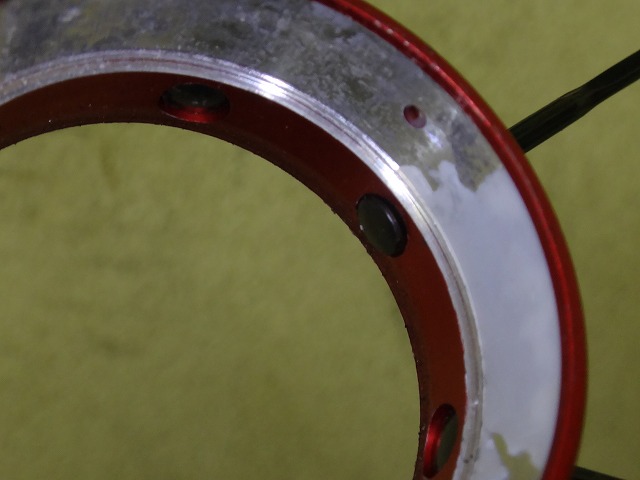
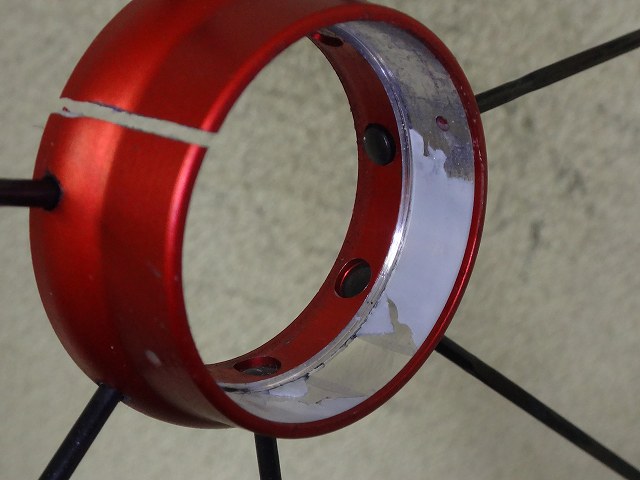
The last part of the press-fit before adhesion has a step, so
it wouldn't normally pull out inward just from loss of adhesive.
But if the flange cracks, that's a different story.
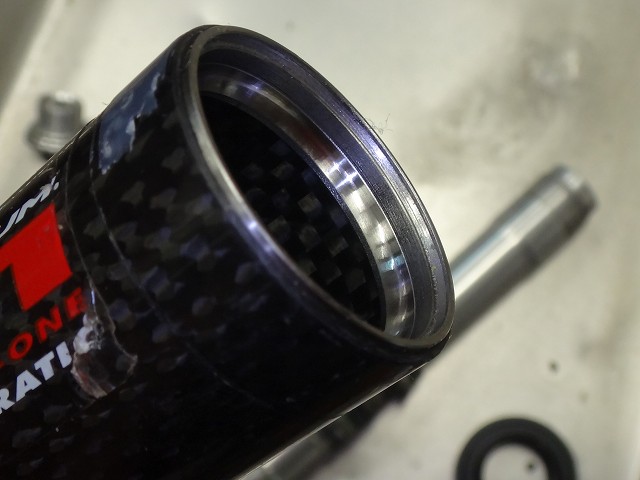
I removed the CULT bearing cup from the original hub
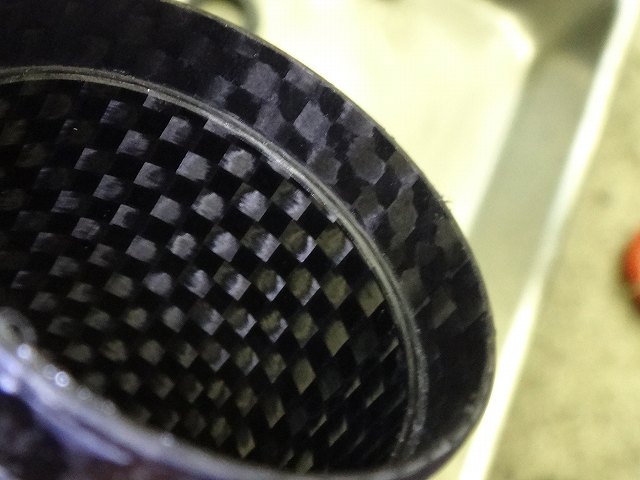
and extracted it.
The left end of this hub body's carbon section
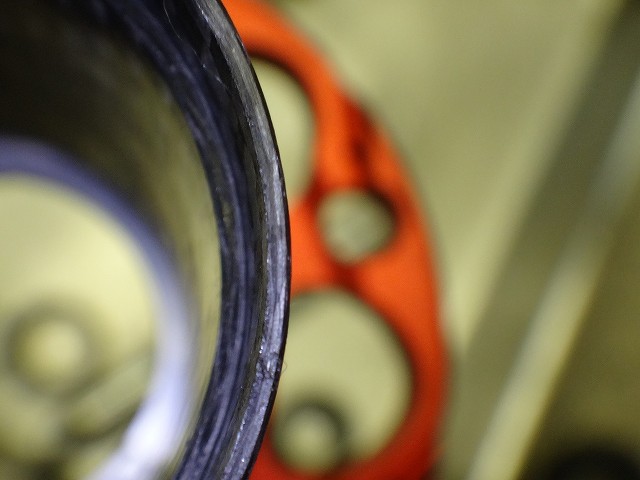
is incredibly thin.
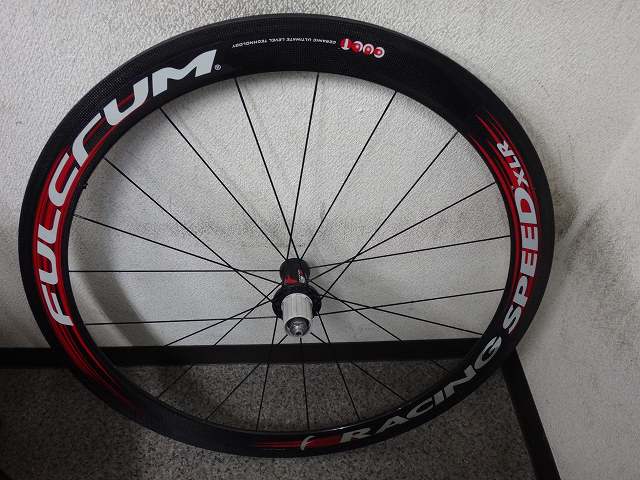
I got it built.
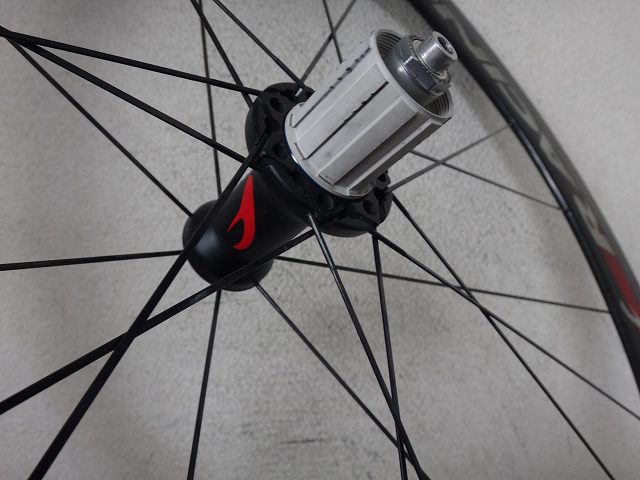
Most hub parts are shared in common, but
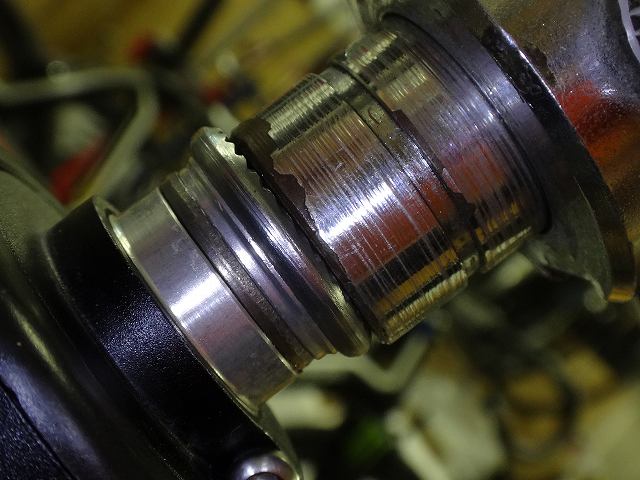
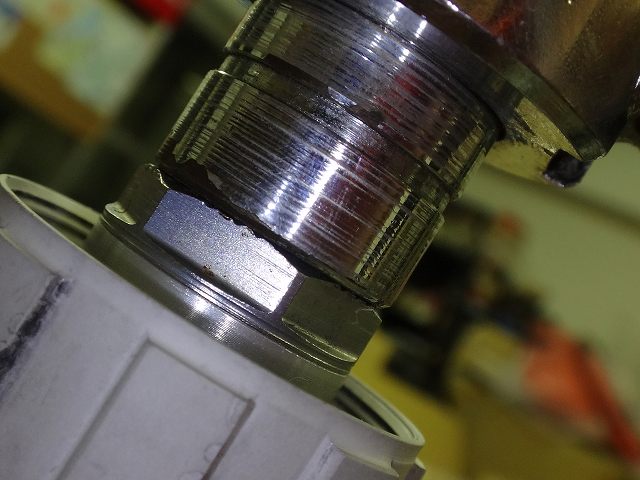
The hub is centered—not that that's a problem—
but the bearing preload adjustment nut visible in the upper image
is different between the Racing Speed and Racing 3 hubs.
Actually, for the successor models like the Speed with wide rims and the current Bora,
the hub axle part number has advanced by one digit,
and the bearing preload adjustment screw pitch has become finer.
In that case, this Racing 3 hub's bearing preload adjustment nut won't fit on the hub body.
This Racing Speed XLR has a mega flange on the right side, but
if the hub body was from a mega flange Racing 3,
there's a possibility that the bearing preload adjustment nut for that
won't fit on the hub axle.
Well, in that case I'd just need to change the hub axle to a newer one.
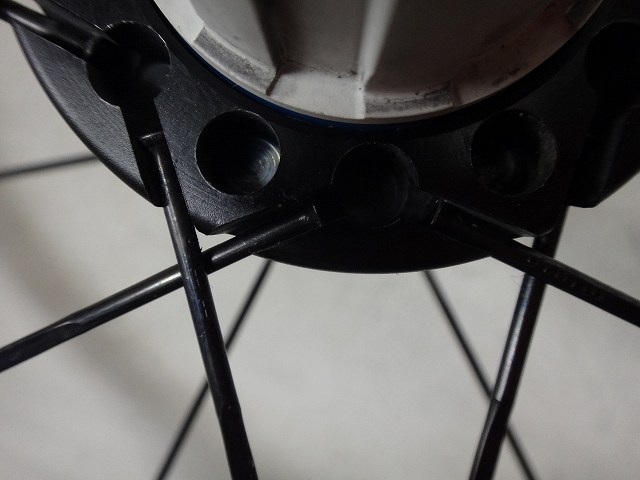
The original Racing Speed hub has
a mega flange and rim holes spaced evenly,
while the rebuilt Racing 3 hub has
a non-mega flange and rim holes with offset phase spacing.
The rim height and hole phase are different, but
there's no problem with the spoke orientation slightly different in theory at the flange slits.
If it were a Zonda hub designed for G3 lacing, it might not have worked.
We managed to make the spoke length work (or rather, we made it work).
As another difference,
this Racing Speed XLR uses Ж (zhe) lacing for 2:1 spoke pattern,
but the Racing 3 hub I used is XI (XI) laced, so
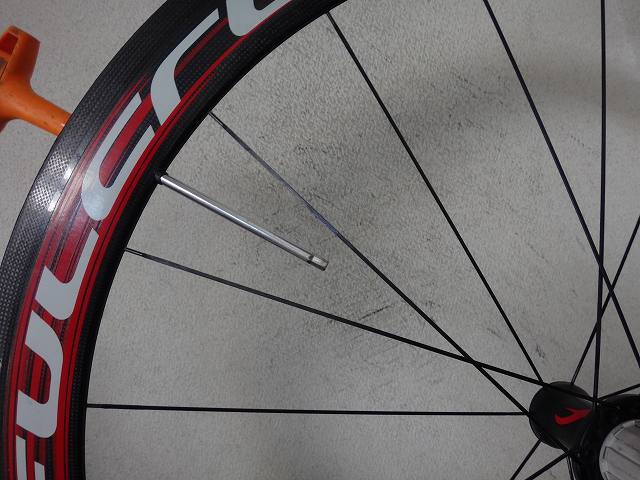
the valve hole position ends up in the middle of the freewheel side spoke's final cross.
This is unavoidable.
You might think we could shift the rim hole by one position either way, but
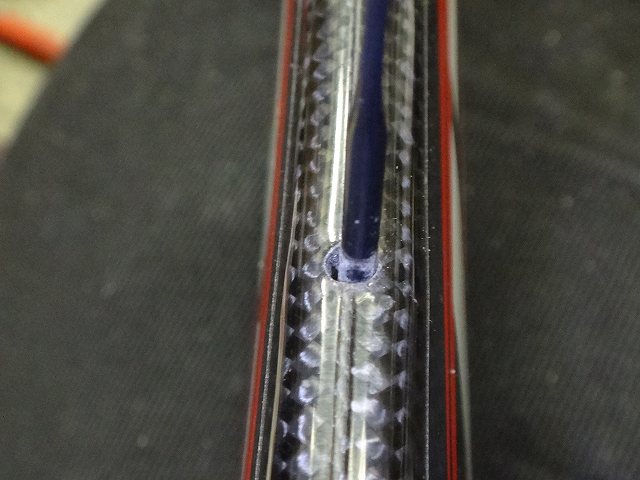
as is common with 2:1 lacing rims,
the freewheel side spoke holes aren't offset to the right, but rather positioned
at the rim center
(or maybe just slightly to the right...),
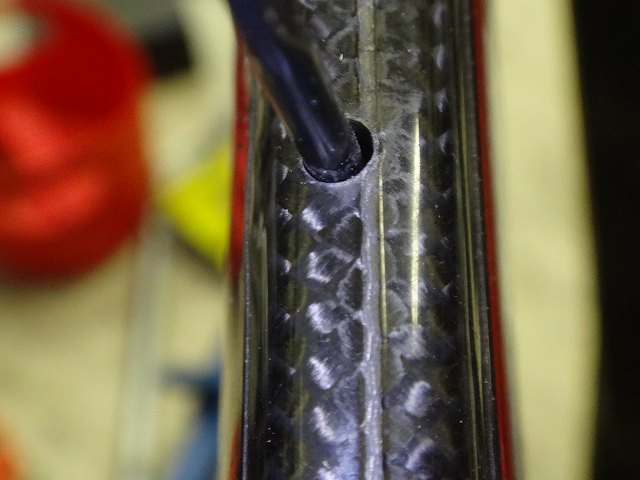
while the non-freewheel side spoke holes are
clearly offset to the left.
So we can't shift the hub-rim phase by one hole
(and we also can't assemble it backwards).
There are other tricky or pitfall-prone points besides what I've written here,
but I won't mention them.
I don't think most shops would do this kind of thing anyway.
if you can't build normal wheels, you can't build weird ones.
This Racing Speed XLR, shown alongside
a Bora Ultra Two in the image above, is
identical except for the rim hole phase,
both being narrow rim tubular with internal nipple design
from that era.
So they weigh the same
(though the front and rear rims might differ).
Against these "narrow rims," the current models use
"wide rims" built with 4mm (or 3.95mm) external nipples,
but what "wide rim" means is that
what started as barely feasible width according to old ETRTO standards of that time
has become wider still with recent wide rims now compliant with new ETRTO,
one step broader than what was originally called wide rim.
For Campagnolo and Fulcrum, C15 was a narrow rim and
C17 was a wide rim, but
recently there's a C19 rim, and
how should we even call this?
It's still just called a "wide rim," but
isn't the range of what "wide rim" covers getting too broad?
Since I'm disassembling this rim anyway, I weighed it for reference, but
rather than the utility of knowing this single rim's weight,
it might have more value as a benchmark
comparing the height-to-weight ratio with current wide rims
to see how much heavier recent rims have become—
the question being how many 50mm-high rims of this weight class
exist in new ETRTO-compliant designs.
Even if I "choose to believe" the aerodynamic properties of wider rims
and the rolling resistance lightness of wider tires,
when I weigh that against the detriment of increased rim weight at the perimeter,
in terms of what I often call "the relative magnitude of factors,"
I just can't bring myself to think such rims are necessarily inferior.
Even if there were a 50mm-high tubeless wide rim of nearly identical weight to this one,
if it were part of a complete wheel,
it almost certainly wouldn't have lateral stiffness greater than Bora or Speed.
As wheel manufacturers, I frequently hear about Shimano, Roval,
and as rim makers, Reynolds, ZIPP, ENVE—their 50mm-high-class off-the-shelf wheels,
if they're rim brake models,
I constantly hear about and have personally fixed many cases of brake rub.
It's still true today. The phenomenon of brake rub just isn't disappearing;
it's just becoming easier to hide the fact that the wheels are garbage.
Having written this far, you'd expect me to disclose the actual weight
of that old-fashioned 50mm narrow rim,
but that's information only I need to know, so I'm not telling.
↑ What a jerk
We apologize for the wait! Please take a look at these images!
Note that the rim bed has cement
applied to this degree on the rim's outer perimeter!
↑ Stop it!