The other day, an IRC tubeless tire got a sidewall cut, so
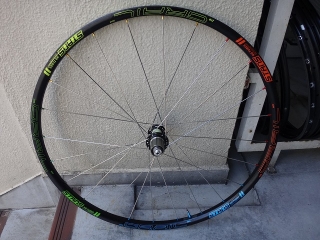
↑I hurriedly removed the same tire from another wheel and brought it home (strictly speaking, it went from 23C to 25C),
but due to a day off plus unavoidable personal business, I left it sitting for nearly three full days and
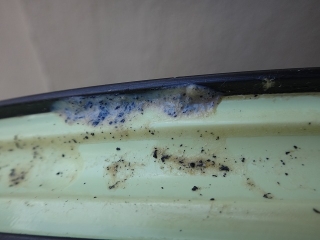
the moisture evaporated and it hardened.
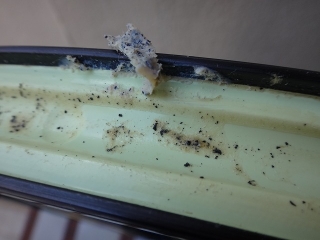
The parts that are still moist come right off when you scratch them with your fingernail.
Rather than becoming that high-elasticity, sticky feeling of chewed gum,
it takes on a crumbly texture like okara (soy pulp), so
cleaning the rim is overwhelmingly easier compared to other manufacturers' sealants.
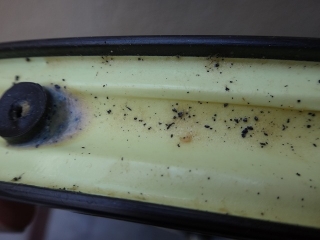
I chose to shoot near the valve hole so I could say this is a before/after of the same spot, but
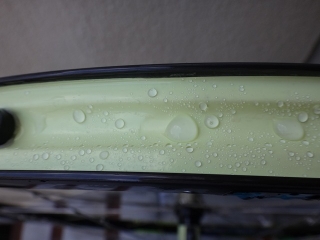
it doesn't get completely clean just from rinsing with water—
I did have to scrub with a sponge somewhat hard,
but even so, it doesn't normally come out this clean.
As for the wheel I'd been using regularly,
from the moment of the sidewall cut until air started leaking,
there was virtually no air loss and it was extremely stable.
Even with the lazy approach of pumping it up only once a week, I could manage it.
Then I swapped in a new tire and filled it with fresh Imaje sealant, but
currently it's losing about 2–3 psi per day.
This is just because it hasn't stabilized yet, and
in most cases, after you pump it up again and monitor it for a bit,
somehow the air loss practically stops and it stabilizes,
even becoming slower to deflate than a thin butyl tube.
If it does continue to leak or if you're concerned about rotational weight and remember being stingy with sealant,
you might need to add a bit more.
This point—that it's less effective and requires patience to observe—is
somewhat of a hassle,
but the fact that rim cleaning is so easy is outstanding.
With tubular rim bed cement, having it remain on the rim is actually rather appreciated,
but sealant chunks left on the tubeless rim bead hooks
seem to create gaps when seating subsequent tubeless tire beads,
and that doesn't feel good.

↑I hurriedly removed the same tire from another wheel and brought it home (strictly speaking, it went from 23C to 25C),
but due to a day off plus unavoidable personal business, I left it sitting for nearly three full days and
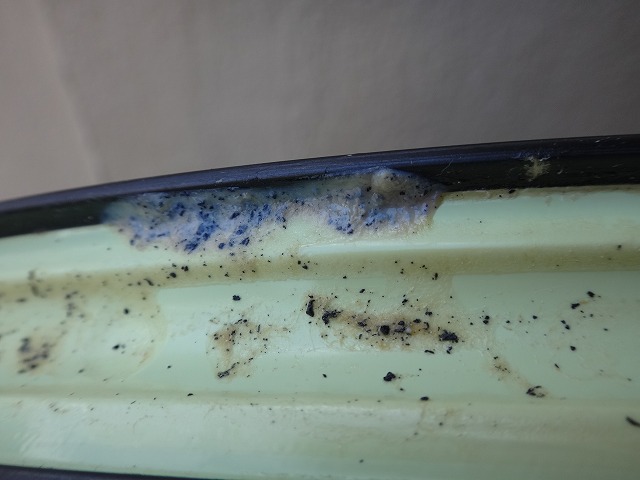
the moisture evaporated and it hardened.
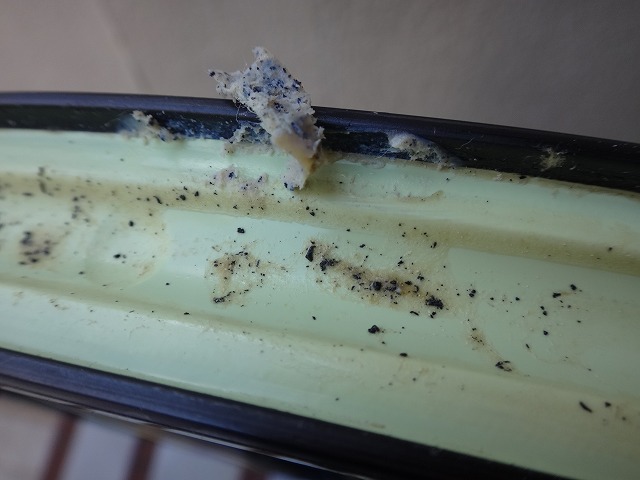
The parts that are still moist come right off when you scratch them with your fingernail.
Rather than becoming that high-elasticity, sticky feeling of chewed gum,
it takes on a crumbly texture like okara (soy pulp), so
cleaning the rim is overwhelmingly easier compared to other manufacturers' sealants.
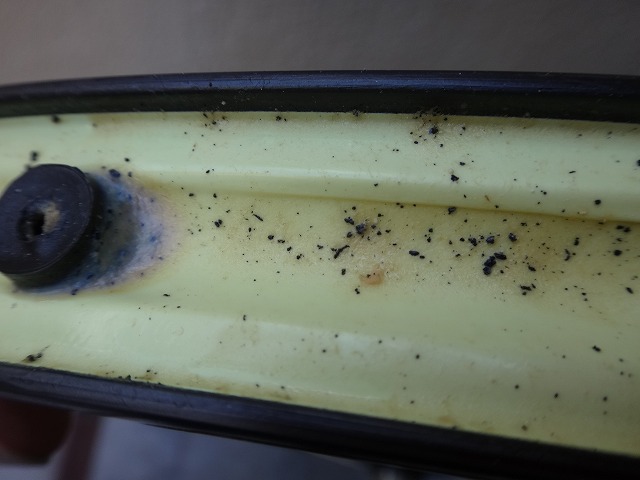
I chose to shoot near the valve hole so I could say this is a before/after of the same spot, but
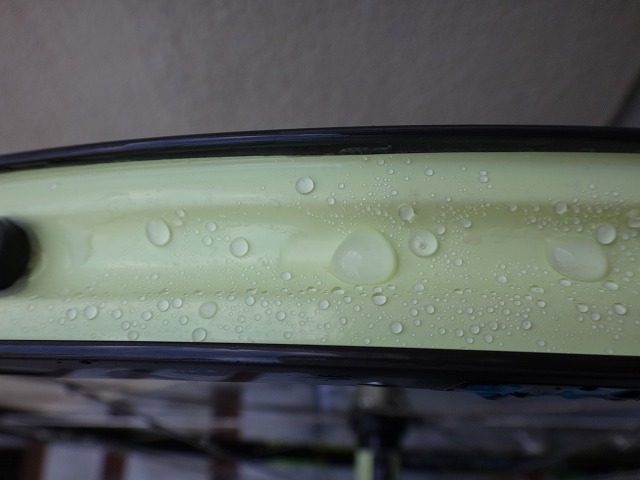
it doesn't get completely clean just from rinsing with water—
I did have to scrub with a sponge somewhat hard,
but even so, it doesn't normally come out this clean.
As for the wheel I'd been using regularly,
from the moment of the sidewall cut until air started leaking,
there was virtually no air loss and it was extremely stable.
Even with the lazy approach of pumping it up only once a week, I could manage it.
Then I swapped in a new tire and filled it with fresh Imaje sealant, but
currently it's losing about 2–3 psi per day.
This is just because it hasn't stabilized yet, and
in most cases, after you pump it up again and monitor it for a bit,
somehow the air loss practically stops and it stabilizes,
even becoming slower to deflate than a thin butyl tube.
If it does continue to leak or if you're concerned about rotational weight and remember being stingy with sealant,
you might need to add a bit more.
This point—that it's less effective and requires patience to observe—is
somewhat of a hassle,
but the fact that rim cleaning is so easy is outstanding.
With tubular rim bed cement, having it remain on the rim is actually rather appreciated,
but sealant chunks left on the tubeless rim bead hooks
seem to create gaps when seating subsequent tubeless tire beads,
and that doesn't feel good.