A customer dropped off a HUNT rear wheel with carbon spokes for me.
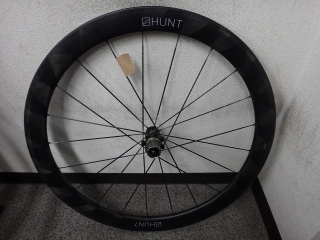
There was a splinter on the spoke marked with tape, and
they asked me to replace it.
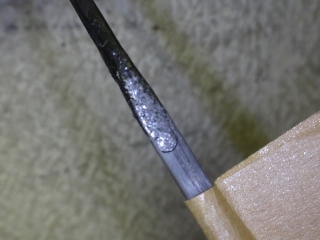
The customer had already filled the splinter with adhesive.
They didn't cause this damage themselves—
it was there from when they bought the wheel, so they requested a full wheel replacement from HUNT.
HUNT replied, "Just replace the spoke at that location," and sent a spoke.
But the local shop turned them down saying "we don't have the tools,"
so they came to us since we have a track record with this kind of work.
We've dealt with this customer before,
so they weren't a complete stranger to us.
"We don't have the tools"—but you only need a 3.4mm nipple wrench and
a 6mm hex box wrench nipple tool to do this job.
I can't believe they're running a bike shop without these.
What they're really lacking isn't tools, it's skill and confidence, but
apparently you can make a living in N Prefecture even if you won't just say that honestly.
This is totally irrelevant, but when you use initials to hide a location,
the prefecture and city with the highest anonymity are S Prefecture and K City, apparently.
There are also examples like K Prefecture U City and O Prefecture D City where there's only one possible match.
The wheel we received has the splinter-filled spoke mixed in,
but it doesn't affect lateral run-out.
The wheel originally had almost no runout, and I only did
the most nitpicky micro-adjustments while keeping the wheel in its original condition.
Even then, I only adjusted two internal nipples, and just slightly at that.
Of course, the wheel center didn't shift at all.
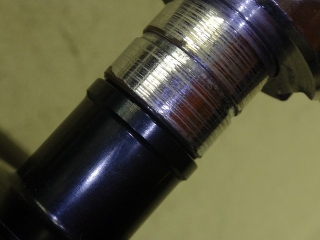
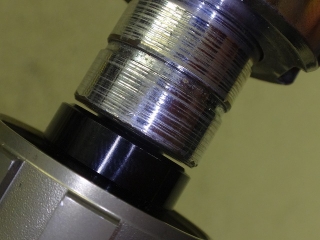
This is what it looked like when I put the centering gauge on it.
There was quite a bit of center offset.
The lateral runout was dialed in perfectly, so unlike my usual temporary centering method,
I got the same reading regardless of what angle I put the gauge at—
that's for sure.
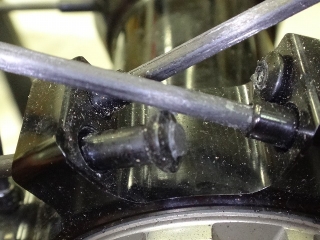
When I tried to remove the spoke to replace, the spoke head
kept hitting the adjacent spoke no matter what I did, so it wouldn't come out.
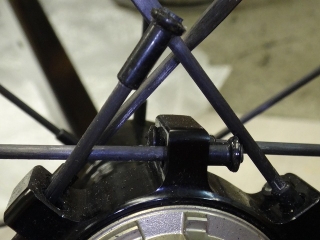
I loosened the nipple on the adjacent spoke to create clearance.
This would've required loosening the next spoke over too,
and then the next one, and so on in a chain reaction.
Fortunately, I didn't need to loosen all the non-drive-side spokes.
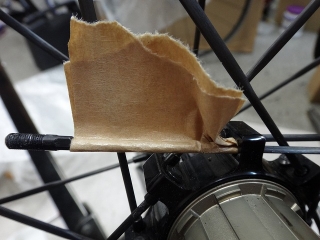
The marker tape won't fit through the flange hole, so I removed it.
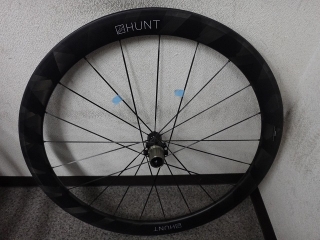
All fixed.
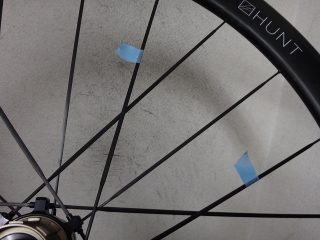
The tape marked "temporarily loosened spokes"—
one is the spoke I replaced,
the other is the spoke I had to loosen for the work.
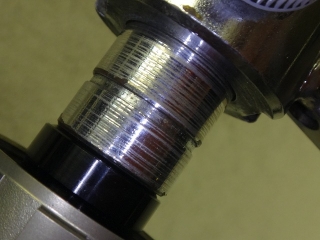
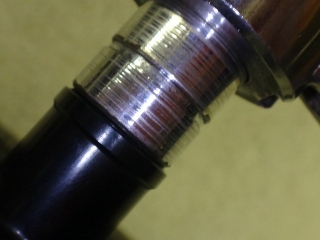
Dead center.
It helped that I could work with an increase-tightening approach on the non-drive side.
With a rear wheel having equal spokes on both sides,
you're grateful to "be able to increase tension on the low-tension non-drive side,"
but with asymmetric builds like this wheel's 2:1 lacing,
you're grateful that "we can just tighten up the side with fewer spokes."
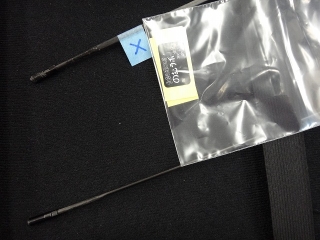
↑The spoke I replaced (the one marked with an × tape)
HUNT sent two spokes, so I have
two spare spokes on hand,
but I only needed one.
If you buy a HUNT carbon spoke wheel,
you might want to do a complete inspection of all spokes
for splinters before you ride it.

Also, apparently mysterious stickers get sent to customers,
but I absolutely don't recommend using one
to commit a terror attack (※) by sticking it on the doorknob of the shop that refused to do the spoke replacement.
Don't do it, knock it off—I'm telling you, don't stick it on, don't, seriously don't.
※In the truest sense of the word, it would be absolutely terrifying.
If that shop happens to read this, they'll be nervously checking their doorknob for a while.

There was a splinter on the spoke marked with tape, and
they asked me to replace it.
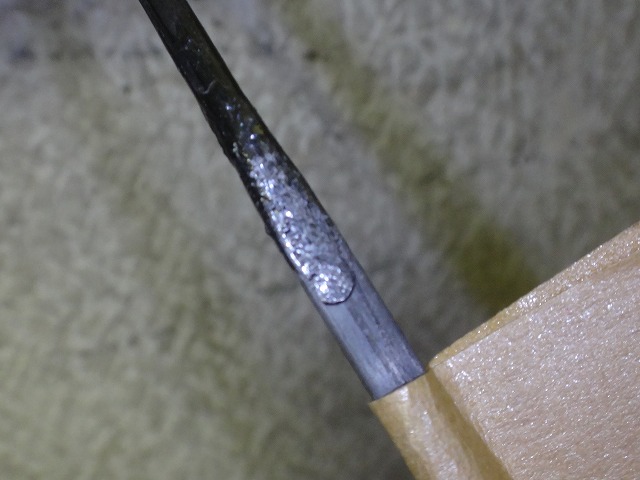
The customer had already filled the splinter with adhesive.
They didn't cause this damage themselves—
it was there from when they bought the wheel, so they requested a full wheel replacement from HUNT.
HUNT replied, "Just replace the spoke at that location," and sent a spoke.
But the local shop turned them down saying "we don't have the tools,"
so they came to us since we have a track record with this kind of work.
We've dealt with this customer before,
so they weren't a complete stranger to us.
"We don't have the tools"—but you only need a 3.4mm nipple wrench and
a 6mm hex box wrench nipple tool to do this job.
I can't believe they're running a bike shop without these.
What they're really lacking isn't tools, it's skill and confidence, but
apparently you can make a living in N Prefecture even if you won't just say that honestly.
This is totally irrelevant, but when you use initials to hide a location,
the prefecture and city with the highest anonymity are S Prefecture and K City, apparently.
There are also examples like K Prefecture U City and O Prefecture D City where there's only one possible match.
The wheel we received has the splinter-filled spoke mixed in,
but it doesn't affect lateral run-out.
The wheel originally had almost no runout, and I only did
the most nitpicky micro-adjustments while keeping the wheel in its original condition.
Even then, I only adjusted two internal nipples, and just slightly at that.
Of course, the wheel center didn't shift at all.
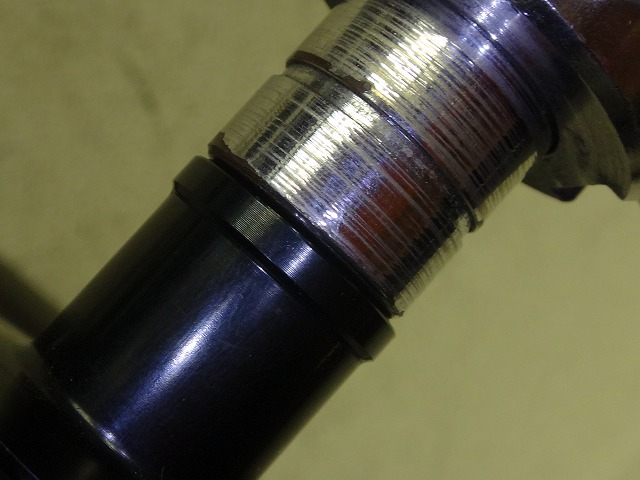
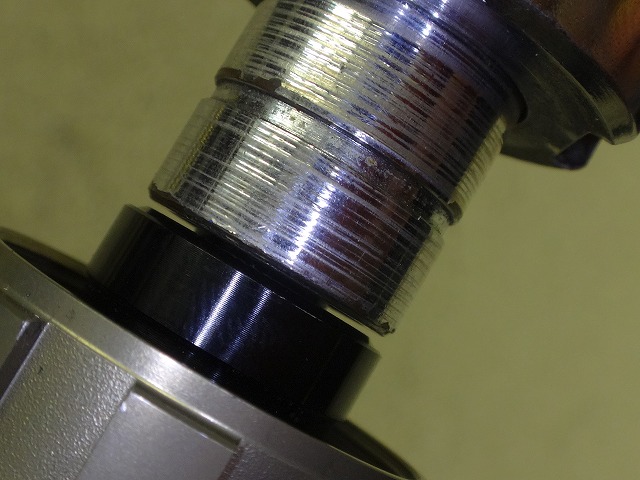
This is what it looked like when I put the centering gauge on it.
There was quite a bit of center offset.
The lateral runout was dialed in perfectly, so unlike my usual temporary centering method,
I got the same reading regardless of what angle I put the gauge at—
that's for sure.
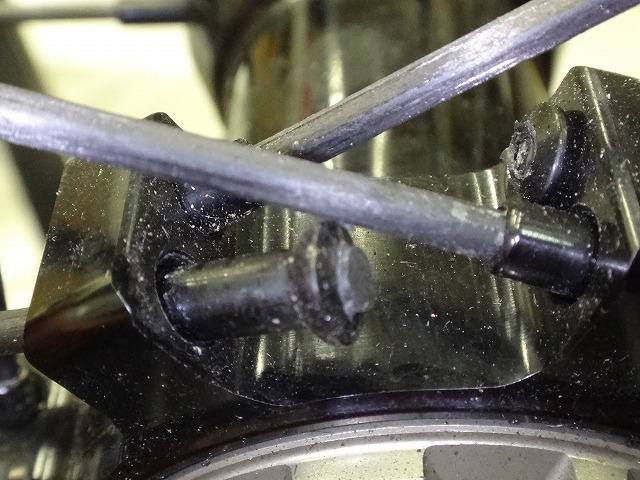
When I tried to remove the spoke to replace, the spoke head
kept hitting the adjacent spoke no matter what I did, so it wouldn't come out.
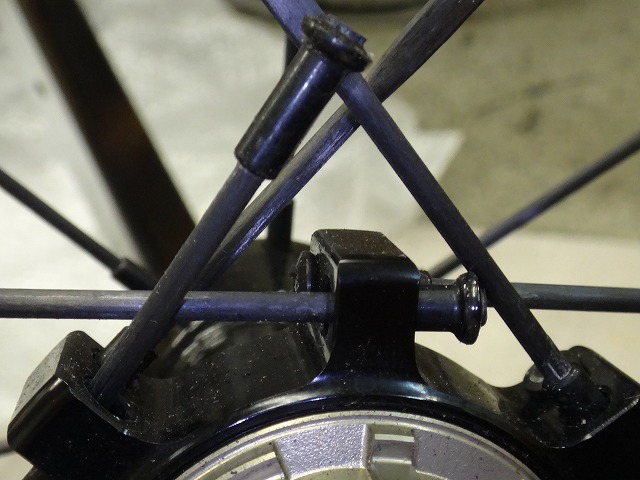
I loosened the nipple on the adjacent spoke to create clearance.
This would've required loosening the next spoke over too,
and then the next one, and so on in a chain reaction.
Fortunately, I didn't need to loosen all the non-drive-side spokes.

The marker tape won't fit through the flange hole, so I removed it.
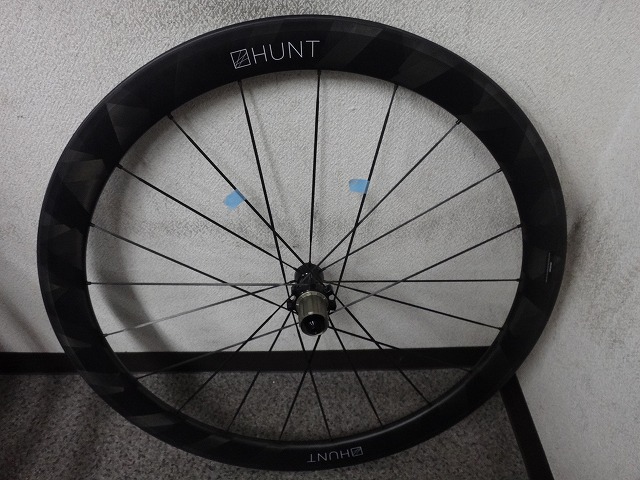
All fixed.
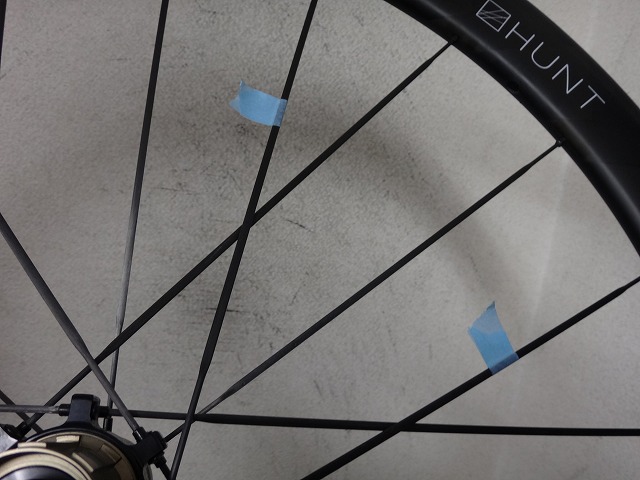
The tape marked "temporarily loosened spokes"—
one is the spoke I replaced,
the other is the spoke I had to loosen for the work.
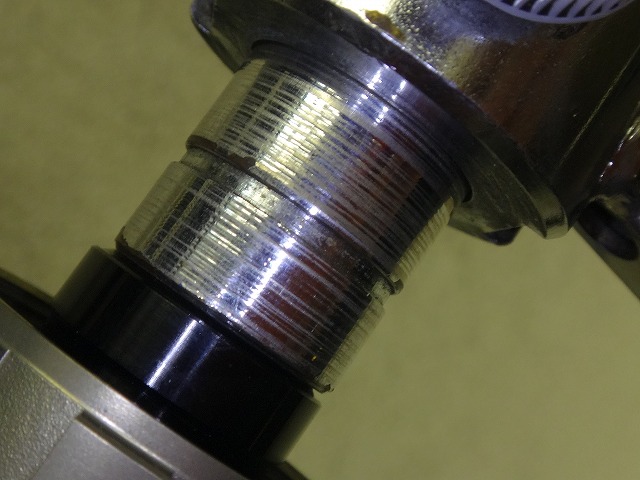
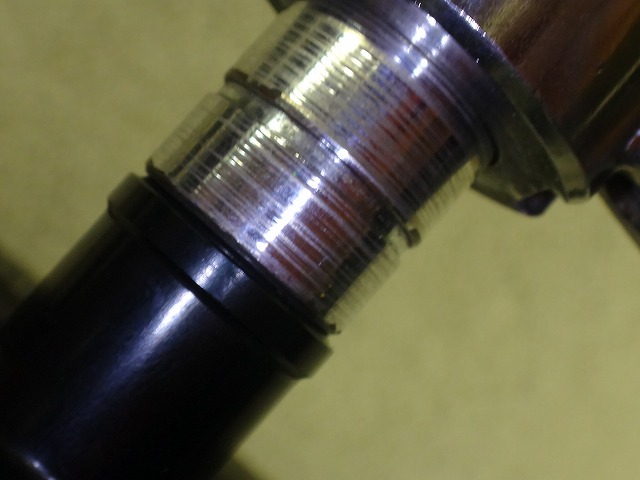
Dead center.
It helped that I could work with an increase-tightening approach on the non-drive side.
With a rear wheel having equal spokes on both sides,
you're grateful to "be able to increase tension on the low-tension non-drive side,"
but with asymmetric builds like this wheel's 2:1 lacing,
you're grateful that "we can just tighten up the side with fewer spokes."
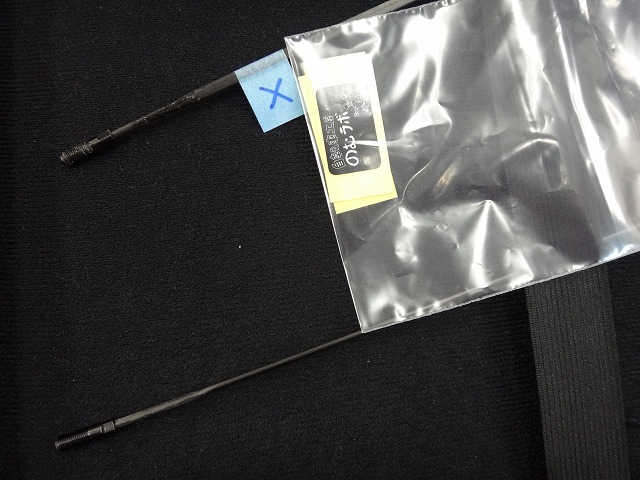
↑The spoke I replaced (the one marked with an × tape)
HUNT sent two spokes, so I have
two spare spokes on hand,
but I only needed one.
If you buy a HUNT carbon spoke wheel,
you might want to do a complete inspection of all spokes
for splinters before you ride it.
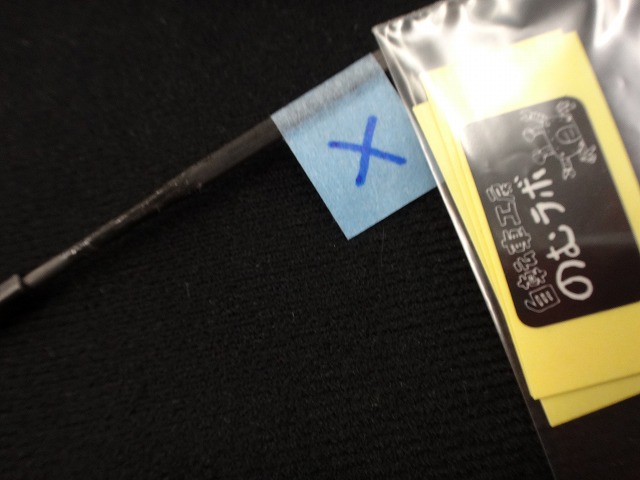
Also, apparently mysterious stickers get sent to customers,
but I absolutely don't recommend using one
to commit a terror attack (※) by sticking it on the doorknob of the shop that refused to do the spoke replacement.
Don't do it, knock it off—I'm telling you, don't stick it on, don't, seriously don't.
※In the truest sense of the word, it would be absolutely terrifying.
If that shop happens to read this, they'll be nervously checking their doorknob for a while.