As of today, Shimano's 11-speed sprocket inventory situation is as follows:
Except for the R9100 11-25T and 12-25T, and the R7000 12-25T,
all other tooth counts are completely out of stock.
If things go according to plan (though I doubt they will),
most tooth counts should arrive sometime between January and March next year,
but the R7000 11-30T and 11-32T are expected
to arrive sometime after June.

Anyway (← not that anyway), I removed the
R8000 11-30T sprocket that was on my daily-use bike.
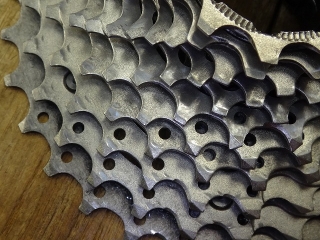
The front single chainring has 44T,
but honestly I'd prefer 46T.
Since the Campagnolo Ekar chainring maxes out at 44T
and there don't appear to be any aftermarket options (probably),
I'm using 44×11-30T.
I've cleaned the sprocket in the photo, but before washing
it would have been easier to see the range where
the chain usually sits.
Since the chain barely touches the top gear or the low gear,
you can tell that the front chainring tooth count is
neither too light nor too heavy,and
I don't go to the mountains much.
This one is still usable so I'm not throwing it away,
but I bought a Tni chromoly cog, so I removed this one to swap it in.

↑Here's the thing
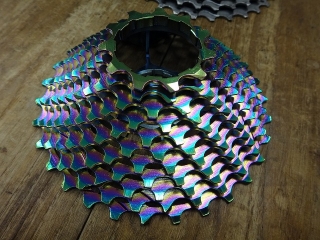
It's a sprocket machined from a solid block of chromoly.
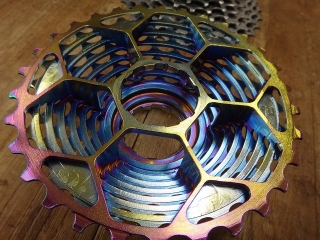
Even if it's not aluminum,
it does feel a bit aggressively designed.
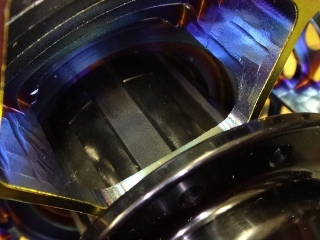
↑View from the inside after threading it onto the rear hub
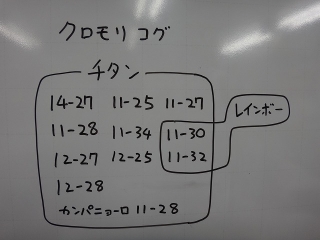
The Tni chromoly cog comes in a titanium color (meaning the color, not the material)
with 10 different tooth count options for Shimano and 1 for Campagnolo.
Among those, only the 11-30T and 11-32T come in
a rainbow finish, which is essentially an oil-slick color.
The price is the same regardless of tooth count:
22,000 yen before tax for the titanium color,
and 24,000 yen for the rainbow version.
It's not cheap, but my daily-use bike only uses
Shimano 11-speed spec for the sprocket and chain,
and that's mainly because Campagnolo alternatives are expensive.
I'm trying to keep maintenance costs down,
so even if the sprocket costs 20,000 yen, it's still cheaper than genuine Campagnolo,
so it doesn't feel outrageously expensive.
The separate aluminum sprocket option, however, seems overpriced
when you consider how much faster it wears and its short service life.
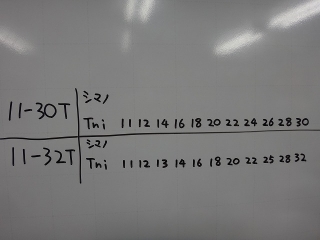
I wrote out the tooth count configurations for the two Tni rainbow options.
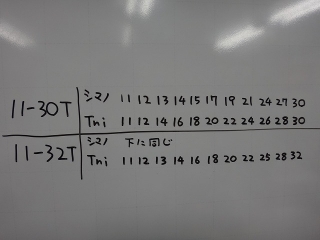
Similarly, I also added the configuration of
Shimano sprockets where the top and low gears have the same tooth count.
For the 11-32T, both have the same configuration.
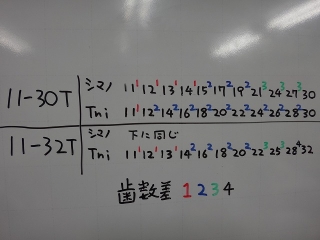
I also added the tooth count differences.
The Tni chromoly cog 11-30T has a distinctive configuration
where, except for the gear after the top, it's all 2-tooth jumps.
There's a "low-cross" tooth count configuration for hill climbing
where the last few gears near the low end are 1-tooth jumps,
but while not as extreme as that, having 2-tooth jumps all the way through
does give it low-cross-like characteristics.
In fact, comparing the 11-30T in the diagram above,
between the 24T and 30T there are 3 gears total with Shimano,
but 4 gears total with Tni.
On the downside, there's no 13T or 15T, and in the top half,
the cadence difference per shift is larger,
which is a drawback of the low-cross design.
I wanted to try this out,
which is part of why I bought the Tni chromoly cog this time.
Incidentally, the total number of teeth across all Tni chromoly cog options is
221 teeth for the 11-30T and 211 teeth for the 11-32T,
so "the larger low gear configuration has fewer teeth,"
meaning the 11-32T is lighter by stated weight—
which is a counterintuitive result.
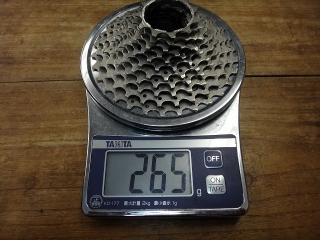
↑The R8000 11-30T I've been using until now
Its stated weight is 269g,
which I believe includes the lockring.

↑Tni chromoly cog 11-30T
The stated weight for the 11-30T is 237g, and 214g for the 11-32T.
These weights also likely include the lockring.
Since the R8000's smallest gear, the 11-25T, weighs a stated 232g,
if you think of the 11-30T as roughly the same weight, that's pretty light.
The R9100 11-30T has a stated weight of 211g,
but it costs 28,311 yen before tax, which is higher than the Tni,
and considering that its bottom 5 cogs are titanium and wear quickly,
the cost-performance isn't bad.
What's lacking is shifting performance.
It will never be better than genuine Shimano sprockets.
Or so I'd like to say (and it's probably true),
but from my experience using it, it's not clearly terrible.
I'm aware it's an aftermarket sprocket not so much from the shift feel,
but more from the fact that when shifting through
the top half of the gears,
I notice it feels heavier (or lighter) than a single gear tooth warrants.
The 11-30T tooth configuration with all 2-tooth jumps except after the top gear
applies to both the rainbow and titanium versions.
The titanium was also in stock at my distributor,
but I chose the oil-slick color because at a glance
it screams "hey, this guy's running aftermarket parts"—
that flashy look appealed to me.
※"Ichibili" (いちびる) is Kansai dialect.
Except for the R9100 11-25T and 12-25T, and the R7000 12-25T,
all other tooth counts are completely out of stock.
If things go according to plan (though I doubt they will),
most tooth counts should arrive sometime between January and March next year,
but the R7000 11-30T and 11-32T are expected
to arrive sometime after June.

Anyway (← not that anyway), I removed the
R8000 11-30T sprocket that was on my daily-use bike.
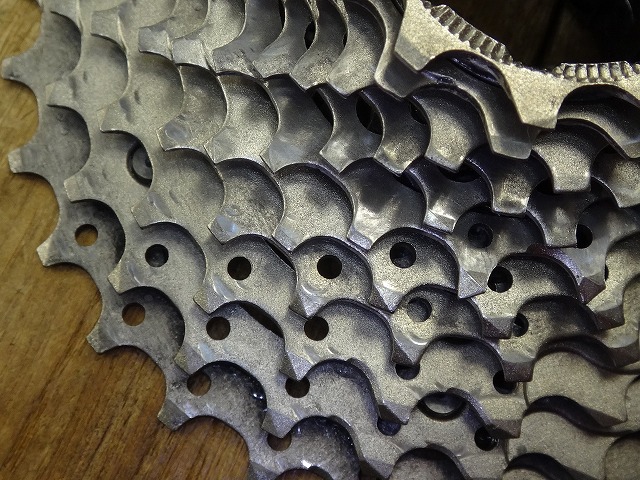
The front single chainring has 44T,
but honestly I'd prefer 46T.
Since the Campagnolo Ekar chainring maxes out at 44T
and there don't appear to be any aftermarket options (probably),
I'm using 44×11-30T.
I've cleaned the sprocket in the photo, but before washing
it would have been easier to see the range where
the chain usually sits.
Since the chain barely touches the top gear or the low gear,
you can tell that the front chainring tooth count is
neither too light nor too heavy,
I don't go to the mountains much
This one is still usable so I'm not throwing it away,
but I bought a Tni chromoly cog, so I removed this one to swap it in.
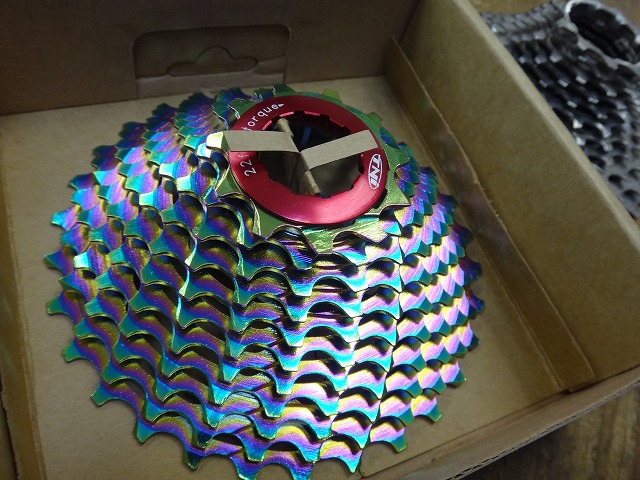
↑Here's the thing
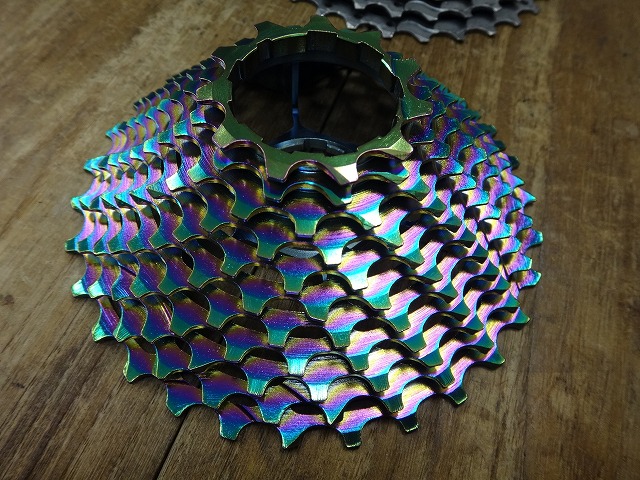
It's a sprocket machined from a solid block of chromoly.

Even if it's not aluminum,
it does feel a bit aggressively designed.
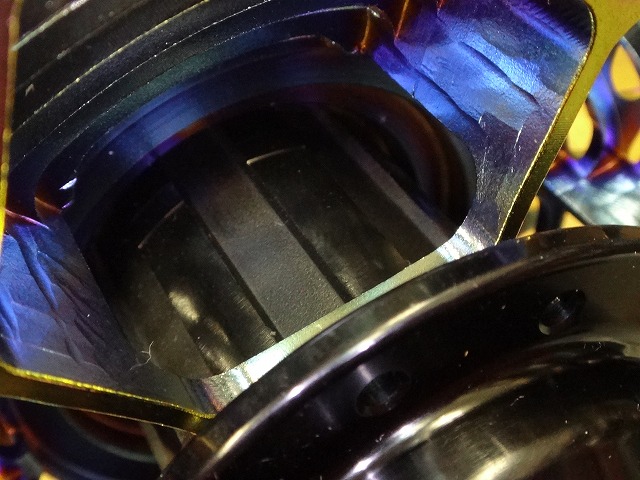
↑View from the inside after threading it onto the rear hub
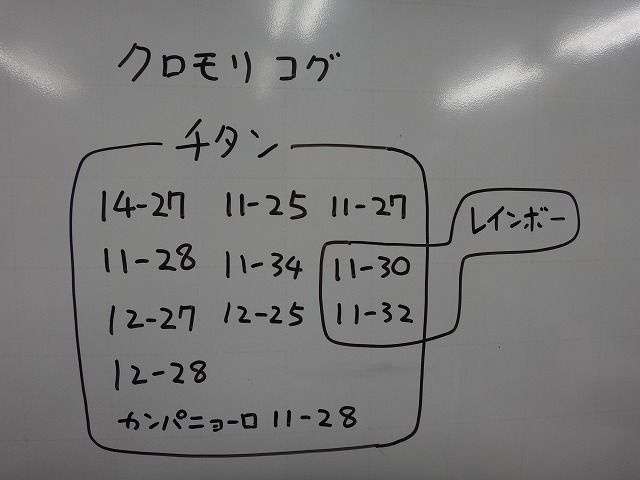
The Tni chromoly cog comes in a titanium color (meaning the color, not the material)
with 10 different tooth count options for Shimano and 1 for Campagnolo.
Among those, only the 11-30T and 11-32T come in
a rainbow finish, which is essentially an oil-slick color.
The price is the same regardless of tooth count:
22,000 yen before tax for the titanium color,
and 24,000 yen for the rainbow version.
It's not cheap, but my daily-use bike only uses
Shimano 11-speed spec for the sprocket and chain,
and that's mainly because Campagnolo alternatives are expensive.
I'm trying to keep maintenance costs down,
so even if the sprocket costs 20,000 yen, it's still cheaper than genuine Campagnolo,
so it doesn't feel outrageously expensive.
The separate aluminum sprocket option, however, seems overpriced
when you consider how much faster it wears and its short service life.
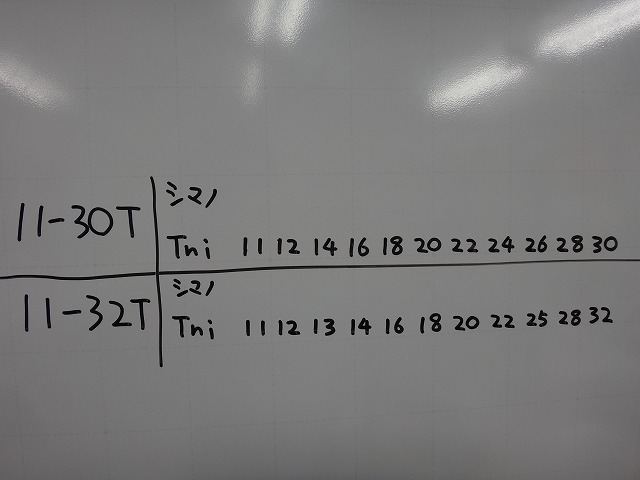
I wrote out the tooth count configurations for the two Tni rainbow options.

Similarly, I also added the configuration of
Shimano sprockets where the top and low gears have the same tooth count.
For the 11-32T, both have the same configuration.
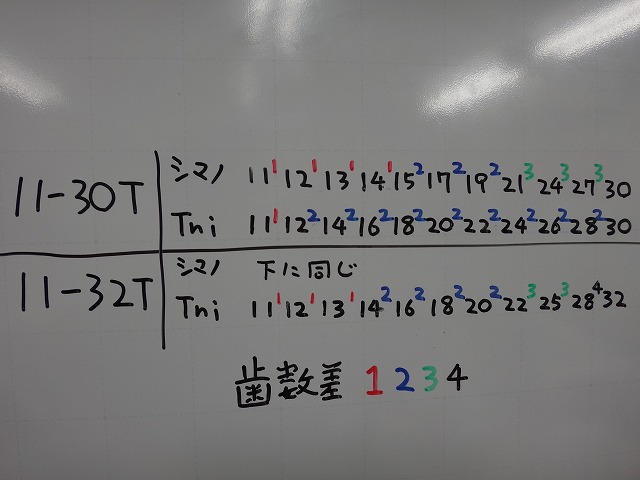
I also added the tooth count differences.
The Tni chromoly cog 11-30T has a distinctive configuration
where, except for the gear after the top, it's all 2-tooth jumps.
There's a "low-cross" tooth count configuration for hill climbing
where the last few gears near the low end are 1-tooth jumps,
but while not as extreme as that, having 2-tooth jumps all the way through
does give it low-cross-like characteristics.
In fact, comparing the 11-30T in the diagram above,
between the 24T and 30T there are 3 gears total with Shimano,
but 4 gears total with Tni.
On the downside, there's no 13T or 15T, and in the top half,
the cadence difference per shift is larger,
which is a drawback of the low-cross design.
I wanted to try this out,
which is part of why I bought the Tni chromoly cog this time.
Incidentally, the total number of teeth across all Tni chromoly cog options is
221 teeth for the 11-30T and 211 teeth for the 11-32T,
so "the larger low gear configuration has fewer teeth,"
meaning the 11-32T is lighter by stated weight—
which is a counterintuitive result.

↑The R8000 11-30T I've been using until now
Its stated weight is 269g,
which I believe includes the lockring.
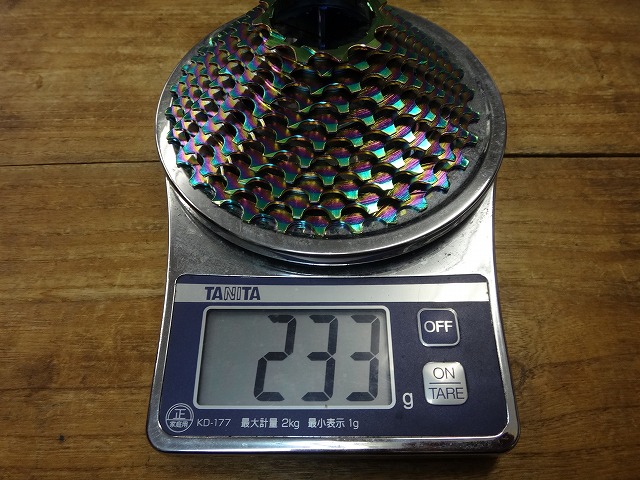
↑Tni chromoly cog 11-30T
The stated weight for the 11-30T is 237g, and 214g for the 11-32T.
These weights also likely include the lockring.
Since the R8000's smallest gear, the 11-25T, weighs a stated 232g,
if you think of the 11-30T as roughly the same weight, that's pretty light.
The R9100 11-30T has a stated weight of 211g,
but it costs 28,311 yen before tax, which is higher than the Tni,
and considering that its bottom 5 cogs are titanium and wear quickly,
the cost-performance isn't bad.
What's lacking is shifting performance.
It will never be better than genuine Shimano sprockets.
Or so I'd like to say (and it's probably true),
but from my experience using it, it's not clearly terrible.
I'm aware it's an aftermarket sprocket not so much from the shift feel,
but more from the fact that when shifting through
the top half of the gears,
I notice it feels heavier (or lighter) than a single gear tooth warrants.
The 11-30T tooth configuration with all 2-tooth jumps except after the top gear
applies to both the rainbow and titanium versions.
The titanium was also in stock at my distributor,
but I chose the oil-slick color because at a glance
it screams "hey, this guy's running aftermarket parts"—
that flashy look appealed to me.
※"Ichibili" (いちびる) is Kansai dialect.