The drill whines to life!
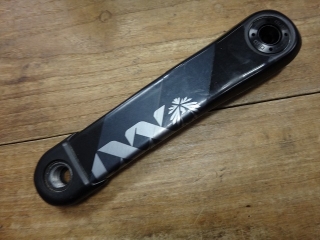
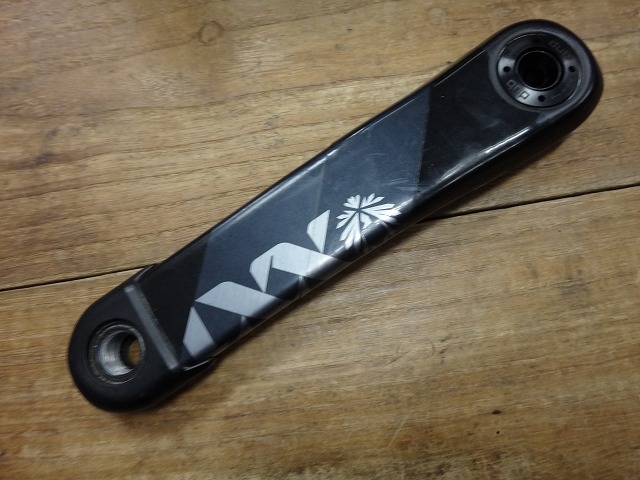
A customer left me with a right crank from a SRAM XX1 Eagle.

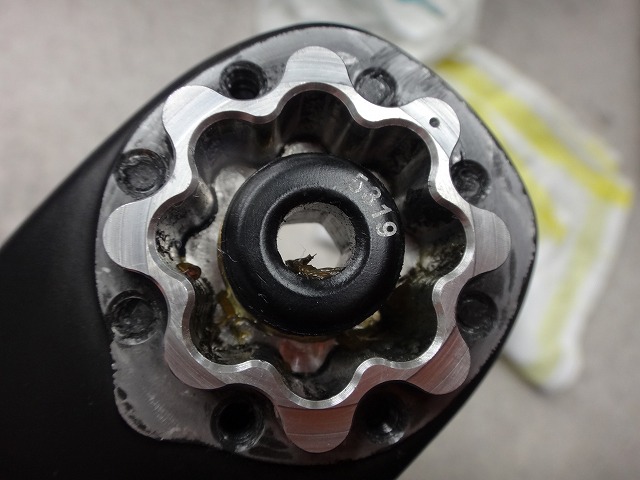
Out of the eight M4 bolts securing the chainring,
five of them are broken almost flush with the surface.
He asked if I could extract them.
Apparently this crank isn't sold as a single side,
and a matching crankset costs around ¥90,000 with tax
depending on the specs,
so he's desperate to get them out somehow...
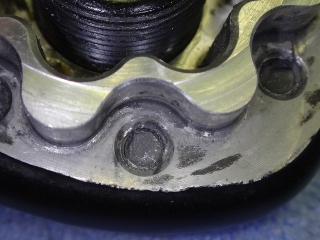
Since the holes have a tapered bottom,
I can't grip the bolts like a set screw either.
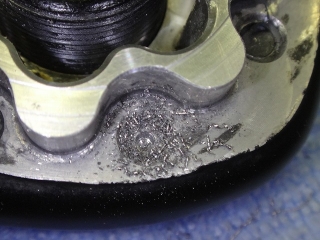
Vrrrmmm.
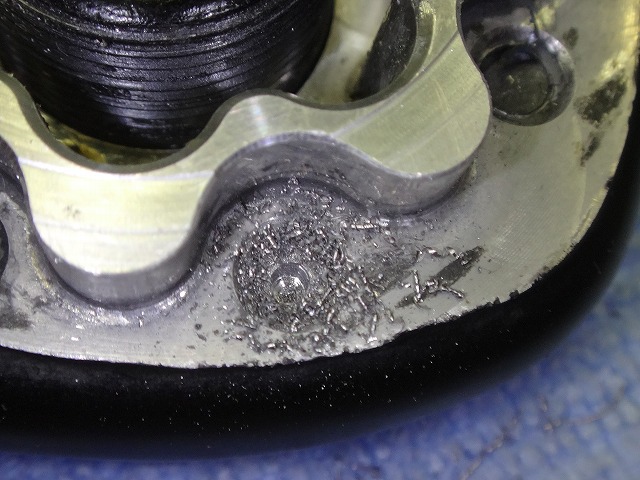
I drill carefully, trying to stay as centered as possible, using a carbide drill bit.
Usually a partial hole is enough, but if needed I'll drill all the way through.
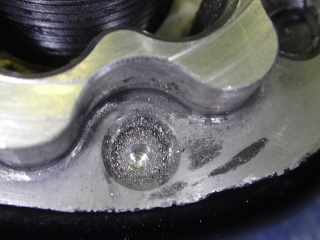
↑Like this
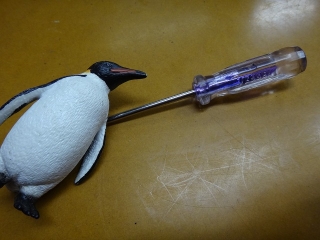
I insert my original custom tool—a screwdriver-type "Set Screw Loosener-kun"—into the hole drilled in the center of the bolt,
then apply counter-clockwise pressure to back the bolt out.
The tip of the Set Screw Loosener-kun has a shape that follows the Mesinotane code.

It's loosening.
There's blue threadlocker applied to the threads,
but that's not too much of a problem.
This time there wasn't any, but complete seizing from rust is where it gets really difficult.

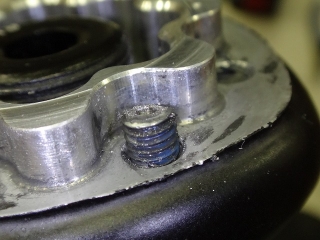

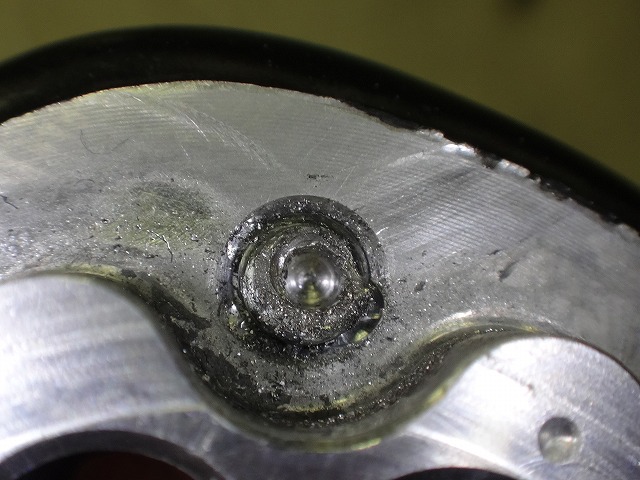
Out it comes.
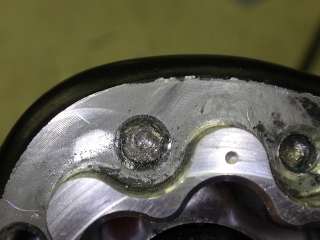
This is a different location.
The hole doesn't have to be perfectly centered—some offset is fine—
but it can't drift so far that it damages the thread crests on the threaded side or go in at an angle.
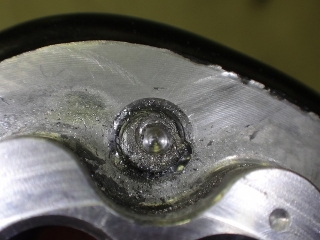
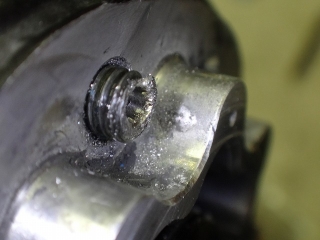
Out it comes.
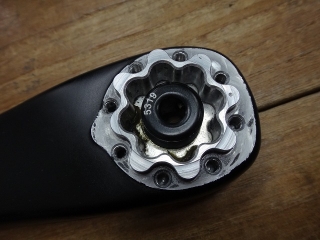
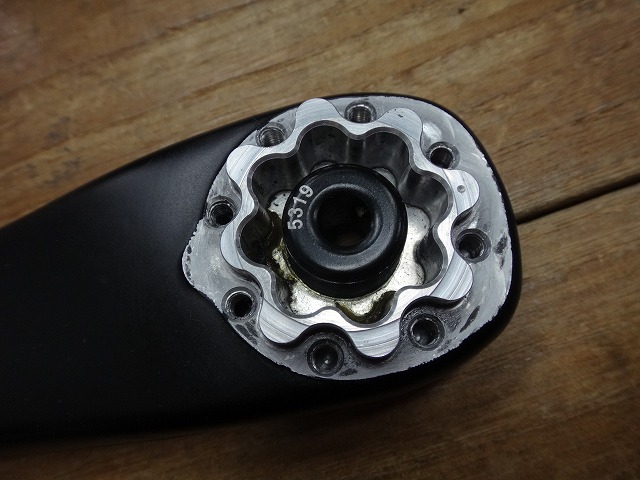
All five are out.
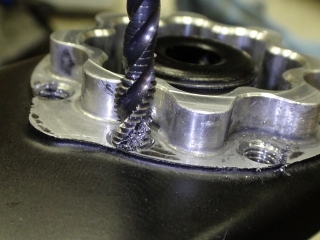
Just to be safe, I ran an M4 tap through all eight holes.
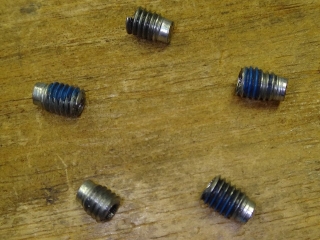
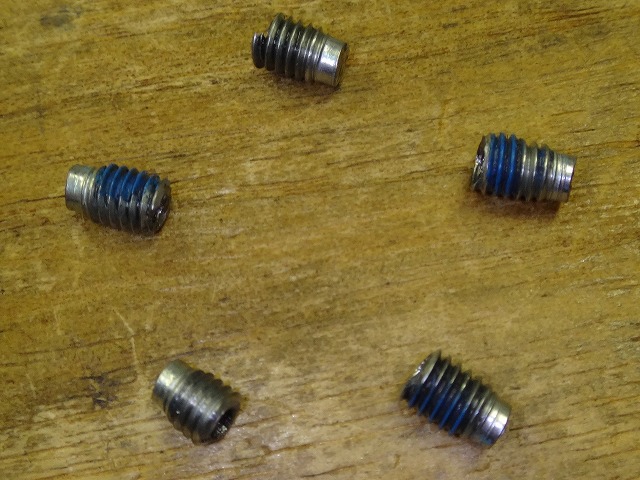
↑The extracted bolts
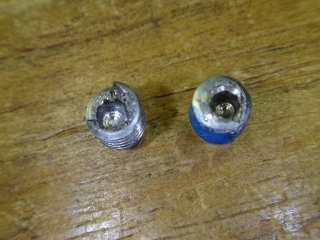
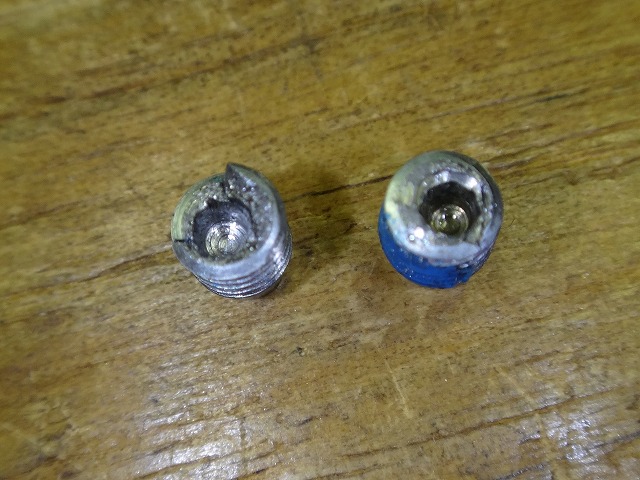
Four of them came out with just a partial hole,

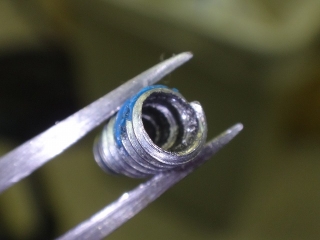
but this one had a cross-section that looked like a gabled roof,
and the drill bit kept sliding off, making it hard to catch the center.
So I made the first half a hole just barely the size of the thread root diameter,
then used a finer drill bit for the second half to create a through hole.
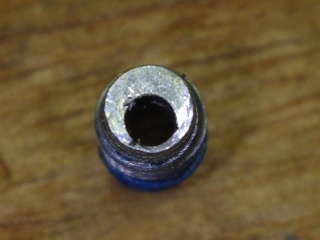
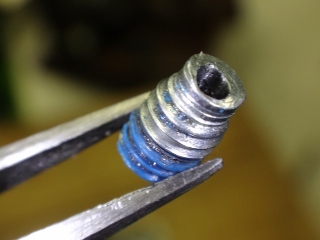
↑The pointed end
If that bolt had been any longer, it would've been dicey.
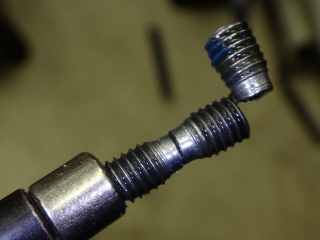
As for this bolt, I'm not sure if it's steel or chromoly,
but it grabs magnets incredibly well.
I used a fresh carbide drill bit,
but it clearly dulled noticeably during this job—it's some seriously hard material.
A customer left me with a right crank from a SRAM XX1 Eagle.
Out of the eight M4 bolts securing the chainring,
five of them are broken almost flush with the surface.
He asked if I could extract them.
Apparently this crank isn't sold as a single side,
and a matching crankset costs around ¥90,000 with tax
depending on the specs,
so he's desperate to get them out somehow...

Since the holes have a tapered bottom,
I can't grip the bolts like a set screw either.
Vrrrmmm.
I drill carefully, trying to stay as centered as possible, using a carbide drill bit.
Usually a partial hole is enough, but if needed I'll drill all the way through.
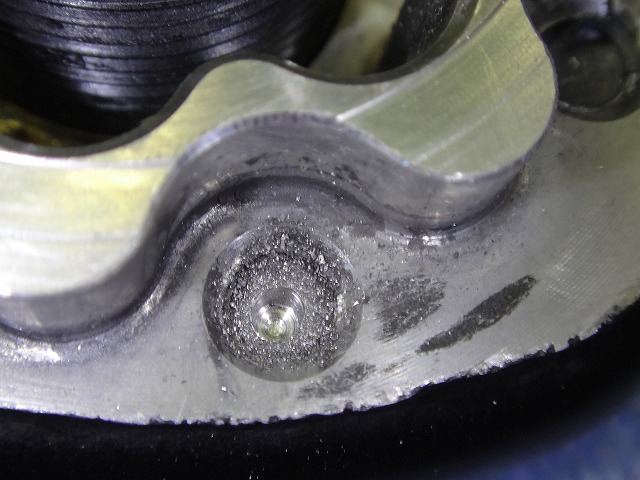
↑Like this

I insert my original custom tool—a screwdriver-type "Set Screw Loosener-kun"—into the hole drilled in the center of the bolt,
then apply counter-clockwise pressure to back the bolt out.
The tip of the Set Screw Loosener-kun has a shape that follows the Mesinotane code.

It's loosening.
There's blue threadlocker applied to the threads,
but that's not too much of a problem.
This time there wasn't any, but complete seizing from rust is where it gets really difficult.
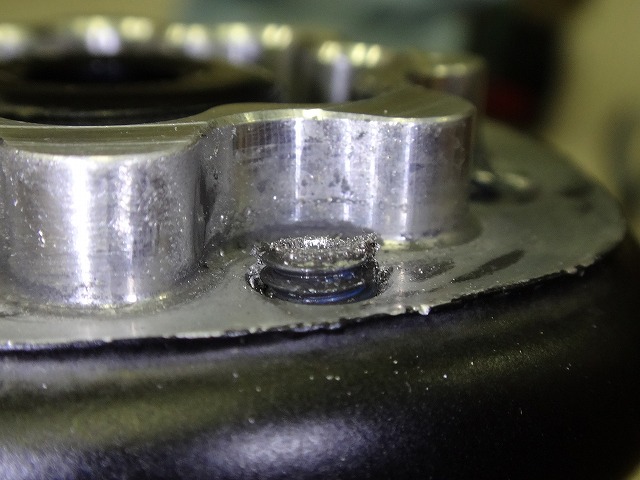
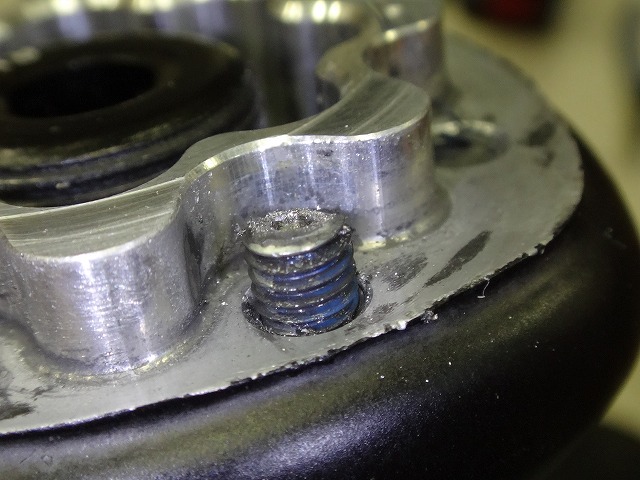
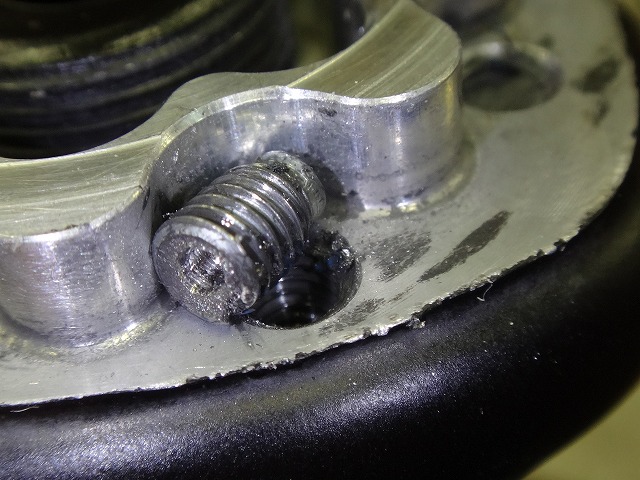
Out it comes.

This is a different location.
The hole doesn't have to be perfectly centered—some offset is fine—
but it can't drift so far that it damages the thread crests on the threaded side or go in at an angle.

Out it comes.
All five are out.

Just to be safe, I ran an M4 tap through all eight holes.
↑The extracted bolts
Four of them came out with just a partial hole,
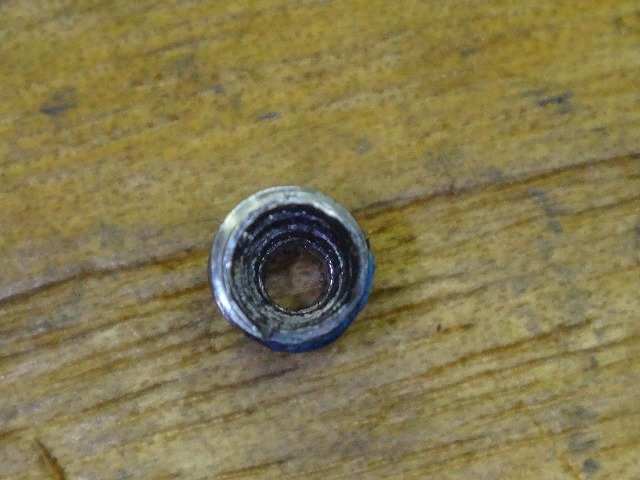
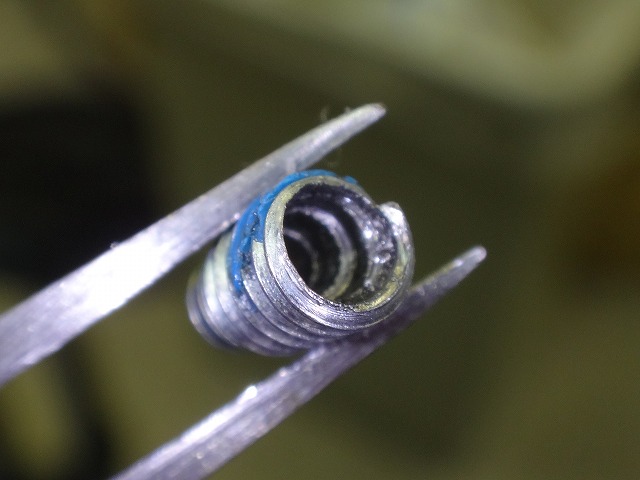
but this one had a cross-section that looked like a gabled roof,
and the drill bit kept sliding off, making it hard to catch the center.
So I made the first half a hole just barely the size of the thread root diameter,
then used a finer drill bit for the second half to create a through hole.
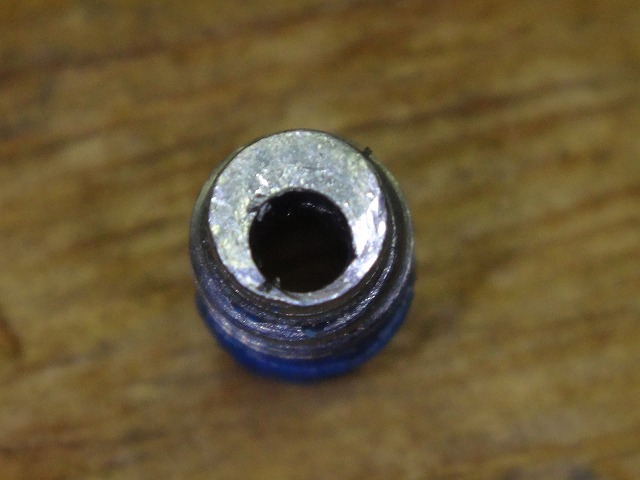
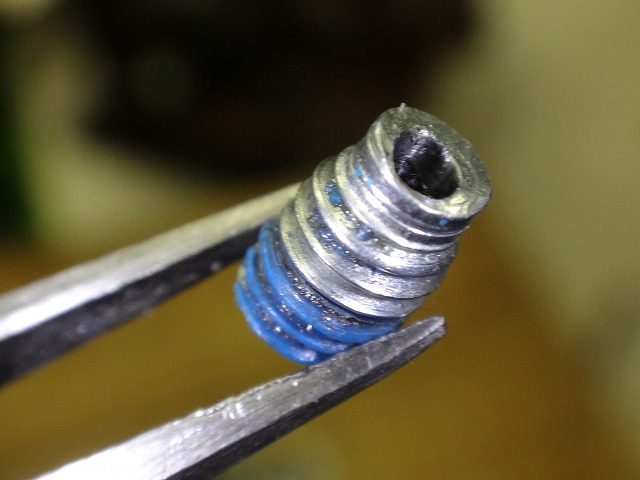
↑The pointed end
If that bolt had been any longer, it would've been dicey.

As for this bolt, I'm not sure if it's steel or chromoly,
but it grabs magnets incredibly well.
I used a fresh carbide drill bit,
but it clearly dulled noticeably during this job—it's some seriously hard material.