The drill is singing!
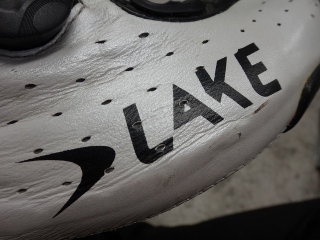
A customer dropped off a pair of Lake CX402 shoes with me.
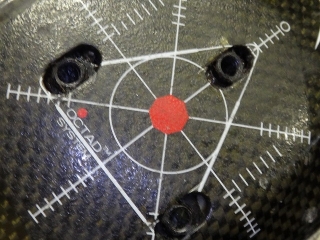
One of the cleat mounting holes has become stripped,
so the cleat bolt just spins forever. They wanted me to fix it somehow.
One of the two rear holes is stripped—
the leftmost hole in the image above.
Since this was purchased from an authorized retailer,
I asked if they could do something under warranty.
The shop said they couldn't do anything about it,
and the distributor (what was that place called... something that sounds like the Gatchaman villain—
maybe Beruk Katze?) told them
to just buy a new pair, and they'd give them a special 30% discount.
But these shoes cost 60,000 yen! Even with 30% off that's still 42,000 yen.
I found out later that the 60,000 yen is the pre-tax list price,
so with tax it's actually 66,000 yen.
Since these shoes require thermal molding,
there might be additional fitting costs if they went with a new pair.
This is just my personal opinion, but given the price of what they're selling,
both the shop and distributor are providing
a shopping experience that's way too low-quality.
If they want to argue, they should try handling things like actual professionals—
you useless fools who can't do anything but shuffle products from left to right.
Actually, I'm grateful they didn't even attempt a repair.
It would be more annoying if they'd fumbled around and made it harder or impossible to fix.
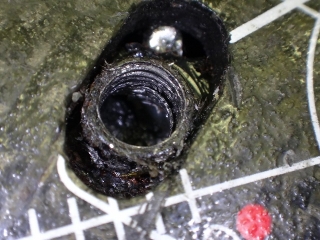
The M5 hole had stripped threads,
so I drilled a 5.2mm pilot hole for a helicoil insert.
This plate with the threaded hole is called a cleat nut,
and on some Shimano shoes you can access and replace it by removing the insole and opening a cover.
On these shoes, it's sealed in, so replacement wasn't possible.
I had to drill through it as-is.
But because the cleat nut could move in a slotted hole front-to-back,
it wobbled and sank loosely into the shoe,
making it hard to drill straight and clean.
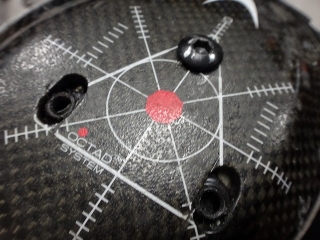
But since the cleat nut was a single plate connected on the inside,
tightening a bolt through another hole
eliminated most of the wobble in the cleat nut.
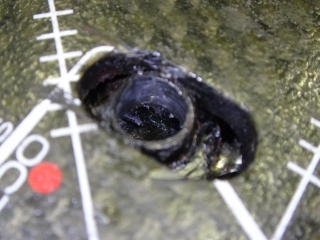
I drilled the 5.2mm hole.
At this stage, the M5 cleat mounting bolt spins freely.
It's made of ferrous material but seemed to be a relatively soft type,
and after securing the cleat nut, the drill went right through, which was lucky.
On a different note, I once worked on a Sidi MTB shoe with a sealed two-hole SPD cleat nut
that was hardened with a heat treatment, so hard I couldn't even cut threads with a tap.
The defect was that one of the two holes in the cleat nut
had been left without threads—a manufacturing defect.
It had been sitting unused for over a year after being purchased from an overseas online retailer,
so returning it was difficult.
I got the customer's permission, made a slit from inside the shoe to extract the cleat nut,
then machined a Shimano cleat nut
to roughly the same shape and swapped it in.
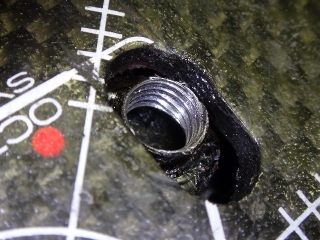
I chased the hole with a tap sized for the helicoil.
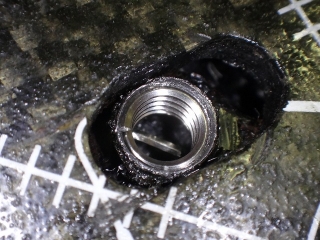
I inserted the helicoil and
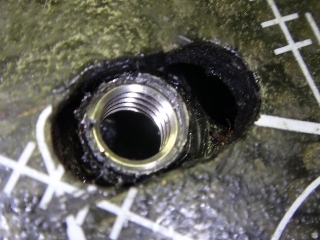
broke off the installation tang at the end.
The inside of this becomes a standard M5 threaded hole.
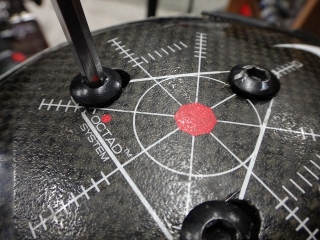
I installed the bolt in the repaired hole,
told the customer to "crank it down hard,"
and had them tighten it with an Allen wrench.
They said, "I'm afraid of stripping it again,"
but (as I've written before)
if it does strip, it's better to do it right here right now
when I can drive in a new helicoil.
By the way, if you deliberately try to strip a threaded hole
by tightening a bolt as hard as possible without limit,
the hardest hole to actually strip is one that's been repaired with a helicoil.
The original hole already has a proven track record of being stripped . . .
Oh, the labor (helicoil included) was 3,000 yen.
Whether that's expensive or cheap, I couldn't say.

A customer dropped off a pair of Lake CX402 shoes with me.
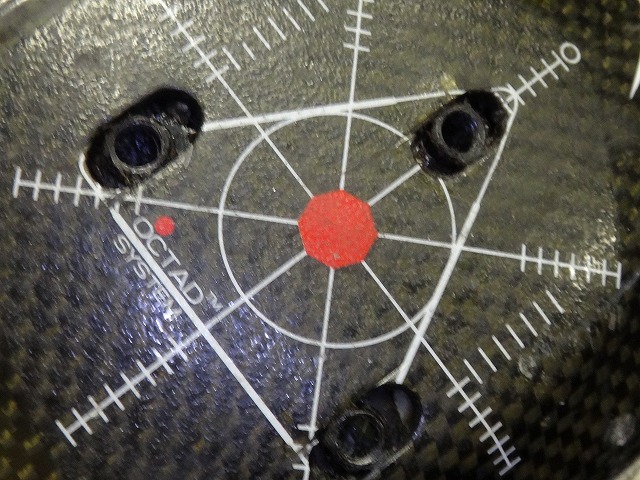
One of the cleat mounting holes has become stripped,
so the cleat bolt just spins forever. They wanted me to fix it somehow.
One of the two rear holes is stripped—
the leftmost hole in the image above.
Since this was purchased from an authorized retailer,
I asked if they could do something under warranty.
The shop said they couldn't do anything about it,
and the distributor (what was that place called... something that sounds like the Gatchaman villain—
maybe Beruk Katze?) told them
to just buy a new pair, and they'd give them a special 30% discount.
But these shoes cost 60,000 yen! Even with 30% off that's still 42,000 yen.
I found out later that the 60,000 yen is the pre-tax list price,
so with tax it's actually 66,000 yen.
Since these shoes require thermal molding,
there might be additional fitting costs if they went with a new pair.
This is just my personal opinion, but given the price of what they're selling,
both the shop and distributor are providing
a shopping experience that's way too low-quality.
If they want to argue, they should try handling things like actual professionals—
you useless fools who can't do anything but shuffle products from left to right.
Actually, I'm grateful they didn't even attempt a repair.
It would be more annoying if they'd fumbled around and made it harder or impossible to fix.

The M5 hole had stripped threads,
so I drilled a 5.2mm pilot hole for a helicoil insert.
This plate with the threaded hole is called a cleat nut,
and on some Shimano shoes you can access and replace it by removing the insole and opening a cover.
On these shoes, it's sealed in, so replacement wasn't possible.
I had to drill through it as-is.
But because the cleat nut could move in a slotted hole front-to-back,
it wobbled and sank loosely into the shoe,
making it hard to drill straight and clean.
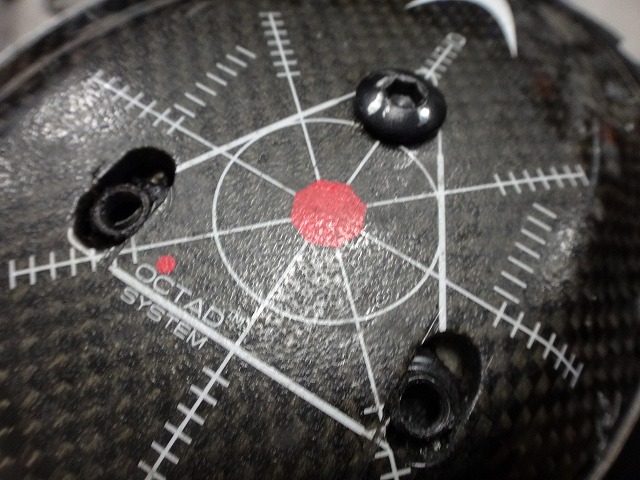
But since the cleat nut was a single plate connected on the inside,
tightening a bolt through another hole
eliminated most of the wobble in the cleat nut.
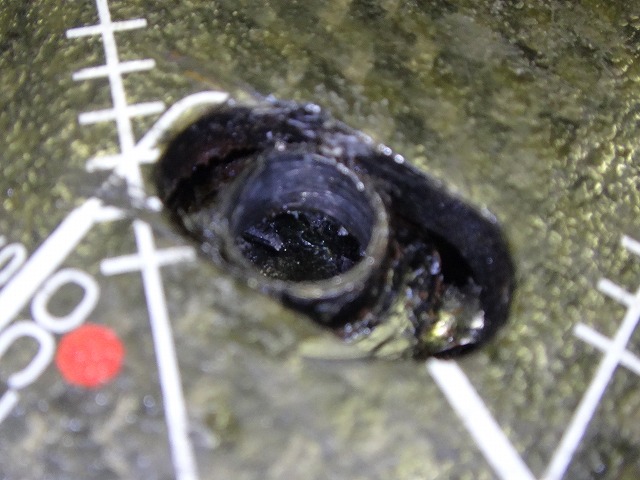
I drilled the 5.2mm hole.
At this stage, the M5 cleat mounting bolt spins freely.
It's made of ferrous material but seemed to be a relatively soft type,
and after securing the cleat nut, the drill went right through, which was lucky.
On a different note, I once worked on a Sidi MTB shoe with a sealed two-hole SPD cleat nut
that was hardened with a heat treatment, so hard I couldn't even cut threads with a tap.
The defect was that one of the two holes in the cleat nut
had been left without threads—a manufacturing defect.
It had been sitting unused for over a year after being purchased from an overseas online retailer,
so returning it was difficult.
I got the customer's permission, made a slit from inside the shoe to extract the cleat nut,
then machined a Shimano cleat nut
to roughly the same shape and swapped it in.

I chased the hole with a tap sized for the helicoil.
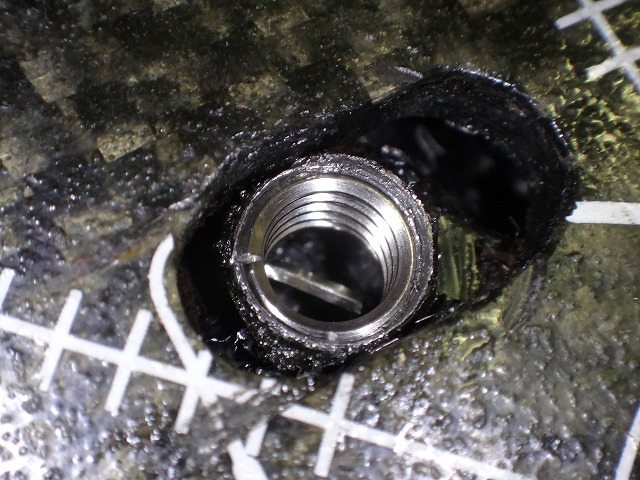
I inserted the helicoil and
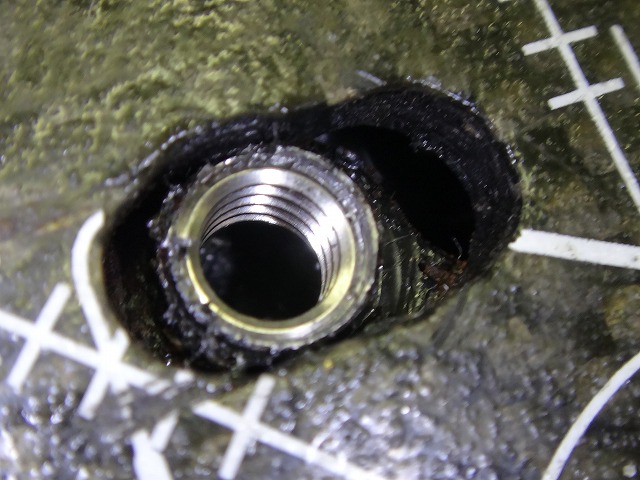
broke off the installation tang at the end.
The inside of this becomes a standard M5 threaded hole.
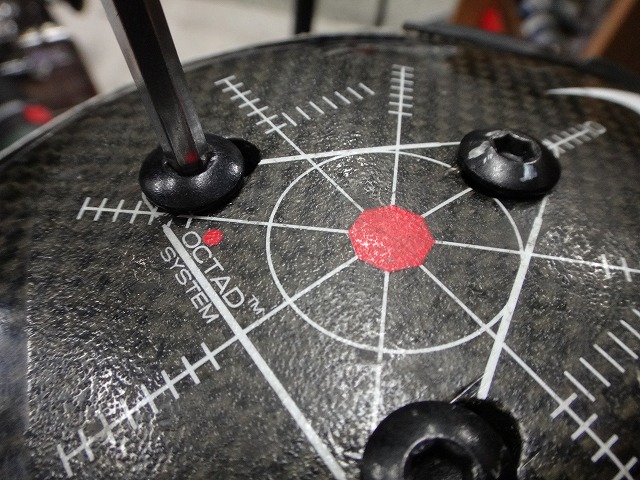
I installed the bolt in the repaired hole,
told the customer to "crank it down hard,"
and had them tighten it with an Allen wrench.
They said, "I'm afraid of stripping it again,"
but (as I've written before)
if it does strip, it's better to do it right here right now
when I can drive in a new helicoil.
By the way, if you deliberately try to strip a threaded hole
by tightening a bolt as hard as possible without limit,
the hardest hole to actually strip is one that's been repaired with a helicoil.
The original hole already has a proven track record of being stripped . . .
Whether that's expensive or cheap, I couldn't say.