I received a Ksyrium K10 from a customer.

They said they haven't noticed any particular issues, but they requested an inspection.
At this point, I had no idea I'd end up relying on that phrase "haven't noticed any particular issues"...

In Japan, this model is simply called the Ksyrium K10,
which is how the distributor refers to it,
but overseas it's recognized by the model name Ksyrium Ixion or
Ksyrium Ixion K10.
The Ixion introduced rim-side fluting that Campagnolo had previously done on MTB CrossMax wheels
(disc brake rims don't have a brake zone, so there's more dimensional clearance to do fluting)
to their road Ksyrium, and
K10 means the 10th anniversary of Ksyrium.
Like the Ksyrium ES and Ksyrium 125,
since they can't keep releasing limited-edition anniversary models forever,
a regular model with slightly different appearance came out the following year.
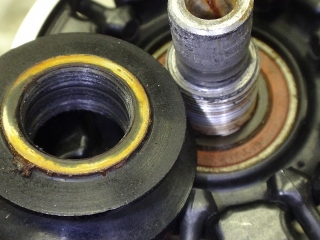
On the front wheel, when I thought the rotation was smooth,
I found lateral play in the front hub adjustment.
So I turned the six-hole cone adjustment until the lateral play just disappeared,
but then the hub rotation became rough and gritty.
I removed the cone adjustment part,
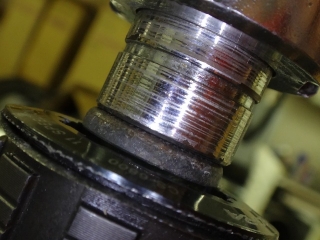
and the black anodizing on the inner race pressing step was peeling,
with rust bleeding from underneath.
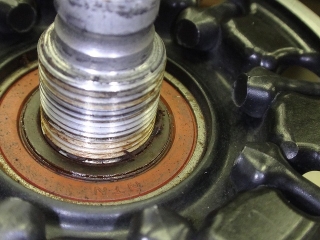
The bearings are OEM parts with (supposedly) extremely high durability
contact-seal type bearings.
From this state the hub axle should come out easily,
but it didn't come out even with finger pressure, so
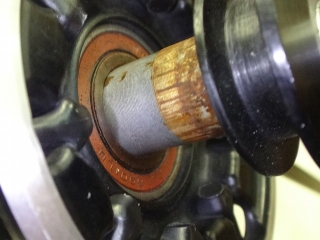
I tapped it out with a plastic hammer.
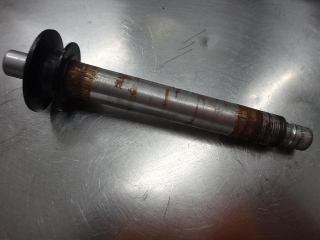
The area directly under the bearing on the hub axle was rusted, and
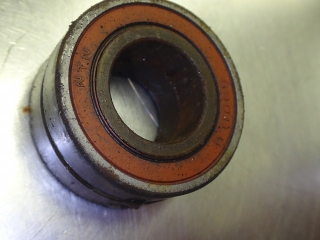
the bearing I removed from the hub body
had heavy rust on the inner race.

The right-side inner race press part should come off the hub axle easily too,
but it was rusted and stuck.
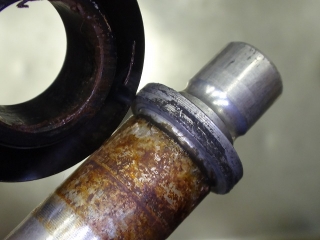
I managed to get it off.

I polished and removed as much rust as I could from the hub axle.

I also cleaned the threads
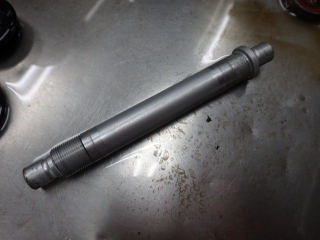
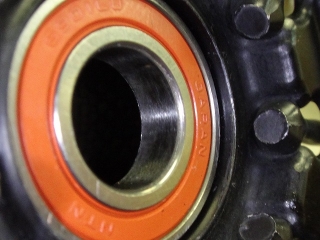
I replaced the bearings.
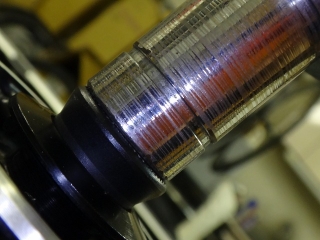
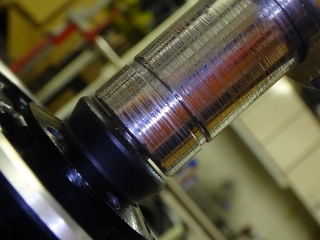
When I assembled the hub parts and checked the centering,
it was off by about this much.
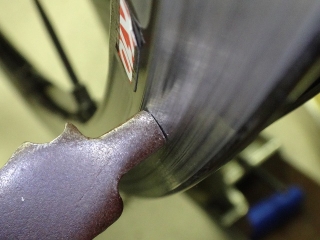
As for runout, if I set the gauge at the phase where it's deflected most toward the gauge, just touching the rim,

most other phases
have this much clearance from the gauge.
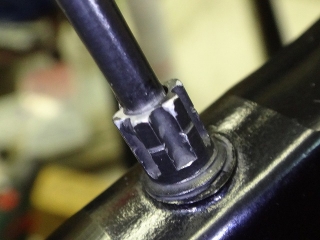
There were no nipples I couldn't turn
(no seizure between rim holes and nipples),
but seizing occurred between spokes and nipples,
and when I turn the nipple, the spoke twists in complete sync with it.
If I'm too rough, I risk breaking the spoke, so I couldn't adjust it.
This phenomenon doesn't happen as easily with later-generation Zygrals spokes with larger grip profiles
(or maybe it's just that many haven't reached complete seizing due to the time period,
or because the tool diameter is larger making it easier to turn),
but the Ksyrium K10 is from the final generation of early-period Zygrals spokes.
The nipples themselves turn, so I could recover them if I cut the spokes.
If I cut about two-thirds of them overall, I can remove the hook-type spoke head from the front hub,
and if I remove the seized spokes sticking out from the rim and get them to just spoke and nipple,
there are usually ways to break the seizing.
So if it's okay to replace about two-thirds of the spokes with new ones,
I can get it to an adjustable state, and wheel centering and truing—or rather
re-lacing the wheel—is possible.
I don't know if Ksyrium K10 spokes are currently available though.
Campagnolo and Fulcrum aluminum spokes and nipples don't have threads cut into the rim,
so except for complete seizing there are workarounds (or ways to make it work).
And the stable supply of spokes is a big factor too.

The rear wheel also showed the usual trend of being off-center,
but all the nipples and spokes were seized,
so there was nothing I could do.
As I wrote at the beginning, if until now they "haven't noticed any particular issues,"
I have no choice but to let them use it as is.
Mavic wheels that aren't properly inspected
are originally off like this,
so the likelihood that it drifted from repeated truing play without a center gauge is low.
Also, the rear hub bearings have been replaced before,
so rotation wasn't particularly problematic.
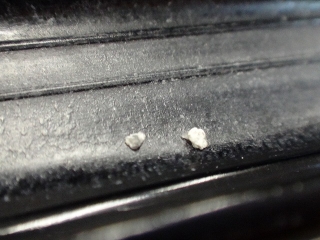
↑This is the front wheel rim, and since it rattled when shaken,
I removed the foreign matter. But there were considerable amounts in there.
It was white powder from aluminum corrosion hardened by moisture.
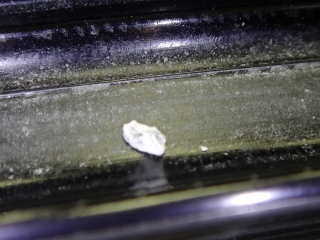
↑This is the rear wheel.
Unlike the front, there was less quantity but larger pieces came out.
Non-agglomerated white powder also emerged.
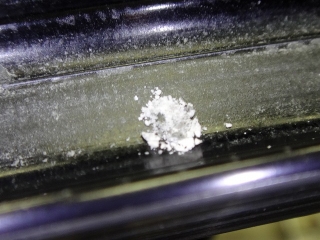
When I pressed a punch tip against it, it crumbled to powder.
Unrelated to this, but I dislike how the line from the protrusion on the outer circumference of the rim
leaves crack-like marks on the tube, especially when using latex tubes.
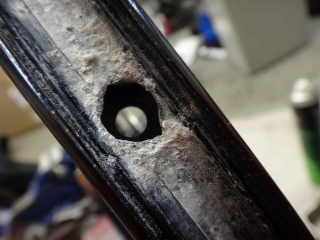
Even on black anodized rims, white powder sometimes appears around the valve hole
due to potential difference with brass valves or water entry,
but on this wheel, the powder was built up in a mound,
and the valve hole itself was so corroded that the outline wasn't even circular anymore.

They said they haven't noticed any particular issues, but they requested an inspection.
At this point, I had no idea I'd end up relying on that phrase "haven't noticed any particular issues"...
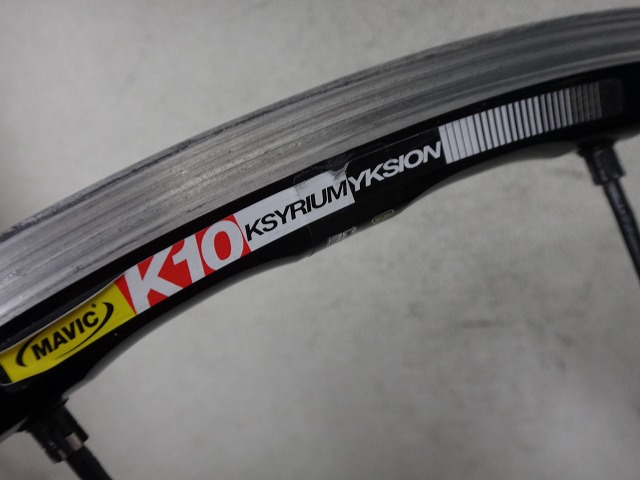
In Japan, this model is simply called the Ksyrium K10,
which is how the distributor refers to it,
but overseas it's recognized by the model name Ksyrium Ixion or
Ksyrium Ixion K10.
The Ixion introduced rim-side fluting that Campagnolo had previously done on MTB CrossMax wheels
(disc brake rims don't have a brake zone, so there's more dimensional clearance to do fluting)
to their road Ksyrium, and
K10 means the 10th anniversary of Ksyrium.
Like the Ksyrium ES and Ksyrium 125,
since they can't keep releasing limited-edition anniversary models forever,
a regular model with slightly different appearance came out the following year.
On the front wheel, when I thought the rotation was smooth,
I found lateral play in the front hub adjustment.
So I turned the six-hole cone adjustment until the lateral play just disappeared,
but then the hub rotation became rough and gritty.
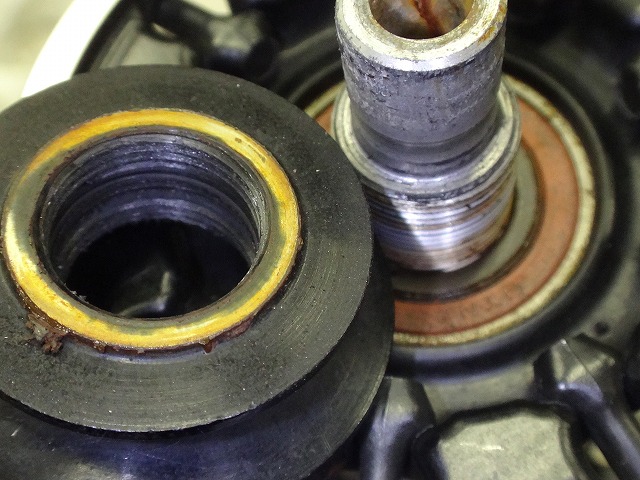
I removed the cone adjustment part,
and the black anodizing on the inner race pressing step was peeling,
with rust bleeding from underneath.
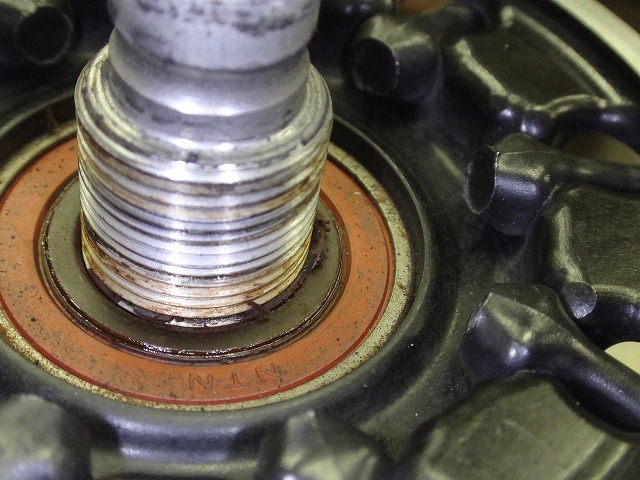
The bearings are OEM parts with (supposedly) extremely high durability
contact-seal type bearings.
From this state the hub axle should come out easily,
but it didn't come out even with finger pressure, so
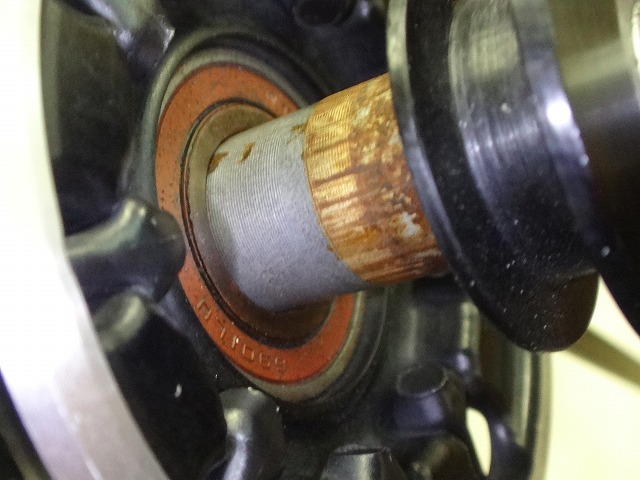
I tapped it out with a plastic hammer.
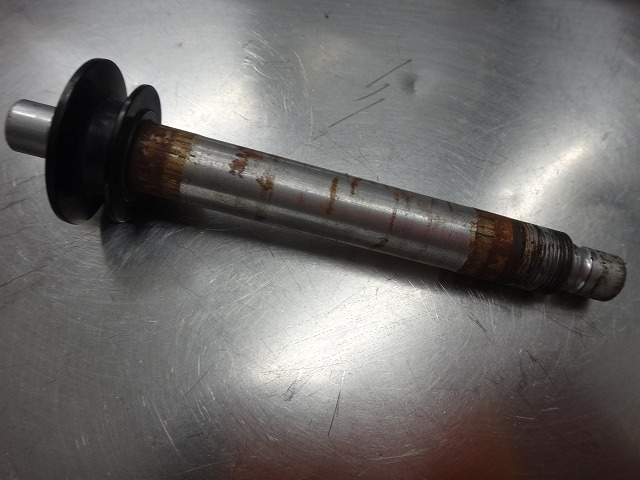
The area directly under the bearing on the hub axle was rusted, and
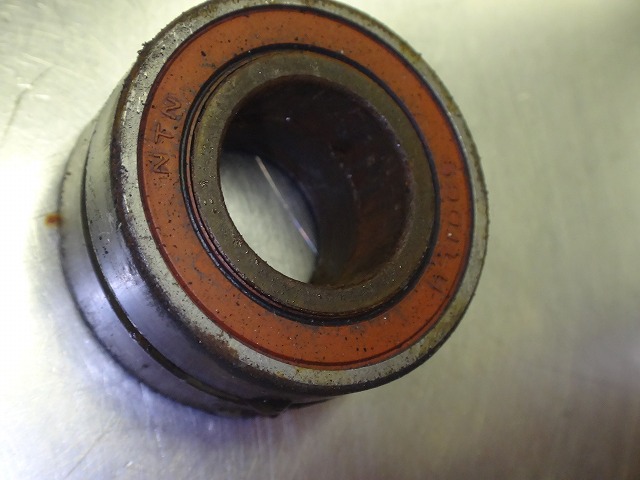
the bearing I removed from the hub body
had heavy rust on the inner race.
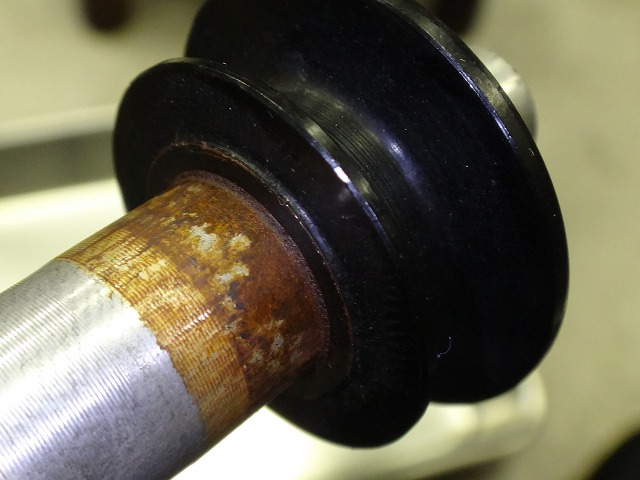
The right-side inner race press part should come off the hub axle easily too,
but it was rusted and stuck.
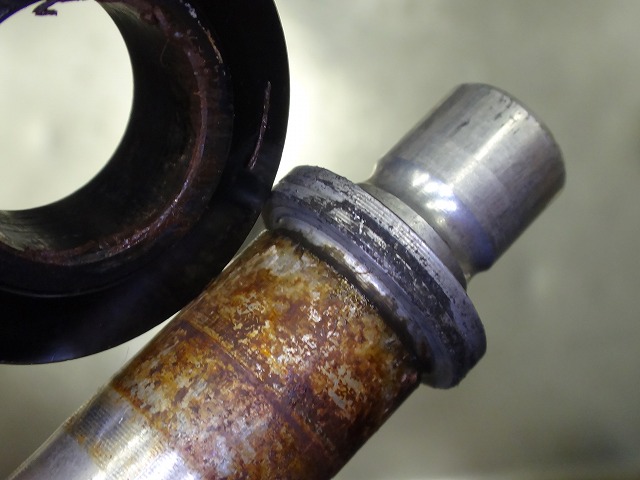
I managed to get it off.
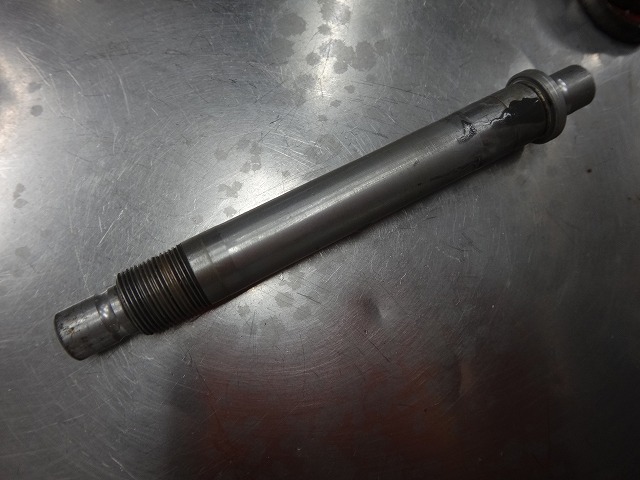
I polished and removed as much rust as I could from the hub axle.
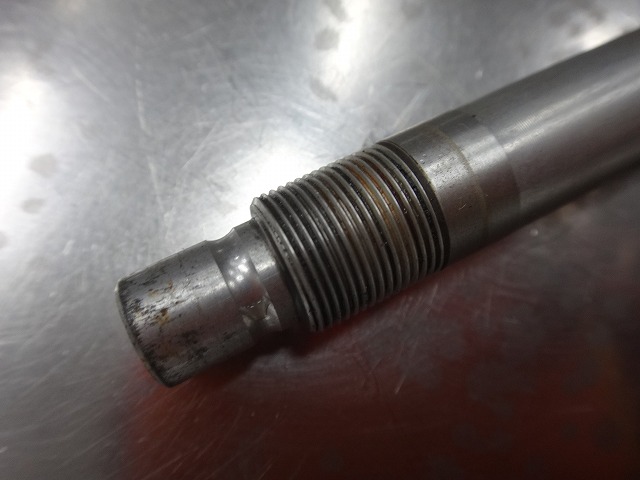
I also cleaned the threads
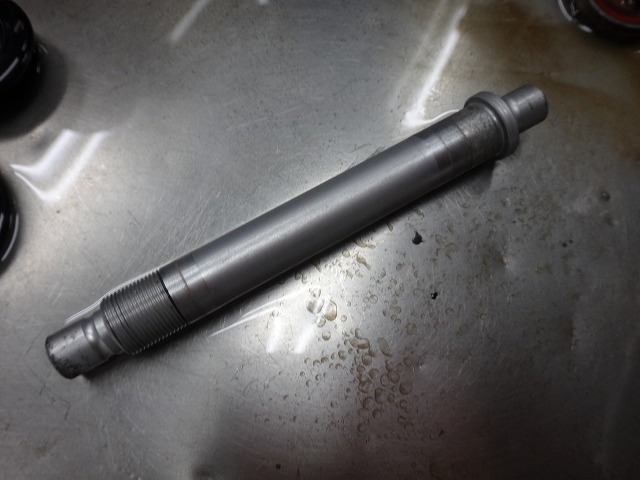
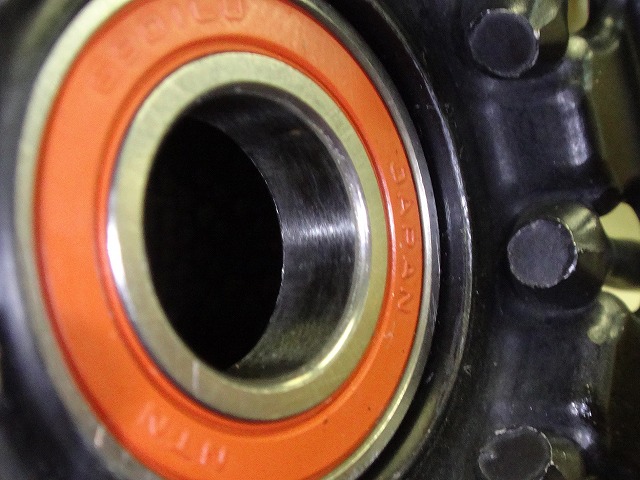
I replaced the bearings.
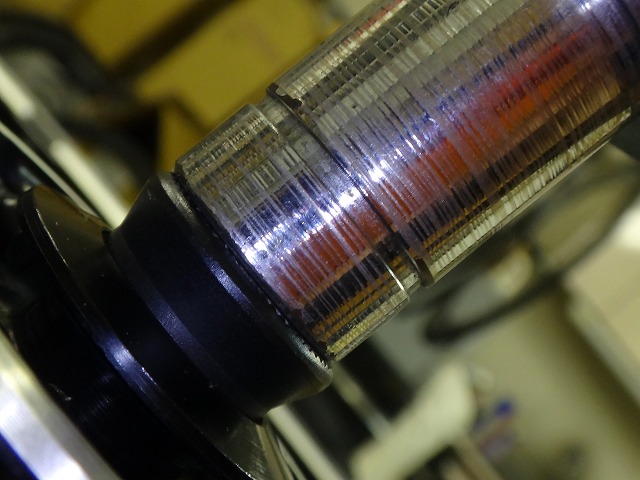
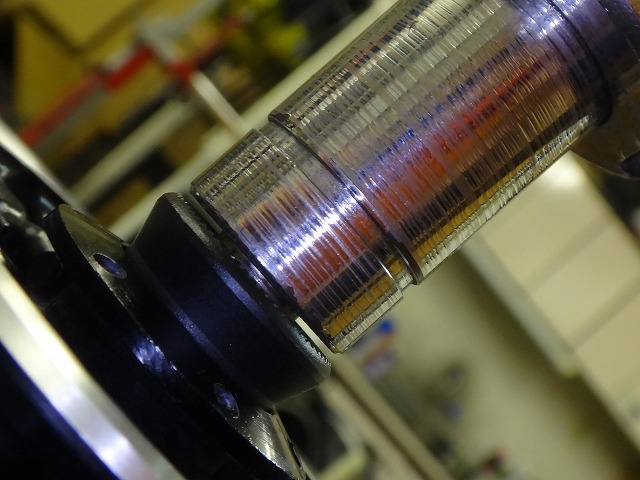
When I assembled the hub parts and checked the centering,
it was off by about this much.
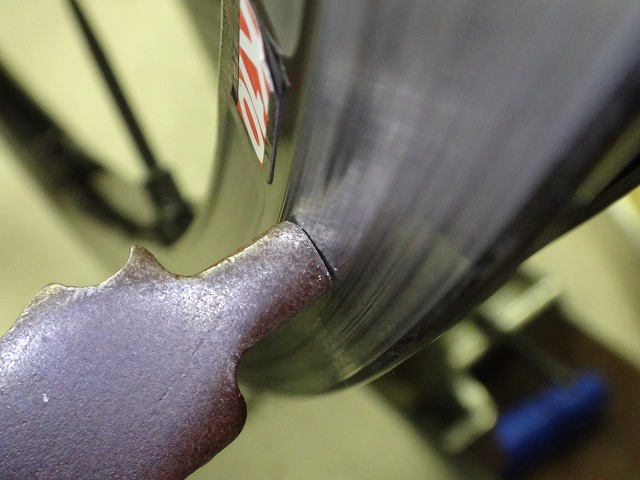
As for runout, if I set the gauge at the phase where it's deflected most toward the gauge, just touching the rim,
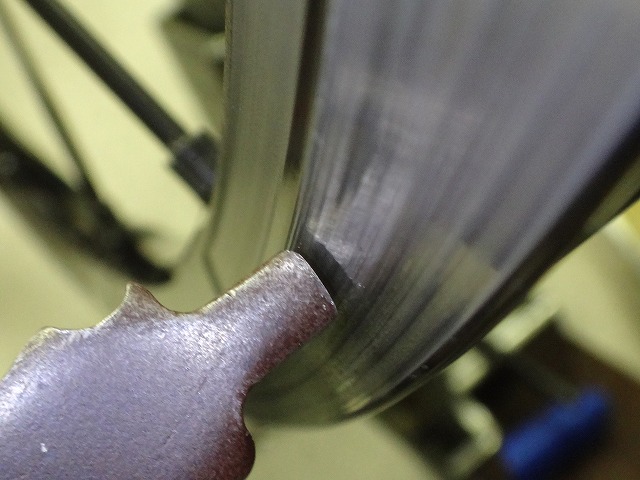
most other phases
have this much clearance from the gauge.
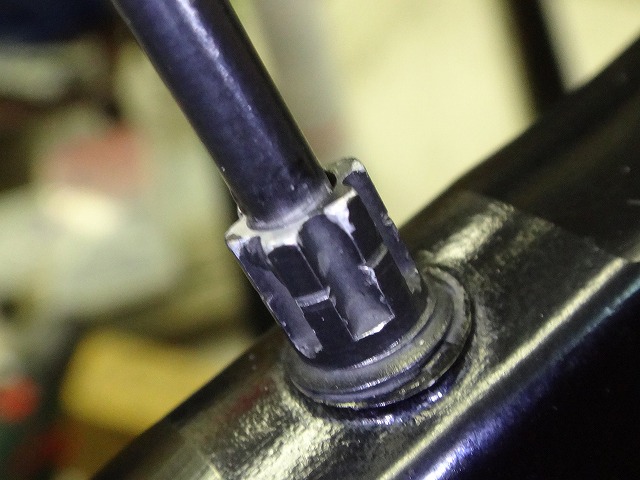
There were no nipples I couldn't turn
(no seizure between rim holes and nipples),
but seizing occurred between spokes and nipples,
and when I turn the nipple, the spoke twists in complete sync with it.
If I'm too rough, I risk breaking the spoke, so I couldn't adjust it.
This phenomenon doesn't happen as easily with later-generation Zygrals spokes with larger grip profiles
(or maybe it's just that many haven't reached complete seizing due to the time period,
or because the tool diameter is larger making it easier to turn),
but the Ksyrium K10 is from the final generation of early-period Zygrals spokes.
The nipples themselves turn, so I could recover them if I cut the spokes.
If I cut about two-thirds of them overall, I can remove the hook-type spoke head from the front hub,
and if I remove the seized spokes sticking out from the rim and get them to just spoke and nipple,
there are usually ways to break the seizing.
So if it's okay to replace about two-thirds of the spokes with new ones,
I can get it to an adjustable state, and wheel centering and truing—or rather
re-lacing the wheel—is possible.
I don't know if Ksyrium K10 spokes are currently available though.
Campagnolo and Fulcrum aluminum spokes and nipples don't have threads cut into the rim,
so except for complete seizing there are workarounds (or ways to make it work).
And the stable supply of spokes is a big factor too.
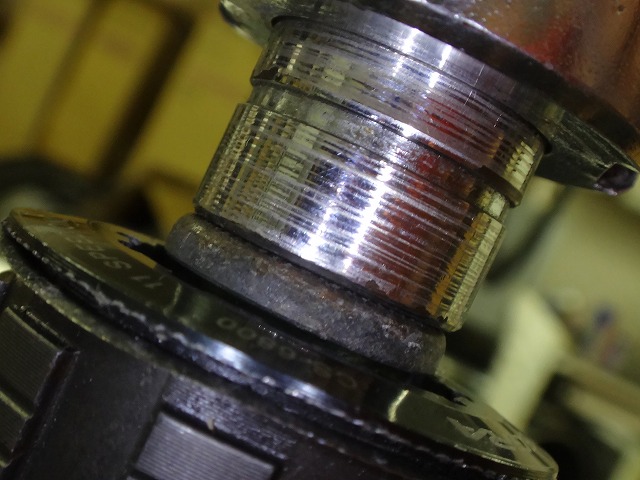
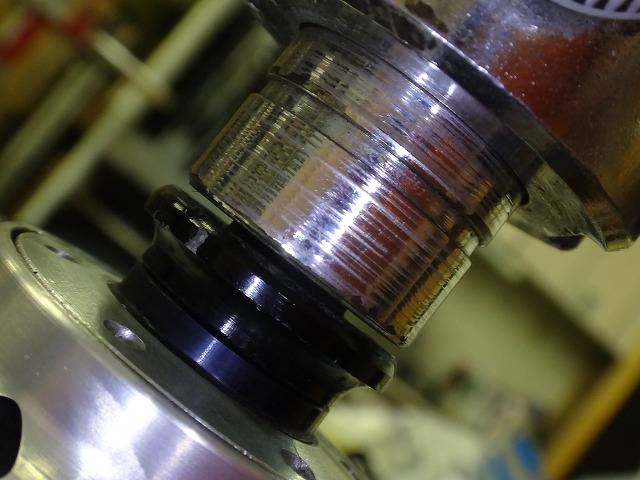
The rear wheel also showed the usual trend of being off-center,
but all the nipples and spokes were seized,
so there was nothing I could do.
As I wrote at the beginning, if until now they "haven't noticed any particular issues,"
I have no choice but to let them use it as is.
Mavic wheels that aren't properly inspected
are originally off like this,
so the likelihood that it drifted from repeated truing play without a center gauge is low.
Also, the rear hub bearings have been replaced before,
so rotation wasn't particularly problematic.
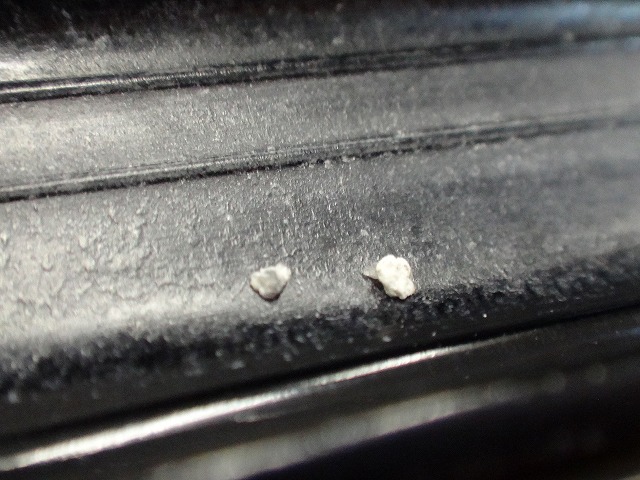
↑This is the front wheel rim, and since it rattled when shaken,
I removed the foreign matter. But there were considerable amounts in there.
It was white powder from aluminum corrosion hardened by moisture.
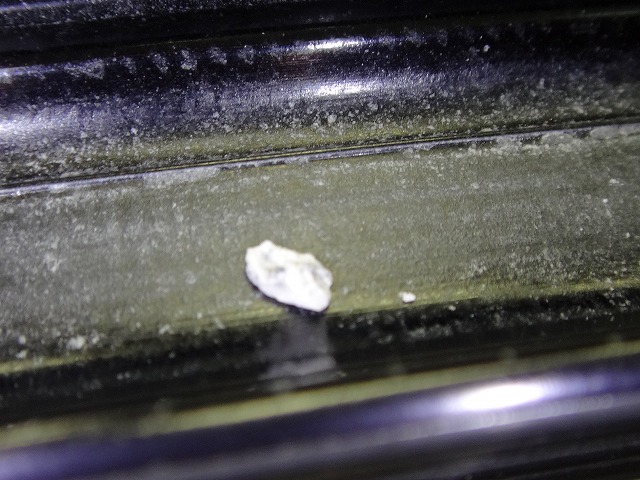
↑This is the rear wheel.
Unlike the front, there was less quantity but larger pieces came out.
Non-agglomerated white powder also emerged.

When I pressed a punch tip against it, it crumbled to powder.
Unrelated to this, but I dislike how the line from the protrusion on the outer circumference of the rim
leaves crack-like marks on the tube, especially when using latex tubes.
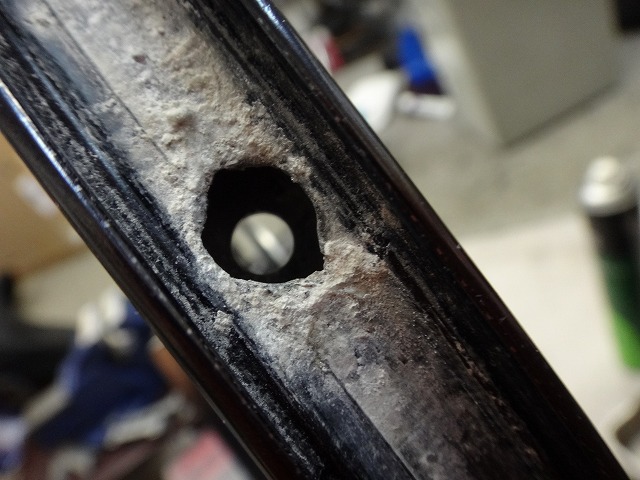
Even on black anodized rims, white powder sometimes appears around the valve hole
due to potential difference with brass valves or water entry,
but on this wheel, the powder was built up in a mound,
and the valve hole itself was so corroded that the outline wasn't even circular anymore.