Another day with wheels (and so on).
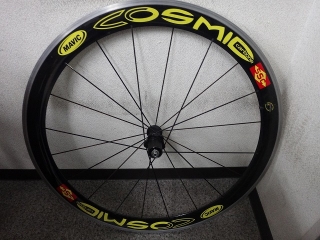
A customer entrusted me with the rear wheel
of a first-generation Cosmic Carbon (late-model version).
You might wonder what "late-model" means for a first-generation wheel,
but...
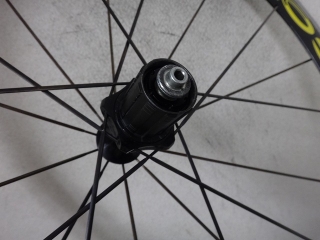
The very first rear wheel actually had a sketchy 16H specification.
This one is 20H, equivalent to a 40-spoke wheel.
Well, before front and rear 16H Cosmic Carbons came out,
wheels like front and rear 12H Campagnolo Shamals and even sketchier options
were being sold normally.
The customer's request was to build a track bike rear wheel using this rim,
but it's impossible.
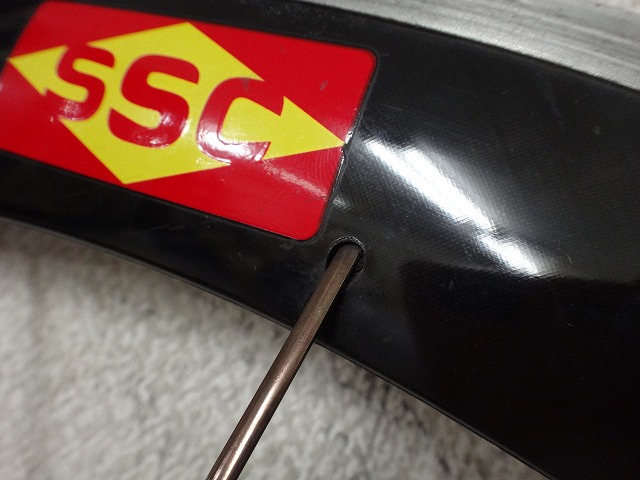
At least with a hub like the 7600 with double-threaded rear axle,
the spokes interfere with the carbon fairing holes.
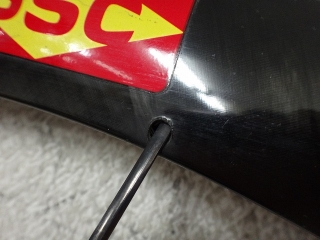
↑Freewheel side
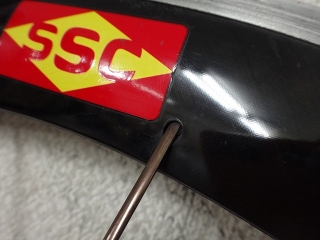
↑Non-freewheel side
The holes in the carbon fairing—
since the spoke angles differ left and right, the hole positions are offset accordingly.
On hubs without an ochoko (hub flange), or on single-threaded hubs where it's minimal,
the spoke trajectory and rim hole positions don't align.
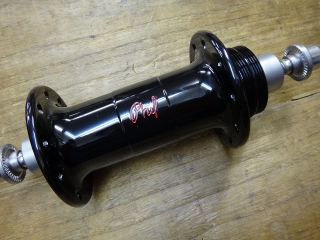
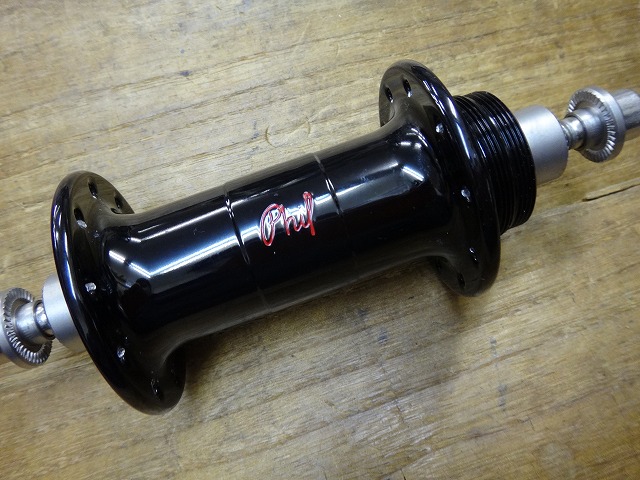
However, the hub the customer brought me
was a Filwood hub.
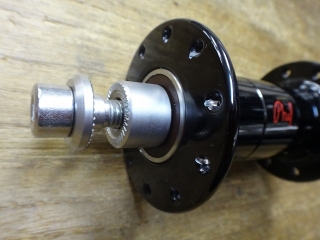
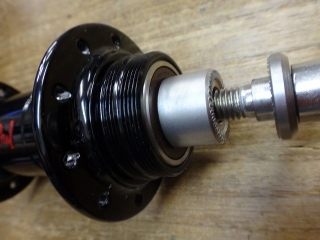
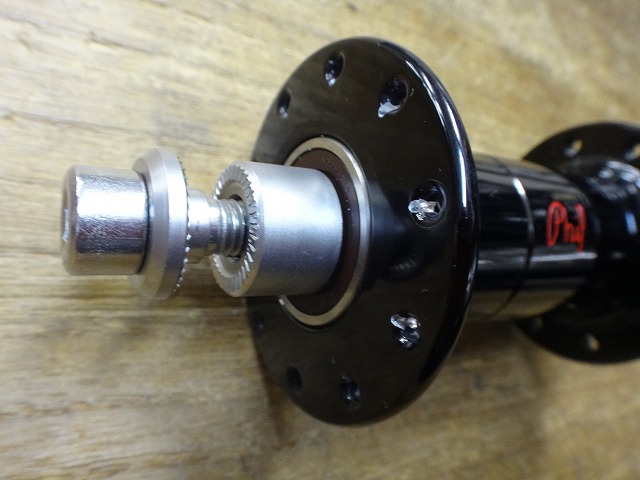
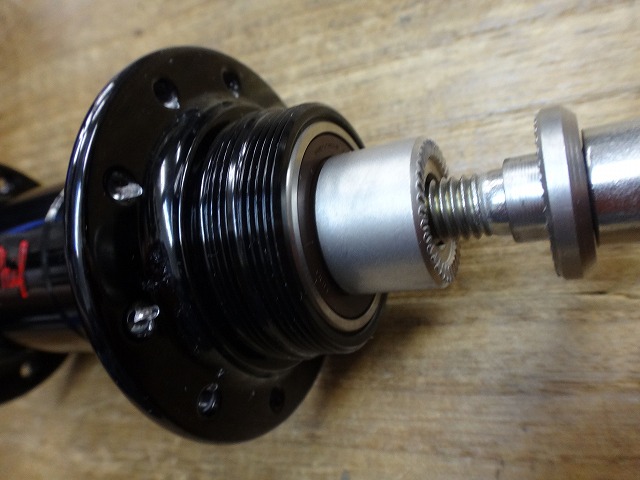
It has a decent ochoko (the non-gear side is wider), so
maybe it could work somehow.
When I researched this, I found a blog with an actual example
of this hub and rim combination (→here).
However, the spoke width this rim was originally designed for
is wider than this Cosmic's, so
the rim holes on this one are smaller.
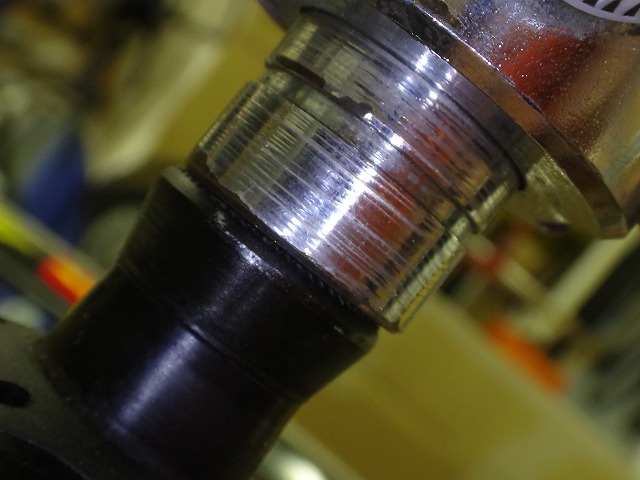
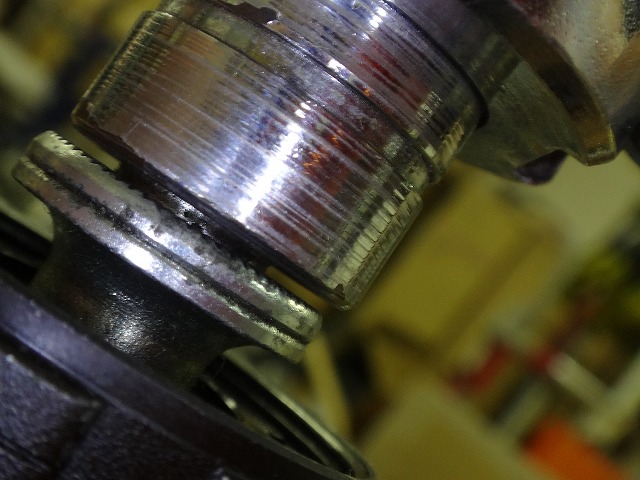
Also, on this track hub, instead of the hub axle itself,
the bolt threaded into the hub sits directly below the frame dropouts,
which I'm not particularly fond of.
But since there are virtually no other options for 20H track rear hubs,
it can't be helped.
Note that this will be used for pure competition, not street riding.
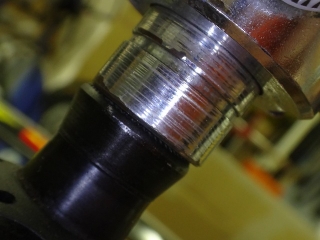
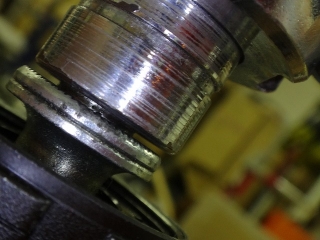
Since I'm disassembling it anyway, it doesn't really matter, but there was some centering offset.
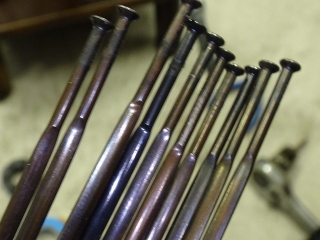
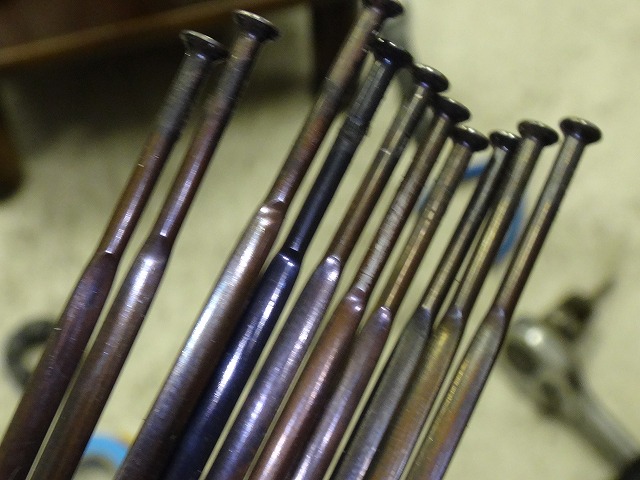
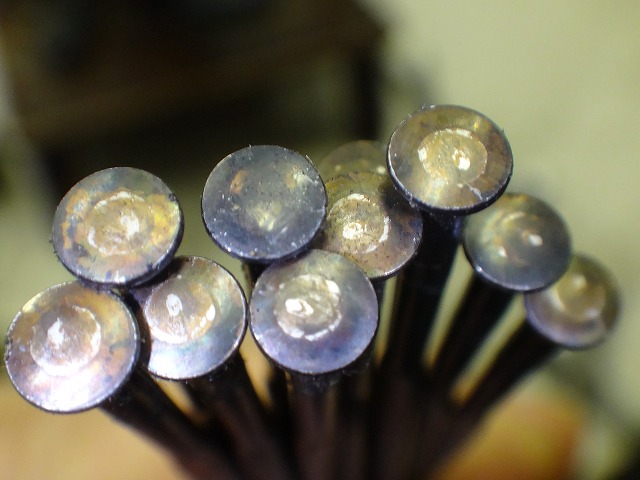
There's one spoke on the non-freewheel side that hasn't faded much, and
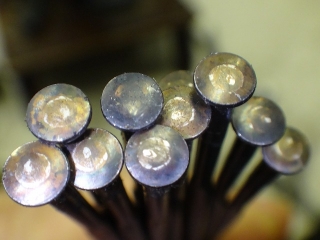
the pattern on the spoke head is different too, so
this one was replaced during a repair.
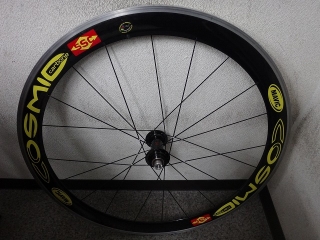
Got it built.
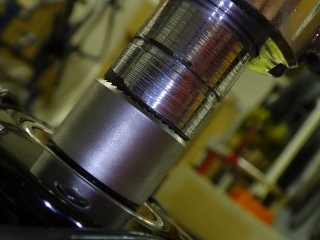
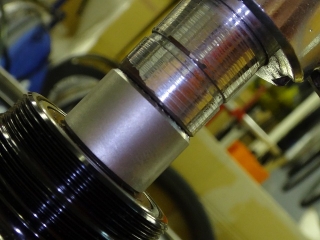
Of course, the centering is dead on.
I shot from a bit further back
so the hub shell would be visible in the frame.
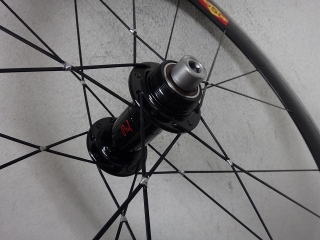
All-black CX Sprint with Italian 4-cross lacing, fully cross-laced on both sides.
For a 20H rear wheel, I did my best to get it as close to a rigid structure as possible.
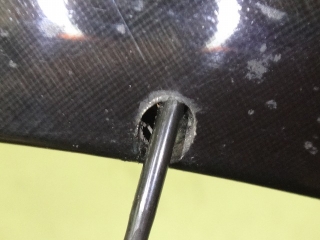
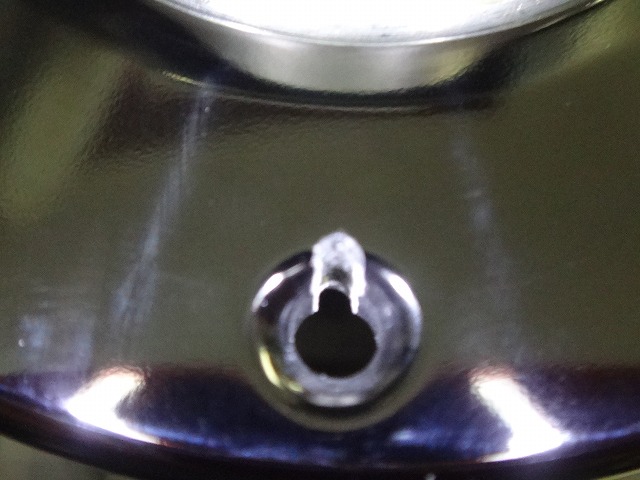
About the rim hole issue:
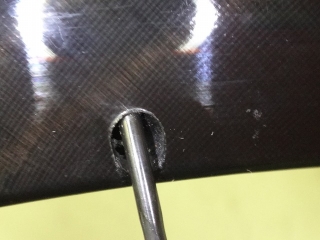
↑Gear side, left spoke of final cross
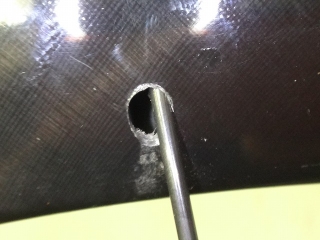
↑Gear side, right spoke of final cross
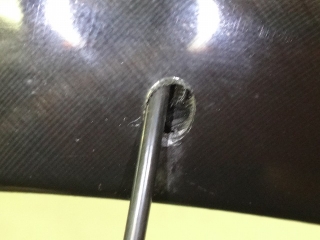
↑Non-gear side, left spoke of final cross
↑Non-gear side, right spoke of final cross
The gear side holes were designed for tangent lacing from the start, but
the non-gear side holes were designed for radial lacing, so
the spokes are contacting the edge of the holes.
I explained to the customer beforehand that this could happen.
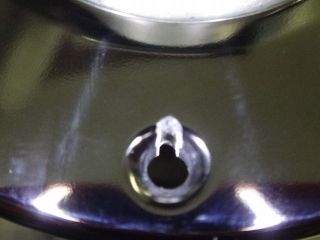
Actually, the hub flange holes had been machined with slots by the customer,
and we were considering building it with Sapim CX spokes,
but the longest CX lengths in stock at the Sapim distributor
were far shorter than what this wheel needed,
and there was basically only silver spokes in stock anyway, so
we decided against the CX option.
However, if we had built it with CX, the spokes on the non-gear side would have
embedded themselves into the side of the rim holes, so
in the end, building it with CX Sprint was the right call.
This Cosmic Carbon rim is a tubular, and it's not actually lighter
than the clincher version of the same model—
somehow it's actually heavier.
According to the customer, "When I get pulled on the bank up to about 50 kph
by the lead bike, and then maintain that speed, this rim weight is just right,"
so as a road wheel, it should only be usable by world top pros of that era.
Even on flat terrain, it's not suited for criteriums.
In scenarios with many corners and constant acceleration/deceleration,
lighter rims tend to have an advantage.
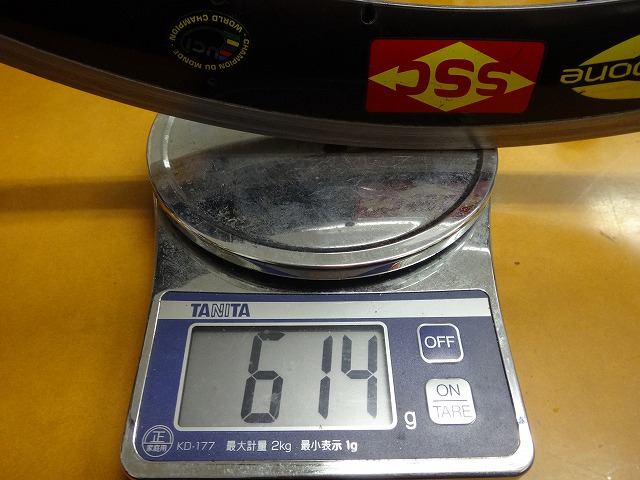
As for the actual weight...
Why do I have to tell you?
↑wow this guy has a bad attitude
Thank you for your patience! You've been a great help this year too!

Please take a look at this image!
↑Stop that right now!
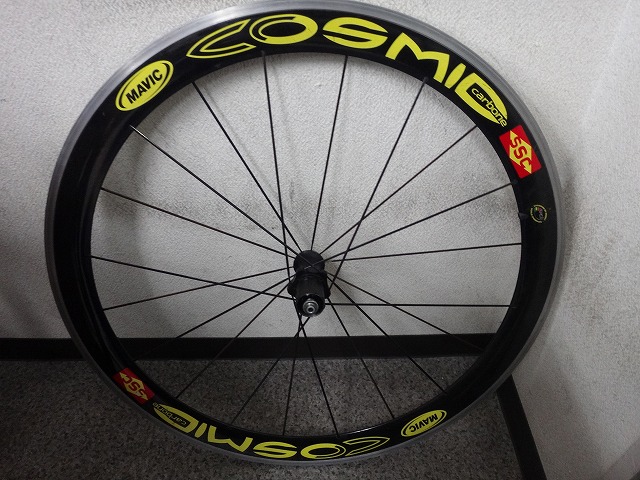
A customer entrusted me with the rear wheel
of a first-generation Cosmic Carbon (late-model version).
You might wonder what "late-model" means for a first-generation wheel,
but...
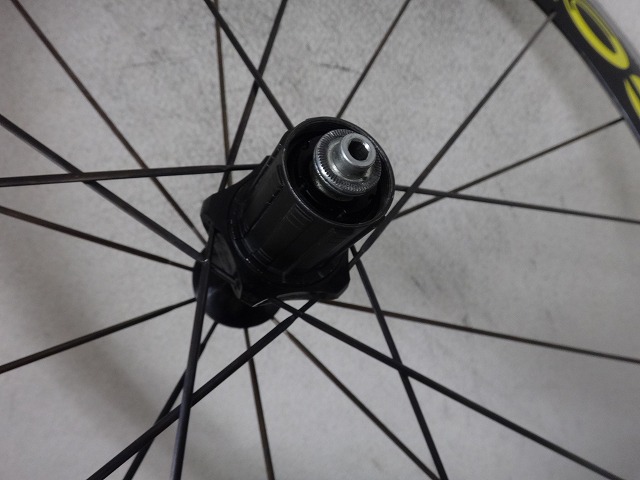
The very first rear wheel actually had a sketchy 16H specification.
This one is 20H, equivalent to a 40-spoke wheel.
Well, before front and rear 16H Cosmic Carbons came out,
wheels like front and rear 12H Campagnolo Shamals and even sketchier options
were being sold normally.
The customer's request was to build a track bike rear wheel using this rim,
but it's impossible.
At least with a hub like the 7600 with double-threaded rear axle,
the spokes interfere with the carbon fairing holes.
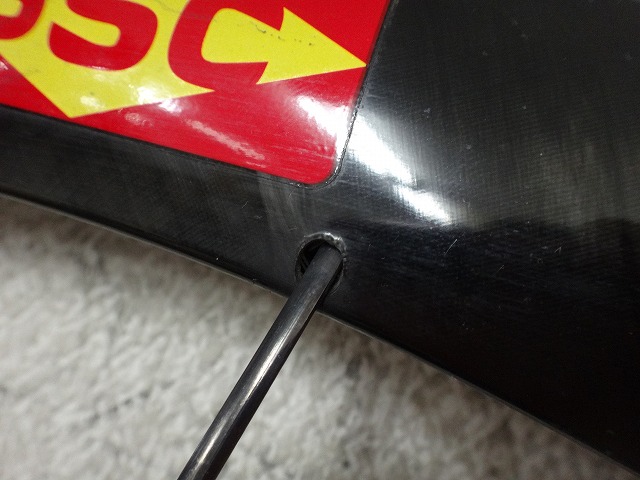
↑Freewheel side
↑Non-freewheel side
The holes in the carbon fairing—
since the spoke angles differ left and right, the hole positions are offset accordingly.
On hubs without an ochoko (hub flange), or on single-threaded hubs where it's minimal,
the spoke trajectory and rim hole positions don't align.
However, the hub the customer brought me
was a Filwood hub.
It has a decent ochoko (the non-gear side is wider), so
maybe it could work somehow.
When I researched this, I found a blog with an actual example
of this hub and rim combination (→here).
However, the spoke width this rim was originally designed for
is wider than this Cosmic's, so
the rim holes on this one are smaller.
Also, on this track hub, instead of the hub axle itself,
the bolt threaded into the hub sits directly below the frame dropouts,
which I'm not particularly fond of.
But since there are virtually no other options for 20H track rear hubs,
it can't be helped.
Note that this will be used for pure competition, not street riding.
Since I'm disassembling it anyway, it doesn't really matter, but there was some centering offset.
There's one spoke on the non-freewheel side that hasn't faded much, and
the pattern on the spoke head is different too, so
this one was replaced during a repair.

Got it built.
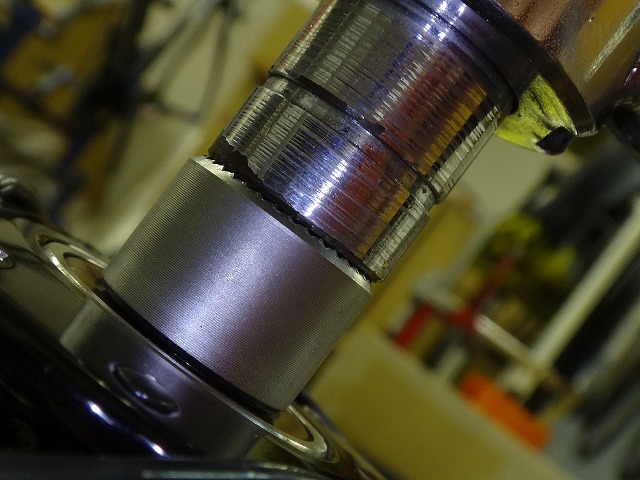
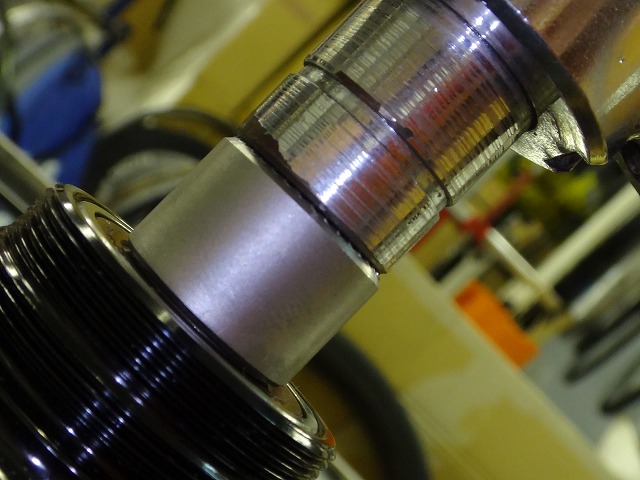
Of course, the centering is dead on.
I shot from a bit further back
so the hub shell would be visible in the frame.

All-black CX Sprint with Italian 4-cross lacing, fully cross-laced on both sides.
For a 20H rear wheel, I did my best to get it as close to a rigid structure as possible.
About the rim hole issue:

↑Gear side, left spoke of final cross

↑Gear side, right spoke of final cross
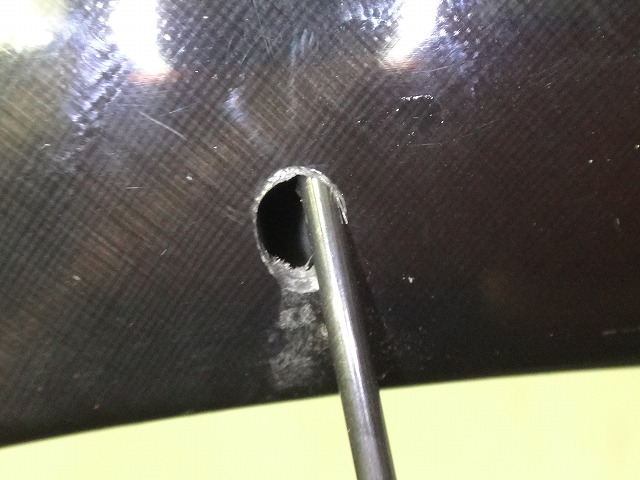
↑Non-gear side, left spoke of final cross
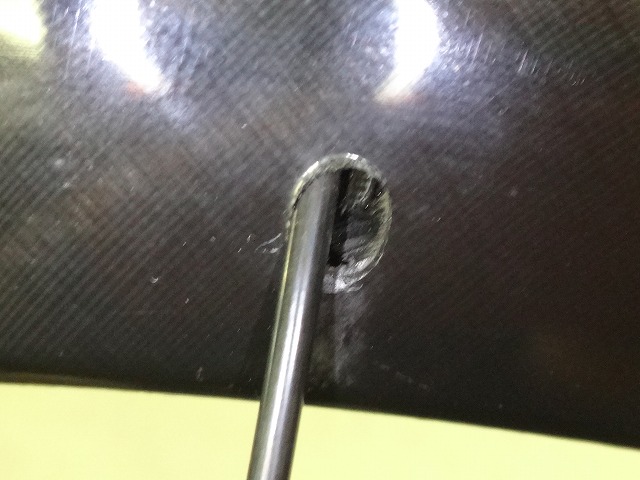
↑Non-gear side, right spoke of final cross
The gear side holes were designed for tangent lacing from the start, but
the non-gear side holes were designed for radial lacing, so
the spokes are contacting the edge of the holes.
I explained to the customer beforehand that this could happen.
Actually, the hub flange holes had been machined with slots by the customer,
and we were considering building it with Sapim CX spokes,
but the longest CX lengths in stock at the Sapim distributor
were far shorter than what this wheel needed,
and there was basically only silver spokes in stock anyway, so
we decided against the CX option.
However, if we had built it with CX, the spokes on the non-gear side would have
embedded themselves into the side of the rim holes, so
in the end, building it with CX Sprint was the right call.
This Cosmic Carbon rim is a tubular, and it's not actually lighter
than the clincher version of the same model—
somehow it's actually heavier.
According to the customer, "When I get pulled on the bank up to about 50 kph
by the lead bike, and then maintain that speed, this rim weight is just right,"
so as a road wheel, it should only be usable by world top pros of that era.
Even on flat terrain, it's not suited for criteriums.
In scenarios with many corners and constant acceleration/deceleration,
lighter rims tend to have an advantage.
As for the actual weight...
Why do I have to tell you?
↑wow this guy has a bad attitude
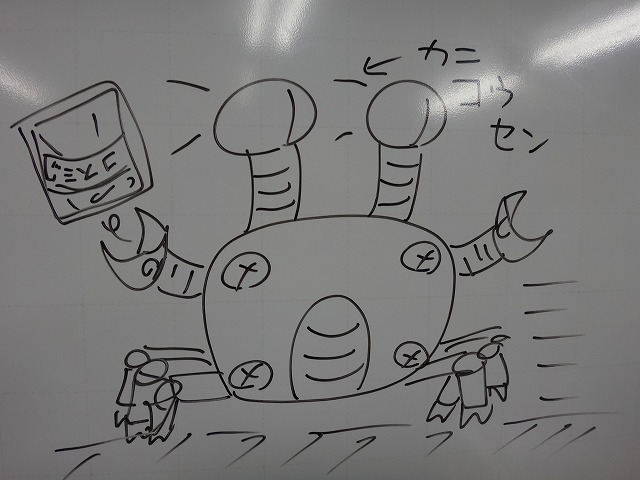
Thank you for your patience! You've been a great help this year too!
Please take a look at this image!
↑Stop that right now!