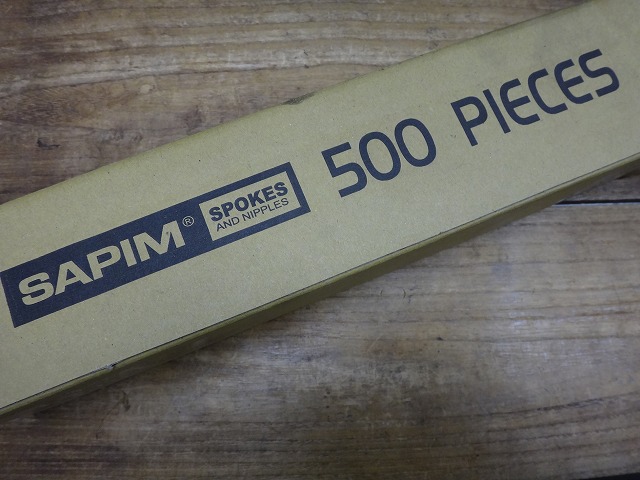
The Sapim CX Sprint bent spoke spokes that have been out of stock since around February this year have finally arrived!
It's been a long wait...
The lead time was so long that I'm starting to suspect CX Sprint was maybe just a one-time spot order.
There are quite a few ZIPP wheels using these spokes out in the world,
so I kept believing they must still be making them and hadn't discontinued production.
The Japanese distributor carries two lengths:
310mm and 270mm, both with long plain sections.
The 310mm can be cut down to 270mm, and the 270mm can be cut down to 240mm,
so we can now cover the full 310~240mm range.
With this shipment, it's now possible to build the front wheel for the Nomu Lab Wheel #8
with half CX Sprint instead of half Compete.
For the disc brake front wheels I've built in the past where I wanted half CX Sprint
but the lead time was uncertain, I built them with half Compete instead.
For those wheels, I'm offering to rebuild the spoke pattern from Compete to CX Sprint
for free labor — you only pay for the spokes (plus shipping).
If you're interested, please get in touch.
I'll also be building the wheels that have been waiting for CX Sprint to arrive.
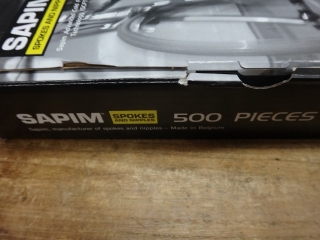
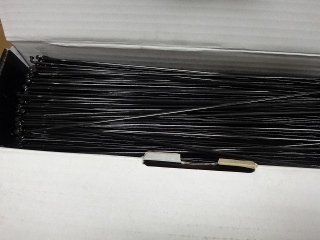
↑black
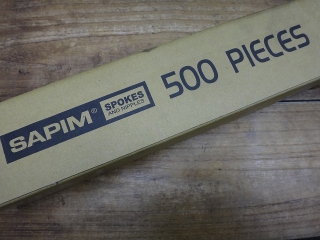

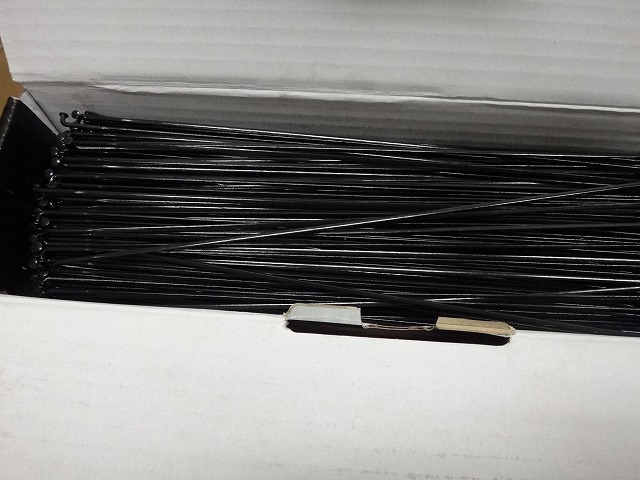
↑silver
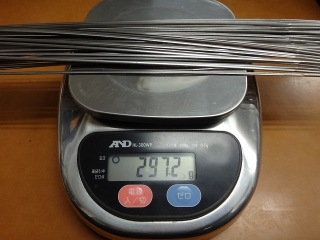
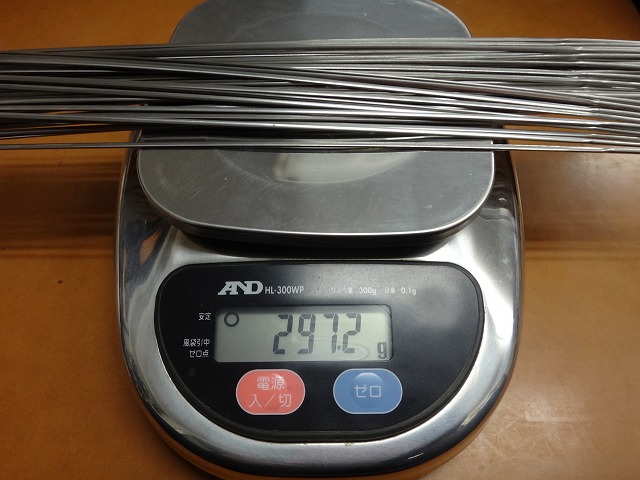
I placed as many silver CX Sprint 310mm spokes on the scale as it could measure
(it has a capacity of 300g with 0.1g resolution).
The weight was 297.2g.
I chose silver over black not because I was worried about the weight of the paint finish—
(though that's not entirely irrelevant)—
but because the surface had oil all over it and was annoyingly greasy to wipe down.

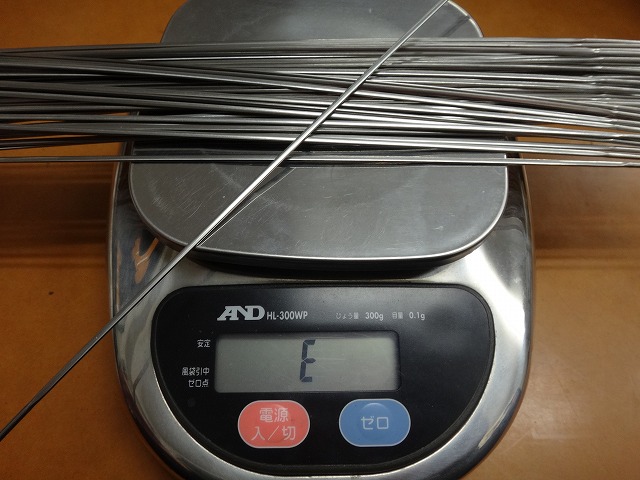
Adding one more spoke would push it over 300g, and the scale would refuse to measure it.
I've been saying that the CX Sprint spoke specific gravity is 78%,
so let me use that to calculate the number of spokes on the scale.
Spoke specific gravity is defined with a 14-gauge plain spoke 1mm in length as 100%,
and its weight is 0.0257g.
So 297.2÷310÷0.78÷0.0257 gives me
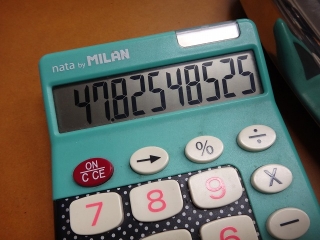
47.825... And when I counted the actual spokes, there were 47.
The reason the calculation gives a number closer to 48 has an explanation.
Now that I know there are 47 spokes,
I can calculate the spoke specific gravity based on that:
297.2÷47÷310÷0.0257 gives
0.7936995333..., so about 79.3%.
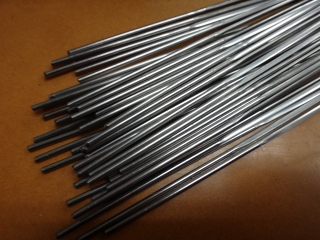
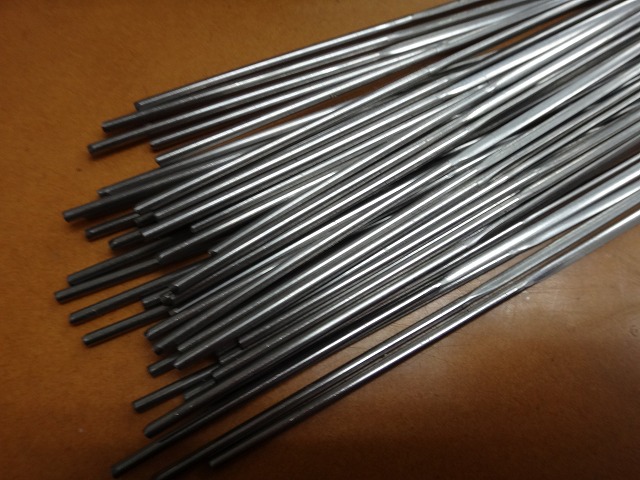
However, this spoke has a long 2.0mm plain section at the rim end,
which causes the spoke specific gravity to measure higher.
That's why the calculation gave 48-ish spokes when there are actually 47,
and why uncut spokes measure higher than 78%.
I measured using the 310mm spokes because I thought the 270mm spokes would show
much more noise from the plain section weight relative to the overall length.
Now, if I calculate the weight of one 310mm spoke:
0.0257×310×0.7936995333 gives
6.3234041179g.
From here, I'll calculate the weight of the 270mm finished spoke after cutting off up to 40mm.
The 2.0mm plain spoke portion of 40mm is
0.0257×40 = 1.028g, so
6.3234041179 - 1.028 = 5.2954041179g,
and the spoke specific gravity of a spoke that weighs 5.2954041179g when 270mm is
5.2954041179÷270÷0.0257, which is
0.7631364898..., so 76.3%.
For a large-flange fixed-gear hub in 36H laced 8-way with
an ultra-low-profile 700C rim,
the spoke length would be around 304~305mm
(in fact, Hoshi's keirin-use 15-gauge Aerostar Bright NJS-approved spokes are 305mm).
For twist-lacing there are patterns that calculate to around 315mm,
but CX Sprint is a round-section spoke, so
there's no reason to use them that way.
So using 310mm almost never happens,
but across the 310~270mm range, spoke specific gravity ranges from 79.3~76.3%,
and in the actual typical usage range it often drops below 77.5%.
I'm adopting 78% as a rough estimate.
Even if I switched to 77%, for the number of spokes used in a wheel—
12 or 20 or whatever—it wouldn't change by even 1g.
While I'm at it, let me note that
"spoke specific gravity" is my own term.
I hadn't seen any terminology focusing on weight per unit length of spoke before,
so I decided to call it that.
In terms of the original physics definition of "specific gravity," this is a misuse.
It would only be accurate when comparing, say, steel and titanium spokes
with identical cross-sections and lengths.
Campagnolo (Fulcrum included) and Colima clearly understand
what I call the spoke specific gravity concept
(though I don't know what they call it) when designing wheels.
However, both manufacturers use reverse-diameter mixed-flange lacing
(like 14+7 for 21H or 12+8 for 20H) on some of their wheels depending on rim height,
and catalogs don't go into detail about this,
nor do they explain why they do it.
It's been a long wait...
The lead time was so long that I'm starting to suspect CX Sprint was maybe just a one-time spot order.
There are quite a few ZIPP wheels using these spokes out in the world,
so I kept believing they must still be making them and hadn't discontinued production.
The Japanese distributor carries two lengths:
310mm and 270mm, both with long plain sections.
The 310mm can be cut down to 270mm, and the 270mm can be cut down to 240mm,
so we can now cover the full 310~240mm range.
With this shipment, it's now possible to build the front wheel for the Nomu Lab Wheel #8
with half CX Sprint instead of half Compete.
For the disc brake front wheels I've built in the past where I wanted half CX Sprint
but the lead time was uncertain, I built them with half Compete instead.
For those wheels, I'm offering to rebuild the spoke pattern from Compete to CX Sprint
for free labor — you only pay for the spokes (plus shipping).
If you're interested, please get in touch.
I'll also be building the wheels that have been waiting for CX Sprint to arrive.
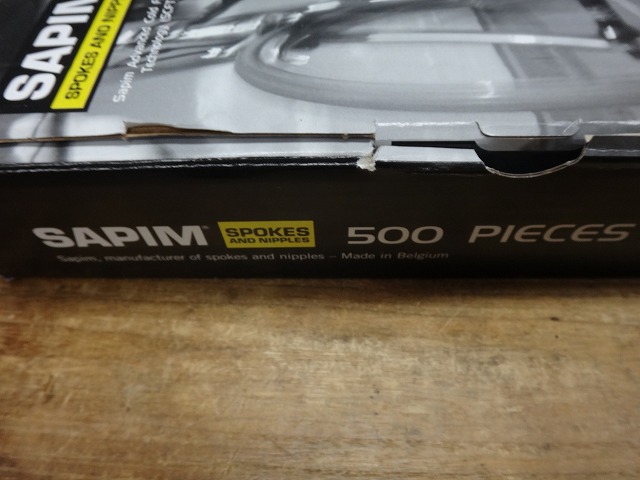
↑black

↑silver
I placed as many silver CX Sprint 310mm spokes on the scale as it could measure
(it has a capacity of 300g with 0.1g resolution).
The weight was 297.2g.
I chose silver over black not because I was worried about the weight of the paint finish—
(though that's not entirely irrelevant)—
but because the surface had oil all over it and was annoyingly greasy to wipe down.
Adding one more spoke would push it over 300g, and the scale would refuse to measure it.
I've been saying that the CX Sprint spoke specific gravity is 78%,
so let me use that to calculate the number of spokes on the scale.
Spoke specific gravity is defined with a 14-gauge plain spoke 1mm in length as 100%,
and its weight is 0.0257g.
So 297.2÷310÷0.78÷0.0257 gives me

47.825... And when I counted the actual spokes, there were 47.
The reason the calculation gives a number closer to 48 has an explanation.
Now that I know there are 47 spokes,
I can calculate the spoke specific gravity based on that:
297.2÷47÷310÷0.0257 gives
0.7936995333..., so about 79.3%.
However, this spoke has a long 2.0mm plain section at the rim end,
which causes the spoke specific gravity to measure higher.
That's why the calculation gave 48-ish spokes when there are actually 47,
and why uncut spokes measure higher than 78%.
I measured using the 310mm spokes because I thought the 270mm spokes would show
much more noise from the plain section weight relative to the overall length.
Now, if I calculate the weight of one 310mm spoke:
0.0257×310×0.7936995333 gives
6.3234041179g.
From here, I'll calculate the weight of the 270mm finished spoke after cutting off up to 40mm.
The 2.0mm plain spoke portion of 40mm is
0.0257×40 = 1.028g, so
6.3234041179 - 1.028 = 5.2954041179g,
and the spoke specific gravity of a spoke that weighs 5.2954041179g when 270mm is
5.2954041179÷270÷0.0257, which is
0.7631364898..., so 76.3%.
For a large-flange fixed-gear hub in 36H laced 8-way with
an ultra-low-profile 700C rim,
the spoke length would be around 304~305mm
(in fact, Hoshi's keirin-use 15-gauge Aerostar Bright NJS-approved spokes are 305mm).
For twist-lacing there are patterns that calculate to around 315mm,
but CX Sprint is a round-section spoke, so
there's no reason to use them that way.
So using 310mm almost never happens,
but across the 310~270mm range, spoke specific gravity ranges from 79.3~76.3%,
and in the actual typical usage range it often drops below 77.5%.
I'm adopting 78% as a rough estimate.
Even if I switched to 77%, for the number of spokes used in a wheel—
12 or 20 or whatever—it wouldn't change by even 1g.
While I'm at it, let me note that
"spoke specific gravity" is my own term.
I hadn't seen any terminology focusing on weight per unit length of spoke before,
so I decided to call it that.
In terms of the original physics definition of "specific gravity," this is a misuse.
It would only be accurate when comparing, say, steel and titanium spokes
with identical cross-sections and lengths.
Campagnolo (Fulcrum included) and Colima clearly understand
what I call the spoke specific gravity concept
(though I don't know what they call it) when designing wheels.
However, both manufacturers use reverse-diameter mixed-flange lacing
(like 14+7 for 21H or 12+8 for 20H) on some of their wheels depending on rim height,
and catalogs don't go into detail about this,
nor do they explain why they do it.