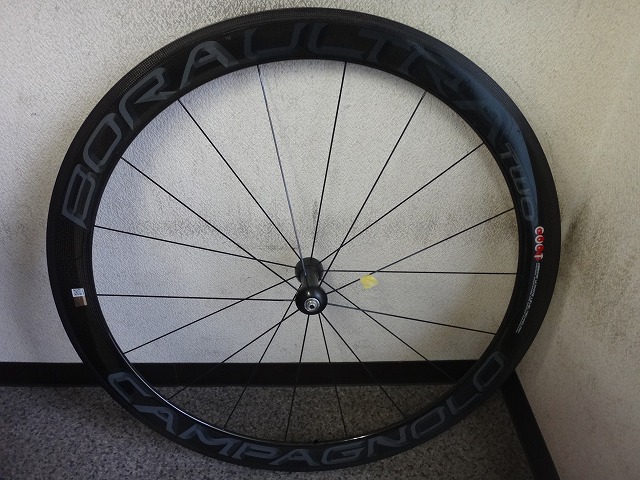
I received a Bora Ultra Two (high-end carbon wheelset) from a customer.
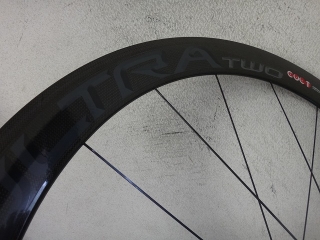
When this wheel was the latest model,
Bora only existed in the 50mm deep rim version,
so there was no need to include rim depth in the model name.
When I think about how many wheels released 10 years after this one
still don't match the performance of this wheel,
you could say it was a wheel that was 10 years ahead of its time.
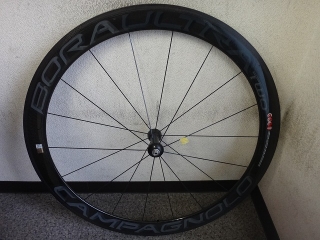
Anyway, let's start with the front wheel.
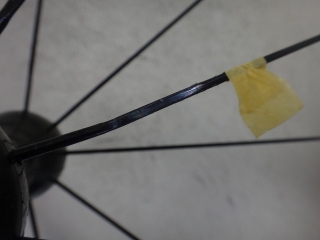
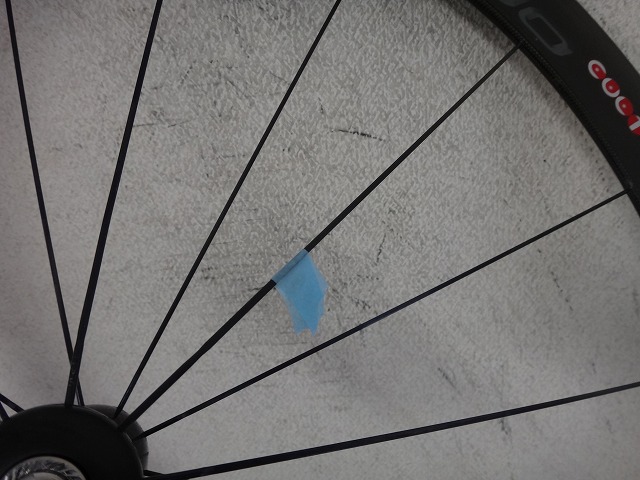
The spoke with the marker tape on it is bent,
so the customer wants it replaced and the wheel inspected.
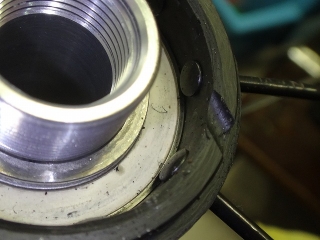
The bent spoke is on the right side of the wheel.
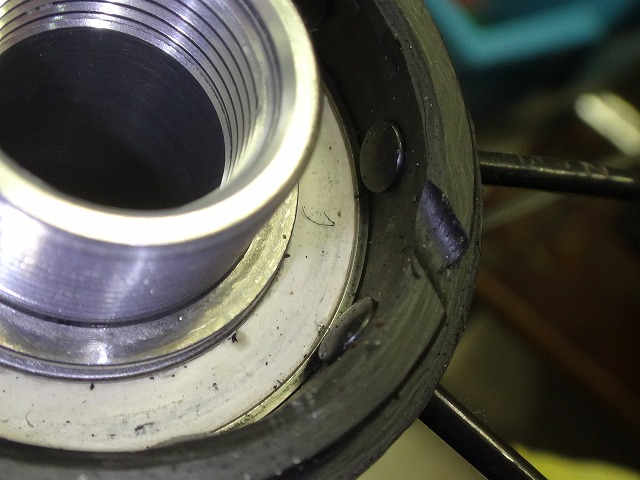
You might wonder how I can definitively determine left and right on a radial-spoked front wheel,
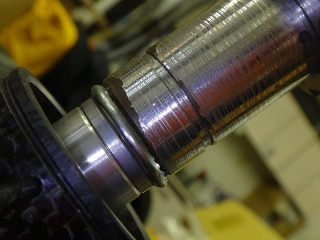
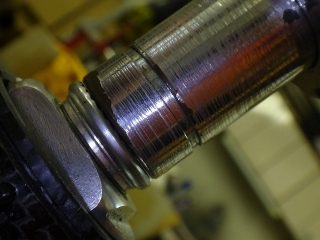
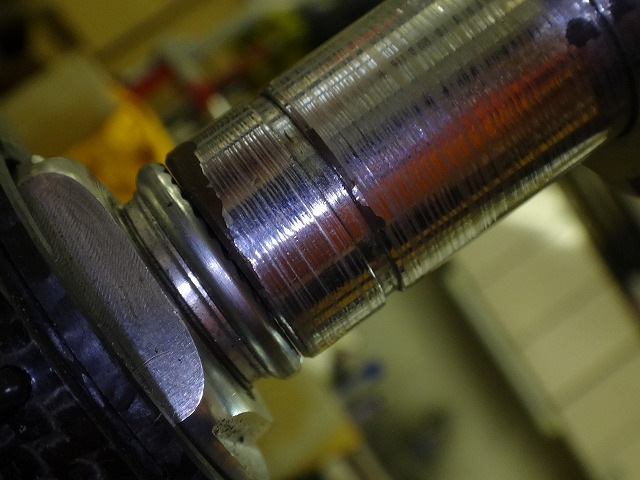
but as you can see in the image above,
there's a slot on the left side of the hub shell only,
where you insert an Allen key to adjust the ball race bearing.
Since the spoke in question is on the right side, I had no choice but
to completely remove the hub axle for the replacement,
but even if I were replacing a spoke on the left side,
I'd still need to slide the hub axle enough to release
the relationship between the cone and the bearing balls.
The front hub ball race was properly adjusted—CULT (top-tier bearing) felt great
and rotated silky smooth, so I would've preferred not to touch it,
but there was no way around it. As it turned out, after reassembly,
the hub rotation was just as smooth as before—no degradation.
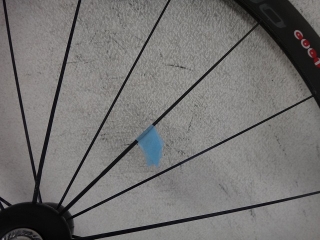
I replaced the spoke.
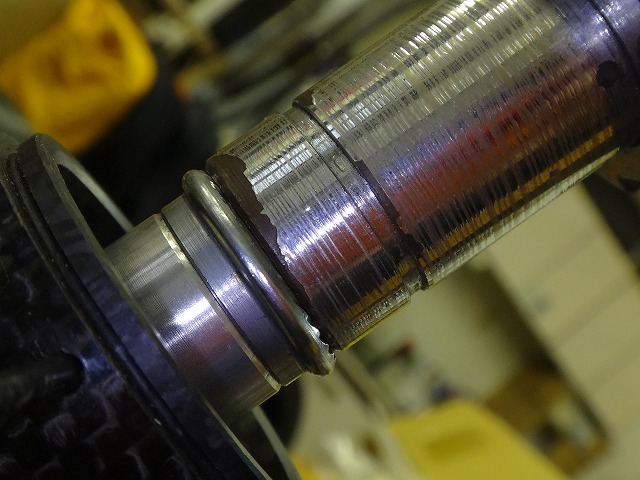
I didn't check the preliminary center before replacing the spoke—I just
replaced it and trued out the slight wobble, and only then
applied the centering gauge for the first time. It was dead-center.
The images above are from that moment. If a wheel is built correctly
from the start, it doesn't just go out of true later on.
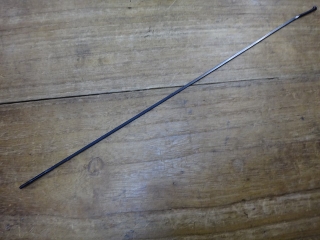
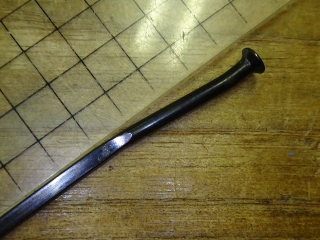
↑The replaced spoke
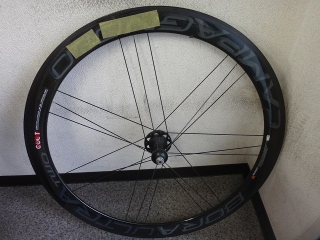
Now for the rear wheel.
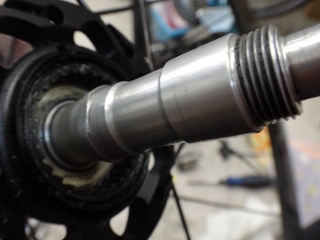
The customer mentioned that the hub rotation felt heavy,
and as you can see in the image above, the rear hub in a "front hub state"
(with the freewheel body's resistance eliminated) does rotate slightly heavy.
However, this is not abnormal—it's just that the bearings haven't broken in yet.
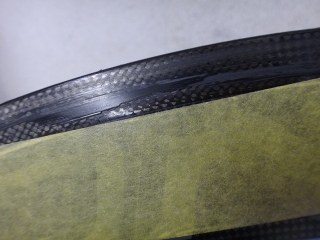
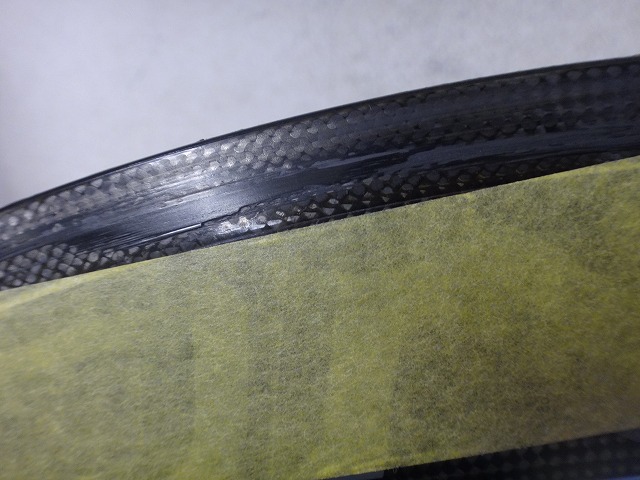
The tape on the rim marks a location in the braking zone
where the customer wants the dirt cleaned.
When rim cement drips onto the braking zone and you brake,
it gets stretched out like this, but looking at the outer edge of the rim,
there are no signs of rim cement having been used.
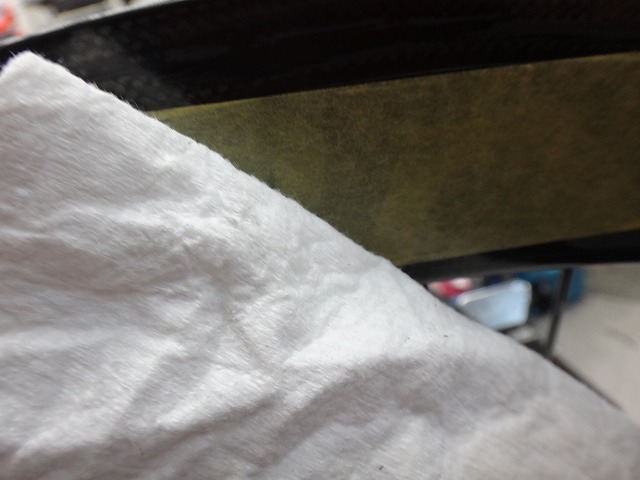
And when I wiped it, I found out it wasn't rim cement at all.
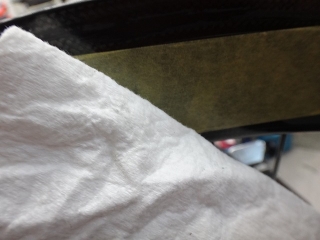
I cleaned it with
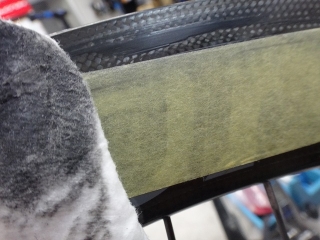
acetone.
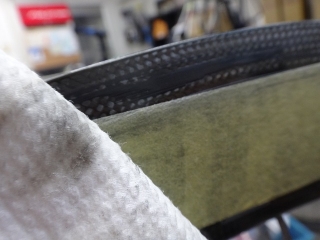
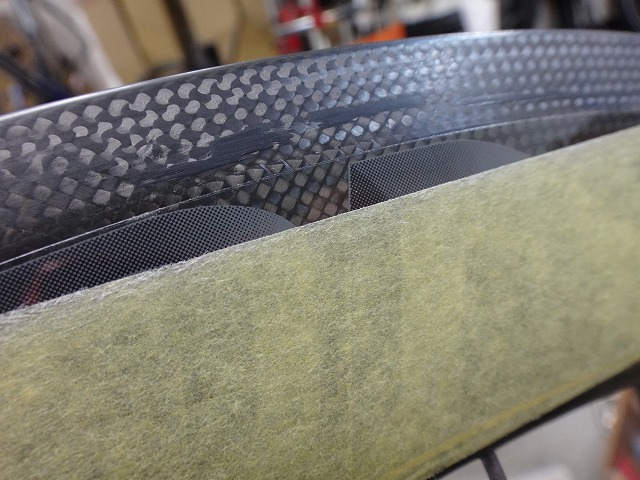
Parts cleaner barely touched it.
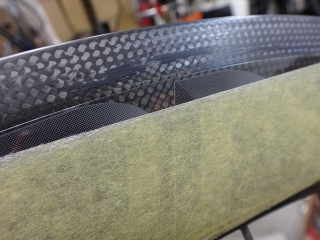
The edge of the tape was sitting on the dirt, so
I moved the tape position lower, toward the inner edge of the rim.
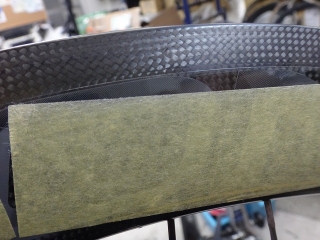
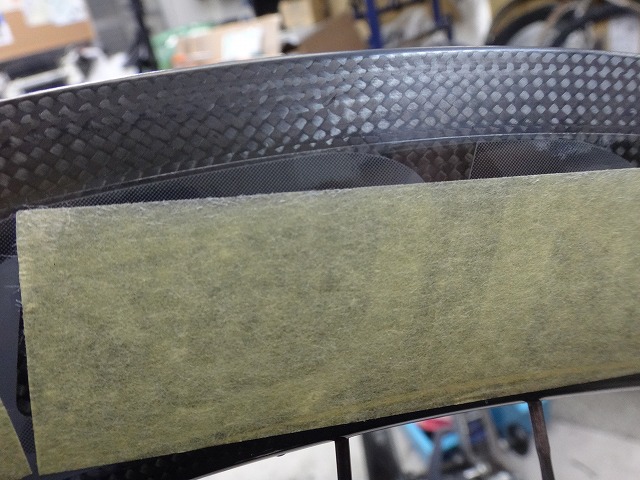
Clean.
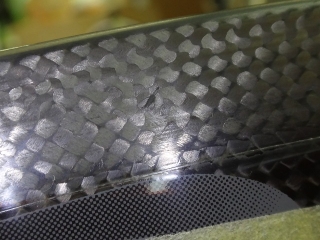
At first I thought it might be porosity, but
there are actually scratches in the braking zone. This doesn't affect operation.
Just as tiny scratches on a ball race get caught by the bearing balls every rotation,
eventually becoming obvious pitting, these small dents seem to
accumulate brake shoe dust like a filter.

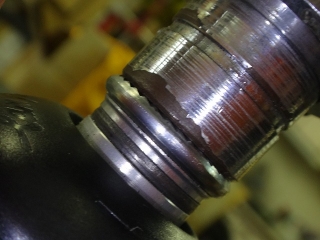
The rear wheel also didn't have a preliminary center checked.
When I first applied the gauge after truing, it was dead-center.
Given the likelihood that years of use have shifted it toward the freewheel side,
I made sure to true with a slight bias toward the non-freewheel side,
but since the wheel wasn't very out of true to begin with,
I didn't even pull the rim that much toward the non-freewheel side.
In other words, the wheel was already dead-center from the original state,
or very close to it.
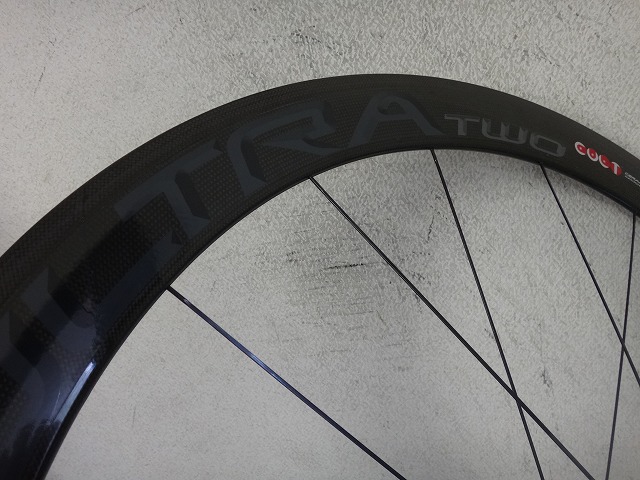
When this wheel was the latest model,
Bora only existed in the 50mm deep rim version,
so there was no need to include rim depth in the model name.
When I think about how many wheels released 10 years after this one
still don't match the performance of this wheel,
you could say it was a wheel that was 10 years ahead of its time.
Anyway, let's start with the front wheel.

The spoke with the marker tape on it is bent,
so the customer wants it replaced and the wheel inspected.
The bent spoke is on the right side of the wheel.
You might wonder how I can definitively determine left and right on a radial-spoked front wheel,
but as you can see in the image above,
there's a slot on the left side of the hub shell only,
where you insert an Allen key to adjust the ball race bearing.
Since the spoke in question is on the right side, I had no choice but
to completely remove the hub axle for the replacement,
but even if I were replacing a spoke on the left side,
I'd still need to slide the hub axle enough to release
the relationship between the cone and the bearing balls.
The front hub ball race was properly adjusted—CULT (top-tier bearing) felt great
and rotated silky smooth, so I would've preferred not to touch it,
but there was no way around it. As it turned out, after reassembly,
the hub rotation was just as smooth as before—no degradation.
I replaced the spoke.
I didn't check the preliminary center before replacing the spoke—I just
replaced it and trued out the slight wobble, and only then
applied the centering gauge for the first time. It was dead-center.
The images above are from that moment. If a wheel is built correctly
from the start, it doesn't just go out of true later on.
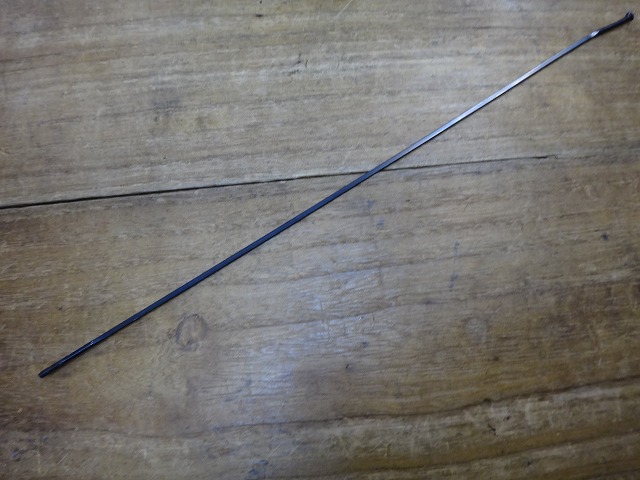
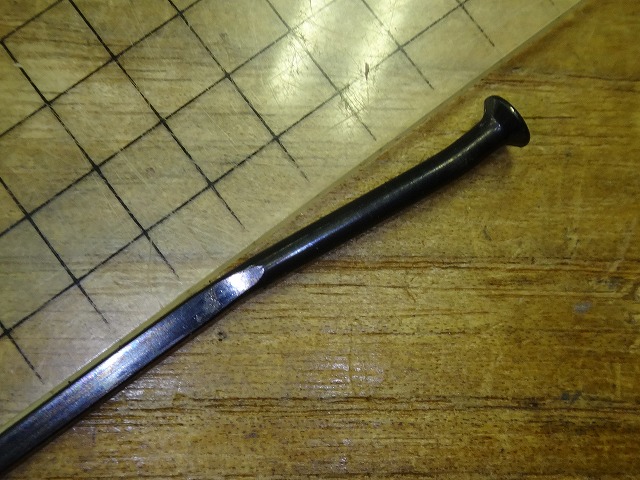
↑The replaced spoke

Now for the rear wheel.
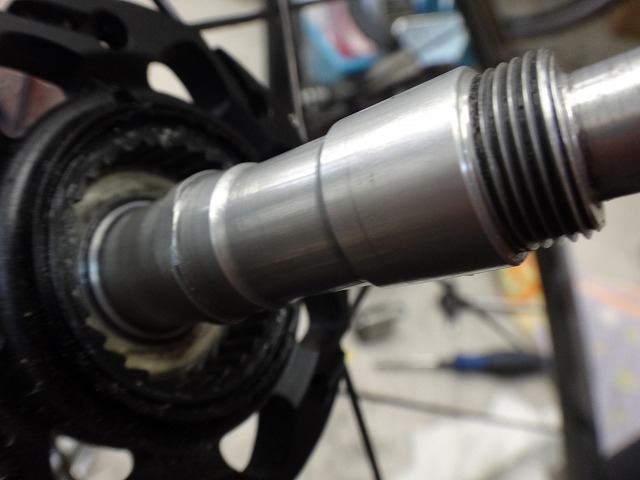
The customer mentioned that the hub rotation felt heavy,
and as you can see in the image above, the rear hub in a "front hub state"
(with the freewheel body's resistance eliminated) does rotate slightly heavy.
However, this is not abnormal—it's just that the bearings haven't broken in yet.
The tape on the rim marks a location in the braking zone
where the customer wants the dirt cleaned.
When rim cement drips onto the braking zone and you brake,
it gets stretched out like this, but looking at the outer edge of the rim,
there are no signs of rim cement having been used.
And when I wiped it, I found out it wasn't rim cement at all.
I cleaned it with

acetone.

Parts cleaner barely touched it.
The edge of the tape was sitting on the dirt, so
I moved the tape position lower, toward the inner edge of the rim.
Clean.

At first I thought it might be porosity, but
there are actually scratches in the braking zone. This doesn't affect operation.
Just as tiny scratches on a ball race get caught by the bearing balls every rotation,
eventually becoming obvious pitting, these small dents seem to
accumulate brake shoe dust like a filter.

The rear wheel also didn't have a preliminary center checked.
When I first applied the gauge after truing, it was dead-center.
Given the likelihood that years of use have shifted it toward the freewheel side,
I made sure to true with a slight bias toward the non-freewheel side,
but since the wheel wasn't very out of true to begin with,
I didn't even pull the rim that much toward the non-freewheel side.
In other words, the wheel was already dead-center from the original state,
or very close to it.