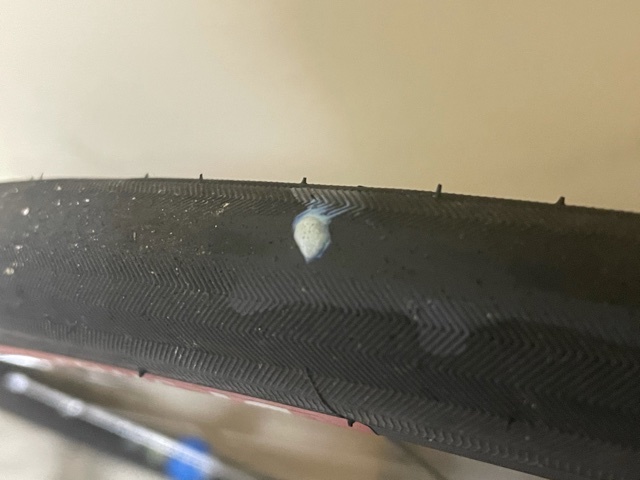
Early yesterday morning, I noticed my tubeless tire was flat.
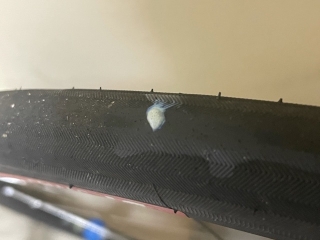
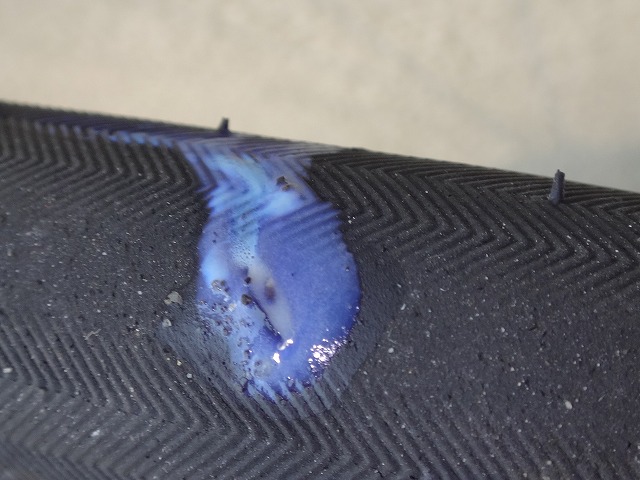
The Effetto (tire sealant) was leaking out in liquid form.
After that, the location of the puncture remained roughly at the top of the wheel.
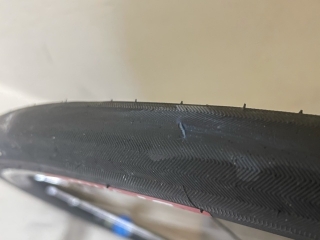
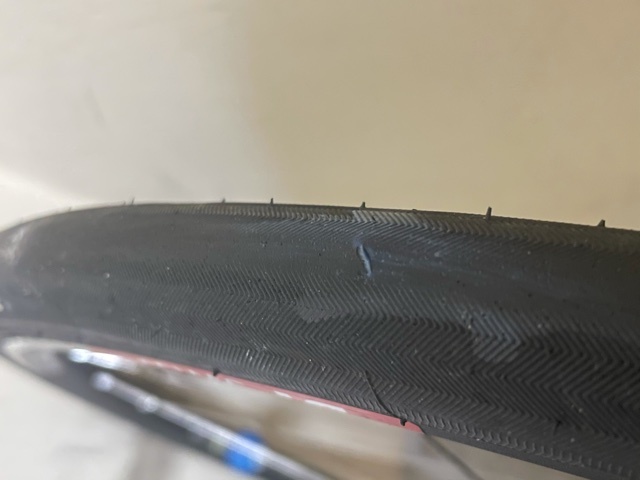
I wiped away the sealant.
I could see the tear from the puncture.
When I checked the air pressure at this point, it was around 7 bar.
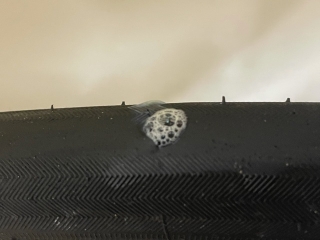
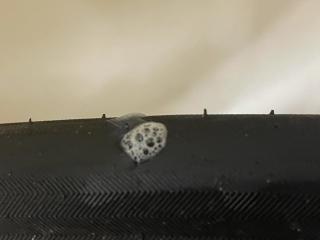
Just over 30 hours had passed since then.
I hadn't moved the bike at all.
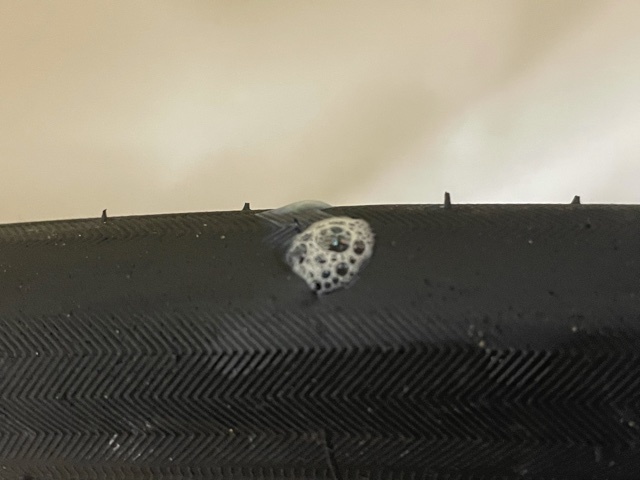
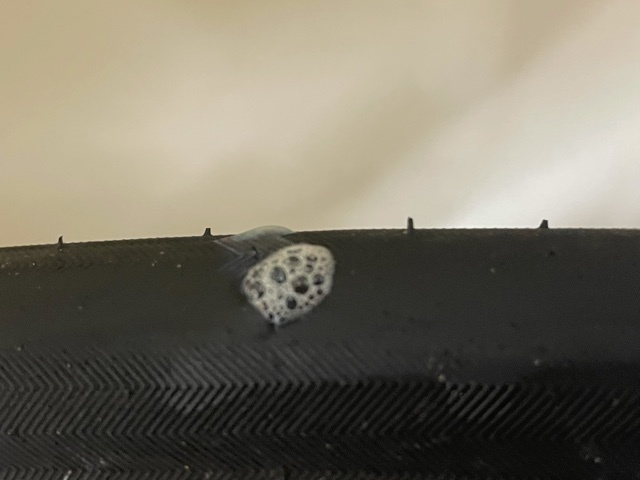
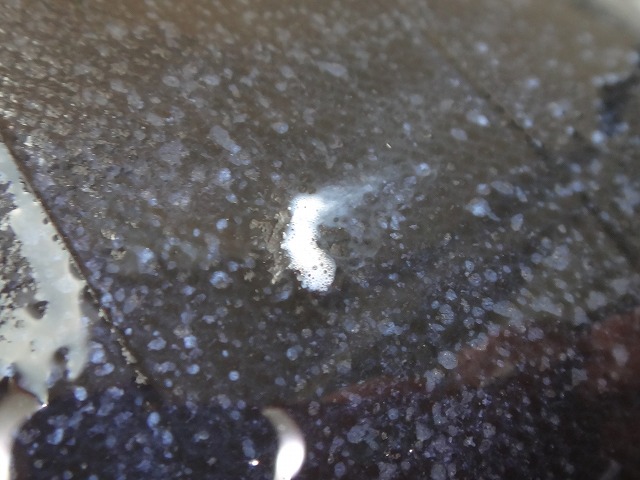
You can tell by the different shape of the bubbles,
but air was bubbling out through the tear.
The tire is an IRC Formula Pro S-Lite,
and while it's extremely light, the tread is thin and the lifespan is short,
but I like this model because there's no sense of it being unreliable on corners or wet roads.
Even with bubbles actively forming right in front of me,
the pressure had only dropped 1 bar in 30 hours.
7 bar is on the high-pressure side for a tubeless setup,
and pressure loss should happen faster at higher pressures.
It might be that while the sealant is bubbling, air barely leaks out—
at least in this case.
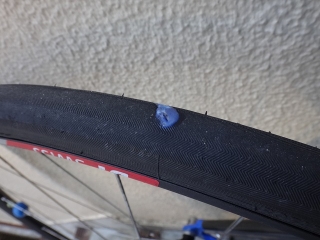
It seemed rideable, so I commuted by bike without adding air.
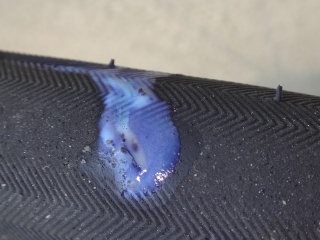
The sealant was leaking like a wound that never stops bleeding, but the air pressure barely dropped.
Most of the times I've had a tubeless puncture,
it's been either in rain or
on wet road surfaces just after rain.
This isn't so much "punctures happen more easily in rain" as it is
that the sealant had already sealed the puncture,
and it got peeled away on the wet road surface,
causing a puncture that hadn't actually happened yet
to become visible.

So I squeezed the water from the hose nozzle
and directed it intensely at the puncture location.
This might remove the sealant "cap" and open up the tear,
potentially causing rapid air leakage.
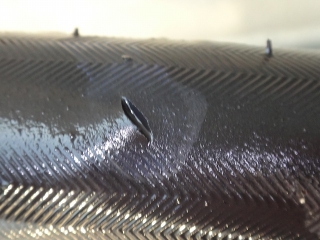
Result: It didn't.
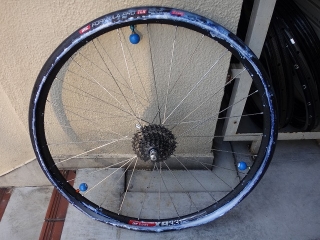
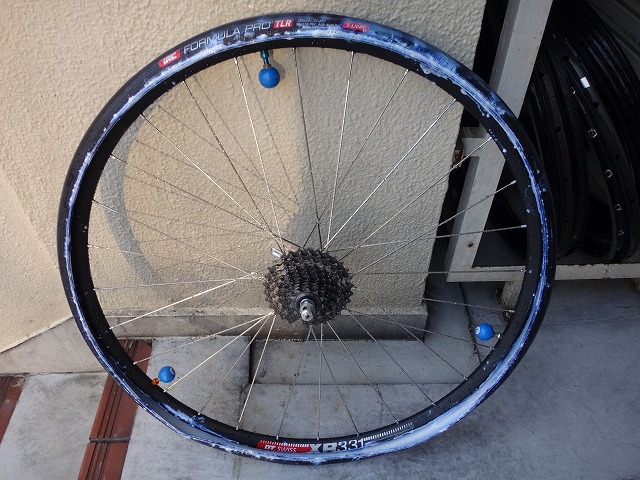
I let the air out of the valve and removed the tire.
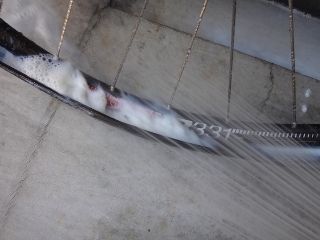
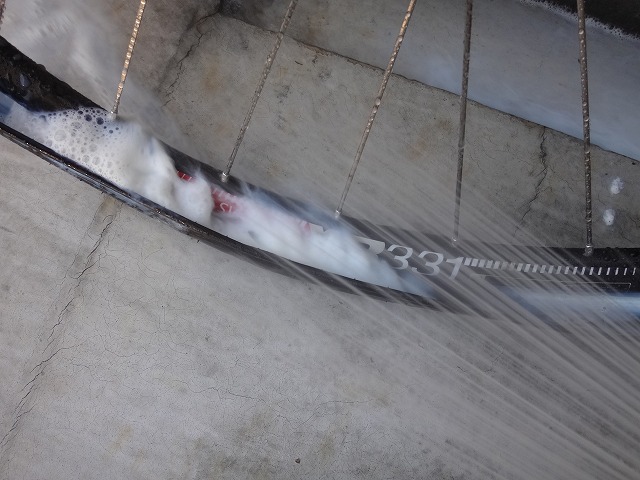
I opened the hose nozzle to a wide angle
and lightly sprayed shower-like water,
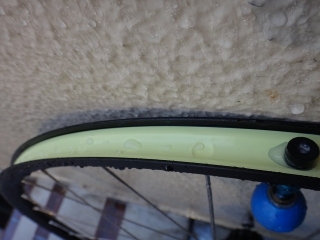
and the rim cleaned up beautifully with sealant flowing right off,

and the inside of the tire too
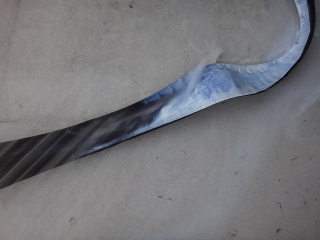
came clean easily without scrubbing.
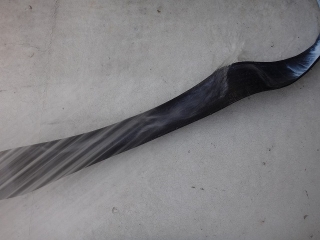
I'm talking like a bathroom cleaner commercial, and I won't deny this is basically advertising for Effetto.
Well, once I say it's advertising, it's not really advertising anymore.
As I always say, old tires are going to be thrown away anyway,
but the fact that sealant doesn't leave clumps on the rim side
makes Effetto worth using.
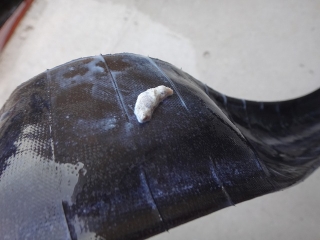
There was a buildup of working sealant
on the underside of the puncture tear!
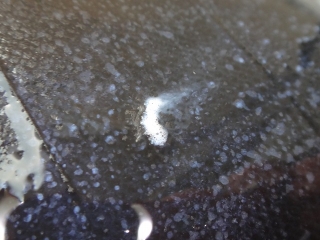
When I rubbed it with my finger, the sealant clump came off easily.
Sealant was still in the tear itself,
so I scrubbed just that area to wash away the sealant,
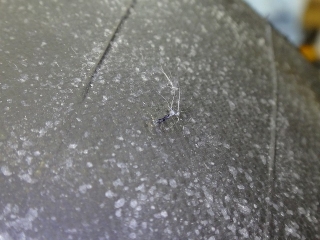
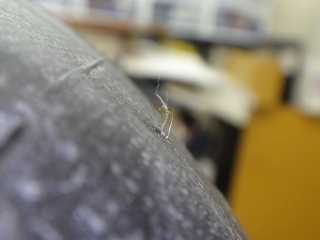
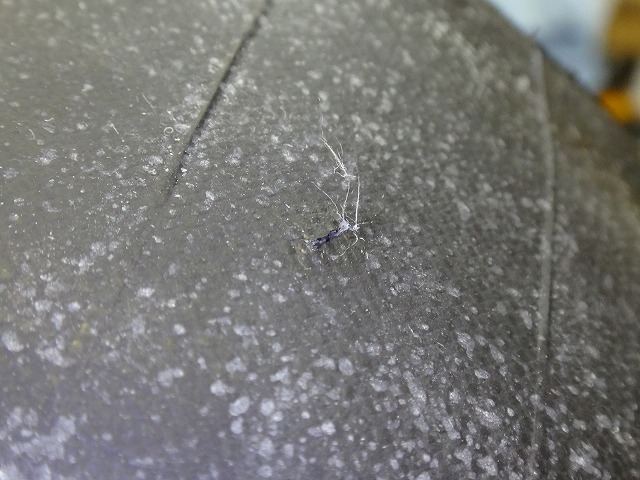
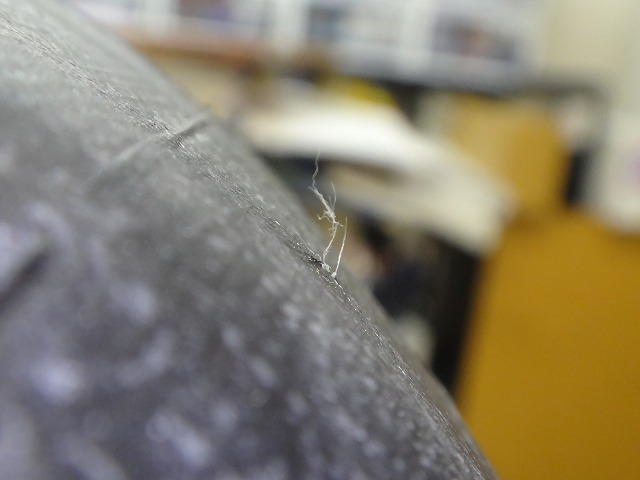
↑This is what I got after blasting it with compressed air to remove moisture.
A bit of tire fiber is showing.
The tread still has usable thickness, so
I cheaped out and decided to reuse it.
I applied cyanoacrylate and sprayed accelerator
(a promoter that hardens cyanoacrylate truly instantly) to harden it crisp,
but the hardened adhesive peeled off easily under my fingernail like a scab.
It seems to have poor compatibility with tire rubber.
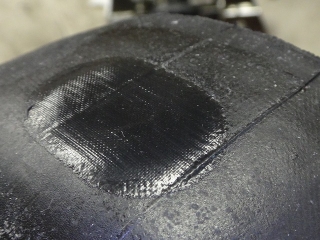
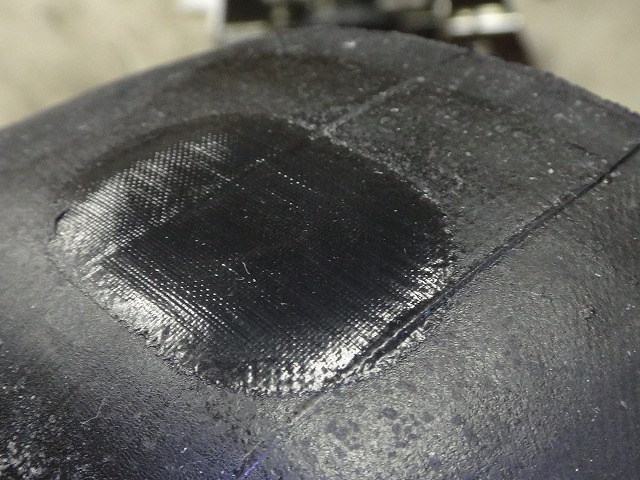
So next, I carefully vulcanized and
applied the thinnest patch I know of.
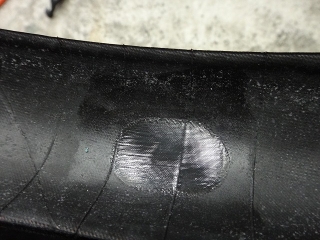
↑Like this.
Even scratching with a fingernail doesn't come off easily.
At least it doesn't seem like it'll naturally peel back.
Previously, I wrote that even the grainy Effetto sealant doesn't work as well,
so I use about 1.5 times the amount of Stans,
but with this rim and tire combination
I've found through experience that using about the same amount as Stans
with observation over time can prevent air leakage entirely.
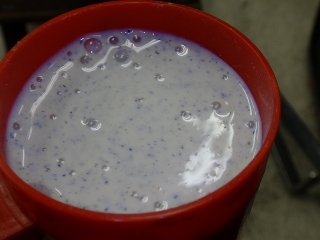
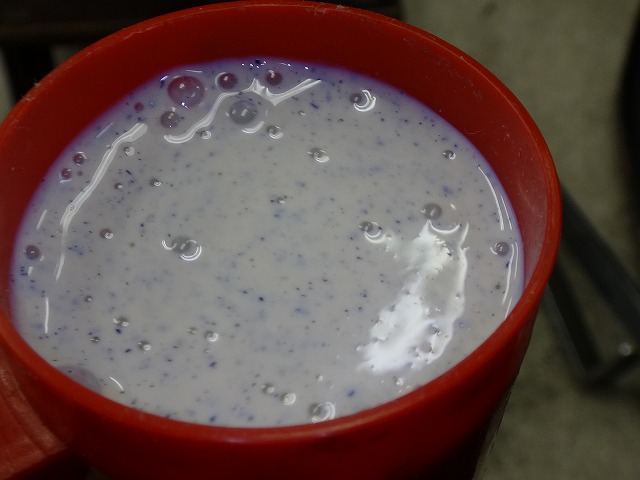
The cup in the image above is from Stans,
and filling it to the line shown is about 40ml.
For 23C or 25C, with observation over time, this amount stops air leakage.
Compatibility with the rim and tire performance matter,
so especially if the tire isn't IRC and it's the type that leaks air bubbling from the tire sidewall
rather than from the bead interface, 40ml likely won't be enough.
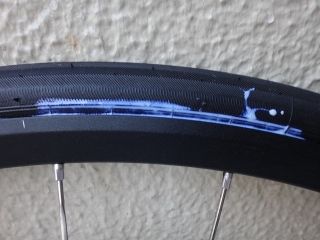
The bead seated with a loud snap!
There was one spot where sealant leaked out,
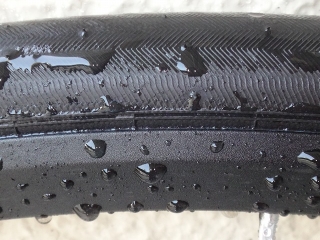
so I rinsed it with water.
Sometimes at this point, very small bubbles will bubble out
from the rim-tire interface,
and sometimes that will result in noticeable air loss in half a day,
but interestingly, once you add more air there,
it stabilizes to have zero air leakage.
This time there were no bubbles, and about 10 hours have passed since the image above
while I've been writing this article,
and no air leakage has occurred.
And of course, no sealant leakage from the tear either.
The Effetto (tire sealant) was leaking out in liquid form.
After that, the location of the puncture remained roughly at the top of the wheel.
I wiped away the sealant.
I could see the tear from the puncture.
When I checked the air pressure at this point, it was around 7 bar.
Just over 30 hours had passed since then.
I hadn't moved the bike at all.
You can tell by the different shape of the bubbles,
but air was bubbling out through the tear.
The tire is an IRC Formula Pro S-Lite,
and while it's extremely light, the tread is thin and the lifespan is short,
but I like this model because there's no sense of it being unreliable on corners or wet roads.
Even with bubbles actively forming right in front of me,
the pressure had only dropped 1 bar in 30 hours.
7 bar is on the high-pressure side for a tubeless setup,
and pressure loss should happen faster at higher pressures.
It might be that while the sealant is bubbling, air barely leaks out—
at least in this case.

It seemed rideable, so I commuted by bike without adding air.
The sealant was leaking like a wound that never stops bleeding, but the air pressure barely dropped.
Most of the times I've had a tubeless puncture,
it's been either in rain or
on wet road surfaces just after rain.
This isn't so much "punctures happen more easily in rain" as it is
that the sealant had already sealed the puncture,
and it got peeled away on the wet road surface,
causing a puncture that hadn't actually happened yet
to become visible.

So I squeezed the water from the hose nozzle
and directed it intensely at the puncture location.
This might remove the sealant "cap" and open up the tear,
potentially causing rapid air leakage.

Result: It didn't.
I let the air out of the valve and removed the tire.
I opened the hose nozzle to a wide angle
and lightly sprayed shower-like water,
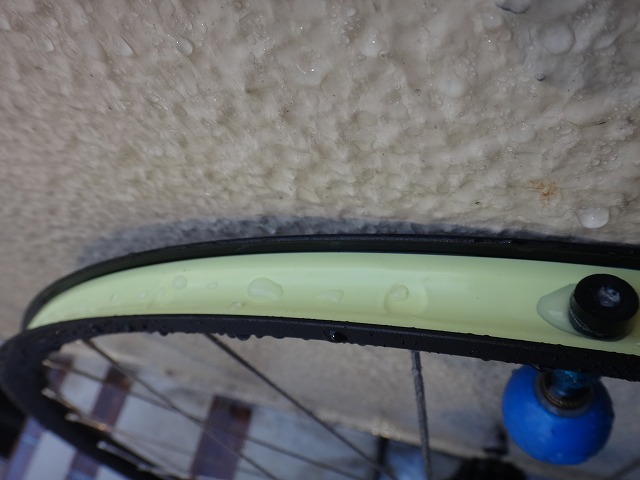
and the rim cleaned up beautifully with sealant flowing right off,

and the inside of the tire too
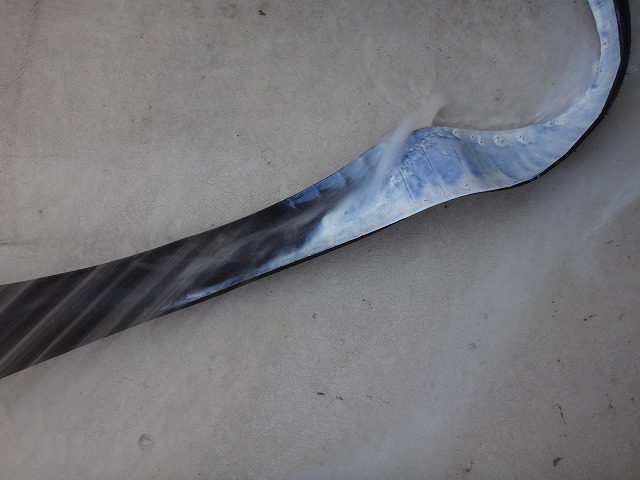
came clean easily without scrubbing.
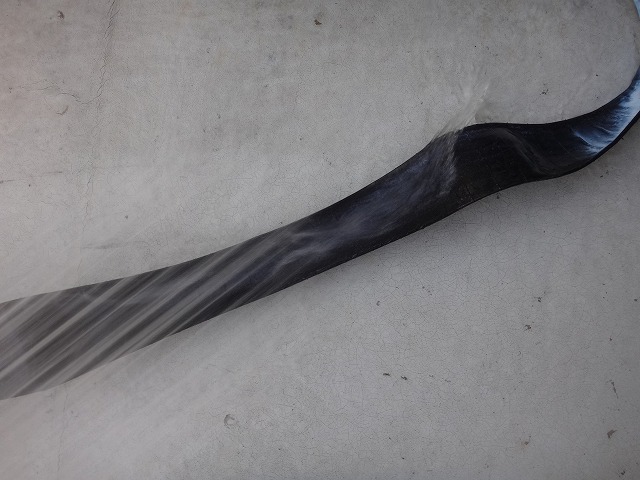
I'm talking like a bathroom cleaner commercial, and I won't deny this is basically advertising for Effetto.
Well, once I say it's advertising, it's not really advertising anymore.
As I always say, old tires are going to be thrown away anyway,
but the fact that sealant doesn't leave clumps on the rim side
makes Effetto worth using.
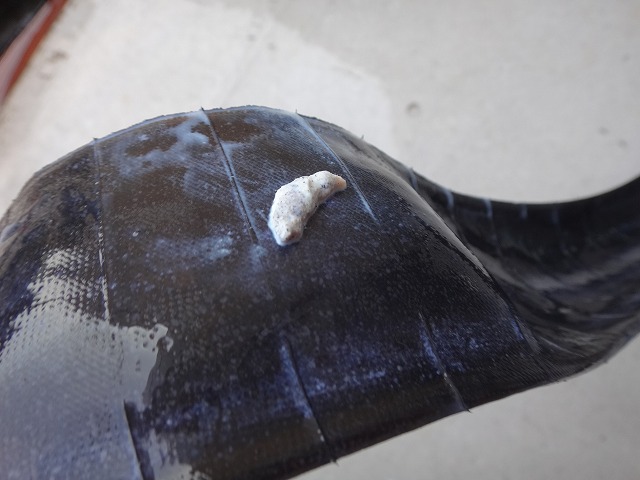
There was a buildup of working sealant
on the underside of the puncture tear!
When I rubbed it with my finger, the sealant clump came off easily.
Sealant was still in the tear itself,
so I scrubbed just that area to wash away the sealant,
↑This is what I got after blasting it with compressed air to remove moisture.
A bit of tire fiber is showing.
The tread still has usable thickness, so
I cheaped out and decided to reuse it.
I applied cyanoacrylate and sprayed accelerator
(a promoter that hardens cyanoacrylate truly instantly) to harden it crisp,
but the hardened adhesive peeled off easily under my fingernail like a scab.
It seems to have poor compatibility with tire rubber.
So next, I carefully vulcanized and
applied the thinnest patch I know of.

↑Like this.
Even scratching with a fingernail doesn't come off easily.
At least it doesn't seem like it'll naturally peel back.
Previously, I wrote that even the grainy Effetto sealant doesn't work as well,
so I use about 1.5 times the amount of Stans,
but with this rim and tire combination
I've found through experience that using about the same amount as Stans
with observation over time can prevent air leakage entirely.
The cup in the image above is from Stans,
and filling it to the line shown is about 40ml.
For 23C or 25C, with observation over time, this amount stops air leakage.
Compatibility with the rim and tire performance matter,
so especially if the tire isn't IRC and it's the type that leaks air bubbling from the tire sidewall
rather than from the bead interface, 40ml likely won't be enough.

The bead seated with a loud snap!
There was one spot where sealant leaked out,
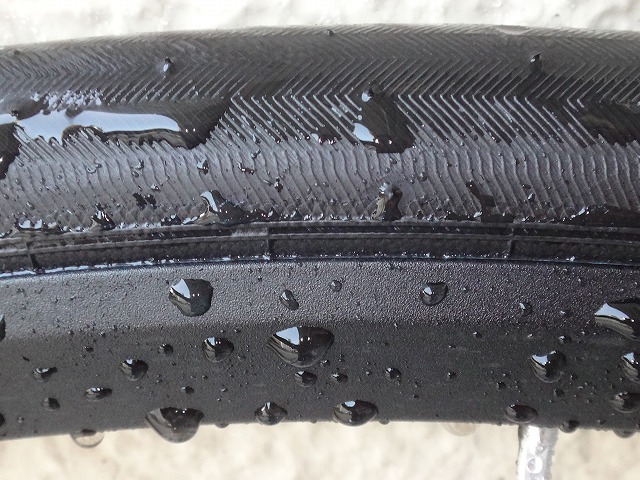
so I rinsed it with water.
Sometimes at this point, very small bubbles will bubble out
from the rim-tire interface,
and sometimes that will result in noticeable air loss in half a day,
but interestingly, once you add more air there,
it stabilizes to have zero air leakage.
This time there were no bubbles, and about 10 hours have passed since the image above
while I've been writing this article,
and no air leakage has occurred.
And of course, no sealant leakage from the tear either.