Another day working on wheels (and so on).
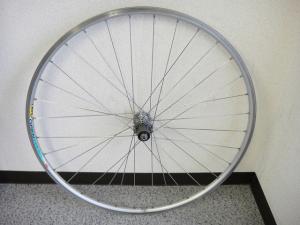
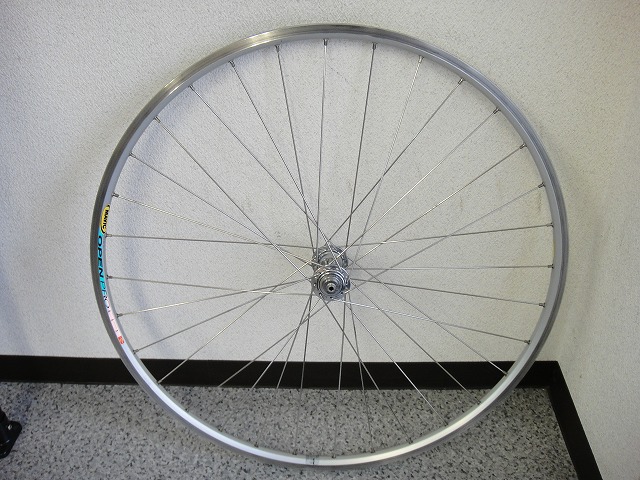
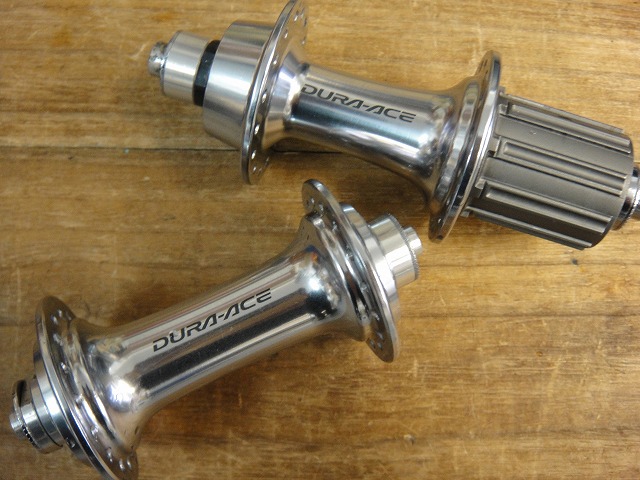
I've taken in an Open Pro rim with a 7800 Dura-Ace hub
32H wheel for a complete rebuild.
The customer also wants a hub overhaul.
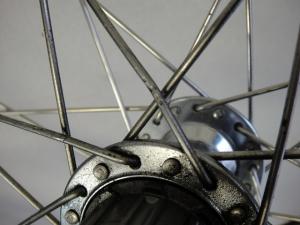
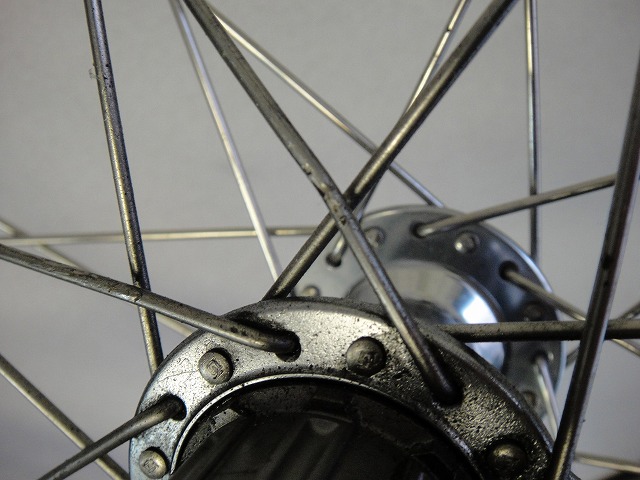
The inpoke spokes on the freewheel side of the rear wheel have been gouged up
from chain drops—that's definitely one reason for wanting a rebuild.
Both wheels are currently all 6-spoke lacing, but the customer wants
4-spoke lacing on the rear wheel.
I use my own naming convention here—I apply the spoke counts in this order:
"front wheel · rear freewheel side · rear non-freewheel side."
So this rebuild goes from "6·6·6" to "6·4·8."
These days, 32H wheels are almost exclusively built with classical low-profile rims,
except in cases like using an XR300 semi-aero rim with a PowerTap.
Depending on the bike, when I prioritize character and durability with tangent lacing on the front,
I usually go with 6-spoke lacing, so "6·4·8" is basically our shop's standard
for low-profile rims with tangent lacing front and rear.
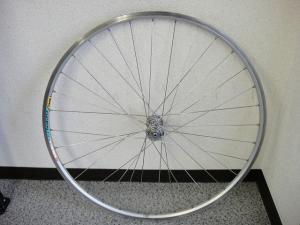
The front wheel is already laced 6-spoke. Regardless of the customer's wishes,
I'm not the type who's desperate to rebuild wheels just for the sake of it.
If there's no real "benefit from rebuilding," then honestly
I think truing and tightening might be enough.
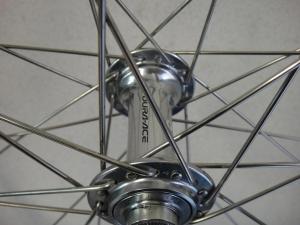
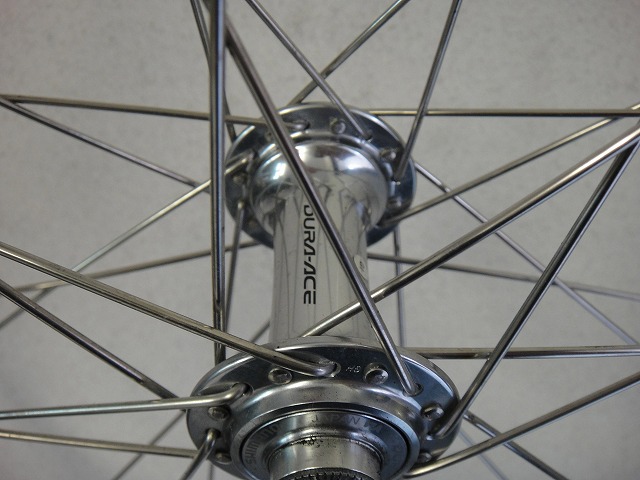
It was laced JIS-style before, so I'm going to relace it Italian-style.
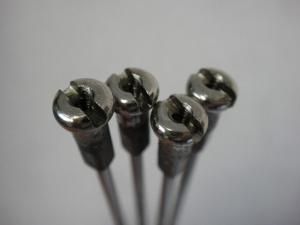
When I disassemble wheels, I almost never reuse the spokes.
So I cut them with clippers, but if you cut them straight through, the spoke tension
releases all at once and sends a shock to the rim, so I loosen the nipples first
to gradually release the tension. You only need to loosen about half the wheel's worth,
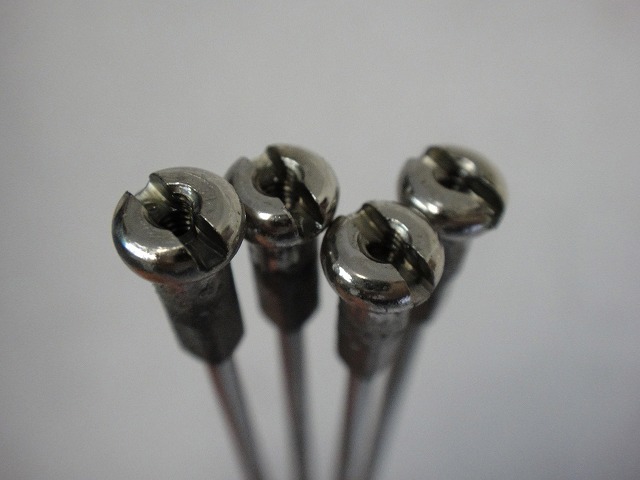
but the nipples in the image above are on the side I haven't loosened at all.
You can clearly see these spokes are too short.
More and more reasons to rebuild are showing up.
Upgrading from 2.0mm plain spokes to butted spokes,
and from brass nipples to aluminum nipples,
means there's value in the rebuild from a weight perspective too.
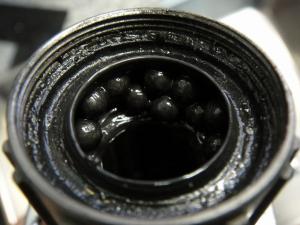
I opened up the rear hub and it was almost too late.
But there's still time—it can be saved with regreasing and so on.
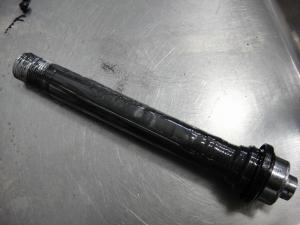
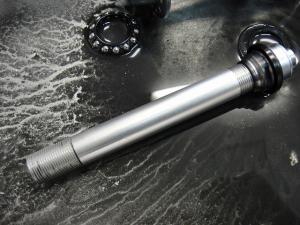
I cleaned the shaft and everything thoroughly.
Dura-Ace hubs are exceptional for their smoothness,
so even if the internals are pretty rough, you can't tell just by watching the shaft spin.
I didn't expect this hub had gotten to this point.
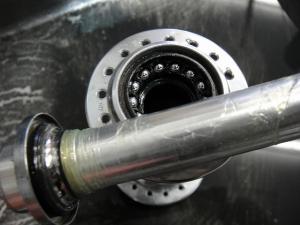
The front hub wasn't quite as bad as the rear.
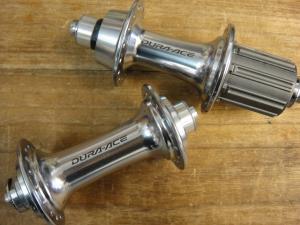
Anyway, I overhauled both hubs.

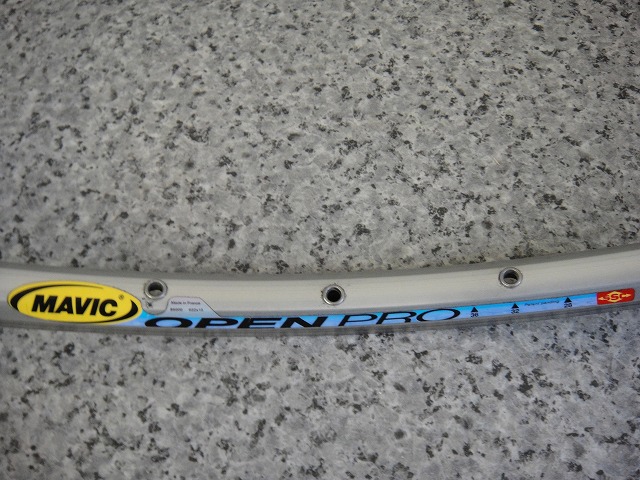
On a side note, Open Pro rims don't have any obvious visual indicators
that determine their front/rear/left/right orientation.
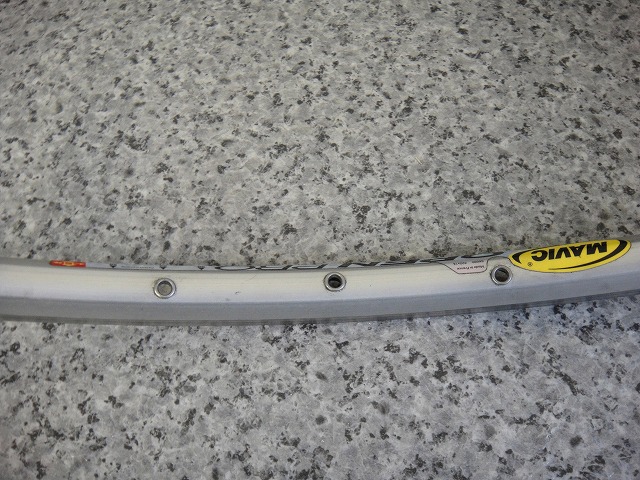
As for the sticker direction, from the position in this image, the opposite side looks like
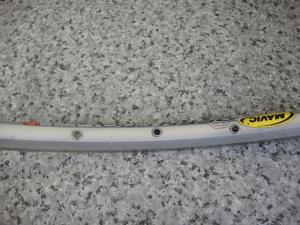
↑this.
It doesn't seem like there's a defined side that should face "to the right relative to forward motion."
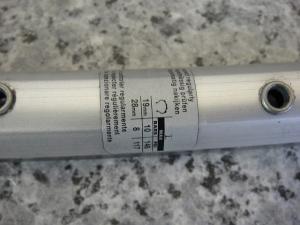
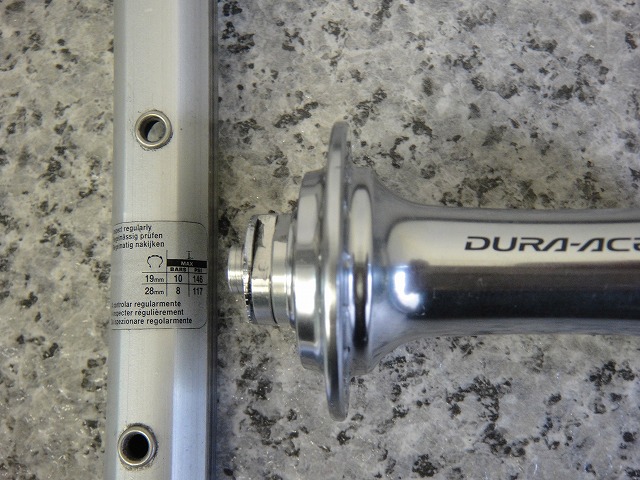
But the rim joint sticker does have front/rear information.
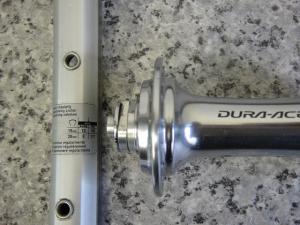
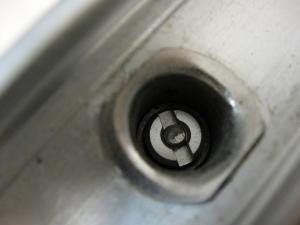
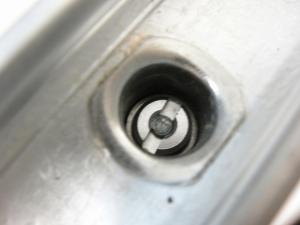
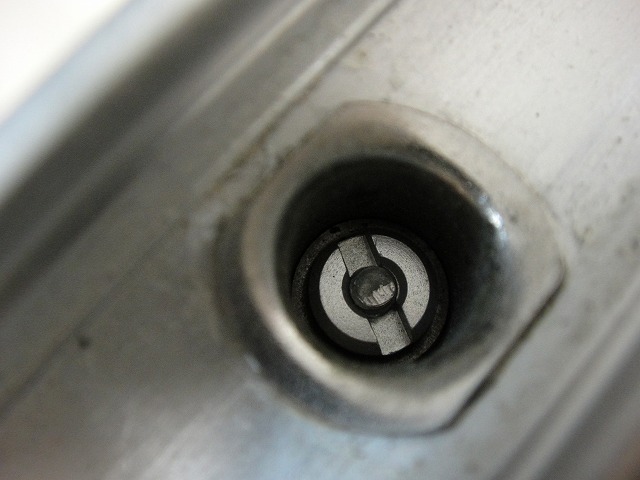
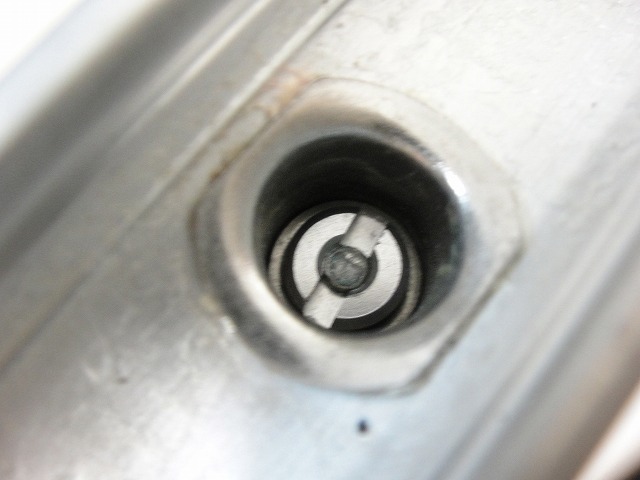
So I lace the wheel so that when you peek through the valve hole,
both the joint sticker's text and the hub markings read correctly in their proper orientation.
It doesn't affect performance, but it's like the custom of aligning
the WO tire label with the valve position.
I occasionally see wheels laced with this sticker reversed and it bugs me.
This Open Pro is from an earlier generation in terms of stickers.
On current Open Pro rims, this text appears on both left and right stickers,
so there's no rim-based indicator for front/rear or left/right orientation.
(Maybe just the serial number sticker on the rim tape side.)

The front wheel is built.
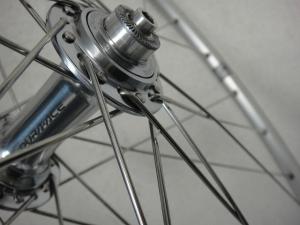
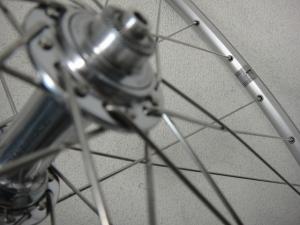
↑This is what I was talking about earlier.
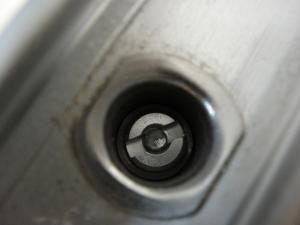
The spoke lengths are spot on.
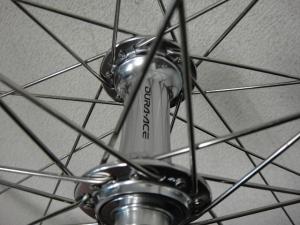
Six-spoke Italian lacing, done.
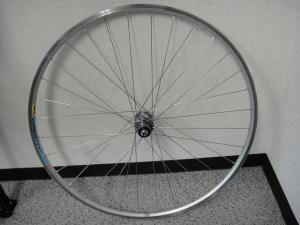
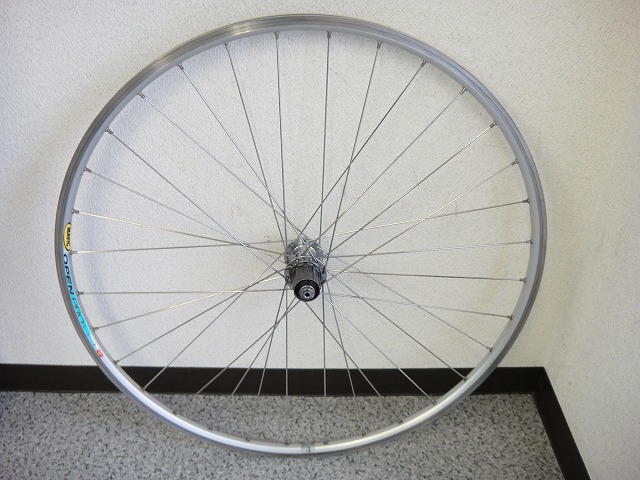
The rear wheel is built too.
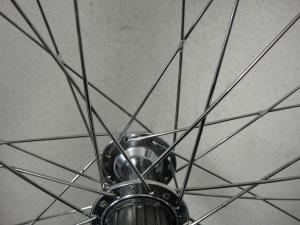
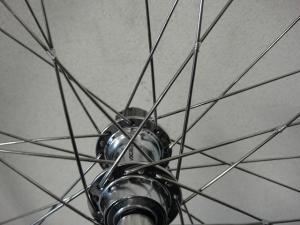
Four-spoke Italian lacing on the rear,
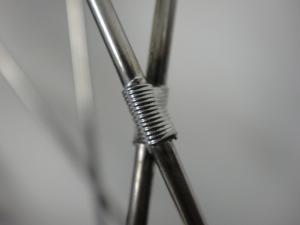
with outpoke lacing on the non-freewheel side.
I've taken in an Open Pro rim with a 7800 Dura-Ace hub
32H wheel for a complete rebuild.
The customer also wants a hub overhaul.
The inpoke spokes on the freewheel side of the rear wheel have been gouged up
from chain drops—that's definitely one reason for wanting a rebuild.
Both wheels are currently all 6-spoke lacing, but the customer wants
4-spoke lacing on the rear wheel.
I use my own naming convention here—I apply the spoke counts in this order:
"front wheel · rear freewheel side · rear non-freewheel side."
So this rebuild goes from "6·6·6" to "6·4·8."
These days, 32H wheels are almost exclusively built with classical low-profile rims,
except in cases like using an XR300 semi-aero rim with a PowerTap.
Depending on the bike, when I prioritize character and durability with tangent lacing on the front,
I usually go with 6-spoke lacing, so "6·4·8" is basically our shop's standard
for low-profile rims with tangent lacing front and rear.
The front wheel is already laced 6-spoke. Regardless of the customer's wishes,
I'm not the type who's desperate to rebuild wheels just for the sake of it.
If there's no real "benefit from rebuilding," then honestly
I think truing and tightening might be enough.
It was laced JIS-style before, so I'm going to relace it Italian-style.
When I disassemble wheels, I almost never reuse the spokes.
So I cut them with clippers, but if you cut them straight through, the spoke tension
releases all at once and sends a shock to the rim, so I loosen the nipples first
to gradually release the tension. You only need to loosen about half the wheel's worth,
but the nipples in the image above are on the side I haven't loosened at all.
You can clearly see these spokes are too short.
More and more reasons to rebuild are showing up.
Upgrading from 2.0mm plain spokes to butted spokes,
and from brass nipples to aluminum nipples,
means there's value in the rebuild from a weight perspective too.
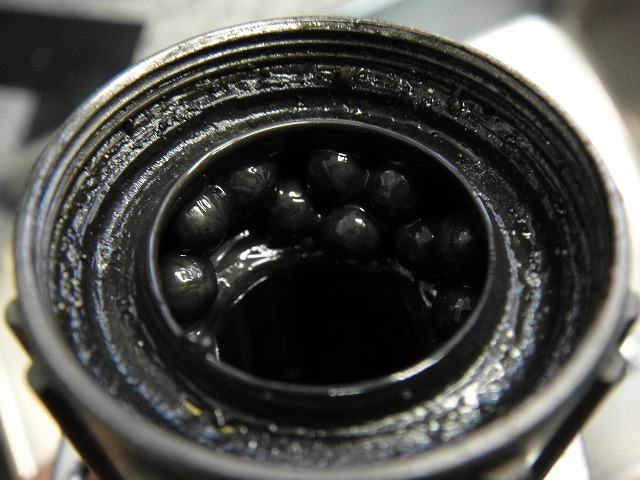
I opened up the rear hub and it was almost too late.
But there's still time—it can be saved with regreasing and so on.
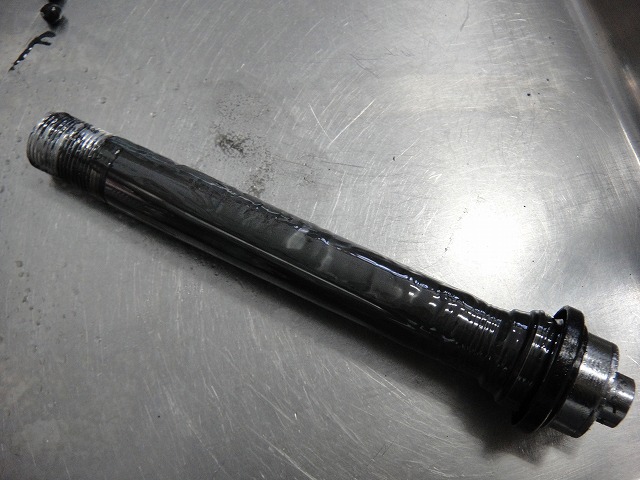
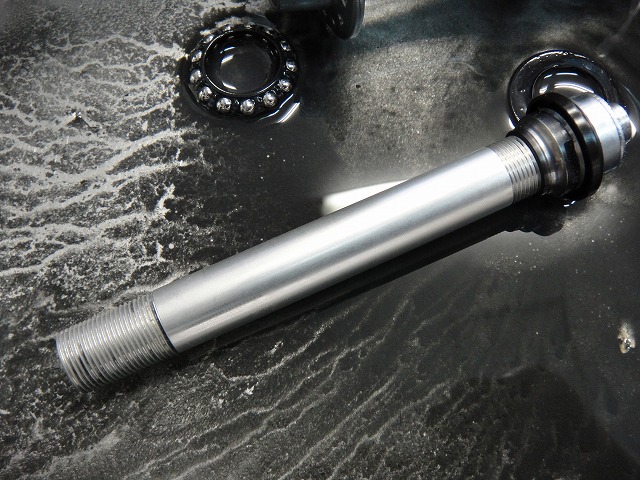
I cleaned the shaft and everything thoroughly.
Dura-Ace hubs are exceptional for their smoothness,
so even if the internals are pretty rough, you can't tell just by watching the shaft spin.
I didn't expect this hub had gotten to this point.
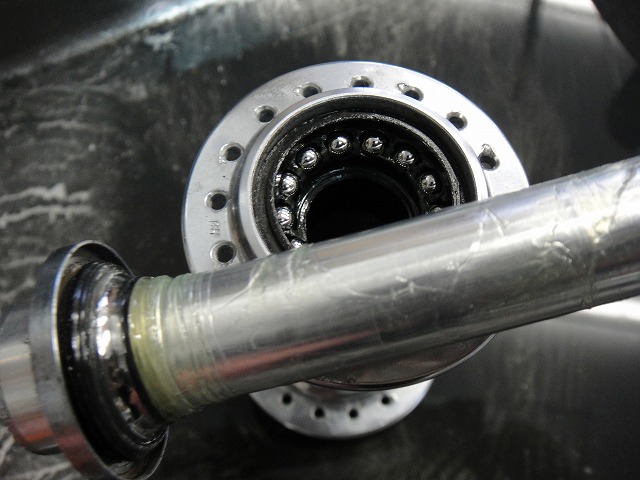
The front hub wasn't quite as bad as the rear.
Anyway, I overhauled both hubs.
On a side note, Open Pro rims don't have any obvious visual indicators
that determine their front/rear/left/right orientation.
As for the sticker direction, from the position in this image, the opposite side looks like
↑this.
It doesn't seem like there's a defined side that should face "to the right relative to forward motion."

But the rim joint sticker does have front/rear information.
So I lace the wheel so that when you peek through the valve hole,
both the joint sticker's text and the hub markings read correctly in their proper orientation.
It doesn't affect performance, but it's like the custom of aligning
the WO tire label with the valve position.
I occasionally see wheels laced with this sticker reversed and it bugs me.
This Open Pro is from an earlier generation in terms of stickers.
On current Open Pro rims, this text appears on both left and right stickers,
so there's no rim-based indicator for front/rear or left/right orientation.
(Maybe just the serial number sticker on the rim tape side.)
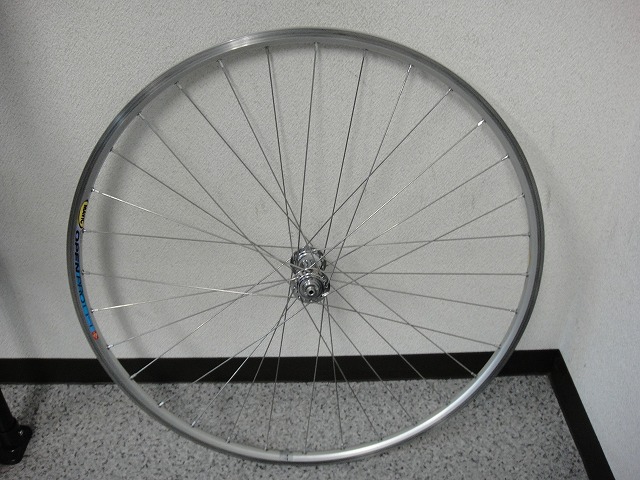
The front wheel is built.
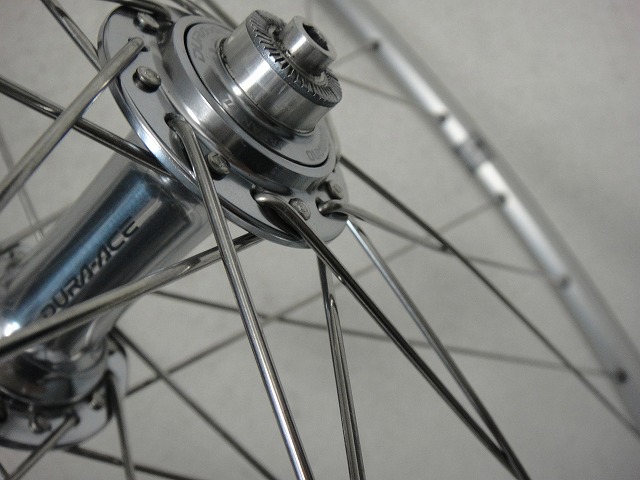
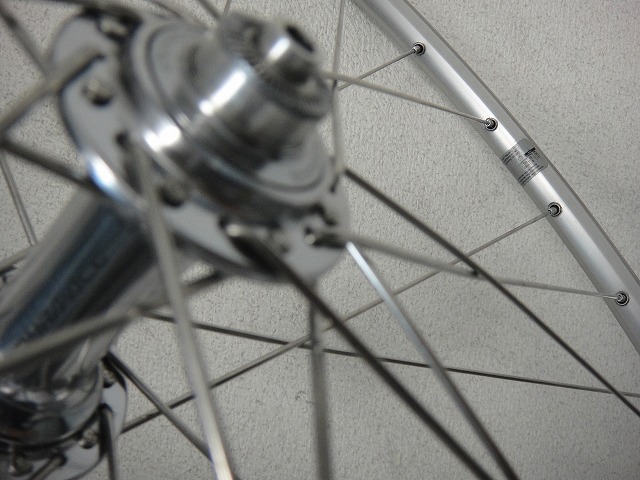
↑This is what I was talking about earlier.
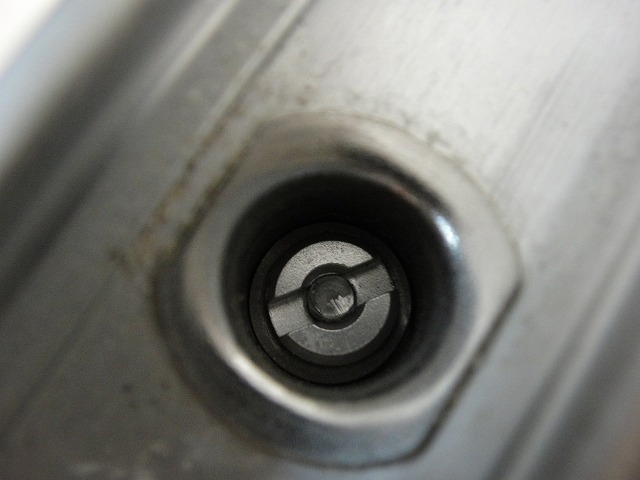
The spoke lengths are spot on.
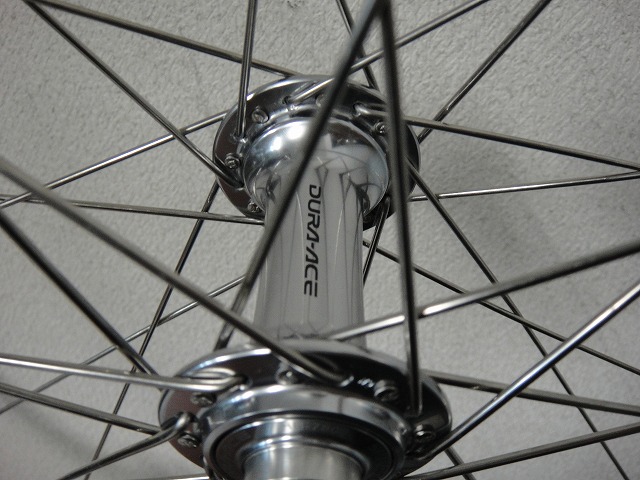
Six-spoke Italian lacing, done.
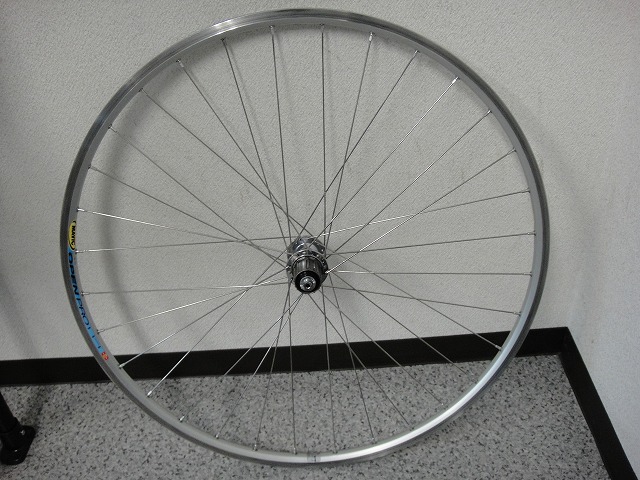
The rear wheel is built too.
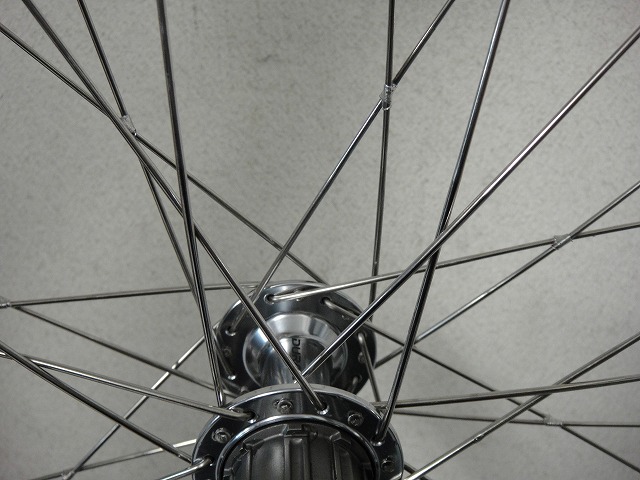
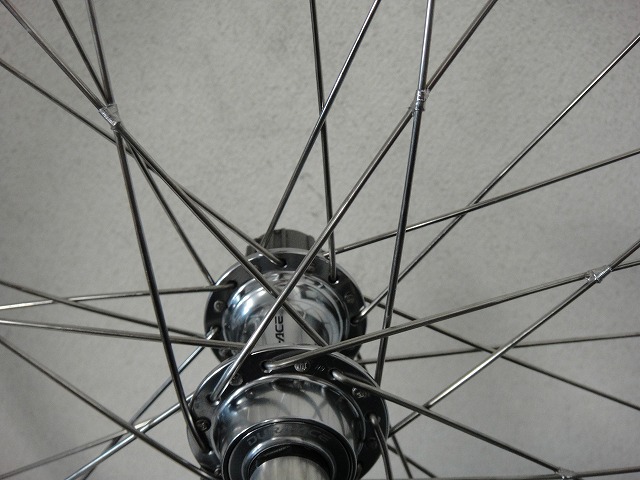
Four-spoke Italian lacing on the rear,
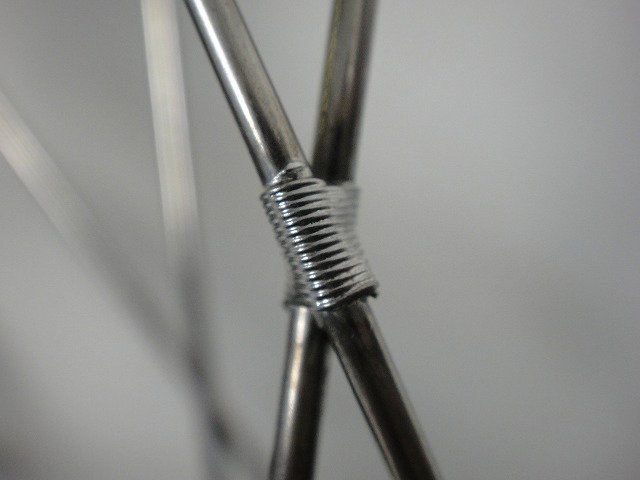
with outpoke lacing on the non-freewheel side.