Recently I received a comment about building a fixed-gear front wheel with JIS lacing.
I've written time and again that "for tangent-laced front wheels, I prefer Italian lacing,"

↑but someone asked why I built this one as JIS lacing instead.
Fundamentally, I don't like "lacing patterns where inpoke spokes stretch in different directions left and right."
Specifically, that means JIS lacing or reverse-JIS lacing.
I actually think reverse-Italian lacing would be preferable (from the inpoke standpoint).
So why did I choose JIS lacing this time?
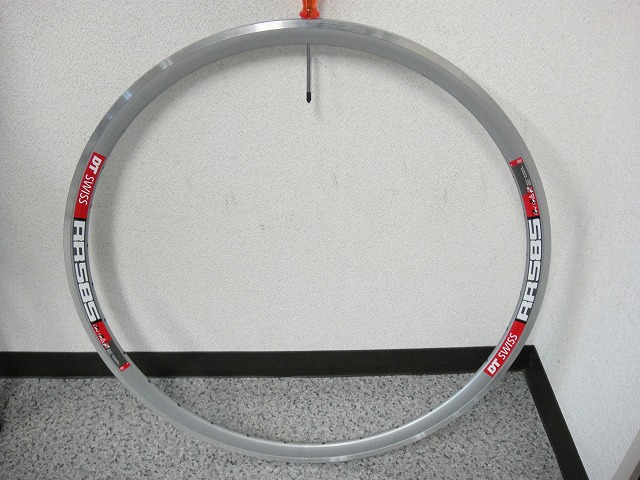
The DT rim in the image above has a label at the valve position.
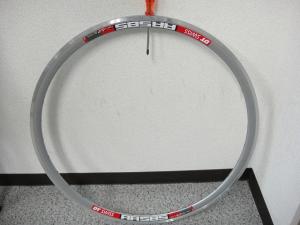
↑That wheel is a 415 rim, this image shows a 585, but
the sticker orientation is the same on both.
There's a screwdriver through the valve hole, but
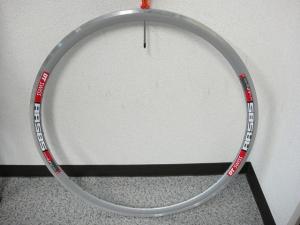
the sticker on the opposite side is offset by about 90° in phase.
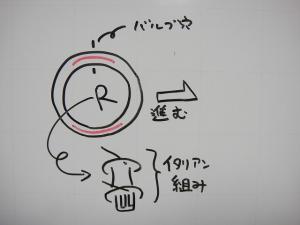
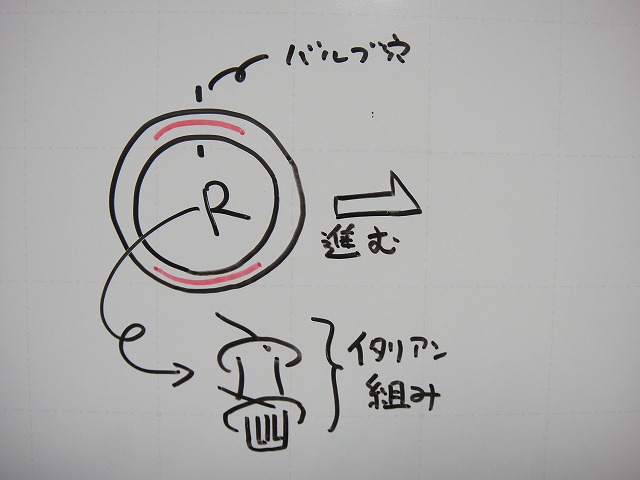
That fixed-gear wheel has a dual-threaded rear hub, so the rear wheel is also JIS laced,
but let's say hypothetically I'd built this DT rim in Italian lacing instead.
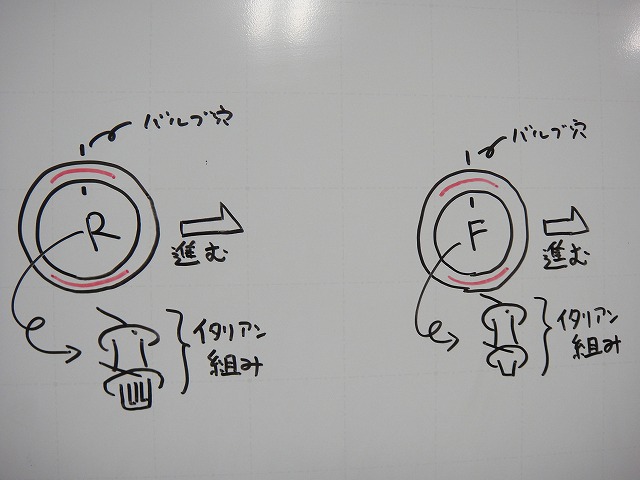
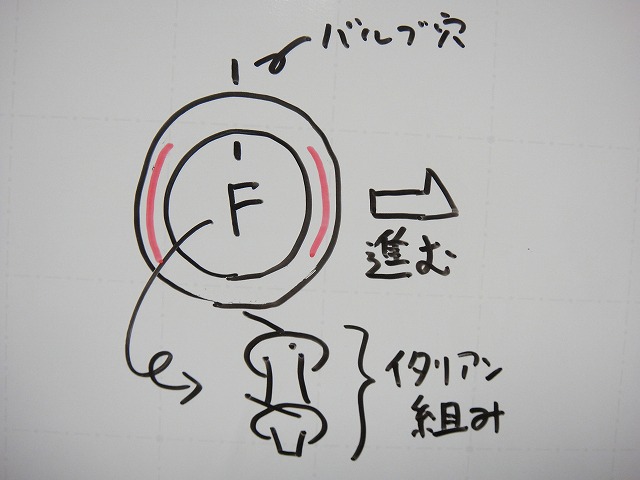
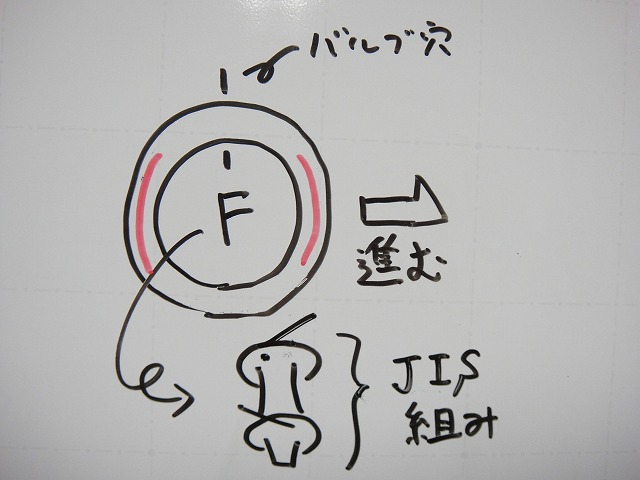
The red line in the diagram above shows the sticker position.
If the sticker is placed at the valve hole position
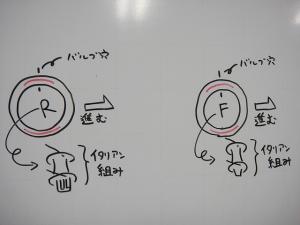
↑then when building the front wheel in Italian lacing, I'd want to build it this way.
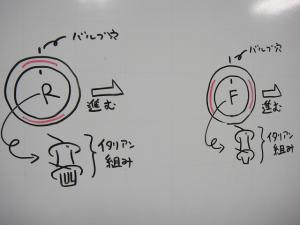
↑But ending up like this feels off to me.

Now, say hypothetically the rear wheel was a JIS-laced dual-threaded fixed-gear wheel,
and I flipped it around to use it
if the front wheel is Italian lacing, the "phase relationship between valve position and sticker"
would differ between front and rear wheels.
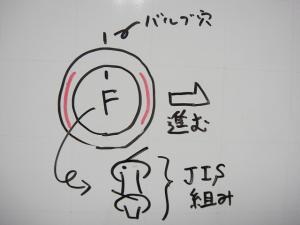
If the front wheel is JIS laced, that problem doesn't occur.
When you flip the rear wheel around, you just flip the front wheel at the same time.
If the tire has a front-to-rear direction, you'd need to flip that too.
However, if the front hub has directional attributes—front/rear or left/right—that changes things.
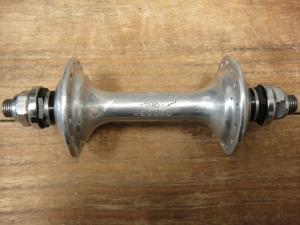
↑This Record hub has front/rear attributes.
Flipping it upside-down makes the logo and lettering reverse.
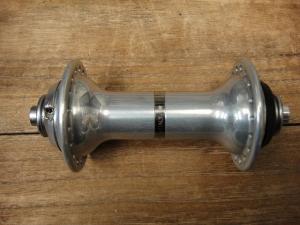
↑This Record hub has no front/rear attributes,
but it does have left/right attributes.
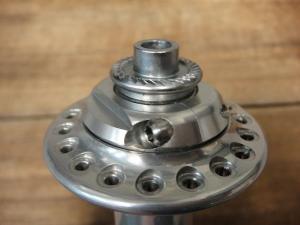
Since the bearing-adjustment nut is on the left side for the rear hub,
I regard this side as the left for the front hub too.
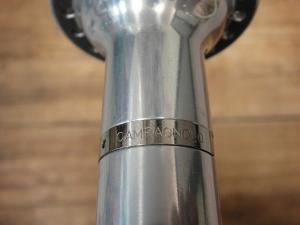
Also, a small detail: the band on the grease port cap has
lettering too, so it should be installed in a direction readable from the right side.
I said "should," but naturally this has no bearing on performance. It's a matter of convention.
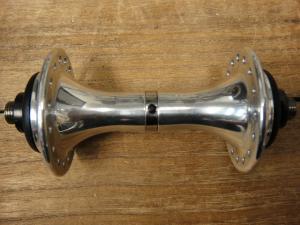
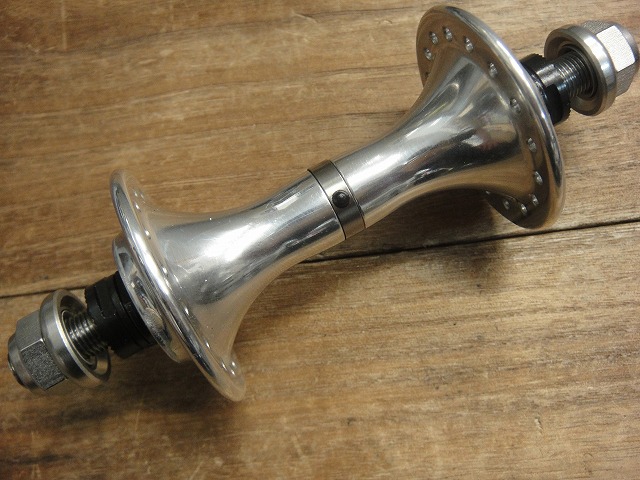
↑This Record hub is the model right before they switched to aluminum large-diameter axles,
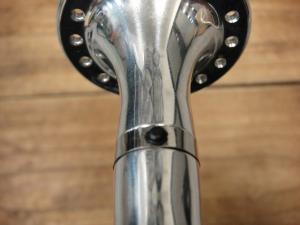
and both sides of this hub are identical in shape; the grease port band has no lettering.
Even if you JIS laced it, there are no elements that would reverse it front-to-back or left-to-right.
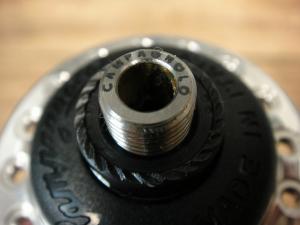
Anyway, this isn't a standard steel-axle model—
it's the titanium-axle version. There's lettering on the end of the axle.
Pretty meticulous work, huh.
Since the lettering is only on one side, technically this alone gives it "left/right attributes."
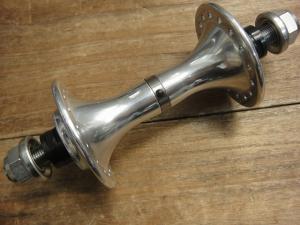
The current Record Pista hub (the front wheel at the start) seems to be based on
the steel-axle version of that hub,
and this hub has absolutely no elements distinguishing front/rear or left/right.
Since it's built with a DT rim, I thought that if I ever flipped the rear wheel,
I'd want the relationship between "valve position and sticker location" to stay consistent too,
which is why I went with JIS lacing.
"Aligning valve phase front-to-back and having the sticker position differ when viewed from the side" versus
"JIS lacing"—when I weighed these against each other, the former bothered me more.
If the hub had logos or lettering with front/rear/left/right attributes,
that would be different: "when you flip the wheel, the rim sticker position aligns front-to-back
but the hub design reverses."
In that case, even if the sticker phase differed front-to-back,
the reversed hub design would bother me more, so
I wouldn't flip it no matter what—meaning I'd have built it as Italian lacing.
"A hub with no front/rear/left/right attributes" and
"a rim with sticker phase offset by 90° left and right"—given these conditions,
when I ranked my "things I'd rather not do" in order,
this time JIS lacing happened to be the answer.
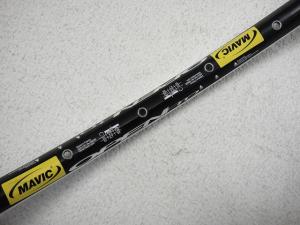
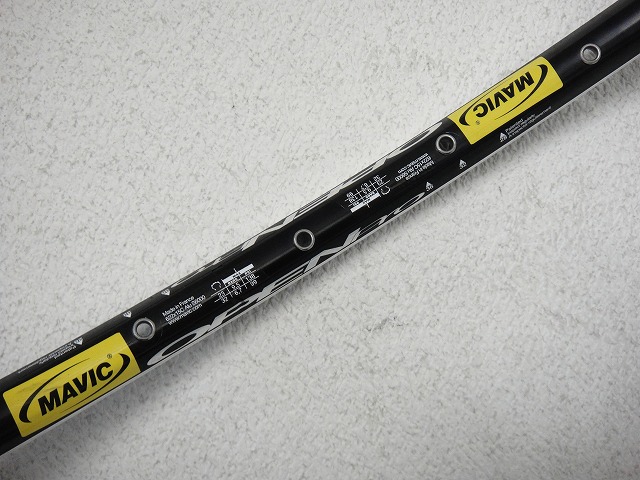
As a supplement to the earlier OpenPro article,
the current model's sticker is like this.
If I were building with this rim and that fixed-gear hub,
I would have gone with Italian lacing for the front wheel.
The JIS lacing on that front wheel at the top was neither a change of faith nor a whim—
it was the result of my own deliberation, for what it's worth.
Thank you for the sharp comment.
I'm impressed you've read through the older posts so carefully too.
I've written time and again that "for tangent-laced front wheels, I prefer Italian lacing,"
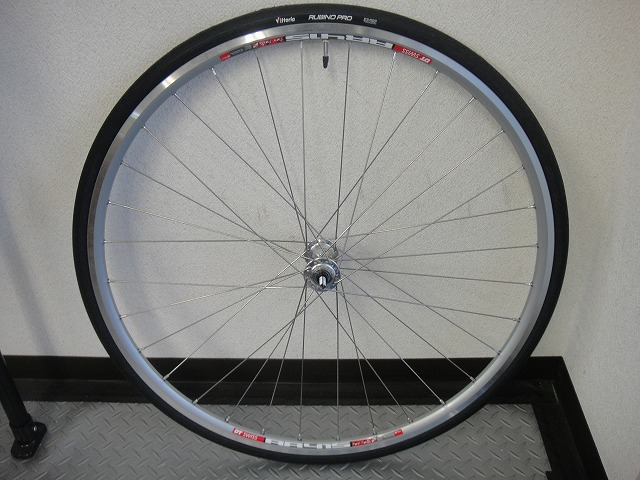
↑but someone asked why I built this one as JIS lacing instead.
Fundamentally, I don't like "lacing patterns where inpoke spokes stretch in different directions left and right."
Specifically, that means JIS lacing or reverse-JIS lacing.
I actually think reverse-Italian lacing would be preferable (from the inpoke standpoint).
So why did I choose JIS lacing this time?
The DT rim in the image above has a label at the valve position.

↑That wheel is a 415 rim, this image shows a 585, but
the sticker orientation is the same on both.
There's a screwdriver through the valve hole, but
the sticker on the opposite side is offset by about 90° in phase.
That fixed-gear wheel has a dual-threaded rear hub, so the rear wheel is also JIS laced,
but let's say hypothetically I'd built this DT rim in Italian lacing instead.
The red line in the diagram above shows the sticker position.
If the sticker is placed at the valve hole position
↑then when building the front wheel in Italian lacing, I'd want to build it this way.

↑But ending up like this feels off to me.
Now, say hypothetically the rear wheel was a JIS-laced dual-threaded fixed-gear wheel,
and I flipped it around to use it
if the front wheel is Italian lacing, the "phase relationship between valve position and sticker"
would differ between front and rear wheels.
If the front wheel is JIS laced, that problem doesn't occur.
When you flip the rear wheel around, you just flip the front wheel at the same time.
If the tire has a front-to-rear direction, you'd need to flip that too.
However, if the front hub has directional attributes—front/rear or left/right—that changes things.
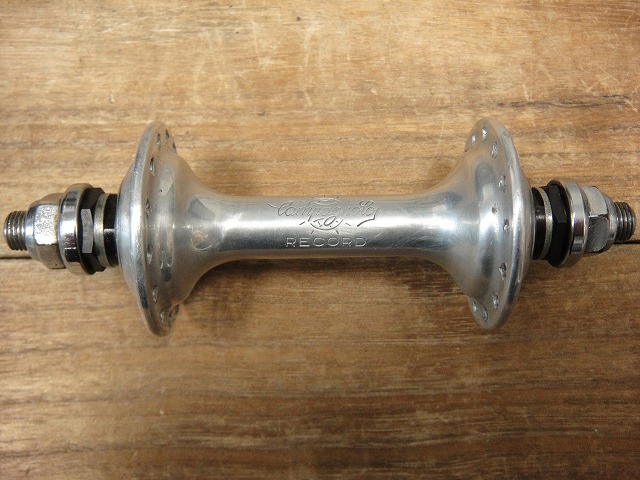
↑This Record hub has front/rear attributes.
Flipping it upside-down makes the logo and lettering reverse.
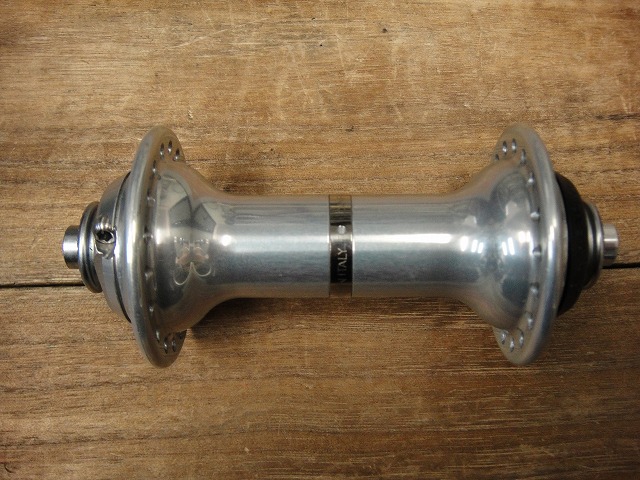
↑This Record hub has no front/rear attributes,
but it does have left/right attributes.
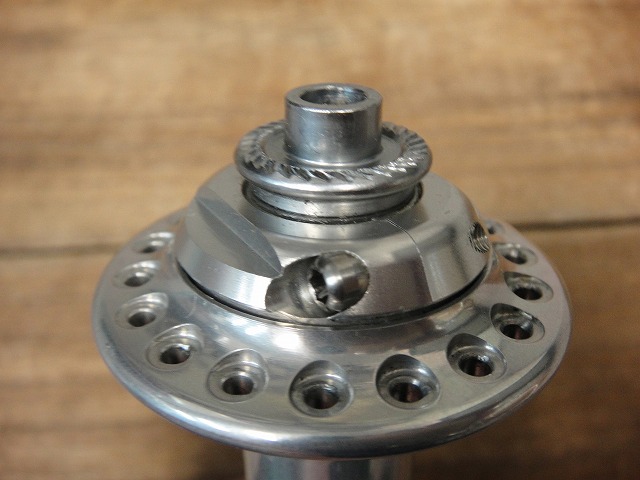
Since the bearing-adjustment nut is on the left side for the rear hub,
I regard this side as the left for the front hub too.
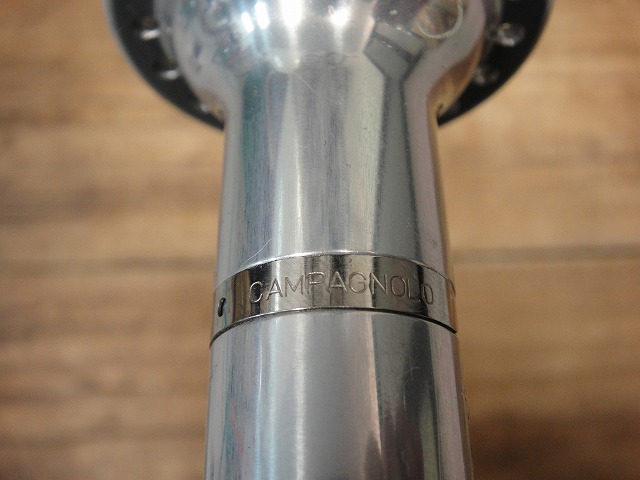
Also, a small detail: the band on the grease port cap has
lettering too, so it should be installed in a direction readable from the right side.
I said "should," but naturally this has no bearing on performance. It's a matter of convention.
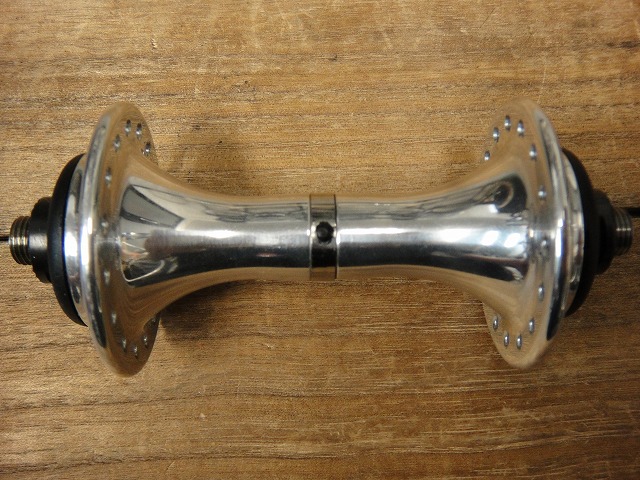
↑This Record hub is the model right before they switched to aluminum large-diameter axles,
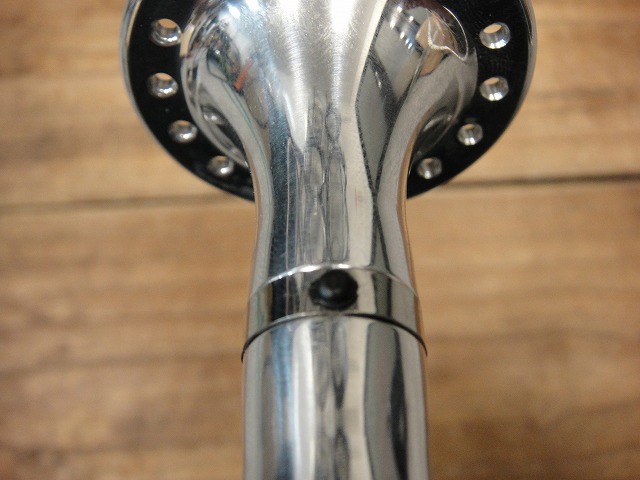
and both sides of this hub are identical in shape; the grease port band has no lettering.
Even if you JIS laced it, there are no elements that would reverse it front-to-back or left-to-right.
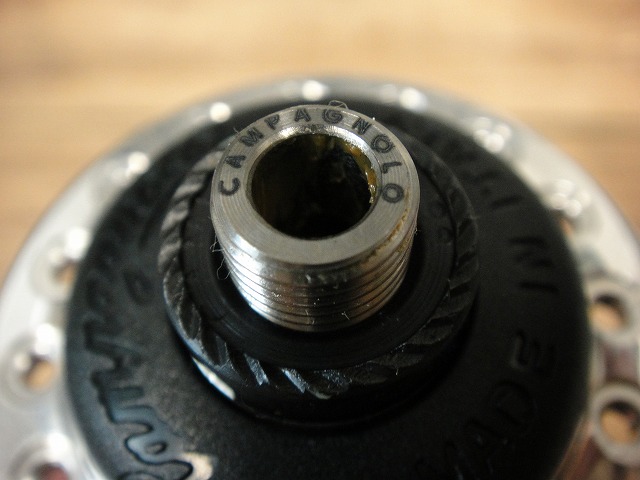
Anyway, this isn't a standard steel-axle model—
it's the titanium-axle version. There's lettering on the end of the axle.
Pretty meticulous work, huh.
Since the lettering is only on one side, technically this alone gives it "left/right attributes."
The current Record Pista hub (the front wheel at the start) seems to be based on
the steel-axle version of that hub,
and this hub has absolutely no elements distinguishing front/rear or left/right.
Since it's built with a DT rim, I thought that if I ever flipped the rear wheel,
I'd want the relationship between "valve position and sticker location" to stay consistent too,
which is why I went with JIS lacing.
"Aligning valve phase front-to-back and having the sticker position differ when viewed from the side" versus
"JIS lacing"—when I weighed these against each other, the former bothered me more.
If the hub had logos or lettering with front/rear/left/right attributes,
that would be different: "when you flip the wheel, the rim sticker position aligns front-to-back
but the hub design reverses."
In that case, even if the sticker phase differed front-to-back,
the reversed hub design would bother me more, so
I wouldn't flip it no matter what—meaning I'd have built it as Italian lacing.
"A hub with no front/rear/left/right attributes" and
"a rim with sticker phase offset by 90° left and right"—given these conditions,
when I ranked my "things I'd rather not do" in order,
this time JIS lacing happened to be the answer.
As a supplement to the earlier OpenPro article,
the current model's sticker is like this.
If I were building with this rim and that fixed-gear hub,
I would have gone with Italian lacing for the front wheel.
The JIS lacing on that front wheel at the top was neither a change of faith nor a whim—
it was the result of my own deliberation, for what it's worth.
Thank you for the sharp comment.
I'm impressed you've read through the older posts so carefully too.