Super important information (at least to me)
Starting April 2022, I've decided to include "rim relocation" projects
in "Today's wheel-building" (abbreviated hereinafter).
Originally that's what it was (→see here),
but I wasn't including it due to certain circumstances.
However, considering the labor involved,
relocating a rim requires more work than building a wheel from separate components,
and the actual work is wheel-building itself, so
from now on I'll include rim relocations in "Today's wheel-building" (abbreviated hereinafter).
So today's job is a rim relocation,
but today's wheel-building.
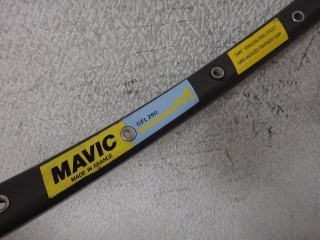
For the replacement rear rim of the Titanium Ace rim from the other day,
I decided to go with a Mavic GEL280
instead of an Araya Pro Staff 400.
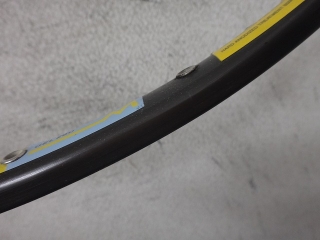
There's no visible wear on the brake zone, but

there are traces of rim cement from the tire mounting.
It wasn't used as my personal rear wheel that doesn't use rear braking.
It was probably used as a track bike wheel that only runs on a velodrome.
The Titanium Ace rim had no rim cement bed at all—
the tire was mounted with tubular tape—
so I need to remove enough of the bed to be able to use tape, but
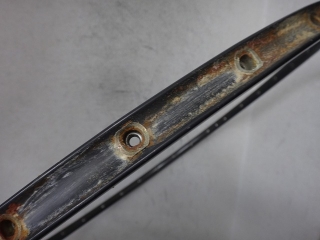
the old cement had lost its stickiness and
came off in flakes when rubbed, so
I was able to remove it quite easily and cleanly with a brass brush.
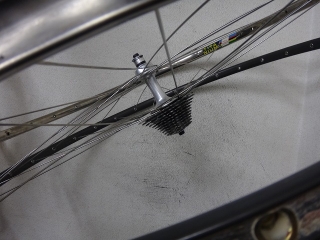
In the middle of the rim relocation...

During the rim relocation, I shifted the valve hole phase for just four rim holes
of the final crossing pair on the left and right,
because doing this makes it so when you look through the valve hole
the position is closer to the exact location of the "DURA-ACE" lettering on the hub shell.
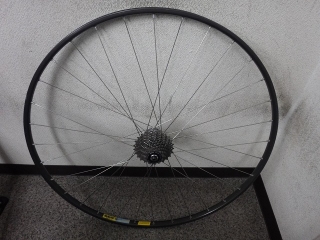
Built.
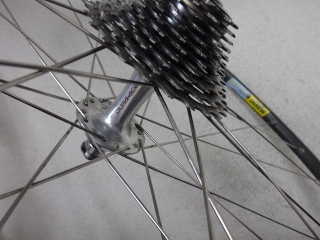
FH-7700 32H all-competition #15 (1.8–1.6–1.8mm)
Six-cross Italian weave, no cross-lacing.
In my previous article I wrote "the spokes are probably Revo or Competition"
because they were clearly thin, but I checked the dimensions properly today.
With round spokes like Competition #15, Competition Race, Revolution, etc.,
where the butted section diameter is 1.6mm or 1.5mm,
if you tension the spokes beyond a certain point
there's a risk of "waviness," but
with the GEL280, the rim hole would split before that happens, so
there's no issue. However, since it can handle more tension than the Titanium Ace, I tensioned it accordingly.
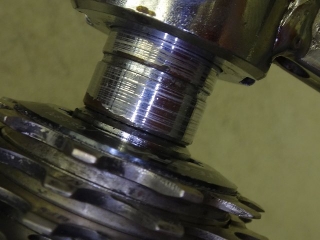
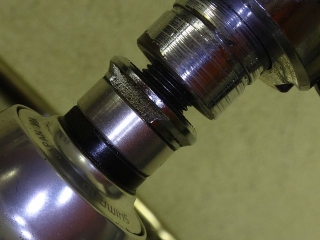
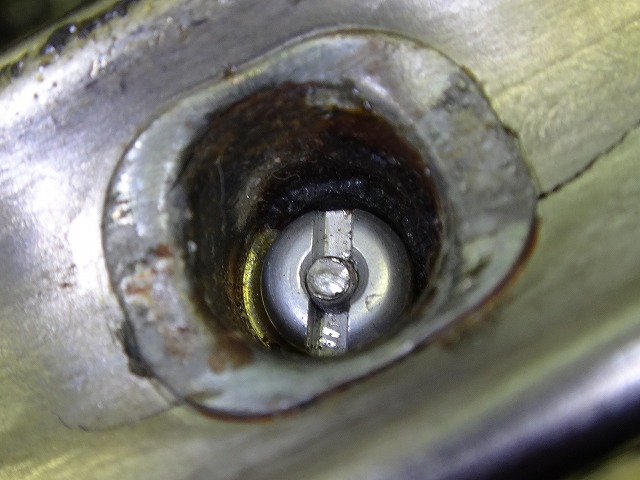
↑This is the wheel center before the rim relocation,
and even though the spoke length is correct,
the non-freewheel side nipples were tightened so excessively
that the rim was severely offset toward the non-freewheel side, and

↑non-freewheel side

↑freewheel side
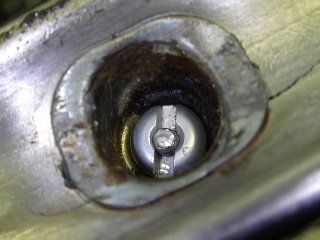
↑non-freewheel side
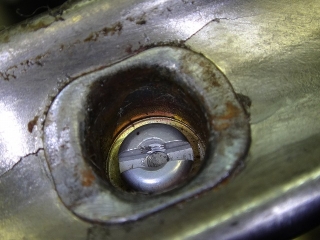
↑freewheel side
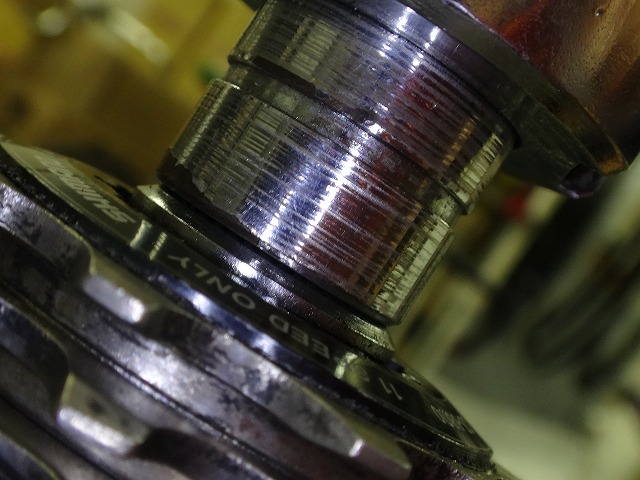
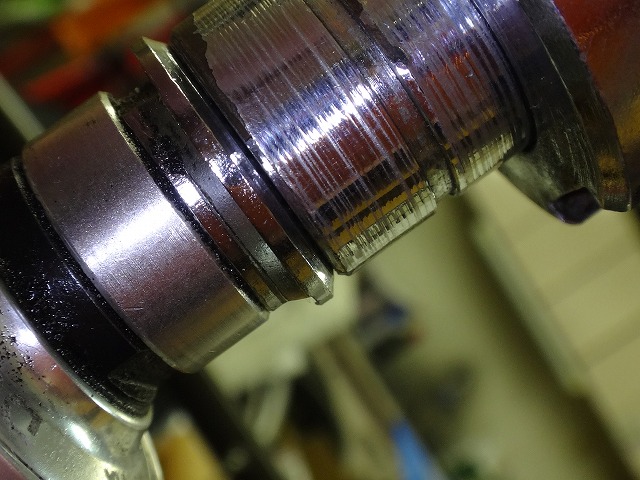
On the non-freewheel side, the nipple end face and spoke end face are flush,
but on the freewheel side, the spoke doesn't reach the nipple end face.
During the rim relocation, instead of loosening the non-freewheel side from here,
I corrected it by tightening the freewheel side
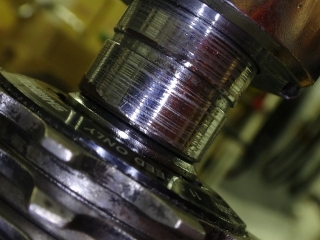
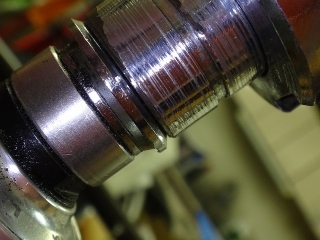
↑after the rim relocation
to center the wheel.
The lateral rim displacement from tightening the freewheel side
is smaller than that of the non-freewheel side, so I'm doing
considerably more tightening than I did with the Titanium Ace
(though it's still way less than on the Nomu Lab wheel #5 and others).
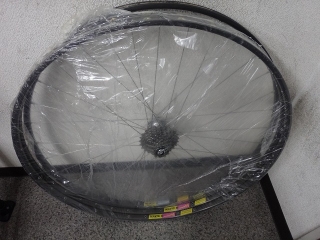
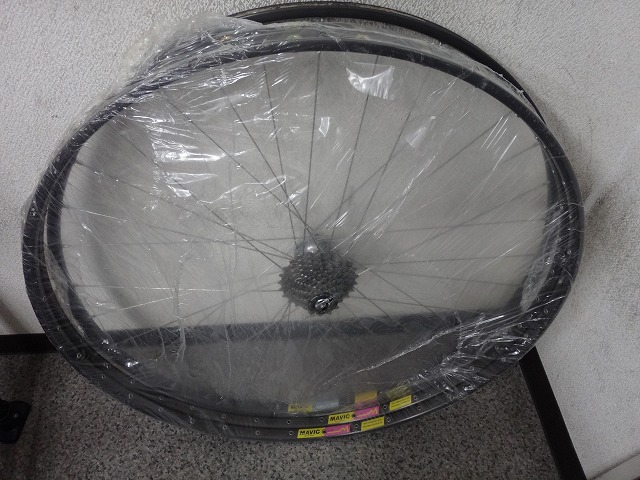
This GEL280 rim came from a box in "Maqsoku Mark II"
(which is my own shop) rather than from the previous "Maqsoku."
Below are the other rims that were there.
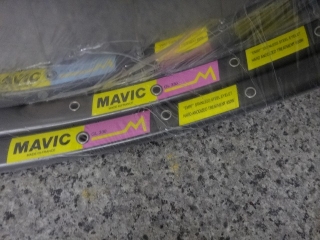
This GL330 is for Nomu Lab wheel #33
and is 36H, so it can't be used for today's relocation.
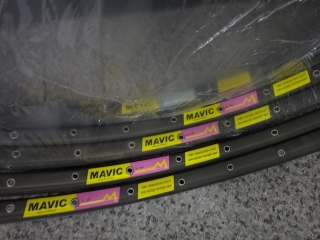
This GP4 is also 36H.
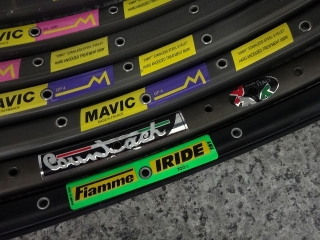
A Niji Countach and
a Fiamma black iridescent 191
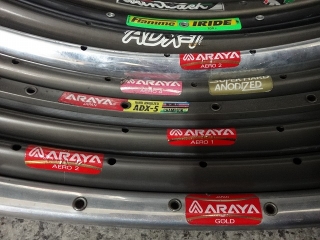
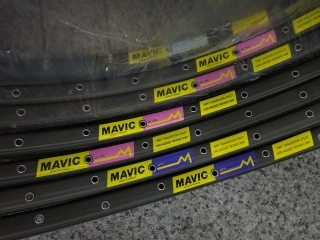
From top to bottom in the image:
ADX-1S, the new aero #1 that doesn't require washers
Aero 2 in silver
Aero 4 in hard anodize
ADX-5
Old aero #1 in hard anodize
Aero 2 in hard anodize
16B gold in silver
I don't mention "hard anodize" or color for the ADX-1S and ADX-5
because these rims only exist in hard anodized versions.
Araya calls it hard anodized.
Starting April 2022, I've decided to include "rim relocation" projects
in "Today's wheel-building" (abbreviated hereinafter).
Originally that's what it was (→see here),
but I wasn't including it due to certain circumstances.
However, considering the labor involved,
relocating a rim requires more work than building a wheel from separate components,
and the actual work is wheel-building itself, so
from now on I'll include rim relocations in "Today's wheel-building" (abbreviated hereinafter).
So today's job is a rim relocation,
but today's wheel-building.
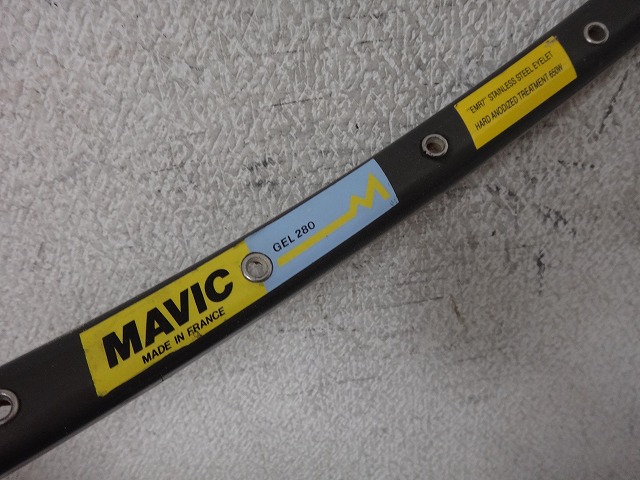
For the replacement rear rim of the Titanium Ace rim from the other day,
I decided to go with a Mavic GEL280
instead of an Araya Pro Staff 400.
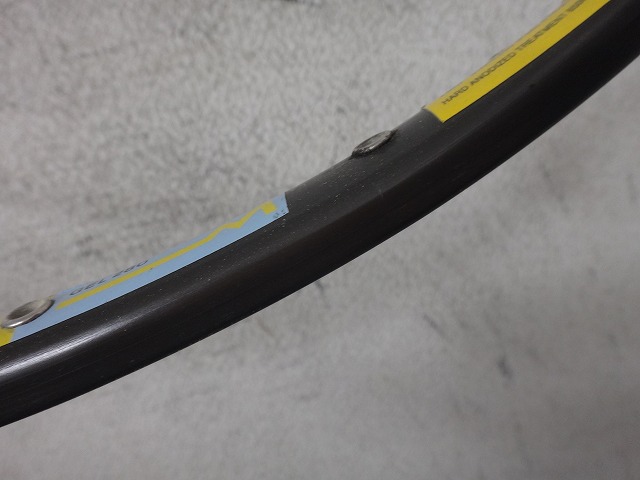
There's no visible wear on the brake zone, but

there are traces of rim cement from the tire mounting.
It wasn't used as my personal rear wheel that doesn't use rear braking.
It was probably used as a track bike wheel that only runs on a velodrome.
The Titanium Ace rim had no rim cement bed at all—
the tire was mounted with tubular tape—
so I need to remove enough of the bed to be able to use tape, but

the old cement had lost its stickiness and
came off in flakes when rubbed, so
I was able to remove it quite easily and cleanly with a brass brush.
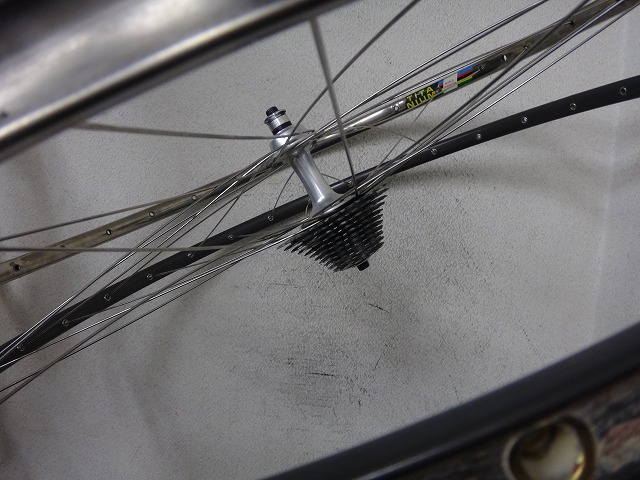
In the middle of the rim relocation...
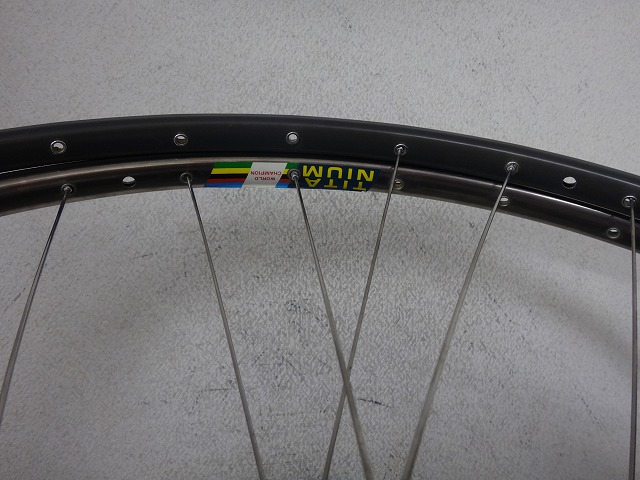
During the rim relocation, I shifted the valve hole phase for just four rim holes
of the final crossing pair on the left and right,
because doing this makes it so when you look through the valve hole
the position is closer to the exact location of the "DURA-ACE" lettering on the hub shell.
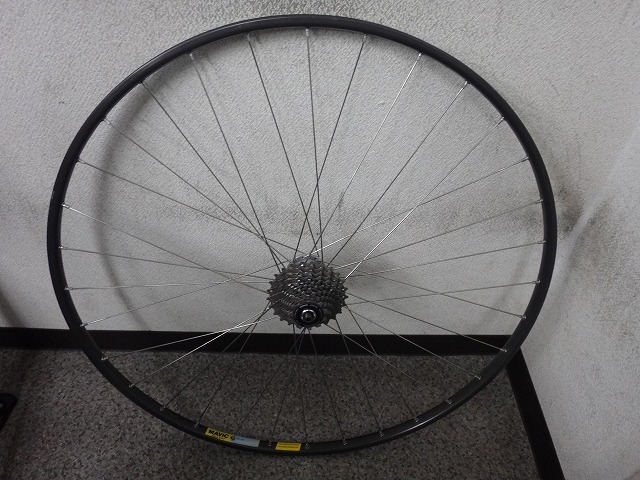
Built.
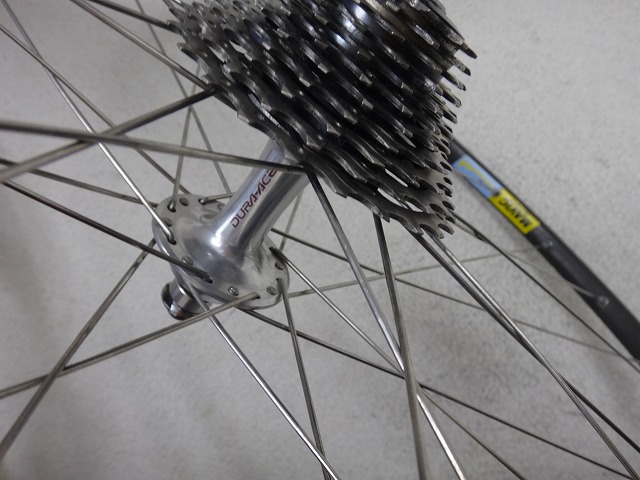
FH-7700 32H all-competition #15 (1.8–1.6–1.8mm)
Six-cross Italian weave, no cross-lacing.
In my previous article I wrote "the spokes are probably Revo or Competition"
because they were clearly thin, but I checked the dimensions properly today.
With round spokes like Competition #15, Competition Race, Revolution, etc.,
where the butted section diameter is 1.6mm or 1.5mm,
if you tension the spokes beyond a certain point
there's a risk of "waviness," but
with the GEL280, the rim hole would split before that happens, so
there's no issue. However, since it can handle more tension than the Titanium Ace, I tensioned it accordingly.
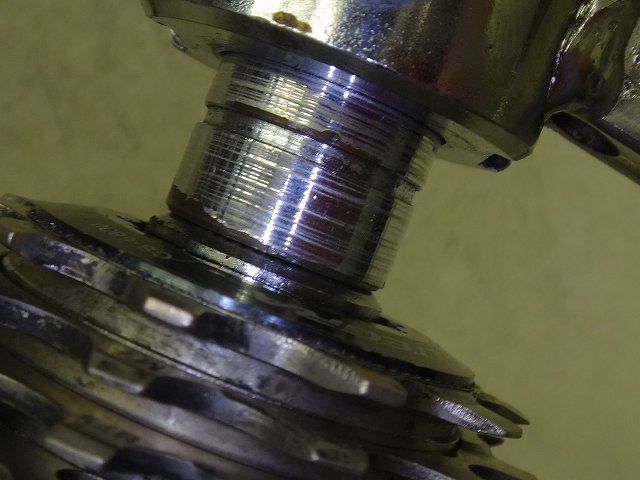
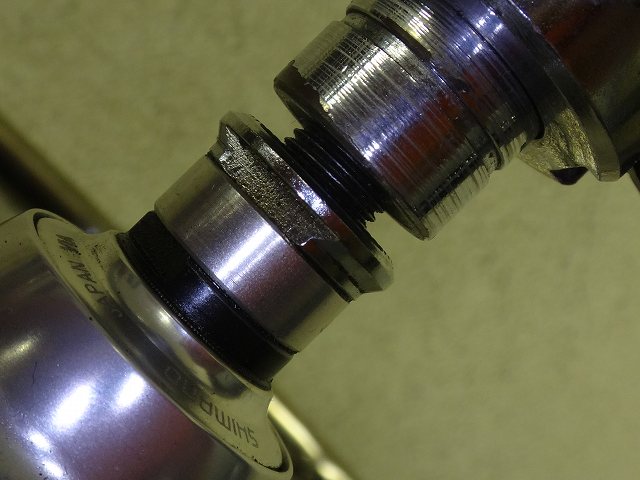
↑This is the wheel center before the rim relocation,
and even though the spoke length is correct,
the non-freewheel side nipples were tightened so excessively
that the rim was severely offset toward the non-freewheel side, and
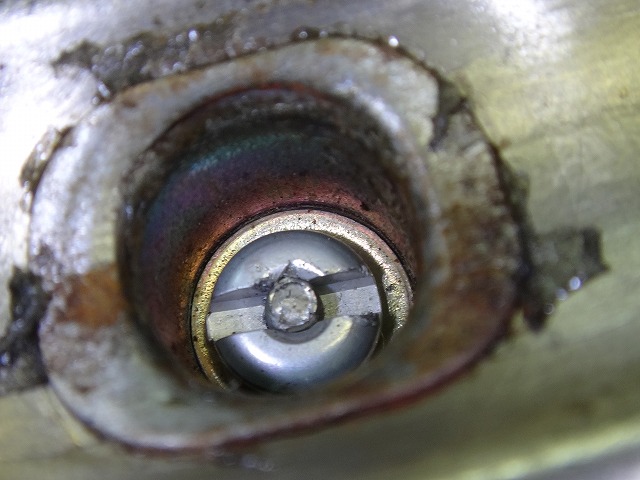
↑non-freewheel side
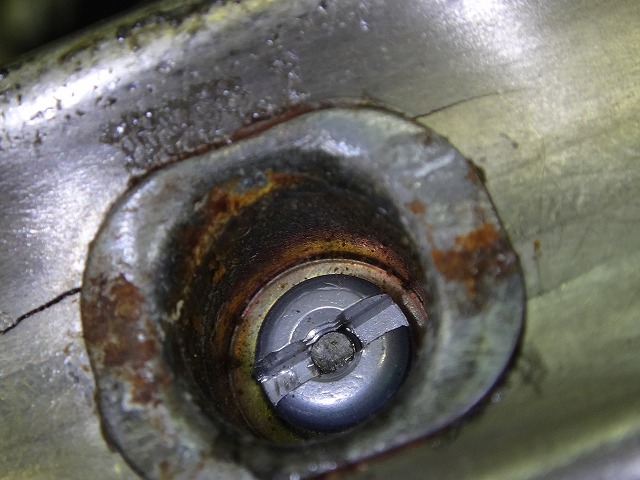
↑freewheel side
↑non-freewheel side

↑freewheel side
On the non-freewheel side, the nipple end face and spoke end face are flush,
but on the freewheel side, the spoke doesn't reach the nipple end face.
During the rim relocation, instead of loosening the non-freewheel side from here,
I corrected it by tightening the freewheel side
↑after the rim relocation
to center the wheel.
The lateral rim displacement from tightening the freewheel side
is smaller than that of the non-freewheel side, so I'm doing
considerably more tightening than I did with the Titanium Ace
(though it's still way less than on the Nomu Lab wheel #5 and others).
This GEL280 rim came from a box in "Maqsoku Mark II"
(which is my own shop) rather than from the previous "Maqsoku."
Below are the other rims that were there.
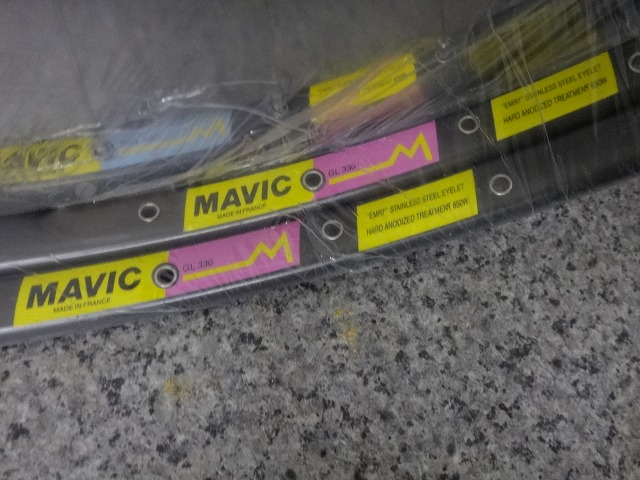
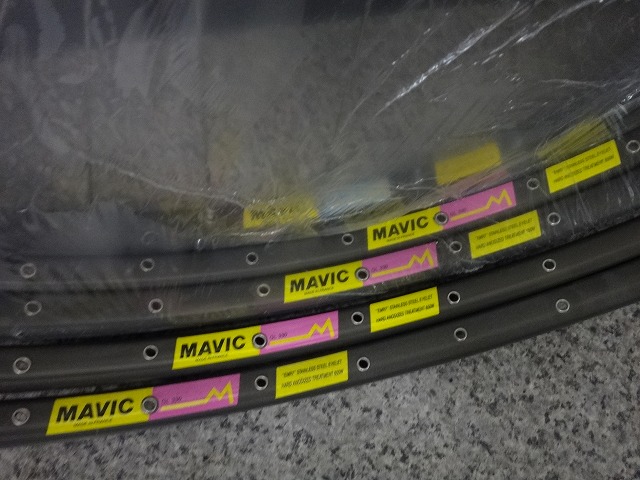
This GL330 is for Nomu Lab wheel #33
and is 36H, so it can't be used for today's relocation.
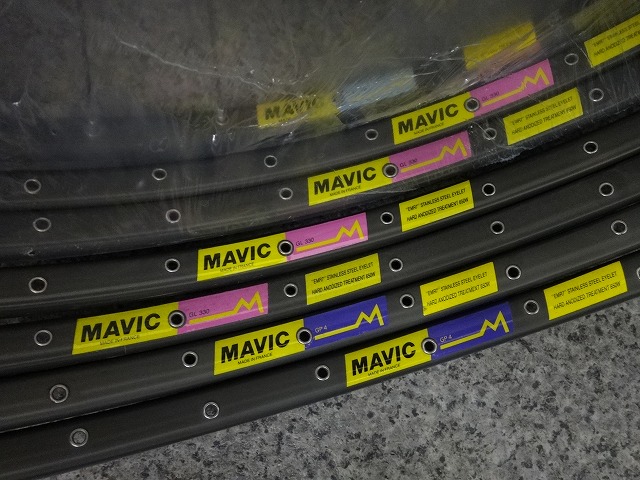
This GP4 is also 36H.
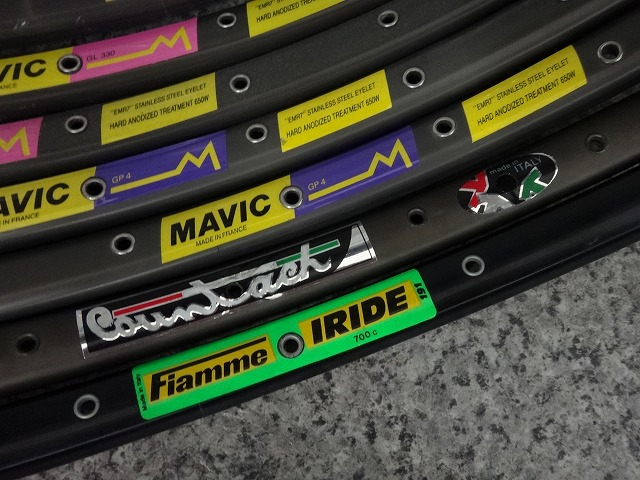
A Niji Countach and
a Fiamma black iridescent 191
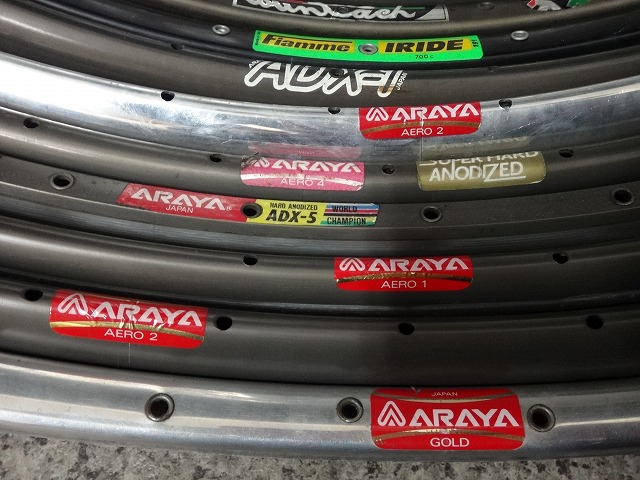
From top to bottom in the image:
ADX-1S, the new aero #1 that doesn't require washers
Aero 2 in silver
Aero 4 in hard anodize
ADX-5
Old aero #1 in hard anodize
Aero 2 in hard anodize
16B gold in silver
I don't mention "hard anodize" or color for the ADX-1S and ADX-5
because these rims only exist in hard anodized versions.
Araya calls it hard anodized.