Another day of wheelbuilding (and so on).
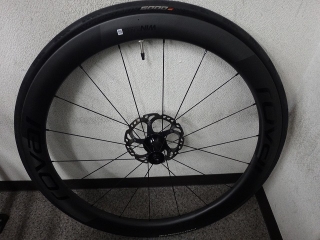
I received a front wheel of a Rovall Rapide CLX from a customer.
I had taken it in along with the rear wheel of a CL50 that I rebuilt the other day,
but it seems unlikely they'd be using the Rapide CLX front wheel paired with a CL50 rear wheel,
so I assume they have at least both front and rear wheels and chose these two
as the ones that needed attention the most.
On a different note,
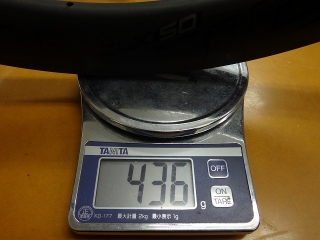
↑The rim of the front wheel of a CLX50 I rebuilt a little while ago
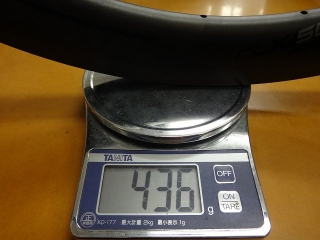
↑Its paired rear wheel rim
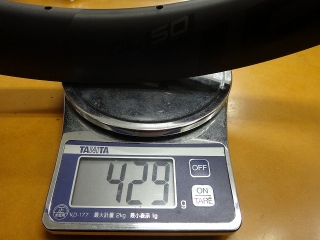
↑The rear wheel rim of the CL50 I received today along with the Rapide.
By avoiding using a certain keyword,
the actual measured weights of these three rims
won't remain in easily searchable archives.
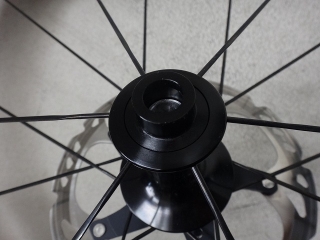
Anyway, getting back to the subject, this Rapide front wheel
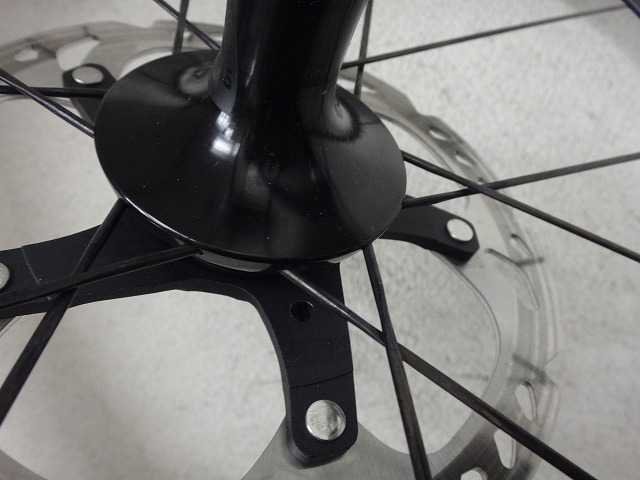
has a 2:1 lacing pattern with 18 spokes total—that is, just 6 spokes on the lower spoke count side.
That's quite an extreme specification.
I've written about this before with Shimano's 16-spoke front rim brake wheel,
but trying to balance the weight savings and aerodynamic benefits gained by excessively skimping on spoke count
against the loss of rigidity that can't be recovered through spoke tension or gauge
is a fundamental mistake in weighing the relative importance of factors.
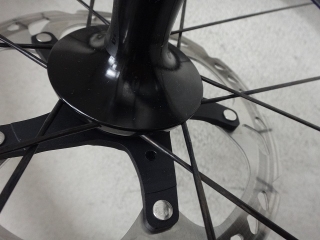
I'll write about this separately, but
since the higher spoke count side has 12 spokes, I had to make it a 1-cross,
which means the final crossing becomes the first crossing,
but it's so close to the hub flange that lacing has minimal effect.
So I'm not doing any lacing on this front wheel.
Since Rovall doesn't have the wherewithal to think of reverse-sided different-diameter lacing,
the 6-spoke side is also an Aerolight, but the only thing I can do
is swap it for a CX Sprint spoke
to allow the 12-spoke side to be tensioned higher.
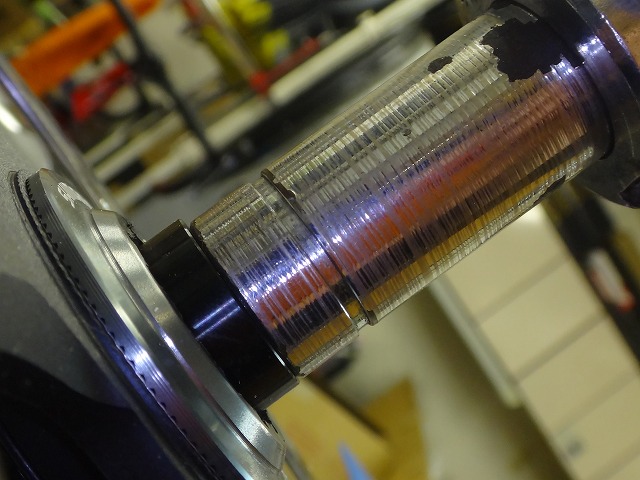
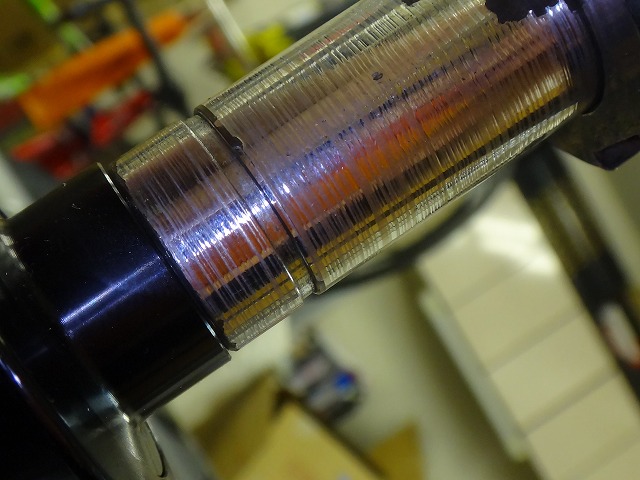
The center was spot-on.
When built with identical spokes on both sides,
it's possible to compare the secondary spoke tension (ST) left-to-right based on the first ST tension meter reading.
The original condition was all Aerolites and centered,
so it met these criteria, but clearly the 6-spoke side had higher tension.
However, something important to note is that while we can compare highs and lows,
the left-right difference in first ST doesn't directly translate to the same proportion difference in second ST.
When you graph the relationship between first ST and second ST, it's not a straight proportional line
but a curved line.
For example, with this wheel, if the 12-spoke side averaged 120 first ST
and the 6-spoke side averaged 132,
that doesn't mean "the second ST is also exactly 10% higher on the 6-spoke side."
However, "the second ST is definitely higher on the 6-spoke side" is certain.
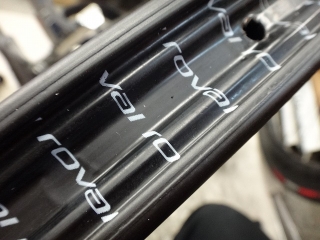
The Rapide CLX rear wheel and Alpinist front and rear wheels
have bead hooks with thin flanges,
but the Rapide CLX front wheel alone has a bead hook where the inner width stays the same
while the outer width is expanded.
Since the outer rim section the tire bead must climb is thicker,
mounting the tire is somewhat more difficult,
but if this isn't a significant weight penalty,
the aerodynamic benefits from the continuous shape
when a properly-sized tire is mounted might outweigh the difficulty.

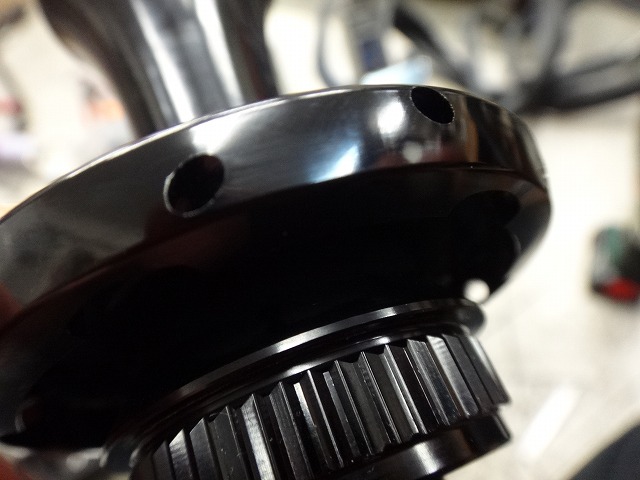
On Rovall's disc hub flanges on the tangent-laced side,
the rear right flange and front left flange have offset hole patterns,
and spokes emerging from the inner holes
are positioned outward beyond the final crossing (and vice versa),
and these final crossings are woven.
The rear left flange of the disc hub has no offset hole pattern,
but is woven as reverse Italian lacing.
Since there's no offset, whichever side becomes the outer spoke will be woven anyway.
The Rapide CLX front left flange has offset holes,
but since the 1-cross final crossing is close to the hub flange,
it wasn't woven originally.
I tried running it through with weaving during a dry-fit,
but unwoven seemed better, so I didn't weave it after rebuilding either.
Therefore, lacing isn't possible regardless.
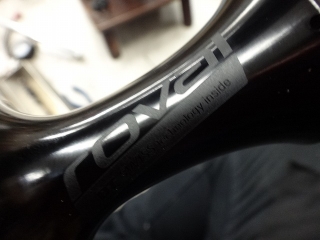
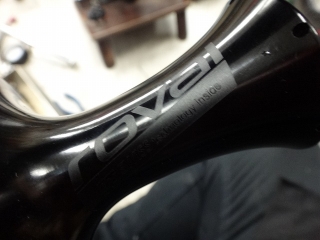
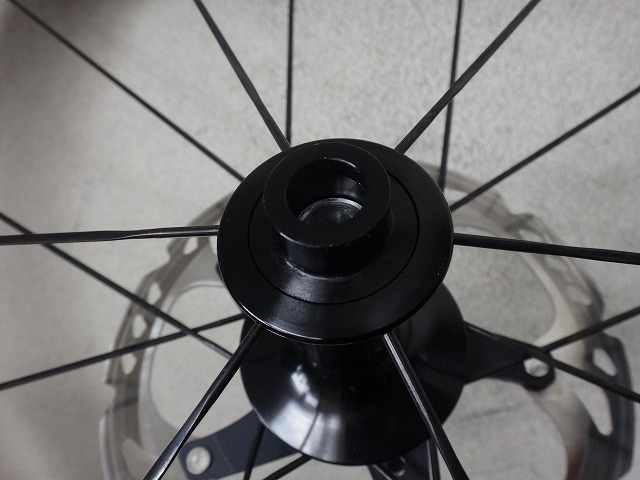
On Rovall hubs, the text on the hub shell is reversed at 180° phase,
but on this Rapide hub, both
are oriented the "correct direction when viewed from above."

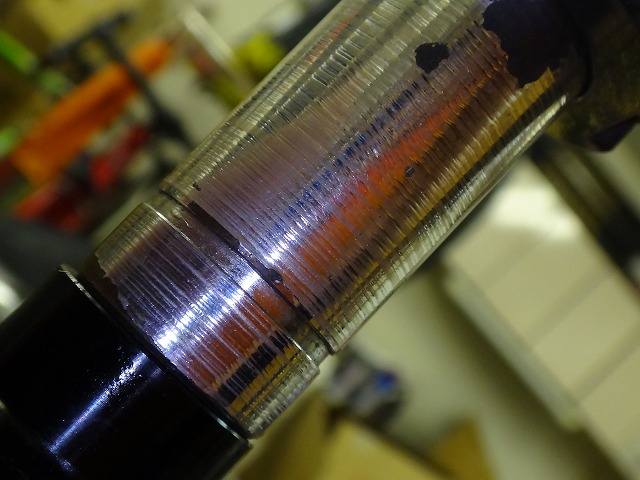
This is a spoke I removed
from the 6-spoke side, and when you press on the flattened butted section,
you can see that the angle of the press-formed spoke head
is slightly rotated where it should be parallel.
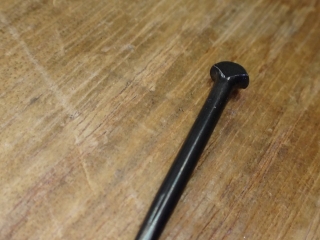
↑In the image above, the right side of the spoke head is slightly lifted,
not parallel to the butted section.
While there are varying degrees, spokes like this are fairly common.

Unrelated to that, a CX Sprint I was going to use for the rebuild had a defect, so I rejected it.
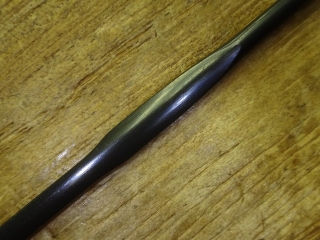
↑Are you serious?
This defect, apparently from rolling failure,
I've only seen on the threads side before.
This is the first time I've seen one occur on the neck side.
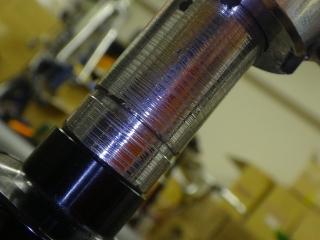
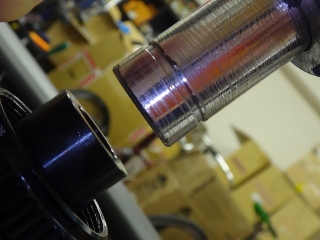
I won't deny I pushed it to extremes for the sake of photos,
but it's an intermediate state with virtually no radial or lateral runout, just center offset.
At this point the 12-spoke side's first ST
is roughly the same as before starting, and since the 12-spoke side reuses the same spokes,
the tension is essentially the same as before rebuilding.
Taking an average, it might be ever-so-slightly lower,
but from here until center is achieved, I can tension the 6-spoke side unidirectionally,
so in that process the 12-spoke side will definitely get tensioned higher than before.
Getting the 12-spoke side more tensioned without reverse-sided different-diameter lacing is basically impossible.
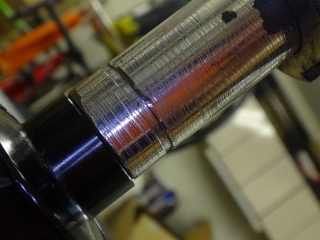
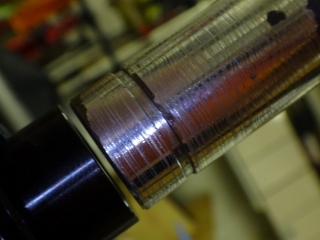
The center still isn't perfect, but that's enough.
From here, I introduced "spoke chatter slack" on the 12-spoke side.
Yeah, that intermediate state was overdoing it.
However, I didn't loosen just the 12-spoke side unidirectionally—
I'm also tightening together with additional tightening on the 6-spoke side.
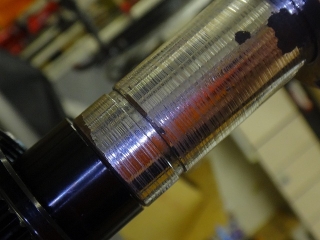
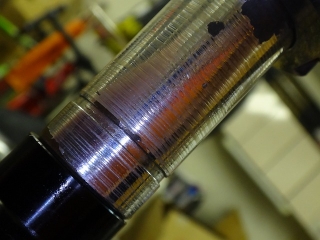
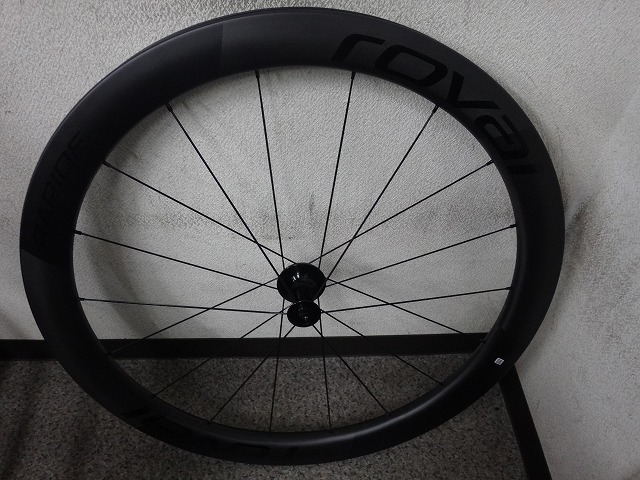
Center is achieved.
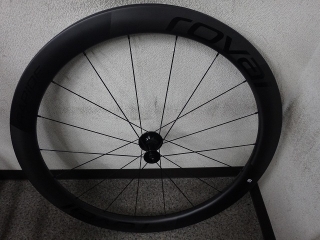
Built.
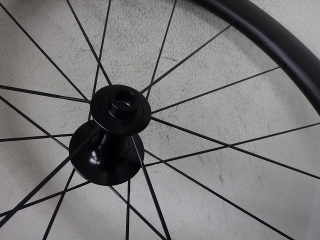
Half-black CX Sprint.
If you think this is slack, there's nothing more I can do.
It's the design limit.
The Rapide CLX has a front rim with 51mm depth,
about the same rim height as the CLX/CL50,
while the rear rim is 60mm depth.
However, since the front rim has a wider rim width,
it's virtually certain to be heavier
than the rim on the similarly-heighted CLX50.
But because reducing spokes from 21H to removing three spokes from the CL50
results in weight savings that get obscured in the comparison muddle of complete wheel weights by front and rear,
it's become even harder to discern the actual rim weight.
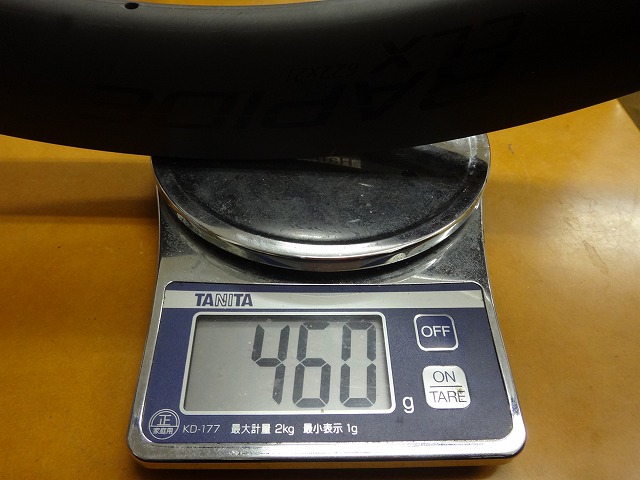
Past tense because I finally got the chance to actually measure the weight.
But if you think I'm just going to hand that information over easily,
you're sorely mistaken.
↑What's with this guy? Pretty bad attitude.
Sorry for the wait!
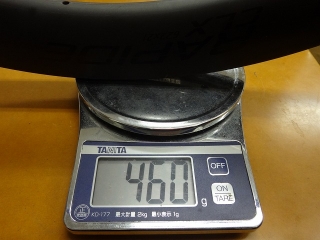
Please take a look at this image!
↑Stop that!
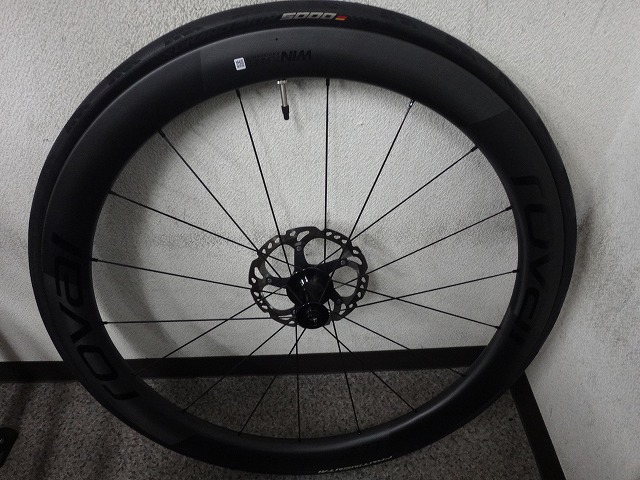
Oh no, I shouted out the specific keyword,
so those three rims from the beginning ended up getting archived along with this rim too!
I received a front wheel of a Rovall Rapide CLX from a customer.
I had taken it in along with the rear wheel of a CL50 that I rebuilt the other day,
but it seems unlikely they'd be using the Rapide CLX front wheel paired with a CL50 rear wheel,
so I assume they have at least both front and rear wheels and chose these two
as the ones that needed attention the most.
On a different note,
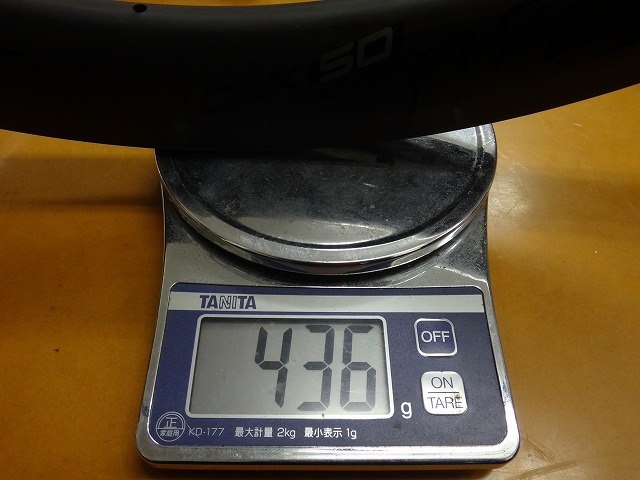
↑The rim of the front wheel of a CLX50 I rebuilt a little while ago
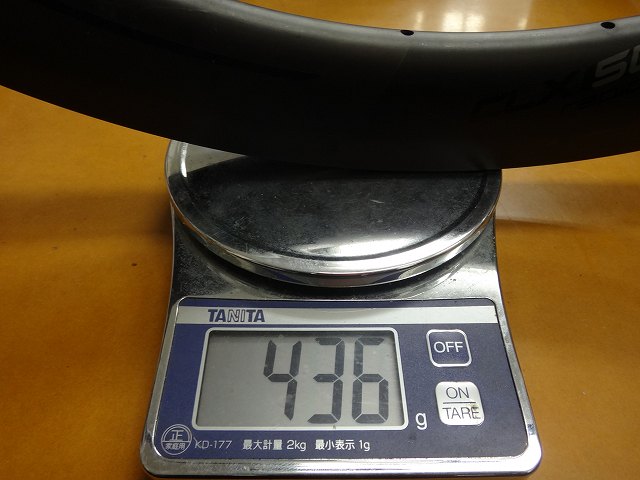
↑Its paired rear wheel rim
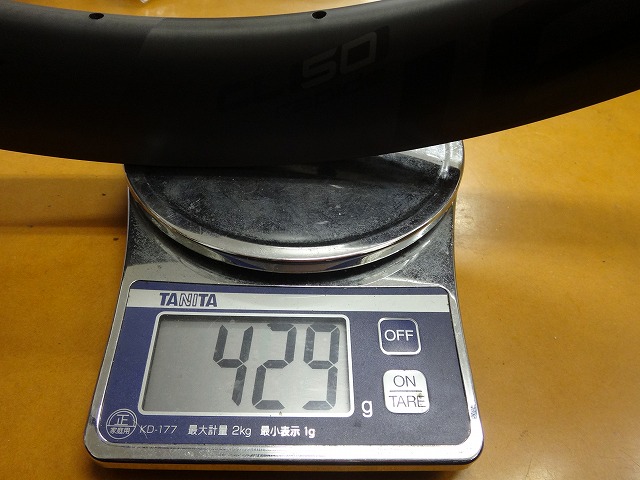
↑The rear wheel rim of the CL50 I received today along with the Rapide.
By avoiding using a certain keyword,
the actual measured weights of these three rims
won't remain in easily searchable archives.
Anyway, getting back to the subject, this Rapide front wheel
has a 2:1 lacing pattern with 18 spokes total—that is, just 6 spokes on the lower spoke count side.
That's quite an extreme specification.
I've written about this before with Shimano's 16-spoke front rim brake wheel,
but trying to balance the weight savings and aerodynamic benefits gained by excessively skimping on spoke count
against the loss of rigidity that can't be recovered through spoke tension or gauge
is a fundamental mistake in weighing the relative importance of factors.
I'll write about this separately, but
since the higher spoke count side has 12 spokes, I had to make it a 1-cross,
which means the final crossing becomes the first crossing,
but it's so close to the hub flange that lacing has minimal effect.
So I'm not doing any lacing on this front wheel.
Since Rovall doesn't have the wherewithal to think of reverse-sided different-diameter lacing,
the 6-spoke side is also an Aerolight, but the only thing I can do
is swap it for a CX Sprint spoke
to allow the 12-spoke side to be tensioned higher.
The center was spot-on.
When built with identical spokes on both sides,
it's possible to compare the secondary spoke tension (ST) left-to-right based on the first ST tension meter reading.
The original condition was all Aerolites and centered,
so it met these criteria, but clearly the 6-spoke side had higher tension.
However, something important to note is that while we can compare highs and lows,
the left-right difference in first ST doesn't directly translate to the same proportion difference in second ST.
When you graph the relationship between first ST and second ST, it's not a straight proportional line
but a curved line.
For example, with this wheel, if the 12-spoke side averaged 120 first ST
and the 6-spoke side averaged 132,
that doesn't mean "the second ST is also exactly 10% higher on the 6-spoke side."
However, "the second ST is definitely higher on the 6-spoke side" is certain.

The Rapide CLX rear wheel and Alpinist front and rear wheels
have bead hooks with thin flanges,
but the Rapide CLX front wheel alone has a bead hook where the inner width stays the same
while the outer width is expanded.
Since the outer rim section the tire bead must climb is thicker,
mounting the tire is somewhat more difficult,
but if this isn't a significant weight penalty,
the aerodynamic benefits from the continuous shape
when a properly-sized tire is mounted might outweigh the difficulty.
On Rovall's disc hub flanges on the tangent-laced side,
the rear right flange and front left flange have offset hole patterns,
and spokes emerging from the inner holes
are positioned outward beyond the final crossing (and vice versa),
and these final crossings are woven.
The rear left flange of the disc hub has no offset hole pattern,
but is woven as reverse Italian lacing.
Since there's no offset, whichever side becomes the outer spoke will be woven anyway.
The Rapide CLX front left flange has offset holes,
but since the 1-cross final crossing is close to the hub flange,
it wasn't woven originally.
I tried running it through with weaving during a dry-fit,
but unwoven seemed better, so I didn't weave it after rebuilding either.
Therefore, lacing isn't possible regardless.

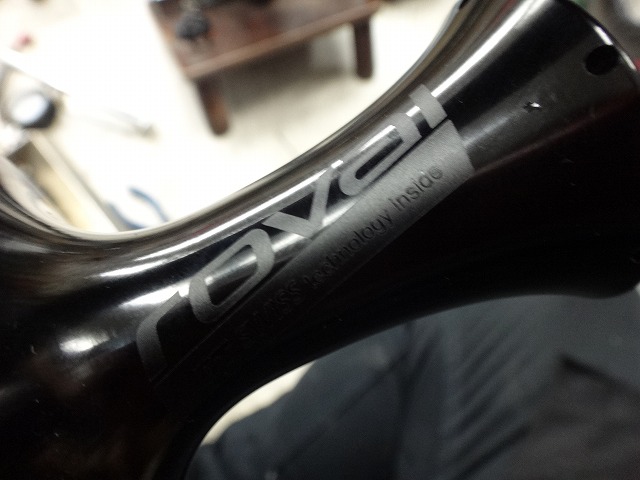
On Rovall hubs, the text on the hub shell is reversed at 180° phase,
but on this Rapide hub, both
are oriented the "correct direction when viewed from above."
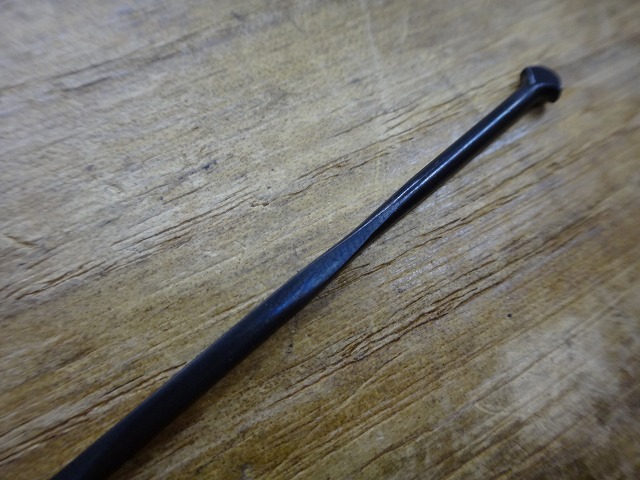
This is a spoke I removed
from the 6-spoke side, and when you press on the flattened butted section,
you can see that the angle of the press-formed spoke head
is slightly rotated where it should be parallel.

↑In the image above, the right side of the spoke head is slightly lifted,
not parallel to the butted section.
While there are varying degrees, spokes like this are fairly common.
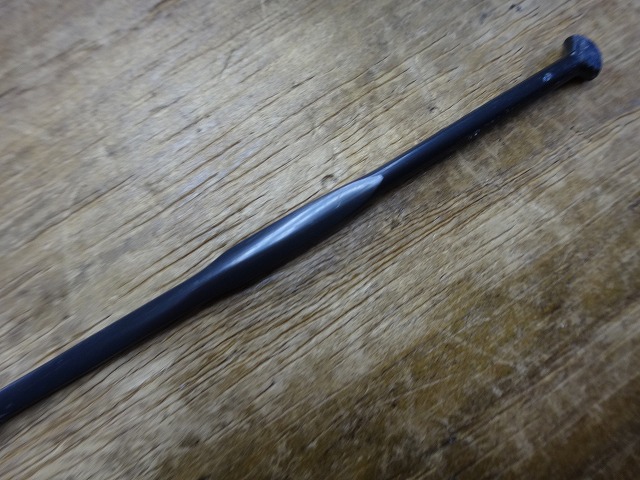
Unrelated to that, a CX Sprint I was going to use for the rebuild had a defect, so I rejected it.
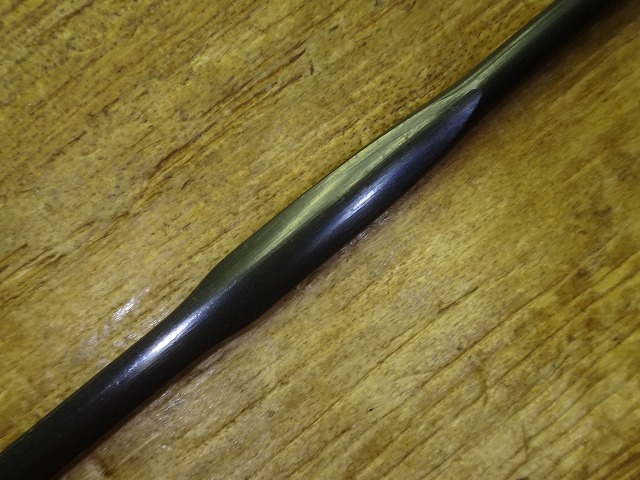
↑Are you serious?
This defect, apparently from rolling failure,
I've only seen on the threads side before.
This is the first time I've seen one occur on the neck side.
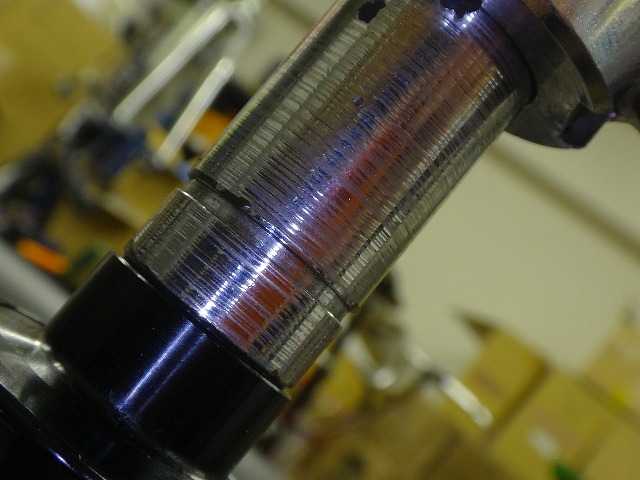
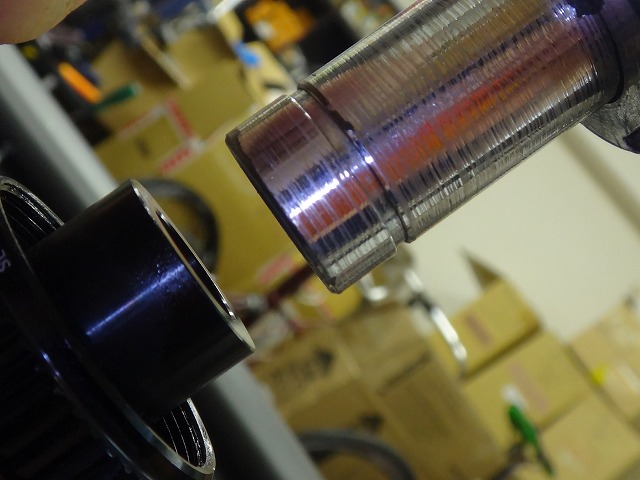
I won't deny I pushed it to extremes for the sake of photos,
but it's an intermediate state with virtually no radial or lateral runout, just center offset.
At this point the 12-spoke side's first ST
is roughly the same as before starting, and since the 12-spoke side reuses the same spokes,
the tension is essentially the same as before rebuilding.
Taking an average, it might be ever-so-slightly lower,
but from here until center is achieved, I can tension the 6-spoke side unidirectionally,
so in that process the 12-spoke side will definitely get tensioned higher than before.
Getting the 12-spoke side more tensioned without reverse-sided different-diameter lacing is basically impossible.
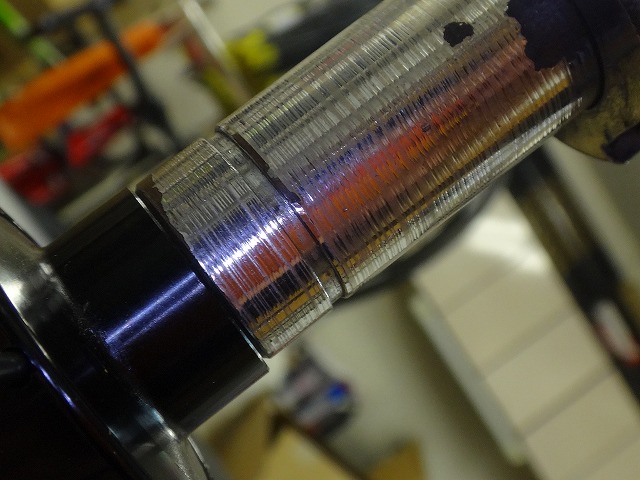

The center still isn't perfect, but that's enough.
From here, I introduced "spoke chatter slack" on the 12-spoke side.
Yeah, that intermediate state was overdoing it.
However, I didn't loosen just the 12-spoke side unidirectionally—
I'm also tightening together with additional tightening on the 6-spoke side.
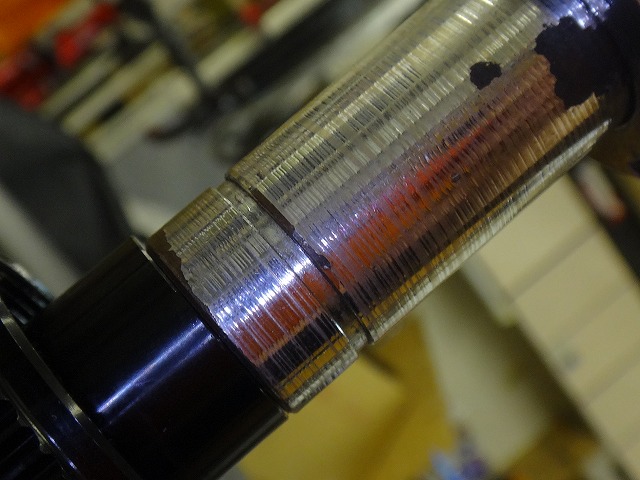
Center is achieved.
Built.

Half-black CX Sprint.
If you think this is slack, there's nothing more I can do.
It's the design limit.
The Rapide CLX has a front rim with 51mm depth,
about the same rim height as the CLX/CL50,
while the rear rim is 60mm depth.
However, since the front rim has a wider rim width,
it's virtually certain to be heavier
than the rim on the similarly-heighted CLX50.
But because reducing spokes from 21H to removing three spokes from the CL50
results in weight savings that get obscured in the comparison muddle of complete wheel weights by front and rear,
it's become even harder to discern the actual rim weight.
Past tense because I finally got the chance to actually measure the weight.
But if you think I'm just going to hand that information over easily,
you're sorely mistaken.
↑What's with this guy? Pretty bad attitude.

Sorry for the wait!
Please take a look at this image!
↑Stop that!
Oh no, I shouted out the specific keyword,
so those three rims from the beginning ended up getting archived along with this rim too!