In my recent article about Luc Leblanc,
I got some feedback from someone at a certain distributor,
so I'm making a correction here.
Laurent Jalabert did not compete in the 1994 World Road Race Championship.
My source for this was "I heard directly from Jalabert himself at the time that
he couldn't race due to injuries from a crash at the Tour de France"—
literally the strongest source possible. Pretty amazing.
Which got me curious—
since neither Leblanc nor Virenque had bib number ending in 1 (which indicates the team leader),
I wondered who exactly was the French team's leader,
so I looked it up and found that
the World Championships isn't actually a 9-riders-per-country format.
Different countries send different numbers of riders (sometimes more than 9),
so bib numbers are just sequential,
and you see bib numbers ending in 0 (multiples of 10)
that you wouldn't see in the typical 9-rider or 8-rider format.
Looking at the 1994 World Championships start list, for example:
Canada had bibs 49–51 (3 riders),
Czech Republic had only 52 (1 rider),
Colombia had 53–69 (12 riders, with 62, 65, 68 as no-shows),
Denmark had 71–82 (9 riders, with 79, 80, 81 as no-shows),
France had 83–101 (12 riders, with 83, 84, 86, 87, 89, 91, 98 as no-shows)
and Japan had 121–127 (7 riders).
There didn't seem to be any pattern to the order
(at least not alphabetical,
or putting the team leader first).
I suspect Jalabert's number was among France's no-shows.
I mistakenly thought Richard Virenque had bib 99 because
his last name starts with V,
so the number ended in 9.
Now, something different:
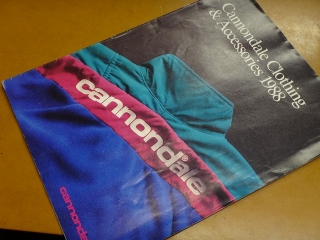
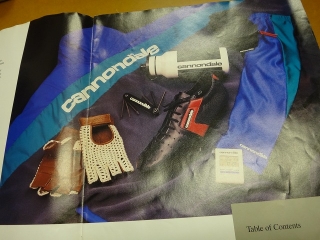
This is a 1988 Cannondale apparel and equipment catalog.
The fact that they had separate catalogs for apparel and equipment
means that by 1988
they also had a bike catalog.
Cannondale was founded in 1971,
but their original business was bag manufacturing. Up until around their 1982 catalog,
along with bags they offered tents, sleeping bags,
and cycling apparel, but
the bikes that the models in the apparel photos were riding
weren't Cannondale bikes.
They didn't exist yet.
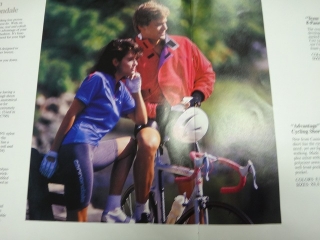
By 1988
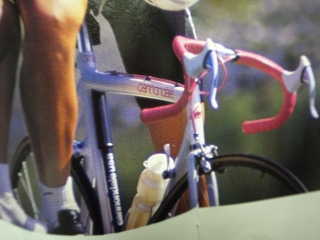
Cannondale bikes are there.
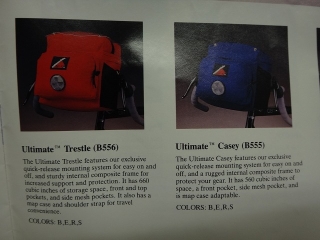
These products here are their "core business".

Now, this Flat Fixer—
a trademarked puncture repair kit—
except for the tire levers and bag,
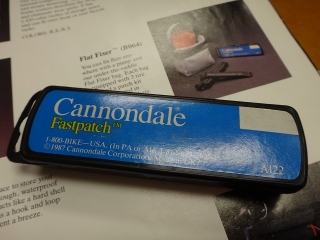
↑Here's the actual patch kit.
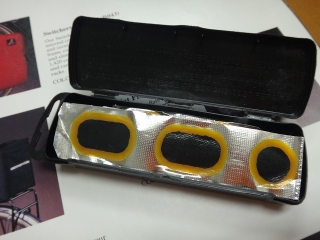
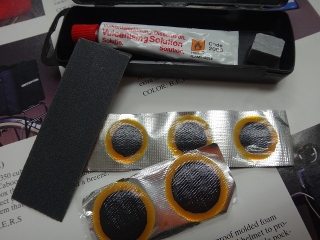
It contains various patches, rubber cement, sandpaper, and
a whetstone.
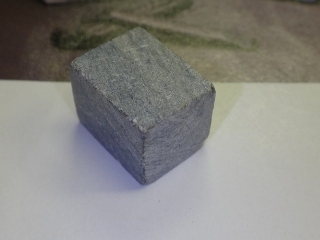
About the purpose of this whetstone:
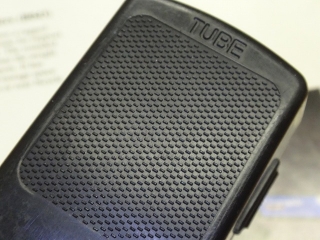
The edge of the case back serves as a tube file.
Without sandpaper, it's only about as effective as
some psychological comfort—not much filing power really.

And the other end, marked "chalk"—
this is a single-cut file for sharpening the whetstone.
The powder you get from sharpening it is used as tenka powder (talc),
which you dust onto the patched area
to prevent adhesion to the inside of the tire.
Basically it's tire powder—imagine it like having wasabi root before grating
rather than already-grated wasabi in a tube.
I got some feedback from someone at a certain distributor,
so I'm making a correction here.
Laurent Jalabert did not compete in the 1994 World Road Race Championship.
My source for this was "I heard directly from Jalabert himself at the time that
he couldn't race due to injuries from a crash at the Tour de France"—
literally the strongest source possible. Pretty amazing.
Which got me curious—
since neither Leblanc nor Virenque had bib number ending in 1 (which indicates the team leader),
I wondered who exactly was the French team's leader,
so I looked it up and found that
the World Championships isn't actually a 9-riders-per-country format.
Different countries send different numbers of riders (sometimes more than 9),
so bib numbers are just sequential,
and you see bib numbers ending in 0 (multiples of 10)
that you wouldn't see in the typical 9-rider or 8-rider format.
Looking at the 1994 World Championships start list, for example:
Canada had bibs 49–51 (3 riders),
Czech Republic had only 52 (1 rider),
Colombia had 53–69 (12 riders, with 62, 65, 68 as no-shows),
Denmark had 71–82 (9 riders, with 79, 80, 81 as no-shows),
France had 83–101 (12 riders, with 83, 84, 86, 87, 89, 91, 98 as no-shows)
and Japan had 121–127 (7 riders).
There didn't seem to be any pattern to the order
(at least not alphabetical,
or putting the team leader first).
I suspect Jalabert's number was among France's no-shows.
I mistakenly thought Richard Virenque had bib 99 because
his last name starts with V,
so the number ended in 9.
Now, something different:
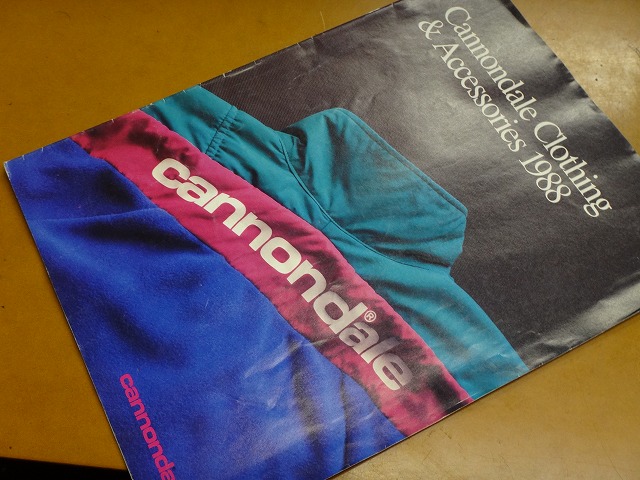
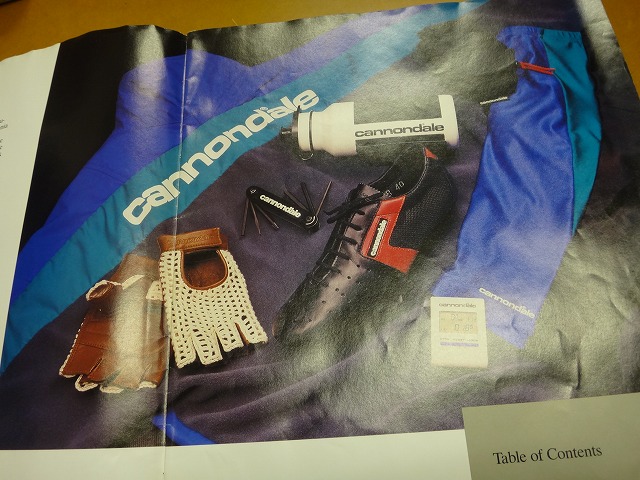
This is a 1988 Cannondale apparel and equipment catalog.
The fact that they had separate catalogs for apparel and equipment
means that by 1988
they also had a bike catalog.
Cannondale was founded in 1971,
but their original business was bag manufacturing. Up until around their 1982 catalog,
along with bags they offered tents, sleeping bags,
and cycling apparel, but
the bikes that the models in the apparel photos were riding
weren't Cannondale bikes.
They didn't exist yet.
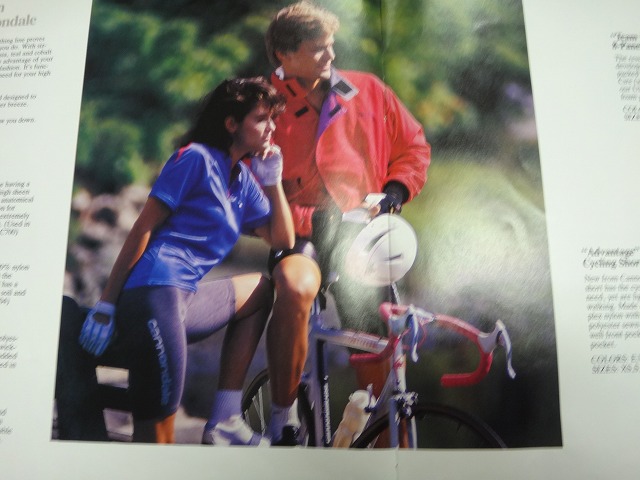
By 1988
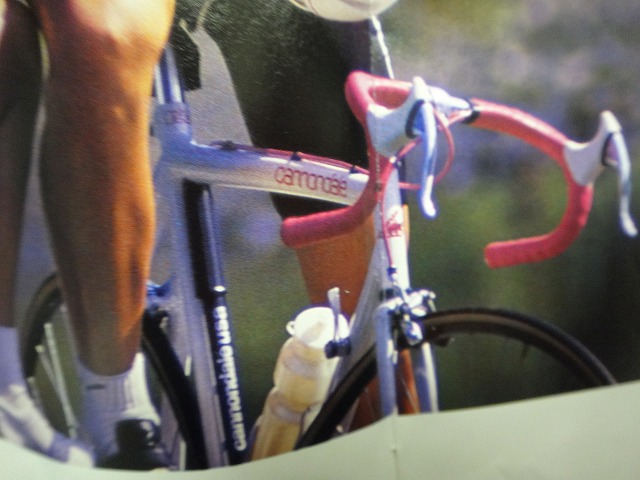
Cannondale bikes are there.

These products here are their "core business".
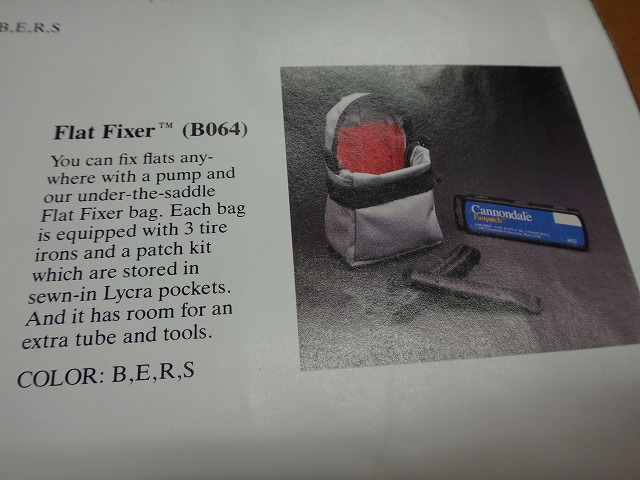
Now, this Flat Fixer—
a trademarked puncture repair kit—
except for the tire levers and bag,
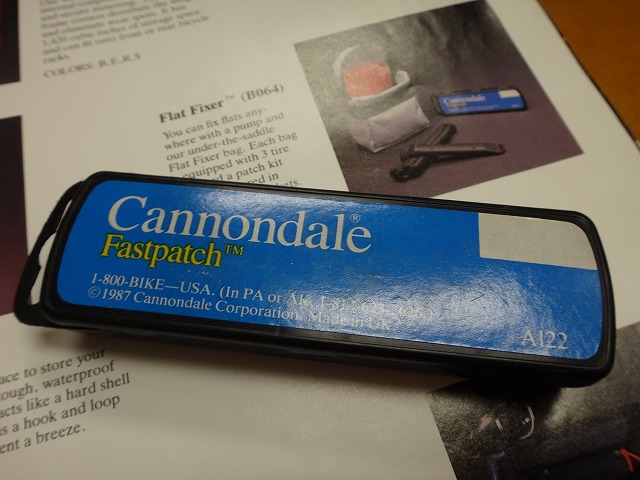
↑Here's the actual patch kit.
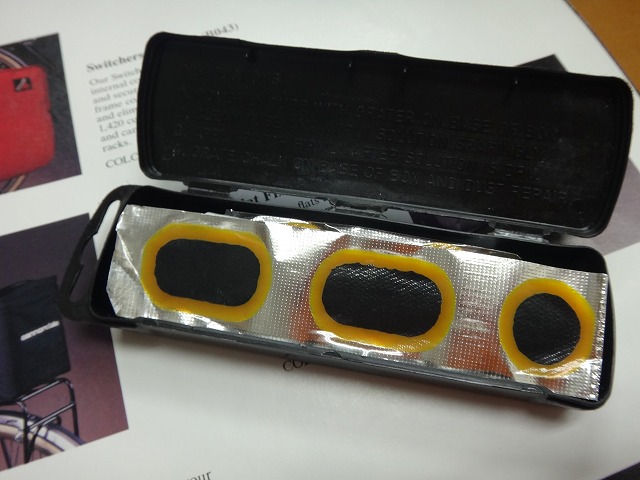
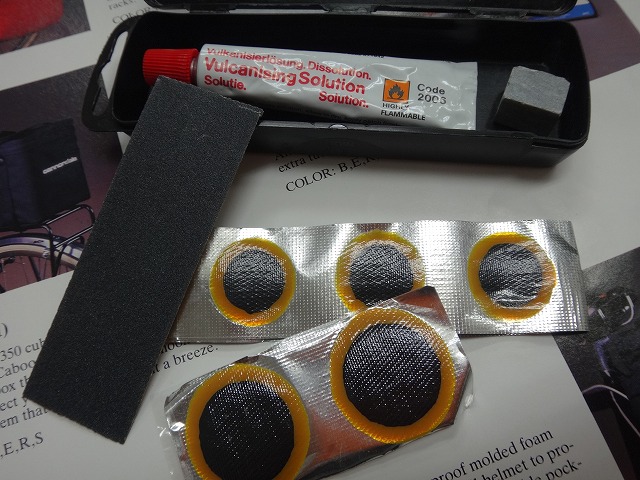
It contains various patches, rubber cement, sandpaper, and
a whetstone.
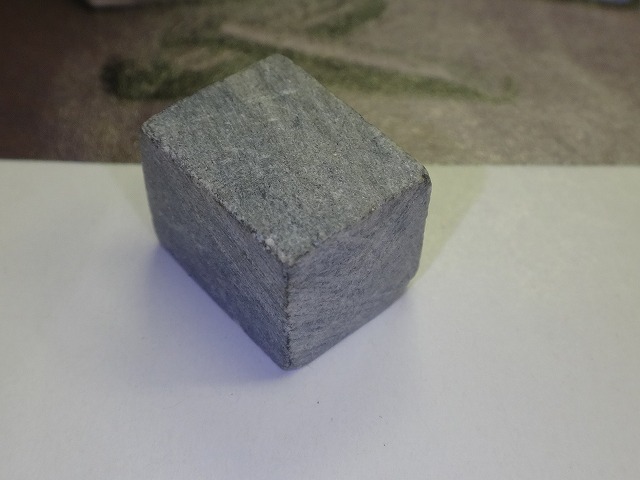
About the purpose of this whetstone:
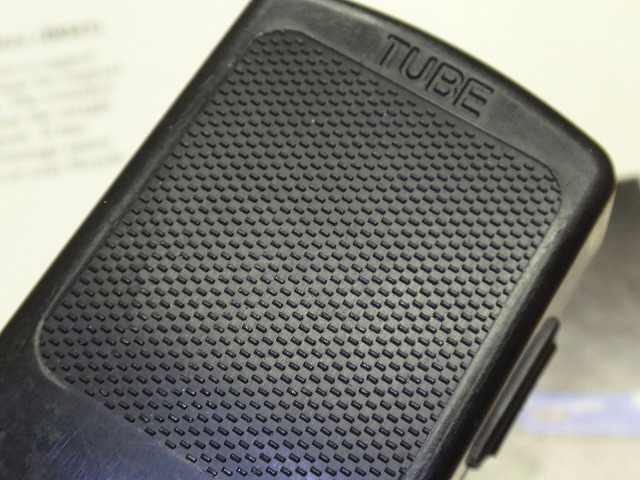
The edge of the case back serves as a tube file.
Without sandpaper, it's only about as effective as
some psychological comfort—not much filing power really.

And the other end, marked "chalk"—
this is a single-cut file for sharpening the whetstone.
The powder you get from sharpening it is used as tenka powder (talc),
which you dust onto the patched area
to prevent adhesion to the inside of the tire.
Basically it's tire powder—imagine it like having wasabi root before grating
rather than already-grated wasabi in a tube.