Another wheel day (and so on).
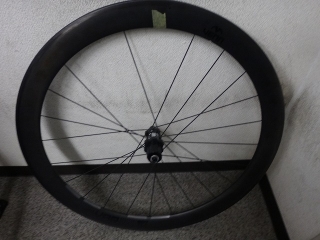
A customer brought in a rear wheel from a brand called VENN
called the 507TCC—a 50mm deep rim.
This is a rim brake model, but the difference between this rim and the
507TCD disc brake model from the same company is
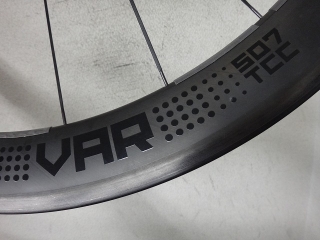
just whether the sticker position covers the brake zone or not—
I thought everything else was the same,
but it turns out there's actually proper brake zone treatment applied.
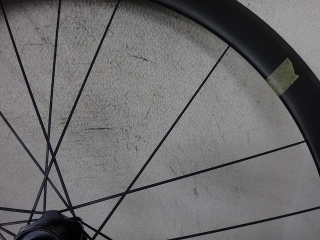
A straight spoke at the rim hole with the marker tape broke,
so they want it repaired.
The reason there's no spoke at the final crossing on the other side of the broken spoke in the image above
is that I pulled it out to check its length.
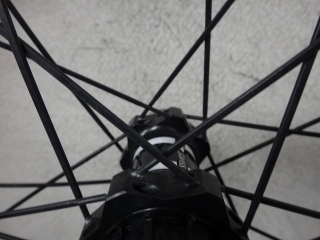
The hub is a DT 350 in straight spoke configuration, and
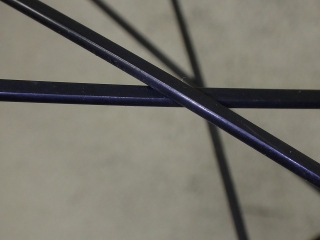
the spokes are Pillar straight spokes,
but they're square aero spokes with an aspect ratio so squared that calling them "flattened" would be an understatement—
more like one half of a broken chopstick.
I don't have any spokes with a similar weight ratio in stock or anywhere I can think of.
I was stumped, but then the customer said that if there's a way to make it better,
they're okay with it including replacing the lacing.
So I'm going to interpret that generously.
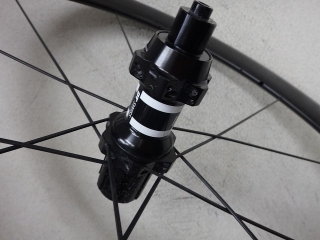
I pulled out all the spokes on the non-drive side.

11 spokes at 279mm weigh 76.5g, so
the spoke weight ratio is 76.5÷11÷279÷0.0257 =
0.9699099961..., or about 97%.
I can't understand the point of an aero spoke when it's barely different from plain 14-gauge.
It probably does make wheel building easier than round spokes, though.
The term "aero" is seductive, but the biggest thing I look for in aero or flattened spokes is
getting lightweight spokes that don't develop unwanted deflection even at spoke weight ratios below 70% thanks to work hardening.
When that's the goal, there's no need to orient the flattening in an aerodynamically disadvantageous direction—
it's simply a matter of pointing the long side of the flattened profile in the front-to-back direction rather than left-to-right across the wheel.
Now, if you ask whether the CX Sprint with its ~78% spoke weight ratio needs to be an aero spoke, the answer is no—actually, wait,
it's useful when you want a left-right difference compared to the CX-RAY at ~65%,
and since flattened spokes have better workability,
you could make do without flattening at that weight ratio,
but there's no harm in being flattened either.
If you're going to run a wheel with runout and use 85% and 65% spoke weight ratios,
the 85% side can have any spoke shape,
but the 65% side absolutely cannot be round.
At spoke weight ratios near 100%,
with something like Sapim CX or Aero SB II true aero from Hoshi,
if used on a front wheel,
you can actually feel what's called the aero effect.
So why aren't today's spokes shaped that way?
Because the hub flanges are slitless through-design,
so you can't use flattened spokes that deviate from a 2.35mm diameter circle.
So when I said earlier I couldn't understand the point,
it might actually be the optimal solution under the constraint of
「a somewhat flattened spoke with as large a weight ratio as possible
that can be used on DT straight-spoke hubs」.
I wish "easy to source" had been added to those conditions too.
For this wheel, I decided to replace the non-drive side with CX-RAY and relace it.
The final crossing was already woven before the rebuild, so that's not an issue.
The 11 non-drive spokes can be used as spare spokes for the drive side if I shorten them a bit.
After the rebuild, the non-drive side with CX-RAY straight spokes can be repaired,
so future spoke breaks on either side can be fixed.
What if the broken spoke had been on the drive side?
In that case I'd take one spoke from the non-drive side and completely replace the non-drive side spokes—basically the same result.
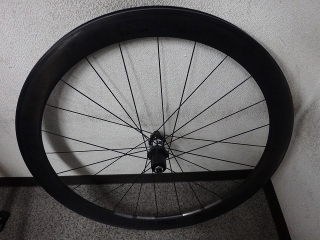
It's built.

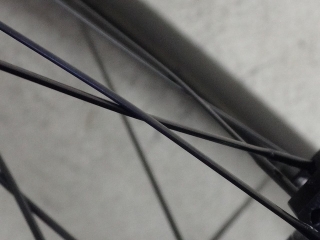
The non-drive side is now black CX-RAY straight spokes.
Since the spoke was already broken before the rebuild,
I didn't check the preliminary centering,
but in this state—separate from the lacing—it's clear that
the non-drive side spokes show noticeably less deflection than the original wheel.
I'd love to have the customer feel the difference before I do the lacing,
but since it was shipped from far away, that's not possible.
Anyway, this wheel's customer is using a Loyal that I rebuilt,
so they can probably imagine pretty well how this will turn out.
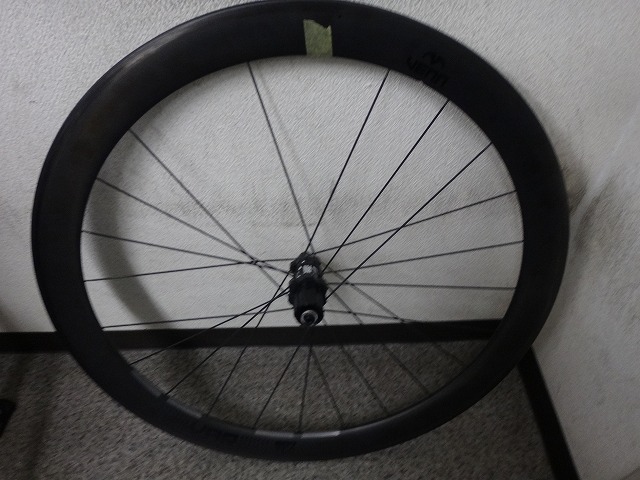
A customer brought in a rear wheel from a brand called VENN
called the 507TCC—a 50mm deep rim.
This is a rim brake model, but the difference between this rim and the
507TCD disc brake model from the same company is
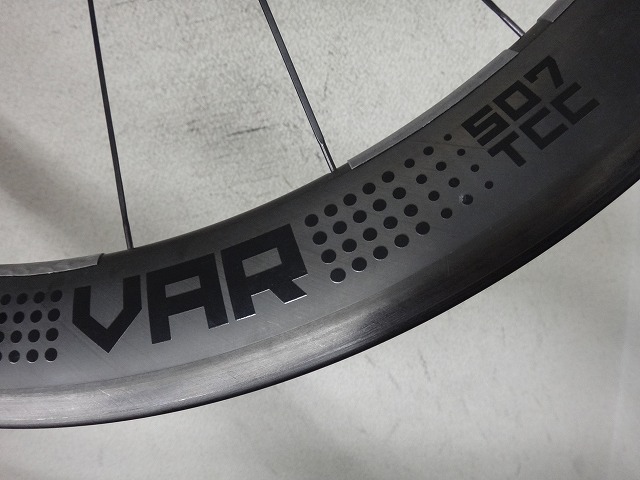
just whether the sticker position covers the brake zone or not—
I thought everything else was the same,
but it turns out there's actually proper brake zone treatment applied.
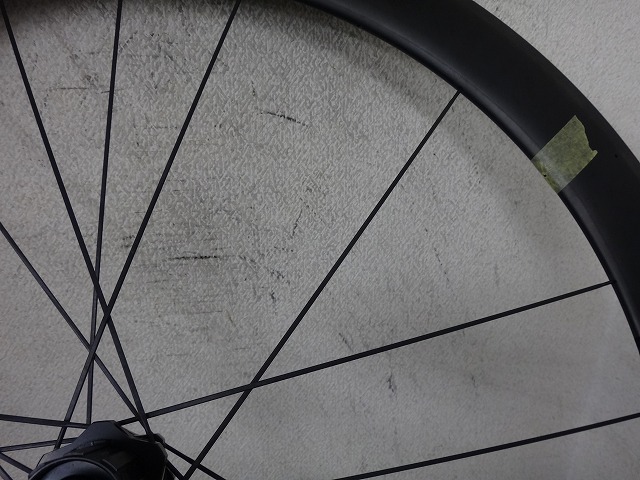
A straight spoke at the rim hole with the marker tape broke,
so they want it repaired.
The reason there's no spoke at the final crossing on the other side of the broken spoke in the image above
is that I pulled it out to check its length.
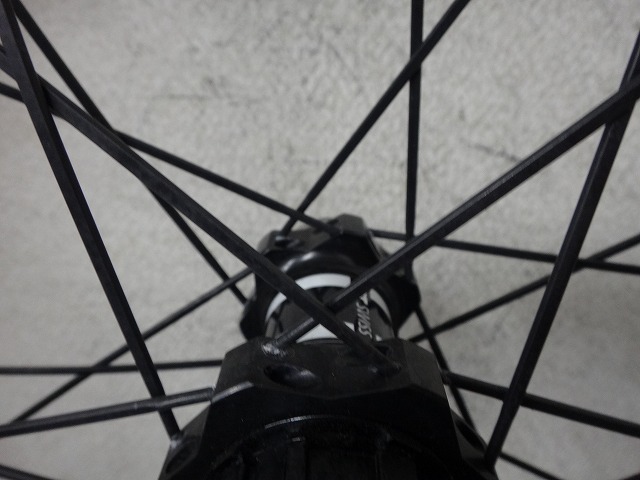
The hub is a DT 350 in straight spoke configuration, and
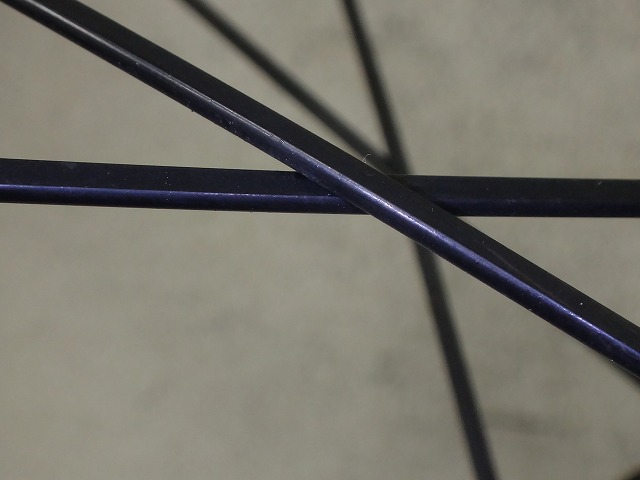
the spokes are Pillar straight spokes,
but they're square aero spokes with an aspect ratio so squared that calling them "flattened" would be an understatement—
more like one half of a broken chopstick.
I don't have any spokes with a similar weight ratio in stock or anywhere I can think of.
I was stumped, but then the customer said that if there's a way to make it better,
they're okay with it including replacing the lacing.
So I'm going to interpret that generously.
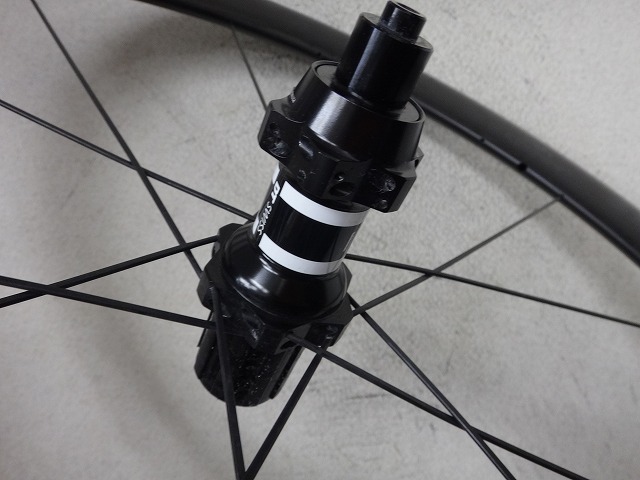
I pulled out all the spokes on the non-drive side.
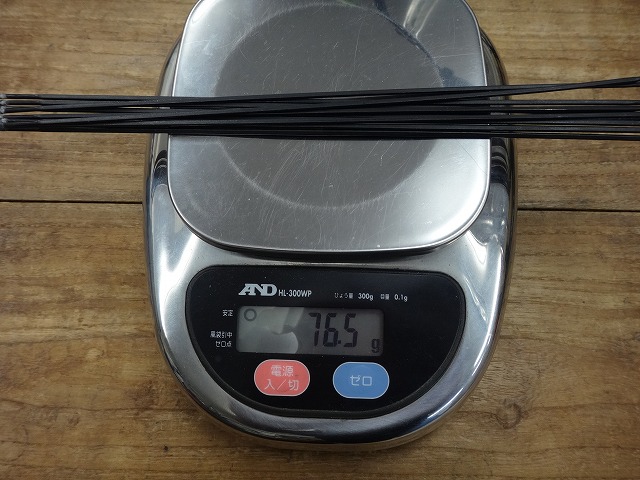
11 spokes at 279mm weigh 76.5g, so
the spoke weight ratio is 76.5÷11÷279÷0.0257 =
0.9699099961..., or about 97%.
I can't understand the point of an aero spoke when it's barely different from plain 14-gauge.
It probably does make wheel building easier than round spokes, though.
The term "aero" is seductive, but the biggest thing I look for in aero or flattened spokes is
getting lightweight spokes that don't develop unwanted deflection even at spoke weight ratios below 70% thanks to work hardening.
When that's the goal, there's no need to orient the flattening in an aerodynamically disadvantageous direction—
it's simply a matter of pointing the long side of the flattened profile in the front-to-back direction rather than left-to-right across the wheel.
Now, if you ask whether the CX Sprint with its ~78% spoke weight ratio needs to be an aero spoke, the answer is no—actually, wait,
it's useful when you want a left-right difference compared to the CX-RAY at ~65%,
and since flattened spokes have better workability,
you could make do without flattening at that weight ratio,
but there's no harm in being flattened either.
If you're going to run a wheel with runout and use 85% and 65% spoke weight ratios,
the 85% side can have any spoke shape,
but the 65% side absolutely cannot be round.
At spoke weight ratios near 100%,
with something like Sapim CX or Aero SB II true aero from Hoshi,
if used on a front wheel,
you can actually feel what's called the aero effect.
So why aren't today's spokes shaped that way?
Because the hub flanges are slitless through-design,
so you can't use flattened spokes that deviate from a 2.35mm diameter circle.
So when I said earlier I couldn't understand the point,
it might actually be the optimal solution under the constraint of
「a somewhat flattened spoke with as large a weight ratio as possible
that can be used on DT straight-spoke hubs」.
For this wheel, I decided to replace the non-drive side with CX-RAY and relace it.
The final crossing was already woven before the rebuild, so that's not an issue.
The 11 non-drive spokes can be used as spare spokes for the drive side if I shorten them a bit.
After the rebuild, the non-drive side with CX-RAY straight spokes can be repaired,
so future spoke breaks on either side can be fixed.
What if the broken spoke had been on the drive side?
In that case I'd take one spoke from the non-drive side and completely replace the non-drive side spokes—basically the same result.
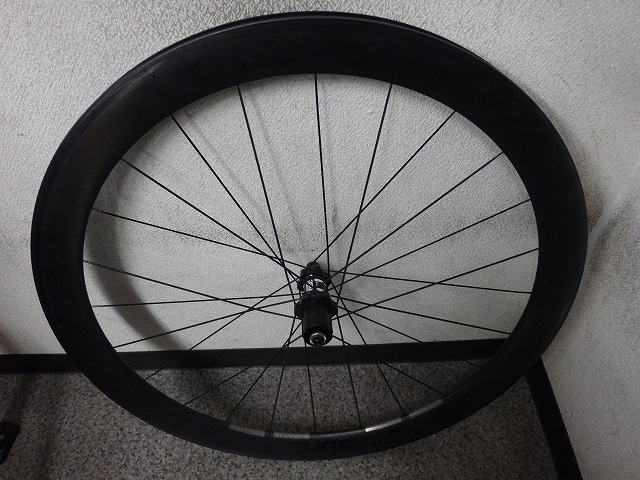
It's built.
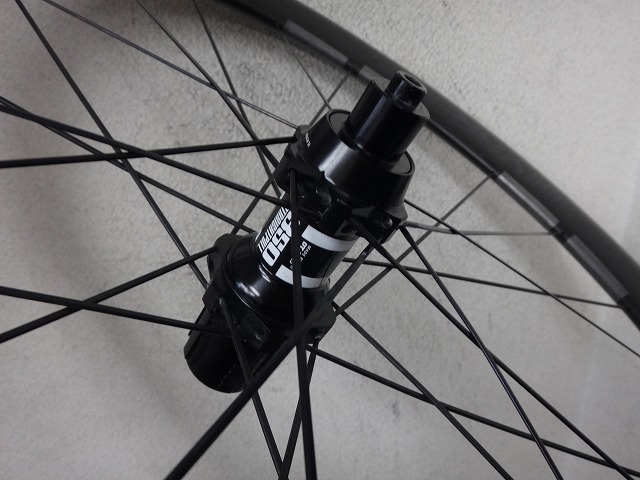

The non-drive side is now black CX-RAY straight spokes.
Since the spoke was already broken before the rebuild,
I didn't check the preliminary centering,
but in this state—separate from the lacing—it's clear that
the non-drive side spokes show noticeably less deflection than the original wheel.
I'd love to have the customer feel the difference before I do the lacing,
but since it was shipped from far away, that's not possible.
Anyway, this wheel's customer is using a Loyal that I rebuilt,
so they can probably imagine pretty well how this will turn out.