This is a separate job from the last one.
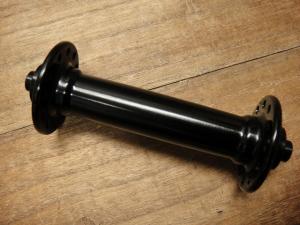
The hub in question came in as a customer build-up.
For the rear hub I'm using our shop's Tni, and building one pair of Nomunlab Wheel No. 5.
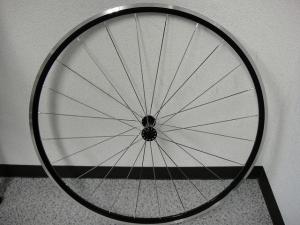
Starting with the front wheel. 24H, all CX-RAY spokes.
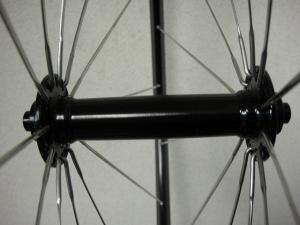
The request was for outpokes, since there might be clearance issues with the fork.
Even so, the flange spacing is really wide. The inner-to-inner flange dimension on this hub is
actually wider than the outer-to-outer dimension on most other hubs.

Now for the rear wheel.
I was asked whether to go with 32H all CX-RAY or 24H semi-comp, considering the rider's weight.
I went with the latter.
The weight in question wasn't heavy enough to warrant concern.
Between 32H all CX-RAY and 24H semi-comp,
the 24H semi-comp is about 10% lighter in spoke weight.
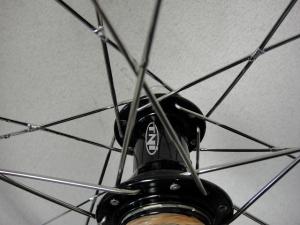
Earlier I did XR300, and now XR200 with
left-right different diameters and left-right offset lacing
(specifically, the 46-pattern semi-comp arrangement),
and even without any spoke lacing, the difference in
spoke deflection between left and right in the fore-aft direction is extremely minimal.
I focus on lacing primarily to even out spoke deflection asymmetry rather than for rigidity alone,
but it's only auxiliary. Really, what matters most is
the spoke selection and the lacing pattern itself.
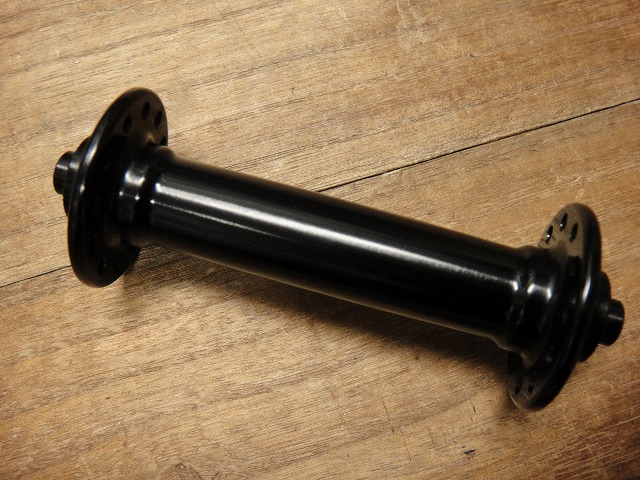
The hub in question came in as a customer build-up.
For the rear hub I'm using our shop's Tni, and building one pair of Nomunlab Wheel No. 5.

Starting with the front wheel. 24H, all CX-RAY spokes.

The request was for outpokes, since there might be clearance issues with the fork.
Even so, the flange spacing is really wide. The inner-to-inner flange dimension on this hub is
actually wider than the outer-to-outer dimension on most other hubs.
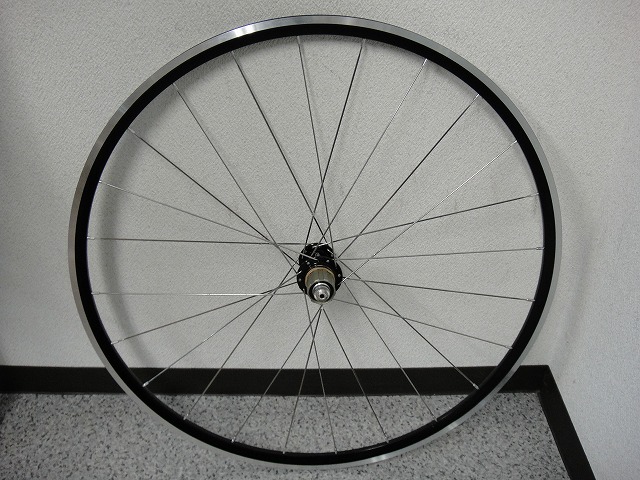
Now for the rear wheel.
I was asked whether to go with 32H all CX-RAY or 24H semi-comp, considering the rider's weight.
I went with the latter.
The weight in question wasn't heavy enough to warrant concern.
Between 32H all CX-RAY and 24H semi-comp,
the 24H semi-comp is about 10% lighter in spoke weight.
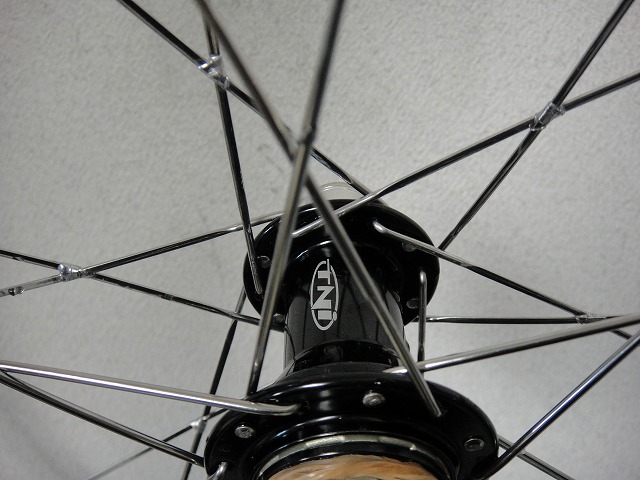
Earlier I did XR300, and now XR200 with
left-right different diameters and left-right offset lacing
(specifically, the 46-pattern semi-comp arrangement),
and even without any spoke lacing, the difference in
spoke deflection between left and right in the fore-aft direction is extremely minimal.
I focus on lacing primarily to even out spoke deflection asymmetry rather than for rigidity alone,
but it's only auxiliary. Really, what matters most is
the spoke selection and the lacing pattern itself.