Another day with wheels (and so on).
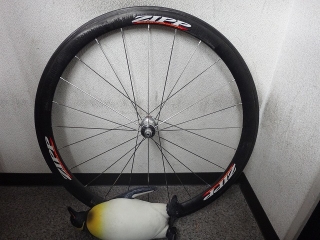
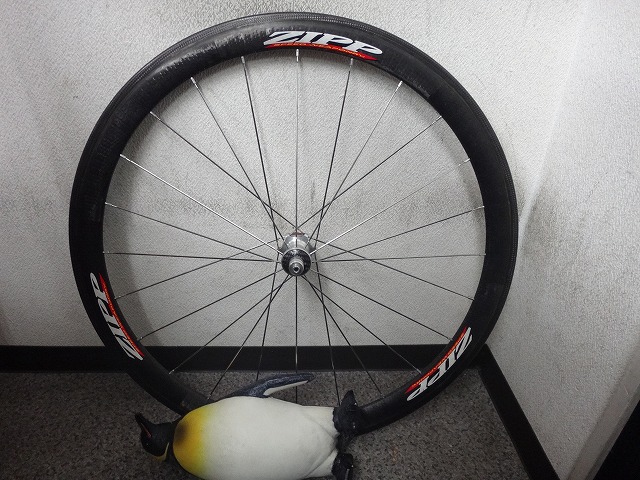
A customer brought in a ZIPP 303 rear wheel for me to work on.
Even though it's small, our shop's name sticker is on it,
so Consideration-san is being considerate. That's the real job.
A while back I thought I saw a bird called "Visualized Profit" (→here),
but apparently it's not actually Consideration-san, even though it looks similar.
Similarly, the true identity of Yellow-Neck Radish-san (→here) remains a mystery.
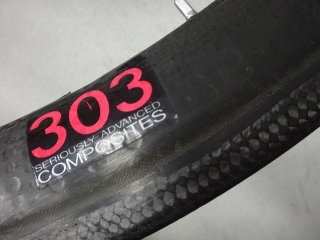
Speaking of just the rim on this 303,
even back in 2005 the component was the same,
but in that case the sticker had a yellow line running beneath the 303 mark.
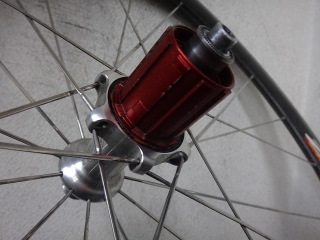
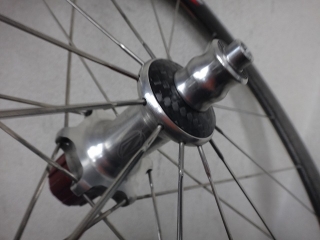
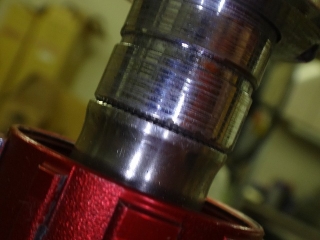
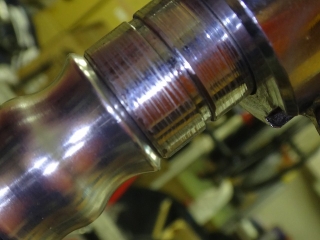
The freebody color on the 182 hub is silver.
Shimano versions are red, and Campagnolo versions are blue—
the forced 4-cross build 182 hubs are limited to 2006 and 2007.
Since this red freebody is for 10-speed, the customer is requesting that we rebuild it with an 11-speed hub.
I almost forgot to mention, but
the spokes were CX-RAY straight on both sides.
Assuming it was built centered perfectly at first,
even after sitting for 10 years you'd expect the rim to shift
toward the freeside by about a sheet of paper's thickness.
But currently it's still dead center.
Either it was originally slightly off toward the non-freeside,
or it was adjusted recently—one or the other.
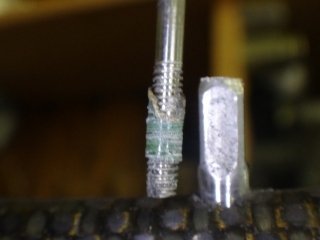
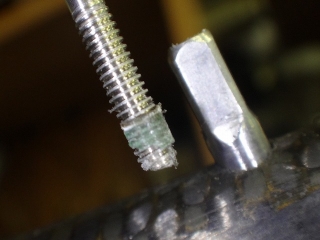
The crusty threadlocker that powerfully prevents initial nipple loosening
was applied excessively in many spots,
and turning the nipples met with significant resistance
along with a squeaking sound—it was extremely difficult to turn.
So recent adjustment seems unlikely.

The nipples are standard long pattern with no grip room on the outer edge.
The outer rim hole is also small, and nipple washers weren't used in this generation yet.
Two generations before this rim, ZIPP was producing their lightest rim ever,
and the complete wheel 303 rim was the MID-V280,
with no carbon pattern or dimpling on the rim sidewall.
This had abnormally low spoke tension strength—
it was weaker than track racing rims.
The next model was the MID-V285, with the numbers indicating nominal weight.
The MID-V285 developed a bulge on the rim sidewall.
The next model after that is this rim, and its standalone name is
just "285" without the MID-V prefix.
Starting with this generation, the rim sidewall received dimple treatment, but
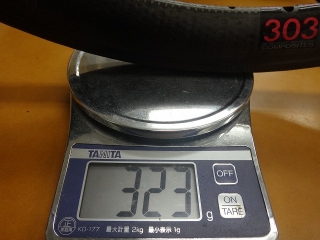
the model number and actual measured weight have now diverged quite a bit.
Looking back, this is still sufficiently light though.
However, starting with this generation, it became a rim you could really tension up.
Colima can be tensioned even higher, but
that's a built-in nipple design, so direct comparison isn't possible.
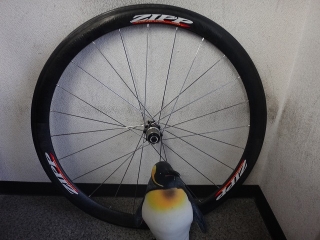
Built.
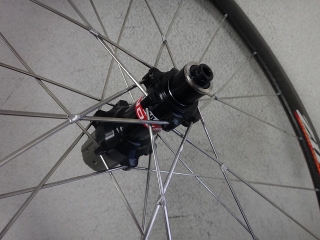
Novatech FS522SB hub, 24H, all CX Sprint straight
forced left-right 2-cross build with lacing.
I didn't use CX-RAY on the non-freeside
because I judged this approach would better meet the customer's wishes.
While the non-freeside is a small flange,
the final crossing isn't so close to the hub flange that lacing becomes pointless,
so it definitely serves its purpose.
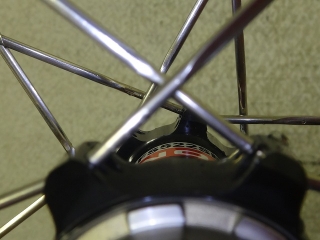
The hub flange spoke holes for two straight spokes pointing outward in each direction—
on one side there are 6 (since 24H divided by 2 is 12H).
The phase relationship between these and the non-freeside holes
is not exactly midway between the freeside holes, but offset by half again,
creating a 3:1 relationship when viewed from the right.

Looking at a wheel built with left-right tangent lacing on a rim with evenly-spaced holes,
the non-freeside final crossing is not
exactly midway between the freeside final crossing.
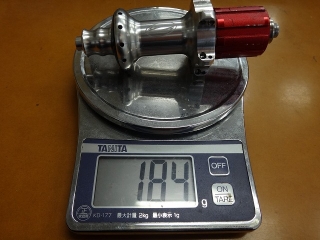
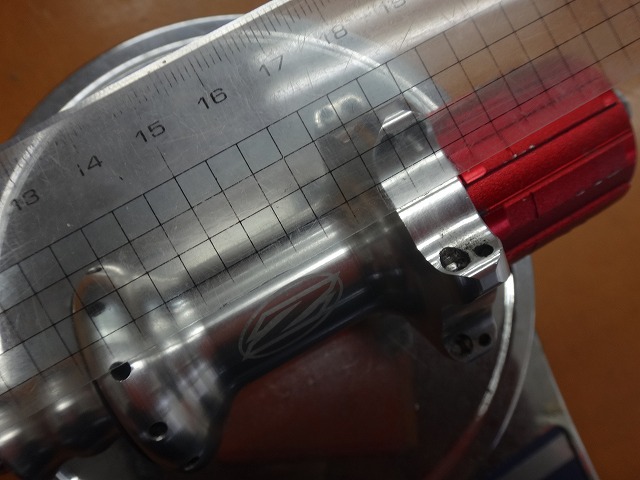
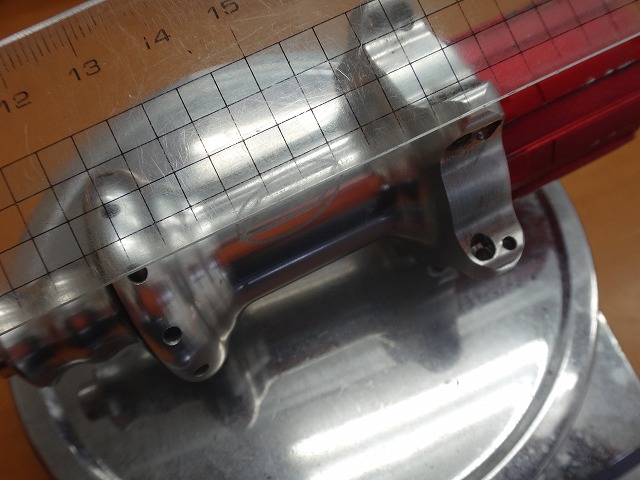
↑The measured weight of the 182 hub matches its name pretty well,
which is fine, but
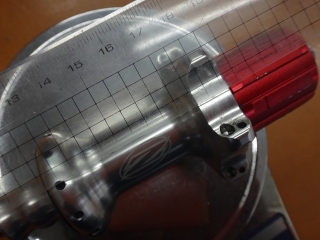
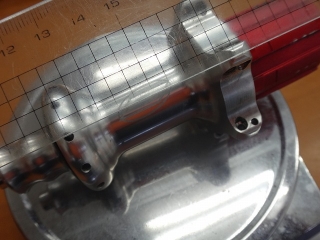
For straight spoke radial-laced non-freeside hubs,
the non-freeside rim hole phase is either
exactly midway between the freeside flange holes, or exactly centered on them.
Apparently some manufacturers confused this and made
a tangent-laced non-freeside hub with phasing errors,
didn't catch it until the catalog stage,
and when the first builder using it pointed out the mistake,
they gave some nonsensical excuse.
...Thanks for all your help back then.
A customer brought in a ZIPP 303 rear wheel for me to work on.
Even though it's small, our shop's name sticker is on it,
so Consideration-san is being considerate. That's the real job.
A while back I thought I saw a bird called "Visualized Profit" (→here),
but apparently it's not actually Consideration-san, even though it looks similar.
Similarly, the true identity of Yellow-Neck Radish-san (→here) remains a mystery.

Speaking of just the rim on this 303,
even back in 2005 the component was the same,
but in that case the sticker had a yellow line running beneath the 303 mark.
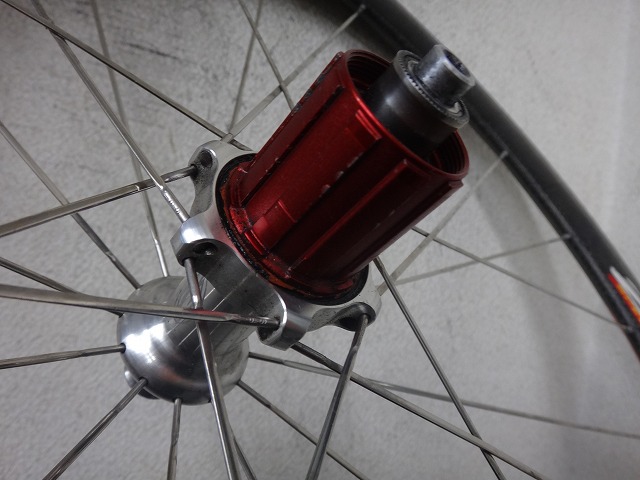

The freebody color on the 182 hub is silver.
Shimano versions are red, and Campagnolo versions are blue—
the forced 4-cross build 182 hubs are limited to 2006 and 2007.
Since this red freebody is for 10-speed, the customer is requesting that we rebuild it with an 11-speed hub.
I almost forgot to mention, but
the spokes were CX-RAY straight on both sides.
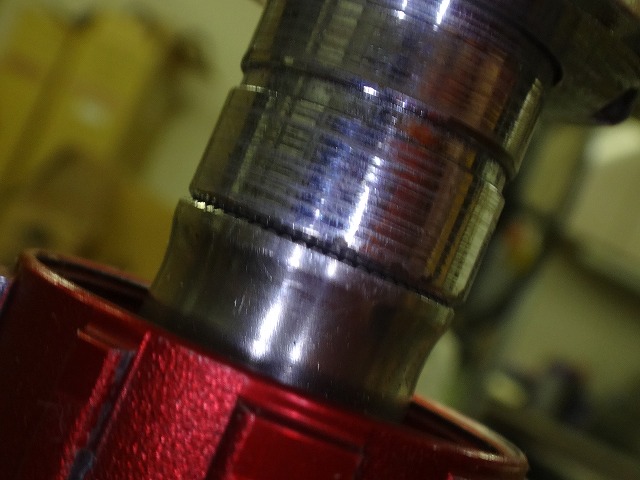
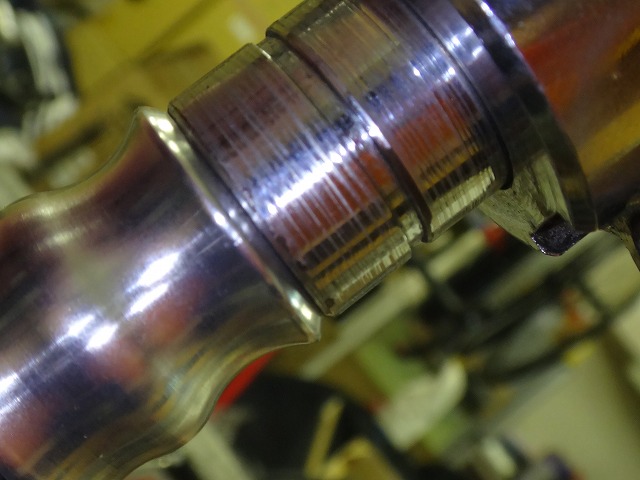
Assuming it was built centered perfectly at first,
even after sitting for 10 years you'd expect the rim to shift
toward the freeside by about a sheet of paper's thickness.
But currently it's still dead center.
Either it was originally slightly off toward the non-freeside,
or it was adjusted recently—one or the other.

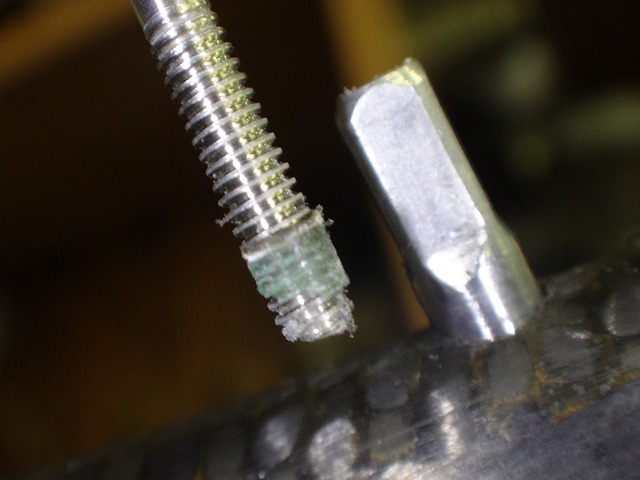
The crusty threadlocker that powerfully prevents initial nipple loosening
was applied excessively in many spots,
and turning the nipples met with significant resistance
along with a squeaking sound—it was extremely difficult to turn.
So recent adjustment seems unlikely.
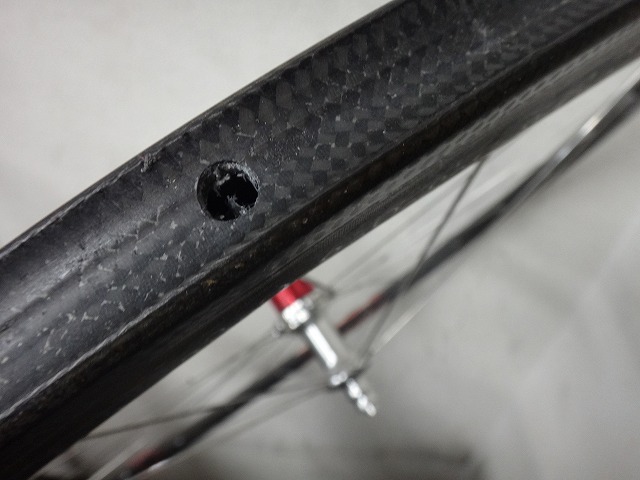
The nipples are standard long pattern with no grip room on the outer edge.
The outer rim hole is also small, and nipple washers weren't used in this generation yet.
Two generations before this rim, ZIPP was producing their lightest rim ever,
and the complete wheel 303 rim was the MID-V280,
with no carbon pattern or dimpling on the rim sidewall.
This had abnormally low spoke tension strength—
it was weaker than track racing rims.
The next model was the MID-V285, with the numbers indicating nominal weight.
The MID-V285 developed a bulge on the rim sidewall.
The next model after that is this rim, and its standalone name is
just "285" without the MID-V prefix.
Starting with this generation, the rim sidewall received dimple treatment, but
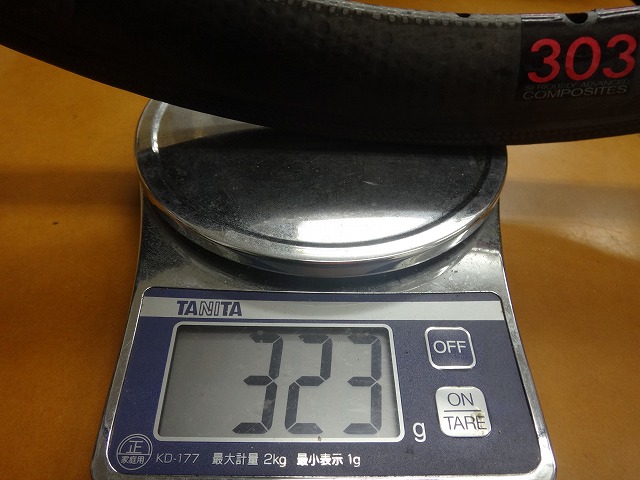
the model number and actual measured weight have now diverged quite a bit.
Looking back, this is still sufficiently light though.
However, starting with this generation, it became a rim you could really tension up.
Colima can be tensioned even higher, but
that's a built-in nipple design, so direct comparison isn't possible.
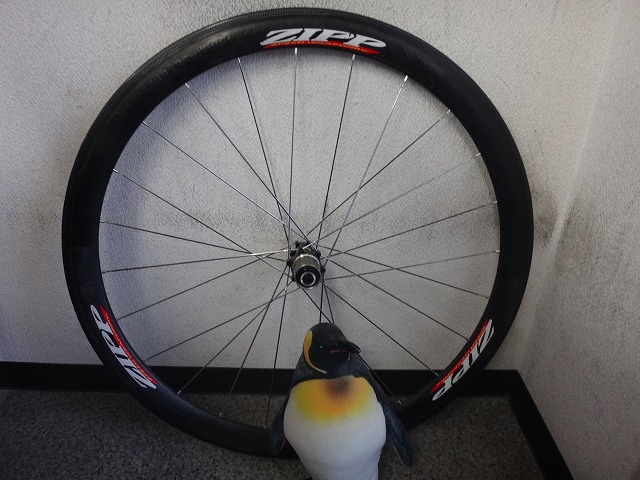
Built.
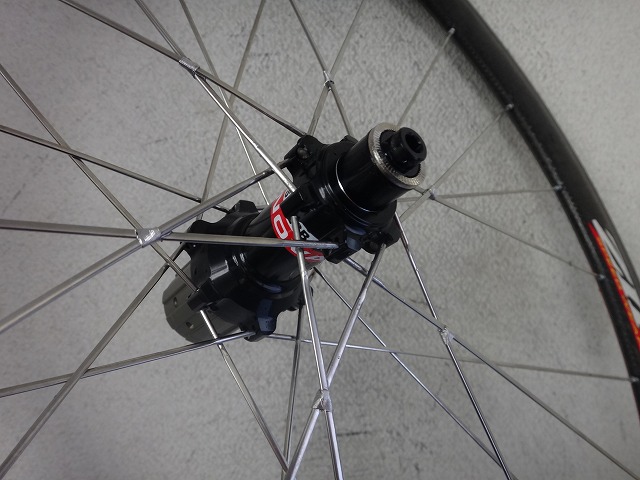
Novatech FS522SB hub, 24H, all CX Sprint straight
forced left-right 2-cross build with lacing.
I didn't use CX-RAY on the non-freeside
because I judged this approach would better meet the customer's wishes.
While the non-freeside is a small flange,
the final crossing isn't so close to the hub flange that lacing becomes pointless,
so it definitely serves its purpose.
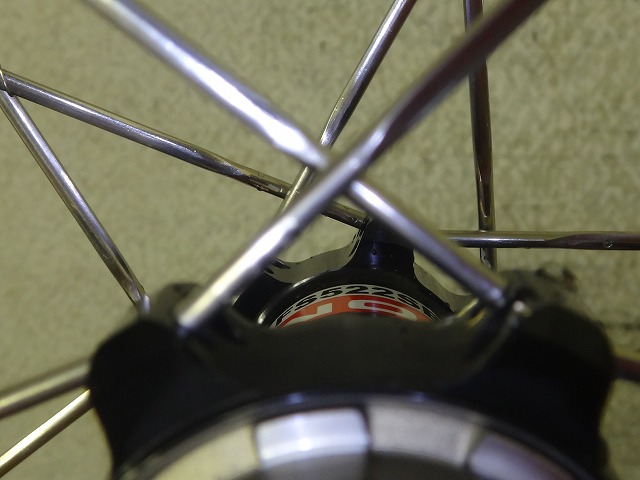
The hub flange spoke holes for two straight spokes pointing outward in each direction—
on one side there are 6 (since 24H divided by 2 is 12H).
The phase relationship between these and the non-freeside holes
is not exactly midway between the freeside holes, but offset by half again,
creating a 3:1 relationship when viewed from the right.

Looking at a wheel built with left-right tangent lacing on a rim with evenly-spaced holes,
the non-freeside final crossing is not
exactly midway between the freeside final crossing.

↑The measured weight of the 182 hub matches its name pretty well,
which is fine, but
For straight spoke radial-laced non-freeside hubs,
the non-freeside rim hole phase is either
exactly midway between the freeside flange holes, or exactly centered on them.
Apparently some manufacturers confused this and made
a tangent-laced non-freeside hub with phasing errors,
didn't catch it until the catalog stage,
and when the first builder using it pointed out the mistake,
they gave some nonsensical excuse.
...Thanks for all your help back then.