Another day, another wheel (and so on).
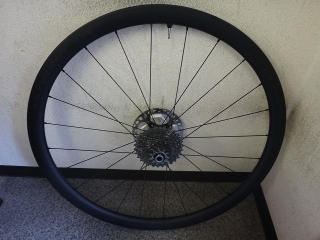
A customer brought in a rear wheel with a current-generation Altegra C36 tubeless rim.
Just to be clear, the TL-R at the end of WH-R8170-C36-TL-R doesn't mean tubeless-ready—
it means tubeless rear.
The wheel isn't running right and hardly rolls, so they want it rebuilt.

Current-generation Dura-Ace and Altegra disc brake wheels come in 24 spokes front and rear,
but the rear wheel alone uses a 2:1 lacing pattern.
This is something I've never quite understood.
Left-right different diameter lacing and left-right different count lacing both create
a difference in total spoke weight between left and right sides,
but with left-right equal count, different diameter lacing can't achieve
the extreme left-right difference you get with 2:1 lacing.
On a rear wheel, if you use strong spokes on the freewheel side and CX Super on the non-freewheel side,
the spoke weight ratios would be 104.3% and 54.0% respectively,
so the left-right difference when setting the freewheel side to 100 would be 100:51.7—
roughly 2:1. But you practically can't actually build such an extreme different diameter setup.
With 2:1 lacing, you can achieve a 100:50 left-right spoke weight difference with same diameter spokes
(ignoring spoke length differences), but the lower spoke count side needs to be laced radial.
If you lace the low spoke count side tangentially instead,
on a rear wheel the non-freewheel side will have higher tension,
and when you try to tension the rim to its limit,
the non-freewheel side hits the limit first,
leaving the freewheel side slack—a wheel with poor engagement.
As I've said before, Rovals' rear wheels are exactly like this.
You can feel it yourself by squeezing the rear wheel spokes.
The enormous stress from the hub-side brake in disc braking is
a huge factor in how a wheel is built—
things like left-right radial lacing, which we know empirically cause no problems on rim-brake front wheels,
become impossible here.
So where normally you'd build a standard 24-spoke rear wheel with 65% aero spokes in a 4-cross pattern,
or with straight spokes on the hub and a 2-cross 4-cross equivalent lacing
(and if you're not satisfied, you can try different diameter lacing or result lacing),
there are manufacturers that deliberately use 2:1 lacing and work hard to produce
wheels with below-average performance.
Cannondale's Hologram wheel is an example of front-only 2:1 lacing;
Shimano's complete wheels are rear-only 2:1 lacing.
It's not favoritism on my part—Campagnolo and Fulcrum actually produce above-average wheels
using left-right different count lacing.
There are proper reasons for this,
but I won't go into them today since this is already getting long.
I've previously suggested that the best approach with current Shimano disc brake wheels
would be to buy two front wheels and rebuild one as the rear.
If you want a tubular rim, only Dura-Ace is available,
so disassemble the Dura-Ace front wheel.
For tubeless rims, you can use an Altegra front wheel,
so you could disassemble that instead.
With Altegra, the front wheel actually costs less than a rim from a major manufacturer,
and the height-to-weight ratio based on the expected rim weight
becomes quite excellent.
But the rear wheel, despite being 24 spokes, has that unnecessary 2:1 lacing,
so when you disassemble the rim, if the rim holes are drilled for
a right-left-right-eight pattern instead of left-right-twelve,
you might not be able to rebuild it with a standard 24-spoke hub.
When the wheel is built up, if the hole offset is minimal,
it becomes difficult to detect that.
With something like Roval it's obvious, so you can tell from the wheel's condition.
But the customer already bought a rear wheel,
so if we rebuild, it has to be as a rear.
Buying the rear wheel—you might regret it, hence the "regret".
If there's a problem that prevents rebuilding after disassembling the wheel,
I carefully disassemble it so we can put it back together.
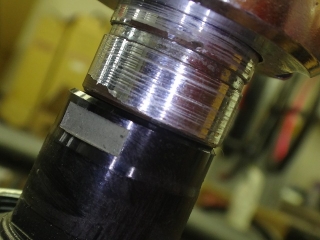

The wheel was centered perfectly.
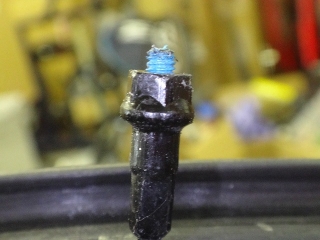
Freewheel side

Non-freewheel side
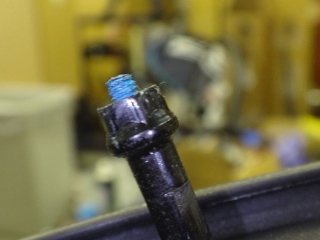
Freewheel side
These three spokes make one pair
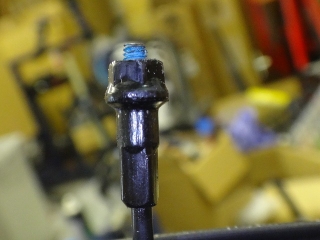
Freewheel side
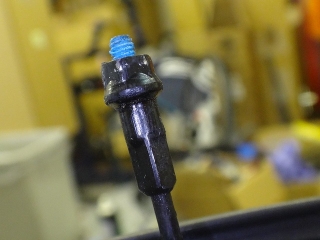
Non-freewheel side
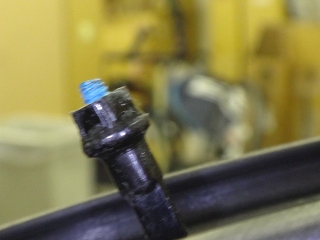
Freewheel side
This is the neighboring pair
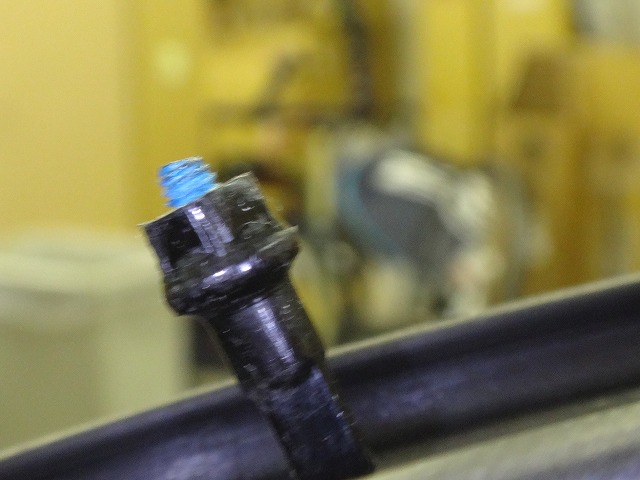
I disassembled up to 18 spokes of the 24, and these are photos of the untightened nipples
pulled out to the rim exterior in order.
The spoke lengths between freewheel and non-freewheel sides are quite different,
and both are clearly too long, with the non-freewheel side being longer overall.
These nipples had a hexagonal grip on the outer diameter, but
unlike Campagnolo complete wheel nipples where the outer end is embedded
with blue threadlock nylon, these had nothing of the sort.
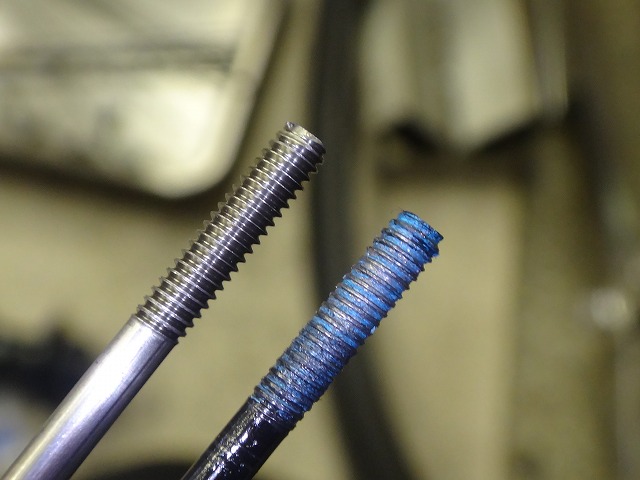
Also, like Campagnolo, special nipples that are longer than standard
sometimes use spokes with longer thread pitch than standard spokes,
and in that case you can't determine spoke length is wrong just by counting
how many thread pitches stick out of the nipple, but
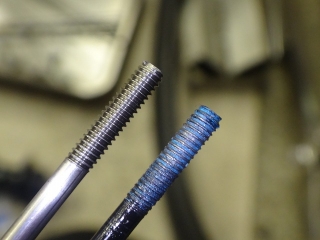
compared to standard silver CX-RAY, they were nearly identical.
The nipple design wasn't special—the thread pitch start position
didn't seem offset outward from where it contacts the bottom of the pocket.
So the spoke length is definitely too long.
The nipple isn't embedded with threadlock nylon,
but as you can see, the spoke threads are generously coated with threadlock compound,
so at least that aspect isn't concerning.
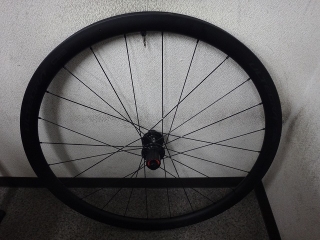
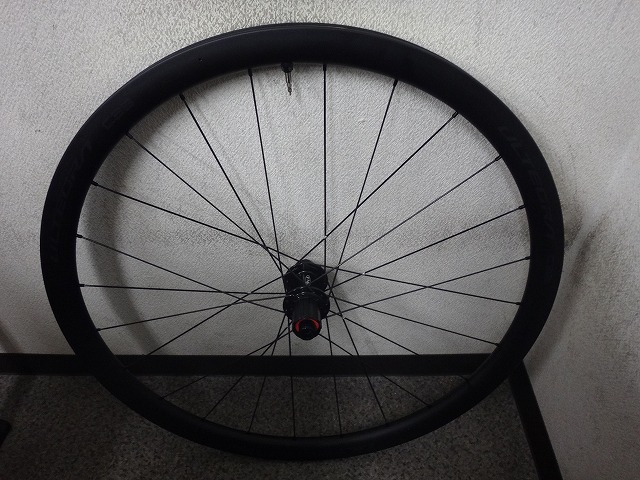
Built.
Though this is a 2:1 laced rim, there's no clear hole offset
or directional rim hole design, so
with the customer's approval, I went ahead and rebuilt it as equal-count lacing.
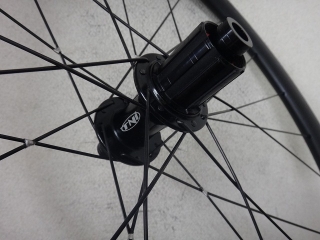
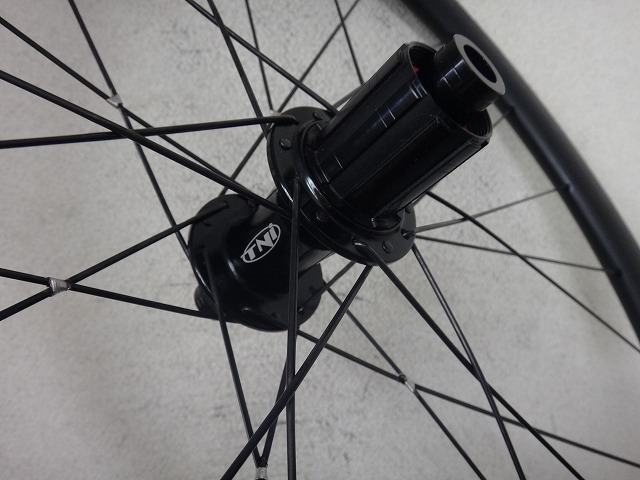
REVO disc hub, 24H, half-comp 4-cross with result lacing.
Even without the result lacing,
I'm confident it's better than the original wheel.
I don't understand why manufacturers go to such lengths to design crappy wheels.
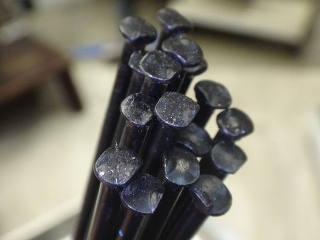
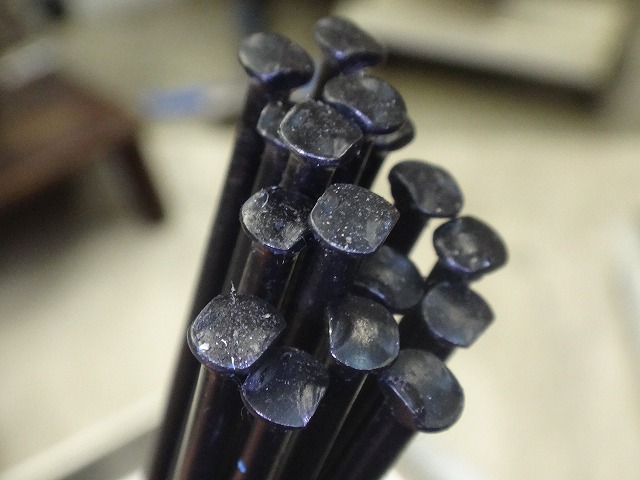
The original spokes had no stampings on the head and didn't appear to be Sapim.
This is speculation, but the tubeless rim seems to be the same as
the Dura-Ace grade version.
As an intentional weight reduction against that,
the spokes—regardless of the hub—were deliberately heavier,
or in my terms, higher spoke weight ratio,
but without doing different diameter lacing (different diameter for equal count, reverse different for 2:1),
if I had to choose between Altegra and Dura-Ace spokes,
I'm starting to think Altegra's would be superior.
Using the hub and rim from a Dura-Ace wheel as-is,
but swapping just the spokes for Altegra ones might actually
make for a better-rolling wheel.
Dura-Ace wheel spokes have a spoke weight ratio of about 62%—extremely light—
so they certainly have strong appeal to the market segment that
chooses wheels based solely on front-and-rear combined weight.

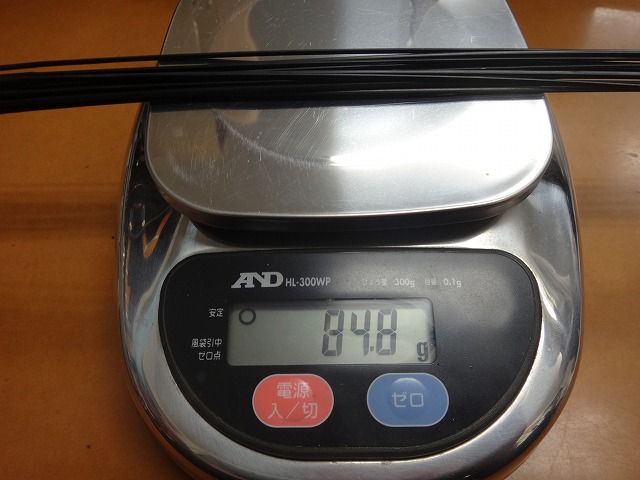
The original spokes' spoke weight ratio.
16 spokes on the freewheel side weighed 84.8g.
Nominal length 286mm, and my measurement also showed 286mm.
84.8÷16÷286 equals 0.01853146... and
dividing by 0.0257 (which I define as 100% spoke weight ratio)
gives 0.7210687... so approximately 72.1%.
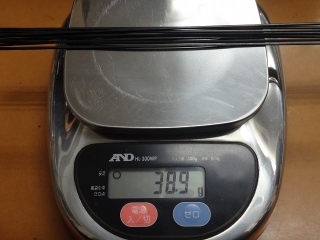
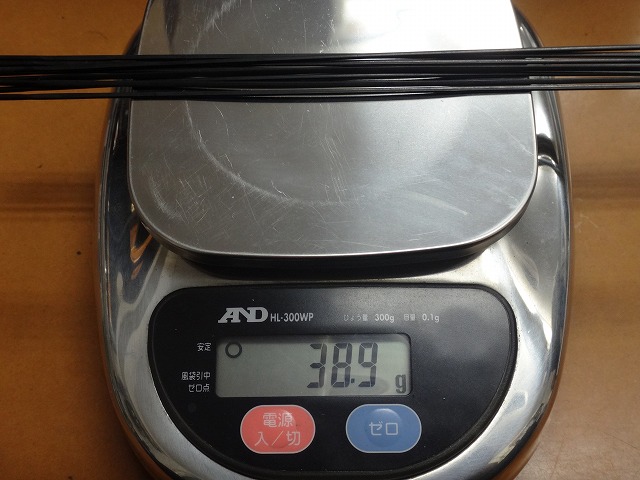
The non-freewheel side, 8 spokes, weighed 38.9g.
Nominal length 267mm, though my measurement seemed to be 268mm—
let me calculate using the nominal first.
38.9÷8÷267÷0.0257 equals 0.70862265... so approximately 70.8%.
If I calculate using 268mm, I get about 70.5%.
Since the freewheel side spokes are longer,
the proportion of butted section in the total spoke length is larger,
so you'd expect the spoke weight ratio to be smaller on the freewheel side,
but the result was opposite. It might be due to small sample size.
The original wheel was perfectly centered,
with the freewheel side spokes sticking out about 3 threads from the nipple
and the non-freewheel side about 4-5 threads.
Accounting for this difference, while not a reversal,
the left-right spoke weight ratio difference that should be identical
comes very slightly closer.
For now, let's say these are approximately 71% spokes.
This rear wheel uses a C36, and the different rim height models C50 use the same spokes,
but C60 is built with different spokes that have a larger spoke weight ratio.
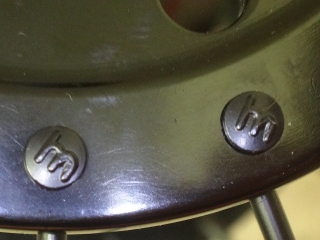
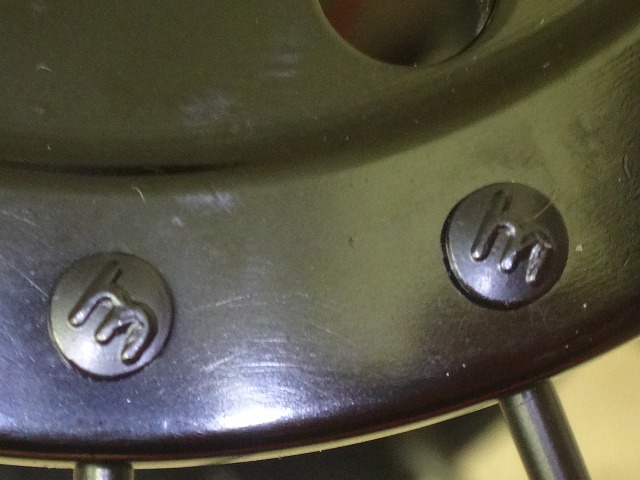
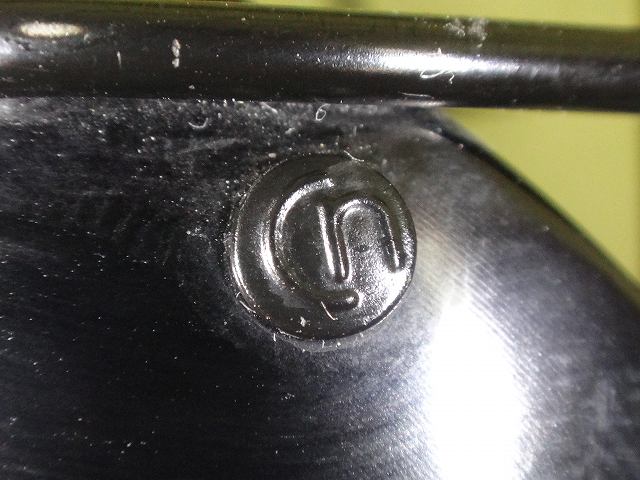
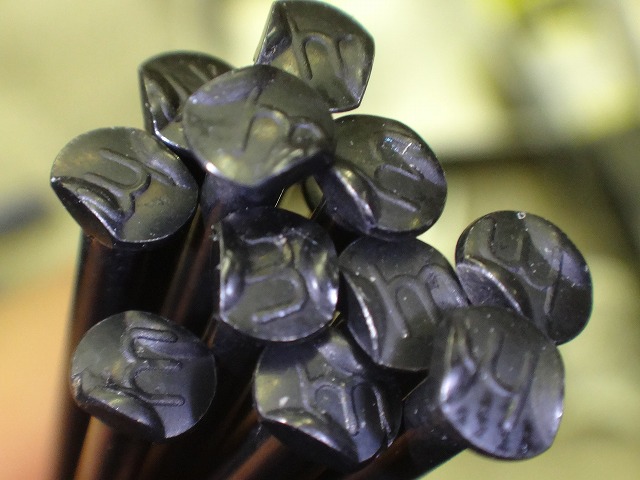
This is a wheel I'm planning to rebuild tomorrow, built with mac spokes plain spokes.
The logo stamping shows the m with the first vertical bar extended.

Mac is a brand name for what CN Spokes (the image above shows the Cn stamping)
positions as "Elite Spokes," a separate brand, but
from experience, the nipple-break failure rate is higher than DT or Sapim,
and the black spoke coating looks cheap. Which makes sense, since the price is cheap too.
Getting a mac spoke image from a conveniently nearby wheel was helpful.
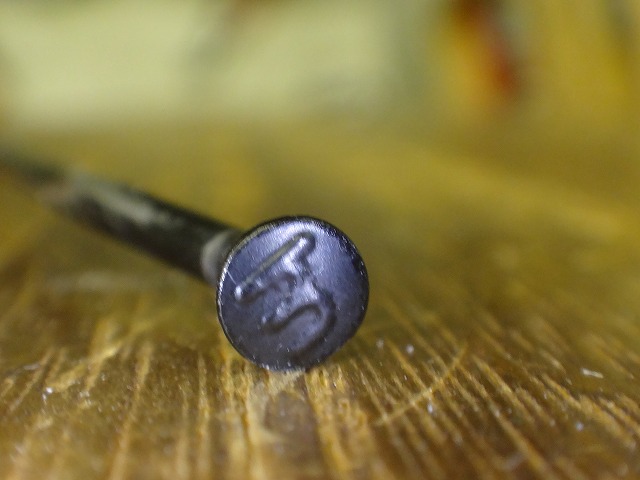
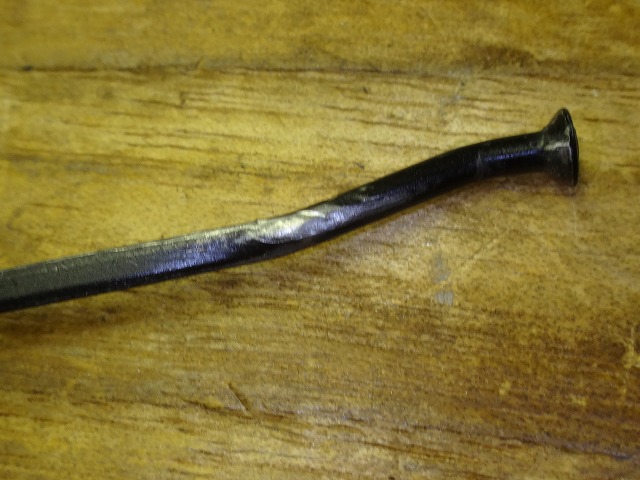
I had prepared spoke head stampings of mac black spokes and CN gold spokes for the post,
but I'm glad I didn't have to use them.
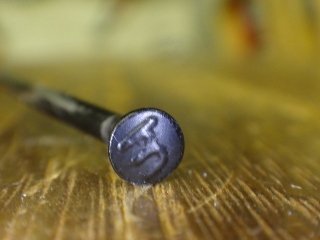
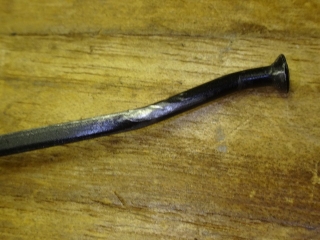
Or so I'd like to say, but I'll use them anyway.
These are mac straight spokes—I can't remember which wheel they came from.
With straight spokes, the nipple-break risk is basically negligible,
so that's not a concern.
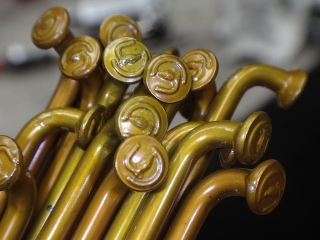
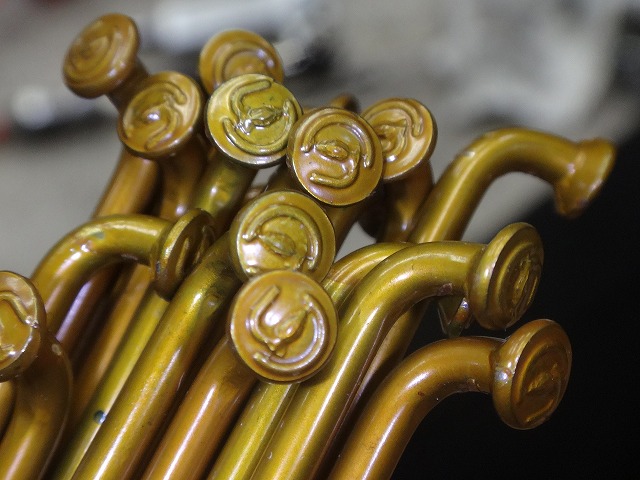
These are CN spoke gold spokes.
I only use these for repairs on wheels originally built with these spokes.
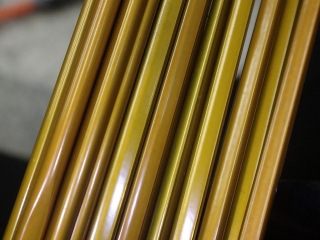
Once built into a wheel, it's harder to see, but
even within the same bag of spokes, there's color variation.
The reason I suddenly started talking about mac spokes is
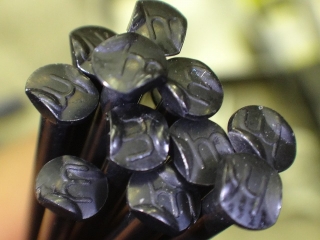
when I disassembled a WH-R9270 front wheel earlier,
its spokes were openly mac-branded. Yikes.
These spokes are lighter than CX-RAY or Aero Lite, but
thinking about it, there's no way Sapim or DT would make
custom spokes lighter than their standard models just by asking.
In my opinion, I'd sooner rebuild with CX-RAY,
accepting a 2% larger spoke weight ratio.
Or actually, if I'm going that far, I'd use the heavier half-CX Sprint instead.

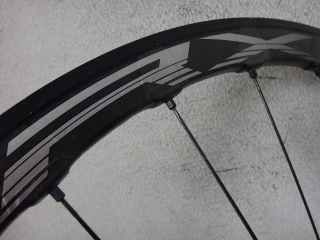
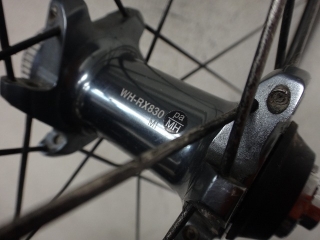
↑This is a Shimano WH-RX830, with a rim that's beat to hell,
and the customer wants me to use just the hub to build a different wheel—
it's one I have on hand.
It appeared in catalogs through 2021,
with its first appearance in the 2015 catalog,
and this wheel itself was made in August 2014.
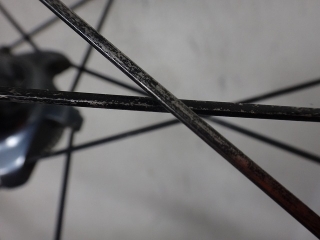
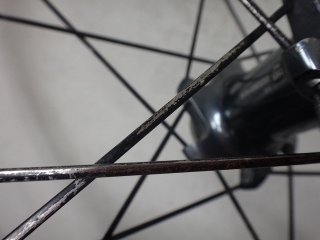
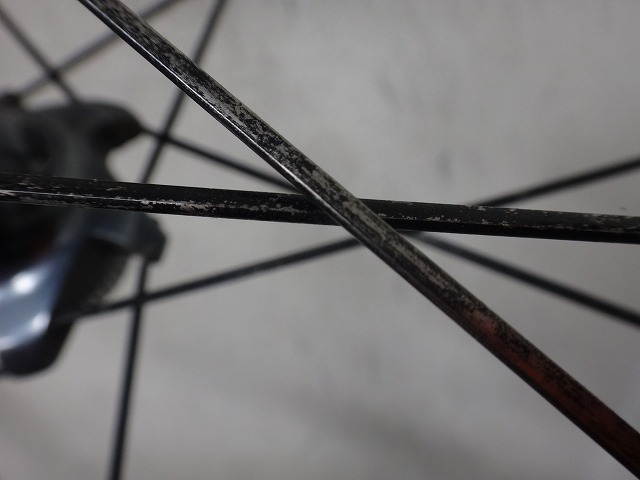
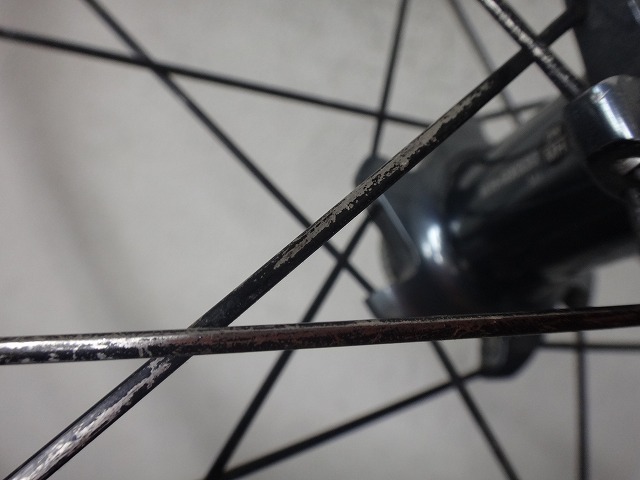
And with Shimano wheels with black spokes,
the coating peeling and surface rust appearing is extremely common.
Whether the R9270's spokes will eventually do the same—
only continued observation would tell,
but I have no desire to do such observation in the first place.
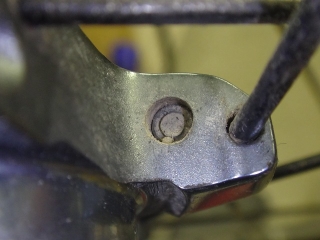
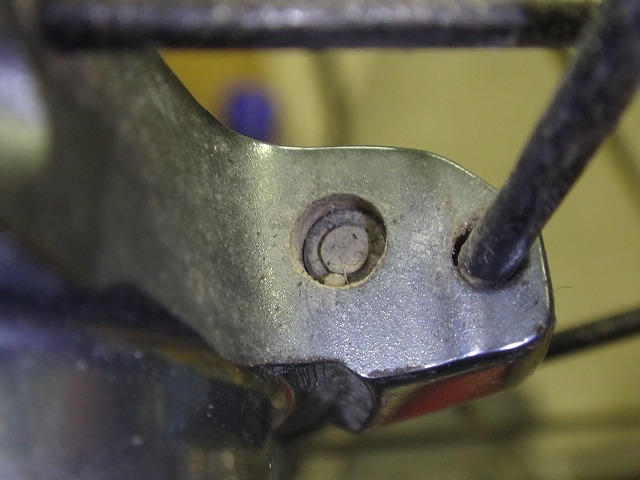
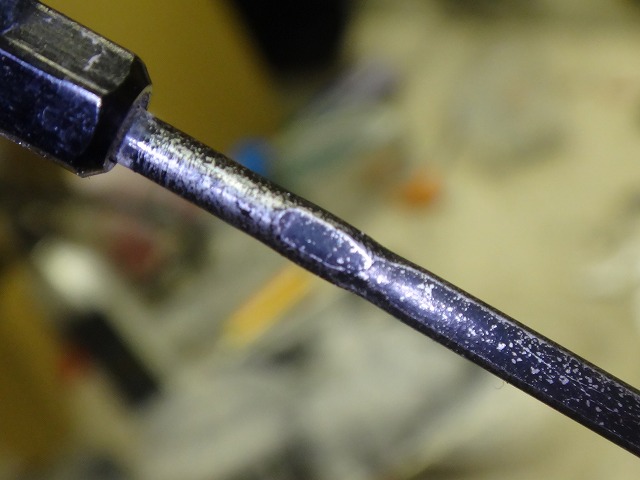
When I tried to look at the spoke stamping,
it was a tubeless rim, so the spoke head was on the rim side.
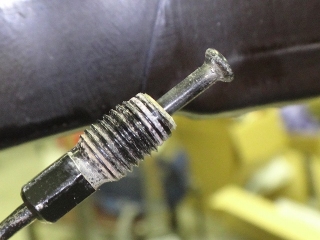
So I investigated.
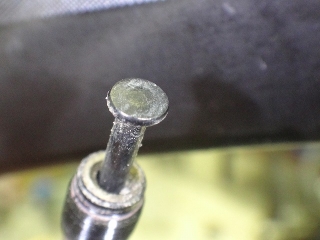
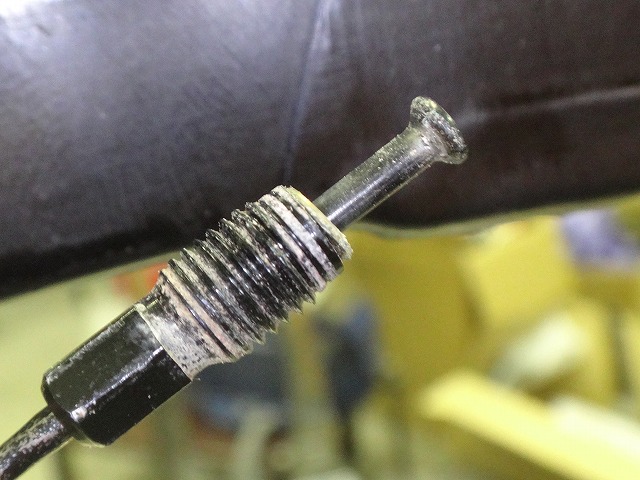
There was no stamping on the spoke head.
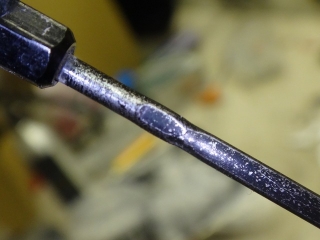
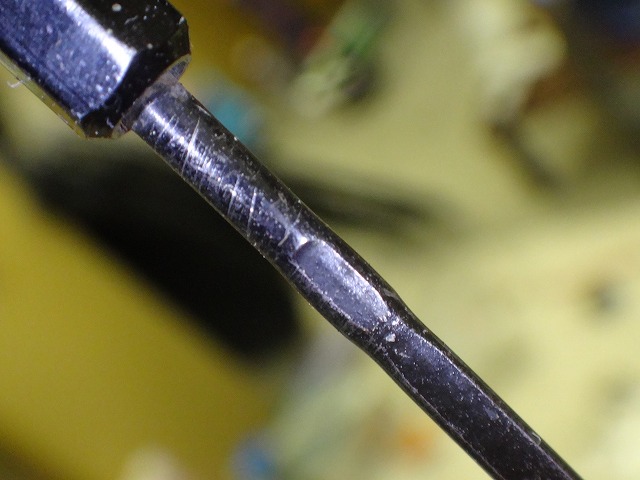
These are flattened-butted spokes, so
it's not especially necessary, but there's a flattened section
near the nipple for a tool grip to prevent rotation.
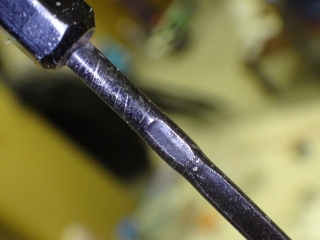
↑A spoke from a different location, but
this shows it more clearly.
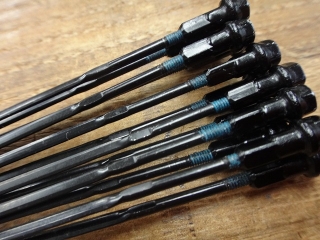
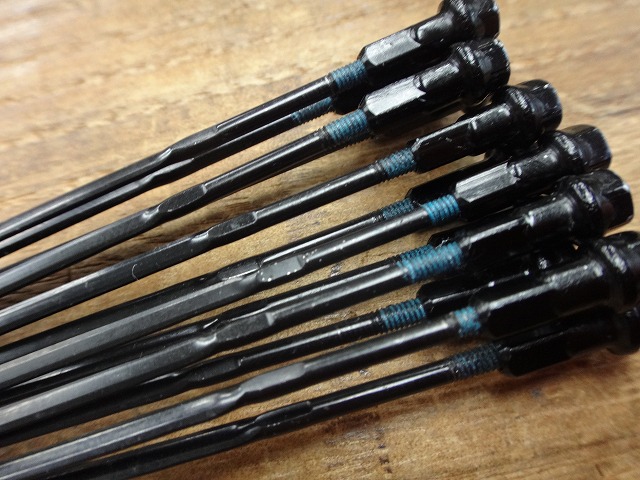
This is a WH-R9270 spoke.
It has similar processing.
I can't say definitively that this means it came from the same manufacturer
and will rust the same way, but the possibility can't be ruled out.
My theory is that stamping mac spokes was a mistake or early specification,
and later batches might have unmarked spoke heads.
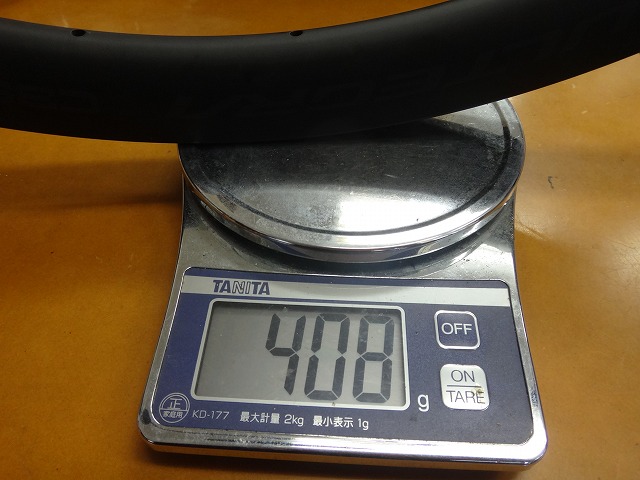
The rim weight for this wheel today?
Tch, I've been deflecting the conversation away from the rim this whole time,
and you're still fixated on that?
This rim's weight is actually pretty important information, so
I'm not about to hand it over that easily.
Already at our shop there are multiple customers considering
buying two R8170 front wheels and rebuilding one as the rear.
I could tell those people, but anyone else?
There's no such thing as free lunch.
↑wow this guy's a real charmer

My Apologies For The Wait!
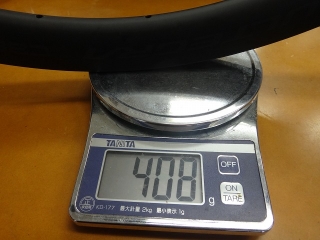
Please Observe The Following Image!
↑Stop That Right Now!
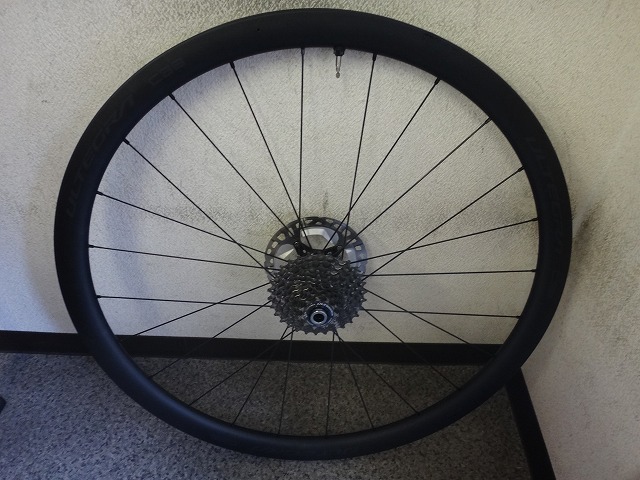
A customer brought in a rear wheel with a current-generation Altegra C36 tubeless rim.
Just to be clear, the TL-R at the end of WH-R8170-C36-TL-R doesn't mean tubeless-ready—
it means tubeless rear.
The wheel isn't running right and hardly rolls, so they want it rebuilt.
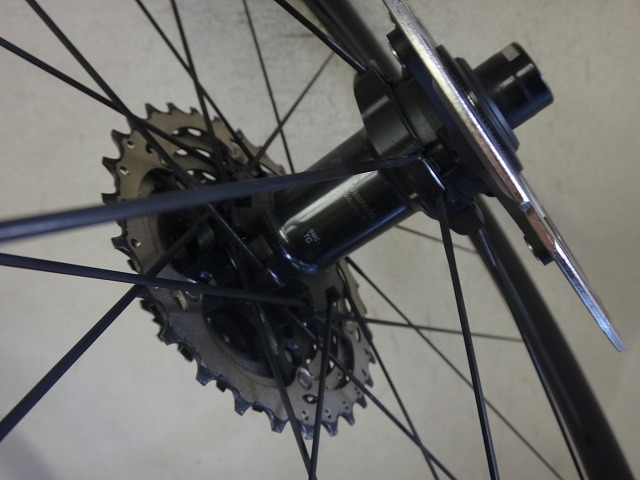
Current-generation Dura-Ace and Altegra disc brake wheels come in 24 spokes front and rear,
but the rear wheel alone uses a 2:1 lacing pattern.
This is something I've never quite understood.
Left-right different diameter lacing and left-right different count lacing both create
a difference in total spoke weight between left and right sides,
but with left-right equal count, different diameter lacing can't achieve
the extreme left-right difference you get with 2:1 lacing.
On a rear wheel, if you use strong spokes on the freewheel side and CX Super on the non-freewheel side,
the spoke weight ratios would be 104.3% and 54.0% respectively,
so the left-right difference when setting the freewheel side to 100 would be 100:51.7—
roughly 2:1. But you practically can't actually build such an extreme different diameter setup.
With 2:1 lacing, you can achieve a 100:50 left-right spoke weight difference with same diameter spokes
(ignoring spoke length differences), but the lower spoke count side needs to be laced radial.
If you lace the low spoke count side tangentially instead,
on a rear wheel the non-freewheel side will have higher tension,
and when you try to tension the rim to its limit,
the non-freewheel side hits the limit first,
leaving the freewheel side slack—a wheel with poor engagement.
As I've said before, Rovals' rear wheels are exactly like this.
You can feel it yourself by squeezing the rear wheel spokes.
The enormous stress from the hub-side brake in disc braking is
a huge factor in how a wheel is built—
things like left-right radial lacing, which we know empirically cause no problems on rim-brake front wheels,
become impossible here.
So where normally you'd build a standard 24-spoke rear wheel with 65% aero spokes in a 4-cross pattern,
or with straight spokes on the hub and a 2-cross 4-cross equivalent lacing
(and if you're not satisfied, you can try different diameter lacing or result lacing),
there are manufacturers that deliberately use 2:1 lacing and work hard to produce
wheels with below-average performance.
Cannondale's Hologram wheel is an example of front-only 2:1 lacing;
Shimano's complete wheels are rear-only 2:1 lacing.
It's not favoritism on my part—Campagnolo and Fulcrum actually produce above-average wheels
using left-right different count lacing.
There are proper reasons for this,
but I won't go into them today since this is already getting long.
I've previously suggested that the best approach with current Shimano disc brake wheels
would be to buy two front wheels and rebuild one as the rear.
If you want a tubular rim, only Dura-Ace is available,
so disassemble the Dura-Ace front wheel.
For tubeless rims, you can use an Altegra front wheel,
so you could disassemble that instead.
With Altegra, the front wheel actually costs less than a rim from a major manufacturer,
and the height-to-weight ratio based on the expected rim weight
becomes quite excellent.
But the rear wheel, despite being 24 spokes, has that unnecessary 2:1 lacing,
so when you disassemble the rim, if the rim holes are drilled for
a right-left-right-eight pattern instead of left-right-twelve,
you might not be able to rebuild it with a standard 24-spoke hub.
When the wheel is built up, if the hole offset is minimal,
it becomes difficult to detect that.
With something like Roval it's obvious, so you can tell from the wheel's condition.
But the customer already bought a rear wheel,
so if we rebuild, it has to be as a rear.
Buying the rear wheel—you might regret it, hence the "regret".
If there's a problem that prevents rebuilding after disassembling the wheel,
I carefully disassemble it so we can put it back together.
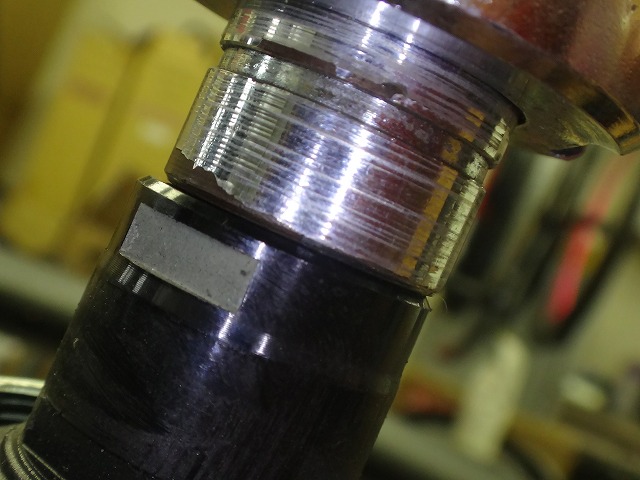

The wheel was centered perfectly.
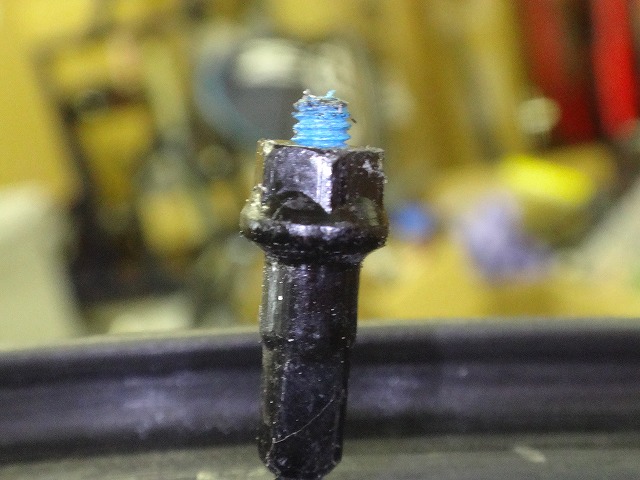
Freewheel side
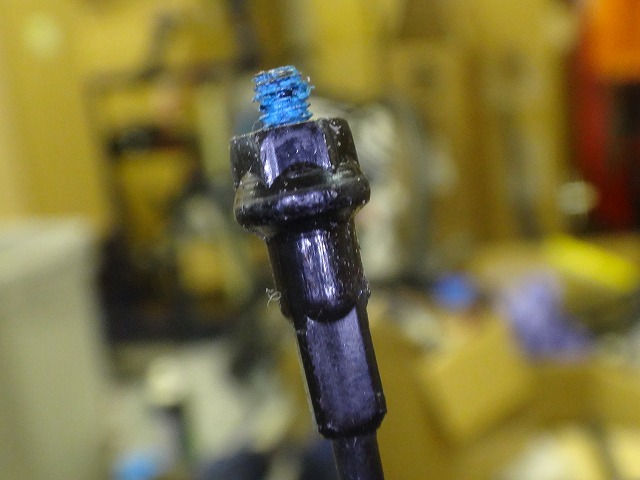
Non-freewheel side
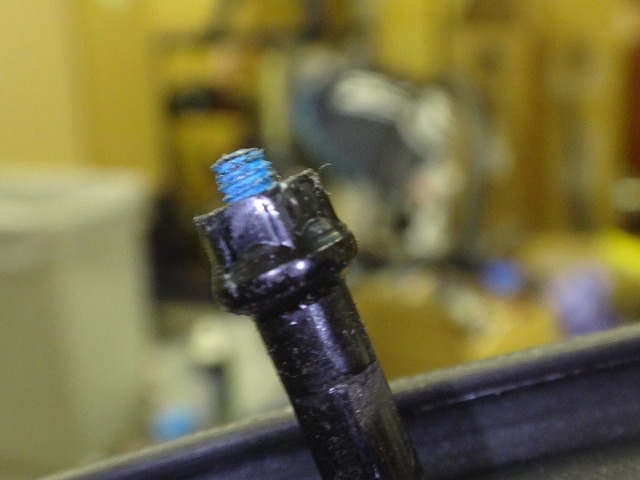
Freewheel side
These three spokes make one pair
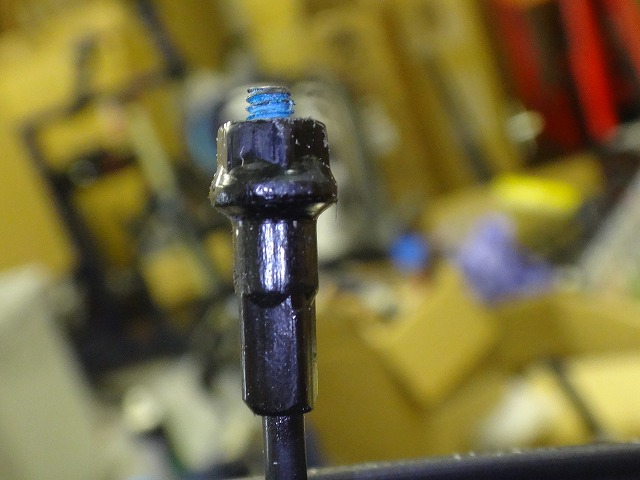
Freewheel side

Non-freewheel side
Freewheel side
This is the neighboring pair
I disassembled up to 18 spokes of the 24, and these are photos of the untightened nipples
pulled out to the rim exterior in order.
The spoke lengths between freewheel and non-freewheel sides are quite different,
and both are clearly too long, with the non-freewheel side being longer overall.
These nipples had a hexagonal grip on the outer diameter, but
unlike Campagnolo complete wheel nipples where the outer end is embedded
with blue threadlock nylon, these had nothing of the sort.
Also, like Campagnolo, special nipples that are longer than standard
sometimes use spokes with longer thread pitch than standard spokes,
and in that case you can't determine spoke length is wrong just by counting
how many thread pitches stick out of the nipple, but
compared to standard silver CX-RAY, they were nearly identical.
The nipple design wasn't special—the thread pitch start position
didn't seem offset outward from where it contacts the bottom of the pocket.
So the spoke length is definitely too long.
The nipple isn't embedded with threadlock nylon,
but as you can see, the spoke threads are generously coated with threadlock compound,
so at least that aspect isn't concerning.
Built.
Though this is a 2:1 laced rim, there's no clear hole offset
or directional rim hole design, so
with the customer's approval, I went ahead and rebuilt it as equal-count lacing.
REVO disc hub, 24H, half-comp 4-cross with result lacing.
Even without the result lacing,
I'm confident it's better than the original wheel.
The original spokes had no stampings on the head and didn't appear to be Sapim.
This is speculation, but the tubeless rim seems to be the same as
the Dura-Ace grade version.
As an intentional weight reduction against that,
the spokes—regardless of the hub—were deliberately heavier,
or in my terms, higher spoke weight ratio,
but without doing different diameter lacing (different diameter for equal count, reverse different for 2:1),
if I had to choose between Altegra and Dura-Ace spokes,
I'm starting to think Altegra's would be superior.
Using the hub and rim from a Dura-Ace wheel as-is,
but swapping just the spokes for Altegra ones might actually
make for a better-rolling wheel.
Dura-Ace wheel spokes have a spoke weight ratio of about 62%—extremely light—
so they certainly have strong appeal to the market segment that
chooses wheels based solely on front-and-rear combined weight.
The original spokes' spoke weight ratio.
16 spokes on the freewheel side weighed 84.8g.
Nominal length 286mm, and my measurement also showed 286mm.
84.8÷16÷286 equals 0.01853146... and
dividing by 0.0257 (which I define as 100% spoke weight ratio)
gives 0.7210687... so approximately 72.1%.
The non-freewheel side, 8 spokes, weighed 38.9g.
Nominal length 267mm, though my measurement seemed to be 268mm—
let me calculate using the nominal first.
38.9÷8÷267÷0.0257 equals 0.70862265... so approximately 70.8%.
If I calculate using 268mm, I get about 70.5%.
Since the freewheel side spokes are longer,
the proportion of butted section in the total spoke length is larger,
so you'd expect the spoke weight ratio to be smaller on the freewheel side,
but the result was opposite. It might be due to small sample size.
The original wheel was perfectly centered,
with the freewheel side spokes sticking out about 3 threads from the nipple
and the non-freewheel side about 4-5 threads.
Accounting for this difference, while not a reversal,
the left-right spoke weight ratio difference that should be identical
comes very slightly closer.
For now, let's say these are approximately 71% spokes.
This rear wheel uses a C36, and the different rim height models C50 use the same spokes,
but C60 is built with different spokes that have a larger spoke weight ratio.
This is a wheel I'm planning to rebuild tomorrow, built with mac spokes plain spokes.
The logo stamping shows the m with the first vertical bar extended.
Mac is a brand name for what CN Spokes (the image above shows the Cn stamping)
positions as "Elite Spokes," a separate brand, but
from experience, the nipple-break failure rate is higher than DT or Sapim,
and the black spoke coating looks cheap. Which makes sense, since the price is cheap too.
Getting a mac spoke image from a conveniently nearby wheel was helpful.
I had prepared spoke head stampings of mac black spokes and CN gold spokes for the post,
but I'm glad I didn't have to use them.
Or so I'd like to say, but I'll use them anyway.
These are mac straight spokes—I can't remember which wheel they came from.
With straight spokes, the nipple-break risk is basically negligible,
so that's not a concern.
These are CN spoke gold spokes.
I only use these for repairs on wheels originally built with these spokes.
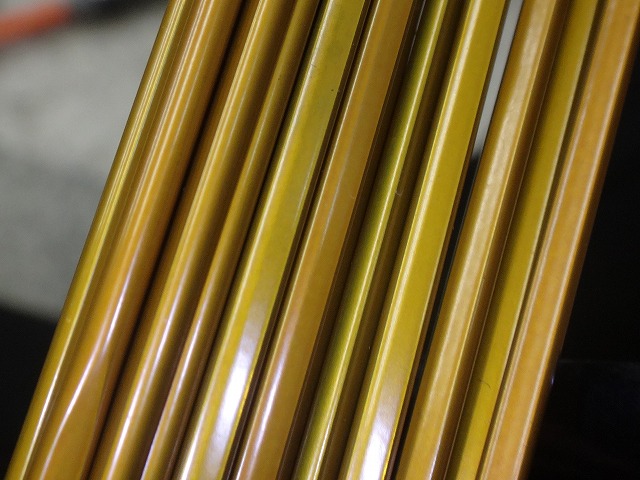
Once built into a wheel, it's harder to see, but
even within the same bag of spokes, there's color variation.
The reason I suddenly started talking about mac spokes is
when I disassembled a WH-R9270 front wheel earlier,
its spokes were openly mac-branded. Yikes.
These spokes are lighter than CX-RAY or Aero Lite, but
thinking about it, there's no way Sapim or DT would make
custom spokes lighter than their standard models just by asking.
In my opinion, I'd sooner rebuild with CX-RAY,
accepting a 2% larger spoke weight ratio.
Or actually, if I'm going that far, I'd use the heavier half-CX Sprint instead.
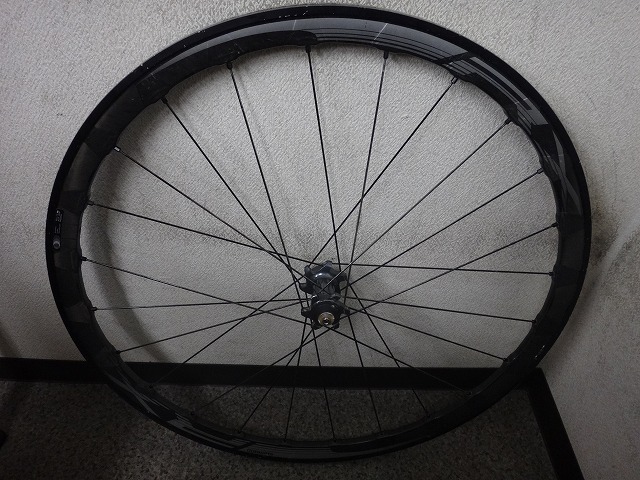

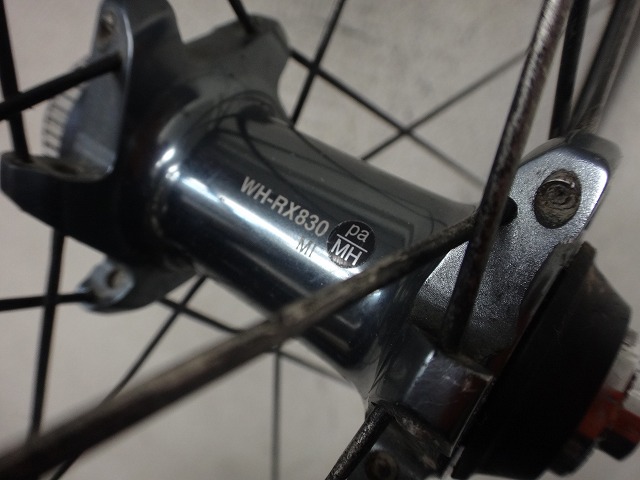
↑This is a Shimano WH-RX830, with a rim that's beat to hell,
and the customer wants me to use just the hub to build a different wheel—
it's one I have on hand.
It appeared in catalogs through 2021,
with its first appearance in the 2015 catalog,
and this wheel itself was made in August 2014.
And with Shimano wheels with black spokes,
the coating peeling and surface rust appearing is extremely common.
Whether the R9270's spokes will eventually do the same—
only continued observation would tell,
but I have no desire to do such observation in the first place.
When I tried to look at the spoke stamping,
it was a tubeless rim, so the spoke head was on the rim side.
So I investigated.

There was no stamping on the spoke head.
These are flattened-butted spokes, so
it's not especially necessary, but there's a flattened section
near the nipple for a tool grip to prevent rotation.
↑A spoke from a different location, but
this shows it more clearly.
This is a WH-R9270 spoke.
It has similar processing.
I can't say definitively that this means it came from the same manufacturer
and will rust the same way, but the possibility can't be ruled out.
My theory is that stamping mac spokes was a mistake or early specification,
and later batches might have unmarked spoke heads.
The rim weight for this wheel today?
Tch, I've been deflecting the conversation away from the rim this whole time,
and you're still fixated on that?
This rim's weight is actually pretty important information, so
I'm not about to hand it over that easily.
Already at our shop there are multiple customers considering
buying two R8170 front wheels and rebuilding one as the rear.
I could tell those people, but anyone else?
There's no such thing as free lunch.
↑wow this guy's a real charmer

My Apologies For The Wait!
Please Observe The Following Image!
↑Stop That Right Now!