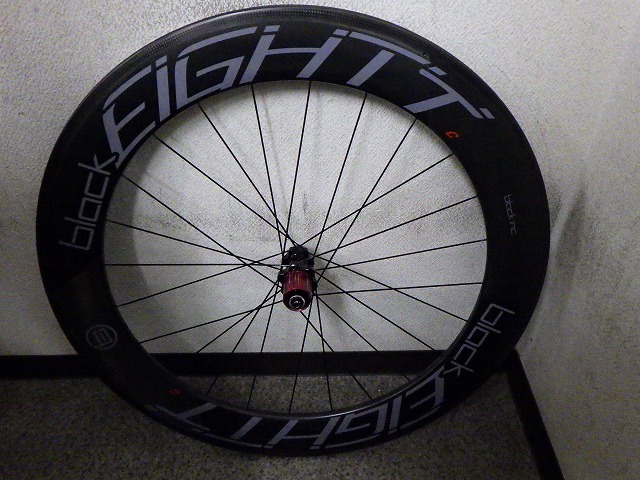
A customer brought in a Black Ink Eighty C rear wheel for service.
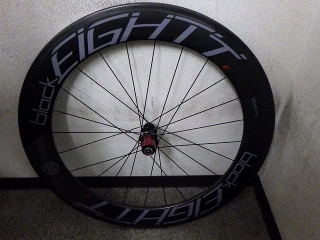
The numbers in the model name indicate rim height, and C stands for clincher rim.
There used to be set sales models like Thirty/Forty and Fifty/Sixty with different rim heights front and rear,
but nowadays Black Ink wheels only come with the same rim height on both front and rear
(Japanese distributors' consumer pages still list them, but they're out of stock so production has ended).
For Black Ink, when a model with the same rim height reaches its second generation or later,
Roman numerals are added at the end of the internal official name,
making it possible to distinguish them.
For example, the latest Thirty is the Thirty IV,
and the final model of the Fifty (which is now discontinued and no longer listed on the official site) was the Fifty II.
Complicating matters, separate from the Thirty road model at 30mm height,
there's a ThirtyFour gravel model at 34mm height,
which ends up having the same name as the fourth-generation Thirty IV.
In normal usage though, you probably wouldn't append generation numbers to Thirty,
and II would be called "second" rather than "two,"
and IV called "four" rather than "four."
Also, single-digit model numbers don't represent rim height—they represent spoke count.
Three would be a 3-spoke wheel, Five would be a 5-spoke wheel.
Following this system, disc wheels
(solid disc wheels, just to be clear)
are named Zero. I see.
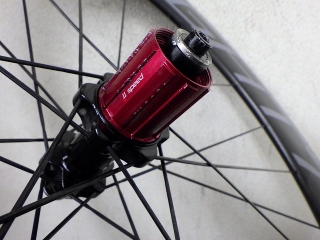
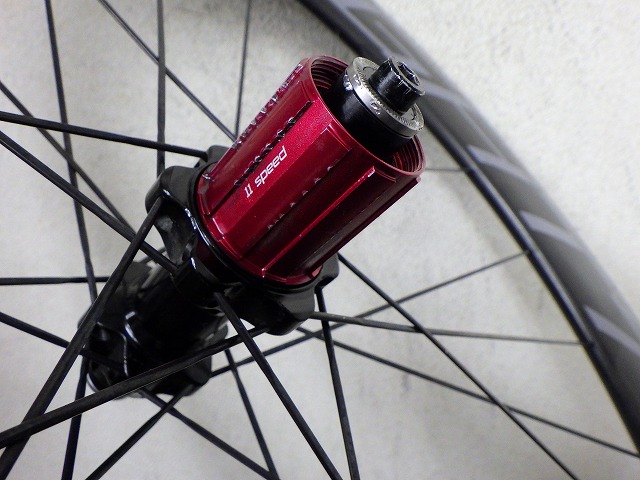
The reason for the service: when you hold the hub axle ends and spin the wheel,
the freewheel body doesn't rotate in sync with the hub shell rotation.
This is because the ratchet teeth click and clack at the freewheel body's own weight during rotation,
which isn't actually a bad thing.
Rather, when ratchet resistance is too large,
when you stop pedaling while riding, the freewheel body rotates forward,
the chain moves forward on top of itself,
and the chain goes slack—that's the symptom you get.
When you lift the rear wheel and hand-rotate the crank,
the freewheel body rotates in sync with the hub shell more than a car's half-clutch engagement,
creating a "ghost is pedaling" state—it's the same phenomenon.
This happens frequently with Mavic FTS-L freewheel bodies (French freewheel component brand)
where the oil around the teeth has dried up and the internals are dirty.
While it's true that the freewheel body not rotating in sync with the hub shell isn't a problem needing correction,
there's another issue: the customer doesn't know how to disassemble the rear hub
and asked me to show them.
By the way, the hub notes that CeramicSpeed (premium bearing brand) bearings
were originally installed,
but this time nothing was damaged.
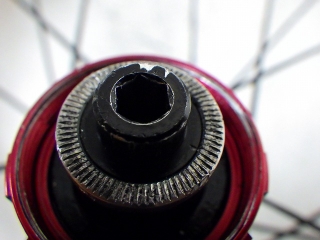
↑Freewheel side
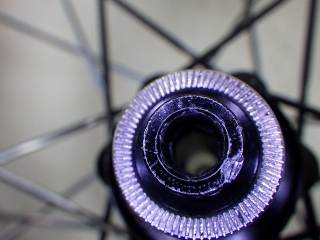
↑Non-freewheel side
Both sides have a 5mm hex socket for an Allen key.
The non-freewheel side socket is positioned slightly recessed.
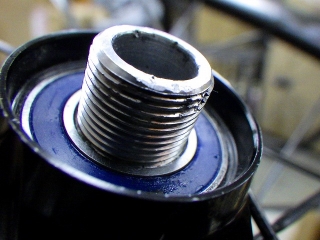
With 5mm Allen keys in both hub ends,
the left end came off first.
Some hub axles have 10mm Allen key holes on both sides,
but this shaft has round holes.
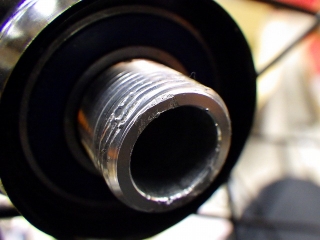
↑There are grip marks from the customer.
I could see how to disassemble this hub just by looking at it,
but the tool wouldn't fit for some reason,
so I first decided to grab and fix the hub shaft.
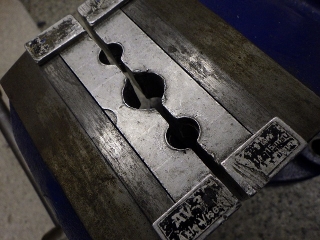
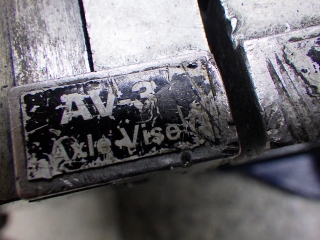
↑Park Tool AV-3 hub axle vice. Used with a bench vise.
Due to material and contact area, it won't damage the hub axle even when gripped with this.
The product code AV stands for Axle Vise.
It's the third product to be released in that line, hence AV-3,
but currently only AV-1 and AV-5 are sold.
This AV-3 probably has the best usability,
so it's been discontinued and I'm frustrated (otherwise I'd just buy the newer version).
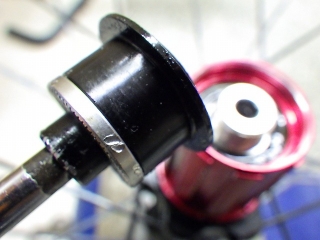
Left: hub axle vice, right: 5mm Allen key,
and the right end came off too.

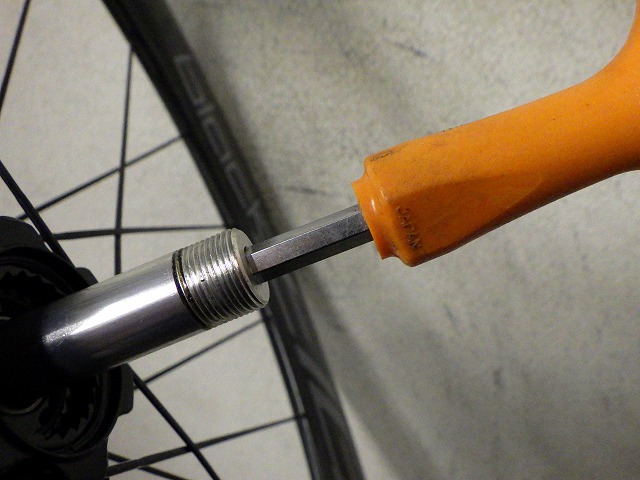
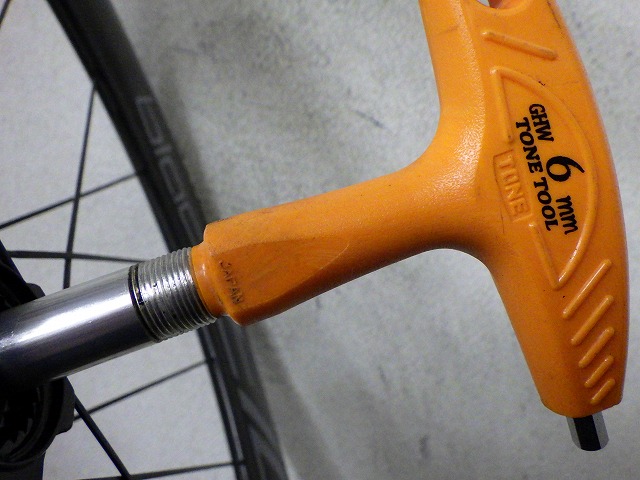
There's a 6mm hex socket on the right side of the hub shaft,
but even inserting an Allen key from the left side,
the tool wouldn't engage with this hole.
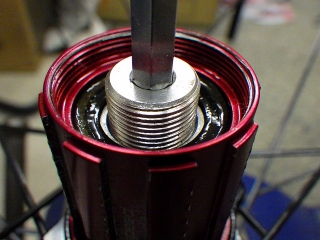
So I inserted a 6mm Allen key from the outside (right side),
but it bottoms out and the tool stops at a certain point.
That point is where the hex socket ends.
I thought, there's no way there's a 6mm hole on a 5mm end
that can only be engaged from the same side...
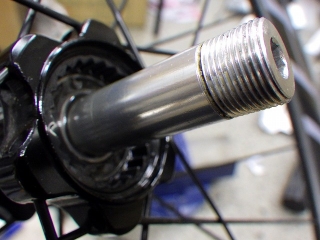
First I removed the freewheel body
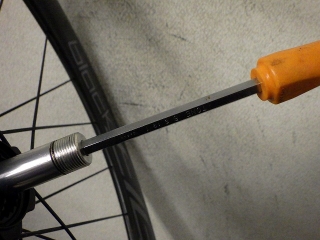
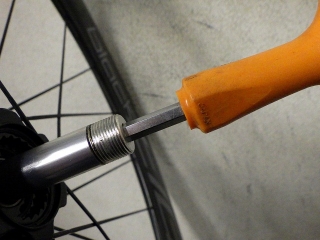

When I tapped the tool with a plastic hammer,
the hex socket went all the way through.
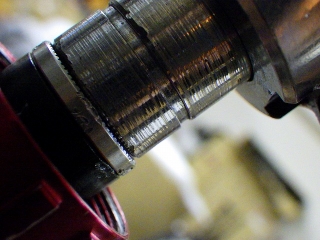
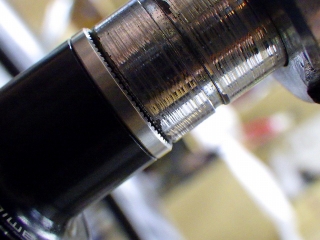
The cause was a burr on the edge of the hole.
This burr was likely created when someone tapped a rod
into the hub shaft from the left side after removing the left end.
So regarding hub disassembly, the answer is:
"If the left end comes off first, insert a long 6mm Allen key from the left side of the hub shaft
and turn it simultaneously with the right end's 5mm,"
and in that case the 6mm Allen key should ideally
be long enough and have a "hexagonal end rather than a ball point."
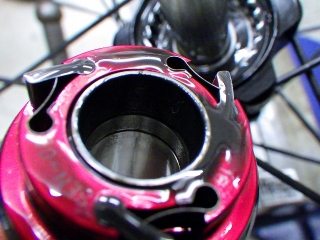
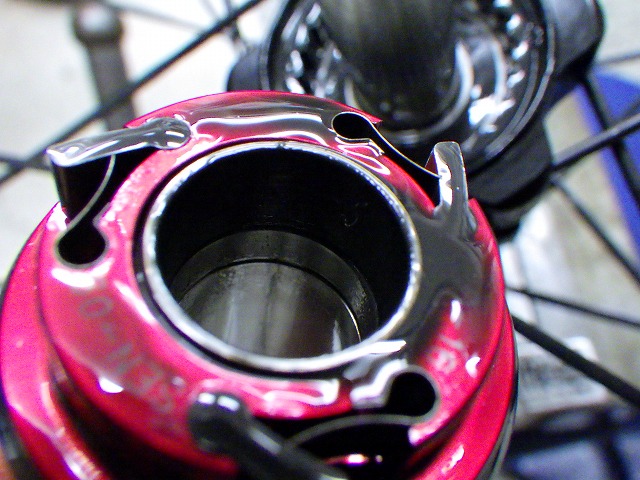
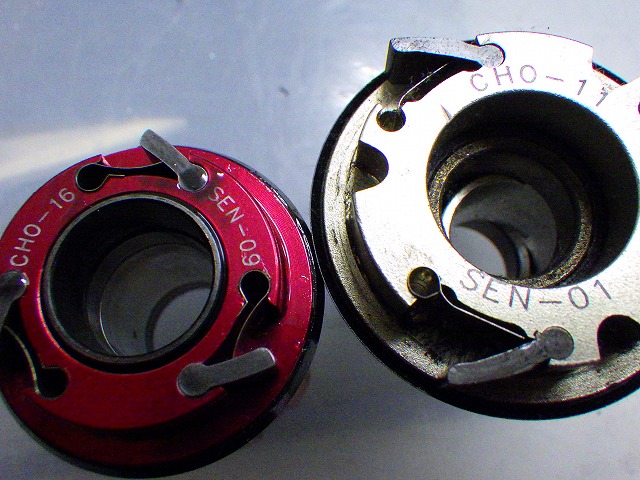
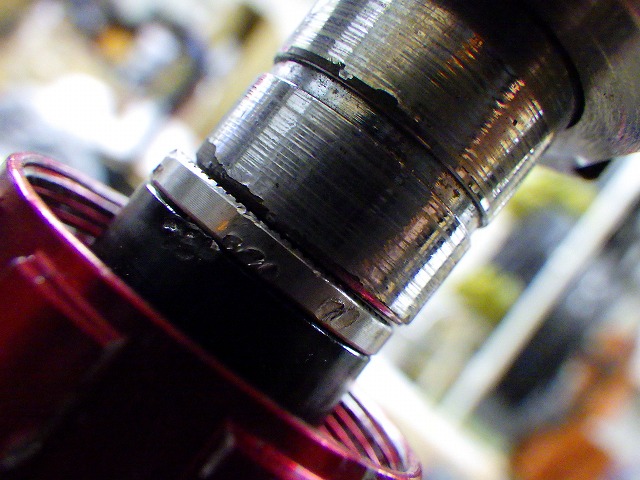
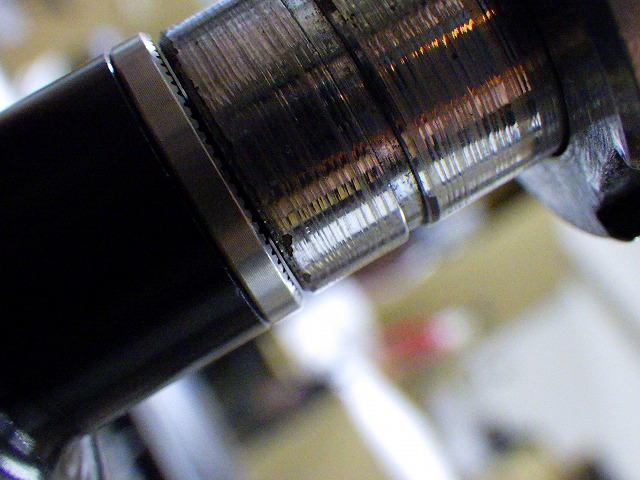
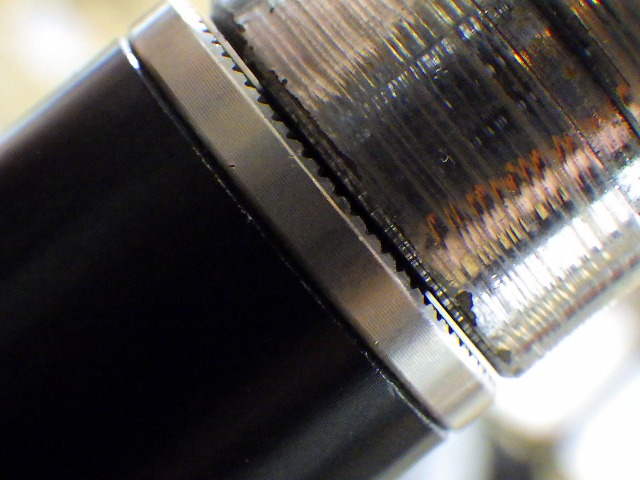
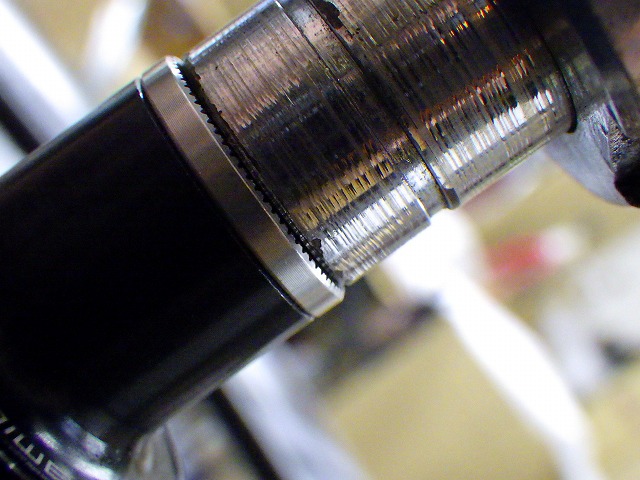
The freewheel body was a Chosen (Japanese component maker) unit.
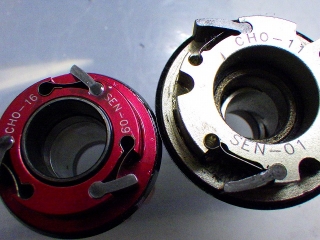
I lined it up with a completely unrelated freewheel body from the same manufacturer.
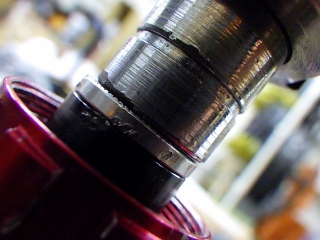
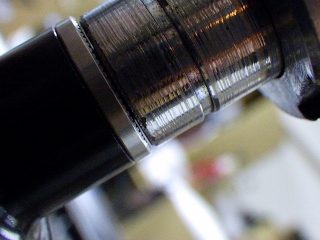
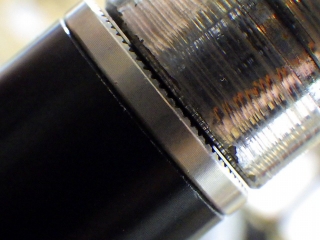
I reassembled the hub and did a check while I was at it.
There was slight runout, and the centering was off by about a paper thickness.
↑Centering offset
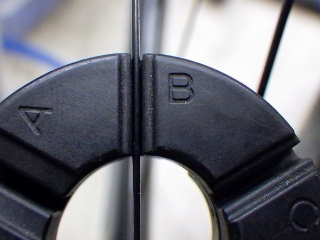
↑Non-freewheel side spokes
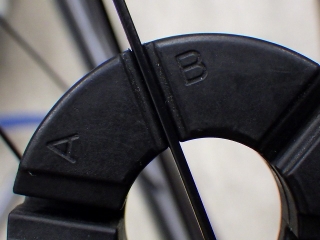
↑Freewheel side spokes
Black Ink rear wheels use radial spoking on one side and crossed spoking on the other.
If the rim height is as much as 80mm, spoke deformation itself is minimal,
so the difference from equal-diameter spoking on both sides would be small,
but they apparently do it regardless of rim height.
Whether they do this even with varying amounts of dish (brake-side offset), I don't know.
What I'm getting at is: I don't know whether disc brake front wheels
also use this asymmetrical spoking pattern.
All fixed.
When reassembling the hub, I applied grease around the ratchet teeth as I saw fit.
As a result, the freewheel body that wasn't rotating in sync with the hub shell
now rotates slightly in sync, and the ratchet noise got a bit quieter.
I didn't add grease to achieve hub sync specifically—
I prioritized balancing preventing rust on the teeth parts
and preventing the tooth action from getting stiff.
If someone wanted perfect hub sync
or nearly silent ratchet action, they could pack the grease thicker.
Though that has the downside of increased mechanical resistance when coasting.
The numbers in the model name indicate rim height, and C stands for clincher rim.
There used to be set sales models like Thirty/Forty and Fifty/Sixty with different rim heights front and rear,
but nowadays Black Ink wheels only come with the same rim height on both front and rear
(Japanese distributors' consumer pages still list them, but they're out of stock so production has ended).
For Black Ink, when a model with the same rim height reaches its second generation or later,
Roman numerals are added at the end of the internal official name,
making it possible to distinguish them.
For example, the latest Thirty is the Thirty IV,
and the final model of the Fifty (which is now discontinued and no longer listed on the official site) was the Fifty II.
Complicating matters, separate from the Thirty road model at 30mm height,
there's a ThirtyFour gravel model at 34mm height,
which ends up having the same name as the fourth-generation Thirty IV.
In normal usage though, you probably wouldn't append generation numbers to Thirty,
and II would be called "second" rather than "two,"
and IV called "four" rather than "four."
Also, single-digit model numbers don't represent rim height—they represent spoke count.
Three would be a 3-spoke wheel, Five would be a 5-spoke wheel.
Following this system, disc wheels
(solid disc wheels, just to be clear)
are named Zero. I see.
The reason for the service: when you hold the hub axle ends and spin the wheel,
the freewheel body doesn't rotate in sync with the hub shell rotation.
This is because the ratchet teeth click and clack at the freewheel body's own weight during rotation,
which isn't actually a bad thing.
Rather, when ratchet resistance is too large,
when you stop pedaling while riding, the freewheel body rotates forward,
the chain moves forward on top of itself,
and the chain goes slack—that's the symptom you get.
When you lift the rear wheel and hand-rotate the crank,
the freewheel body rotates in sync with the hub shell more than a car's half-clutch engagement,
creating a "ghost is pedaling" state—it's the same phenomenon.
This happens frequently with Mavic FTS-L freewheel bodies (French freewheel component brand)
where the oil around the teeth has dried up and the internals are dirty.
While it's true that the freewheel body not rotating in sync with the hub shell isn't a problem needing correction,
there's another issue: the customer doesn't know how to disassemble the rear hub
and asked me to show them.
By the way, the hub notes that CeramicSpeed (premium bearing brand) bearings
were originally installed,
but this time nothing was damaged.
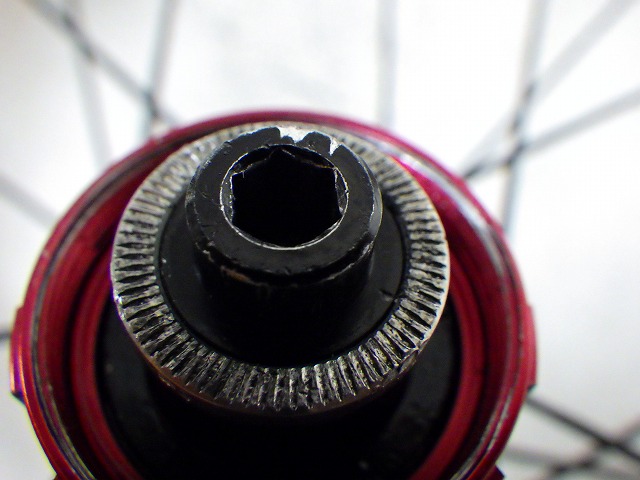
↑Freewheel side
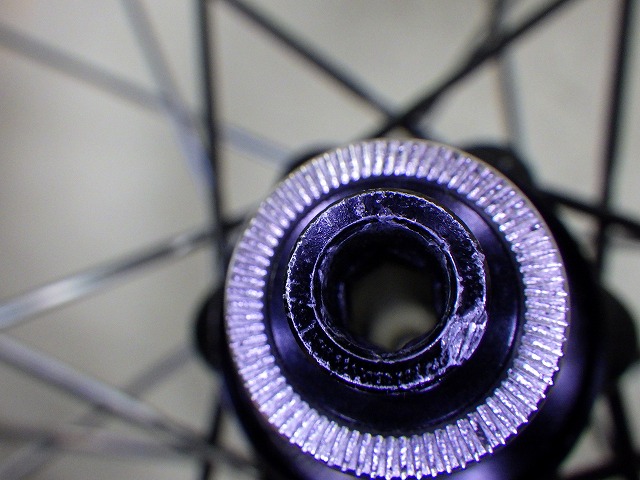
↑Non-freewheel side
Both sides have a 5mm hex socket for an Allen key.
The non-freewheel side socket is positioned slightly recessed.
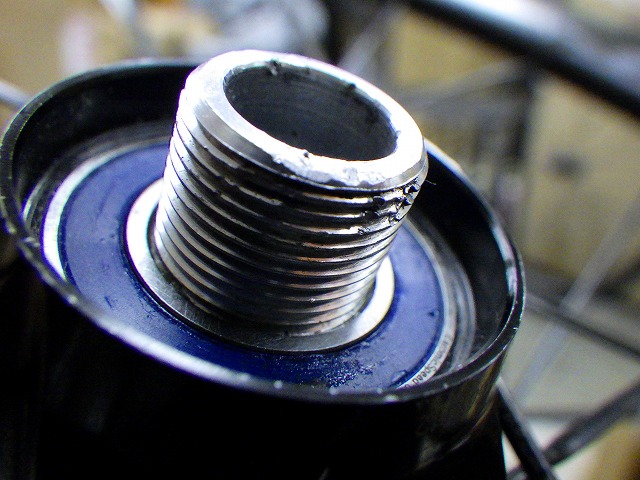
With 5mm Allen keys in both hub ends,
the left end came off first.
Some hub axles have 10mm Allen key holes on both sides,
but this shaft has round holes.
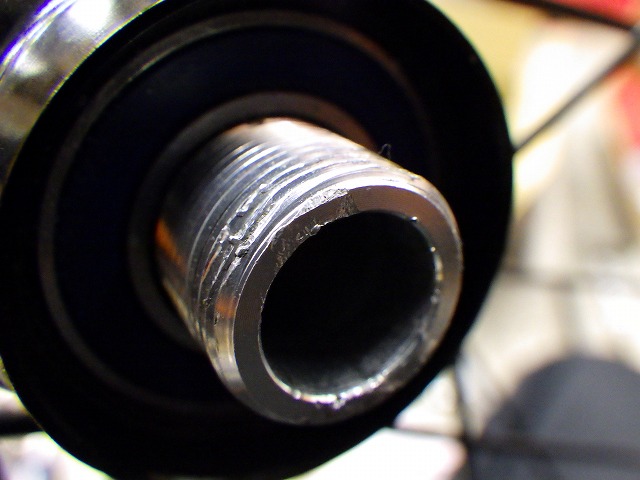
↑There are grip marks from the customer.
I could see how to disassemble this hub just by looking at it,
but the tool wouldn't fit for some reason,
so I first decided to grab and fix the hub shaft.


↑Park Tool AV-3 hub axle vice. Used with a bench vise.
Due to material and contact area, it won't damage the hub axle even when gripped with this.
The product code AV stands for Axle Vise.
It's the third product to be released in that line, hence AV-3,
but currently only AV-1 and AV-5 are sold.
This AV-3 probably has the best usability,
so it's been discontinued and I'm frustrated (otherwise I'd just buy the newer version).

Left: hub axle vice, right: 5mm Allen key,
and the right end came off too.
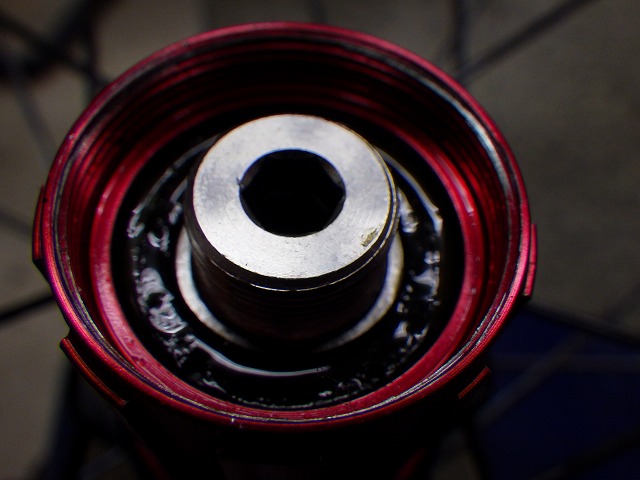
There's a 6mm hex socket on the right side of the hub shaft,
but even inserting an Allen key from the left side,
the tool wouldn't engage with this hole.
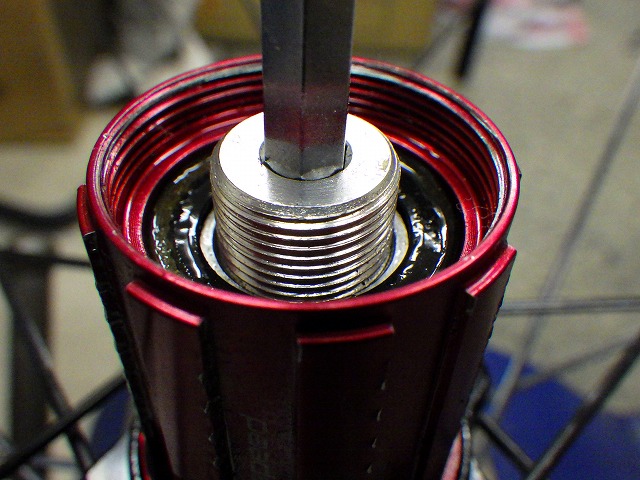
So I inserted a 6mm Allen key from the outside (right side),
but it bottoms out and the tool stops at a certain point.
That point is where the hex socket ends.
I thought, there's no way there's a 6mm hole on a 5mm end
that can only be engaged from the same side...
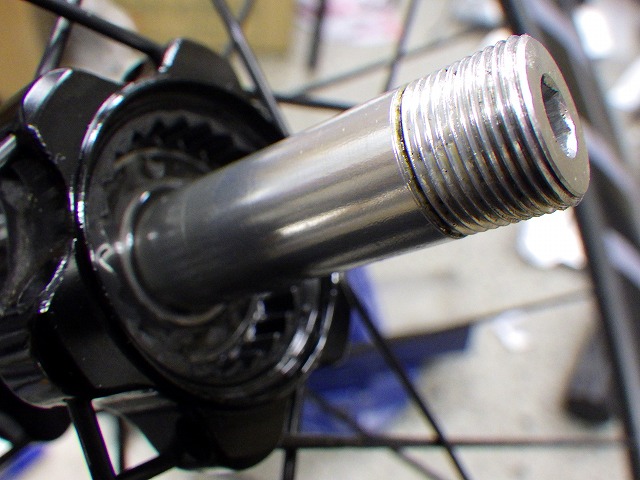
First I removed the freewheel body
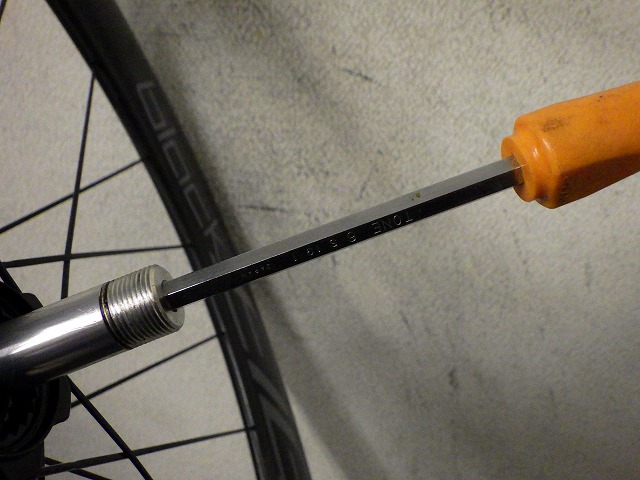
When I tapped the tool with a plastic hammer,
the hex socket went all the way through.
The cause was a burr on the edge of the hole.
This burr was likely created when someone tapped a rod
into the hub shaft from the left side after removing the left end.
So regarding hub disassembly, the answer is:
"If the left end comes off first, insert a long 6mm Allen key from the left side of the hub shaft
and turn it simultaneously with the right end's 5mm,"
and in that case the 6mm Allen key should ideally
be long enough and have a "hexagonal end rather than a ball point."
The freewheel body was a Chosen (Japanese component maker) unit.
I lined it up with a completely unrelated freewheel body from the same manufacturer.
I reassembled the hub and did a check while I was at it.
There was slight runout, and the centering was off by about a paper thickness.
↑Centering offset

↑Non-freewheel side spokes

↑Freewheel side spokes
Black Ink rear wheels use radial spoking on one side and crossed spoking on the other.
If the rim height is as much as 80mm, spoke deformation itself is minimal,
so the difference from equal-diameter spoking on both sides would be small,
but they apparently do it regardless of rim height.
Whether they do this even with varying amounts of dish (brake-side offset), I don't know.
What I'm getting at is: I don't know whether disc brake front wheels
also use this asymmetrical spoking pattern.

All fixed.
When reassembling the hub, I applied grease around the ratchet teeth as I saw fit.
As a result, the freewheel body that wasn't rotating in sync with the hub shell
now rotates slightly in sync, and the ratchet noise got a bit quieter.
I didn't add grease to achieve hub sync specifically—
I prioritized balancing preventing rust on the teeth parts
and preventing the tooth action from getting stiff.
If someone wanted perfect hub sync
or nearly silent ratchet action, they could pack the grease thicker.
Though that has the downside of increased mechanical resistance when coasting.