I received a set of front and rear wheels from a customer — a Bora.
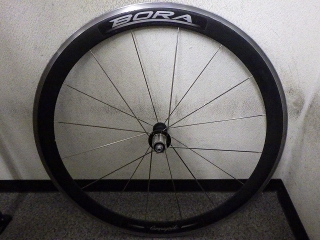
The original Bora used Colima (コリマ製) carbon rims, and aside from spoke count ordering and cosmetic rim details, they were Colima rims as-is.
The next generation Bora had aluminum cladding on the braking zone,
with purple text around the rim model name (pink on Shamal),
and this Bora is from the next generation after that,
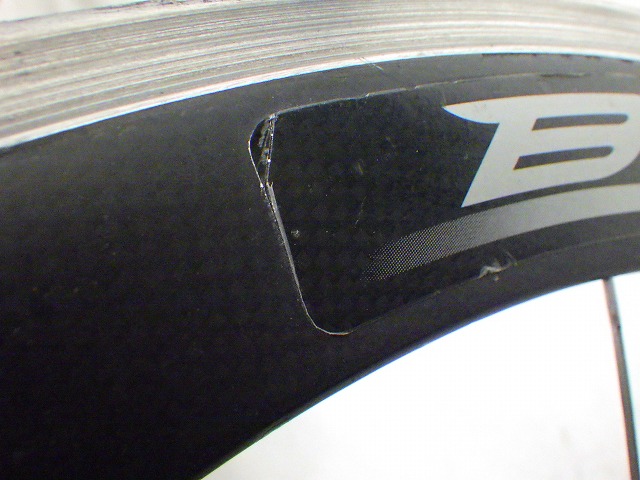
still featuring aluminum cladding on the braking zone,
with rim cosmetics from the era when all wheel models were unified in monochrome.
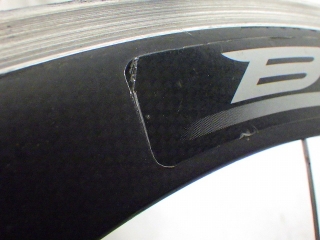
The rim markings aren't printed—they're clear stickers.
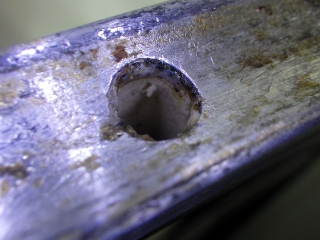
As for the tire specification matching this rim,
being a "race wheel," naturally it's tubular.
This Bora has no rim specification for mounting tires the same way you would on a city bike.
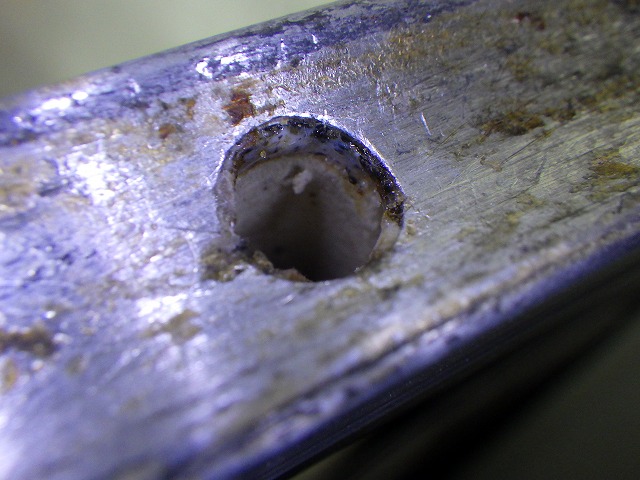
The rim interior is filled with foam urethane, except for passages for the valve and tools.
I'm not sure whether the aluminum braking zone specification is a custom order
or if Campagnolo added it to the carbon rims after receiving them from Colima,
but the carbon rim portion itself is Colima-made.
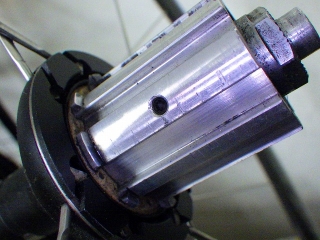
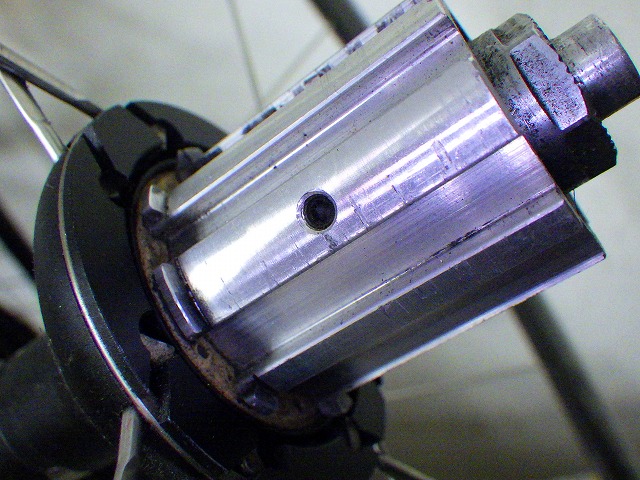
The aluminum freewheel body has a set screw on the high point of the spline teeth.
By removing this set screw, you can inject grease into the freewheel body using a grease gun.
So the inner bearing surface of the freewheel body has no seal and is open.
This is unrelated to these wheels, but Campagnolo/Fulcrum complete wheels with Shimano 10-speed aluminum freewheel bodies
had lockrings compatible with Campagnolo lockring tools.
Shimano HG freewheel bodies have larger spline and lockring thread diameters than Campagnolo ED freewheel bodies,
making the lockring thread thinner, so to gain strength they adopted
Campagnolo-spec lockrings with smaller-diameter threads.
The steel freewheel body that first appeared for Shimano 11-speed had thin wall thickness at the spline section,
so there wasn't enough thread thickness for the set screw—no grease port.
The white aluminum freewheel body that came later with plasma electrolytic oxidation treatment achieved sufficient strength
and, despite being an HG freewheel body, accepts Shimano-spec lockrings.
Currently, the hub shaft position directly below the freewheel body has become butted for weight reduction,
and grease pools there, so even aluminum freewheel bodies have no grease port now.
Butted shafts have been standard since around 2006,
so there's been no need for open-side design since then, but
the spare bearing parts for OEM freewheel bodies only switched to double-seal specs within the last couple years.
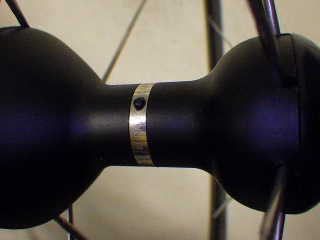
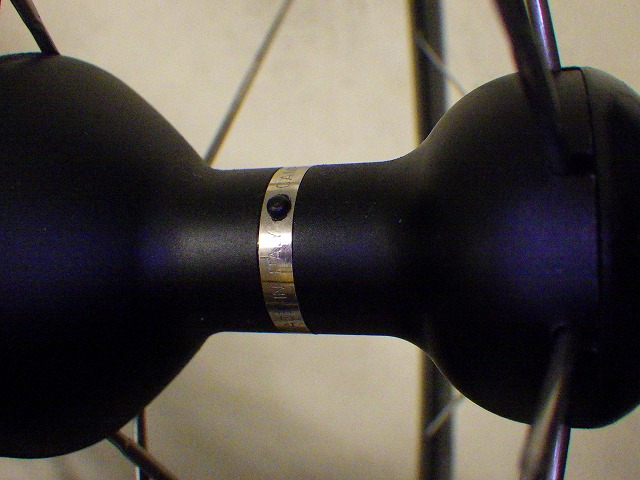
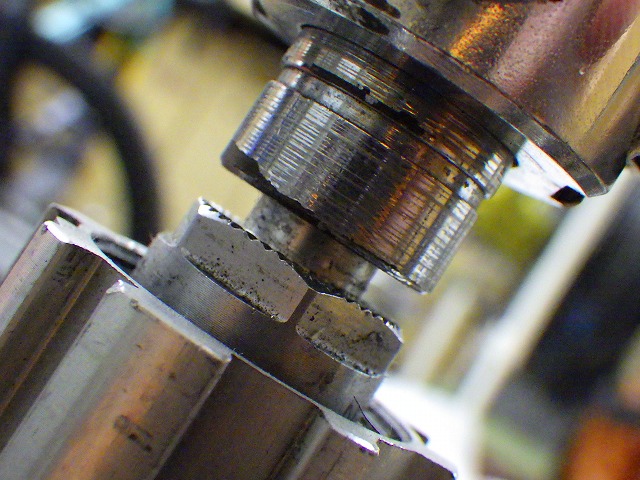
Being Record-grade hubs, they have a grease port for hub bearings at the center of the hub body,
with a C-ring clip covering it.
In the pro racing scene of that era, Dura-Ace hubs on Shimano-equipped teams would sometimes have grease ports drilled in afterward,
but when you inject grease from the center of the hub body,
the grease that seeps between the hub shaft and body becomes drag resistance.
Since pro teams don't have time for disassembly and regreasing while racing,
and bearing grease gets depleted quickly anyway,
it's better for teams other than pros not to grease from here.
Suntour XC Pro hubs, on the other hand,
had grease ports at both ends of the hub body
so you could inject grease almost exclusively around the bearing races.
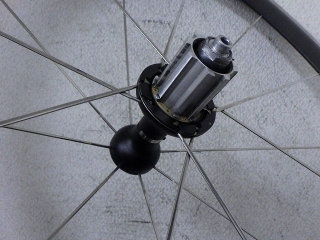
16-hole with radial spoking on the non-drive side,
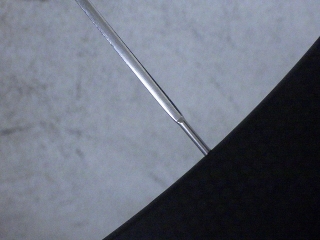
↑Drive side
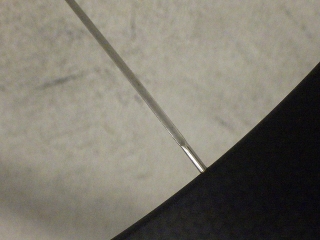
↑Non-drive side
with asymmetrical sizing on left and right.
I believe this Bora's spokes are ACI or Alpina-made (probably the latter),
which roughly correspond to Sapim CX and CX-RAY spokes.
Now, this rear wheel—the customer said they got it from an acquaintance,
and it had some centering issues and started rubbing on the brake after about 300km,
but there's no way centering drift that's visually obvious is just "a little."

Yeah. This is beyond redemption.
However, this wasn't due to poor maintenance by the previous owner—
over time (likely just sitting unused rather than actually riding),
spoke tension sagged, and as the spokes stretched,
the rim shifted to the right, which accounts for most of the issue.
Campagnolo complete wheels have large flange spacing
(strictly speaking, the left flange sits quite far outward),
so when spokes stretch, the rim shifts rightward more significantly.
Add the high rim height, which creates larger left-right angle differences between spokes,
the extreme low spoke count demanding sky-high tension that sags quickly,
the asymmetrical sizing (thinner spokes stretch more easily),
and radial spoking on the non-drive side—
virtually every factor is stacked to accelerate rightward rim drift.
This manifests over a 10-year span, and this wheel dates from around 1998.
The "rubbing after 300km" means that's when the customer noticed it,
not that the tendency changed from when they received it.
It should have been the same from day one.
The drive-side spoke tension is far lower than on the 24-hole Nomulab Wheel No. 5 rear wheel,
and with such low tension on a few-spoke wheel,
it's past merely feeling slack—it's actually dangerous.
There was also lateral runout, and adjusting it with non-drive-side tightening alone didn't center it,
so I tightened only the non-drive side to center the wheel.
But it's still not right. The drive side is too loose!
I should be able to tighten it more.
This isn't about cranking it to maximum tension—
I'm just trying to restore it to factory condition.
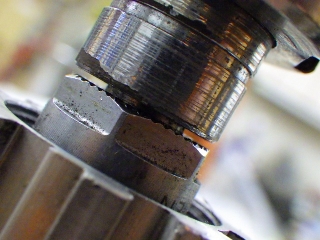
I tightened the drive side by about a quarter turn.
Naturally, the rim shifts toward the drive side.
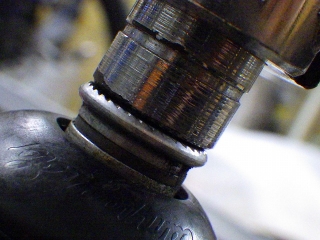
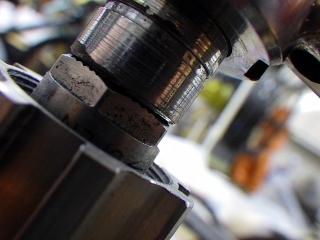
Then with about an eighth-turn tightening on the non-drive side,
the center came out.
This essentially means the "rim lateral movement per unit nipple rotation
when the wheel is nearly complete" differs by almost a factor of two between sides.
A full nipple rotation extends the effective spoke length by one thread pitch,
but on a flanged wheel, this prevents maintaining wheel center.
Even if the length increase were actual spoke growth rather than effective length,
the same happens. If age-related stretch on the drive side were about double,
the wheel would stay centered while getting slack—but it doesn't show that much difference,
so the rim shifts drive-side.
Earlier I mentioned that asymmetrical sizing would make non-drive-side spokes stretch faster,
but I think the fact that drive-side spokes are inherently higher tension is the bigger factor.
Either way, drive-side doesn't stretch by twice the amount, so
with age or age-related use, the rim shifts drive-side.
You might think that 2:1 ratio rear wheels would drift faster, and
experience confirms you'd be absolutely right.
Especially aluminum-spoke wheels like Racing Zero and Shamal Ultra
arrive from the shop often perfectly centered, with few extreme offset cases,
but inspection wheelsets I receive almost always have
the rim shifted drive-side.
Even the rear wheels I've sent out perfectly centered do this.
Though it's usually just one or two sheet-thicknesses' worth over two years.
That amount of drive-side rim shift balances with the minor runout correction
from heavy non-drive-side tightening.
Or rather, I adjust it to balance out.
The final drive-side spoke tension on this rear wheel
is tight enough that if it were on a Nomulab Wheel No. 5 rim
(which I haven't tested), it would break immediately.
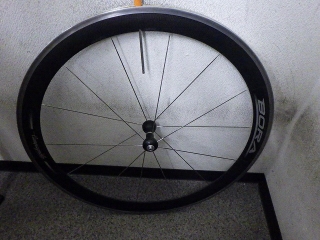
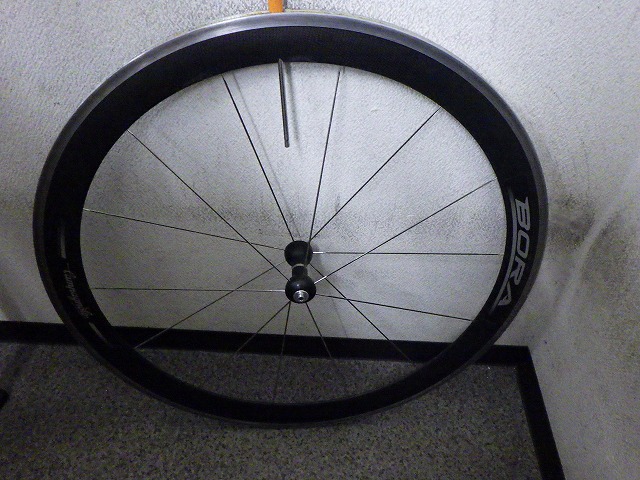
Next, the front wheel.
It has 14 spokes.
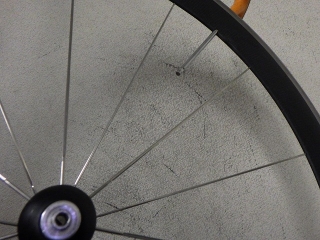
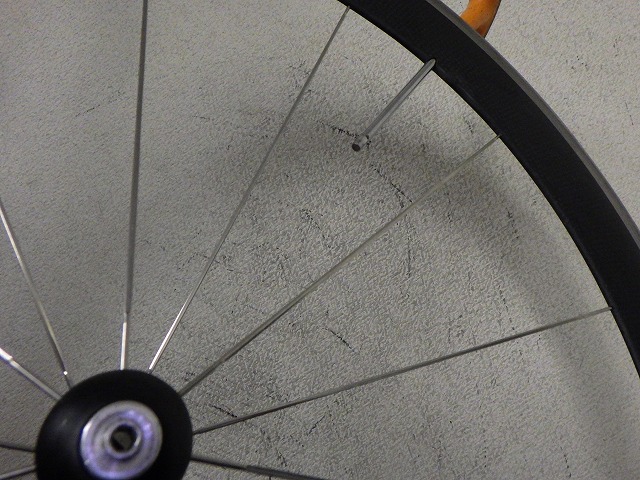
Both wheels have reverse-drilled rims.
This is a characteristic of old Colima rims,
but Campagnolo complete wheels with aluminum rims generally
have reverse-drilled rims as standard.
On the rear you can't determine it with G3 spoking,
but the front is reverse-drilled even on Bora WTO.
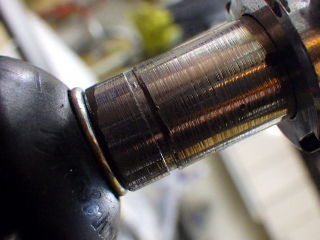

These are post-work photos, but the center was already true before work.
The customer said the front wheel was probably fine,
but like the rear, tension was abnormally low.
As a greeting, I was able to lightly tighten every nipple
a full turn at first.
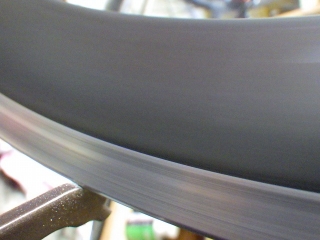
It doesn't appear to be from truing work,
but there was some radial runout for a factory wheel
(maybe from uneven age-related loosening),
so I treated everything as "tightening bonus" and adjusted.
The wheel in the image is spinning, and
after the radial truing, the white wear mark slightly inside the braking zone
bounces up and down within the zone.
Before work, that wear mark was a perfect circle.
So that's it—the tension was so low when riding that brake rub occurred.
The rear wheel had asymmetrical spokes,
but the front has 14 spokes of the thinner type—
about CX-RAY level.
With high rim height, it's less risky than a Shimano C24 16-hole front, though.
Time-wise, the front wheel—which didn't have extreme centering issues—
took about three times longer than the rear.
Earlier I showed the centering gauge image,
but I couldn't tell left from right by appearance.
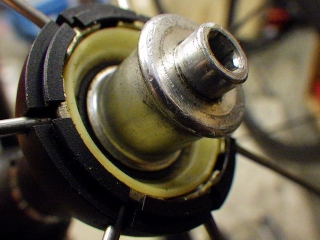
After work, I removed one dust cap
(breaking risk, but it survived).
By chance it was the right side.
I should have mentioned: there were no issues with hub rotation or bearing preload.
So from a service standpoint, removing the dust cap isn't necessary.
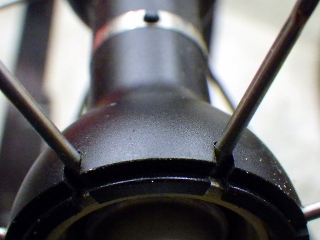
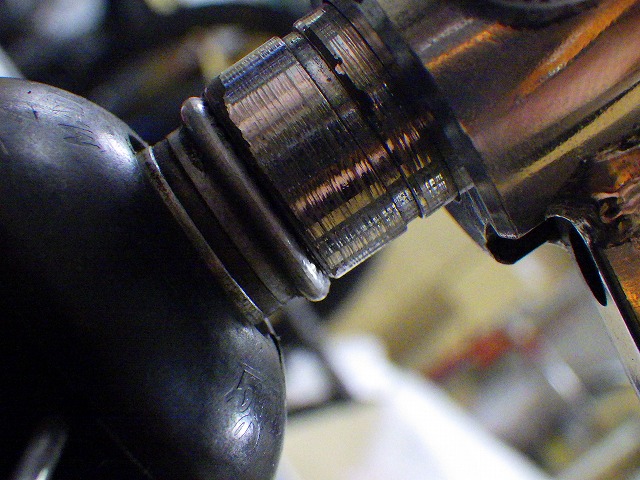
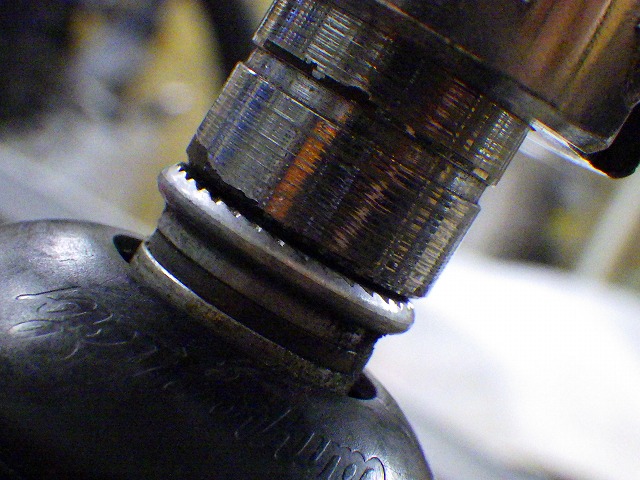
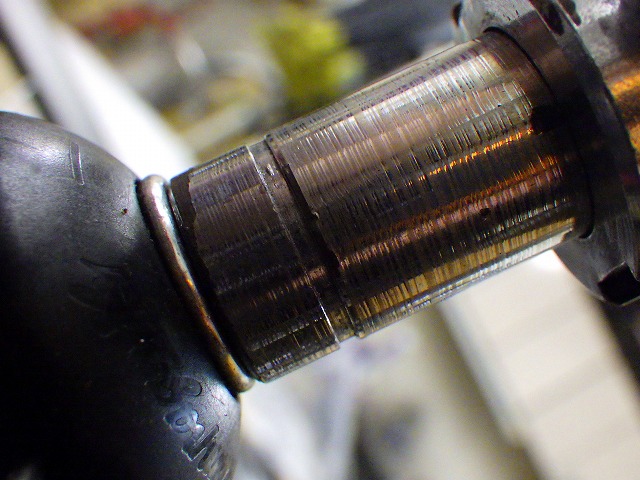
From the side identified as right, looking at the grease port cap on the hub body...
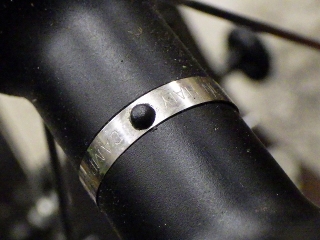
...it read upside down, so
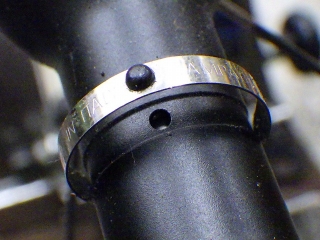
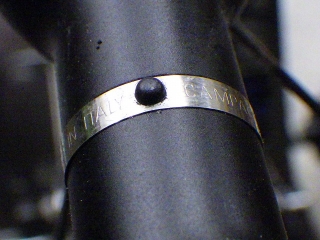
I rotated it so it read MADE IN ITALY ● CAMPAGNOLO.
Once the dust cap is installed,
this becomes the only way to determine hub orientation.
Coincidentally the rear hub cap was also upside down,
so I corrected that too.

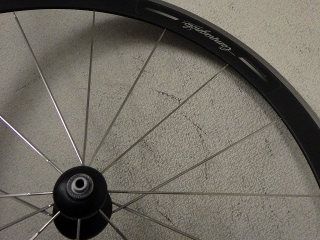
This is the rear wheel—
Campagnolo wheels use stickers where one side shows the model name
and the reverse side shows the maker name,
with text gravity also flipped.
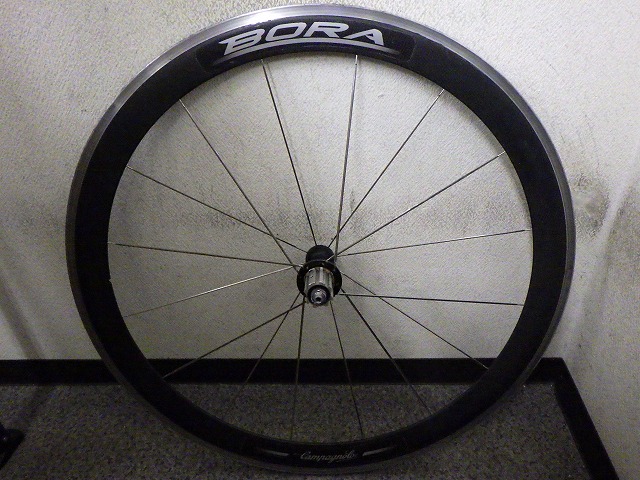
You might ask: if the valve hole on the rear right aligns with the BORA position,
couldn't the front just have the sticker reading BORA positioned below the valve hole on the right side,
making the hub grease cap the sole left-right reference? Well...
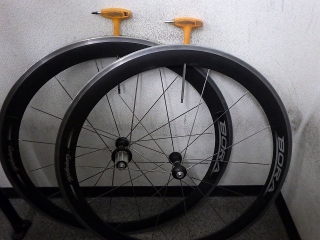
On this Bora, the valve hole position falls
between the two stickers.
From here, I flip only the front wheel keeping the valve hole directly above,
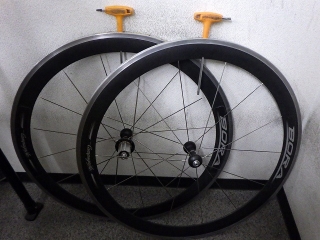
↑...and you get this.
Just to be clear, I didn't rotate an Allen key in the valve hole.
This Bora has a design where flipping the front wheel
doesn't change its positional relationship to the rear valve and stickers.
So with dust caps installed on both sides,
the only way to determine left and right is by checking the hub grease port cap.
If you install the quick release following the cap orientation
or mount a tire with directional markings, you'd have other reference points.
The original Bora used Colima (コリマ製) carbon rims, and aside from spoke count ordering and cosmetic rim details, they were Colima rims as-is.
The next generation Bora had aluminum cladding on the braking zone,
with purple text around the rim model name (pink on Shamal),
and this Bora is from the next generation after that,
still featuring aluminum cladding on the braking zone,
with rim cosmetics from the era when all wheel models were unified in monochrome.
The rim markings aren't printed—they're clear stickers.
As for the tire specification matching this rim,
being a "race wheel," naturally it's tubular.
This Bora has no rim specification for mounting tires the same way you would on a city bike.
The rim interior is filled with foam urethane, except for passages for the valve and tools.
I'm not sure whether the aluminum braking zone specification is a custom order
or if Campagnolo added it to the carbon rims after receiving them from Colima,
but the carbon rim portion itself is Colima-made.
The aluminum freewheel body has a set screw on the high point of the spline teeth.
By removing this set screw, you can inject grease into the freewheel body using a grease gun.
So the inner bearing surface of the freewheel body has no seal and is open.
This is unrelated to these wheels, but Campagnolo/Fulcrum complete wheels with Shimano 10-speed aluminum freewheel bodies
had lockrings compatible with Campagnolo lockring tools.
Shimano HG freewheel bodies have larger spline and lockring thread diameters than Campagnolo ED freewheel bodies,
making the lockring thread thinner, so to gain strength they adopted
Campagnolo-spec lockrings with smaller-diameter threads.
The steel freewheel body that first appeared for Shimano 11-speed had thin wall thickness at the spline section,
so there wasn't enough thread thickness for the set screw—no grease port.
The white aluminum freewheel body that came later with plasma electrolytic oxidation treatment achieved sufficient strength
and, despite being an HG freewheel body, accepts Shimano-spec lockrings.
Currently, the hub shaft position directly below the freewheel body has become butted for weight reduction,
and grease pools there, so even aluminum freewheel bodies have no grease port now.
Butted shafts have been standard since around 2006,
so there's been no need for open-side design since then, but
the spare bearing parts for OEM freewheel bodies only switched to double-seal specs within the last couple years.
Being Record-grade hubs, they have a grease port for hub bearings at the center of the hub body,
with a C-ring clip covering it.
In the pro racing scene of that era, Dura-Ace hubs on Shimano-equipped teams would sometimes have grease ports drilled in afterward,
but when you inject grease from the center of the hub body,
the grease that seeps between the hub shaft and body becomes drag resistance.
Since pro teams don't have time for disassembly and regreasing while racing,
and bearing grease gets depleted quickly anyway,
it's better for teams other than pros not to grease from here.
Suntour XC Pro hubs, on the other hand,
had grease ports at both ends of the hub body
so you could inject grease almost exclusively around the bearing races.

16-hole with radial spoking on the non-drive side,
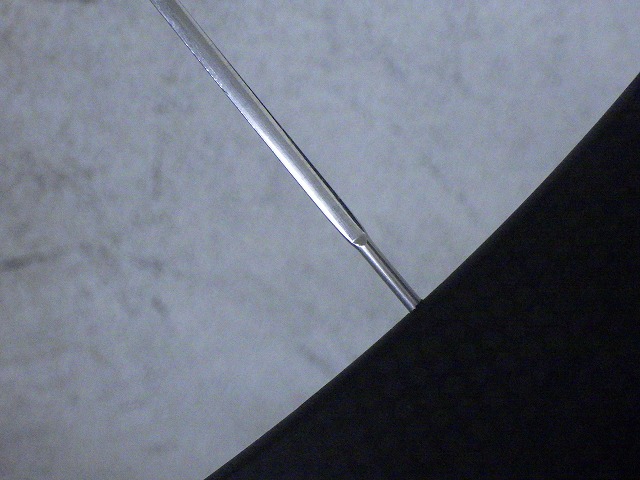
↑Drive side
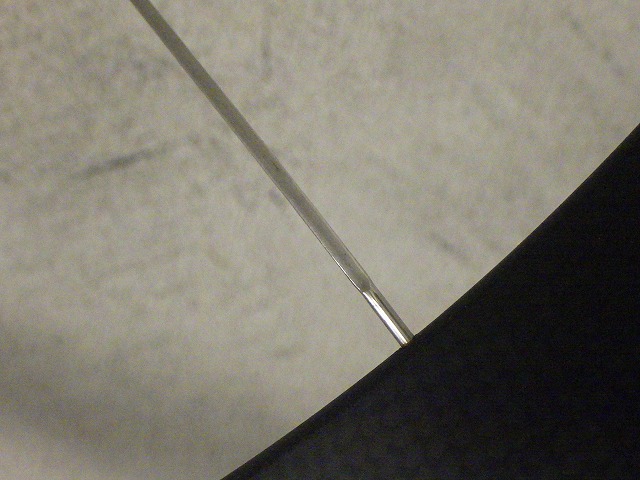
↑Non-drive side
with asymmetrical sizing on left and right.
I believe this Bora's spokes are ACI or Alpina-made (probably the latter),
which roughly correspond to Sapim CX and CX-RAY spokes.
Now, this rear wheel—the customer said they got it from an acquaintance,
and it had some centering issues and started rubbing on the brake after about 300km,
but there's no way centering drift that's visually obvious is just "a little."
Yeah. This is beyond redemption.
However, this wasn't due to poor maintenance by the previous owner—
over time (likely just sitting unused rather than actually riding),
spoke tension sagged, and as the spokes stretched,
the rim shifted to the right, which accounts for most of the issue.
Campagnolo complete wheels have large flange spacing
(strictly speaking, the left flange sits quite far outward),
so when spokes stretch, the rim shifts rightward more significantly.
Add the high rim height, which creates larger left-right angle differences between spokes,
the extreme low spoke count demanding sky-high tension that sags quickly,
the asymmetrical sizing (thinner spokes stretch more easily),
and radial spoking on the non-drive side—
virtually every factor is stacked to accelerate rightward rim drift.
This manifests over a 10-year span, and this wheel dates from around 1998.
The "rubbing after 300km" means that's when the customer noticed it,
not that the tendency changed from when they received it.
It should have been the same from day one.
The drive-side spoke tension is far lower than on the 24-hole Nomulab Wheel No. 5 rear wheel,
and with such low tension on a few-spoke wheel,
it's past merely feeling slack—it's actually dangerous.
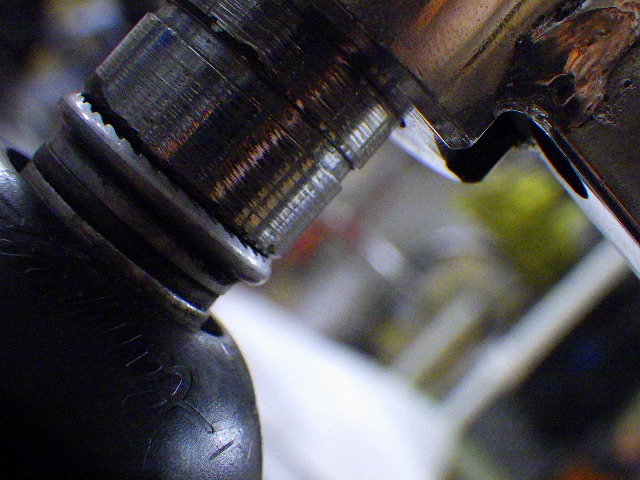
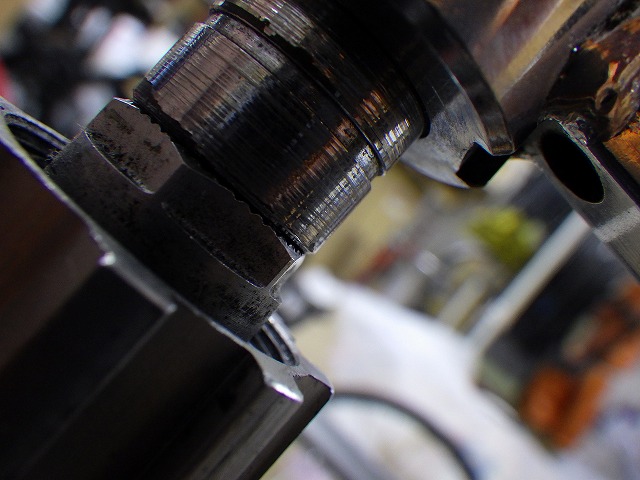
There was also lateral runout, and adjusting it with non-drive-side tightening alone didn't center it,
so I tightened only the non-drive side to center the wheel.
But it's still not right. The drive side is too loose!
I should be able to tighten it more.
This isn't about cranking it to maximum tension—
I'm just trying to restore it to factory condition.
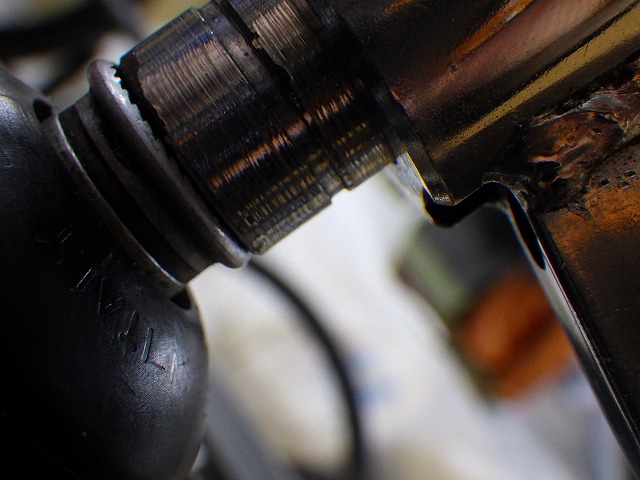
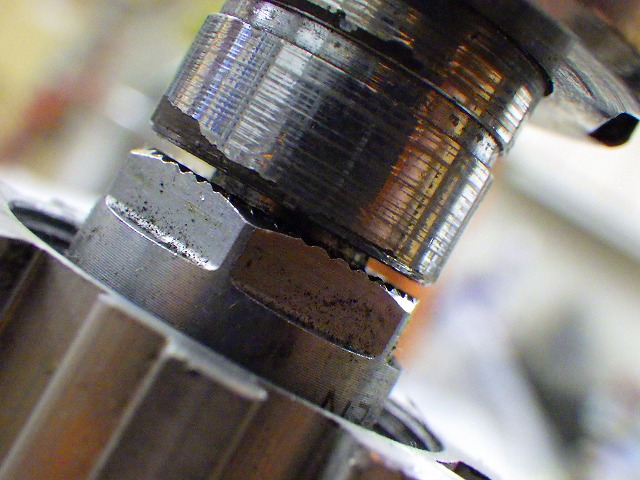
I tightened the drive side by about a quarter turn.
Naturally, the rim shifts toward the drive side.

Then with about an eighth-turn tightening on the non-drive side,
the center came out.
This essentially means the "rim lateral movement per unit nipple rotation
when the wheel is nearly complete" differs by almost a factor of two between sides.
A full nipple rotation extends the effective spoke length by one thread pitch,
but on a flanged wheel, this prevents maintaining wheel center.
Even if the length increase were actual spoke growth rather than effective length,
the same happens. If age-related stretch on the drive side were about double,
the wheel would stay centered while getting slack—but it doesn't show that much difference,
so the rim shifts drive-side.
Earlier I mentioned that asymmetrical sizing would make non-drive-side spokes stretch faster,
but I think the fact that drive-side spokes are inherently higher tension is the bigger factor.
Either way, drive-side doesn't stretch by twice the amount, so
with age or age-related use, the rim shifts drive-side.
You might think that 2:1 ratio rear wheels would drift faster, and
experience confirms you'd be absolutely right.
Especially aluminum-spoke wheels like Racing Zero and Shamal Ultra
arrive from the shop often perfectly centered, with few extreme offset cases,
but inspection wheelsets I receive almost always have
the rim shifted drive-side.
Even the rear wheels I've sent out perfectly centered do this.
Though it's usually just one or two sheet-thicknesses' worth over two years.
That amount of drive-side rim shift balances with the minor runout correction
from heavy non-drive-side tightening.
Or rather, I adjust it to balance out.
The final drive-side spoke tension on this rear wheel
is tight enough that if it were on a Nomulab Wheel No. 5 rim
(which I haven't tested), it would break immediately.
Next, the front wheel.
It has 14 spokes.
Both wheels have reverse-drilled rims.
This is a characteristic of old Colima rims,
but Campagnolo complete wheels with aluminum rims generally
have reverse-drilled rims as standard.
On the rear you can't determine it with G3 spoking,
but the front is reverse-drilled even on Bora WTO.
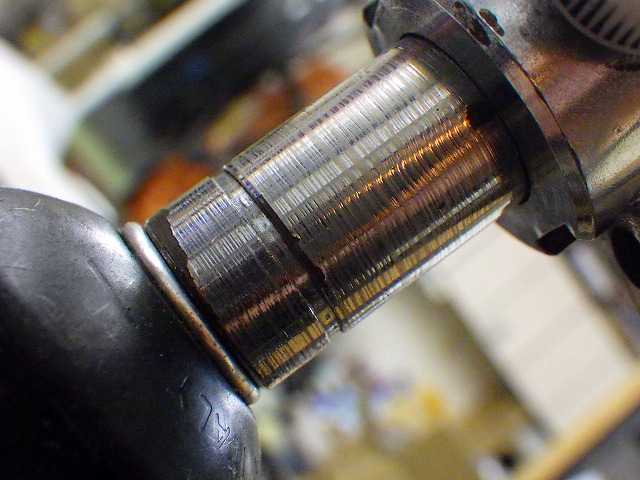
These are post-work photos, but the center was already true before work.
The customer said the front wheel was probably fine,
but like the rear, tension was abnormally low.
As a greeting, I was able to lightly tighten every nipple
a full turn at first.
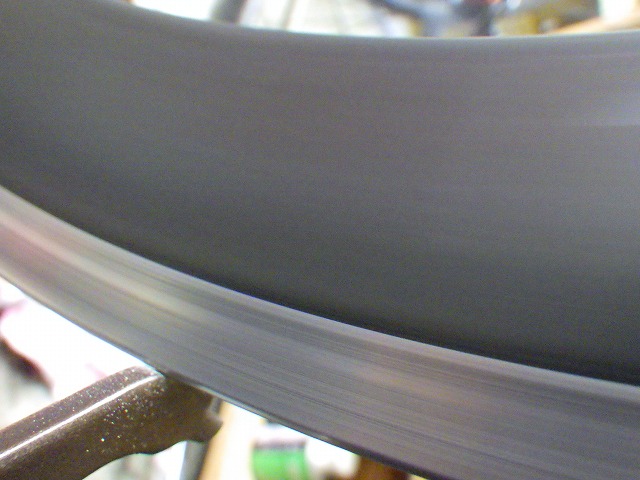
It doesn't appear to be from truing work,
but there was some radial runout for a factory wheel
(maybe from uneven age-related loosening),
so I treated everything as "tightening bonus" and adjusted.
The wheel in the image is spinning, and
after the radial truing, the white wear mark slightly inside the braking zone
bounces up and down within the zone.
Before work, that wear mark was a perfect circle.
So that's it—the tension was so low when riding that brake rub occurred.
The rear wheel had asymmetrical spokes,
but the front has 14 spokes of the thinner type—
about CX-RAY level.
With high rim height, it's less risky than a Shimano C24 16-hole front, though.
Time-wise, the front wheel—which didn't have extreme centering issues—
took about three times longer than the rear.
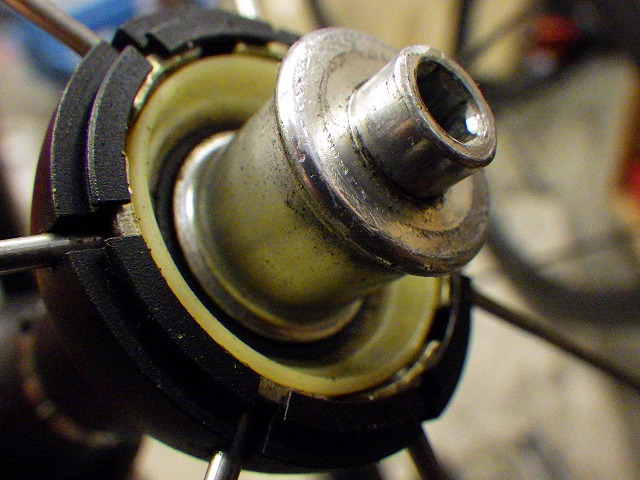
Earlier I showed the centering gauge image,
but I couldn't tell left from right by appearance.
After work, I removed one dust cap
(breaking risk, but it survived).
By chance it was the right side.
I should have mentioned: there were no issues with hub rotation or bearing preload.
So from a service standpoint, removing the dust cap isn't necessary.
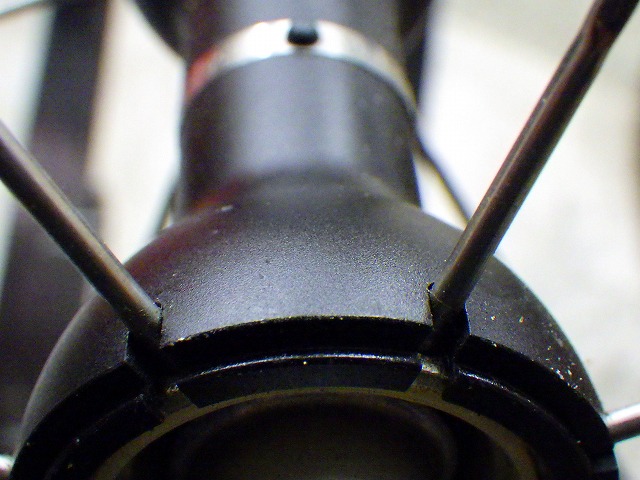
From the side identified as right, looking at the grease port cap on the hub body...
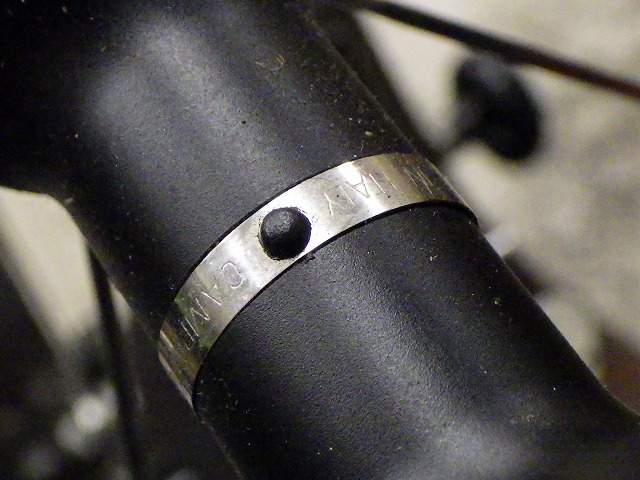
...it read upside down, so
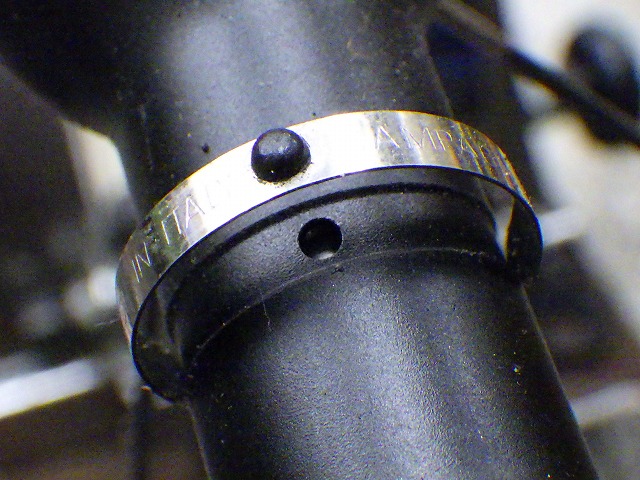
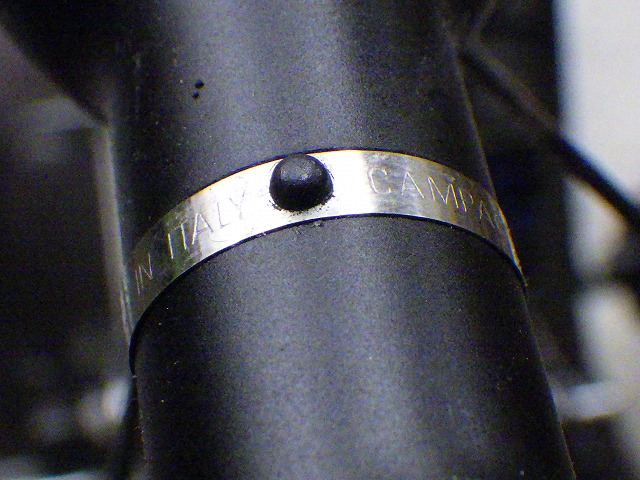
I rotated it so it read MADE IN ITALY ● CAMPAGNOLO.
Once the dust cap is installed,
this becomes the only way to determine hub orientation.
Coincidentally the rear hub cap was also upside down,
so I corrected that too.
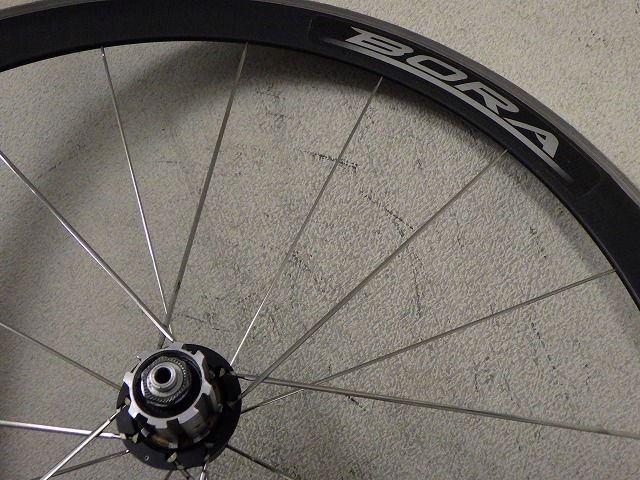
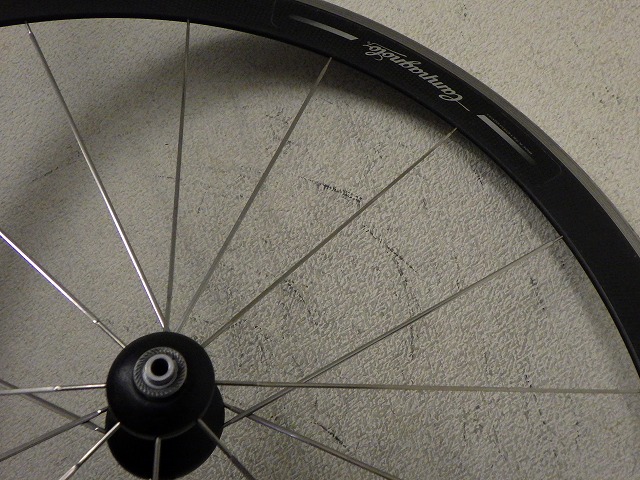
This is the rear wheel—
Campagnolo wheels use stickers where one side shows the model name
and the reverse side shows the maker name,
with text gravity also flipped.
You might ask: if the valve hole on the rear right aligns with the BORA position,
couldn't the front just have the sticker reading BORA positioned below the valve hole on the right side,
making the hub grease cap the sole left-right reference? Well...
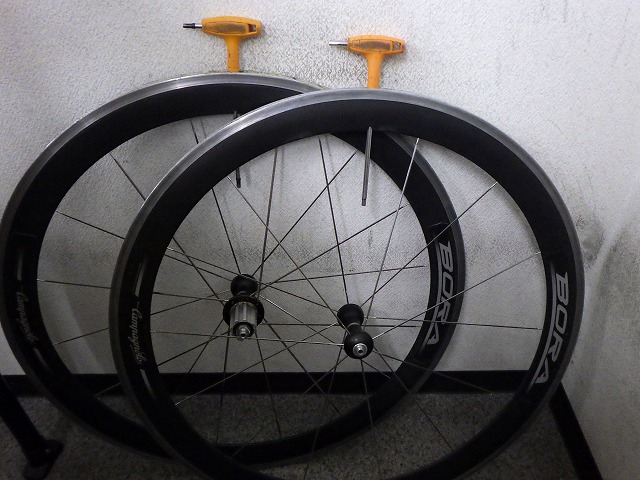
On this Bora, the valve hole position falls
between the two stickers.
From here, I flip only the front wheel keeping the valve hole directly above,
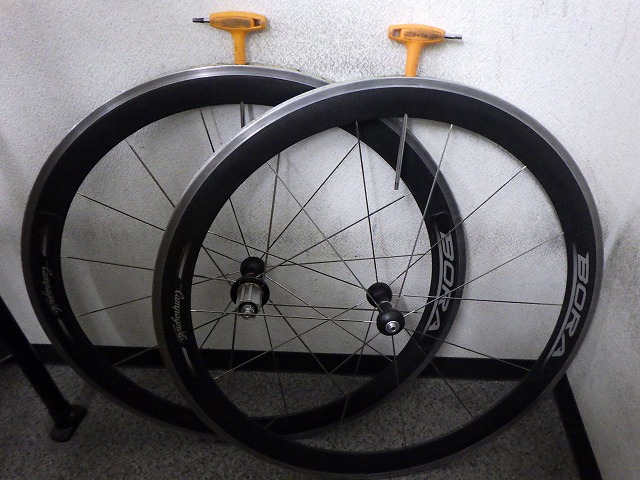
↑...and you get this.
Just to be clear, I didn't rotate an Allen key in the valve hole.
This Bora has a design where flipping the front wheel
doesn't change its positional relationship to the rear valve and stickers.
So with dust caps installed on both sides,
the only way to determine left and right is by checking the hub grease port cap.
If you install the quick release following the cap orientation
or mount a tire with directional markings, you'd have other reference points.