As the title says, truing is essentially impossible (the rear wheel is OK under certain conditions), so
there aren't many things I can improve by working on them.
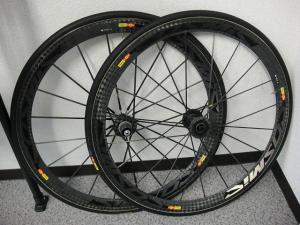
The work I was asked to do was to re-glue the tires.
Since they'd been glued on for over a year, I peeled them off and re-glued them.
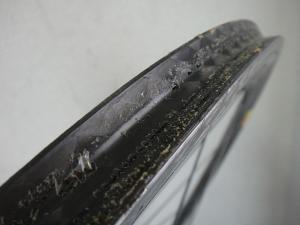
It's not strictly necessary every year,
but tubular tires that have been glued on the rim for a long time
may lose their 100% adhesive strength,
so it's often worth re-gluing them.
In this wheel's case, the bed (the foundation under the cement) was on the thin side,
so when re-gluing, I made the bed slightly thicker.
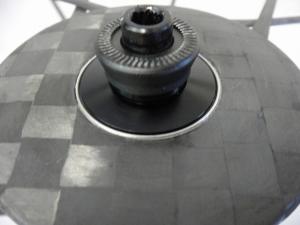
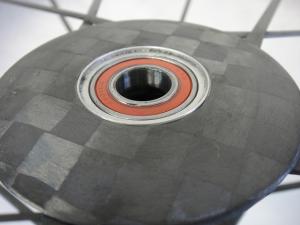
Regarding the depth to which the cartridge bearing is seated in the front wheel,
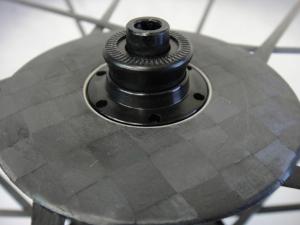
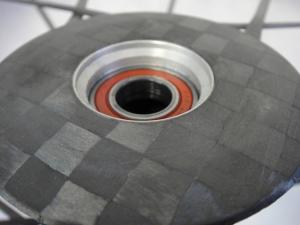
the bearing preload adjustment side is slightly recessed on the inside due to structural constraints.
There's no noticeable impact in actual riding.
If you align both sides to the same depth, the theoretical lateral stiffness would decrease,
so you could say this is by design.
I own this wheel myself.
It's difficult to say which is better compared to Lightweight,
but one thing I can say for certain is that the braking performance is better on this one.
The vertical stiffness is excessive for my taste.
Compared to other carbon rims of similar height, the rim weight probably isn't
particularly light (probably),
but there's a light, snappy acceleration that can't be explained by weight alone.
When I see wheels like this, I think hand-built wheels can't compete,
but the only saving grace is the outrageous price.
When it comes to "aluminum WO wheels up to around 60,000 yen" and
"carbon tubular wheels up to around 200,000 yen,"
hand-built wheels can hold their own against factory-built ones.
there aren't many things I can improve by working on them.
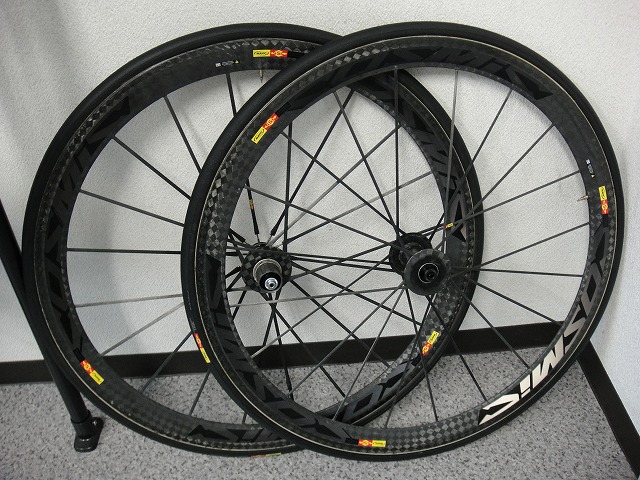
The work I was asked to do was to re-glue the tires.
Since they'd been glued on for over a year, I peeled them off and re-glued them.
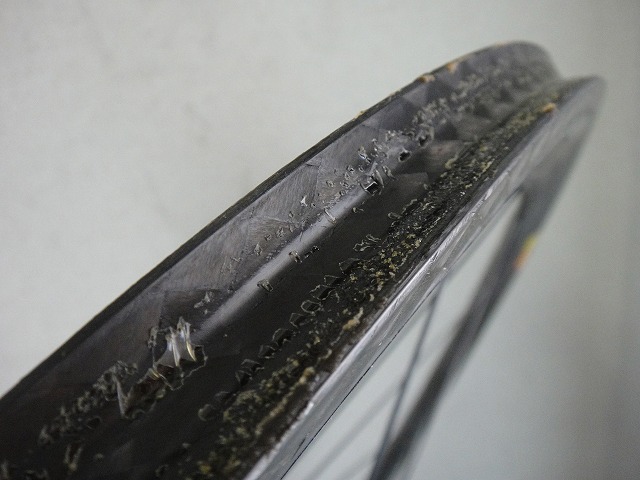
It's not strictly necessary every year,
but tubular tires that have been glued on the rim for a long time
may lose their 100% adhesive strength,
so it's often worth re-gluing them.
In this wheel's case, the bed (the foundation under the cement) was on the thin side,
so when re-gluing, I made the bed slightly thicker.
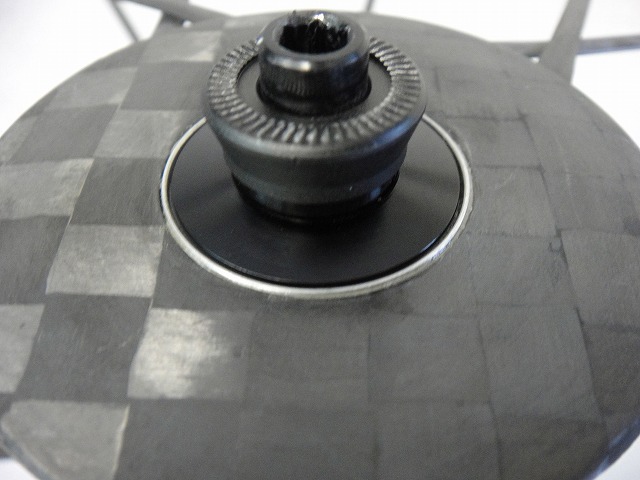
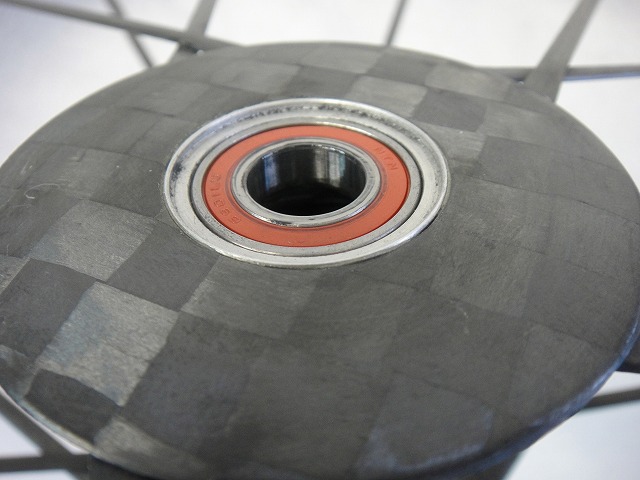
Regarding the depth to which the cartridge bearing is seated in the front wheel,
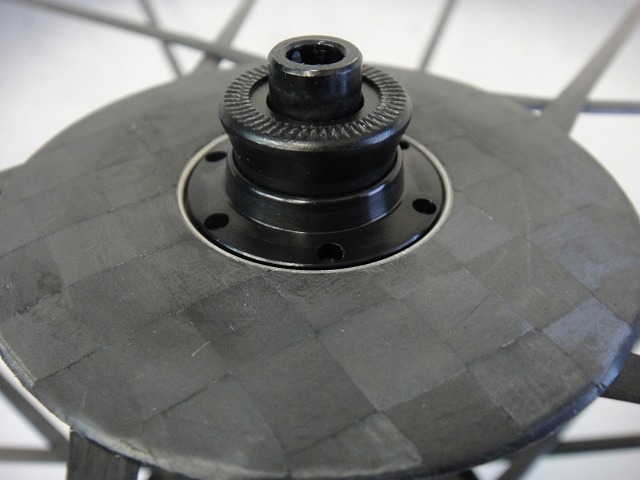
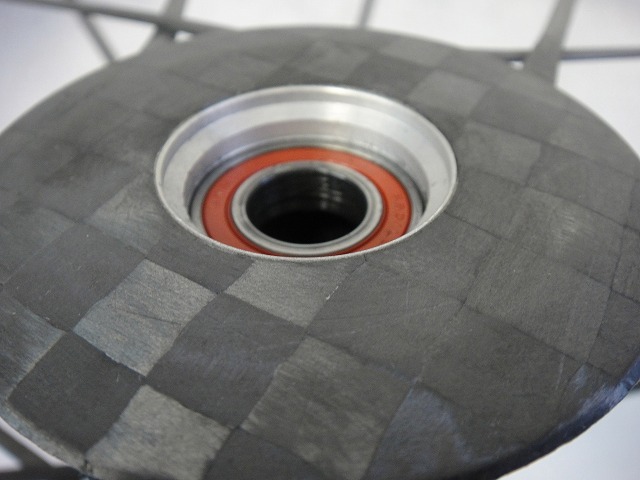
the bearing preload adjustment side is slightly recessed on the inside due to structural constraints.
There's no noticeable impact in actual riding.
If you align both sides to the same depth, the theoretical lateral stiffness would decrease,
so you could say this is by design.
I own this wheel myself.
It's difficult to say which is better compared to Lightweight,
but one thing I can say for certain is that the braking performance is better on this one.
The vertical stiffness is excessive for my taste.
Compared to other carbon rims of similar height, the rim weight probably isn't
particularly light (probably),
but there's a light, snappy acceleration that can't be explained by weight alone.
When I see wheels like this, I think hand-built wheels can't compete,
but the only saving grace is the outrageous price.
When it comes to "aluminum WO wheels up to around 60,000 yen" and
"carbon tubular wheels up to around 200,000 yen,"
hand-built wheels can hold their own against factory-built ones.