What's generally called the Ксилиум K10 in Japan is called that because the Japanese distributor does, but
overseas it seems to be written more often as Ксилиум Ixion K10 or just Ксилиум Ixion.
Why I suddenly wrote "overseas" is a secret.
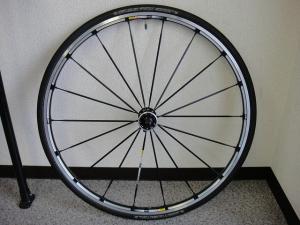
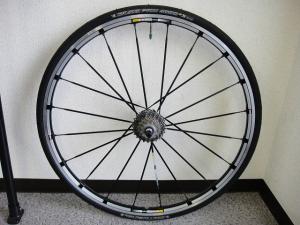
Brand new. Strictly speaking, it was installed on a bike and ridden to our shop, though.
Since it's brand new, the customer requested wheel truing and centering checks without disassembling the hub.
There's no quality inspection route from the shop where it was purchased,
so our shop does it for a fee.
Even with "that price" plus "our labor charges," it's still below the domestic distribution price (the rest is redacted).
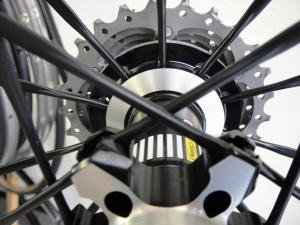
It has "asymmetrical radial lacing on the freewheel side."
What this certain manufacturer calls Isopulse Racing,
fitting my blog's definitions, is zero-four lacing.
It has tremendous effect in correcting spoke tension differences between left and right.
Using radial lacing on the freewheel side with butted spokes has major drawbacks, so
I normally use four-cross on the freewheel side and six-cross or more on the non-freewheel side,
but when you try radial lacing on the freewheel side on wheels I'm not selling,
the change in wheel balance is instantly obvious.
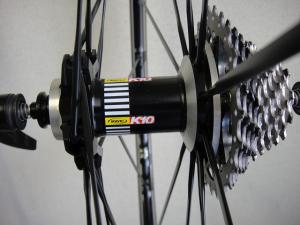
↑If we consider the position where the spoke head fits as the flange hole,
it's technically a very subtle reverse high-low flange,
but since Isopulse has the greater effect on wheel balance, there's no problem.
Ксилиум wasn't created out of a desire to build wheels with aluminum spokes.
My thinking is that aluminum spokes resulted from considering how to minimize
the twisting losses from pedaling torque, which is a drawback of freewheel-side radial lacing.
What's amazing about Ксилиум is that without changing the development philosophy,
it gets reliably better with each model change.
There's no foolish whimsy or abandonment of course—it just keeps maturing year after year.
If someone were to swap out their Ксилиум flagship model every four or five years,
they'd constantly experience that "it's better than before!" feeling.
With a certain different manufacturer (I'll keep their name hidden),
a wheel that had paired spokes somehow became radial laced on the freewheel side,
then changed to two-cross left and right, then to 2:1 spokes, and so forth—
it keeps shifting around and lacks any consistent vision.
The original 1999 Ксилиум: my measurement notes show
the front clincher rim at 510g.
In 2002 came the Ксилиум SL with machined cutouts on the rim.
In 2004 came the all-silver Ксилиум SL,
but only the very earliest batches had deep cutouts,
with rim actual weight under 400g.
There was an announcement back then saying "we machined too deeply, so from the next batch we'll make the cuts shallower."
Starting with the 2006 Ксилиум ES, the front hub became carbon shell,
but the important thing wasn't that—it was that the hub flange spoke-catching design was revised.
The current Ксилиум SL's hub is based on this.
From the K10 came side-wall cutouts on the rim.
The harbinger of this was the company's own Crossmax SL.
On disc-brake-only wheels you can machine the side-walls,
but the K10 is rim-brake, so a braking zone is necessary.
Still, there's an attempt to cut away at least a bit of the side-wall.
Actually, regarding rim weight, the 2004 early batch was the lightest,
but there's suspicion that the K10's rim might match it.
The 2006 ES tubular is around 390g, but
the clincher version goes slightly over 400g.
That 400g-breaking clincher rim they once gave up on—
whether it's been achieved is something you only know by disassembling the wheel.
I don't know this rim's actual weight, but I know someone who does.
Though it seems this certain manufacturer gave them some kind of trauma, so they won't tell.
But this time, on the condition of anonymity, they finally opened up.
That's why I've been vaguely referring to "a certain manufacturer" from the start.
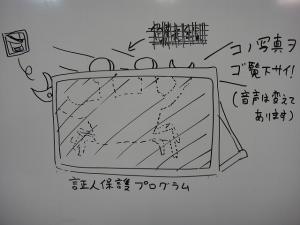
↑I can't say who or where from.
Also, despite saying "finally opened up," they seem oddly delighted, but that's probably just my imagination.
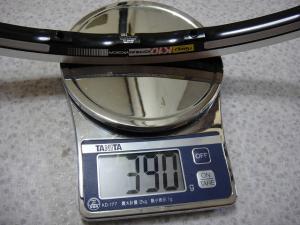
It came in under 400g!
Within about 10g of a different manufacturer's (name withheld) carbon-laminate aluminum light rim,
but the Ксилиум has a more solid feel as a complete wheel.
Especially the rear wheel—there's no comparison.
Ксилиум is one of the "walls that hand-built wheels can't overcome."
For pre-assembled wheels as a category, if a wheel thoughtfully designed with custom components
performs worse than wheels made from off-the-shelf materials, there'd be
no reason to make pre-assembled wheels in the first place.
Some shops do point to this caliber of wheel and claim "our hand-built wheels exceed that,"
but that's simply not believable.
By acknowledging the performance of well-designed pre-assembled wheels
and then facing hand-built wheels head-on, you experience the "pangs of creation,"
and that's what Ксилиум sensei teaches us.
overseas it seems to be written more often as Ксилиум Ixion K10 or just Ксилиум Ixion.
Why I suddenly wrote "overseas" is a secret.
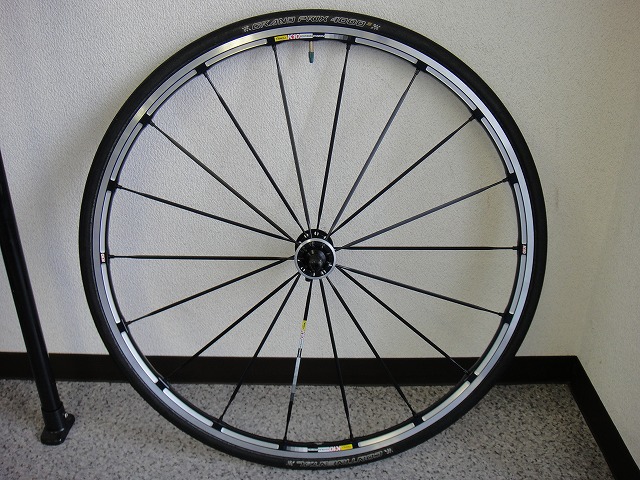
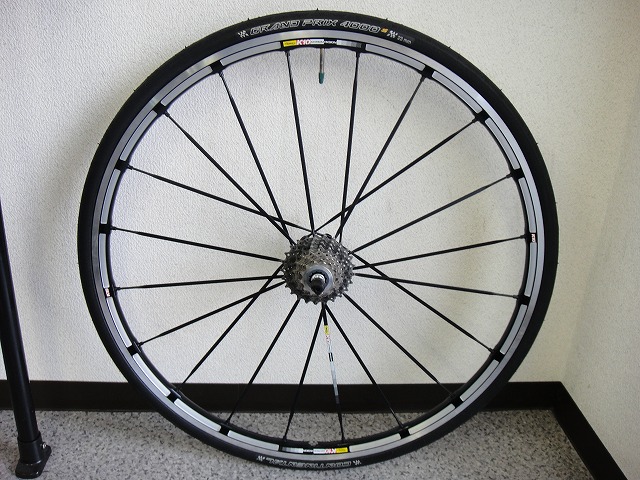
Brand new. Strictly speaking, it was installed on a bike and ridden to our shop, though.
Since it's brand new, the customer requested wheel truing and centering checks without disassembling the hub.
There's no quality inspection route from the shop where it was purchased,
so our shop does it for a fee.
Even with "that price" plus "our labor charges," it's still below the domestic distribution price (the rest is redacted).
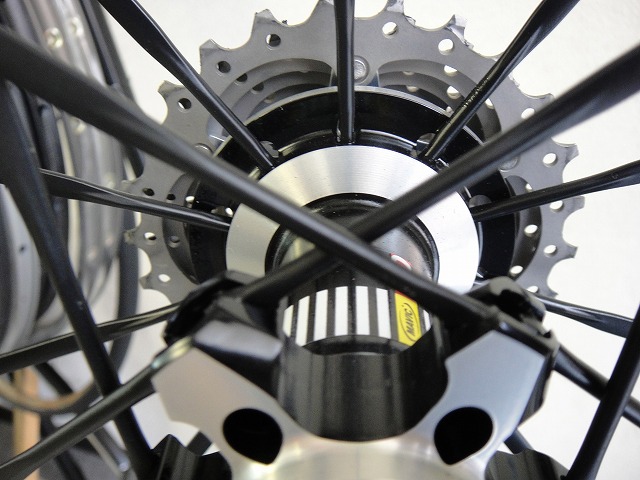
It has "asymmetrical radial lacing on the freewheel side."
What this certain manufacturer calls Isopulse Racing,
fitting my blog's definitions, is zero-four lacing.
It has tremendous effect in correcting spoke tension differences between left and right.
Using radial lacing on the freewheel side with butted spokes has major drawbacks, so
I normally use four-cross on the freewheel side and six-cross or more on the non-freewheel side,
but when you try radial lacing on the freewheel side on wheels I'm not selling,
the change in wheel balance is instantly obvious.

↑If we consider the position where the spoke head fits as the flange hole,
it's technically a very subtle reverse high-low flange,
but since Isopulse has the greater effect on wheel balance, there's no problem.
Ксилиум wasn't created out of a desire to build wheels with aluminum spokes.
My thinking is that aluminum spokes resulted from considering how to minimize
the twisting losses from pedaling torque, which is a drawback of freewheel-side radial lacing.
What's amazing about Ксилиум is that without changing the development philosophy,
it gets reliably better with each model change.
There's no foolish whimsy or abandonment of course—it just keeps maturing year after year.
If someone were to swap out their Ксилиум flagship model every four or five years,
they'd constantly experience that "it's better than before!" feeling.
With a certain different manufacturer (I'll keep their name hidden),
a wheel that had paired spokes somehow became radial laced on the freewheel side,
then changed to two-cross left and right, then to 2:1 spokes, and so forth—
it keeps shifting around and lacks any consistent vision.
The original 1999 Ксилиум: my measurement notes show
the front clincher rim at 510g.
In 2002 came the Ксилиум SL with machined cutouts on the rim.
In 2004 came the all-silver Ксилиум SL,
but only the very earliest batches had deep cutouts,
with rim actual weight under 400g.
There was an announcement back then saying "we machined too deeply, so from the next batch we'll make the cuts shallower."
Starting with the 2006 Ксилиум ES, the front hub became carbon shell,
but the important thing wasn't that—it was that the hub flange spoke-catching design was revised.
The current Ксилиум SL's hub is based on this.
From the K10 came side-wall cutouts on the rim.
The harbinger of this was the company's own Crossmax SL.
On disc-brake-only wheels you can machine the side-walls,
but the K10 is rim-brake, so a braking zone is necessary.
Still, there's an attempt to cut away at least a bit of the side-wall.
Actually, regarding rim weight, the 2004 early batch was the lightest,
but there's suspicion that the K10's rim might match it.
The 2006 ES tubular is around 390g, but
the clincher version goes slightly over 400g.
That 400g-breaking clincher rim they once gave up on—
whether it's been achieved is something you only know by disassembling the wheel.
I don't know this rim's actual weight, but I know someone who does.
Though it seems this certain manufacturer gave them some kind of trauma, so they won't tell.
But this time, on the condition of anonymity, they finally opened up.
That's why I've been vaguely referring to "a certain manufacturer" from the start.

↑I can't say who or where from.
Also, despite saying "finally opened up," they seem oddly delighted, but that's probably just my imagination.
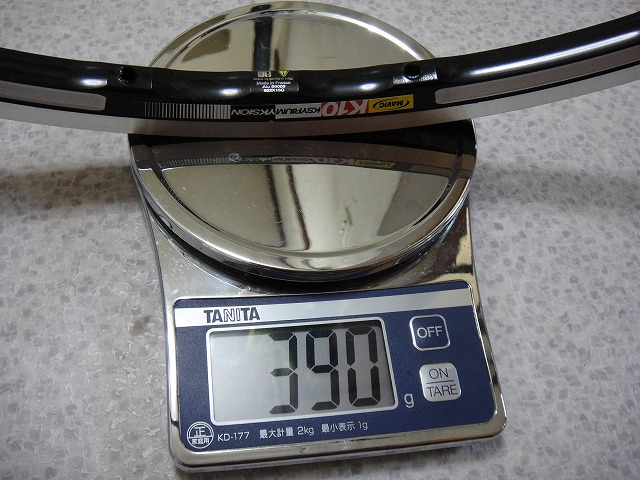
It came in under 400g!
Within about 10g of a different manufacturer's (name withheld) carbon-laminate aluminum light rim,
but the Ксилиум has a more solid feel as a complete wheel.
Especially the rear wheel—there's no comparison.
Ксилиум is one of the "walls that hand-built wheels can't overcome."
For pre-assembled wheels as a category, if a wheel thoughtfully designed with custom components
performs worse than wheels made from off-the-shelf materials, there'd be
no reason to make pre-assembled wheels in the first place.
Some shops do point to this caliber of wheel and claim "our hand-built wheels exceed that,"
but that's simply not believable.
By acknowledging the performance of well-designed pre-assembled wheels
and then facing hand-built wheels head-on, you experience the "pangs of creation,"
and that's what Ксилиум sensei teaches us.