The tubeless rim version of the Hyperion Ultra has arrived.
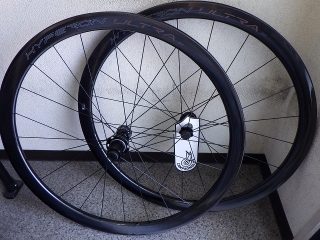

The tubular version is currently not yet available in Japan.
With a 37mm rim height, it's lighter in claimed weight than
the Bora Ultra WTO33 with lower rim height or
Fulcrum's Speed 25.
It's worth noting that the Hyperion Ultra front wheel is 21H,
while the Bora WTO and Speed 25 front wheels are
24H, but when you list the manufacturer's claimed weights
not that I want to write some pointless article just listing specs
the Hyperion Ultra DB 2WAY-FIT is 1240g,
the Bora Ultra WTO33 is 1385g, and
the Fulcrum Speed 25 is 1285g.
By the way, the tubular version of the Hyperion Ultra DB has
a claimed weight of 1160g, so the weight difference between
tubular and tubeless versions is essentially just the rim.

The front wheel uses a non-G3 2:1 ratio 21H in radial lacing.
There's no defending it—it's the same as Lovell.
With the Hyperion, they clearly prioritized lightness above all else.
The final cross on the tangent side is not woven, and
it's not reverse offset lacing either.
It's essentially a front wheel for disc brakes designed as close
as possible to left-right radial lacing.

The rear hub shell is slim, and if you were to swap the freehub to go the CULT route,
the shape would make removal difficult, but since it's already CULT equipped, that's not an issue.

The Bora WTO freehub body uses the traditional
30mm diameter cylinder with ratchet pawls, the same as
the older Zonda and Shamal Ultra, but
the Bora WTO Ultra, Hyperion Ultra DB, and
Shamal Carbon DB use a new 33mm diameter freehub body
that's incompatible with the 30mm version.
As an important note, the 30mm freehub body has
individual pawl springs available (sold as a set of 5),
which at 2023 list prices were ¥1,152 including tax—
our shop sells them individually for around ¥200 each.
However, the 33mm freehub body is sold as a unit containing
1 spring and 3 pawls per set at ¥1,980 including tax,
so the replacement cost for pawl springs has increased nearly tenfold.

For the 33mm freehub body in Shimano fitment, the part number is
FH-HGA33.
That likely stands for
Hyperglide freehub body,
aluminum,
33mm diameter.
The Shamal Carbon and Bora WTO Ultra that use this
FH-HGA33 have ball bearing freehubs, but
the Hyperion Ultra's Shimano freehub body
uses USB bearings, and
the part number is FH-HGA33USB (←they literally just added it onto the end!)

The rear wheel features modest high-low flanges
and uses 24H with equal spoke counts on both sides, but
when I noticed the spoke deflection difference between sides
was smaller than expected, it turned out to be an offset rim.
While not a dramatic offset, the left and right rim sidewall shapes are
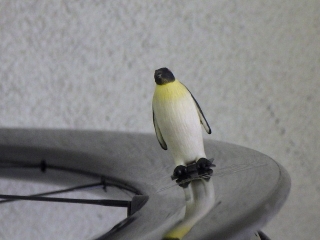
angled on the freewheel side, and
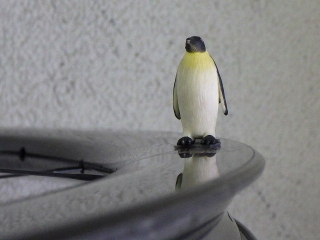
nearly a sheer cliff on the non-freewheel side.
Just from these two images alone,
you can see the rim holes are offset, and

the valve hole makes it even clearer.
The bottom right of the image is the freewheel side.
The non-freewheel sidewall also has
the Campagnolo logo, just so you know.
As for this sale, the selling price is
posted in the usual place.
The deadline is set through September 2023, but
we may extend it somewhat.


The tubular version is currently not yet available in Japan.
With a 37mm rim height, it's lighter in claimed weight than
the Bora Ultra WTO33 with lower rim height or
Fulcrum's Speed 25.
It's worth noting that the Hyperion Ultra front wheel is 21H,
while the Bora WTO and Speed 25 front wheels are
24H, but when you list the manufacturer's claimed weights
the Hyperion Ultra DB 2WAY-FIT is 1240g,
the Bora Ultra WTO33 is 1385g, and
the Fulcrum Speed 25 is 1285g.
By the way, the tubular version of the Hyperion Ultra DB has
a claimed weight of 1160g, so the weight difference between
tubular and tubeless versions is essentially just the rim.

The front wheel uses a non-G3 2:1 ratio 21H in radial lacing.
There's no defending it—it's the same as Lovell.
With the Hyperion, they clearly prioritized lightness above all else.
The final cross on the tangent side is not woven, and
it's not reverse offset lacing either.
It's essentially a front wheel for disc brakes designed as close
as possible to left-right radial lacing.

The rear hub shell is slim, and if you were to swap the freehub to go the CULT route,
the shape would make removal difficult, but since it's already CULT equipped, that's not an issue.

The Bora WTO freehub body uses the traditional
30mm diameter cylinder with ratchet pawls, the same as
the older Zonda and Shamal Ultra, but
the Bora WTO Ultra, Hyperion Ultra DB, and
Shamal Carbon DB use a new 33mm diameter freehub body
that's incompatible with the 30mm version.
As an important note, the 30mm freehub body has
individual pawl springs available (sold as a set of 5),
which at 2023 list prices were ¥1,152 including tax—
our shop sells them individually for around ¥200 each.
However, the 33mm freehub body is sold as a unit containing
1 spring and 3 pawls per set at ¥1,980 including tax,
so the replacement cost for pawl springs has increased nearly tenfold.

For the 33mm freehub body in Shimano fitment, the part number is
FH-HGA33.
That likely stands for
Hyperglide freehub body,
aluminum,
33mm diameter.
The Shamal Carbon and Bora WTO Ultra that use this
FH-HGA33 have ball bearing freehubs, but
the Hyperion Ultra's Shimano freehub body
uses USB bearings, and
the part number is FH-HGA33USB (←they literally just added it onto the end!)

The rear wheel features modest high-low flanges
and uses 24H with equal spoke counts on both sides, but
when I noticed the spoke deflection difference between sides
was smaller than expected, it turned out to be an offset rim.
While not a dramatic offset, the left and right rim sidewall shapes are

angled on the freewheel side, and

nearly a sheer cliff on the non-freewheel side.
Just from these two images alone,
you can see the rim holes are offset, and

the valve hole makes it even clearer.
The bottom right of the image is the freewheel side.
The non-freewheel sidewall also has
the Campagnolo logo, just so you know.
As for this sale, the selling price is
posted in the usual place.
The deadline is set through September 2023, but
we may extend it somewhat.